Jump to ratings and reviews
Rate this book

A Scots Quair #1

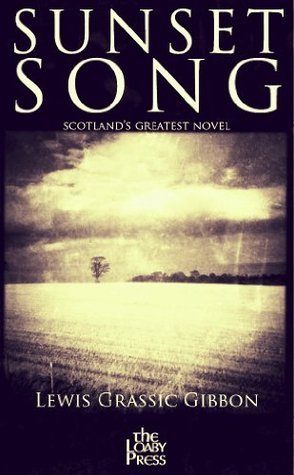
Sunset Song, The First Book of A Scots Quair

Rate this book
This new annotated edition contains a full Scots word glossary and a new introduction.

--------------

It is possible to state, without hyperbole, that Lewis Grassic Gibbon’s 1930 novel Sunset Song is perhaps the single greatest Scottish novel of all time. At the very least this was the case in the eyes of Scottish readers, when in 2005 it was voted exactly that by readers during the Edinburgh International Book Festival in a poll conducted by the Scottish Arts Council. Its current regard 80 years after its publication demonstrates its unique place among the consciousness of the nation’s book-lovers.

Lewis Grassic Gibbon with Sunset Song in particular was one of the driving forces behind the “Scottish renaissance” Alongside authors like such Neil Gunn, Edwin Muir, Hugh McDiarmid and others, Gibbon blazed a trail into a new form of Scottish literature, combining modernist styles and modern philosophy to forge an exploratory tool to gaze deeply into the depths of Scottish national consciousness.

The novel depicts the often-traumatic life of Chris Guthrie, a woman living in the fictional rural farming community of Kinraddie in Aberdeenshire at the beginning of the 20th century. The story charts her trials through Scotland of the early 1900s and uses her reactions and those of the other characters around her to highlight and assess the oncoming modern age that the new century would bring. The book is also inextricably linked with the locale where it is based. While many of the locations are fictitious, the area of The Mearns in Kincardineshire that encompasses the story is most certainly not, and is drawn heavily on the author's own experience of growing up in the area.

Grassic Gibbon as with Chris Guthrie, was himself a child of the Mearns, and the book can in many ways be described as a hymn to the land in which he was raised. One of the particular wonders of the novel is the awareness Gibbon has for the hundreds of generations before him that tilled the soil and ploughed the fields. Its this sense the pervades throughout the text of an ancient Scotland moving relentlessly to the new challenges of the modern world that cements its place as a work of Scottish literature without peer.

258 pages, Kindle Edition

First published January 1, 1932

375 people are currently reading
10286 people want to read

About the author

Lewis Grassic Gibbon

73 books55 followers
Lewis Grassic Gibbon was the pen name of the Scottish author James Leslie Mitchell.

Born in Auchterless and raised in Arbuthnott, then in Kincardineshire, Mitchell started working as a journalist for the Aberdeen Journal and the Scottish Farmer at age 16. In 1919 he joined the Royal Army Service Corps and served in Iran, India and Egypt before enlisting in the Royal Air Force in 1920. In the RAF he worked as a clerk and spent some time in the Middle East. He married Rebecca Middleton in 1925, with whom he settled in Welwyn Garden City. He began writing full-time in 1929. Mitchell wrote numerous books and shorter works under both his real name and nom de plume before his early death in 1935 of peritonitis brought on by a perforated ulcer.

Ratings & Reviews

What do you think?
Rate this book

Friends & Following

Create a free account to discover what your friends think of this book!

Community Reviews

5 stars
2,244 (40%)
4 stars
1,807 (32%)
3 stars
946 (17%)
2 stars
310 (5%)
1 star
204 (3%)
Displaying 1 - 30 of 602 reviews
Profile Image for Magrat Ajostiernos.
721 reviews4,862 followers
May 9, 2021
Sin duda una de las mejores novelas que he leído este año, una auténtica joya que me ha robado el corazón.
La historia de Chris Guthrie y Kinraddie, esa pequeña comunidad de campesinos en Escocia, que deben enfrentarse día tras día a la dura vida del campo pero al mismo tiempo aman y veneran esa tierra, es de esas que se quedan contigo.
Por un lado Chris es un personaje maravilloso, que sabe sobreponerse con valentía y dedicación a todo lo que le llega, con su alma divivida por el amor al estudio (esa alma más inglesa) y su pasión por la tierra (su parte más escocesa). Contemplamos la vida que lleva de niña en el seno de una familia complicada, en la que la figura de su madre deja una huella imborrable en ella y en el lector. La vemos crecer y tener que hacerse cargo de la familia, la vemos enamorarse, sobreponerse a la muerte, a la llegada de la Primera Guerra Mundial que va a acabar con todo tal y como lo conocían en Kinraddie hasta ese momento... exceptuando el amor por la tierra.
Es uno de esos libros tristes y melancólicos que al mismo tiempo está cargado de humor e ironía, que parece narrado por un amigo, alguien que te va contando la historia de su vida y de su familia de una manera tan íntima que al terminar la novela sientes que eres uno más en Kinraddie.
No puedo dejar de recomendar esta historia que me ha robado el corazón y que me va a resultar difícil olvidar... ¡Leedla! Y compradla, así Trotalibros nos traerá más libros de este maravilloso autor.
Pd. La traducción es DE LUJO. Y la edición preciosa
Profile Image for Libros Prestados.
472 reviews1,040 followers
May 15, 2021
Esta novela consigue ese reto tan difícil que es ir "sobre nada", contar la simple vida de alguien. Más concretamente, contar la existencia de una pequeña aldea (ni siquiera, son cuatro casas) ficticia y que parezca que es muy real y que conoces a tods esos vecinos y vecinas con sus historias, sus manías, sus chistes y sus pequeños rencores.

Es curioso, porque hay varias veces en las que el espectro de Thomas Hardy sobrevuela la historia. Hay momentos puntuales en el libro que son dramáticos y sabes perfectamente que con cualquiera de ellos Hardy se hubiera montado el dramón de la vida. Pero Grassic Gibbon no es Hardy, así que pese a mostrarte la crudeza de la vida de vez en cuando, la novela nunca se convierte en una tragedia, Chris Guthrie no sufre emociones que la desbordan, no es un "simple muñeco del Destino". Es una chavala que al comienzo de la novela llega a ese asentamiento con su familia campesina y que tiene que lidiar con lo que le toca: lo bueno y, a veces, lo malo.

Podría igualar (y de hecho lo hago) a otras historias "en las que no pasa nada" que me son muy queridas. Podría ponerla en el mismo pedestal que "Stoner" de John Williams. Pero si comparo este libro con algo es con la obra de Willa Cather. Es curioso, pero siento que "Canción del ocaso" está en una especie de diálogo con "Uno de los nuestros". "Canción del ocaso" está escrito por un hombre, tiene como protagonista a una mujer, se desarrolla en un ambiente rural (en Escocia) y en la trama la Primera Guerra Mundial y su propaganda trastoca la vida de esa gente que parecía tan alejada del conflicto. "Uno de los nuestros" está escrito por una mujer, tiene como protagonista a un hombre, se desarrolla en un ambiente rural (en EEUU) y en la trama la Primera Guerra Mundial y su propaganda trastoca la vida de esa gente que parecía tan alejada del conflicto. Es fascinante las similitudes y diferencias de ambas obras.

Supongo que a quienes les gusten los grandes dramas o las novelas con tramas en las que continuamente suceda algo excitante, esta crónica de una chica "de pueblo" rodeada de gente pintoresca en la que no pasa mucho les parecerá aburrida, pero esta es mi tipo de novela.
Profile Image for Andy Marr.
Author 4 books1,162 followers
September 13, 2022
Well, I finally read this, 25 years after pretending to read it for high school English class (sorry, Mrs Fleming). In fairness, it's just as well, as I know I'd have appreciated it far less as a gawky, fourteen-year-old geek than I did as... uh, a gawky, geeky thirty-nine-year-old.
Profile Image for Chrissie.
2,811 reviews1,421 followers
August 15, 2021
Voted "Best Scottish Book of All Time" by "the public" in 2005

Look here: http://news.bbc.co.uk/2/hi/uk_news/sc...

The lines are gorgeous. When you listen to this you are there in the Scottish Highlands. When? At the beginning of the 20th century. Writing can be all about creating the atmosphere of a particular time and place.

I am listening to the audiobook narrated by Eileen McCallum. You have to pay attention. Understanding the Scottish dialect is difficult, but worth it. I don't understand all the words. Most you understand from the context. The dialect captures the colloquial speech of the area. The dialect is said to be artificial, but I didn’t realize this. McCallum's intonation reflects the humor, sadness and anger found in the lines. She sings the Scottish tunes. Five stars for the excellent narration. In my view the narration enhances one's appreciation of the text.

I absolutely adored this book. I love the story, how it plays out, as well as the writing. If you look on Wiki you will get a map of the fictional town of Kinraddie. It is near Aberdeen. After reading the article I thought that while I agreed with all that was said, the article fails. It fails because it does not convey how the reader / listener will be drawn into the story. That is the magic of good writing.

The themes are the impact of the First World War and pacifism, socialism, the disappearance from the Scottish Highlands of the traditional small-scale croft farming, the cutting of the forests and the subsequent increase of sheep raising. One world is replaced by another. The inevitability of change. A world that changes means that people's lives change too. The characters fall in love, they are happy, they are sad, they hurt each other and some die. Life goes on. The land is a constant.

This is not a light book. People are drawn accurately ...and we aren't always nice! Some readers may be upset by the realistic description of childbirth. There is incest and sex. I didn't find any of this graphic. Keep in mind that a threat can be more disturbing than an actual event.

This book will be loved by those who appreciate nature, those who prefer country over city, those who have been to and love Scotland, and all of you who appreciate superb writing.
Profile Image for Ian.
974 reviews60 followers
January 1, 2020
A much-loved novel in Scotland, that I originally read 30 or more years ago. I’ve just listened to it again on audiobook, with a superb narration by the actress Eileen McCallum, and have linked this review to the audio version rather than the paperback I previously read.

The author lived a short life between 1901 and 1935. For a man of his time he was unusual in that he often placed women as the central characters of his stories, many of which were told from a female perspective. So pronounced was this tendency that during his lifetime some people thought his books were written by a female author using a penname. Lewis Grassic Gibbon was in fact a penname, though of a man called James Leslie Mitchell. “Sunset Song” fits this pattern, with its central character being a young woman, Christine (Chris) Guthrie.

The novel itself is set in the years before and during WW1, amongst a community of small tenant farmers in the north-east of Scotland. Their age-old way of life is facing its end as the modern world reaches them. Both the characters and the landscape are wonderfully conjured into life, but whilst the novel has a definite “end of epoch” feel this is no romanticised portrait of past rural life. Incest, suicide and marital rape all feature, and there’s a strong theme of how people are either brutalised or worn down by the harshness of their lives. Particularly impressive was the way LGG perfectly captured the gossiping and scandalmongering that goes on in this type of community. There’s plenty of tragedy in the book, but some great humour too.

The people of Scotland’s north-east use a dialect that even other Scots can struggle with, and it would have been even more marked in the author’s time. He does use a lot of local words but consciously moderated the regional dialect for the book, so it would be accessible to non-Scots. I was going to say that the novel might not travel well, but glancing at other reviews there seem to be many non-Scots who have enjoyed it. If you listen to the audio version, you will pick up a lot from the tone of the narrator’s voice even if you don’t know every word.

The author himself had a personal philosophy that mixed a sort of primitive Christianity with Marxist economics. He believed that organised religion had corrupted the original message of Christianity. His worldview comes through in the novel, where two of the most favourably drawn characters, Chae Strachan and Rob Duncan, are both men with leftist opinions, whilst the local Minister, Rev. Gibbon, is a hypocrite of the first magnitude. If the book has a weakness, it lies in the author making this message a little too obvious. It’s a minor complaint though in what is otherwise a first-class novel. The last section of the main text, just prior to the epilogue, is superbly delivered.

This novel was followed by two greatly inferior sequels, and you can often find the 3 books packaged into one under the Title “A Scots Quair”. The Epilogue to this one sets up the scenario for Book 2. In my opinion “Sunset Song” is complete in itself.
Profile Image for MJ Nicholls.
2,271 reviews4,836 followers
September 24, 2012
Attention Novelists!

Test 1

Have you written a dreary middlebrow novel set in a part of India, the Orient, or a sundrenched third-world nation? Is your novel about postcolonial struggles and skirmishes faced by impoverished nations during a specific period in history? Does your novel dwell upon the emotional turmoil at the root of a persecuted community, and does it focus on a stoic native whose trials are shown at their most heartbreaking and humourless? Well done! Your novel will be popular with middle-aged divorcées and airheaded beach readers who want the covers of their novels to reflect the places in which they skim them. Your novel probably looks like this:

description

Test 2

Have you written a shameless, tearjerking piece of third-world issuetainment after a moving trip to Nigeria in an attempt to “spread the message” to readers around the world about suffering, poverty, and the first-world’s indifference to famine, drought and oppression? Was your intention originally to donate all profits to charities, but now that you’ve written the novel, you need the money to pay for your mortgage and car insurance? Is your book told from a child’s point of view in insultingly simple prose that approximates how a Nigerian would speak, since you didn’t attempt to transcribe dialect during your trip, you simply made concerned faces and wept in your hotel room? Well done! Your novel will be bought at airports and remain unread for months until the reader has the guts to skim a few pages before he puts it down for being too depressing. Your novel probably looks like this:

description

Test 3

Have you written a sentimental, nostalgic novel romanticising the past in a dreary Irish, Scottish or Northern English ex-mining town? Is your novel stuffed with lazily specific references to things that happened in the past so people think you are “evoking” a certain place in time wonderfully, rather than simply ransacking your own bland childhood cynically for profit? Does your novel have extremely tame romantic scenes and po-faced attempts to depict the bigotry and racism at the heart of these backward communities in the form of hokey “literary” metaphors and stand-alone paragraph-sentences? Well done! Your novel will sell like spangles to the over-sixties market, desperate to redeem their miserable childhoods by misremembering every bad thing that happened to them as a good thing that didn’t happen to them. Your novel looks like:

description
Profile Image for Iris ☾ (iriis.dreamer).
485 reviews1,178 followers
June 11, 2021
Lewis Grassic Gibbon, escribió esta primera parte de la Trilogía Escocesa en 1932. Siendo reconocida como una de las obras cumbre de la literatura escocesa del siglo XX, no ha sido hasta este año que hemos podido disfrutar de esta novela traducida al Castellano de la mano de una editorial independiente. La edición, acompañada de un mapa y de un estilo y maquetación encomiables nos brinda una experiencia lectora imprescindible de la mano de una traducción simplemente perfecta.

Kinraddie (una ficticia región rural escocesa), nos es presentada en un preludio exquisito narrado con un toque irónico, en el que es inevitable sentir ciertas semejanzas con la descripción del inolvidable Macondo (que nos brindó G. García Márquez en «Cien años de soledad»). En ese lugar habitan entrañables personajes como Chris Guthrie, Chae y Rob El largo, que nos embarcarán en una lectura apasionante dividida en seis partes de aprendizaje a través de un costumbrismo atrevido y ligero.

El personaje de Chris es el verdadero eje central de la novela, su pequeño debate interno al comienzo abre las puertas a una protagonista luchadora y valiente que no se deja amedrentar. Pasaremos por varias etapas de su vida, en las que florecerá el auto descubrimiento, el hallazgo interno de la pasión y del amor, así como la superación y el poder emergente que nace desde lo más profundo de su ser. Su evolución, al igual que la formación de la protagonista son desarrolladas magistralmente.

Leer «Canción del ocaso» es viajar a Escocia, trasladarse a parajes naturales, vientos frescos que retuercen las ramas, colinas verdes que evocan la paz de un lugar que no ha sido alterado por la mano del hombre. Seremos partícipes de las costumbres, de la veneración por la tierra, de aquel lugar al que llamamos hogar y que sentimos parte de nuestro ser a pesar de la distancia. Sufrirá cambios con la llegada de la primera guerra mundial, pero su esencia siempre perdurará.

Es una novela melancólica y triste a la par que optimista, cargada con toques de humor que harán de esta una obra genuina, dotada de una viveza y sensibilidad memorables. Es sobrecogedora, mantiene al lector con el corazón en un puño en un final dramático en el que me ha sido imposible contener las lágrimas. Un libro que sorprende, emociona y enternece y a la vez entretiene y atrapa; cuando concluyes la lectura ya es demasiado tarde, te darás cuenta que formas parte de Kinraddie hasta la eternidad.
Profile Image for Hugh.
1,293 reviews49 followers
October 10, 2020
This is a book I have been wanting to read for a while because it is so revered in Scottish literary circles. It is something of a period piece, in that the lifestyles of ordinary Scots living in rural Kincardineshire were already largely lost by the time it was written in the 1930s, and plenty more has changed since.

Interestingly Grassic Gibbon felt his use of dialect words should have been intuitively comprehensible to readers outside Scotland - for me this was increasingly true as the book goes on, but the introductory section, in which he describes the history of his little patch of Scotland as described in oral legends, is riddled with dialect and I found myself referring to the glossary several times in almost every paragraph.

At heart this is a rites of passage tale, which describes the teenage and early adult years of its heroine Chris Guthrie as she grows up in a small farm, gains an education but has to abandon it when her mother commits suicide - her elder brother leaves for Argentina soon afterwards so when her domineering father dies soon afterwards she chooses to keep farming alone. The later parts of the book are overshadowed by the Great War, which eventually changes almost everything.

Overall I found this an interesting and enjoyable read which largely succeeds in its evocation of a lost world.
Profile Image for Bettie.
9,979 reviews5 followers
January 23, 2015


REVISIT VIA BBC: Listen here

Description: Divided between her love of the land and the harshness of farming life, young Chris Guthrie finally decides to stay in the rural community of her childhood. Yet World War I and the changes that follow make her a widow and mock the efforts of her youth.

Episode 1/2 (1 hour): Chris is torn between the love of the land and her ambition to be a teacher.

Episode 2/2: After her father's death, Chris is determined to work the farm, alone if needs be.

watch a dramatised production. Not the best of quality but hey! who's going to be so picky at this stage. There is, allegedly, a new film in production as we speak.


PAPER READ: fireside, sipping scotch and toasting Rabbie Burns.

Edited with an introduction by Tom Crawford. Map of Kinraddie

Dedication: To Jean Baxter

Arbuthnott is the real Kinraddie

Opening - KINRADDIE lands had been won by a Norman childe, Cospatric de Gondeshil, in the days of William de Lyon, when gryphons and such-like beasts still roamed the Scots countryside and folk would waken in their beds to hear the children screaming, with a great wolf-beast, come through the hide window, tearing at their throats.

Dunnottar Castle.

I know there are many historical-fictionistas out there who dislike dialects and there is a further modernist warning:

Gibbon's style is one of the great achievements of the trilogy and should be seen in relation to Scottish forerunners like John Galt as well as in the context of modernist innovators such as James Joyce, Gertrude Stein and William Faulkner (Tom Crawford, Canongate Books)
24 reviews
February 1, 2012
I was forced to read this book when I was in 5th year at school in Scotland. I despised it. I have no idea why students are given this to study. This is a dull dull book. Fields, farming, more fields, some stepping stones, Long Rob, Chris Guthrie, sighing, pondering, her rosy cheeked bloody face on the cover. Her grunting father wanking outside her door. Christ on a bike... I think at the very least you need grey pubic hair to enjoy this.
Profile Image for Señor Haller.
55 reviews20 followers
May 26, 2021
Hay lecturas que trastocan, otras que te dejan indiferente y están las que te hacen sentir vivo. De nuevo, y como en raras ocasiones sucede, me encuentro con un texto con cadencia, de esos que logran ponerle palabras a la vida (como si eso fuera fácil). Nostalgia pura.

Ni he podido parar de leer, ni he querido hacerlo. El autor logra transmitirte el paso y el peso del tiempo desde la pura inocencia hasta ese punto en el que, sin saber por qué, la realidad corrompe los sueños y ya no creemos en leyendas, o más bien, necesitamos no creer en ellas porque nada es tan bonito, ni tan fantástico.

Me ha sorprendido muchísimo la sensibilidad del texto, la figura de Chris y todas las sutilezas en su actitud para con los hombres. La concepción que tiene de sí misma me ha parecido algo loco, que me ha congelado por completo. Tan real el cómo se habla a sí misma y tan clara en cómo percibe al resto, que parece estar leyendo al mundo en solo ese coro de personajes tan bien escogido. Brutal.
Profile Image for Antonio Luis .
272 reviews92 followers
March 3, 2025
Magnífico retrato de la vida rural escocesa y algunos cambios sociales mientras se narra el paso a la vida adulta de su protagonista, Chris Guthrie, después Tavendale, una mujer independiente, tenaz, fuerte y y sensible, que personifica el carácter de su tierra.

La ambientación en Escocia es extraordinaria, igual que la construcción de todos, todos, los personajes, tanto en su perspectiva emocional como en la situación social y económica de su comunidad agrícola.

El estilo pese al contenido que abarca resulta muy lírico, rico en simbolismo, con un lenguaje sencillo, directo, que da profundidad a la narrativa sin perder su cadencia poética.

La edición de la Editorial Trotalibros es maravillosa y el trabajo de traducción ha debido ser igualmente magnífico, por primera vez traducido al castellano. Es lo primero que leo de esta editorial y ya tengo claro que el siguiente será Valle de nubes, segunda parte de esta trilogía escocesa.
Un pedacito de Kinraddie se queda conmigo.
Profile Image for Auntie Terror.
476 reviews111 followers
April 23, 2020
If you've ever even been to Scotland and seen this lost world in the desolate ruins of farm steads, this book will make your heart ache ever so much. [Prtf]
Profile Image for Marie Saville.
215 reviews121 followers
March 6, 2021
"La mer et le ciel, et les gens qui écrivaient, combattaient, étudiaient, ceux qui enseignaient, racontaient et priaient, tous ne dureraient que le temps d’un soupir, une nuée de brouillard dans les collines, mais la terre était éternelle. [...] La joie et la gentillesse passaient, vivaient et étaient oubliées, et ce qui restait dans les chansons, c’était l’Ecosse des brumes et de la pluie et les cris de la mer. [...] L’Ecosse vivait, elle ne mourrait jamais, la terre leur survivrait à eux tous, à leurs guerres et à leurs Argentines, et les vents continueraient à souffler sur les monts Grampians en apportant les orages et les pluies et la rosée qui faisaient mûrir les épis – longtemps, bien longtemps après que toutes leurs petites mesquineries dans la lueur du soir seront mortes et oubliées."
— Lewis Grassic Gibbon, 'Canción del atardecer' 🍂

¿Qué se puede decir cuando una termina de leer una joya como esta? ¿cómo hacerle justicia a un libro que se ha adorado de la primera a la última página?

Difícil tarea, pero 'Canción del ocaso', auténtica joya de la literatura escocesa publicada en 1932, bien merece una entrada. Una de esas entradas que se escriben desde el corazón y profundamente emocionada.

Esta es la historia de una pequeña comunidad de campesinos del noreste de Escocia justo antes, durante y después de la Primera Guerra Mundial. La vida no es fácil cuando uno depende de la tierra, del trabajo de sus manos y de los caprichos del tiempo. Y eso lo sabe bien Chris Guthrie, la protagonista de la novela.
Conocemos a Chris cuando apenas es una niña que corre por las colinas de Kinraddie, la cabeza perdida entre lecturas y ensoñaciones. Chris ama profundamente la tierra que la ha visto nacer, pero al mismo tiempo es consciente del duro destino que le espera cuando deba hacerse cargo de su propia granja y de su propia familia. Lo ha visto en los ojos de su madre; en esa mujer cansada, melancólica y rota que recuerda con nostalgia los tiempos felices de su infancia...

Pero desgraciadamente la niñez no es eterna, los años pasan y, muy pronto, Chris debe hacer frente a la dura realidad.

Su sueño de convertirse en maestra debe postergarse cuando la tragedia golpea directamente a su familia. Dos opciones se abren entonces ante ella: ¿empezar de nuevo lejos de su hogar o aferrarse a él y compartir su destino?

'Canción del ocaso', novela de iniciación, canto de amor a la tierra escocesa y testamento de un mundo perdido, es uno de los libros más bellos y a la vez más duros que he leído en mi vida.
Las descripciones de la naturaleza, del paso de las estaciones en este rincón de Escocia, perdido entre el Mar del norte y un mar de colinas y brezales, son tan hermosas que cortan la respiración. Es la belleza de una Escocia salvaje que va transformándose al mismo tiempo que el nuevo siglo...

Lewis Grassic Gibbon retrata con minuciosidad y con inmenso cariño la vida de esta pequeña comunidad de campesinos escoceses. Pero lo hace sin concesiones. La vida es dura, cruel e injusta. Estos hombres y mujeres, moldeados por el tiempo y el trabajo, aman y sufren. Saben acariciar pero también golpean con mano de hierro, incluso a los que más quieren. Y a pesar de todo uno los compadece y entiende; no son mejores ni peores, simplemente son humanos. Personas de carne y hueso que casi parecen salir de las páginas de 'Canción del ocaso' para confiarte al oído su propia historia, sus anhelos y pesares...
Jean Murdoch, Long Rob, Chae Strachan, Ewan Tavendale...y, como no, Chris Guthrie, una joven inteligente, salvaje, valiente y bondadosa, encabezan una lista de personajes que no voy a olvidar en la vida.

¡Cuánto he sufrido cuando la modernidad termina por encontrarles, cuando los estragos de la guerra se dejan ver en sus cuerpos y en sus corazones!

Canción del ocaso' se cierra con las notas melancólicas de 'Las flores del bosque' una canción tradicional escocesa. Con los personajes supervivientes congregados sobre una colina despidiendo a sus seres queridos. Sobre ellos cae la lluvia y resuenan los acordes de una gaita.
Es el canto de despedida a un mundo desaparecido. El canto de amor de un escritor a la Escocia que conoció y que, pese a los cambios, todavía permanece viva.
Inmenso coup de cœur pues por este libro que os recomiendo de todo corazón.
Profile Image for Jim.
2,407 reviews795 followers
March 4, 2025
I am beginning to fall in love with the Scots dialect. Having read Sir Walter Scott's Kenilworth last month and Lewis Grassic Gibbon 's Sunset Song this week, I no longer mind reading slowly and consulting the end notes and (much needed) glossary virtually every page.

Gibbon tells the story of Chris Guthrie, the daughter of a cruel farmer who routinely abused his children. They lived in an area south of Aberdeen called The Mearns where they raised livestock and grow crops in the years before the First World War. Chris married a neighboring farmer and began to raise a family when the War intervened.

>b>Sunset Song is the first volume of a trilogy called A Scots Quair. I hope to read the other two volumes as well.
Profile Image for Carlos.
143 reviews120 followers
December 7, 2025
[Leído en inglés. Reseña en español más abajo]

It is not easy to rate a book with only 1 star. Especially if I bought this book while I was travelling in Scotland and precisely because it is a "must" in their literature. I love Scotland, its landscape, culture, accent, music, everything. However, the book didn't convince me at all. I tried to like it, but I couldn't. I just couldn't.
First of all, I am not a native speaker of English and maybe I made a mistake reading this in English, even though I have read so many books in this language before and I didn't have this kind of problem. The way it was written, the excessively amount of idioms, slang and expressions that did not help me to understand and follow the story at all. And damn... I saw the word "daft" HUNDREDS of times that I feel I will have dreams/nightmares about that word. So repetitive!
Besides the language barrier, I was never able to engage with the characters. I insist that I love Scotland with all my heart and I am very willing to read more Scottish literature and that's why I will read the next 2 parts of this trilogy. Maybe there is an easier edition or version to read. If so, I wish I read that one instead.

-----------------------------------------------------------------------------------------------------------------

No es fácil ponerle 1 estrella a ningún libro. Especialmente si compré este libro mientras viajaba por Escocia y precisamente porque es un libro "obligatorio" en su literatura. Me encanta Escocia, su paisaje, cultura, acento, música, todo. Sin embargo, el libro no me convenció para nada. Intenté que me gustara, pero no lo conseguí. No pude.
Primero que todo, no soy hablante nativo de inglés y quizás cometí un error al leer esto en inglés, a pesar que he leído bastantes libros en este idioma anteriormente y no tuve este tipo de problema. La forma en que estaba escrito, la cantidad excesiva de expresiones y conceptos locales que no me ayudaron a entender ni a seguir la historia para nada. Y la palabra "daft" estaba escrita CIENTOS de veces que siento que tendré sueños/pesadillas con esa palabra. Demasiado repetitiva!
Además de la barrera lingüística, nunca me pude conectar con los personajes. Insisto en que me encanta Escocia con todo mi corazón y tengo muchas ganas de leer más literatura escocesa y es por eso que leeré las próximas 2 partes de esta trilogía. Quizás hay una edición o versión más simple para leer. Si es así, me hubiera gustado leer esa.
Profile Image for Leah.
1,726 reviews288 followers
July 29, 2015
A Scottish lament...

This first volume of Lewis Grassic Gibbon's trilogy, A Scots Quair, focuses on the life of Chris Guthrie, daughter of a tenant farmer in the fictional estate of Kinraddie in the north-east of Scotland, before and during the First World War. Sunset Song, written in 1932, is generally considered the strongest book in the trilogy and one of the greatest Scottish novels of the twentieth century. Although it's written in a form of the dialect of the area, it's been pretty heavily anglicised so that it keeps the rhythms without being too hard for non-Scots (or modern Scots) to understand. There's a heavy sprinkling of old Scots words, but also a glossary of them should the meaning not be obvious from the context.

Chris is born the daughter of John Guthrie of Blawearie, a farmer hardened by the lifelong struggle to wrest a living from the land, and Jean, a woman worn down by years of pregnancies and childbirth. John is a harsh father to his sons, demanding hard labour and unquestioning obedience, and exacting cruel physical punishment when angered, while Jean can do nothing but watch passively. But Chris shows signs of academic intelligence, and it is John's wish, and her own, that she be educated and get away from the land to become a teacher. All this changes when first Jean and then John die, leaving the family broken up and Chris as the inheritor of the farm. Now with the money to leave and make a new life for herself, Chris realises the land is in her blood – she wonders how she could ever have thought to leave it and to take up a career that would deny her the joys of marriage and children.

And so she marries young Ewan Tavendale and together they are content to farm their land, Chris' happiness enhanced when she bears her first son. But the world is changing and over in Europe war clouds are gathering. And during the four years of fighting, life for Chris and for this entire community will be changed forever.
Chae jumped up when she finished, he said Damn't, folk, we'll all have the whimsies if we listen to any more woesome songs! Have none of you a cheerful one? And the folk in the barn laughed at him and shook their heads, it came on Chris how strange was the sadness of Scotland's singing, made for the sadness of the land and sky in dark autumn evenings, the crying of men and women of the land who had seen their lives and loves sink away in the years, things wept for beside the sheep-ouchts, remembered at night and in twilight. The gladness and kindness had passed, lived and forgotten, it was Scotland of the mist and rain and the crying sea that made the songs.

The book is essentially a lament for the passing of a way of life. Gibbon shows how the war hurried the process along, but he also indicates how change was happening anyway, with increasing mechanisation of farms, the landowners gradually driving the tenant farmers off as they found more profitable uses for the land, the English-ing of education leading to the loss of the old language and with it, old traditions. Although the cruelties and hardships of the old ways are shown to the full, he also portrays the sense of community, of neighbour supporting neighbour when the need arises. And he gives a great feeling of the relative isolation of these communities, far distant from the seat of power and with little interest in anything beyond their own lives. But here too he suggests things are changing, with some of the characters flirting with the new socialist politics of the fledgling Labour Party.

It took me a good third of the book to really find myself involved in the story. It begins with a long introduction to all the characters and a potted history of the area. While there's some great writing and quite a lot of humour in this section, I found it was trying to cover too much and I didn't really get a feel for most of the characters – which was a problem that remained throughout the book in fact. The main characters become very well realised, but all the others flit in and out and I never felt fully on top of who they were or how they related to each other. As Chris grows from childhood into young womanhood, there is a major emphasis on her awakening sexuality, with some writing which I feel must have been considered pretty shocking in its time, including allusions to rape and incest.

But suddenly, at the point where Chris finds herself alone and independent, the book turns into something quite wonderful. The story of Chris and Ewan falling in love and marrying is full of emotional truth. This isn't a great romance – this is two young people setting out to make a life for themselves and their inevitable children, farming the land in continuity with the generations before them and assuming they will hand it on in turn to the next, and making the adjustments that any couple must when the realities of living with another person don't quite match up to the dream.
It lingered at the back of her mind, dark, like a black cat creeping at the back of a hedge, she saw the fluff of its fur or the peek of its eyes, a wild and sinister thing in the sunlight; but you would not look often or see those eyes, how they glared at you. He was going out there, where the sky was a troubled nightmare and the earth shook night and day, into the lands of the coarse French folk, her Ewan, her lad with his dark, dear face and that quick, blithe blush. And suddenly she was filled with a weeping pity in her heart for him, a pity that brought no tears to her eyes, he must never see her shed tears all the time he was with her, he'd go out to the dark, far land with memories of her and Blawearie that were shining and brave and kind.

And when war begins, Gibbon handles beautifully the gradual change within the community, from feeling completely detached and uninvolved to slowly finding their lives affected in every way. As the men begin to either volunteer or, later, be conscripted into the Army, each character reacts differently but truly to the personality Gibbon has so carefully created for them. Some of the writing is heart-breaking in its emotional intensity but never overloaded with mawkishness or sentimentality. Gibbon touches on questions that must still have been hugely sensitive so soon after one war and with another already looming – conscientious objection and desertion – and asks not for forgiveness for his characters but for understanding and empathy. The ending echoes the beginning, as Gibbon again takes us round the community showing the irrevocable changes wrought by war and modernisation on each family – some winners, some losers, but none unaltered. And as he brings his characters together one last time, we see them begin to gather the strength to face their uncertain future in a world that will never be the same again.

A brilliant book that fully deserves its reputation. Highly recommended, though I should warn you I sobbed solidly through most of the second half...

www.fictionfanblog.wordpress.com
Profile Image for Anna.
2,108 reviews1,014 followers
November 28, 2024
I borrowed Sunset Song from the library as it's a Scottish classic. Indeed, I'd never heard of Lewis Grassic Gibbon before moving to Scotland. The edition I read has an introduction by Nicola Sturgeon (former First Minister and noted book-lover) explaining why it's her favourite novel. I found it beautiful, poetic, and tragic. Set during the 1910s in rural Aberdeenshire, Sunset Song follows a young woman named Chris Guthrie coming of age. Grassic Gibbon uses a lot of Scots words and phrases, some of which were new to me but easy enough to grasp from context. They add to the atmosphere, which is very much grounded in a specific time and place. There's a rather fascinating and delicate ambivalence about this via Chris' point of view. On the one hand, an intense love for the land, feeling of pride to be Scottish, and awareness of history. Simultaneously, an awareness that farming is hard and brutal, life is changing as modernity encroaches, and the land is indifferent to human suffering. This realism tempers the lyrical pen-portraits of fields, standing stones, and so on that could otherwise have become cloying. Chris herself considers leaving for somewhere more urban, before deciding to remain in the familiar farming life.

I found Chris a very compelling protagonist. She is independent, determined, and feels intensely. Her vivid personality holds the book together. Two aspects of the narrative stood out to me. First, Grassic Gibbon's honest depiction of womens' lives before the availability of contraception. Sex is always a risk, and pregnancy and childbirth are depicted in unsparing detail as terrifying and dangerous. I did not expect such a sympathetic and insightful perspective from a male novelist writing in the 1930s. The fate of Chris' mother remains shocking. Secondly, I appreciated the gradual incursion of the First World War into insular rural life. At first the war appears distant and irrelevant, the subject of theoretical political debates between socialist and more traditional locals. As the years pass and men enlist, by choice or otherwise, it becomes much harder to ignore.

I can see why Sunset Song became a Scottish classic. It remains very readable, with involving characterisation, lovely imagery, and a distinctive perspective on the First World War. I found the romance less effective than the bonds of community and love of the land; at times Grassic Gibbons truly manages to make poetry out of cowshit.
Profile Image for Alba.
57 reviews7 followers
May 14, 2021
Es un libro fantástico. Lo disfruté un montón. Sale uno enamorado de la Escocia rural y sus habitantes. Seguiré leyendo las andanzas de Chris Guthrie.
Profile Image for Gary.
65 reviews14 followers
May 24, 2008
This book was included in the 100 Best Scottish Books (Willy Maley and the Scottish Book Trust and others in 2005), and according to the Wikipedia article on it is widely regarded as one of the most important Scottish novels of the 20th century, if not the most important. Having just completed it I'm all in agreement. It is lyrical and moving, it is old fashioned and modern at the same time, it does blend melodrama and realism, and it does show the best of Scotland in Chris Guthrie.

The orthography is a bit peculiar but it does give a very strong sense of how Scots people spoke (and therefore thought?). Don't let that put you off though, this is a very good read indeed.

Personally I enjoyed the Prelude to the novel which gives the history of Kinraddie and sets the scene for the story of Chris. It's a great piece of writing. And the novel overall is a great achievement on the part of Grassic Gibbon.

Makes you proud to be Scottish:)

Sunset Song Wikipedia
Sunset Song amazon.co.uk
Profile Image for Rocío Prieto.
305 reviews100 followers
June 15, 2021
Este libro se convirtió rápidamente en uno de mis favoritos. Pocos libros se sienten tan grandes en alcance mientras tratan cosas tan pequeñas.

Estamos ante una historia impresionante que toca las fuentes de la identidad de uno, la conexión humana con la tierra y las fuerzas de un mundo que cambia rápidamente. Un elogio inquietantemente hermoso a un tiempo y un lugar irrevocablemente cambiado por la Gran Guerra. Otros puntos que explora son la inutilidad de la guerra, las relaciones entre hombres y mujeres, el poder abusivo del patrimonio y la resistencia del espíritu humano.

Trágica pero extrañamente gratificante escribe sobre la tierra de la Escocia rural con pasión y dolor. Escribe de la gente con gran calidez y cariño por la humanidad. Sus personajes son intrigantes y el personaje central de Chris Guthrie es increíble, ¡es poderosa, fuerte e independiente! Me sentí totalmente parte de ella.

En definitiva, un libro bellamente escrito con una musicalidad y una cadencia en la escritura que, sumadas a la sustancia conmovedora y desgarradora, hacen de este un libro que permanecerá contigo mucho después de que termines de leerlo.
Profile Image for Wilsonn.
19 reviews20 followers
Read
August 3, 2020
A story quickening, mad, disturbing, and beautiful, in prose striking and melodic - 'Sunset Song' dilates on tyranny and family, covetous and bewildering small communities, coming of age, the dying of old ways, the passing of generations, the wicked thoughts and terrible acts of life, and that great breaking between two people, tied by family, who simply cannot see each other as worthy of love. I’m sure this book will stay with me through my days.
Profile Image for Mercedes Fernández Varea.
291 reviews102 followers
June 20, 2021
Reseña en 5 minutos y al dictado

Últimamente los libros “los bostezo” (sic) todos. Acabada la jornada laboral, me siento por la tarde en el comedor con mis libros y tanto da que lea las penalidades de Agnes Grey con sus díscolos alumnos, las aventuras sexuales de Reinaldo Arenas o los primeros amores de Chris en “Canción del ocaso”, todo me conduce a la misma modorra. Leer a 30 grados iguala a Cervantes con Marcial Lafuente Estefanía.

Con lo anterior como excusa, debo decir que no he disfrutado con esta novela como yo deseaba y me esperaba. Me ha gustado en general esta novela casi coral, me ha parecido de una modernidad sorprendente en su modo de abordar temáticas, la forma de narrar es muy original (el manejo del monólogo interior me ha hecho recordar en ocasiones a Mercè Rodoreda, tal vez por alucinación mía a altas temperaturas), contiene frases bellísimas como las líneas finales, pero mis expectativas eran altísimas: esta desde luego no es la lectura de mi vida, ni Chris ese personaje que se va a quedar conmigo para siempre, ni he sentido ganas de llorar en ningún momento... No he acabado de entender algunos de los comportamientos de los personajes principales y confieso que hacia el final tenía muchas ganas de acabarlo.

Cuando leo tantas y tantas reseñas de lectores para los cuales este libro ha sido la maravilla de las maravillas siento envidia.

Lo dicho, será el calor…
Profile Image for Mónica Cordero Thomson.
553 reviews85 followers
July 18, 2021
Tengo que reconocer que cuando leí que era la mejor novela escocesa elegida por los escoceses tuve mis dudas. Una parte de mi corazoncito semi-escocés se negaba a que hubiera una novela mejor que mi querida La Isla del tesoro. Y sin embargo,...para mí ya es la mejor novela escocesa de todos los tiempos y una de mis novelas favoritas (aunque La Isla del Tesoro seguirá siendo también de mis libros favoritos,...).
Me ha transportado a mi Escocia, pero también a la Escocia de mis bisabuelos, algo que siempre agradeceré tanto a Grassic Gibbon como a Jan Arimany (el editor del libro en castellano). Infinitas gracias.
Me han emocionado las descripciones del paisaje hasta tal punto de llorar, en parte por morriña, en parte por la poesía tan bonita que utiliza para ello.
Los personajes son totalemente escoceses, de eso no hay duda. Y la historia es desgarradora, pero a la vez absorbente y encantadora, como muchas de las historias escocesas y como la vida misma.
Será un libro al que regrese a menudo. Totalmente recomendable.
Profile Image for Laura.
7,129 reviews605 followers
December 5, 2012
What to say about this magnificent book? This is the first boot of the trilogy A Scots Quair.

According to George Malcom Thomson, to whom the book is dedicated, wrote that "this Chris of yours is surely the greatest woman character in Scottish fiction...She is intensely Scottish and yet universal".

I just found these little gems:

Sunset Song (BBC 1971) Clips 1, 2, 3 and 4.

This book was a kind gift by dear friend A aka B.
Profile Image for Catriona.
10 reviews5 followers
January 27, 2013
Every time I read Sunset Song, I begin to ache. I long for the land, the earth and the glorious Scottish sunlight. I long to lie amongst standing stones and feel unchangeable and everlasting for just a moment. Unfortunately, Scotland is in reality too wet and cold to do any of this- hence the aching and the longing.

Chris Guthrie has been called the voice of Scotland, but I would simple call her the voice of youth. Grassic Gibbon's narration gets stuck in your head, and you can't get rid of it for weeks after reading this book. In a way though, you're glad, as it's painful to leave Chris behind, and you like that she sticks with you, even after you've walked away from her story. This book makes me cry, as the realities of the First World War trickle into the rural Ayshire community and tear it apart. Chae Strachan will forever be one of my favourite characters, but even he cannot compare to Chris herself: she, and this book, will always be with me throughout my life.
Profile Image for Dee.
454 reviews151 followers
July 30, 2023
Sunset song is a beautiful story. It may take a little time to get used to the wording but it is an interesting read.🙂.
Following this ladys journey in the first of three books was very enjoyable. The ups and downs, the stuggles of life at the time and the hard work of keeping land and animals was extemely well explained. Also reading of the cruelty she experienced but the overall strength in her character was impressive.
This amazing strong woman makes this book what it is and i look forward to the others to find out more
Profile Image for Victoria.
204 reviews492 followers
July 23, 2019
Coup de coeur pour cette histoire poignante, à la fois brute et douce. Le destin d'une jeune femme libre, meurtrie par la vie et pourtant tellement forte, des personnages profondément attachants, et cet amour profond, irrépressible, de la terre face à la vanité de la guerre, face aux temps qui changent et qui ne seront jamais plus les mêmes. Je la termine les larmes aux yeux, au son de la cornemuse <3
Profile Image for Miriam. L.
153 reviews37 followers
August 8, 2022
Me he quedado bastante tocada después de terminarlo, cuánta belleza y crudeza en tan pocas páginas.
Chris Guthrie pasa a convertirse en una de mis protagonistas favoritas.


*Un consejo, leed las últimas páginas escuchando a algún gaitero interpretar "Flowers of the Forest", ha sido una experiencia religiosa.
Profile Image for Phil.
624 reviews31 followers
April 21, 2022
An easy 5 stars. Some books take a long time to finish because you don’t want to go back to them, but this took me a long time to finish simply because the language is so beautiful and earns the luxury of slowing down, rolling the words around my mouth and mind and living the life in and around Kinraddie.

The Sunset of the title is essential to the book, this describes the end of a way of living, the end of a community, an era where those around you geographically were the whole world and their support, help and Grace could make or break any family living in the village. The portrayal of rural Scottish life is no rose-tinted one and it doesn’t stint at showing the hard, uncaring, mean-spirited side alongside the friendly, hospitable and supportive one.

The first parts are hard, fighting the soil, the weather, ill luck, ill health and inner demons, but these travails arrive almost by chance. Then the war arrives even to this insular part of Scotland and suddenly the troubles are wrought by men, deliberately. Old Gordon cuts down the trees and buys up farms and forces the young and not-so-young men to go to war, with accusations of cowardice and supporting the Germans. So the men go, and either die or return damaged beyond repair, and the small farms, growing corn and milking cows and providing a hard but sustainable living to dozens of people, are replaced by sheep, the small farms knocked into one, the gaps left by the felled trees letting through weather that no longer lets crops grow. kinraddie, by the end of the novel has, to all intents and purposes, gone.

The heart of the novel is Chris Guthrie, who arrives as a child with he brothers and sisters, mother and domineering and abusive father. During the novel her mother commits suicide rather than have another child, her younger siblings are taken away to live with relatives, her older brother runs away to Argentina rather than live with his father, her father has a stroke, he tries to force her to share an incestuous bed (but his post-stroke frailty foils this) and more. But through all this, Chris remains mostly optimistic, strong and positive.

The language in which the book is written is a very artificial form of cod Scots, where Scots words and phrases are used to give a flavour of the speech, but not so that English readers can’t understand what’s happening, and it works, with Gibbon succeeding in his aim to show how beautiful and evocative the Scots language can be.

All in all, a novel that deserves its position as a keystone in 20th century Scottish literature.
Displaying 1 - 30 of 602 reviews

Can't find what you're looking for?

Get help and learn more about the design.