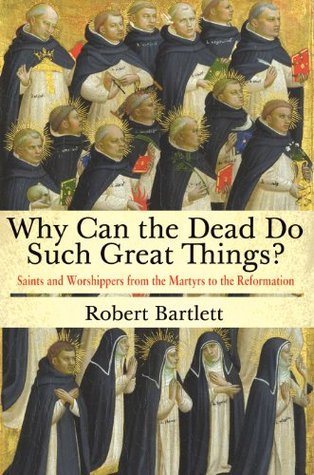
A sweeping, authoritative, and entertaining history of the Christian cult of the saints from its origin to the ReformationFrom its earliest centuries, one of the most notable features of Christianity has been the veneration of the saints—the holy dead. This ambitious history tells the fascinating story of the cult of the saints from its origins in the second-century days of the Christian martyrs to the Protestant Reformation. Robert Bartlett examines all of the most important aspects of the saints—including miracles, relics, pilgrimages, shrines, and the saints' role in the calendar, literature, and art.The book explores the central role played by the bodies and body parts of saints, and the special treatment these relics received. From the routes, dangers, and rewards of pilgrimage, to the saints' impact on everyday life, Bartlett's account is an unmatched examination of an important and intriguing part of the religious life of the past—as well as the present.
Very good overview over the medieval cult of saints from the late Roman Empire to the Reformation. Focuses on the Latin Christendom but also covers pre-catholic Ireland as well as the Middle East. Goes through the chronology of the development of the cult of the saints and then focuses on certain themes such as relics, literature, pilgrimage etc.
Particularly enjoyed because it is written in a way that is easy to be understood without sacrificing terminology and historical narratives of the cult of saints.
The most comprehensive history of the cult of the saints in print. Bartlett, a secular medieval scholar, draws from a vast well of primary material--much of it not available in English--to explain every facet of the history and practice of Saint veneration. Being the work of a historian rather than a believer, it lacks insight that faith could provide, and is notably weak on modern practice, but otherwise it's a superb work of scholarship.
About once a year I read a book that is genuinely satisfying: this book may be the one for this year. Phenomenally learned yet chatty, this was a challenge worth accepting; Bartlett is a great connector of threads, a good storyteller, a keen analyst, and gives a history of medieval sainthood that is engaging, quirky but founded in deep scholarship.
A fascinating look into the medieval cult of saints. This is a comprehensive study of how pre-Reformation Christians treated saints and how the cult of saints permeated almost every element of medieval life. As someone who grew up Protestant, saints are totally foreign to me and it’s strange to think about their absence when they’ve been so important to other varieties of Christianity since the earliest days of martyrdom. I do wish that there was a chapter on Protestant reactions to the cult of saints and why certain denominations still acknowledge them while others threw them out.
I was very impressed by the detail Bartlett provided, and I learned quite a lot: definitely something I think my Medievalist and Papist friends would enjoy!
The whole time I read this tome (which I’d been putting off for literal years because tome) I was like ‘goddammit I should have read this in undergrad. It would have helped me a lot.’ I’m glad I read it fully now, as opposed to just sections in my MPhil, because it’s a magisterial and encyclopaedic look at the medieval cult of saints. Would highly recommend to undergrads or advanced non-specialists interested in this sort of thing.
Okay, gonna be honest, i haven’t read it all, but a great part of it. Originally borrowed it from the library for a part of my exam, but ended up buying it and reading more than i needed to, because it was so interesting!
For anyone who has grown up with saints and miracles this is a pretty fascinating book. We Catholics, former and otherwise, we're all named after one and likely had a favorite one . The book begins with an explanation of the history/beginnings of relics ( okay - for those of you who paid attention in religion class what laywoman comes to mind when you hear or read the word relics?). A somewhat ponderous book, to be sure, but definitely readable - albeit in small chunks. Anxious to hear from others.