Jump to ratings and reviews
Rate this book

Confessions of an English Opium-Eater and Other Writings

Rate this book
I took it: - and in an hour, oh! Heavens! what a revulsion! what an upheaving, from its lowest depths, of the inner spirit! what an apocalypse of the world within me!'

Thomas De Quincey's Confessions of an English Opium-Eater (1821) launched a fascination with drug use and abuse that has continued from his day to ours. In the Confessions De Quincey invents recreational drug taking, but he also details both the lurid nightmares that beset him in the depths of his addiction as well as his humiliatingly futile attempts to renounce the drug.

On the Knocking at the Gate in Macbeth offers both a small masterpiece of Shakespearian interpretation and a provocative statement of De Quincey's personal aesthetic of contrast and counterpoint.

Suspiria de Profundis centres on the deep afflictions of De Quincey's childhood, and examines the powerful and often paradoxical relationship between drugs and human creativity.

In The English Mail-Coach, the tragedies of De Quincey's past are played out with horrifying repetitiveness against a backdrop of Britain as a Protestant and an imperial power.

This edition presents De Quincey's finest essays in impassioned autobiography, together with three appendices that are highlighted by a wealth of manuscript material related to the three main texts.

ABOUT THE SERIES: For over 100 years Oxford World's Classics has made available the widest range of literature from around the globe. Each affordable volume reflects Oxford's commitment to scholarship, providing the most accurate text plus a wealth of other valuable features, including expert introductions by leading authorities, helpful notes to clarify the text, up-to-date bibliographies for further study, and much more.

332 pages, Kindle Edition

First published January 1, 1821

137 people are currently reading
1171 people want to read

About the author

Thomas de Quincey

1,385 books303 followers
Thomas de Quincey was an English author and intellectual, best known for his Confessions of an English Opium-Eater (1821).
See also http://en.wikipedia.org/wiki/Thomas_d...

Ratings & Reviews

What do you think?
Rate this book

Friends & Following

Create a free account to discover what your friends think of this book!

Community Reviews

5 stars
199 (18%)
4 stars
309 (29%)
3 stars
360 (34%)
2 stars
141 (13%)
1 star
48 (4%)
Displaying 1 - 30 of 99 reviews
Profile Image for Leonard Gaya.
Author 1 book1,177 followers
January 24, 2020
De Quincey’s account on opium consumption is perhaps one of the earliest books on drugs addiction, before Charles Baudelaire’s Paradis artificiels. It seems that De Quincey started taking laudanum to relieve a stomach condition. The drug did not affect him negatively at first; on the contrary, it improved the acuteness of his senses and uplifted his spirits. “Oh!, says he, subtle and mighty opium! that bringest an assuaging balm!” And that's how he got involved in an opium-eating habit for more than seventeen years. In the end, De Quincey was haunted by horrible nightmares.

The book, written in the first person singular, doesn’t delve immediately into the description of De Quincey’s experience with opium. He beats about the bush for quite some time, telling us about his life as a student and a love story with a young prostitute, probably “considering what is proper to be said” and trying to gain the benevolence of his readers, before he tackles the main subject. The ending, with the account of what took place in his hallucinations and dreams, under the influence of the drug, is perhaps the most exciting part.

Here is one example of his visions: “Be it as it may, now it was that upon the rocking waters of the ocean the human face began to appear: the sea appeared paved with innumerable faces, upturned to the heavens: faces imploring, wrathful, despairing, surged upwards by thousands, by myriads, by generations, by centuries...” All this, to be sure, would give much to think to the soon to come psychoanalysts and surrealists…

The Confessions in this short volume, is followed by Suspira De Profundis (a sequel to the former) and The English Mail-Coach, which, for now, I do not care to read or to review.
Profile Image for Yair.
339 reviews101 followers
July 30, 2011
Intolerably tough to read but a force worth going through. De Quincy was a xenophobe, drug addict, racist, imperialist, etc etc. But his writing is, hyperbole aside, incredible. He digresses, stops and starts tangents, and sometimes (actually often) ends stories with absolutely no resolution. Like post-modern even before modernism. Not easy but definitely great reading.
239 reviews184 followers
April 8, 2018
I sometimes seem to have lived for 70 or 100 years in one night; nay, sometimes had feelings representative of a millennium passed in that time, or, however, of a duration far beyond the limits of any human experience. —Confessions

. . . I do not believe that any man, having once tasted the divine luxuries of opium, will afterwards descend to the gross and mortal enjoyments of alcohol. —Confessions
__________
Rarely do things perish from my memory that are worth remembering. Rubbish dies instantly. Hence it happens that passages in Latin or English poets, which I never could have read but once (and that thirty years ago), often begin to blossom anew when I am lying awake, unable to sleep. I become a distinguished compositor in the darkness: and, with my aerial composing-stick, sometimes I “set up” half a page of verses, that would be found tolerably correct if collated with the volume that I never had in my hand but once. I mention this in no spirit of boasting. Far from it. —Suspiria De Profundis
__________
This edition includes De Quincey's Confessions of an English Opium Eater, his sequel, Suspiria De Profundis or Sighs from the Depths, and a somewhat related essay, The English Mail-Coach, which was originally intended to form part of Suspiria. It also contains manuscript material relating to all three works, and a large quantity of excellent notes.

In the Confessions, De Quincey recounts his experiences with Opium, and in Suspiria he explores his childhood.

He has a large fascination with dreams and dreaming, and this interest is well woven through both of these works.

De Quincey's style is rich and powerful, and the works are well peppered with amusing anecdotes and spurts of humour.

The Confessions is very entertaining, I enjoyed Suspiria arguably more, and I would recommend both purely on the quality of De Quincey's writing. But unfortunately, even this could not not get me through the entirety of The English Mail-Coach.
_____
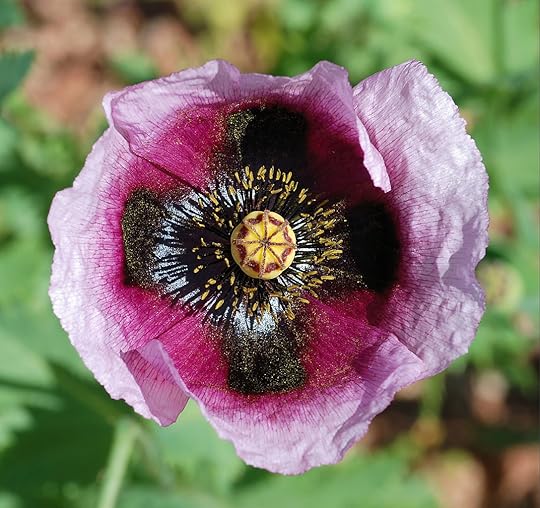
If after reading the Confessions, De Quincey has piqued your interest in Opium, you can safely sate this curiosity by inhaling the redolence of the rich, heady exilir that is Vi Et Armis by Beaufort London; from the heart of which flows a beautifully intoxicating Opium note.

I say by inhaling this potent tincture, you will be safely sated; but do take care the olfactive seduction does not entice you to seek out the pleasures of the illicit flower . . .

description
__________
From Confessions of an English Opium Eater:

. . . whereas wine disorders the mental faculties, opium, on the contrary (if taken in a proper manner), introduces amongst them the most exquisite order, legislation, and harmony. Wine robs a man of his self-possession; opium greatly invigorates it. Wine unsettles and clouds the judgement, and gives a preternatural brightness and a vivid exaltation to the contempts and the admirations, the loves and the hatreds of the drinker; opium, on the contrary, communicates serenity and equipoise to all the faculties, active or passive, and with respect to the temper and moral feelings in general it gives simply that sort of vital warmth which is approved by the judgment, and which would probably always accompany a bodily constitution of primeval or antediluvian health.

For music is an intellectual or a sensual pleasure, according to the temperament of him who hears it.

For tea, though ridiculed by those who are naturally of coarse nerves, or are become so from wine-drinking, and are not susceptible of influence from so refined a stimulant, will always be the favourite beverage of the intellectual.

People in general either read poetry without any passion at all, or else overstep the modesty of nature, and read not like scholars.

The sublimer and more passionate poets I still read, as I have said, by snatches, and occasionally. But my proper vocation, as I well know, was the exercise of the analytic understanding. Now, for the most part, analytic studies are continuous, and not to be pursued by fits and starts, or fragmentary efforts. 

I had been in youth, and even since, for occasional amusement, a great reader of Livy, whom I confess that I prefer, both for style and matter, to any other of the Roman historians.

I set off on foot, carrying a small parcel with some articles of dress under my arm; a favourite English poet in one pocket, and a small 12mo volume, containing about nine plays of Euripides, in the other.

. . . for it happens that books are the only article of property in which I am richer than my neighbours. Of these I have about five thousand, collected gradually since my eighteenth year.

__________
From Suspiria De Profundis :

Well it was for me that, at this crisis, I was summoned to put on the harness of life by commencing my classical studies.

The case was this:—It happened that I had now, and commencing with my first introduction to Latin studies, a large weekly allowance of pocket-money, too large for my age, but safely intrusted to myself, who never spent or desired to spend one fraction of it upon anything but books. But all proved too little for my colossal schemes. Had the Vatican, the Bodleian, and the Bibliothèque du Roi, been all emptied into one collection for my private gratification, little progress would have been made towards content in this particular craving. Very soon I had run ahead of my allowance, and was about three guineas deep in debt.

No man ever will unfold the capacities of his own intellect who does not at least checker his life with solitude. How much solitude, so much power.

Whatsoever in a man's mind blossoms as expands to his own consciousness in mature life, must have pre-existed in germ during his infancy. (Note)

That a girl it was who had crowned the earth with beauty, and had opened to my thirst fountains of pure celestial love, from which, in this world, I was to drink no more.
Profile Image for Fin.
340 reviews43 followers
July 17, 2022
Opium-Eater is great but it's the rest of the writing here that really captured me. Suspiria de Profundis is a sublime work: its architecture as tortuously digressive and intricately labyrinthine as a Piranesi etching, its mosaics of dreamlight poetry haunting and beautiful like nothing else. De Quincey takes long, Shandean diversions of epic proportions (and is often self-conscious and amusing about this aspect of his writing), entertaining in themselves but necessary for laying the foundations that reveries of opium-soaked prose rise out from and soar above in overpowering visions.
I genuinely think De Quincey as a stylist is almost unparalleled in his time; in terms of the sheer power of the language his peers are Shelley, Wordsworth and Keats, not other essayists or novelists; and the legacy of his "impassioned prose" on writers like Woolf is self-evident. This I think is most apparent in the conclusory "Dream-Fugue", an alabaster masterpiece of hallucinatory prose-poetry that captures in overwhelming fashion a sense of the sublime and the terrifying, the "dream-horror" of finding "housed within himself...some horrid alien nature". Though occasionally I felt that the obsessive engagement with his childhood in the early parts of Opium-Eater and Suspiria could have been truncated, I just did not expect this level of total imaginary energy and was completely bowled over by it. could probs move up to a 5 on a reread/if it infects my dreamscapes a bit too much
Profile Image for Phrodrick slowed his growing backlog.
1,077 reviews69 followers
June 27, 2018
For the right audience this will be an interesting read. For me there was not enough about what brought me to this book.

In giving Thomas De Quincey’s autobiographical Confessions of an English Opium-Eater (Kindle Edition) 3 stars I find myself trying to justify at last a 4th. The style is too much of its time, although not as evasive and overloaded as some writing of this century. De Quincey may have, with this book invented addiction literature and in so doing been an early example of qualitative research and objective analysis of specifically opium addiction. He comes across as more humane and realistic in his appreciation of, for example why otherwise good women are driven to become prostitutes. This at a time when the expected thing was to write such women off as degraded. There is much in De Quincey’s extended pamphlet to be admired. I get why others liked it more than I. I do not dislike it and that is the best I can post.

This book is a partial autobiography giving the authors background as a good if headstrong student. Against advice he leaves school at 17 and breaks with his father. Taking work where and as he can; he nearly starves to death in London. Here he befriends a young prostitute and between them eke out a minimal survival. Ultimately he returns to his father and to something of a comfortable life as a scholar. Exactly why we needed to hear about his near starvation is uncertain, but he gives us some topics to consider besides his main one, that of being an addict. Remember, this is about his experience as an addict? We are well into the book and he has yet to meet up with opium.

It is while suffering from a tooth ache a friend of his introduces him to opium. The narrative breaks into roughly three parts as he walks us through his experience with opium. The early period, when he thinks he has consumption under his control and the effects are pleasant, even exhilarating. This part is important as it answers the question about why a person would begin down this path.

Next he will describe what happened to him as the drug strips from him what he believed to have been his control. It is unclear how much of this testimony is valid, but absent a lot more research into addiction; De Quincey can be forgiven for relating only what he has determined to have been his experience. Throughout his conceit is that his experience is likely to be universal and therefore especially instructive. There was in his day little or nothing for him or anyone else to compare with and judge his testimony to be anything other than what he suggests.

The visions that had so much elevated his senses and awareness of the world become nightmares beyond his control, even as his continued consumption is not within his control.

The last part is about his efforts to regain control of his consumption and at least come close to a total abstinence.

There is little reason to doubt the veracity of De Quincey’s narrative. My problem is that it reads more like a performance. One can almost hear the hat being passed at some kind of fund raiser. The author to be the beneficiary. Forgivable is the presumption that his experience is universal and that what worked for or against him is the right approach for others. He is convinced that one can avoid addiction by counting the usage in drops, staying below a fixed amount. That seemed to work for him except that ultimately he became a victim of his drug usage.

Mostly I objected to the pages spent on topics not related to his usage. There are pages of elaborate images. There are reasonable because in him the drug stimulated visions, but there are other pages of him describing life with and without his drug as being like some county cabin. It was in these moment I most felt like I was listening to a fund raiser rather than insightful self-analysis.

Profile Image for W.B..
Author 4 books129 followers
July 2, 2013
I imagine this was once the ultimate literary car crash. And people rubbernecked even in the 19th century, which as far as I know did not have radial tires. But there have been so many truly gnarly drug slave narratives since the publication of this once "shocking" book (go Burroughs go!) that this one seems quite pallid and tepid by comparison now. Reading this one is scraping the bottom of the pharmacological lit barrel. You'll have much more fun with James Frey. De Quincey's great crimes as an addict were his neglect of loved ones and his feelings of powerlessness. He just became a sloth and hibernated into his drug world of cheap and easy visions. His crimes as a writer consisted of writing terribly purple prose like this book. Prose can't really get much more purple than this sentence: "I was kissed, with cancerous kisses, by crocodiles, and was laid, confounded with all unutterable abortions, amongst reeds and Nilotic mud." Tim Burton would probably want to film that. So there's that. But much of this is dull, pedestrian (even if purple) prose and uninspired visions that want to elevate themselves into the clouds. Yes, Coleridge (great lover of drug visions) encouraged the boy. It's no surprise that De Quincey's mind divagates constantly, and this even makes sense if the author wants to communicate to you how his mind wandered under the influence of opium. Most of it just made me think, however, of the French proverb about how the dreams of others are always boring. (It's not that I always agree with that proverb, but in this case I do.) A few of his weird trips did hold some interest for me, like his hallucinations of endless faces, with De Quincey lying there on a bed, unable to move, watching this manifestation, this ectoplasm, as though he were seeing every human being who ever existed--or would exist. De Quincey will talk about anything ad infinitum, ad nauseam. In other words, he was very much a 19th century blogger. I know: takes one to know one. Those 19th century collections of essays were, I think, basically proto-blogs. But even among bloggers there are vast differences. I was reading the essays of Charles Lamb the same week I read this, and I found those much more appealing. It's not that Lamb doesn't write his share of purple prose. It's just Lamb's purple prose has less bathetic, unintentional humor. There's much more wit than twit. And the latter can truly turn an interesting phrase to rival the poets of the period. Lamb is just a better 19th century blogger than De Quincey. De Quincey lacks that "inner blog censor." I can relate to the poor guy. He got an extra star for tortured kinship.
Profile Image for Annie.
1,144 reviews429 followers
May 26, 2016
[Review is just for Opium-Eater]

Quincey: “This person was a young woman… who subsisted upon the wages of prostitution. I feel no shame, nor have any reason to feel it, in avowing that i was then on familiar and friendly terms with many women in that unfortunate condition.”

Me: *starts to grin*

Quincey: “The reader needs neither smile at this avowal, nor frown…’

Fucking psychic, that one.

So I lo-ove drug literature, and I admire de Quincey for pretty much inventing the genre, but his style is not my style. He's unbearably wordsy, by which I mean he takes the long route to get a thought across, and it's not really scenic enough to merit it.
103 reviews
July 6, 2023
This book changed my life, several times over.
Profile Image for emilia.
351 reviews9 followers
March 30, 2025
genuinely one of the best best things I've read for my degree this year.

De Quincey writes the most exquisite, disgusting, fragile, intense prose, which feels to me like it's somewhere between James Joyce (esp. Portrait of the Artist, 1916) and the sermons of John Donne (esp. his final, 1631 sermon known as "Deaths Duell")!!!

also this feels very proto-Freudian, and ahead of its time (1820s) – I believe De Quincey was actually the first person to coin the words 'pathological' and 'subconscious'. what at first seems to be about opium, or about guilt, actually turns out to be about human language and the self and trauma and life and death and infinity...and crocodiles! De Quincey is haunted by crocodiles. they keep coming up in his dreams, trying to give him 'cancerous kisses'...
Profile Image for Christian Patterson.
49 reviews4 followers
December 16, 2013
I never thought a memoir about doing drugs could be this dull. There are some interesting aspects, like de Quincy describing what being high is like, but without the language of describing 'highs' that we have today. It makes it harder to penetrate but more interesting in some ways. Also, de Quincy uses equivacation A LOT in his story, but not in a constructive way. It's like de Quincy showing drug addiction in a realistic way, as opposed to drug narratives that go from everything's bad to everything's good.

Overall though, reading this book is so dull. The first section especially is like pulling teeth.
43 reviews2 followers
May 11, 2025
the first half was basically an opium advert but i’m not complaining
Profile Image for Aryanna Santiago.
21 reviews
October 2, 2025
as much as i love victorian literature and understand how influential this work was in shaping a new genre of confessional literature, i just do not care enough about the opium induced ramblings of some englishman.
Profile Image for Steven "Steve".
Author 4 books6 followers
July 20, 2024
Interesting first-person account of addiction before it was even known such a thing existed. The style of this tell-all is rather scholarly, but the sentiments are genuine. This book also includes other writings such as an odd dreamily written sequel and an improbable account of the English mail service of the time.
Profile Image for Nikolas Kalar.
196 reviews1 follower
November 6, 2020
Like a lot of classics, I think I have more respect and admiration for "Confessions of an English Opium-Eater" (and other writings) than I do enjoyment of it. There is a certain level of kudos one has to give to de Quincey for being the first person to publically write about their drug addiction, and to do so in such an open way, I mean, that title alone. But other than that, I just couldn't get into the writing style.

It is very much a piece of its time: wordy, verbose, purple, overlong. And all that I am more or less willing to forgive, but de Quincey, as the character at the center of all his works, is so pretentious in his liberal quotations of Milton, classic Latin works, Shakespear and archaic language. It almost feels as if he needs to brag to the reader about how educated he is, even though a significant portion of the work already deals with his school years. His non-fiction, or, at least the part of his non-fiction which is readily realistic and comprehendible, was nearly unreadable, in my opinion.

Which is a shame because, when he applies the same style of writing to things other than himself, when de Quincey starts moving in the direction of fiction, it can be exciting. When he lets himself become a little more dreamlike, fantasy-influenced, acid-eyed, it becomes an almost overwhelming spectacle of delirium to behold. An assault on the literary senses. The sections "Levanna and Our Lady of Sorrows" and "Savannah-La-Mar" from "Suspiria de Profundis" and "Dream-Fugue" from "The English Mail-Coach" in particular jump out as a real headlong dive into the mind space of someone raving on opium. But when the comedown strikes, it feels more like the diary of an egotistical drug-addict than a fantastic piece of literature. As a marker of history, a time-capsule, I'm sure it's lovely. But to an outsider looking for a brief glimpse into the life of a drug-addict in the early 1800s, it's slow-going.
Profile Image for Guy Portman.
Author 18 books317 followers
March 10, 2015
The first part of this autobiographical work takes the form of a lengthy discourse on the author’s childhood and teenage years. We learn about De Quincey’s family, his education, and his love of walking, literature and classical studies, all of which are described in excruciating detail. At the age of eighteen De Quincey moves to London, where he exists in a near destitute state, surviving on borrowed money.

An illness results in a doctor prescribing the author laudanum, which contains opium. De Quincey starts using the drug regularly, culminating in addiction. The section of the book (approx. one third) dedicated to opium is divided into two parts - the pleasures of opium and the pains of opium. Later De Quincey, who infers that it was his early experiences that led to his use of the drug, attempts to reduce his opium intake.

This reader would compare reading Confessions of an English Opium-Eater to struggling through sinking mud. For despite the fact that there are a mere 201 pages, some interesting historical insights, details of opium-fuelled dreams, in addition to an ornate, almost poetic prose style, no doubt the influence of Wordsworth of whom the author was an ardent devotee, toiling through the book was extremely arduous. This was due to the turgid blocks of text devoid of paragraphs, the unremitting references to classical studies and literature, the tedious footnotes, grandiloquent use of language (c.f. novitiate, tintinnabulous and antediluvian), and self-indulgence.

This reader would strongly recommend that anyone enticed by the prospect of this, the forefather of addiction literature, read the original 1821 version, and not make his mistake of wading through the considerably expanded 1856 edition.
Profile Image for Tom Meade.
270 reviews8 followers
Read
September 21, 2011
Finished the Opium Confessions. The information is interesting, but mostly of that vague, generalist sort that could only have been considered useful in the early 19th century. The writing, however, is superb - an over-sexed mezzanine of verbiage - with any number of scenes and incidents that stick with you long after you've closed the book. The dreams in particular, though quite short, are striking in the power of their imagery. The book could have done with a few more freak-outs, to be honest. True of most things, I suppose.

Have read a bit of Suspiria de Profundis. De Quincey seems to have gotten a hold on some of his wilder linguistic impulses, directing them with a bit more power and foresight. I'm pretty excited to find-out just how much of this stuff Dario Argento took to heart.
75 reviews4 followers
September 25, 2012
While there are several entertaining anecdotes that Thomas De Quincey relates in the works contained in this compilation, I can't get over the fact that following his purpose us difficult at best. Upon starting to read "Suspiria De Profundis," I discovered that I had completely missed the supposed point of his "Confessions of an English Opium Eater." Upon reflection, I realized that this was not my own fault, but that De Quincey does not do much to direct attention to his stated point. Thus, while at times his writing is entertaining, it meanders. Also, I feel much if what De Quincey has to say is a bit arrogant, further reducing my enjoyment of his writing.
Profile Image for Jenni.
23 reviews8 followers
March 11, 2012
De Quincey is, admittedly, witty, and I can see his personality affecting his work. However, this is where my admiration stops.
It was, to put it bluntly, painful to read, though that may have been due to the lack of chapters or any kind of coherent organisation. And while I can understand why De Quincey organised his own thoughts like this, to create a realistic stream of conciousness (unsurprising considering the subject matter), I personally simply found it daunting and stifled.
I will re-read it once I have finished the module for which I read it, but I don't hold much hope of it having a greater effect on me.
Profile Image for Arcadia.
329 reviews48 followers
March 29, 2017
"Paint the real receptable, which was not of gold, but of glass, and as much like a wine-decanter as possible. Into this you may put a quart of ruby-coloured laudanum: that, and a book of German metaphysics placed by its side, will sufficiently attest my being in the neighbourhood." L E G E N D.
So I'm a fan of the annoying little comma-loving twerp. He lived in a different time. He has a supremely identifiable and glorious dramatic voice in his text, and I'd say it's fairly resonant, as evidenced by the immense number of underlining that took place during the reading.
"I, whose disease it was to mediate too much and observe too little"
Profile Image for David.
173 reviews4 followers
May 12, 2019
I felt very mixed about this one.

Whilst the first book in the collection (that being 'Confessions of an English Opium Eater) was very interesting and readable, the other two were complete crap.

It isn't that they aren't just completely unreadable by today's standards, it's just that De Quincy needs to get over himself.

His dreams are boring, his life uninteresting and he comes across as a posh pompous twit.

Why these works are viewed as classics is beyond me. Just because you are friends with (the as equally overrated) William Wordsworth doesn't make you a great author by osmosis.

Find something else to read that is more interesting, like the back of a cereal box.
Profile Image for Raissa.
9 reviews12 followers
June 18, 2008
I have owned this book in hardcover for years, and I tried to read it recently. I made it through, perhaps, the first 15 pages. De Quincey is so pompous and assinine in the introductory pages that I gave up in absolute disgust.

If anyone has finished it and wants to assure me that it is worth reading, please comment. Otherwise, I will continue to get my vicarious opium fix by watching Johnny Depp chase the dragon in From Hell.
Profile Image for Menno Beek.
Author 6 books16 followers
March 2, 2024
This was a tough one to get into, because his language is rather formal, stilted, almost, and one might have trouble believing the sincerity of the actual emotions he writes about because of all the stiff upper lip that is shown. Take this sentence from page #78, for example:

'Either, on the one hand, I must exhaust the reader's patience by such a details of my malady, of my struggles with it, as might suffice to establish the fact of my inability to wrestle any longer with irritation and constant suffering; or, on the other hand, by passing lightly over this critical part of my story, I must forgo the benefit of a stronger impression on the mind of the reader, and must lay myself open to the misconstruction of having slipped, by the easy and gradual steps of self-indulging persons, from the first to the final stage of opium eating ( a misconception to which there will be a lurking predisposition in most readers, from my previous acknowledgements'

this is to mean, I think: 'I don't want to whine to much, but it was not a picknick, believe me'. Although of course he says it with more song and dance.

This is a great and most enlightening book: the naivety, the class privilege, the extreme consequences of class differences in his age, the well documented opium trip, it is all there.

When I was reading this around Rotterdam, I was actually three times addressed by strangers, asking me, on seeing the cover, if eating was the thing to do with opium. Really happended.

Great book to meet strangers.


Profile Image for Joey Sills.
26 reviews
Read
May 16, 2025
This is really three different works — the titular Confessions of an English Opium-Eater, Suspiria de Profundis, and The English Mail-Coach — but they essentially work as a trilogy of sorts so I'll just talk about them in whole.

Thomas De Quincey treated every sentence like it was the greatest sentence he would ever write, meaning a lot of this collection works as excellent prose poetry. The oneiric essays really hammer this in, a lot of Suspiria reads like Arthur Rimbaud before Arthur Rimbaud. The downside, though, is that these sections, where he's describing his opium dreams, are just leagues more interesting than the autobiographical, confessional bits. That isn't to say some of those moments aren't profound, his musings on the death of his sister Elizabeth are particularly powerful, but he writes in such a stream-of-consciousness style that the essays end up totally rambling.

Obviously I think this only work as a whole — that is to say, you can't read one without the other two — but if I had to choose a favorite I'd probably go with Suspiria, with The English Mail-Coach and Confessions of an English Opium-Eater coming in after, in that order.

All in all, really cool stuff!
Profile Image for Santiago Jaramillo-Vesga.
12 reviews1 follower
January 28, 2025
Discussing a take on addiction that I once hypothesized before I’d read this book, De Quincy does well to capture consequence and seeming reward of vice. It is ugly, it can destroy a person’s self esteem and identity. However, vice, whatever it may be, unlocks something within a person, an un-orderly darkness or a higher degree of complex thought, that gives way to inspiration and creativity. Essentially, a depth of thought that can only be unlocked after exploring dark corners of the self. Most of history’s greatest artistic minds were addicts of some sort, would Fitzgerald have been Fitzgerald without the bottle? Camus without his cigarettes? In diary form, the book discusses a writer who struggles with his addiction to opium because while it has destroyed virtually every aspect of his life, it is what stimulates his most inspired and powerful writing. There’s definitely an easier way to say this that I’m struggling to find, however, if this thought has ever also crossed your mind, I encourage you to read this book.
Profile Image for Simone.
49 reviews1 follower
December 11, 2021
literally a work of art- the jumbled almost rambling style of writing use is incredible and the imagery in some parts,,, oh my,, and not to mention the amount of empathy Quincey manages to pull from the reader- AND ADDRESSING THE READER AS READER!! the seemingly unfiltered confessions which are not only of opium but of his life itself- extremely endearing. not to mention the quote “Not the Opium-Eater, but the opium, is the true hero of the tale, and the legitimate centre on which the interest revolves”- i found this interesting because as i read, i did not find myself entranced by the effects of opium, but instead i was captivated by Quincey himself.. so much so that nearing the end of the book, it felt as if i was having a conversation with a friend - not to say i would be his friend, but it felt as such. i loved reading this- i’ve never enjoyed a book i have to read for school this much.
Displaying 1 - 30 of 99 reviews

Can't find what you're looking for?

Get help and learn more about the design.