

What do you think?
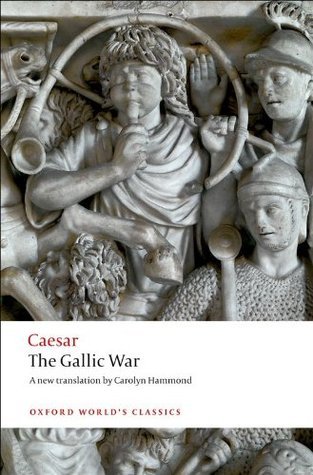
The Gallic War: Seven Commentaries on The Gallic War with an Eighth Commentary by Aulus Hirtius
The Gallic War, published on the eve of the civil war which led to the end of the Roman Republic, is an autobiographical account written by one of the most famous figures of European history. This new translation reflects the purity of Caesar's Latin while preserving the pace and flow of his momentous narrative. As well as an introduction and notes, this edition offers maps, a table of dates, and a glossary.
On one level a straightforward narrative of the campaigns Caesar fought against the Gauls, Germans and Britons, it also serves a deeper political purpose, revealing him as a commander of breathtaking flair, courage and persistence—a man of the people, a man without rival.
This new translation reflects the purity of Caesar's Latin while preserving the pace and flow of his momentous narrative of the conquest of Gaul and the first Roman invasions of Britain and Germany. The introduction includes a survey of Caesar's role and reputation in later thought, while detailed notes, maps, a table of dates, and glossary make this the most useful edition available.
On one level a straightforward narrative of the campaigns Caesar fought against the Gauls, Germans and Britons, it also serves a deeper political purpose, revealing him as a commander of breathtaking flair, courage and persistence—a man of the people, a man without rival.
This new translation reflects the purity of Caesar's Latin while preserving the pace and flow of his momentous narrative of the conquest of Gaul and the first Roman invasions of Britain and Germany. The introduction includes a survey of Caesar's role and reputation in later thought, while detailed notes, maps, a table of dates, and glossary make this the most useful edition available.
321 pages, Kindle Edition
Published November 26, 1998
About the author
Gaius Julius Caesar
2,039 books581 followersborn 12 July 100 BC
died 15 March 44 BC
Statesman and historian Julius Caesar, fully named Gaius Julius Caesar, general, invaded Britain in 55 BC, crushed the army of the politician Gnaeus Pompeius Magnus in 48 BC, pursued other enemies to Egypt, installed Cleopatra as queen in 47 BC, and returned to Rome, and the people in 45 BC gave him a mandate to rule as dictator for life; Gaius Cassius Longinus and Marcus Junius Brutus feared that he intended to establish a monarchy and led a group of republicans, who on 15 March 44 BC murdered him.
Marcus Licinius Crassus joined Caesar and Pompey in the first triumvirate to challenge the power of the senate in 60 BC.
Pompey with Caesar and Crassus formed a ruling triumvirate from 60 BC to 53 BC, but Caesar later defeated Pompey.
Caesar conquered Iberian peoples of Aquitania in 56 BC.
Cassius led members of the conspiracy to assassinate Caesar.
Brutus conspired to assassinate Caesar.
After his assassination, Gaius Octavius, his grandnephew, in 44 BC took the name Gaius Julius Caesar Octavianus, to whom English texts often refer simply as Octavian.
He notably authored Latin prose. He played a critical role in the events to the demise and the rise of the empire.
In 60 BC, Caesar and Marcus Licinius Crassus formed an alliance that dominated for several years. Marcus Porcius Cato the Younger with the frequent support of Marcus Tullius Cicero among the Optimates within the senate opposed their attempts to amass power as Populares.
Victories of Caesar in the Gallic wars, completed before 51 BC, extended territory to the English Channel and the Rhine. Caesar first then built a bridge across the Rhine and crossed the channel.
After the death of Crassus in 53 BC, his rival realigned with the senate, but these achievements granted him unmatched military power and threatened to eclipse the standing. With the Gallic wars concluded, the senate ordered Caesar to step from his military.
Caesar refused the order and instead crossed the Rubicon with the thirteenth legion, left his province, and illegally entered Italy under arms to mark his defiance in 49 BC. Civil war resulted, and victory put Caesar him in an unrivalled position of power and influence.
Julius Caesar assumed control of government and afterward began a program of social reforms, including the creation of the calendar. He centralized the bureaucracy, and proclamation "in perpetuity" eventually gave him additional authority. Nevertheless, people resolved not the underlying conflicts, and on the ides, 15 March 44 BC, rebellious senators assassinated Caesar.
We know much from own accounts of military campaigns of Caesar and from other contemporary sources, mainly the letters and speeches of Cicero and the writings of Gaius Sallustius Crispus. Gaius Suetonius Tranquillus and Mestrius Plutarchus wrote the later biographies, also major sources. Many people consider supreme military greatness of Caesar.
People regarded Caesar during his time of the best orators and prose authors in Latin; even Cicero spoke highly of his rhetoric and style. Only war commentaries of Caesar survived. From other works, other authors quote a few sentences. He wrote his funeral oration for Julia, his paternal aunt, among his lost works. Cicero published praise; in response, he wrote Anticato , a document, to defame Cato. Ancient sources also mention poems of Julius Caesar.
A new series of civil wars broke, and people never restored the constitutional government. Octavian, adopted heir of Gaius Julius Caesar, defeated his opponents in the civil war and afterward rose to sole power as Augustus. Octavian set about solidifying his power, and the era of the empire began.
died 15 March 44 BC
Statesman and historian Julius Caesar, fully named Gaius Julius Caesar, general, invaded Britain in 55 BC, crushed the army of the politician Gnaeus Pompeius Magnus in 48 BC, pursued other enemies to Egypt, installed Cleopatra as queen in 47 BC, and returned to Rome, and the people in 45 BC gave him a mandate to rule as dictator for life; Gaius Cassius Longinus and Marcus Junius Brutus feared that he intended to establish a monarchy and led a group of republicans, who on 15 March 44 BC murdered him.
Marcus Licinius Crassus joined Caesar and Pompey in the first triumvirate to challenge the power of the senate in 60 BC.
Pompey with Caesar and Crassus formed a ruling triumvirate from 60 BC to 53 BC, but Caesar later defeated Pompey.
Caesar conquered Iberian peoples of Aquitania in 56 BC.
Cassius led members of the conspiracy to assassinate Caesar.
Brutus conspired to assassinate Caesar.
After his assassination, Gaius Octavius, his grandnephew, in 44 BC took the name Gaius Julius Caesar Octavianus, to whom English texts often refer simply as Octavian.
He notably authored Latin prose. He played a critical role in the events to the demise and the rise of the empire.
In 60 BC, Caesar and Marcus Licinius Crassus formed an alliance that dominated for several years. Marcus Porcius Cato the Younger with the frequent support of Marcus Tullius Cicero among the Optimates within the senate opposed their attempts to amass power as Populares.
Victories of Caesar in the Gallic wars, completed before 51 BC, extended territory to the English Channel and the Rhine. Caesar first then built a bridge across the Rhine and crossed the channel.
After the death of Crassus in 53 BC, his rival realigned with the senate, but these achievements granted him unmatched military power and threatened to eclipse the standing. With the Gallic wars concluded, the senate ordered Caesar to step from his military.
Caesar refused the order and instead crossed the Rubicon with the thirteenth legion, left his province, and illegally entered Italy under arms to mark his defiance in 49 BC. Civil war resulted, and victory put Caesar him in an unrivalled position of power and influence.
Julius Caesar assumed control of government and afterward began a program of social reforms, including the creation of the calendar. He centralized the bureaucracy, and proclamation "in perpetuity" eventually gave him additional authority. Nevertheless, people resolved not the underlying conflicts, and on the ides, 15 March 44 BC, rebellious senators assassinated Caesar.
We know much from own accounts of military campaigns of Caesar and from other contemporary sources, mainly the letters and speeches of Cicero and the writings of Gaius Sallustius Crispus. Gaius Suetonius Tranquillus and Mestrius Plutarchus wrote the later biographies, also major sources. Many people consider supreme military greatness of Caesar.
People regarded Caesar during his time of the best orators and prose authors in Latin; even Cicero spoke highly of his rhetoric and style. Only war commentaries of Caesar survived. From other works, other authors quote a few sentences. He wrote his funeral oration for Julia, his paternal aunt, among his lost works. Cicero published praise; in response, he wrote Anticato , a document, to defame Cato. Ancient sources also mention poems of Julius Caesar.
A new series of civil wars broke, and people never restored the constitutional government. Octavian, adopted heir of Gaius Julius Caesar, defeated his opponents in the civil war and afterward rose to sole power as Augustus. Octavian set about solidifying his power, and the era of the empire began.
Ratings & Reviews
Friends & Following
Create a free account to discover what your friends think of this book!
Community Reviews
Displaying 1 - 16 of 16 reviews

July 10, 2019
The diary of a raving warmonger.
Though make no mistake, I appreciate this book for the insights it gives putting things into perspective.
Caesar throughout the book fashions himself in an overly positive light and showers himself with never ending victories and an over-eager army to suffer hardship for him, but makes excuses for the few military failures in between or writing off the blame to his officers, but never his men (who do the fighting). Such a thing pointed out in explanatory notes, was common during antiquity, at least among the Romans to be lacking in self-criticism.. Otherwise it simply spelled failure and loss of gravitas, prestige in the public eye. Which brings the issue with how these flights of fancy made Caesar commit the worst of atrocities, such as enslaving whole towns, or slaughtering towns without sparing women or child, it is mentioned in select places albeit bluntly and shortly, which gives us a hint into what kind of war took place.
Just by a quick read on wiki we can see the number estimates of historians on the war casualties;"As many as a million people (probably 1 in 5 of the Gauls) died, another million were enslaved,[22] 300 clans were subjugated and 800 cities were destroyed during the Gallic Wars.[23] The entire population of the city of Avaricum (Bourges) (40,000 in all) were slaughtered.[24] Before Julius Caesar's campaign against the Helvetii (present-day Switzerland), the Helvetians had numbered 263,000, but afterwards only 100,000 remained, most of whom Caesar took as slaves.[25]"
By ancient standards these are large numbers. As a consequence of Caesar's gallivant Gaul was depopulated and colonized by Romans for Romanization, all the while millions of Celts (Gauls) were imported to Rome and beyond to work in farms, brothels and other unpleasant manual labors, due to how Romans considered barbarians uneducated and uncouth, the Greeks had it easy.
Of course all this had made Caesar incredibly rich, rich enough to wage civil wars in his own name and bribe the masses, the elite and his army at the same time. Throughout the books Caesar focuses on his clemency towards the Gauls by not putting every tribe or town that surrenders to the sword or slavery, though most often by necessity than actual leniency.
Those that resisted such as Atuatuci the entire town was enslaved after siege due to feign of surrender by them. The Eburones who hid in the marshes and woods, were enslaved and slaughtered when Caesar called for a "hunt" all Gauls and Germans for easy booty, thus preserving the safety of his Romans. In his campaign to subdue the nearby German migratory tribes he resorted to treachery, captured the envoys/diplomats broke the truce with them and hunted down the men, women and children in their camps, many were slaughtered while Caesar's troops were left unscathed as per usual. When Romans did sustain a few casualties or a pro-longed siege, they would put the entire town to sword not caring for profit or booty only vengeance as was the case with the destruction of Avaricum where 40,000 civilians were killed. On the siege of Alessia, when the Mandubii were expelled from their own town by Vercigentorix army due to lack of food, they flocked to Caesar for shelter or passage, however Caesar gives no mention to their fate. Cassius Dio tells us that Caesar forcefully sent them back to increase pressure on the town, but instead the Mandubii died wretchedly of starvation and thirst before the town gates.
Many towns and villages were burnt down due to Gauls such as Vercingetorix pursuing the scorched earth policy, but how much of this is propaganda I am uncertain as Romans did the same to Gauls whom they could not defeat in pitched battles.
Some interesting historical perspective is put into the final commentary on Vercigentorix and the Great revolt. In many critical moments of the battle, Caesar heavily relied on Germanic cavalry to rout the much more numerous Gauls. This perhaps put much emphasis on why later Roman Emperors relied on Germanic bodyguards, not only for their impartiality on Roman politics but fierceness and bravery.
In the final, eight book by Aulus Hirtius, we get a short, but a bit less embellished picture of Caesar and the Gallic war. For example after the Uxellodunum town surrendered, he fearing that his clemency be taken for granted, cut off the hands of the entire people who had taken arms against him.
Caesar was undoubtedly a talented military commander, orator, and a propagandist. This book is invaluable for those wanting to witness Roman military operations up close.
Though make no mistake, I appreciate this book for the insights it gives putting things into perspective.
Caesar throughout the book fashions himself in an overly positive light and showers himself with never ending victories and an over-eager army to suffer hardship for him, but makes excuses for the few military failures in between or writing off the blame to his officers, but never his men (who do the fighting). Such a thing pointed out in explanatory notes, was common during antiquity, at least among the Romans to be lacking in self-criticism.. Otherwise it simply spelled failure and loss of gravitas, prestige in the public eye. Which brings the issue with how these flights of fancy made Caesar commit the worst of atrocities, such as enslaving whole towns, or slaughtering towns without sparing women or child, it is mentioned in select places albeit bluntly and shortly, which gives us a hint into what kind of war took place.
Just by a quick read on wiki we can see the number estimates of historians on the war casualties;"As many as a million people (probably 1 in 5 of the Gauls) died, another million were enslaved,[22] 300 clans were subjugated and 800 cities were destroyed during the Gallic Wars.[23] The entire population of the city of Avaricum (Bourges) (40,000 in all) were slaughtered.[24] Before Julius Caesar's campaign against the Helvetii (present-day Switzerland), the Helvetians had numbered 263,000, but afterwards only 100,000 remained, most of whom Caesar took as slaves.[25]"
By ancient standards these are large numbers. As a consequence of Caesar's gallivant Gaul was depopulated and colonized by Romans for Romanization, all the while millions of Celts (Gauls) were imported to Rome and beyond to work in farms, brothels and other unpleasant manual labors, due to how Romans considered barbarians uneducated and uncouth, the Greeks had it easy.
Of course all this had made Caesar incredibly rich, rich enough to wage civil wars in his own name and bribe the masses, the elite and his army at the same time. Throughout the books Caesar focuses on his clemency towards the Gauls by not putting every tribe or town that surrenders to the sword or slavery, though most often by necessity than actual leniency.
Those that resisted such as Atuatuci the entire town was enslaved after siege due to feign of surrender by them. The Eburones who hid in the marshes and woods, were enslaved and slaughtered when Caesar called for a "hunt" all Gauls and Germans for easy booty, thus preserving the safety of his Romans. In his campaign to subdue the nearby German migratory tribes he resorted to treachery, captured the envoys/diplomats broke the truce with them and hunted down the men, women and children in their camps, many were slaughtered while Caesar's troops were left unscathed as per usual. When Romans did sustain a few casualties or a pro-longed siege, they would put the entire town to sword not caring for profit or booty only vengeance as was the case with the destruction of Avaricum where 40,000 civilians were killed. On the siege of Alessia, when the Mandubii were expelled from their own town by Vercigentorix army due to lack of food, they flocked to Caesar for shelter or passage, however Caesar gives no mention to their fate. Cassius Dio tells us that Caesar forcefully sent them back to increase pressure on the town, but instead the Mandubii died wretchedly of starvation and thirst before the town gates.
Many towns and villages were burnt down due to Gauls such as Vercingetorix pursuing the scorched earth policy, but how much of this is propaganda I am uncertain as Romans did the same to Gauls whom they could not defeat in pitched battles.
Some interesting historical perspective is put into the final commentary on Vercigentorix and the Great revolt. In many critical moments of the battle, Caesar heavily relied on Germanic cavalry to rout the much more numerous Gauls. This perhaps put much emphasis on why later Roman Emperors relied on Germanic bodyguards, not only for their impartiality on Roman politics but fierceness and bravery.
In the final, eight book by Aulus Hirtius, we get a short, but a bit less embellished picture of Caesar and the Gallic war. For example after the Uxellodunum town surrendered, he fearing that his clemency be taken for granted, cut off the hands of the entire people who had taken arms against him.
Caesar was undoubtedly a talented military commander, orator, and a propagandist. This book is invaluable for those wanting to witness Roman military operations up close.
September 21, 2024
A very interesting delve into Julius Caesar and his thought process. Stinks of self embellishment much of the time, including many of his personal anecdotes, but at the same time, many of them depict heroic events and moments which encapsulate what the Classical Romans saw as valorous. Almost all, for example, were militaristic actions. (Charging superior forces, fighting elephants, holding the line against overwhelming force, etc)
It is interesting to see several of his “quotes” or quotes which were input later on whilst Julius was writing. As, whilst they may not represent his thoughts at the exact moment, they show the man’s thoughts in retrospect, and that is almost just as important.
Finally, the expeditions into Germany and over to Britain are incredibly interesting, and show a strange side of the world which is only visible through julius Caesar’s text. Much of how the Germanic peoples and the Britons lived is played out in, limited but, interestingly sections of the book,
It is interesting to see several of his “quotes” or quotes which were input later on whilst Julius was writing. As, whilst they may not represent his thoughts at the exact moment, they show the man’s thoughts in retrospect, and that is almost just as important.
Finally, the expeditions into Germany and over to Britain are incredibly interesting, and show a strange side of the world which is only visible through julius Caesar’s text. Much of how the Germanic peoples and the Britons lived is played out in, limited but, interestingly sections of the book,

Read
November 29, 2022Almost died in the process

December 19, 2015
Right, so I actually own the 1891 version, simply titled "Caesar's Gallic War" - it is one of the oldest books in my collection, and I have slept near it for five years. It was my uncle's before me, and before him, my great-grandfather's. My copy has penciled-in notes on conjugations and the like, and I read through as much of it as I dared without getting lost in the Latin or damaging the book back in February 2012, for at the time my French class was covering the Gaulois. Excited to see that a version of this that I can tote with me and read exists!

Read
June 25, 2011I was torn between this book and Civil War, also by Julius Caesar. Since I'm already very familiar with the feud between Julius Caesar and Pompey I choose this book. I'd like to expand my knowledge on other campaigns.
November 3, 2015
The Relevance of Caesar
We may learn much about ourselves by studying Caesar; in particular the need to choose our leaders wisely. There are many parallels between Rome and the USA ... all of which suggest we are incapable of learning from actual history.
We may learn much about ourselves by studying Caesar; in particular the need to choose our leaders wisely. There are many parallels between Rome and the USA ... all of which suggest we are incapable of learning from actual history.

January 22, 2026
È assolutamente incredibile avere la possibilità di leggere un testo scritto da Giulio Cesare più di 2000 anni fa. Più avanzavo nella lettura e più faticavo a crederci.
È stato come essere trasportati direttamente in Gallia, al fianco di quei soldati.
L'opera va oltre quello che è la semplice descrizione dei combattimenti. È presente anche una componente che precede i lavori di etnografia, con descrizioni su quelli che erano i costumi, i modi e i pensieri di una popolazione "altra".
Un libro da leggere assolutamente almeno una volta nella vita.
È stato come essere trasportati direttamente in Gallia, al fianco di quei soldati.
L'opera va oltre quello che è la semplice descrizione dei combattimenti. È presente anche una componente che precede i lavori di etnografia, con descrizioni su quelli che erano i costumi, i modi e i pensieri di una popolazione "altra".
Un libro da leggere assolutamente almeno una volta nella vita.

March 17, 2023
Da ist aber jemand überzeugt von sich selbst

June 15, 2023
Caesar is a genius; both as a general and as writer. Also, this book gives a fascinating peep into the very old and lost culture of the pre-Roman Gallic peoples.

January 11, 2025
If you think about it this is a how-to book.

November 5, 2025
probably just the unengaging translation I read but wow war sounds really boring
February 5, 2020
It's remarkable to be able to read Julius Caesar's own account of the Gallic Wars. There's something very satisfying about reading of the first Roman Invasions of Britain in this work, knowing that this is at least in part the source of our knowledge on the matter. The same to read of druids, the Gauls and Vercingetorix.
The Gallic War is also breathtaking for other reasons. There is a strange juxtaposition from assisting friends of Rome in the first commentary to total pacification of all Gaul by the last. At one point 53,000 people are sold into slavery in one go as a punishment - it happens quite a lot, but when you see it in numbers it hits hard. In one town anyone who fought Caesar loses both their hands. It's a brutal, different time.
The translation in this edition is good, making for a pain-free read (older translations might be free, but they're nearly always harder!) Translation aside, the subject matter can be dry at times even as you peek into this entirely different world.
The Gallic War is also breathtaking for other reasons. There is a strange juxtaposition from assisting friends of Rome in the first commentary to total pacification of all Gaul by the last. At one point 53,000 people are sold into slavery in one go as a punishment - it happens quite a lot, but when you see it in numbers it hits hard. In one town anyone who fought Caesar loses both their hands. It's a brutal, different time.
The translation in this edition is good, making for a pain-free read (older translations might be free, but they're nearly always harder!) Translation aside, the subject matter can be dry at times even as you peek into this entirely different world.

February 8, 2019
I picked up this translation (a small, typical 19th century book) at a library sale. I hadn't read the Commentaries since High School Latin, and never had read them in English. I really enjoyed it. The translation is very literal, not idiomatic, but it is much easier to follow the flow of the story in English than I remember as I worked chapter-to-chapter in High School. I did enjoy the footnotes, which either gave context from Roman history for Caeser's paragraphs or allusions or, even more entertaining, discussed the reason for translations that were less than purely academically literal. Honestly, it was fun for memories but also for content. I think I can see how this was widely read (among the elite) in the Rome of its time.

October 9, 2017
I read Caesar as part of third-year Latin way (way!) back in high school, but at the time I was reading strictly to get through the class and not for content. So I really appreciated this very accessible modern translation of his classic work. Heavy on unfamiliar tribe and personal names, but not hard to follow.
A recommended read!
A recommended read!
July 14, 2021
Informative. A map would have been nice.

March 11, 2022
Old beat up copy. Great read
Good reference to revisit his adversaries and their territories.
Can't remember it all
Good reference to revisit his adversaries and their territories.
Can't remember it all
Displaying 1 - 16 of 16 reviews