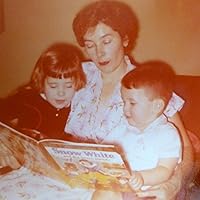
Traumatised by the loss of half her family in Auschwitz, a Hungarian returns to Budapest to retrace her roots. She discovers a dramatic personal history that enables her eventually to shed the burden of her past and move forward to a new life.
This is a true story of human beings caught up in the maelstrom of 20th century history – the Nazis, genocide, Cold War, dictatorship, and the struggle to make new lives after the fall of Communism.
Told with great sympathy and warmth, this well researched book brings history to life by recounting the experiences of ordinary men and women confronted with daunting challenges.
Marcus Ferrar was a journalist with Reuters for 18 years. In 1971/72 during the Cold War he was the only western correspondent in East Berlin. He subsequently lived in Prague and over three years covered all of Eastern Europe. He then reported the Portuguese revolution and served in the management of Reuters.
Now a writer and an award-winning communication consultant living in Oxford, he specializes in writing about WWII, Communism, Germany, and Eastern Europe, with special emphasis on peoples who have difficult historical heritages. He has an English father and a German mother. He is a fluent in German, French and Italian.
Together with John Corsellis, he wrote Slovenia 1945, which was published in English, Slovene and Italian. It recounted the flight of Slovene Catholics after World War II, the British Army’s repatriation of 12,000 soldiers among them to ex-Yugoslavia, their slaughter by Communist Partisans, and the scattering of the civilian survivors around the world. In Slovenia, this book was a best-seller. In Britain it occasioned questions in Parliament and an expression of regret by a Foreign Office minister.
In Oxford, he is Chairman of the Friends of Summertown Library.
First the reader must decide what sort of book The Budapest House is. Superficially it’s a biography and, despite the author’s protest, a bit of a hagiography, but it is also a history and a memoir. It engaged me as a student of history, twice a visitor to Budapest, and one the same age as Frances Pinter.
It’s written as a history, and a rather clunky one at that. It delves into the back story of a Hungarian Jewess who feels neither Hungarian nor Jewish, but guilty for the lack. Its 146 footnotes document interviews and references which often have little to do with the story, other than perhaps to brag about the research done.
As a history, it is somewhat revisionist. Ferrar admits to sharing Pinter's’ left-liberal viewpoint, but rewrites history as he tells it. For example, “voters elected governments which spent on social benefits rather than imposing the austerity blamed for the 1930s Depression.” At first reading that sentence looks like balanced reporting, then you realize no one who knows better blames austerity for the Great Depression. But that depends on one's point of view and often politics. Similarly, Ferrar portrays money manipulator George Soros as a white knight to eastern Europe, bragging he conducted his own foreign policy the tune of a billion dollars a year. So the reader is left with a biased and potentially unreliable narrator, raising questions about the integrity of the balance of the text.
Politics aside, Pinter’s personal history includes the harrowing Holocaust experiences of her family, her daring self-determination, and her individual campaign (with Soros’ financing) to bring books and a free press to much of eastern Europe while most people sat waiting for someone else to act.
Interesting book, it solved some of the doubts that I had after a visit to Budapest regarding the evolution of cotidianity among Hungarians in this city through their difficult historical transitions. However, it portrays "the West" as the good, the correct, the organized and perfectly rational place. This dichotomic bias makes the narrator to be perceived as arrogant and elitist, fron my point of view. Also the story around the actual Budapest house feels a bit too forced. Although it is interesting, it is easily forgotten and seems out of place when it randomly pops up again in different chapters.
Read 8/22-8/27, ebook, non fiction memoir, 2014 read your freebies
This is a first person account of a personal and collective history of Frances Pinter whose family fled the horror and destruction of Eastern Europe during the last century. It is also a history of the Maygar ( Hungarian) people and how they have coped either by embracing or disowning their past and their politics. Yes, it is personal. Yes, it is hindsight and refective/reflexive, but in a world where few first person accounts of this type of trama still exist, it is an important work. It also helped both Pinter and Farrar come to grips and learn to thrive with their personal baggage, beliefs and ideals colored with their family memories, dismays, horrors and triumphs.
Frances Pinters's grandparents were an upper class Jewish family who survived the ebb and flow of life in pre war Hungary after the first goverment overthrow in the late 1800s. Prosperous merchant Imre Hirschenhauser bought into property in Budapest in 1937, much to his wife Lili's chagrin. Despite their eventual collapse after which they emmigrated to the US, Imre kept his stake in Budapest House, and in doing so kept his history and hopes alive.
Frances knew of the property, but had no idea what doors it might open as she sets out to find her past after she finds out the Jewish "secret" in her family past. Even within the Hungarian Jewish community, there was great division and anamosity. Those who became " Maygar" and fit in seamlessly vs. those who kept to their "own". Jewish children were baptized Christian (read Catholic). Others names were adapted to sound more Hungarian. Farrar even tell that a bishop in the RC Church was found to have been born Jewish. It might have divided families, but it kept them from being slaughtered.
This book collaboration happened serendipitously when Reuters reporter met publisher Pinter and they decided to explore the rebuilding of Hungary post World Wars and now within the EU. Frances' family history is explored in great detail. First person edification of trauma and triumph color very dry historical data. However, Frances' own struggles with the politics that have developed is a good balance: here is the situation, here is the historical context, resulting in whether or not it can happen now.
This journey is extrodinary, and proves that someone can move beyond the story and embrace truth. Well worth reading
The Budapest House was interesting on two levels. One, was the personal story of Frances Pinter who while born in Hungary, was raised in New York and California and received her higher education in London. But the other was the Hungarian mind set. In a chapter entitled Lost Track the author quotes Gabor Heller, a television consultant who emigrated to New York from Hungary in 1980 as saying : "Being born in Hungary is like a wound you carry with you from birth." Strong words indeed. But the author backs up these words with a discussion of how being on the loosing side of both Word Wars, actually helping the Germans exterminate Hungarian Jews, and then suffering decades of oppression under Communist Soviet rule has given The Hungarian people a very negative outlook on life. Thankfully, many have overcome this. Billionaire businessman and philanthropist George Soros is one of them. Frances Pinter started her own printing business in London at the tender age of 23 but it was George Soros who started an organization with, Frances Pinter as the head, in order to once again supply textbooks to the schools devastated by The Bosnian War. Despite all she accomplished, Frances was still troubled by her Hungarian heritage and the book serves as an interesting discussion on how she finally came to terms with it.
The Budapest House is an extremely interesting read about the life and fate of the Hungarian Jews before and during WWII and the Cold War that followed. The story is primarily the story of Frances' family. She is a teen before she realizes that she is Jewish. It is her journey to Budapest to attempt to discover who she is and her family's history.
No matter how old I get, it never ceases to amaze me the utter cruelty of humankind. We hear about the suffering of the Jews in France, Germany and Poland but little about the life of Jews in some of the other European countries. Hungarian Jews suffered not only from the Germans but the Russians. Such a strong effort during WWII to destroy an entire race of people. Yet, as throughout history, the Jewish people persevere and survive.
Presents the reader with another view of the atrocities inflicted on the Jewish people.
This is a hard one for me to continue with. It is a bit boring. I understand it is Hungary and the Nazi era but I just can't go on. Maybe another time it will click with my head.
I was very disappointed in this book. The subject matter is fascinating to me, but it could have been written so much better than it was.
First of all, I kept feeling that the author was talking down to us, like we were in middle school. Second, it was not told in anything approaching a linear fashion! We would start in one year, skip ahead to another year, then tumble way back to the past, then go back to the future, and finally head back to the year in which we started the chapter-all in the same chapter, every chapter! That made it very hard to keep track of what was happening and when it was happening.
I also understand that Frances did not care for her mother, however calling her "The mother" was (imo) extremely insulting. Everyone else was "Frances' father", or "her grandparents" but that same respect wasn't always paid to her mother.
I was also bothered by all of the unnecessary name dropping. Case in point: Frances meets Bill Clinton, talks to him for awhile, then announces that he will not only run for president, but that he will become president one day! She then promptly forgets all about him and never thinks of him again until she sees him on tv, during his presidential run and all of a sudden it's (once she heard his name from the newscaster because she'd forgotten it) "my friend, Bill!" I'm sorry, but someone you met once and never thought of, and you couldn't even remember his name until you saw it on the news? That is not your friend. That is someone you met once.
It could have been such a good book, but sadly it didn't live up to my expectations.
From pre-WW2 Hungary to the post-collapse of the Berlin Wall, Marcus Ferrar takes the reader on an illuminating journey through the recent history of the European continent, as reflected in the personal story of Frances Pinter. Pinter, who 'is British and feels at home in Britain', has come to terms with her family history through the journey described in this wonderful book. Born in 1949, she discovered at the age of 13 that she was a Jew. A journey of human courage, heritage and triumph, The Budapest House is a must-read for anyone who lives in Europe today - it simply brings history alive with light touch and confident story-telling.
The Budapest House is one of the most thought-provoking, unsentimental and clear narratives I've read about family discovery set against the backdrop of Europe in its most turbulent times. As the grand-daughter of a holocaust survivor, I appreciate the courage it took Mrs. Pinter to share this personal story and family history with Ferrar - a former reuters correspondent - and she found the right person to tell her tale, which is also the story of Hungarian Jews and of a life long gone.
Frances Pinter was born in Hungary of Jewish parents in 1949. She was never told she was Jewish, though. Her parents & grandparents had such horrible memories of WWII, they thought she would be better off not knowing. After all, they had moved to the United States for a fresh start for the family. Instead, Frances felt like a person without a heritage, a history, a connection to others. The Budapest House, which her grandparents owned through WWII and the Communist Era, beckoned to her.
Frances went on a quest to find her heritage. She moved to Budapest for a while and even lived in the Budapest House. However, she never felt truly Hungarian and that bothered her.
Frances became instrumental in bringing free market publishing to Hungary partnering with the billionaire George Soros.
Through following Frances's journey, the recent history of Hungary is examined from pre-War through Communism. There are so many things I did not know. If I get to follow with my plans to visit Hungary in 2015, this book will have given me a little insight into the country.
While I found the content interesting, I found the the author's style of writing down-right annoying. I did learn a lot about Budapest I did not know and didn't know when I was there in t983. I wish I had known some of what the author described so I could have been more observant, but I was only on a day trip, and we didn't get much time to roam by ourselves. But, it was in Budapest I learned an international phrase upon stopping in what appeared to be a bar/cafe that was full of people getting off work: Coca Cola. I also would have paid more attention to the architecture of the city. I did notice scars from various wars and felt a kind of melancholy among the people. The one neat thing I know now is that I was in the English language bookstore mentioned in the book. On another plane it was interesting to learn how Jewish families one or two generations away from the Holocaust were affected by its atrocities.
This book was free when I downloaded it to my Nook library from Barnes and Noble. I was disappointed in the structure of this book because it confused me when it told more stories than those of Frances and her family. It contains stories from the writer, from George Soros, and from other people, and when it tells those stories I was confused by that person using familiar terms: whose Grandfather without using the name of that individual. Why does this story not end when she sells the Budapest House. Scholars may find this book useful, in their search for details about these periods of history in Hungary; but it is not for a reader looking to be entertained.
It is hard to decide exactly what this book is, and the symbol of the titular house was unsatisfying and incomplete, but I'm still rating it generously because I found the story compelling, the differences between attitudes in western and eastern Europe interesting, and the quest for a descendant of people who survived (mostly) the turmoil of a troubled country fascinating. It's not a perfect book, but it kept me interested and engaged, and it made me think about people I know with similar backgrounds and how their history has affected them.
It annoys me when I can't finish a book because it is so poorly written, but I had to cut my losses about halfway through this one. I had downloaded it as a "Free Friday" Nook book from Barnes and Noble, and started reading it when I was on a plane with nothing else to read. In the hands of a better author, this could have been a great story, but unfortunately, it's a disjointed mess full of disruptive footnotes.
Well crap. I was really looking forward to reading this. But 40-some pages in, I'm giving up.
The story has potential - the story of Hungary after the first world war and beyond, and the story of one family. I know I would enjoy reading this story if it were written by someone else. But the author's style is just so painful for me to read, I'm moving on to something else. I realize that others may enjoy the way he tells the story, but it's just working for me.
I'm giving The Budapest House 2.5 stars. It was more than okay but I didn't like all of it.
The e-book was free from Barnes & Noble and I thought it was the story of Frances and her family, but it wandered off at many points, leaving me slightly bored and so I skimmed a lot of pages.
I found the parts about Frances, her family and various other Hungarians very compelling.
I learned a lot about what the relationships are between Hungry and the rest of the eastern European nations as well as what it was like to live through WWII and the communist times, whether you were Jewish or not. This book did a good job of describing personal stories from those times and relating them to today with our world economic troubles.
There was a lot of potential for this book to work perfectly. However, it was a jumbled mess of words that I believe was supposed to be a history lesson. Due to the author constantly jumping around(halfway through a paragraph he was talking about something else) it was difficult to establish a timeline for the events taking place. This story was just very disappointing.
I liked this book. The author uses Frances Pinter's experiences both in and out of Hungary to explore how Eastern Europe is dealing with the lasting impact of World War II's antisemitism and the cultural and economic stagnation resulting from Communism. It's worth reading if you have any interest in the after affects of WWII and Communism.
I did not find this book to be particularly well written. The pacing was odd and time line jumped all over the place. However, I was entirely caught up in the very real drama of these people, made all the more captivating by the fact that I was reading this while traveling in Budapest and other eastern European cities.
Contains great insights into the Hungarian experience over the past 100 years, but the writing is difficult to follow at times with chronology jumping around and the author's own experience intertwined with his subject's experience and that of others as well. Still, helped me understand the country of my forebears better and perhaps even understand myself better.
I liked it but it really is more of a history of modern Hungary told with a lot of personal stories rather than a book with a plot.
If you are interested in Hungarian History you might like the book, but if you are interested in a book with a story this book will be a disappointment.