This is the first book about the theatre career of Fred and Adele Astaire, detailing their years in vaudeville, on Broadway, and in London, their impact culturally, and the essence of their partnership on and off the stage.
Most of us probably think Fred Astaire simply came into the world dancing. That innate sense of elegance and rhythm which set him apart from the rest was earned the hard way, as a small child who accompanied his older sister, Adele, in vaudeville routines. It was Adele Astaire who was the star of the family and if it hadn't been for her retirement in order to marry English aristocracy, Fred Astaire may have never been a screen legend.
The Astaires revolutionized musical theatre. The vaudeville sketch focus rolled into flashy set pieces which then became Fred and Adele maintaining a full book of song and story from start to finish. Adele was not the better dancer, but she had the ebullient personality which made her famous in London and New York. Little brother Fred was more concerned with dance and came into his own when the act matured. Gershwin and the Astaires were made for each other, filling that gap of post-WWI shell-shocked Europe with American enthusiasm and energy. Adele retired from performing when she married Lord Charles Cavendish in 1932. Without his sister, Fred Astaire became Fred Astaire, and forged his future in sunny Hollywood.
The author takes a very these-are-the-facts approach to the siblings from birth to death. It was very illuminating as there are NO existing visual recordings of Fred and Adele performing, which is a shame. The aim of the book appears to be explaining just how charismatic Adele was and how she was the big star, not baby brother. Certainly a different biography, and of course, I went running to YouTube for some Astairia.
Adele did not have the happiest of lives, though it didn't seem to diminish her zest for life. Her husband died young from the effects of alcoholism and her children didn't survive long. During WWII, she went to London to help, while her mother cared for Cavendish in the lonely Irish castle, where he died a lonely death (none of his Devonshire family came to his funeral). Such are the facts that were interesting to learn and kept me absorbed in the book.
F. Scott Fitzgerald defined a particular American quality as a "willingness of the heart". Perhaps this best describes Fred and Adele Astaire and the impact they brought to music.
An exceptional book but not for lightweights. This is a book of learning and research beautifully written for most part in homage to the great Astaires. Academic, but good read.
The father was older and a confirmed drinker, the mother was only 15 at the time of her marriage, it should have been a receipe for disaster but both loved the Arts and were determined that their children, Adele and Fred, were going to make it!! Fred and Adele were performing from early childhood and usually the best act on the bill. Kathleen Riley weaves a terrific story - theirs was no overnight success, all through the 19teens they slogged away on the vaudeville circuit from tank towns, to the dreaded first act on the bill!! From the start it was Adele's pep and personality that were noticed, they were the opposite in temperament - Adele took after her father, Fred was calm and measured, a perfectionist that in his later Hollywood years tried people's patience. They were also devoted to each other. Their dancing and modernity (Adele often spoke to the audience) took the 1920s by storm and one hit followed another - "Stop Flirting", "Lady Be Good", "Funny Face" - they were the golden pair, until "Smiles" when they found themselves in a chaotic production where everything was done to please a pampered Marilyn Miller who even ordered the best number "Time On My Hands" axed from the show which only rang 63 performances. Another myth to bite the dust - that Fred didn't think he could go on without Adele. He was very confident of his performance in "The Gay Divorce" it was just his mother, Adele and the critics who didn't share his enthusiasm. Once again it took a London crowd to see the show for the great one it was. The book ends with Fred's entering both movies and matrimony, something that his mother and Adele couldn't reconcile themselves to.
Fred Astaire is permanently recorded in our collective consciousness only because his electrifying dance routines were cinematically preserved. Delving just a little below that celluloid image immediately reveals a biographical surprise: before Astaire and Rogers there was Astaire and Astaire – Fred and his sister Adele -- a pair who rose together through the ranks of American vaudeville to become mega-stars on both sides of the Atlantic during the 1920’s and 1930’s. The study of Fred and Adele Astaire is an important in the history of pop culture, not only because it helps us understand Fred, the film star, but also because the team of Astaire and Astaire was an absolute phenomenon in its day.
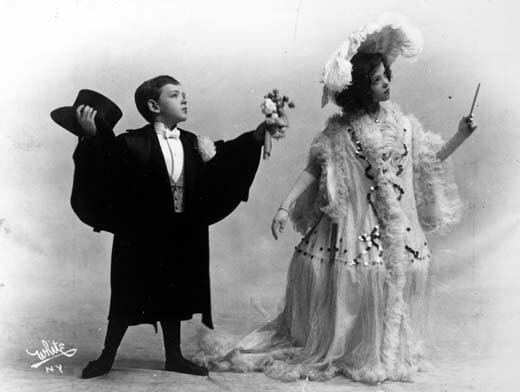
Not one moment of their wildly successful partnership was preserved on film and here is the irony of Astaire and Astaire: a complete biography of Fred must include mention of Adele – generally considered to be the more naturally talented of the two siblings -- and yet when considering this duo, there is nothing visual for us to grasp hold of: all that remains of the partnership are a few publicity shots and what can be imagined from the written testimony of those who witnessed them in action.
Kathleen Riley has combined reams of this testimony (not to mention publicity stills) with all the biographical facts at her disposal to write the first – aside from one children’s book -- dual history of the siblings who were born Adele and Fred Austerlitz. Her narrative traces their Midwestern origins all the way to the end of their lives, painting a detailed picture of everything in between: their youthful days in vaudeville, their Broadway stardom, their conquest of London society, and their professional split, revealing how each sibling was affected by the other at every juncture (the inclusion of transcripted later interviews of both siblings is wonderfully illuminating on this score).
When Riley sticks to narration, the story of the Astaire siblings is told in a lovely, thorough, and relatively clear manner but when she steps forward and attempts to elucidate, she utilizes a puzzling style, quoting entire poems in a highly non-sequitur fashion and utilizing phrases such as:
“a complex ethos exposed with elegiac lyricism” “the elegant apotheosis of Jewish cosmopolitanism” “the ‘tinpantithesis’ of Aeolian Hall” “the anarchic coexistence, in one, sweetly brazen figure, of a seeming mass of bewitching, opalescent contradictions” “Terpsichorean”
Well, perhaps that last one can be forgiven since Fred speaks the word himself – tongue in cheek, of course – in the film “The Gay Divorcee” but "The Astaires" contains entire paragraphs – nay, pages – that could be easily excised without interrupting the biography’s narrative flow, the only remotely negative result being that Riley would have lost an opportunity to exhibit her education (she refers to herself as a classics scholar in the book's introduction and on the back cover which apparently explains everything . . . and nothing). While the book was published by a university press, arguably giving Riley an automatic green light for her questionable style, a compelling argument for something a bit less elaborate for this particular subject is that Fred Astaire is universally loved, hence his biography belongs to the world, not only to those who believe poetry can be used to explain anything and who enjoy communicating with densely ornamental language.
However, when Riley lets the facts – especially contemporary testimony – speak without interruption, one can almost catch a glimpse of the magic that was once this pair of brilliantly talented siblings and for that reason, "The Astaires" is an important addition to the canon of pop culture history.
(Actually 3 1/2 stars).....I've wanted to read a biography of Adele Astaire ever since I read Debo Mitford's memoir in which she describes how her in-laws(the Duke & Duchess of Devonshire) first met Adele. Adele was engaged to Debo's uncle by marriage - Lord Charles - but had not met any of his family since the dating/engagement took place in NYC where Charles was an investment banker & Adele a Broadway star. Once engaged, Charles sailed back first to England, to prepare for the wedding. Adele followed a few months later and arrived alone to the great family estate of Chatsworth.
"The family was all gathered in the library standing like stone pillars in front of the fireplace waiting for Adele to be announced. When she was introduced, the heavy doors at the far end of the library opened and there stood this tiny girl, beautifully dressed. We waited for her to approach but instead of walking towards us, she suddenly began turning cartwheels and ended up in front of us."
HA! I LOVE IT! What an entrance! I've read a fair amount of books set in that period and rather frequently Adele is mentioned in passing. Apparently everyone loved her. When JM Barrie met Adele, he insisted that she play Peter Pan in the play set to open in the West End. He said she'd be a perfect Pan. Sadly she could not get out of her contract with another producer. PJ Wodehouse also wanted her to star in a play of his. Prince George (Queen Elizabeth's uncle) was obsessed with Adele for years. George Bernard Shaw was another big fan of hers. The top critics in America and Europe raved over Adele, writing gushing reviews about her. Now Adele is barely known, a footnote in the history of theater, but prior to her retirement in the early 1930's she was a famous star and everyone knew her.
The hardest part for the author of this book is having to try to impart just how brilliant and adored Adele was. There is no record of her dancing - she was never filmed. It's Fred that, thanks to the movies, has been remembered as a world renowned dancer. There are only so many rhapsodic reviews one can quote in an attempt to portray the brilliance of a performance.
I wish the book had given more details about Adele's life after retirement, but of course, that is not the focus of the book - the partnership between the siblings is. Even after leaving the stage, Adele had a fascinating life. Her marriage ended up being rather tragic - giving birth to three children who all died within days of birth. Her husband's severe alcoholism had him in and out of hospitals and sanitariums, culminating in his early death at the age of 38. Her work in London during WWII. Her second marriage to Kingman Douglass, one of the founders of the OSS and later the assistant director at the CIA. She remained friends with many in the entertainment business.
What the book did provide was an in-depth look at American theater from the turn of the century through the 1920's. I'm a fan of the theater and especially musicals, but I don't know much about it's history. I enjoyed learning about the transition from Vaudeville and reviews such as Ziegfield's Follies into more of what is considered modern theater.
If you thought Fred Astaire's ultimate dance partner was Ginger Rogers, Kathleen Riley's book "The Astaires Fred and Adele" will open your eyes in a profound way. Not only was Adele his partner, on stage, she was also his sister, friend and confidante. Tracing their professional lives from their childhood performances at Ned Wayburn's dance school to Vaudeville, Broadway and across the pond in England, Riley tells their story in nine illuminating and lengthy chapters chock full of interesting facts, beautiful black and white photos, critiques and song lyrics. Surprisingly their story has a lot of ups and downs, but despite that it's a wonderful trip back in time and a delight for any Astaire fan.
A lovely portrait of a little vaudeville family that made good, with the charismatic and naturally gifted sister supported by her less talented (but harder working) brother, and shepherded by a a reluctant stage mom.
Which is kind of an interesting look at Fred Astaire's history 80-odd years later when the movies have preserved his talent long after the stage history is forgotten by most people. (Although, these days, I suppose "most" people have forgotten Fred's movies.) Much like Paul Whiteman (Paul Whiteman: Pioneer in American Music, 1890-1930), a great deal of the Astaires' brilliance is lost to a time when recording things was a really big deal.
There's a fair amount of inside baseball here (though nowhere near Black and Conservative, the bulk of which covers the same time period) and there is a limit to how much you can convey the artistry of music and dance with words, but Riley is game for the task and provides a story of a tightly-knit and largely functional family navigating art and show biz.
The end of Fred and Adele's stories aren't super happy, as endings for human beings often aren't. The struggle over-all, however, of making it to the big time is as fun and funny as an old-time "let's put on a show"-style movie, and I can recommend to any fan of the vaudeville era and jazz age.
Australian Kathleen Riley offers a marvelous look into the early years of Fred and his older sister Adele Astaire. Ms. Riley writes with such affection for Adele Astaire that it is hard not to have similar feelings. She is flighty, flirty and a woman ahead of her time. As Fred huffs and puffs through temper tantrums, loses himself in worry and woe, Adele breezes through show business until it no longer satisfies her. She leaves her brother and heads to England to marry a man who would eventually disappoint due to his alcohol dependency. Riley questions what regrets Adele may have had for leaving show business, but she never really shows any.
This book is also a very interesting look at the theater during the late 1800's and early 1900's in both New York and London when the brother-sister act rubbed elbows with the Gershwin brothers, the Shubert brothers, and even British Royalty.
I suggest it to anyone interested in the history of the Western Stage or fans of Fred Astaire.
If you put together the parts of this book that are actually about Fred and Adele then it would only be about 30% of the length it is now. Most of this book was filler. Lots of random information about the people around them, with scattered bits of information about the pair. I really enjoyed the pictures and letters, but was overall very disappointed in the book. I am a very big fan of the Astaires and was hoping for fresh insights. None were found here. The book was also not well written, it reads like a text book instead of an interesting story.
I was disappointed in this book. It seems to be one-sided in that it offers an in-depth description of Adele and Fred's partnership on stage, but virtually nothing about any other part of their lives. They come across as flat, one-sided characters. In spite of the book's lack of appeal for me, there is a wealth of information about their stage lives in the book, and the book is certainly heavily researched and well written. Just not what I was expecting.
I enjoy books about musical theatre and I love Fred Astaire. This book had much interesting history in it about a period of time that must have been scintillating. I wish I could time-travel back then, but since I can't, books like this one and films will have to do.
Interesting story but unfortunatly reads like one of my college theatrical text books. It felt as if the author needed to use every big, flowery word she had ever encountered.
THE ASTAIRES: FRED & ADELE by Kathleen Riley Genre: Biography | Age Rec: Adult I grew up watching Fred Astaire on he big screen and have always been a fan. I had no idea that for the first 20ish years of his career, he danced with his older sister, Adele, who was seen to be the greater talent of the two! It was only after she retired from dance at the age of 34 to marry a Duke's son and live in an Irish castle that Fred came into his own as a solo entertainer and made his way to Hollywood. This biography focuses on the sibling partnership and the way in which Fred and Adele revolutionized the modern development of dance and stage in the 1920s. It is as much the story of an era and an artistic craft as it is of these two mesmerizing performers. This book may not be for everyone in the sense that it is very focused on being a factual rendering of the author's extensive research and a bit less of a story. While there is story inherent in the lives of these two, Riley doesn't embellish much in her recounting. This was fine for me, although I honestly did skim some of the details of the shows and productions when I lost interest. But the book is under 200 pages, so too short to ever become a slog. I quite enjoyed it!
In The Astaires: Fred & Adele, Kathleen Riley has collected an astonishing amount of detail and data about this famous duo and about their professional and personal milieux, namely early 20th-century musical theater and the British aristocracy. The prevalence of this latter social arena in the lives of the Astaire siblings at first surprised me. Before reading this book, I knew Fred had danced with his sister named Adele, but I knew nothing else about her. I did not, for instance, know that she retired from the stage to marry the Duke of Devonshire. Nor did I realize the pair's first wild successes came to them in London's West End rather than on Broadway. They became the darlings of London before America took much notice, their talent furnishing an "in" with English "society" that usually only birth or money can get one. And they carried this success back with them to America.
Riley frequently observes the discontinuity between the Astaires' Omaha, Nebraska upbringing and the circles in which they later moved, however I was left at the end of this book with a sense of the complete appropriateness of it; both the upper crust's adoption of them and their unselfconscious adoption of it.
I'm going to add a caveat here that I admire and respect Fred Astaire's work ethic and talent and I have loved his movies since I was a child. I also inherently appreciate a pretty girl who will make a clown of herself, as Adele famously did. With the following critique, I mean less to vilify the Astaires (though perhaps a little of that is due) than to criticize Riley's color blind interpretation of their careers. And so...
Certainly, the Astaires grew up working class without much luxury. Equally obviously, they excelled through natural talent and, in the case of Fred, punishing hard work. However they also received professional dance and theater instruction from early ages; and did so in a time period whose social inequities specifically favored white artists. To be fair, the instruction they received seems largely a function of their parent's, and specifically their mother's, willingness to throw the whole family's lot in with the ability of these children to entertain. They went to dance classes, were taken to New York, etc., not because their family had extra money to do it, but because their family used what little money they had in order to further the chances of Fred and Adele to raise the fortunes of the whole family by entertaining.
However, once Ma and Pa Austerlitz made this incredible decision to rely on the fruits of their children's labors for survival (and only incidentally on their own), something else began working in the Astaires' favor; namely white privilege. Riley, albeit obliviously, even gestures at this fact a couple of times when she quotes Fred talking about the songs they danced to as "nigger music" or when she describes the "Bojangles of Harlem" routine in Swing Time (1936).
This number, which Fred performed in blackface, is made more (not less) disquieting by the fact that he clearly believed himself to be offering homage to Bill Robinson and the host of other black performers he had emulated on the road to developing his own style. Of course a dancer of Fred Astaire's talent and drive brought his own moves and interpretations to the dance. Yet I still have a hard time comprehending how a biography about his and Adele's early stage days could completely ignore the fact that, ultimately, they made their living as white dancers interpreting an art form created and pioneered by black dancers. More so, they became wildly wealthy and famous doing so, where most of the black dancers they would have encountered, admired and drawn artistic ideas from during their vaudeville days, earned very little money and were not even allowed into the establishments in which the Astaires would go on to perform.
I do not argue that Fred and Adele Astaire should not be well known for their gifts, that they should not have been compensated (although the celebrity pay scale is I think an issue worth considering sociologically), or that there is something inherently wrong with artists emulating and drawing inspiration from each other. However, I am asserting that in the case of popular American art forms of the 19th and 20th centuries, there has been a well-observed pattern of white artists gaining great fame and wealth using songs, sounds, rhythms and styles developed by African-Americans who never enjoyed a fraction of the same success. This fact does not negate the talent of dancers like Fred and Adele, but any self-respecting biography that purports to talk about their careers should pay attention to the fact that they, too, participated in this shameful trend. Moreover, the time period of their initial success was so deeply racist that Fred, rich and famous, could paint his face black and perform, believing he was paying tribute to a set of artists he must have known several alarming things about: he would not have had his own career without them, they never received the compensation or accolades he did, they could not go to the same ritzy clubs and venues he went to...unless it was to perform.
That Fred and Adele come across as compassionate, kind and joyful individuals in this book does not belie the racist attitudes of themselves and their time that contributed to their unique success. It is not disrespectful to their talent to contextually situate them in a difficult and racially biased historical moment. It is, rather, disrespectful to the talents of all the individuals who could not and did not enjoy the same success as the Astaires, even while their work contributed to it.
Kathleen Riley is a theater historian from Australia, so her focus on Anglo theater is perhaps not surprising. Her apparently color blindness is. I applaud the clearly encyclopedic research she performed to retrace the Astaires' early career. Her archival chops are obviously intact. In a limited anecdotal sense, I really enjoyed parts of this book. But the theoretical, interpretive components of her research are impoverished.
I really enjoyed this from a historical perspective. The book offers an interesting glimpse into the lives and careers of an iconic dancing partnership, only half of which was lucky enough to be memorialized on celluloid. But it was also fun to read for the glimpses it provides into a time before recorded content changed the way we interact with art and entertainment forever as the book provides peeks into the worlds of vaudeville, jazz and the New York and London theater scenes at various moments leading up to the mid-30s.
The last chapter seems to lose focus as it quickly tries to sum up the 50+ years Fred and Adele lived after the end of their shared career, but it's forgivable. For the most part it's a glowing tribute to two amazing performers and a lovely sibling relationship.
This book had LOTS of information and I did learn about the early careers and life of Fred and Adele, but this was not the book for me. It felt like this book was written for the "advanced Astaire" class - several comments about how some other book incorrectly attributed something. As an "Astaire 101" learner I didn't have a great frame of reference for any of that. I also lost relevance in many of the details (this person also did this other show 5 years in the future, or this person's son also owned a nightclub in Manhattan at the same time). I also felt like some of the writing was using unnecessarily complex words to convey a point - which felt less enjoyable to read when I'm spending more time rereading and deciphering sentences than absorbing information.
The author is correct...because she never made movies, Adele Astaire has been relegated to the sidelines of contemporary musical theatre and dance history. Glad to have learned about her — in her prime and at the height of her fame, a beautiful, sexy comedienne and dancer. The Astaires’ childhood receives a lot of attention here as well. They were professionals at quite tender ages. Definitely worth reading if you’re a fan of musical theatre/dance/film history.
I've been making my way through Fred Astaire's filmography for years now, savouring it all: the great, the good, and the less good.
But until now I haven't actually read a biography about him. The catalyst for choosing this particular book for my first Astaire reading was finding, by complete chance, a few tidbits here and there online that indicated how huge Fred's joint career with his sister actually was. Try looking up Adele's name on Tumblr...considering she never made a film & therefore shouldn't technically be able to gather a devoted fandom among Old Hollywood buffs, what comes up is a wee bit of an avalanche, relatively speaking. There are a lot of photos of her, surviving to this day, and being digitised. And why?
Well, she was a big, big star in the UK, and US, via the West End and Broadway, in the 20's and early 30's. And yes, her star quality shines through on those photos. Not a great beauty, but those eyes!
And so I thought this book, chronicling the early life and the musical theatre career of the Astaire siblings, seemed like a perfect place to start with my biographical reading about Fred.
And I was right!
I think it's about as comprehensive and well researched chronicle of Fred's theatre career as you would wish. And since that part of his career and life is inextricably connected with his sister's the author also provides a good (and only?) biography of her life, even the later, post-retirement years.
Ms. Kelly manages to deftly marry information about her subjects' personal lives with the public and professional ones, and frame them within the context of the theatre world of that time period (her knowledge of theatre history, and her fascination with theatre's fleeting nature, is quite clear throughout the book).
I have to say I quite liked the ratio of information of personal nature (incl. correspondence) to sources presenting the more public points of view (contemporary notices, quotes from newspaper and magazine articles). We get to know enough about the Astaire family, even the siblings' love lives, without feeling like we're prying.
The author also offers her opinion here and there, but there is not too much of it. Sometimes a point can be driven too long-winded-ly - but that's a matter of personal taste and how much interested in bygone theatre vs. just the Astaires each individual reader is.
I personally found the inclusion of the personal correspondence & diary entries a delight - I'd gladly read a book consisting purely from it. (Thought as I said I think this book features just enough of it for the consistence of it to make sense.)
Fred and Adele were very close to their mother, who became a stage mum without particularly wanting to, while the father, Fritz, mostly stayed behind in Midwest (and died just as the kids started to make it on Broadway). So when Fred decided to get married, to a divorced woman who already had one child, neither of the other two women in his life were happy about it. The hardest part was convincing his mother. Cue my favourite part in the quoted correspondence - Fred: "Mother is so difficult sometimes - she'll have a fit , I suppose, if I get married to anybody within the next ten years. I don't know what she expects me to do - keep a couple of tarts or play with myself."
Get that image out of your head, if you ever can.
Since I'm Czech, I was happy, but surprised, to learn that not only Fred and Adele's paternal grandfather, but also the grandmother were both from Bohemia, even got married in Pilsen, not Linz. Before this book, I only knew of the grandfather's Prague roots. I suppose we can now claim one fourth of Fred Astaire for us, even if (I'm assuming) his paternal grandparents were German speaking Jewish, not Czech-speaking. It still counts. ;)
I think the author managed to put across quite well, just how ALIVE, in - even ahead of their times, how exciting Adele and Fred were. How admired and beloved Adele was; and that from his teenage years when he befriended George Gershwin, Fred was right where new, exciting music was being made - and that he had an excellent taste in choosing just what suited his and Adele's performing style.
A pro tip: as an ideal accompaniment to reading this book I recommend you to hunt down some of the available records of Fred and Adele's singing on Youtube. Why not take advantage of being able to hear what is being described?
A delightful read if you're interested in Vaudeville and the early days of Broadway musicals. Fred and Adele were one of the many successful child acts, unusual in that they were also successful adult performers. There's lots of interesting trivia about their collaborators — George Gershwin, Irving Berlin, many others. A good companion to Arlene Croce's "The Fred Astaire & Ginger Rogers Book."
I was enamored of the topic of this book; the life before retirement of Fred's sister Adele Astaire, but somehow this book never "grabbed" me.
There are only so many ways you can say how wonderful a person may be, and I believe this author exhausted most of them. I think it made me feel less attracted to Adele. It was as though her purported perfection made her feel less like a real person to me.
Others may differ, but I came to fine this a tedious read.
Book about the theater careers of Fred & Adele Astaire, detailing their years in vaudeville, on Broadway, in London, and movies. Shares stories of their impact culturally, and the depth of their partnership, and sibling relationship on and off the stage. Would recommend, thought I did scan through a lot.
It is good to have a portrait of Adele Astaire, the first and perhaps most influential, partner to her brother Fred. Reading words about performances just doesn't bring them back. We can watch Fred Astaire any time we want (and millions do) since his art was captured on film. But Adele only appeared on the stage before the era when every movement was captured in moving pictures. We do have her voice in recordings of the Gershwin songs that were written for her and Fred.
The book gives a chronological account of the siblings' early career to the point of Adele's retirement upon her marriage. There is a scholarly tone to the book. It is heavily footnoted with among other things, Fred Astaire's own memoir which recounts the same events in a more personal way. For the student of musical theater history, this book is a godsend. But for the fan, as I am, it is a tiny bit repetitive, and leaves unsaid some things I would really like to know. What was the relationship really like between the children and their mother who continued to accompany them on ships to London long after they reached mature ages and did not need a parent or guardian. Did they go to their father's funeral? The death of poor Mr. Austerlitz is recounted almost as an afterthought. I would like to have known if he had any friends, or just how his children took it since they did go on with the show.
There is a lack of context of the jazz scene. I think of jazz as innately African American. Except for one racial slur, this book tells of an all white world without Louis Armstrong, or Duke Ellington, or any of the other greats that made such an impact on American culture. It is true that Fred and Adele were also major, but the emphasis on their success in London, and their hobnobbing with the landed gentry denies us what else was happening simultaneously. This is not Kathleen Riley's interest though. It just goes to show how limiting class can be.
Over the years I've read many books about Broadway, musical theatre, dancing, actors and actresses. Some of them were good; quite a few of them were disappointing. I often wondered why it seemed to be so hard for writers to capture the excitement and emotion of a show, or the elements that made a performer great, in the pages of a book.
This book, however, was just about everything I'd hoped it would be. Although Riley does occasionally veer into some "academic-speak" I could have done without, and despite her adherence to the chronological narrative (which can often cause a book to bog down), this did not affect my overall enjoyment.
Her story of Fred and Adele was thoroughly researched (the footnotes are fascinating), well written and did just what she set out to do - illuminate the life and work of Adele Astaire. Adele was, after the Astaires began to achieve success on Broadway and in London, the bigger star of the two siblings, beloved and praised for her dancing, her acting, her charm and her personality onstage.
No known film exists of Fred and Adele performing onstage during their career, which makes it all the more impressive that Riley is able to capture some of the excitement of their performances together just through her writing and her well-chosen use of contemporary reviews and quotes. You can, however, listen to them sing together via several clips available on YouTube. This book found me frequently doing just that, as well as re-discovering my love for Fred's early films, made so soon after his partnership with Adele ended.
This book not only brings Adele back into the spotlight where she belongs - it also helps us understand how Fred developed into the film star we loved. And on the way, we learn a lot about how two people changed the nature of American musical theater.
It is possible to know your subject, love your subject and still write a dry, crappy book. It's a phenomenon familiar to anyone who reads adult non-fiction, and this is a fine example of that sad situation.
Riley is a theater person and wants to show off her wide range of knowledge about her subject. The result is endless meanderings into related topics, long quotes from only vaguely relevant works, and a life of Fred and Adele Astaire that reduces them to characters that go through their lives as cardboard cut-outs on a timeline.
It is clear that Riley thinks that Adele was marvelous, but she doesn't really make us feel what charm she must have had and there are no film records of her work. Which brings me to Fred and this quote:
"What transpired in the course of the next three months it is not my present purpose to record; suffice it to say that one of the most celebrated careers in film history was tentatively launched"
What she is referring to is the beginning of Fred's movie career, the medium which made him world famous and forever beloved, one of the greatest dancers of all time!
But, NOOOOO, Riley is too enamoured of Adele and of the stage to talk about something as vulgar as MOVIES.She spends more time in the final chapters on the details of Adele's marriages and later life than she does on Fred's career in the movies. She summarizes as quickly as she can so she can talk about Adele's miscarriages and alcoholic husband. To Riley, Fred Astaire is the second banana and his work in films nothing compared to his work with Adele.
Truthfully,having read this I feel no regrets about never being able to see Fred and Adele's stage work. Instead, I am thrilled that his movie work, especially that with Ginger Rogers, is safely on film for generations to come.
I desperately WANTED to like this book because the subject matter is so interesting, but unfortunately this was a tough read. It's overwritten -- there was some truly outrageous vocabulary and on every other page there was a phrase or two that left me scratching my head.
Also, there were far too many biographical details about a ton of extraneous people who were minor players in the Astaires' lives. Every co-star, director, producer, script doctor, etc. was mentioned along with a synopsis of their other Broadway projects/screen credits/professional highlights. I don't care! Tell me more about Fred and Adele! That was why I bought the book in the first place. There was a frustrating lack of in-depth insight about the pair who are ostensibly the subjects of this book. This book reads more like a history of vaudeville & Broadway than a biography of two siblings.
Major life events are dutifully mentioned, but I was also secretly hoping for mundane details of everyday life as well as a bit more about interpersonal relationships with each other, close friends, and their individual habits, quirks, thoughts, and opinions. Supposedly Fred & Adele wrote each other a lot of letters and I don't think the author used them as much as she could have. Adele's post-marriage life was so sad, but readers don't get a sense for what must have been her profound frustration and despair. Adele plugged on courageously and no insight was given into her indomitable spirit. Fred's state of mind during his rise to film stardom wasn't even mentioned at all. There was a surprising amount of ink devoted to their mother, Ann, but she too was a bit of a flat, underdeveloped character, and I was left curious. There was a lot of untapped potential in this book.