Jump to ratings and reviews
Rate this book

Contemporary Cuba

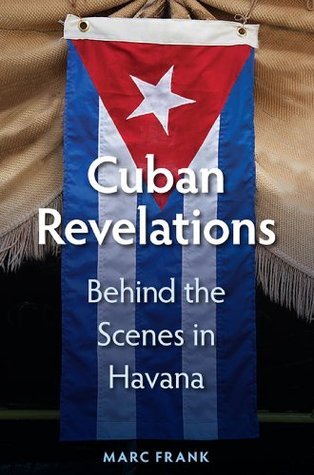
Cuban Revelations: Behind the Scenes in Havana

Rate this book
In Cuban Revelations, Marc Frank offers a first-hand account of daily life in Cuba at the turn of the twenty-first century, the start of a new and dramatic epoch for islanders and the Cuban diaspora. A U.S.-born journalist who has called Havana home for almost a quarter century, Frank observed in person the best days of the revolution, the fall of the Soviet Bloc, the great depression of the 1990s, the stepping aside of Fidel Castro, and the reforms now being devised by his brother.

Examining the effects of U.S. policy toward Cuba, Frank analyzes why Cuba has entered an extraordinary, irreversible period of change and considers what the island's future holds. The enormous social engineering project taking place today under Raúl's leadership is fraught with many dangers, and Cuban Revelations follows the new leader's efforts to overcome bureaucratic resistance and the fears of a populace that stand in his way.

In addition, Frank offers a colorful chronicle of his travels across the island's many and varied provinces, sharing candid interviews with people from all walks of life. He takes the reader outside the capital to reveal how ordinary Cubans live and what they are thinking and feeling as fifty-year-old social and economic taboos are broken. He shares his honest and unbiased observations on extraordinary positive developments in social matters, like healthcare and education, as well as on the inefficiencies in the Cuban economy.

345 pages, Kindle Edition

First published October 22, 2013

29 people are currently reading
174 people want to read

About the author

Marc Frank

4 books1 follower

Ratings & Reviews

What do you think?
Rate this book

Friends & Following

Create a free account to discover what your friends think of this book!

Community Reviews

5 stars
46 (23%)
4 stars
95 (49%)
3 stars
44 (22%)
2 stars
4 (2%)
1 star
3 (1%)
Displaying 1 - 30 of 35 reviews
Profile Image for Lewis Weinstein.
Author 13 books609 followers
December 4, 2014
UPDATE 12/4/14 ... I returned to this book because I felt an obligation to read our book club selection. It didn't get any better. It seems to me like a disjointed series of separate topics, not particularly well connected and with no sense of direction or point to it all.

***

I found it very painful to read this book. Many sentences are so poorly constructed as to take 2-3 reads to understand what is being said. The fact that each sentence seems to exist by itself, unconnected to the one before or the one after, adds to the difficulties.

In addition to being virtually incoherent, the content was repetitive and dull, with no narrative flow whatsoever. Maybe there's an interesting book on Cuba out there, but "Cuban Revelations" is surely not the one.

I should point out that I stopped reading and did not read the later chapters. Maybe it gets better, which would account for the positive reviews here and on amazon.

BTW, I love to read history, especially interpretive history, and I know very little about Cuba, so I think I was a good target audience for this book. The book missed the target.

***
Profile Image for Louise.
1,840 reviews382 followers
August 22, 2014

Today, Cuba is undergoing a revolution that appears to be as significant as the first. A quick Google search shows right away that the US media is either uninterested or unaware that Cubans are now encouraged to start businesses, sell their own produce, travel, and buy and sell homes and cars. This change from a socialist model to a capitalist model and is accompanied by layoffs which are significantly downsizing Cuba’s sprawling bureaucracy and thrusting many into unemployment with almost no severance pay or other financial cushion.

Marc Frank shows how the loss of Soviet patronage damaged the economy of the island. Later, the alliance with Hugo Chavez for Venezuelan oil helped somewhat, but the world wide downturn (and always the US embargo) forced debt beyond what could be realistically paid. The stultifying economic bureaucracy could not continue.

There is data showing how Cuba ranks in the middle of nations on many scales such as standard of living, education, human rights, corruption, etc. and ranks quite high among Caribbean and Latin American counties. Frank draws from conflict resolution theory to describe what is happening in Cuba now: When you are losing, surrender before you lose control. This apparently is what Raul, if not Fidel too, is doing: trying to keep the gains of their revolution, so all will not be lost.

This can be like reference book with data on agriculture (acreage and yields), car and taxi ownership, housing stock, jobs, registered businesses, medical personnel, travel permits etc. For each of these areas there is lot on policy, such as how to register, buy or sell, or what a size or quota might be. There are dates and excerpts of significant speeches regarding the issues surrounding these topics.

There is a data-free discussion on the role of religion in Cuban life and how it is political all the way from Rome to Miami. Local elections seem to show that local politics, at least, are a competitive democracy, and contrary to the belief of many in the states, people speak very freely, at least to Marc Frank.

The book is probably a “must read” for anyone with business in Cuba or with the need to be up on policy in Cuba. While the general reader can glaze over the reference data, there is nothing I know to substitute if you want to know what is going on in Cuba.
Profile Image for Peter.
1,170 reviews44 followers
March 17, 2017
Marc Frank, author of Cuban Revelations: Behind the Scenes in Havana (2013) is a “resident foreign journalist” in Cuba whose grandfather, Waldo Frank, wrote a history of the island in the 1930s. He is obviously in love with Cuba, though his eyes are opened about its unfortunate political history. This is an excellent introduction to a country that has been off-limits to Americans for almost sixty years, but which is about to become a new discovery for those of us who are among Cuba’s closest neighbors.

The Best of the Book: Social and Economic Transformation in Cuba

The best of the book is the political and economic history of Cuba, the island whose population was abused and decimated by the arrival of Europeans in the fifteenth century, an island corrupted by U. S. corporate invasions to exploit its resources, an island with an extremely wide gap between the rich and the poor until the ascendancy of Fidel Castro, and an island that is now in the midst of a change in its economic model to the more benign Asian model of communism.

The era of U.S. dominance began with the Spanish-American War in 1898 followed by U.S. interventions in Central America (the creation of Panama, the Panama Canal). While island politics remained unchanged—corrupt and indifferent to popular welfare—the island’s leaders changed as coup followed coup. Gerardo Machedes was elected President in 1925 and reelected in 1929 with the assistance of his death squads. In 1933—at the depth of the international economic depression, Machedes was ousted by a general strike and Carlos Manuel Cespedes was elected president. Within 24 hours of his inauguration he was ousted by a military coup led by Fulgencia Batista, a former court stenographer and army officer.

Under Batista a trade agreement with the U.S. was concluded giving America unusual power over Cuban affairs. American goods entered Cuba in exchange for Cuban goods, largely sugar, and the Mafia became a factor in the Cuban economy. In 1940 Batista retired to the U.S., only to return in 1948 as a senator and seize the reins in 1952. The Cuban aristocracy and a growing middle class became wealthy while the rural poor saw no improvement. The ground was set for a revolution. In establishing the fragility of Cuba at that time, Frank remarks,
You have to be extraordinarily greedy, corrupt, and brutal to lose not only power but an entire socioeconomic system to a revolution led by a bunch of kids.
This might be an overstatement since it is a commonplace that in political revolutions there is an active cadre of university-age “kids.”

The chief “kid” in the Cuban revolution was, of course, Fidel Castro. Castro’s feinted at pro-capitalism in the hope of U.S. support when he came to power in 1959, while simultaneously declaring a socialist state, initiating land redistribution, and nationalizing foreign enterprises (including the Mafia’s casinos and hotels). The result was an embargo on U.S. trade with Cuba. Cuba became a vassal of the Soviet Union, which traded oil for sugar at inflated sugar prices, and sent resources to Cuba to develop its infrastructure, both private and military. Under Russia’s umbrella, Cuba enjoyed both prosperity and protection. It developed an egalitarian economy with advanced education and healthcare for the population. Its infrastructure for electricity and automobiles was well oiled, electricity was available to run the pumps that provided water and the lights and appliances that served the homes.

This all came to a sudden end with the 1990 collapse of the Soviet Union. Cuba’s trade fell by 75 percent, its GDP by a third, its credit dried up and the printing press created inflation. Its primary import (oil) became scarce and very expensive, its primary export (sugar) became abundant and very cheap. Cars sat unused, the horse became the motor of transportation, electricity was rationed, and water supplies became unreliable.

An ameliorating influence was the rise of Hugo Chavez to power in Venezuela in 1999. A committed socialist and anti-American who controlled large oil reserves, Chavez provided oil to Cuba that reduced the urban population’s distress but didn’t reduce it. Cuba, in exchange, provided technical aid and medical assistance. Chavez’s generosity ended with his death and with the collapse in oil prices that undermined Venezuela’s ability to underwrite the Cuban economy.

Castro’s economic model mimicked Stalin’s. Except for small enterprises (and even then heavily regulated), the market system was banned and all internal transactions were routed through the state. The once-flourishing cattle industry is an example. Castro, saw beef as a rich man’s meat, instituted a regulation that ranchers could trade cattle only with a Cuban ministry that set both purchase and sale prices; the incentive was to increase prices of cattle sold to ranchers and reduce prices of cattle purchased from ranchers. Ranchers were not even allowed to slaughter cattle for their own consumption. The result was a collapse of cattle ranching and a severe shortage of beef. The same problems appeared in many of the state-run markets.

With the collapse in Russian support, Cuba borrowed another page from the Soviet model. Cubans could not hold foreign currencies, limiting them to the “peso economy” using Cuban pesos. The state, however, set up a “dollar economy” in the form of stores catering to foreigners who could use foreign currencies to buy high-end items at drastically marked up prices. The luxury stores sold goods for “convertible pesos” valued 1:1 with the U.S. dollar and 24:1 with the Cuban peso. Foreigners could buy convertible pesos to spend at the luxury shops, with a heft 340 percent tax paid on those purchases. The result was a well-fed class of highly-paid foreigners in Cuba, a poorly fed Cuban population, and a steady stream of foreign exchange flowing to the state.

When Castro came to power in 1959 he banned use of any automobiles not in the country at that time—a major reason why the Cubans have so many finely maintained but pre-1960 American cars. The ban on pre-1960 cars loosened as non-U.S. foreign auto companies in Japan, Germany, and elsewhere became available, but imports of U.S. automobiles are still banned.

Having said all that, the economic model was widely accepted, perhaps because the Castro government was serious about narrowing the income distribution, establishing high quality health and education systems for a third-world country, and ensuring internal stability. Corruption, forbidden but still abundant in a country as bureaucratic as Cuba, is an accepted way of mitigating the system’s restrictions. The older generations of strong opponents to Castro have moved to Miami; the remainder generally supports the Castro regime and its lack of economic freedom. Perhaps it’s a matter of expectations—Cuban expectations might be low but they are not jerked around by surprises. Still, Frank reports that the population is generally supportive of their political system and adjusted to its deficiencies.

During the Clinton Administration the relations between the U.S. and Cuba relaxed. U.S. diplomats had more freedom to roam in Cuba, intellectuals and artists could more freely travel between the U.S. and Cuba, Cuban-Americans could visit their families in Cuba. The trade embargo was relaxed in 2000 with Congressional approval of cash sales of U.S. foodstuffs to Cuba. By 2003 The U.S. was Cuba’s primary source of imported food and among Cuba’s top ten trading partners.

This relaxation was vigorously opposed by the Cuban-American Bloc centered in Miami, but not until the Bush Administration was that bloc returned to its former influence. That administration also encouraged Cuban dissidents in the hope of regime change, going so far as to create a cabinet-level Commission for Assistance to a Free Cuba that called for tightening the embargo and further increases in support of Cuban dissidents. Migration was restricted, the budget for Television Martí, the U.S. news station beaming to Cuba, and transfers of cash to from Cuban-Americans to families in Cuba were restricted.

With Castro’s illness and “retirement” from public life in 2006, followed by his 2008 resignation as president, the levers of government went to the hands of his younger brother. This was a time of perfect storms for Cuba: transition to Raúl, three destructive hurricanes, and transition to the new Obama administration. To top it off, the international financial crisis reduced Cuba’s exports as it simultaneously increased imports, throwing the balance of payments and the Cuban GDP into a tailspin.

Raúl’s commitment to communism is as strong as Fidel’s, but his hand is not as heavy on the economy. His model has been compared to the Asiatic model of Vietnam—keeping the essentials of public control of property but with a lighter hand on the internal allocation of resources. Raúl instituted more open debate about what Cubans want from their society and how to achieve it. He opened fallow state-owned land for use by private farmers, he improved the quality of health and education, which had declined over the many years of Fidel, and he sacked the cabinet that he had inherited from Fidel. The cabinet was reorganized with members more committed to social progress and less corrupted by long terms in office. He attempted to increase wages—a constant complaint of Cuban citizens who seemed to ignore the food, education, health and other subsidies they receive when they compute a “living wage.” He has widened the opportunities for free enterprise, particularly in the food sector.

The election of Barack Obama was simultaneous with the transition to Raúl. Obama was less captive to the conservative anti-Castro Miami Bloc and more open to rapprochement with Cuba than had been the Bush administration. Still, many attempts to relax the embargo and improve relations with Cuba failed in Congress, which was heavily influenced by the anti-Castro Miami bloc. The political barriers seemed to be that each side wanted the other to make concessions before it would discuss rapprochement—the U.S. wanted economic and political reform in Cuba, Cuba wanted an end to the embargo and the anti-Cuban activities in the U.S.

In 2009 eighty- five percent of the five million-person Cuban labor force was employed by the government or by a government enterprise in 2009. In 2010 it was announced that 500,000 of those jobs would be eliminated, to be followed by another 500,000 jobs. Restrictions on private-sector businesses, previously done out of the home or under the table, would be relaxed and most of those ex-government employees were expected to be absorbed in a growing “non-state” sector. Essential services like health care, education, electricity generation and distribution, fuel and water supply would remain in the state-owned sector, but individual enterprises like taxi services, hotel and food services, and automobile repair, would be less fettered though heavily taxed.

The denouement at the time the book is written (2012) is that Cuba begins serious discussion of major reforms in which the state will end its direct administration of the economy—of wages, prices, and resource allocation. Instead it will focus on regulating the economy through market-oriented tools like taxes.

The Rest of the Book

While Frank’s summary of Cuba’s history as a communist state is both enlightening and entertaining, much of the book is less so. The book’s meat and potatoes of social and economic policy is marred by long observations from individual Cubans whom Frank has interviewed, including his wife’s aunt, a young woman hitchhiker, and others that he believes are representative but have no credentials as keen observers of the Cuban scene other than that they are Cuban. Frequent verbatim reproductions of his articles and of his interviews with the players seem like filler and some are vacuous, as when a U. S. businessman in the food industry dined with Castro and we learn that he pressed Castro on what he likes to eat when he’s alone. Really!

There are long sections filled with names, dates, and other particulars that add nothing to the general reader’s knowledge. These sections might be of interest to professional historians or Cuba analysts, but they are footnote material thrust into the main text, cluttering the book and impeding its flow. It’s clear hat Frank knows Cuba and its affairs inside and out; its less clear that much of this knowledge aids the reader looking for substance.

3¼ Stars.
Profile Image for Joey.
224 reviews7 followers
March 29, 2014
"Cuban Revelations" gets bogged down in places with overly-detailed descriptions of the intricacies and mechanics of Cuban economic reform. My other beef is that Frank's writing feels a little bit unnatural -- I think it's just his style, and I doubt that most readers would be bothered by it. In short, the book reads like it was written by someone accustomed to penning short press releases who expands the style to fill a 280-page book, which it was.

That said, Frank's insights into the evolution of Cuban society, politics, and reform are unrivaled. He boasts both an American and a Cuban perspective, having married into a large Cuban family, and he manages with aplomb to critique both Cuban and U.S. policy without coming across as biased on either side, an impressive feat. Lastly, the story of Cuba from the mid-1990s to the present day is fascinating, and Frank tells it well enough for it to be very worth reading.
389 reviews8 followers
February 2, 2015
I recently returned from Cuba. Before I went I searched for a book that described the current political solution and couldn't find one. I guess I am not very observant. This is an excellent book which describes the current (very current) situation in Cuba, starting about 2000 but focusing on the changes under Raoul in the past few years, as well as the moral and social environment in Cuba. Cuba was a fascinating place to visit, and a fascinating place to learn about. Nothing is quite as it appears, and it is certainly not your parents' Cuba. This book outlines the changes which are going on and the way they are presented to the Cuban people. It is a society under transition, led by Raoul. There aren't many places to learn what is going on there. You can visit Cuba, if you are very observant and have a great guide. I recommend that approach. But short of that, or along with it, you can read this book. I can recommend that one too.
Profile Image for Joseph Spuckler.
1,512 reviews32 followers
October 8, 2020
Cuban Revelations:Behind the Scenes in Havana by Marc Frank is a study of Cuba's recent history and the gradual turning over of power. Frank has witnessed many events in Cuba from the good times to the fall of the Soviet Union and the transition of leadership. In the closed Cuban system, Frank is holds a definite edge in English language reporting on Cuba. He is also the recipient of various Thomas Reuters awards for Latin American and global stories.

In Vietnam, America suffered 58,209 deaths in a war against communism. Twenty years later, America opened diplomatic relations with the communist government of Vietnam. The war was a traumatic time for many in the US (and more so Vietnam), yet the page was turned. Ninety miles south of Florida is the island nation of Cuba. In 1959, Cuba had a revolution and overthrew the Batista government. Initially the US recognized the new government but quickly relations soured over property rights. Relations further dissolved into the missile crisis and the Bay of Pigs invasion. All in all, only four Americans died, but to this day the US does not have normal diplomatic relations with Cuba. This something shared with only four nations: North Korea, Iran, Bhutan, and Taiwan.*

Frank opens the door on what seems to be a secretive Cuban government. He is able to take the American reader inside Cuba. He talks to the people and get a personal perspective on the workings in Cuba. He describes the workings of the government and government policy. More importantly he take the reader into the change of leadership and the changes that are being instituted under Raul Castro. Many changes came quietly and many have caused some questioning of the revolution. Private businesses and selling of property are being conducted in the open with government permission. The fall of the Soviet Union has created an urgent challenge for Cuba. It lost its major source of subsidized trade and is now loaded down by debt. Countries are hesitant to offer loans Cuba, and Cuba does not have access to the World Bank or the IMF.

Cuban Revelations gives a short history of Cuba mainly dealing with the time from the fall of the Soviet Union and the aging and retirement of Fidel Castro. Frank gives the reader an insiders view to Cuba that most do not get to see. Most information is first hand reporting, but there is also over twenty pages of documentation. Cuban Revelations is a timely and well written book covering on of the most interesting American foreign policy issues and the inner workings of a country closed off to Americans. A very worthwhile read.


*Bhutan only has relations with 22 countries. Since Recognizing the People's Republic of China, the United States no longer recognizes Taiwan as an independent country.
Profile Image for Natú.
81 reviews79 followers
July 23, 2018
This book took me a while to get through. Mostly because of my habit of reading things in shifts, but also because some of this book's greatest strengths also hold it back. On the one hand, it offers a depth of information and detail about Cuban political and economic goings-on and how they have changed over the past few decades (which is, of course, the central focus of the book), but can often get bogged down in the nitty-gritty. I would not change this fact, as it makes this volume a great one-stop resource, but I would change the way I read the book and glossed over the numbers a bit in order to get more of the experience I was reading for. In addition, Frank's writing is indicative of the American journalistic tradition he comes from: namely, objective to the point of extreme dryness. Again, while I understand the purpose of his tone and refusal to put himself too far out there in his personal analysis of the events and figures he covers (he is forced to carve out a safe nook between the exile establishment, revolutionary adherents, and foreign interests, as well as their respective sympathizers), one cannot help but wish for a little more character to breathe a bit of life into what reads like a 300 page Reuters piece. That said, an enjoyable read on the whole and certainly worthy of the time and occasional persistence necessary to get through it.
221 reviews
December 22, 2017
Author is an American living in Cuba married to a Cuban and reporting on Cuba since 1984. The book is mostly a compilation of stories written for publication in other venues and collected into this book. As a result, the material is at times repetitive.

The book gives the reader broad insight into his last 20+years of covering Cuba as a reporter. We conversations with locals as well as political elites.

While he reports his run=ins with government leaders in Cuba including the Castro brothers, I wondered as I read his reports what he didn’t say to maintain his journalist freedom in a communist country.

The book dives into minute details at times for the casual reader like me. But still I appreciated the opportunity to see the country from an American observers eyes living in country.

Is Marc Frank unbiased as a reporter immersed in the country? Probably, but I could not find another source like his voice expressing what is happening there through 20 plus years until 2013.
Profile Image for Susan Greiner.
269 reviews4 followers
March 14, 2019
This book about Cuba is chock full of information about the Cuban revolution. Written by a Reuters reporter who covered Cuba for decades, it includes the voices of regular Cubans and members of the communist government-- including Fidel and Raul Castro of course. The policy decisions made, especially since the collapse of the Soviet Union in 1989, paint a vivid picture of the Cuban struggle.
Having just returned from Cuba myself a month ago, I was fascinated by the story outlined in this book.
This is a very long, involved book though. At times it even seems to get a little lost in the weeds because of the detail of the author's reporting. But it is a very good book if you want to try to understand Cuba and the Cuban people. Very good.
Profile Image for Jim Grove.
Author 1 book1 follower
October 13, 2024
An examination of the social and economic reforms undertaken by the Cuban government following the fall of the Soviet Union, with additional back history of the earlier reforms undertaken by the government during the 1960s and 1970s. I was especially taken by one particular story of how the government tried to manage the beef cattle industry to make it more productive, with the result that they succeeded in cutting beef production in half within five years and introduced commensurate nationwide food shortages and all but erased the industry. Just one of many examples in the book where heavy-handed centralized control of the economy had negative, if not devastating, effects on the lives of Cuban citizens (never mind the decades-long U.S. trade blockade).
Profile Image for Margaret.
232 reviews19 followers
January 15, 2019
Excellent resource, filled with facts, data, statistics. So it can be a bit dry in places. Will be valuable to anyone interested in recent Cuban history especially from 2000 up to around 2012.
I hope that with the changes to a more market oriented economy, Cubans can benefit from the positive aspects of that without losing the beneficial parts of their revolution- literacy, health care, and efforts toward equality.
Profile Image for Dianna.
45 reviews
January 25, 2019
This book was a great companion to understanding Cuba while visiting the island. As a u.s. citizen I realized I knew — and understood— almost nothing about Cuba and its economy. Along with this book, meeting and talking to Cubans helped me understand the island’s unique economic and political system.
Profile Image for Kim Lanza.
262 reviews21 followers
January 5, 2021
Read this in preparation for a trip to Cuba - it was even more interesting after I came home to compare the versions I was told by locals to the account on the page.

Fascinating place to explore! I think just reading about it would not have sufficed. Better as a complement to the experience.
Profile Image for Deborah Charnes.
Author 1 book11 followers
November 12, 2024
I've read dozens of books about Cuba. I would say this is a must-read. The author's credentials are outstanding and his book is filled with so much data. It's not a light novel, yet the author brings some of his personal life into the book so that it's not too heavy of a history book either.
Profile Image for Rebecca.
158 reviews10 followers
May 16, 2017
A look from inside about how the Cuban government is reforming itself to stay alive.
Profile Image for Ramón.
10 reviews
November 27, 2017
Have no time to read the most important news about Cuban politics since Raúl Castro took over in 2006? Do not despair. Marc Frank, a long-time Havana-based Reuters reporter, has summarised the most important developments in one single book. Do not expect analytical depth –that is not the purpose of this fine journalistic work– but do expect a fact-checked consistent chronology –this may be the best introduction to contemporary Cuban politics.
Profile Image for Christopher.
768 reviews60 followers
April 25, 2015
One of the most startling changes in international politics in recent years has been President Obama's moves to open relations with the island of Cuba, even loosen the embargo against that island. This has not been done in isolation though. Since Fidel Castro stepped down from power in 2006 and his younger brother, Raul, stepped up to take his place, Cuba has been undergoing some slow, but startling, changes in its economy and politics. This book, written by a Reuters journalist who lives on the island with his Cuban wife and has a wealth contacts inside the island, charts Cuba's reforms from the end of the Soviet Union in 1991 to 2013. It shows how Fidel tried one last time to save his Soviet-style socialist state before ill-health forced him out of power and how Raul's turn to more market-oriented solutions is slowly changing Cuban society. Though there have been some political reforms to, it is still very much a one-party system, but one that seems to want to emulate China's Communist Party rather than the Soviet Union's. Of course, because this was written prior to Pres. Obama's surprise announcement in December 2014 about the U.S. and Cuba opening relations and respective embassies and Obama and Raul Castro's recent meeting at the Summit of the Americas in Panama City, so when the author mentions U.S-Cuba relations, it is usually because the U.S. is inflexible in the face of the changes going on inside the country. Indeed, the author seems rather biased against the U.S. and Cuban-Americans efforts to counter the Castro regime, describing them as rather foolish and impotent in the face of the Castro brothers. The author also seems to have a rather favorable opinion of Raul Castro and is rather sympathetic to his attempts at reform. Though somewhat unbalanced, I would not necessarily characterize this book as unfair. In fact, this is probably the best book you will find if you want to know about the changes that have been going on inside Cuba for the past two decades.
1 review
November 29, 2013
Hands down the most informative, accurate, insightful, detailed account available on 21st century Cuba. As an avid reader of all text about Cuba, this book sits firmly on the top tier, virtually alone and towering over most. You won't find ideology or an agenda in here... but rather a comprehensive composition covering the multilayered, and often quite complex, reform process that has been underway in Cuba since at least 2006. Don't worry, it's not based on gossip, speculation, or wishful or spiteful thinking. Frank is an old-school reporter. Remember those? His book is based on solid sources, first hand investigation, inside access and an understanding of Cuba that is very, very rare. From his unique position, he takes a "forest" view of U.S.-Cuba policy, while not ignoring the important "trees" that make up and explain the poisoned relationship. Refreshingly, his analysis is not from the typical U.S. perspective, nor full of Cuban rhetoric. It is more a sober, pragmatic analysis from the island side of the straits.

I only caution that it may be a little too "insider" for readers with just a casual interest in Cuba, those wanting their political views to be supported or attacked, or those looking for shallow entertainment, with tales of salsa, rum and Santeria.

Conversely, for anyone calling themselves a Cuba expert, consultant, or activist; all Cubans living in the U.S.; and anyone working in any way on U.S.-Cuba policy or engaging Cuba economically, this is required reading.
Profile Image for Edwin B.
305 reviews16 followers
June 16, 2015
This book gives an inside look into the process evolving in Cuba to modernize socialism. In order to unleash the productive capacity of the Cuban people, the nation's leadership has changed its focus "from praising equalitarianism to praising reward for individual initiative; from imposing restriction after restriction to lifting some; from 'the state can do everything' to 'we need a strong private sector, at least in agriculture'; from control of all decisions at the national level to granting more say at the provincial and municipal levels."

Led by the Communist Party leadership, Cuba is looking within for answers, critiquing government bureaucracy, exploring market socialism and debating domestic issues. Marc offers a fair treatment of the controversy that is Cuba. On the one hand, he shows us the historical nonsense of the hostile U.S. embargo on Cuba, and on the other hand, he shows us the problems that have to be overcome if Cuban society and economy are to prosper. But Marc does not offer capitalism as the answer, either. Cuba will come up with its own unique solution for its national development, rooted in ideals of social justice.
Profile Image for Joy Weese Moll.
401 reviews109 followers
November 5, 2015
Cuban Revelations covers the recent history of Cuba, described by a US journalist with a Cuban home and family. This account crosses the narrow Straits of Florida to provide a nuanced understanding of Cuban-US relations, illuminating the motivations of each while giving neither a free pass from blame in the long-term breach.

Marc Frank has lived in Cuba for nearly a quarter century and witnessed many changes. He provides a good background of the history, but most of the book focuses on what has happened since 2008 when Raúl Castro came to power just as the world was about to descend into economic crisis and Cuba got hit by back-to-back hurricanes.

Since 2008, Cuba has changed rapidly to find ways to boost its economy, preserve beloved and working social structures, and build a resilient system that will survive the inevitable retirements and deaths of the generation of the Revolution.

More thoughts on my blog, including some observations from my recent trip to Cuba: Cuban Revelations by Marc Frank
Profile Image for Du.
2,070 reviews16 followers
January 21, 2016
There are so many misconceptions about the US Cuba relationship. Most of what we think is involved in that relationship is based upon a very fractious and unrealistic past. The data and the communication style used in this book can be a bit too academic, but lets face it, if you are reading a book about Cuba, it is either because you are truly interested or because you think it is counter culture and rebellious to be up on Cuban affairs, and you want to embrace that. One or two chapters into this book, you'll only continue if you have a genuine interest and knowledge. If you follow through you will find a highly intelligent, and knowing look at Cuba today.

If you are looking for a shock and awe style tome, keep looking. This book is interesting and designed to inform and educate, but not push sides or convince the reader of a particular viewpoint. It is very well done journalism.
Profile Image for Rachel.
38 reviews
May 22, 2015
I read this book in preparation for traveling to Cuba. Overall, I learned a lot and thought it was pretty informative and definitely gave me a better understanding of Cuba and the relationship with the US. The book gives good examples of policies under Fidel's reign, and a good explanation of the reforms that Raul has been working on since taking over. Sometimes the drawn out history of every.little.thing gets a bit slow and boring, but if you can wade through that there is some good information to uncover.

What I really disliked about the book was the writing style. The sentences were weird and, in a lot of instances, took me 2-3 times through a paragraph to get what I'd just read. I can normally tear through a book in a week tops; this one took me over a month to wade through.
2 reviews
March 2, 2015
Good review of Cuba- US relations,particularly since Fidel,s illness and Raul's takeover in 2006. Covers events thru 2013, and reveals much I did not know much about US_Cuba relationship.Cuban policy changed drastically during the years 1959 and 2013 depending which party held presidency in US. On Cuban quoted as saying "It's like hurricanes. Every time we get somewhere, one comes along to wreck it all and there is almost nothing you can do". Raul has encouraged more private enterprise at small business level, but freedom of speech and communication with outside world still strictly controlled.
233 reviews1 follower
March 2, 2016
Probably more detail than most people want to know, but very clearly lays out the political, economic, social, and cultural organization of Cuba, mostly covering the last 15 years but filling in earlier history as needed. It was fascinating to hear the "other side" of the many debates and conflicts we have had between our government, not to mention Cuban Americans, and Cuba's people and government. The most important thing we can learn from this book is that the people of Cuba love their leaders and respect how hard they are trying to make things better, but they would also welcome friendship and interaction with the people of the US.
Profile Image for Jackie.
102 reviews15 followers
April 24, 2016
I had the pleasure of meeting Marc Frank when I was in Cuba last year, and finally got around to reading his book. It is such a wonderful, comprehensive, honest, and unbiased history of modern Cuba and all of the tremendous changes that occurred through about 2013. Keeping my fingers crossed for an update.
Profile Image for Stephen.
119 reviews
April 15, 2016
Super in depth view of what is really happening in Cuba and how American foreign policy has retarded Cuba evolving from a Communist state into a market-based socialist economy. Much deeper and broader than one gets in the popular media here in the US. One gets the impression that Raul and the ruling elite are on a positive path to improve it's citizen's lot in life, a;lbight haltingly and slowly.
Profile Image for Andy.
2,070 reviews606 followers
January 25, 2015
Wishy-washy. The Batista regime was a dictatorial kleptocracy but maybe it wasn't so bad after all. At least in some ways it wasn't as bad as Castro, but you know lots of people in Cuba like Castro. This kind of journalistic "objectivity" mixed with personal anecdotes is not my cup of rum.
Displaying 1 - 30 of 35 reviews

Can't find what you're looking for?

Get help and learn more about the design.