

What do you think?

Popular Culture and Philosophy #73
The Wire and Philosophy: This America, Man
By many accounts, HBO’s The Wire was and remains the greatest and most important television drama of all time. Conceived by writers David Simon and ex-Baltimore homicide detective Ed Burns, this five-season, sixty-episode tour de force has raised the bar for compelling, intelligent television production. With each season addressing a different arena of life in the city of Baltimore, and each season’s narratives tapping into those from previous seasons, The Wire was able to reveal the overlapping, criss-crossing, and colliding realities that shape-if not control-the people, institutions, and culture of the modern American city.The Wire and Philosophy celebrates this show’s realism as well as its intellectual and philosophical clarity. Selected philosophers who are fans of The Wire tap into these conflicts and interconnections to expose the underlying philosophical issues and assumptions and pursue questions, such as, Can cops really tell whether they are smarter than their perps? Or do they fall victim to intellectual vanity? Do individuals really have free will to resist the temptations-of gangs, of drugs, or corruption-that surround them? Is David Simon a modern-day Marx who sees capitalism leading ultimately to its own collapse, or is Baltimore’s story uniquely its own?
330 pages, Kindle Edition
First published May 20, 2013
Ratings & Reviews
Friends & Following
Create a free account to discover what your friends think of this book!
Community Reviews
Displaying 1 - 13 of 13 reviews

January 23, 2014
Lawyer: You are amoral, are you not? … You are a parasite who leeches off –
Omar: Just like you, man … I got the shotgun. You got the briefcase. It’s all in the Game, though, right?

This is the second of the Pop Culture and Philosophy series that I’ve reviewed.
In the first review (Spongebob Squarepants) I concluded that books in the series were useful entrees into both philosophy and serious reading in general for younger people.
This book could serve the same purpose. But I realized while I was reading it that, because The Wire is very unusual, this book deserves recommendation for more than just entrée-level reading.
That is, in terms of “Pop Culture”, The Wire is one of the few instances of same which offers serious social commentary about America, American cities, and the current American way of life: a way of life which, more and more , seems grounded on increasing inequality.
For anyone not familiar with The Wire, here’s a very brief overview.
The Book.
The 21 essays in the book are divided into six sections.
The Game
Three essays deal with an overriding theme of the show: that all the characters, no matter their societal role, no matter how honorable or dishonorable their actions and motives, no matter which side of the law they’re on, are forced to follow (or rebel against) the rules of overlapping games that control and shape their lives.
This Ain't Aruba, Bitch by Joanna Crosby is a summary of the social views of creator David Simon.
All in the Game (Ty Fagan) uses references to Heraclitus of Ephesus and Albert Camus to help describe the “game” theme of the show, concluding that the series presents "a clear-eyed portrait of the dying American city ... (the product of the) sputtering engine of late-stage American capitalism."
Locke’d in the Game? (William Allen) asks whether the B-more underclass illustrates Hobbes’ state of nature/war, or John Locke's Two Treatises of Government? The author thinks the latter. When a minority group in society is oppressed, whilst the majority enjoys the protection of rights and social goods, that oppressed group has been forced into a state of war.
The Tactics.
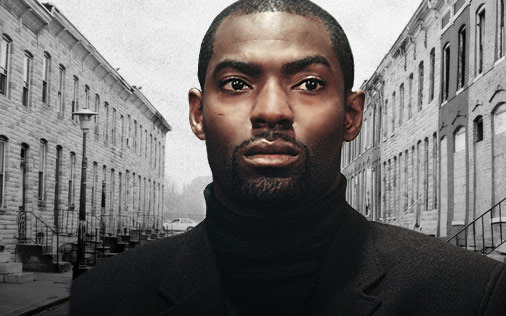
Wee-Bey Brice
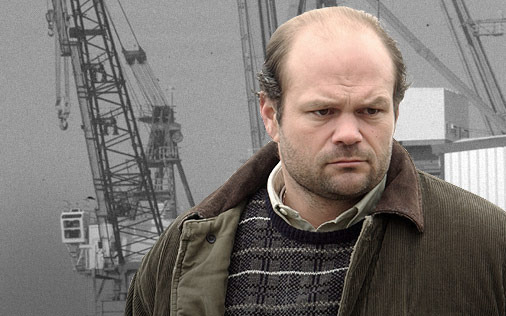
Frank Sobotka
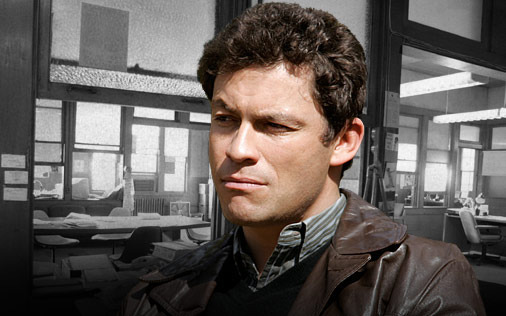
Jimmy McNulty
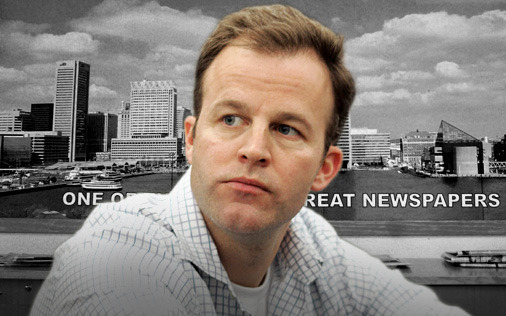 Scott Templeton
The five essays in this section deal with several issues growing out of the “game” theme, particularly ethical issues.
Wee-Bey's Way (David Bzdak) explores "impartiality", and whether being impartial is always required, or is even always a good. Plato's Republic, Socrates, Peter Singer, the Utilitarianism of Bentham and J.S. Mill, Virtue Ethics, the Greater Good Principle are all brought into the discussion.
When a Lie Ain't Just a Lie (Sean McAleer) is a moral analysis of three giant lies that drive the plot line through seasons two and five (Sobotka, McNulty, and Scott Templeton for those in the know). JS Mill's Utilitarianism provides the philosophical background, but McAleer argues that there are "degrees of wrongness", and in assessing these, motives and a person's character do make a difference.
Came to Do Good, Stayed To Do Well (Jason Grinnell) is about the difference between doing good (being a good teacher or police, one who understands the societal function of the profession) and doing well in a profession (by making the boss happy and getting promotions). Doing well is playing the Game; doing good is outside the Game. Excellent.
Giving a Fuck When It's Not Your Turn (Jim Thompson) analyzes The Wire as a story of modern big-city bureaucracy. The police, the schools, the media, politics, even the drug organizations; all in the grip of rules, regulations, unfairness, not getting what one deserves, the need for a patron, the rigid hierarchy, a need for loyalty. The players change; the Organization and The Game don’t.
What If Nobody Walks the Straight and Narrow Track? (Don Fallis) examines Kant's views on lying (Foundations of the Metaphysics of Morals) in the context of The Wire.
Omar Comin’.
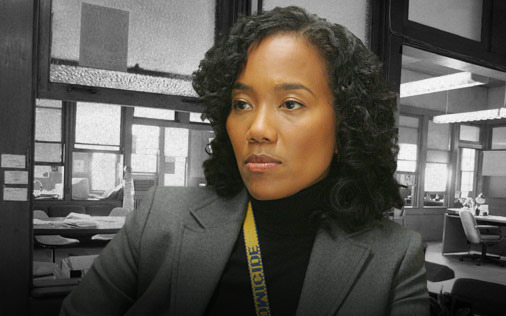
Detective Shakima "Kima" Greggs
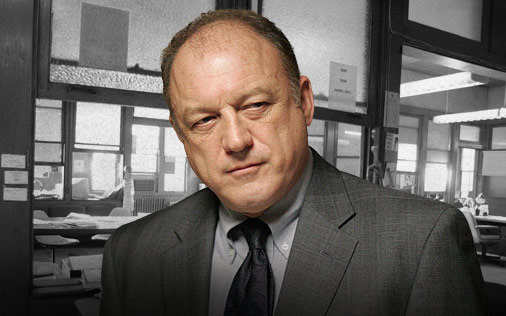
William A. "Bill" Rawls

Felicia “Snoop” Pearson
Three essays largely dealing with perhaps the most astonishing character in the series, Omar Little. Omar makes his living by stealing from the drug dealers. He is too clever, too vigilant, and too violent to be taken down by the dealers, though they try again and again. At one point they try to lure Omar into the open by torturing and killing one of his boyfriends. (Omar is gay.)
Is Omar the Nietzschean Overman? (W.Scott Clifton) discusses at length Nietzsche’s philosophy, particularly his concept of the Overman, then compares the qualities of this Overman to Omar. On three counts (Free Spirit, Non-Dogmatic about Truth, Noble) Omar qualifies; but he fails because he is not a "Value Creator"; he is human, all too human. Very interesting.
The Best of Boys and Lads (Kenn Fisher, with title from Plato's Symposium) argues that the two most powerful characters in the series are the homosexuals Kima and Omar; analyses them and their sexuality in depth; relates how the series handled these story lines without fanfare, and how two other homosexual characters (Rawls and Snoop) are portrayed to be such so briefly that many viewers probably never even noticed it. Fisher argues that in its portrayal of homosexuality, The Wire was absolutely groundbreaking.
Omar the Virtuous Thug (Jonathan Trerise) relates how Omar can be deemed a "virtuous" person by "virtue theory", an extension of Aristotle's view that virtue is largely determined by character traits rather than simply by actions. His summary notes well that unless we place people's actions in the context in which they live, we can't really judge them properly.
The Boundaries.

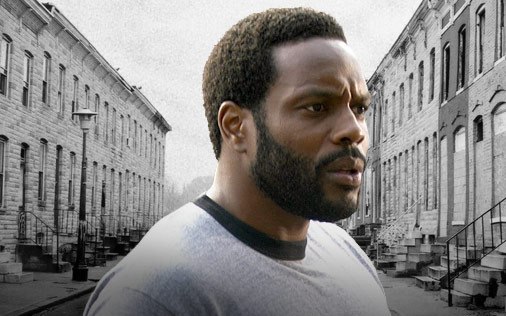
Dennis "Cutty" Wise
This section could probably be called Miscellaneous. All the essays are top-notch interesting.
No Women Up In the Game (Mona Rocha & James Rocha) focus on Snoop and Kima as representing militant feminism. Their actions and motivations are compared with those of female members of the Black Panthers & the Weather Underground radical organizations of the 1960s-70s. Both the characters accept violence as part of their "game", but only Kima has the ability to discriminate morally, to draw a line, and hence become a militant feminist heroine in the show. (Snoop is perhaps the most terrifying character in the series, an absolutely cold-blooded killer as an enforcer for Marlo Stanfield.)
Capital Noir (Tommy J. Curry, a specialist in Critical Race Theory, CRT) is the lone essay in the book whose author has clearly come to bury The Wire, not to praise it. Curry contends that Simon’s presentation of West Baltimore as an underclass sidesteps the racist reality of American society. It’s not class, stupid, it’s race!. I didn’t find the essay convincing, perhaps because it seemed filled with assertions backed up with other assertions, and so on.
Upon some Wikifying, I discovered that CRT is “an academic discipline focused upon the application of Critical Theory”; and that Critical Theory, in philosophy, is “the neo-Marxist philosophy of the Frankfurt School, which was developed in Germany in the 1930s. Frankfurt theorists drew on the critical methods of Karl Marx and Sigmund Freud. Critical theory maintains that ideology is the principal obstacle to human liberation.” So I’m prepared to admit that Curry may have something, and this whole approach could be an interesting one to explore.
(See the Wiki articles Critical theory and Critical race theory. Mr. Curry is mentioned in the latter.)
Hard Times After Hard Time (Zachary Hoskins and Nora Wikoff) is a hard-hitting essay which reveals the many barriers confronting released felons when they try to start over and go straight.
Dennis “Cutty” Wise is the character who illustrates the extreme difficulty that felons have in trying to live a new reformed life. Cutty is one of the inspiring characters in the series, who winds up opening a boxing gym and mentoring the youngsters who come.
In the U.S. there are federal and state laws barring felons from welfare, student loans, voting rights, public housing; and since private owners can refuse renting to anyone, particularly felons, released felons often end up homeless. We say these people have “paid their debt” to society; but no, they keep paying, and paying …
The Loss.
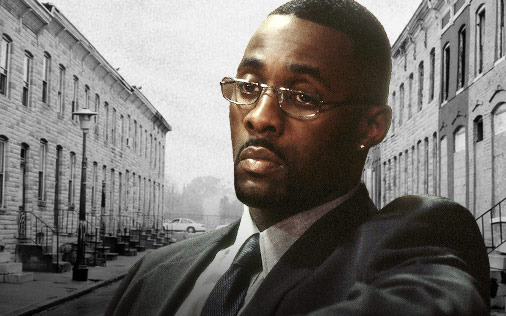
Russell "Stringer" Bell
Two essays about The Wire as tragedy, with a third tacked on by a well known philosopher
The Wire as American Tragedy (Avram Gurland-Blaker) analyzes The Wire in terms of Hegel's theory of tragedy. (I didn't know Hegel gave a fuck about tragedy, even when it was his turn! So there’s yet another thing I learned from this book.) The author says Simon goes beyond Hegel to find a more tragic view. How? the complexity of the situation, and Simon’s denouement – not the death of the protagonist, but the re-establishment of the (tragic) status quo. yeah that is tragic
The Birth of Tragedy from the Spirit of Baltimore (John Thomas Brittingham) examines the tragic in The Wire a la Nietzsche’s first, and I think most culturally influential, published work: Die Geburt der Tragodie (The Birth of Tragedy). The essay focuses on the Dionysian man in the Apollonian org (McNulty), and the Apollonian man in the Dionysian org (Stringer Bell). These forces do not resolve in a Hegelian synthesis. Rather, the friction between produces the brilliance that is tragedy, and which for Nietzsche is “the affirmation of life in all its forms."
… and then? …
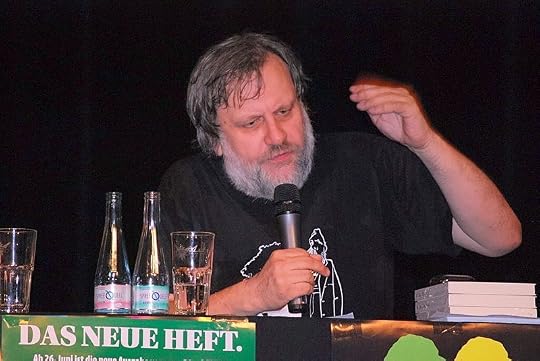
What to Do in Non-Evental Times by the world-renowned Slovenian Marxist philosopher, psychoanalyst, cultural critic and pop icon Slavoj Zizek(!) This essay, the longest in the volume, while fun to read, sailed far over my head. What do “Non-Evental” and “prosopopoeia” have in common?
A trail of Terry Gilliam, Marx, Badiou, Brecht, Hegel, Lacan, Chesterton, Monteverdi, Chaplin, Hitchcock, Beckett, Ayn Rand, Godard, leads to – what? As Edward O’Neill has commented, Zizek ultimately “subdues the reader into acceptance”. I was reachin', but I couldn’t touch it.
Sentencing.
Roland "Prez" Pryzbylewski

Namond Brice, Michael Lee, Randy Wagstaff

“Dukie" Weems The four of them, "The Boys of Summer"
Reginald “Bubbles” Cousins
Walon
Four essays relating to power, or the lack of it.
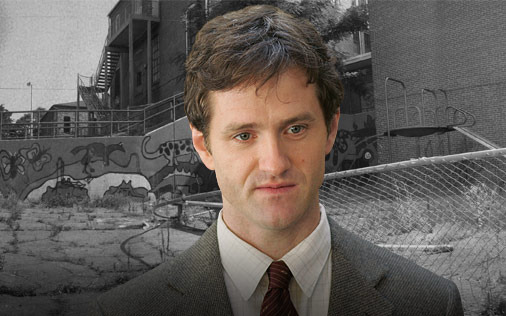
Class Projects and the Project Class (Seth Vannatta) analyses two specific story lines of Season 4 (education): Pryzbylewski’s class projects (his attempt to interest his students in math by connecting with them through the probabilities of dice games) and Dr. David Parenti’s project class, an attempt to connect with the worst, most recalcitrant students in the school.
Vannatta introduces his essay with an analysis of alienation in The Wire, and points out how alienation has helped form the attitudes of the students who are so movingly depicted in Season Four (Namond Brice, Michael Lee, Randy Wagstaff and Duquan “Dukie” Weems). He then explains the theories of John Dewey and Paulo Freire regarding educational methodology and goals: to allow the student to find himself within the context of his society, and (where the educational system depicted in The Wire falls short) the goal of the student discovering the shortcomings of his society and beginning to critique these within a process of change. That latter goal is of course related to empowerment of a deprived class. Powerfully enlightening!
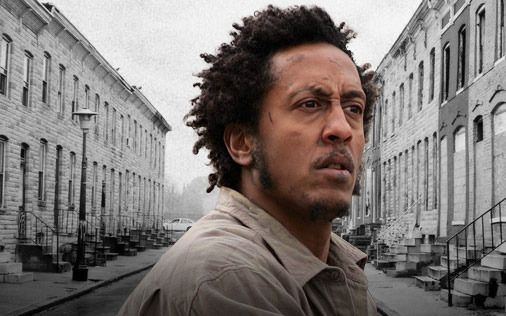
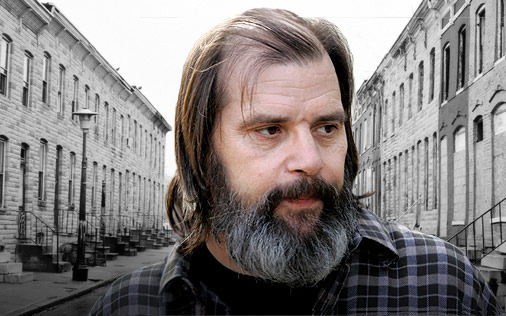
You Gonna Get Got (Kody W. Cooper) explores rival pictures of power and honor in The Wire: Old School (Aristotle, Aquinas) and New School (Hobbes). The modern American city “rife with the ambition for New School power”; yet even in Baltimore, “glimmers of Old School virtue” exist: the characters of Walon, Bubs and Cutty are “testimony to the power of every person to exit a destructive and vicious lifestyle and begin to live well”.
Is Our Thing Really a Part of the Big Thing? (Nathan Eckstrand) is an interesting explication of power in The Wire, using Foucault’s theory of power networks from Discipline and Punish. It’s particularly enlightening on how efforts at reform, according to Foucault (and as illustrated in the series) are “often appropriated by the networks of power they are meant to undo; the … reform ultimately ends up supporting the systems it opposes.”
Stop Snitching, Screw the System (Myisha Cherry) uses the writings of Cornell West and Angela Davis to analyze the “no-snitch” code of the racial underclass. Cherry says that a form of nihilism results from the inadequacies and outright hostility of the police towards the West Baltimore they are ostensibly assigned to “protect”, but which they in fact alternately brutalize and ignore; but concludes that this nihilism is not one of giving up on life, but a narrower and actually life-affirming one of giving up on the society exemplified by the police - a society in which the underclass is refused what they have the right to expect from society, and which they thus refuse to participate in.
It’s a Wrap
For fans of The Wire I would say this book is almost a must read. For would-be fans, recommended . For others, eh!
See http://www.opencourtbooks.com/categor... for the other books in the Pop Culture and Philosophy series.
And for links to the characters of The Wire http://en.wikipedia.org/wiki/The_Wire...
Omar: Just like you, man … I got the shotgun. You got the briefcase. It’s all in the Game, though, right?
This is the second of the Pop Culture and Philosophy series that I’ve reviewed.
In the first review (Spongebob Squarepants) I concluded that books in the series were useful entrees into both philosophy and serious reading in general for younger people.
This book could serve the same purpose. But I realized while I was reading it that, because The Wire is very unusual, this book deserves recommendation for more than just entrée-level reading.
That is, in terms of “Pop Culture”, The Wire is one of the few instances of same which offers serious social commentary about America, American cities, and the current American way of life: a way of life which, more and more , seems grounded on increasing inequality.
For anyone not familiar with The Wire, here’s a very brief overview.
The Book.
The 21 essays in the book are divided into six sections.
The Game
Three essays deal with an overriding theme of the show: that all the characters, no matter their societal role, no matter how honorable or dishonorable their actions and motives, no matter which side of the law they’re on, are forced to follow (or rebel against) the rules of overlapping games that control and shape their lives.
This Ain't Aruba, Bitch by Joanna Crosby is a summary of the social views of creator David Simon.
All in the Game (Ty Fagan) uses references to Heraclitus of Ephesus and Albert Camus to help describe the “game” theme of the show, concluding that the series presents "a clear-eyed portrait of the dying American city ... (the product of the) sputtering engine of late-stage American capitalism."
Locke’d in the Game? (William Allen) asks whether the B-more underclass illustrates Hobbes’ state of nature/war, or John Locke's Two Treatises of Government? The author thinks the latter. When a minority group in society is oppressed, whilst the majority enjoys the protection of rights and social goods, that oppressed group has been forced into a state of war.
The Tactics.
Wee-Bey Brice
Frank Sobotka
Jimmy McNulty
Scott TempletonThe five essays in this section deal with several issues growing out of the “game” theme, particularly ethical issues.
Wee-Bey's Way (David Bzdak) explores "impartiality", and whether being impartial is always required, or is even always a good. Plato's Republic, Socrates, Peter Singer, the Utilitarianism of Bentham and J.S. Mill, Virtue Ethics, the Greater Good Principle are all brought into the discussion.
When a Lie Ain't Just a Lie (Sean McAleer) is a moral analysis of three giant lies that drive the plot line through seasons two and five (Sobotka, McNulty, and Scott Templeton for those in the know). JS Mill's Utilitarianism provides the philosophical background, but McAleer argues that there are "degrees of wrongness", and in assessing these, motives and a person's character do make a difference.
Came to Do Good, Stayed To Do Well (Jason Grinnell) is about the difference between doing good (being a good teacher or police, one who understands the societal function of the profession) and doing well in a profession (by making the boss happy and getting promotions). Doing well is playing the Game; doing good is outside the Game. Excellent.
Giving a Fuck When It's Not Your Turn (Jim Thompson) analyzes The Wire as a story of modern big-city bureaucracy. The police, the schools, the media, politics, even the drug organizations; all in the grip of rules, regulations, unfairness, not getting what one deserves, the need for a patron, the rigid hierarchy, a need for loyalty. The players change; the Organization and The Game don’t.
What If Nobody Walks the Straight and Narrow Track? (Don Fallis) examines Kant's views on lying (Foundations of the Metaphysics of Morals) in the context of The Wire.
Omar Comin’.
Detective Shakima "Kima" Greggs
William A. "Bill" Rawls
Felicia “Snoop” Pearson
Three essays largely dealing with perhaps the most astonishing character in the series, Omar Little. Omar makes his living by stealing from the drug dealers. He is too clever, too vigilant, and too violent to be taken down by the dealers, though they try again and again. At one point they try to lure Omar into the open by torturing and killing one of his boyfriends. (Omar is gay.)
Is Omar the Nietzschean Overman? (W.Scott Clifton) discusses at length Nietzsche’s philosophy, particularly his concept of the Overman, then compares the qualities of this Overman to Omar. On three counts (Free Spirit, Non-Dogmatic about Truth, Noble) Omar qualifies; but he fails because he is not a "Value Creator"; he is human, all too human. Very interesting.
The Best of Boys and Lads (Kenn Fisher, with title from Plato's Symposium) argues that the two most powerful characters in the series are the homosexuals Kima and Omar; analyses them and their sexuality in depth; relates how the series handled these story lines without fanfare, and how two other homosexual characters (Rawls and Snoop) are portrayed to be such so briefly that many viewers probably never even noticed it. Fisher argues that in its portrayal of homosexuality, The Wire was absolutely groundbreaking.
Omar the Virtuous Thug (Jonathan Trerise) relates how Omar can be deemed a "virtuous" person by "virtue theory", an extension of Aristotle's view that virtue is largely determined by character traits rather than simply by actions. His summary notes well that unless we place people's actions in the context in which they live, we can't really judge them properly.
The Boundaries.
Dennis "Cutty" Wise
This section could probably be called Miscellaneous. All the essays are top-notch interesting.
No Women Up In the Game (Mona Rocha & James Rocha) focus on Snoop and Kima as representing militant feminism. Their actions and motivations are compared with those of female members of the Black Panthers & the Weather Underground radical organizations of the 1960s-70s. Both the characters accept violence as part of their "game", but only Kima has the ability to discriminate morally, to draw a line, and hence become a militant feminist heroine in the show. (Snoop is perhaps the most terrifying character in the series, an absolutely cold-blooded killer as an enforcer for Marlo Stanfield.)
Capital Noir (Tommy J. Curry, a specialist in Critical Race Theory, CRT) is the lone essay in the book whose author has clearly come to bury The Wire, not to praise it. Curry contends that Simon’s presentation of West Baltimore as an underclass sidesteps the racist reality of American society. It’s not class, stupid, it’s race!. I didn’t find the essay convincing, perhaps because it seemed filled with assertions backed up with other assertions, and so on.
Upon some Wikifying, I discovered that CRT is “an academic discipline focused upon the application of Critical Theory”; and that Critical Theory, in philosophy, is “the neo-Marxist philosophy of the Frankfurt School, which was developed in Germany in the 1930s. Frankfurt theorists drew on the critical methods of Karl Marx and Sigmund Freud. Critical theory maintains that ideology is the principal obstacle to human liberation.” So I’m prepared to admit that Curry may have something, and this whole approach could be an interesting one to explore.
(See the Wiki articles Critical theory and Critical race theory. Mr. Curry is mentioned in the latter.)
Hard Times After Hard Time (Zachary Hoskins and Nora Wikoff) is a hard-hitting essay which reveals the many barriers confronting released felons when they try to start over and go straight.
Dennis “Cutty” Wise is the character who illustrates the extreme difficulty that felons have in trying to live a new reformed life. Cutty is one of the inspiring characters in the series, who winds up opening a boxing gym and mentoring the youngsters who come.
In the U.S. there are federal and state laws barring felons from welfare, student loans, voting rights, public housing; and since private owners can refuse renting to anyone, particularly felons, released felons often end up homeless. We say these people have “paid their debt” to society; but no, they keep paying, and paying …
The Loss.
Russell "Stringer" Bell
Two essays about The Wire as tragedy, with a third tacked on by a well known philosopher
The Wire as American Tragedy (Avram Gurland-Blaker) analyzes The Wire in terms of Hegel's theory of tragedy. (I didn't know Hegel gave a fuck about tragedy, even when it was his turn! So there’s yet another thing I learned from this book.) The author says Simon goes beyond Hegel to find a more tragic view. How? the complexity of the situation, and Simon’s denouement – not the death of the protagonist, but the re-establishment of the (tragic) status quo. yeah that is tragic
The Birth of Tragedy from the Spirit of Baltimore (John Thomas Brittingham) examines the tragic in The Wire a la Nietzsche’s first, and I think most culturally influential, published work: Die Geburt der Tragodie (The Birth of Tragedy). The essay focuses on the Dionysian man in the Apollonian org (McNulty), and the Apollonian man in the Dionysian org (Stringer Bell). These forces do not resolve in a Hegelian synthesis. Rather, the friction between produces the brilliance that is tragedy, and which for Nietzsche is “the affirmation of life in all its forms."
… and then? …
What to Do in Non-Evental Times by the world-renowned Slovenian Marxist philosopher, psychoanalyst, cultural critic and pop icon Slavoj Zizek(!) This essay, the longest in the volume, while fun to read, sailed far over my head. What do “Non-Evental” and “prosopopoeia” have in common?
A trail of Terry Gilliam, Marx, Badiou, Brecht, Hegel, Lacan, Chesterton, Monteverdi, Chaplin, Hitchcock, Beckett, Ayn Rand, Godard, leads to – what? As Edward O’Neill has commented, Zizek ultimately “subdues the reader into acceptance”. I was reachin', but I couldn’t touch it.
Sentencing.
Roland "Prez" Pryzbylewski
Namond Brice, Michael Lee, Randy Wagstaff
“Dukie" Weems The four of them, "The Boys of Summer"
Reginald “Bubbles” Cousins
Walon
Four essays relating to power, or the lack of it.
Class Projects and the Project Class (Seth Vannatta) analyses two specific story lines of Season 4 (education): Pryzbylewski’s class projects (his attempt to interest his students in math by connecting with them through the probabilities of dice games) and Dr. David Parenti’s project class, an attempt to connect with the worst, most recalcitrant students in the school.
Vannatta introduces his essay with an analysis of alienation in The Wire, and points out how alienation has helped form the attitudes of the students who are so movingly depicted in Season Four (Namond Brice, Michael Lee, Randy Wagstaff and Duquan “Dukie” Weems). He then explains the theories of John Dewey and Paulo Freire regarding educational methodology and goals: to allow the student to find himself within the context of his society, and (where the educational system depicted in The Wire falls short) the goal of the student discovering the shortcomings of his society and beginning to critique these within a process of change. That latter goal is of course related to empowerment of a deprived class. Powerfully enlightening!
You Gonna Get Got (Kody W. Cooper) explores rival pictures of power and honor in The Wire: Old School (Aristotle, Aquinas) and New School (Hobbes). The modern American city “rife with the ambition for New School power”; yet even in Baltimore, “glimmers of Old School virtue” exist: the characters of Walon, Bubs and Cutty are “testimony to the power of every person to exit a destructive and vicious lifestyle and begin to live well”.
Is Our Thing Really a Part of the Big Thing? (Nathan Eckstrand) is an interesting explication of power in The Wire, using Foucault’s theory of power networks from Discipline and Punish. It’s particularly enlightening on how efforts at reform, according to Foucault (and as illustrated in the series) are “often appropriated by the networks of power they are meant to undo; the … reform ultimately ends up supporting the systems it opposes.”
Stop Snitching, Screw the System (Myisha Cherry) uses the writings of Cornell West and Angela Davis to analyze the “no-snitch” code of the racial underclass. Cherry says that a form of nihilism results from the inadequacies and outright hostility of the police towards the West Baltimore they are ostensibly assigned to “protect”, but which they in fact alternately brutalize and ignore; but concludes that this nihilism is not one of giving up on life, but a narrower and actually life-affirming one of giving up on the society exemplified by the police - a society in which the underclass is refused what they have the right to expect from society, and which they thus refuse to participate in.
It’s a Wrap
For fans of The Wire I would say this book is almost a must read. For would-be fans, recommended . For others, eh!
See http://www.opencourtbooks.com/categor... for the other books in the Pop Culture and Philosophy series.
And for links to the characters of The Wire http://en.wikipedia.org/wiki/The_Wire...

November 27, 2022
Some articles are very insightful and well written, but I quickly got bored with this book since I felt like a teacher reading essays submitted by students trying to get an A by repetitive word-bs references to greek mythology or Nietzsche.

June 22, 2021
To preface this review, I firmly believe The Wire is a cinematic and social masterpiece, inarguably one of the greatest television shows of all time. I absolutely love the show, and I think there is most definitely a semblance of reality present throughout. With that being said, I find the premise of this book somewhat absurd—a series of articles attempting to apply philosophical principles to a fictional world. The authors often attempt to draw conclusions about the world based on things that happen in The Wire, pointing to certain events or characters as evidence for or against different theories. While more recent theory might hold to a questioning of reality that would facilitate this line of thought (something along the lines of Debord’s theory of the spectacle), I don’t subscribe to the frankly ridiculous lengths some of these essays go to fit their philosophical musings to the show, a la “Is Omar Nietzsche’s Overman.” Someone also wrote an intro under the pseudonym Prof Joe, which killed the book before it got started for me.
November 15, 2014
A stylistically mixed-bag of essays. Some are really good, and most, if not all make good points. The one theme that I was most struck by was that of an institution taking a "life of its own". Institutions are created to serve a particular purpose, and metrics are established to judge whether or to what extent the institution is successful in serving that purpose. The problem is that maintaining and performing to these metrics *replace* the original purpose. Institutions that live by these standards have a pernicious effect on the society that they are supposed to help, and this twist is explored both in the TV show and the essays in this book.

March 27, 2014
It's an interesting concept and with even a minimal amount of editing it would have been a far better book. Sadly, the 20+ contributors were allowed to run free and endlessly repeat the same scenes over and over and over. It really doesn't even merit 3 stars imho, but a few of the contributions were first rate so it is worth reading.

July 16, 2013
Like philosophy? Like "The Wire"? You'll like this book.

November 22, 2016
Excellent examination of the systemic failures of postmodern institutions told through the lens of the failed war on drugs and it's philosophical antecedents
July 17, 2018
I really loved the show and this book adds a new level of understanding to the characters and their mindsets/actions. Very entertaining and I recommend to anyone who enjoyed the show.

January 31, 2020
Very torn between giving this 2 or 3 stars. Most of the essays in this collection are banal and repetitive. A vast majority of them focus on some sort of virtue analysis of the show, while not uninteresting in itself, becomes so once one reads a couple hundred pages of it. There is one essay in here that I found to be generally great, Capital Noir by Tommy Curry. It not only is original, it is insightful and well done. There's also a handful of essays that are okay, not unremarkable but nothing to write home about, such as Zizek's essay.
Lastly, one thing that was supremely annoying about nearly all of the essays is the way that the (mostly) white authors felt the need to attempt to write as if they were one of the characters in the show. Constant references to 'Marx's crew' or other ways to attempt to mould their vernacular to the show about which they are talking had me consistently considering whether I ought to either remove my eyes or lobotomize myself.
Lastly, one thing that was supremely annoying about nearly all of the essays is the way that the (mostly) white authors felt the need to attempt to write as if they were one of the characters in the show. Constant references to 'Marx's crew' or other ways to attempt to mould their vernacular to the show about which they are talking had me consistently considering whether I ought to either remove my eyes or lobotomize myself.

October 6, 2024
At times a bit too repetitive (and too much Hegel), but there's something intellectually stimulating here for everyone. I especially appreciated Tommy J. Curry's chapter on how The Wire's emphasis on class often misses out on showing how it's race that makes that so many black people in Bodymore are stuck in a system that systematically devalues their lives and experiences.

March 31, 2022
Awesome read combining some of my favourite things. Now, shall I go re-watch the Wire again?

June 22, 2023
If you are a philosophy major and a Wire, I but this book was the perfect read for you. However, I am not a philosophy major so this was very tricky to get through at times. The book did a nice job explaining retain philosophical concepts, but I still had a hard time connecting it to the characters and world of the Wire.

May 11, 2020
A very profound account of the atrocities visited upon poor , innocent Korean women during WW 2...
Displaying 1 - 13 of 13 reviews