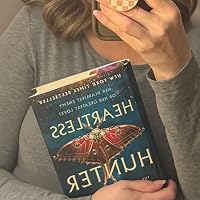
"The Old Money Book: How To Live Better While Spending Less - Secrets of America's Upper Class" shows anyone of any income level how to improve their life by adopting the values, habits, and priorities of Old Money. Whether you're just starting out or starting over, The Old Money Book is an informative and entertaining guide to Living Better While Spending Less.
It is full of so much great advice that should be on the national curriculum for young adults prior to entering "the real world". It's the type of book that you wish you'd have read years ago - I certainly wish I'd had this in my arsenal 15 years ago, it would have saved me from so many pitfalls (mainly financial).
Tully's writing style is very friendly and agreeable, like an old trusted pal pulling you aside to give you some welcome tidbits that you need to hear. Title aside (I know many liberals who would probably balk at this title), it pulls secrets from the lifestyles of some of the most well-rounded, grounded, financially and socially successful sub-cultures around today. The Old Money Book both affirmed many things I have felt about my lifestyle and personal countenance for a long time, but also highlighted a few areas I still would like to refine.
A very worthy read and I enjoyed it so much immediately ordered Tully's book on marriage (already half-way through and enjoying it also).
I know this sounds like a snob appeal book for "preppies" and social climbers, but it's not. It's a really good practical guide to living well, even on limited money. He actually recommends going to thrift stores several time. I really like Tully's views, which are pro-environment, diversity, and just living a simple life. And he priced his ebook at 2.99. Way to go, old chap!
I have so many thoughts on this book! The (Wink, Nod) was so annoying and came across as snobby. I disagree with him on a few topics, but most held truths. After looking at his picture on the back I just can’t take fashion advice from him. With as much emphasis he put on dressing timeless his picture looks dated. He should at least have used a white background. He looks cheap. I know...I know...I shouldn’t judge his book on his picture, but he does devote a lengthy chapter on how to dress. His advice on travel is good. We audacity to tell people they should not have many children baffles me. I do not know anyone who can ever really afford a child — not even Old Money. I think Dave Ramsey has better books on money topics.
Reading self-help books is like watching chick flicks for me; I don't really care for them but indulge in them every once in a while when I do not wish to use my brain.
This book didn't seem as much about financial advice as it was about having a certain standard of living or way of life.
Although, I don't agree with all the advice, there were some useful tips here and there.I read the pdf version on my phone during my work breaks. Wouldn't bother buying the book.
P.S. (Wink, nod) was overly used, and was quite silly.
Reads a bit more like a pamphlet than a book. This is a humorous guide to living a classy life that would be admired by "old money." I was happy to learn that my recent purchase of slacks from Brooks Brothers would be looked fondly upon by Old Money. But the fact that I don't wear a navy blue blazer is an issue.
As soon as I received this book, I immediately went to the table of contents and found the "most relevant" section to peruse. For me, that was the "Cars" section, as I've been considering buying a new car. I found the information within to be pretty interesting, and quite useful. It actually confirmed some of my previous beliefs about buying a car, but my car situation would take way too long to explain here. I then skimmed a bit more, but did not have a chance to finish the book at the time because life got quite busy (which is ridiculous given that this is a 140 page book).
Eventually I sat down to read the entire book. Overall, I did find useful information and tips within this book. It's about remembering the bigger picture (this is a lifestyle), and taking what tips each individual can apply to their own life - of which there are definitely a # throughout the book.
However, I did have a few issues with the first half of the book, within the "Core Values" portion. I'm not a parent, but found myself thinking that I'd feel slightly resentful of receiving parenting advice from a book geared towards money/finances (I do understand that this is about much more than that, it's about a lifestyle, but I was still a bit turned off). Likewise for the nutrition section. As a personal trainer with a nutrition certification, I found it to be a bit odd that very specific nutritional information was discussed. Furthermore, the author mentions that organic foods should be bought, and although he mentions gardening at home - which would be great in an ideal world - it's not always feasible to have one's own garden at home, and organic foods are always more expensive when store bought. This is a huge dilemma and catch-22 within our society, which is exactly why people from lower incomes often settle for packaged/convenience foods that are cheaper. I can go into more specifics, but I will let the reader formulate their own opinions.
I would like to thank Byron Tully and Goodreads for selecting me to receive a copy of this book as a goodreads giveaway winner. And I must say that Byron Tully included a personal note both within the package and on the inside of the book - which was a nice touch, so thank you.
This entire review has been hidden because of spoilers.
Most of the advice is spot-on, 100% correct. I just wish the book wasn't so short. The advice is given almost like a proverb - a short, quick truth without any expounding. Tully should try to inspire us to behave in these ways - perhaps with stories - not just tell us what those ways are.
Also, I didn't get a lot of the (wink, nod) references.
The Old Money Book by Byron Tully should be a required read before graduating high school. It's filled with common sense helpful hints that everyone should follow. Thanks Byron Tully for putting it all together. I won this book in a Goodreads First Reads Giveaway.
Super quick read about habits of the wealthy that anybody can adopt (without being wealthy). Ex: exercise, read lots, act classy, spend below your means -- all of this was a great refresher in starting the new year on the right foot!
To begin, I’m quoting two texts from the book which shows what the book is about and what is really important to the Old Money’s way of living. - “The purpose of this book is to help people who want to live fuller, happier, and more productive lives do so by learning about and emulating the values, priorities, and habits of ‘Old Money’. “ - “The way Old Money dresses and lives are symptomatic of its values, not the core of them; these values may require more time, effort, and discipline to understand, adopt, and put into practice. However, they tend to pay handsome dividends in quality of life.”
See, what’s important is not the superficial things such as how they dress (although good taste is desirable) or how to achieve social status; what’s important is the underlying values and hence priorities, and the principles by which they live.
What are their core values then? The author focus on seven of them in section 1: health, education, the work ethic, etiquette and manners, financial independence, family and marriage, and privacy
For each value, the author explains the principles that guide the actions of the Old Money. For example, some of the principles for the value of The Work Ethic include: - “Old Money realizes that there’s no good chance at happiness without purposeful, productive work. There’s no comfort in relaxation if you haven’t experienced the contrast of challenging work.” - “A marked characteristic of Old Money is that it does not waste time. This does not mean Old Money does not enjoy leisure. It does. This does not mean Old Money is always in a hurry. It rarely is. What it means is that Old Money knows the value of time and is aware that you cannot bank or borrow it like you can cash.” - “Old Money is often focused on maximizing the moment, whether it’s being productive at work or being joyful at home. Maximizing the moment means committing to what you’re doing, without distraction, for the time that you’re doing it.” - “Regarding self-discipline, old Money knows that so much of life depends on the ability to do what needs to be done, when it needs to be done, whether you like it or not. Indeed, this may be the major lesson in all of formal education.”
The author does cover more surface level visible things such as attire, diction and grammar, furnishings, reading, housing, socializing, cars, travel, staff vs. services in section 2. I’m glad the author rises above snobbery when writing about these.
Finally, I’m quoting a few texts I liked which again convey the essence of the Old Money way of living.
“A cornerstone of Old Money thinking is to prioritize personal reality over public perception. This means that Old Money is more concerned with the way things actually are with their personal situation than the way they appear to others.”
“The philosophy of Old Money is to enjoy life to the fullest; to learn and grow as a person; to work hard and excel in a profession that one enjoys and is passionate about; to preserve and expand one’s financial resources while using them well; to share a rich life with friends and family; to explore the world in order to better understand it, and one’s place in it; to prepare one’s children for a productive, healthy and rewarding life of their own; to benefit society and its less fortunate members through charitable giving or vocation; to leave a legacy for the future generations.”
“Old Money represents a set of values that prioritizes modesty over display, investment over consumption, work over idleness, and refinement over brashness. It believes in delaying gratification in order to achieve long term, worthwhile goals.”
Overall, I like this little book and enjoyed reading it.
A book that describes an attitude toward money that allows you to keep it. Pretty much the old Quaker way of living. Still, we can always use a recharge.
The Old Money Book isn't particularly good, but it's also too trivial to get upset over.
Byron Tully's financial advice is lackluster, and not specific to "Old Money" at all. It basically boils down to "Live below your means. When you do buy stuff, buy quality." Hardly earth-shattering. If you're just starting your own financial journey, you'd be better off either (1) talking to a frugal grandparent, or (2) exploring one of the more sensible FIRE (Financial Independence, Retire Early) resources. (My recommendations: Tanja Hester's blog, Our Next Life, and J.L. Collins' book, The Simple Path to Wealth: Your road map to financial independence and a rich, free life.) I will imitate Tully here by giving didactic recommendations with little support, but I would stay away from anyone who advocates a side hustle, gives advice obsessed with tax avoidance, lives frugally to the point of compromising quality of life, or who believes "$400,000 a year isn't enough to live a middle-class lifestyle." You know who I mean (wink, nod).
Tully's advice on fashion, furnishings, etc. is an impractical mess. Basically, you should only wear clothes from Brooks Brothers and Ralph Lauren, and you should wear them for decades. I half-expected him to recommend tailoring your grandpa's trousers. And you should buy furniture only at auction houses and estate sales, NEVER retail.
Look, I'm not a fast-fashion advocate, but there's a whole lot of quality stuff out there other than Northeast prep, and I'm quite satisfied with my primarily REI-inspired wardrobe.
And while the idea of becoming a vintage furniture connoisseur is appealing in theory, as a parent of two young children, I just don't see myself having the time to leisurely troll auctions on weekends, hoping to discover a perfect underpriced treasure that somehow everyone else has missed. "Old Money," according to Tully, does not appear to have a solid grasp of lost opportunity costs.
This might be a good introduction to living a frugal, yet quality life for younger readers. But as an established 40-something who is confident with her life and financial choices so far, this just wasn't worth my time -- and it certainly wasn't worth subjecting myself to Tully's not-so-subtle advice for women not to dress provocatively if they don't want the wrong kind of attention. Yuck.
This was another quick-read freebie. The money advice is good (and more or less reads like things my late grandmother advised). The rest is full of the -isms you'd expect (classism, sexism, etc.). The snobbery seems rather affected, too, like an actor playing a stuffy butler based on the performances of other actors, never having actually met or observed the real thing.
It's difficult for me to be too tough on a book like this, though. Personally, I can laugh off the silly conformist stuff, because my life affords me this luxury. But my teaching career put me in contact with students begging for this sort of advice--more or less, lower-income kids who wanted to land a job, get into college, fit in with better-off students and coworkers, etc. I can't come down too harshly on advice which basically will work, merely because I scoff at fitting into the career world or whatever. And I largely read this as "advice for those who grew up poor, made it through college, and want to get ahead at the office."
All the same, I wish that the author spent more time explaining the rationale behind his advice. For example, there's a lot in here about clothing choices. Tully writes about choosing classics over the latest thing, fewer quality pieces over several cheaper ones, etc. This is fine. But he doesn't do enough to explain why. I also don't like that he seems to be judging people (read: "the lower classes") for what he sees as their flashier, more fleeting-fashion choices.
It's fine to point out that one thing will pass muster with the one-percent, while another thing won't. And it's okay to lead people to make better financial decisions. But I don't think it's okay for Tully to express disdain for the tastes of the 99% or 47% like he does. It's one thing to say, "Dressing like this will help you fit in and get ahead." It's another to imply that the style being advocated is inherently better.
There's not much to be gained from this glorified pamphlet. It's poorly-written and the supposed "secrets" are banal and inane. They essentially boil down to "live a healthy lifestyle, prioritize education throughout your life, be productive, mind your manners, live below your means, don't get married too early, and live discreetly." None of this is news to those with decent parents or an ounce of common sense.
The author has an off-putting style ("wink, nod") and, in the first half of the book, writes with an undue certitude about the "core values" of Old Money. He doesn't actually offer any support for most of his assertions in that section and a lot of his advice is so oddly-specific (e.g., see an acupuncturist regularly, avoid milk, etc.) as to give the impression he's merely pontificating upon his own particular views and lifestyle rather than giving a reliable account of the upper class as a whole. He is on firmer ground in the second half detailing how Old Money lives, mostly because the subject matter is readily observable and therefore more open to the kind of generalization the first half is not.
The only real insight contained in these pages is the degree to which Old Money weighs every decision, whether financial, professional, or personal, by whether it advances or endangers the project of generational wealth inherited from forebears. That shouldn't be surprising, considering "Old Money" is explicitly defined by its possession of wealth for "three generations or more," but it's one of those things that only seem obvious with hindsight. Prudence, frugality, and a sense of duty emerge as the defining traits of the American aristocracy. It's a nugget, but it's not fully explored or developed by the author and it's not worth the panning.
I come from old money. Having said that, I should qualify that for generations before my parents everyone in the family was rich. But because they lived in a peasant village all of my relatives from a century ago learned to bury their wealth. They actually followed all of the directions given in Byron Tully's book. Now, because of certain beliefs, my parents were actually poor. But they had learned how to live like old money, and never said the "P" word (poor), but rather, we were "broke." And I and my siblings had superior educations, and all of us have managed to become wealthy again. We don't keep up with the Jones, or need to have every trendy thing. We value our time with family and friends more than objects. And we all live like old money. Oh yes, and we are happy.
I'm officially a fan of Byron Tully after this book and Old Money, New Woman. Tully is like the classy and knowledgeable grandpa that everyone wishes to have. His writing is crisp, articulate yet still so comfortable to read. You won't feel the superior nor the distance tone or anything off-putting while turning the pages. I will revisit this book for when I want to reaffirm on a big decision in life, such as buying mortgage, buying cars, investing or just simply learning about manners. Feeling lucky to get to know about this book in my 20s, so that I could start over and rebuild my foundation the "old money" way. 5*/5*
A touch cliché and the author doesn't know why, or how often, women wear foundation (wink, nod). There were some basic good points about health and dress sense, but I don't think this book met my expectations (wink, nod). For a personal finance and self-help style book, it also spent far too much time encouraging parents to micro-manage their children (wink, nod). In addition, can the author please refrain from using *(wink, nod)* after every sentence he thinks others may find amusing?
Although this title may look tricky, this really IS how the truly wealthy (those that inherit their money) keep it and spend it, because they inherit it, they have a limited amount - granted more than the rest of us, but they are also taught how to keep it from generation to generation to generation and on and on.
I'm on a bit of a manners and etiquette kick right now, and Bobos in Paradise awakened a desire in me to get to know the elusive 'old money' upper class. Most of it aligns with my expectations. The book itself is very readable.
Odd mix of good advice (some very obvious, however) and an annoying level of colloquialism where the author constantly writes a sentence and follows it with "(wink, nod)."
Tully is just a wee bit self satisfied, but his financial and lifestyle advice for young people is spot on (whether you come from old money, want to be old money, or not).
- (What a gem! Perhaps one of the best book I've ever read. Kudos to BGT)
- The cornerstone of Old Money thinking is care about personal reality over public perception (don't care about letting others know you have "arrived" - because you've known you've always arrived)
- Upper class care about values above all else, which include:
- Health: vital, take care of exercise and diet. Avoid processed food. No money can buy health
- Health for children: buying children McD is not good parenting. Children's health is prioritized above all else
- TV/Mobile Phones/Social Media etc: cut them out completely. One's only entertainment should be books
- Education: another cornerstone. Prep school is important. In addition, socialize with your children's friends' parents: make sure they share the same value as you do. Make sure your children know them importance of education as early as possible, and plan your children's education with your spouse asap (especially before the child is born)
- Parents sets the example for their children: if you watch less TV, if you use proper grammar, if you read and work hard, if you don't curse etc etc, your children won't do the same and they'll look up to you
- Talk to children, listen, don't react when they say something shocking (also chances are, sometimes they might be right. Because they're coming into the world with fresh perspectives. It will force you to rethink the world)
- Be honest with your children: they might want to become an artist more than a lawyer, make peace with it
- Your children are not yours, they're their own person
- Make family the most important peer group. Let the children know that they have each other when the worse time comes
- If you screw up in front of your children, admit it and laugh about it
- Don't hit your child at any age for any reason
- Teach your children to handle money, alcohol and sex early
- Your real competitor is yourself: try to do better than what you've done before
- Politeness/Mannerism is a core value. Treat everyone with respect (especially ones in the lower class)
- Children should be able to behave like children in your backyard. But they should know they're expected to behave differently in public with good manners
- Flamboyant displays of family wealth/money is a strict taboo
- Old money marry later in life. Chemistry is important, but values are equally - if not more important
- (Look at her mother - that's what she will look like in 30 years)
- Continue dating after marriage
- If anyone says they're old money - they're not
- Old Money Gal (OMG): minimal makeups (one should take care of oneself to have natural glow, not through makeups). A good dressed person should take you 5 minutes to realize they're good dressed
- Unless being told otherwise, bring flowers, desserts of a bottle of wine for the host
- Send a thank you note the next day
- When an old money want you to talk to someone, do so - there is a reason for it
- Old money travels frequently (but below one's mean): it's the best education one can get
This enchanting new volume, penned by a perceptive French observer, invites us into the rarefied world of “old money”—those families rich for at least three generations, whose passive income quietly doubles their expenses yet whose taste never screams for attention. Through chapters on dress, language, domestic life, reading habits, real estate, social rituals, cars, travel, and the art of service, the author sketches the subtle codes by which old‐money heirs steward their legacy without ostentation.
Reading it feels like stumbling upon an impromptu gathering of relaxed, well‐heeled uncles and aunts in a secluded park—strangers in daily life, yet here, over light laughter and tea, those elders graciously confide their secrets of living richly without the peril of becoming nouveau riche. Their guiding motto: “Once you hold true wealth, learn to preserve it—and pursue life’s finer pleasures with judicious restraint.”
Among the book’s core tenets: 1. Discretion Above All: Wealth kept quietly ensures peace of mind and shields family from predatory eyes. 2. Impeccable Decorum: Politeness, measured speech, genuine courtesy—avoiding any aura of condescension. 3. Quality Over Quantity: Invest in nourishing food, enduring attire, intellectual enrichment, health, and your children’s schooling—never in mere display. 4. True Cost Awareness: Recognize the full expense of both owning and maintaining possessions; refuse to be the gullible spender. 5. Use‐Based Prioritization: Allocate funds first to items you rely on daily—luxury that serves a routine need is never wasteful. 6. Purposeful Vocation: Work not from monetary necessity, but from passionate engagement and joy. 7. Drama Avoidance: Cultivate a serene life; do not manufacture crises. 8. Charitable Legacy: Let philanthropy be the sole, meaningful emblem of your fortune. 9. Marriage Mindfulness: Choose one lifelong partner thoughtfully—avoid serial unions. 10. Cultivated Privacy: When pressed for personal details, respond with a gentle deflection: “That’s an intriguing question—may I ask why you wonder?” 11. Immaculate Taste: Whether in fabric, cut, or simplicity of line, let each garment reflect a refined, neat elegance.
What struck me most poignantly was the reminder that, in Confucian societies, even the humblest family may nurture values of education and restraint as venerable as any storied dynasty. In this sense, old money’s wisdom is not the sole province of aristocracy but a heritage available to those—of every background—who choose mindful stewardship over empty extravagance.
Let’s start with the positives — this book is definitely informative. If you’re interested in learning about the habits and mindset of “old money,” you’ll find it fairly interesting. Was the information earth-shattering? Not really, but I appreciated that at the end of every chapter, the author included references and resources for further reading. That was a nice touch because if there’s a particular aspect of the old money culture you want to explore deeper, he gives you a solid place to start.
I also liked the “helpful hints” sections at the end of each chapter. They do a good job of summarizing what you just read and highlighting key takeaways. While I was hoping for more emphasis on etiquette, this book focuses primarily on finances — which makes sense given its purpose. I did appreciate the practical, common-sense, and fairly conservative approach to wealth and money management.
As for the negatives, I wouldn’t call them true negatives — more like points of awareness. The author’s tone can be quite blunt. Personally, I didn’t mind it (I actually found it refreshing), but I can see how some readers might find it a bit harsh or old-fashioned. He says things that many people think but don’t necessarily say out loud, so that may ruffle a few feathers.
Overall, if you’re curious about old money values and want a straightforward introduction to that mindset — especially from a financial perspective — this is a good starting point. Would I recommend it to everyone? No. But for those genuinely interested in the “old money” culture, it’s worth the read.