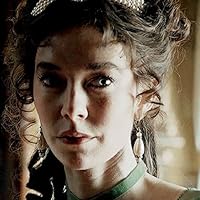
The acclaimed biography of Josephine Bonaparte, the Caribbean-born Creole who became the first wife of Napoleon and Empress of France.
One of the most remarkable women of the modern era, Josephine Bonaparte was born Rose de Tasher on her family’s sugar plantation in Martinique. She embodied all the characteristics of a true Creole—sensuality, vivacity, and willfulness.
Rescued from near starvation, she grew to epitomize the wild decadence of post-revolutionary Paris. It was there that Josephine first caught the eye of Napoleon Bonaparte. A true partner to Napoleon, she was equal parts political adviser, hostess par excellence, confidante, and passionate lover.
Josephine managed to be in the forefront of every important episode of her era’s turbulent history: from the rise of the West Indian slave plantations that bankrolled Europe’s rapid economic development, to the decaying of the ancien régime, to the French Revolution itself, from which she barely escaped the guillotine.
Using diaries and letters, Andrea Stuart brings her so utterly to life that we finally understand why Napoleon’s last word before dying was the name he had given her: Josephine.
“A comprehensive and truly empathetic biography. Andrea Stuart, who was raised in the Caribbean, combines scholarly distance with a genuine attempt to understand her heroine.” —The Washington Post
Andrea Stuart was born in Barbados in 1962. She spent many of her early years in Jamaica,where her father, Kenneth, was Dean of the medical school at the University College of the West Indies - the first university in the Caribbean.
In 1976, when she was a teenager, she moved with her family to England. She studied English at the University of East Anglia and French at the Sorbonne. Her book The Rose of Martinique: A Biography of Napoleon's Josephine, was published in the United States in 2004, has been translated into three languages, and won the Enid McLeod Literary Prize. Stuart's work has been published in numerous anthologies, newspapers, and magazines, and she regularly reviews books for The Independent. She has also worked as a TV producer.
Born in 1763 in Trois-Ilets in Martinique, Marie-Joseph-Rose de Tascher de la Pagerie spent a happy childhood on the family's plantation before being sent to Paris at the age of 16. Her family called her Rose.
Her family arranged a marriage to Alexandre de Beauharnais. He was living in Paris.
Roses family, who were wealthy Creole plantation owners in Martinique, had experienced financial difficulties after hurricanes damaged their estate. Her aunt, who was the mistress of Alexandre's uncle, saw an opportunity to arrange a marriage that would benefit both families.
Alexandre had never met Rose. He was 19 when they married in Paris. They had two children during their time together. Eugene and Hortense.
Alexandre Beauharnais was a French politician and became a general during the French Revolution. He was never happy with Rose.
He considered her unrefined and poorly educated. He was ashamed to be seen with her and rarely took her to any important occasions.
He eventually sent Rose to a convent. Besides being disgusted with her lack of education, he trumped up a reason of her being unfaithful to him.
The French courts eventually granted Rose a legal separation and ordered Alexandre to provide financial support for her and her two children.
During this time, Rose acquired polish and refinement from women of nobility residing in the convent.
She made some powerful political connections through these friends.
During the French Revolution Reign of Terror, Rose was arrested and imprisoned on April 21st.1794. Her husband Alexandre was imprisoned and executed by guillotine on July 23 1794.
Shortly after her husband's execution, due to the fall of Maximilien Robespierre and the end of the Reign of Terror Rose, was freed from prison. She was then under the protection of Paul Barras.
Barras sided with the men who sought to overthrow Maximilien Robespierre's faction. The Thermidorian Reaction of July 27, 1794, made him rise to prominence.
Napoleon Bonaparte first met Rose de Beauharnais in the autumn of 1795. They met through their mutual acquaintance, Paul Barras.
Napoleon was mesmerised by Rose. He declared he would only call her "Josephine." and He fell wildly in love with her.
Their relationship was quickly on fire, and they were married in March 1796.
His passion for her never failed and is well documented in all the letters he wrote to her while on campaigns.
As Napoleon gained power and years passed, his family would not let him forget how important it was for him to have an heir to the empire he built.
It is believed that Josephine was six years older than Napoleon. She was aging, and she never could become pregnant again.
Napoleons advisor Tallyrand pushed for a divorce. He relented, and Napoleon filed for an anullment decree. Josephine was devastated to take second place to a younger woman.
Napoleons second wife was Marie Louise of Austria. She became Empress of the French and Queen of Italy upon their marriage on April 2, 1810, and remained in those roles until Napoleon's abdication on April 6, 1814. She did give Napoleon the son he wanted. Napoleon II.
After being divorced by Napoleon, Josephine lived primarily at the Château de Malmaison, located near Paris, until her death.
Although their marriage was ended on paper, Napoleon still made sure Josephine would have anything she wanted for the rest of her life. He still cared for her well-being.
Napoleon always remained in touch with Josephine. He continually wrote to her, and he would visit her on occasion at her Malmaison estate. He never stopped loving her.
It was Josephines name he spoke as he lay dying. Not Louise.
There is very little of substance to be had on the life of Napoleon's Josephine. We possess some documents, register entries, dates of marriage and birth. We have the odd letter she wrote to a friend or to her children. (Both of her husbands complained vociferously over her failure to reliably correspond with them, her Corsican general destroying what she did manage to post as a matter of military security.) She kept no journal, composed no speech, contributed no article to the press. Her voice, in terms of posterity, is quite nearly silent. And while it is true that she features heavily in the legion of memoirs produced of her time, it is also true that she was often used merely as a tool to make a point. Few genuinely knew her, or viewed her as a person. And this is how she liked it. This is what she preferred.
In The Rose of Martinique, Andrea Stuart chooses to ignore her subject's elusiveness. Instead of embracing the void that is Marie Josephe Rose Tascher de La Pagerie, and examining the craft it took to create such an absence - no small feat for the woman poised at the heart of the Napoleonic storm - Ms. Stuart opts for the predictable and far more irritating course: extending herself as an authority. This is an impossible position to hold with those who cleave to shadow; whose every public moment is a carefully constructed presentation; whose armor is all we are given to see. Any effort to humanize, based as it is on the false front this woman so assiduously projected, is inevitably doomed to fail. The only authority on Josephine was and forever will be Josephine. She made sure of that.
Which is not to say the book is unworthy of note. A lot of information has been collected and appears in this one place. If you can ignore the author's strain to maintain her illusion of expertise, you'll find much here to tap the fascination of this woman and open her up to reflection.
For example...
Josephine was born on a sugar plantation in Martinique. She was of the landed gentry, and lightly educated. At age fifteen her aunt arranged her marriage to a minor French aristocrat named Alexandre Beauharnais. It might, perhaps, interest you to know that Alexandre served in the military alongside Choderlos de Laclos, that they were well-acquainted, and that Alexandre is believed, in certain circles, to have been the model for the Vicomte de Valmont in the novel his friend titled Les Liaisons Dangereuses. Imagine, for a moment, the fifteen year old Josephine married to Valmont. Ask yourself what she might have learned from that arrangement. About life. About society. About the value of orchestration. Alexandre, according to his many letters, took her training quite seriously...when he wasn't honing his own skills among his varied mistresses, of course.
And then there was Paul Barras, the president of the National Assembly, and as dissolute a man as might be found in the Revolution's corridors of power. He sweeps her up once she's been widowed by the guillotine, and it's beneath his wing she learns how to navigate in style. It is Barras who helps put an end to Robespierre, Barras who quells insurrection with the aid of the young artillery officer who'd made such a name for himself in Toulon - Barras who, in all likelihood, hung our Creole like a plum before the eye of Bonaparte. No one predicted marriage. No one predicted this soldier's love. How far was she meant to take this? It seems certain she didn't know.
More interesting now, isn't she? And there are still so many books to go.
It was good. If I could give this book 3.5 stars I would. Truth is, if you're looking for a solid English biography on Josephine's life, this is probably your best option. Could you call it a great biography? No. Is it likely the most balanced and readable Josephine bio in English to be found? Unfortunately, I think so. When the majority of biographers on both Napoleon and Josephine choose to deliberately cherry pick sources and not read memoirs of the 19th century with a critical eye, you wind up with a vast trove of very problematic biographies. Andrea Stuart, sadly, while being more careful than most of Josephine's biographers, still falls into the usual pitfalls of taking for granted what is written in memoirs of very debatable credibility. While it would be difficult to construct a solid picture of the Empress and her life without using memoirs, sources such as Barras' (ghostwritten and posthumous) venomous memoirs or those of Bourienne, have proven to be of dubious credibility, especially as both men had good reason to resent both Napoleon and his wife.
I appreciated that Stuart tried to take a more even approach to her subject, admitting to both her faults and her virtues. What I appreciated less was the prominence unprovable extramarital affairs had in piecing together Josephine's life during the directorate. I can give her the benefit of the doubt over this because this book was published a while ago and the information is perhaps a tad outdated. Now, for example, many have begun to doubt the validity of Louis Hastier's 1955 book which included what he claimed were transcripts of letters Josephine had written Hypollite Charles during their supposed affair. Since then, an affair that had up until '55 been a piece of oft repeated gossip became the gospel of truth in all Josephine's biographies. Nevermind that these letters Mr Hastier claimed to have found with Captain Charles' descendants have never been seen before or since, not even as photographs or scans. Moreover, according to Pierre Branda the author of a more recent (and far more well documented) French biography on the Empress, the descendants of Charles have never heard of or seen any such letters. That such poorly documented and entirely unprovable affairs, possibly originating with malicious gossip, should be given such a central role in the life of a woman who definitely had more important things going on (illicit business, the physical difficulties of early menopause, and frantic political scheming on behalf of her ambitious husband, just for starters) does Josephine a great disservice.
Outside some few sore points, it's a good starter biography for anyone wanting to know more about the famous Empress. It's certainly a much better alternative to Kate Williams' newer but overly-gossipy biography on Josephine.
Stuart does a fantastic job of making history read like fiction. Normally there are places in a biographies that I struggle to read through, but Stuart held my attention through each chapter.
The author states at the beginning that there are 60 biographies on Josephine out there and so much information that "A definitive biography of Josephine is therefore impossible; I offer this only as a general biography with a new accent"--and to this degree the book admirably succeeds. In reading of Josephine's life a lot of ground is covered--poor daughter with no dowry of a decayed French nobility living in a ramshackle sugar plantation in the Caribbean to sad plump bride that was not important enough to be seen in court and abandoned by her first husband to one day ruling over said court herself next to her second husband as one of the most powerful women in the world.
You grow to like and root for Josephine over the course--although some things I felt glossed over a great deal--would have liked to read much more about her life during the Directory and friendship with Tallien. The book never states how Napoleon propositioned Tallien, who laughed, thinking he was joking, and paid for that laughter by Josephine being banned from seeing her best friend later. Napoleon comes off in the standard way--an unbalanced schemer who used people, and although he treated Josephine terribly, they were so entwined together, it's appropriate her name was the last word he said.
I didn't like how de Stael was depicted in this book, all "swarthy complexion, bulbous lips, and prominent nose" and if you read this book your impression might be that she was in love with Napoleon and his most ardent admirer, when in actuality she was the main person in Europe standing up to him and forming coalition against him. Though it was nice to see the evolution of his personality via Josephine--and interesting since he considered her his lucky talisman, that as soon as he divorced her, everything seemed to go awry.
I liked reading more about her children, Hortense and Eugene, since they pop up in every Napoleon biography (for good reason) and Eugene has long been one of my favorite people from history. He stayed noble and cheerful throughout this book too, always choosing his mother over his emperor when forced to and I really would have liked SOMETHING, ANYTHING at the end detailing what happened to her children and people crucial to her life. Book just sort of ends with the death of Napoleon--again and again in this book, I was eager for more information, but the book stays true to the "general biography" tone which is too bad. Why can't there be a definitive book on Josephine? If it takes multiple volumes like bios on Roosevelt or LBG or say Napoleon, then it takes multiple volumes.
That said, considering the multiple ways Josephine intersected with history and her times, this is a very good book that just whetted my appetite on wanting to know more. Like Napoleon's bitchy family--what was his sister's deal with Josephine? How his sisters and brothers treated her alone gives her my full sympathy.
This is an intelligent, well-researched book that deserved to be reviewed in major US newspapers which it wasn't. (I looked online.)
The author pays particular attention to the history and slave-owning culture of Martinique, where Josephine was born Marie-Josephe-Rose Tascher de la Pagerie, the daughter of a plantation owner who kept 150 slaves. One of the sub-themes of the book, which is quite well handled, is the influence of Martiniquan society on Rose (as her family called her) and the way immigrants from Martinique were seen in France. Rose arrived in France a chubby, provincial girl of 15 for an arranged marriage. She soon became an elegant Parisian style leader, famous for her elegant posture, kind and generous disposition, beautiful speaking voice, and love of flowers and children.
The book is well-written and a great view of the French Revolution, Directory, and Imperial Period through the experiences of one remarkable woman, her family and friends.
The resilience and humanity of this remarkable woman through extraordinary times, good, bad, and great make for a tremendous read by any author willing to do the research and put together such a life. And Stuart, who tells readers that she also comes from plantation-owning Caribbean stock, has done just that, recording the life of the woman Napoleon dubbed "Josephine" with respect, fondness, and a graceful writing style that never flounders.
I recommend this book to history buffs, especially those interested in French or Caribbean history, historical biography, social history, womens' history, and anyone who just wants a "good read" about a remarkable individual who live through uncommonly turbulent times and went from being a plantation owner's daughter to the wife of a French Vicount, to being a prisoner in a disgusting prison during the Reign of Terror, and ultimately an Empress.
Since we'll be visiting Martinique next year and will see where she grew up, I at first planned to just read the first section of this book. But it grabbed me right away and I couldn't stop reading until I read to the very end. We'll also visit St. Helena, where Napoleon died. This is a biography about her but also about him and their abiding love for one another. Sometimes bios can be a bit of a slog, but this never was. The amount of research is impressive.
This was a pretty solid biography of woman who did not leave much behind so far as primary source documents. Josephine’s letters are mostly gone but the writer did a good job piecing together an image of her through the writings of her husbands and children, as well as the artistic legacy she left behind. She also placed Josephine well in the context of the time in which she lived. Point off for too many unnecessarily obscure word choices at times.
This book might actually be 2 stars, but the subject matter and her life, no matter how poorly handled and unexceptionally told, is so exceptional in its own right, as to eclipse the shortcomings of the writer. I recently read the trilogy The Many Lives and Secret Sorrows of Josephine B. by Sandra Gulland. This trilogy was one of those historical fiction books that is 95% non-fiction/biographical with 5% of fiction used as dialogue. It was a fantastic trilogy. I fell in love with the amazing Josephine (hence my choice to read a biography on the great lady). The trilogy was so compelling I could not put it down and thus I gave it a 5 star rating. The purity of the biographical elements were astounding. I kept wondering 'did this really happen?', 'could this be true?'. Josephine's life is the embodiment of 'truth is stranger than fiction'. Destiny is the perfect word to describe the life of Rose de Beauharnais aka Josephine Bonaparte. So when I purchased 'The Rose of Martinique', I expected to find out more about Josephine. In fact, I found out less and in much more boring tones. Perhaps had I not read Sandra Gulland's excellent trilogy I'd have found this book more appealing. I still cannot imagine I'd give it an excellent score nonetheless. With books like Peter the Great by Robert Massie out there (one of the greatest books ever written!), one must achieve a lot to garner the excellent reviews a writer desires. This book by Andrea Stuart (writer of the screenplay 'Showgirls') just doesn't deliver. It is neither compelling nor fact riddled. Worst of all, there's no knowledge of how to pace or where the delve deeper in this biography. Josephine's stint in the infamous Le Carmes prison during the Reign of Terror, her subsequent barrenness due to her tragic imprisonment (which was directly responsible for her painful divorce) was brushed over and given as much credence as her friendship with the beautiful Theresia Tallien. This pattern is ingrained in the book. Josephine is one of the most interesting and fabulous women in history, with a destiny that is magnificent. This book could have been absolutely amazing, examining the fiery story about a life if tragic lows, exceptional highs, and a fabulous destiny foretold in youth. Instead it was lukewarm at best. Very disappointing. Josephine deserves better.
This fascinating and intelligently written book by Andrea Scott about the life of Josephine, Napoleon’s great inamorata is going to be very hard for me to return to the library. Josephine was born on the Island of Martinique while it was a French possession. Her real name was Rose de Tasher. Napoleon renamed her Josephine because he could. My temptation is to carry on listing some of the fabulous details of her life, but that would possibly spoil the book for you. Let me just say that I have new heroine – a woman with whom I have nothing in common, yet I feel certain would endeavor to put me at ease were I to meet her. She lived at the cusp of some of the greatest events of her time. Though she was married, widowed, imprisoned, poverty stricken, had terrible teeth, wore pots of rouge, had many affairs, was a world class shopper, could cry at the drop of a hat, was crowned Empress and later divorced from the man she truly loved because she could not give Napoleon an heir, yet she was a wonderful mother whose children were loyal and kind, and no one ever disagreed that she was unfailingly sweet, considerate of everybody and genuinely kind. She retired to her home at Malmaison and devoted herself to its gardens. It was a life that could have crushed to best of us, yet she died beloved, wearing a rose silk peignoir and a suite of rubies. Napoleon, on the other hand, died alone, probably poisoned, exiled on the Island of Elba. His last word was “Josephine”.
I absolutely loved reading this. Not only did I learn many new facts about Josephine, but Stuart also manages to incorporate the unfolding histories of the French military, sciences, literature, arts, fashion and economy.
This is a fabulous writer who is able to make the era and the people come alive and seem fresh with just enough detail to keep the reader enthralled, but not too much to make the work sound overly academic or detached in tone.
The reason I gave this a low score is not the quality of the writing, which was excellent. The problem was the level of detail. I just found it too much to plough through. The information was great, with very evocative descriptions, but there is just too much of it for me. I gave up halfway through, but don't let that put you off.
This was not a terrible book just a waste of my time. The author cared more about the glitz and glamour ala the Kardashians than the personal and political history of this fascinating woman and her time. Sometimes her prose was fluent and engaging, but at too many other times she employed tiresome clichés.
I read this book, mainly because I wanted a more in-depth look at her relationship with Napoleon. His biographers tend to morally demonize, minimize, or completely erase her from his history, even though she was perhaps the most important woman in his life. I’m starting to find that Josephine’s biographers either vilify him or paint a very one-dimensional picture.
The book is beautifully written and flows well. I loved a large portion of this book because of the narrative the author provided, coupled with the historical detail. This is all handled really well, up until Napoleon returns from Egypt. Where their courtship and the Italian campaign were covered in great detail, the time of the Consulate and Empire became more dicey.
In the introduction, the author argues that their bond wasn’t improbable, as other historians claim, because of their shared immigrant status. Both of them were outsiders who had to claw their way up to the top. I was eager to read her analysis of an often misunderstood relationship that is often judged because it doesn’t live up to our 21st century ideals. The author provides strong evidence that Josephine came to love him desperately, but the reader is left scratching their heads as to why because the author cherry picks her sources to make Napoleon seem persistently cruel and insincere. Was Napoleon jealous and possessive? Yes. Did he have strong opinions about women and gender roles? Yes. Was he controlling? Yes. Was he a general pain in the butt sometimes? You betcha. Bur he also had a lot of positive qualities. For as patriarchal as he was, Josephine’s “submissiveness” made her fit into his life like a puzzle piece… and yet she was a powerful woman in her own right.
I am more interested in reading a book that examines Josephine as a woman of her time who navigated the restrictions placed upon women with such grace and finesse. Josephine possessed a unique brand of feminine power she used to influence Napoleon — and that to me is fascinating. I think less time should have been devoted to her beauty regimen and more to understanding how she in the context of other women navigated this time period and why her relationship with Napoleon was able to endure so much. (Note: I’ve been fact-checking this book through an AI app and it’s incredible how, in this case, technology has proven itself more balanced and sympathetic than this author.)
Since reading this book, I have read other biographies that give a much better look at the good, the bad, and the ugly of their relationship, to the point that it shed light on the bias of this author and the way she presents a partial truth or a historical detail completely out of context. I don’t mean to rate this book too harshly because it’s one of the better books I’ve read. It’s like a really juicy steak with pockets of fat that are inedible to me. What fascinates and frustrates me the most about understanding her relationship with Napoleon is how their love and devotion transcended such a messy relationship. Josephine was not defined by this relationship, but the trials she suffered beforehand shaped her into the resilient counterpart of a man who was equally as tough. She had to be strong to offer him emotional support and to be with someone as demanding as Napoleon, but instead she comes across as weak in this book. The author makes her seem like a spineless woman who allowed Napoleon to neglect and emotionally abuse her. What biographers like Andrea Stuart and Kate Williams fail to realize is that by throwing Napoleon under the bus, they’re doing the same to Josephine.
One would think based on this account that Josephine would’ve been relieved to rid herself of him, but she remained devoted to the end and he took very good care of her. Despite her affair, his mistresses, his conspiring and hateful family, political pressures, their inability to produce an heir, his demanding personality — in the end, they are both quoted as saying that the only thing they really fought about was money. No matter how good of terms they remained, historians has pitted them against each other because modern day folk have such a hard time explaining what kept them together. It’s important to examine this part of her life because he impacted it so deeply and he remained one of the most important people in her life.
Josephine was glamorous and beautiful. She loved expensive things. She was kind, charming, and seductive. We know all this. But she is so much deeper, so much more complex. She was a survivor who, in my opinion, didn’t allow many to know her true self. She was a mystery, an enigma, who was able to navigate a man’s world using her feminine power. She was an outsider who clawed her way to the top and had the ability to effortlessly penetrate the thickest skull and toughest heart of a man, for whom all other women saw as the big, mighty emperor but who she knew only as Bonaparte. Considering this, on top of everything she suffered and endured, doesn’t this in some ways make her one of the most powerful women who ever lived? Not through actual political power, but through who she was as a person and the effect she had on others.
Napoleon divorced her! That's what most people remember about the Creole woman, although she was known as Rose until she met the Corsican. She grew up on the French island of Martinique where she lived until she was 15. With a minimum of schooling she found herself on a sea voyage to France to marry Alexandre de Beauharnais. This marriage, arranged by an aunt, proved to be none too happy since he had several mistresses and little patience for a poorly educated girl. Had he kept his head, he might have found some happiness with Rose since he seemed to be a good father to their two children, Eugene and Hortense. Unfortunately, the French Revolution made that impossible. Alexandre was executed while Rose escaped that fate only to have two children to raise and few resources to do so.
She proved more capable in the years that followed as a self-taught lady of society. She had a reputation that was questionable even after she met a man, the young, somewhat naive Napoleone Buonaparte. He fell for her, and things being what they were they married despite the fact that he was several years younger. To her dismay, all her in-laws hated her, and probably did until the day she died. Not that they were such a great bunch, but Napoleon (now using the French spelling) was a great believer in nepotism.
As he progressed through the military and political ranks, his relationship with Josephine (as he called her) changed. He demanded fidelity even if not for himself. He made the rules, and she went along because she had found herself in love with him. It was a marriage fraught with questions because she was no longer capable giving him an heir. Finally, in 1809 they parted so that he could marry Marie Louise of Austria who could give him a son. For the next five years Josephine managed a life of her own, not without many tears, until she succumbed to a diptheria-like disease. Napoleon succumbed to his meglomania which ended at Waterloo.
I enjoyed the book and learned a great deal about the couple. 'Being green' may not be easy, but finding happiness in marriage is not easy either, especially when one of the partners is in love with power and needs an heir to cement his legacy.
This is a very interesting read and provides a glimpse into the personal and private life of Napoleon and his wife Josephine. The book is 456 pages end to end. There are 17 Chapters plus the usual notes and bibliography. The book begins with Josephines birth and family background and concludes with her death May 29, 1814.
Joséphine Bonaparte, French born Marie Josèphe Rose Tascher de La Pagerie; 23 June 1763, was Empress of the French as the first wife of Emperor Napoleon I from 18 May 1804 until their marriage was annulled on 10 January 1810. As Napoleon's consort, she was also Queen of Italy from 26 May 1805 until the 1810 annulment. She is widely known as Joséphine de Beauharnais. Her first husband, Alexandre de Beauharnais, was guillotined during the Reign of Terror, and she was imprisoned in the Carmes Prison until five days after his execution.
She lived through the tumultuous times of age of Revolution and the Napoleonic Wars. She had a reputation of sultry beauty and charm. Her relationships with both here husbands were rocked by infidelity. Her list of acquaintances is a who's who of European Aristocrats. She and her ladies in Waiting would not only scandalize France, but all of Europe as well with their ideas of fashion. She flaunted rules and traditions and was also a trend setter. She was the perfect match for Napoleon. At times, the story digresses and becomes slightly redundant. but these digressions are important for the holistic picture. My war studies usually focus on doctrine and strategy and my Masters Thesis was on the battle of Marengo and so this book brings a much-needed perspective on Napoleon and shows him in a different light. The book is based on primary sources from French archives - diaries, letters, memos and of course some secondary sources. This book however focuses on the actual diary entries and letters of all the key players. I highly recommend this book
One of the most remarkable women of our modern era, Josephine Bonaparte! What makes this biography such a good read is the extraordinary TRUE STORY, well told, of Josephine's own life (and the detailed relationship and her eventual marriage with "her" Napoleon), during fascinating, frightening times of the decaying of the ancient régime, through the Terror of the French Revolution itself, and beyond to post-revolutionary Paris. Masterful research done by the author! It's a story worthy of a blockbuster novel! I didn't want to reach the end!
The book was a recommendation from a friend after we read The Scarlet Pimpernel. Its explanation of the French Revolution is insightful. The life of Josephine was far more interesting than I realized. I actually like her. I can’t say the same about Napoleon whose life intertwines so much with Josephine. They are integral to one another. The author did intensive research and obviously cared about what she was writing. She made me care too. Definitely a worthwhile read.
Best biography I have ever read of Marie Josephe Rose Tascher de la Pagerie aka Empress Josephine of the French. What a full and exciting life this woman had from her birth on Martinique to her death 51 years later at her beautiful house Malmaison just outside Paris. Andrea Stuart writes a book absolutely packed with historical facts covering the revolution, plots, murder, sex, passion. An absolute whammy of a book. Her name so they say was the last spoken word on Napoleon's lips. Without a doubt he adored her.
The writer has done an amazing amount of research and it shows in this wonderfully written book. I learned a lot about Josephine, the French Revolution, life on a Martinique plantation, more about Napoleon Bonaparte and all written with Josephine as the focus. I loved this book and enjoyed reading it. it covers a turbulent and important period in history and firmly places Josephine as one of the major female figures of the period .
This wonderful bio got sucked back before I could finish, but I was so anxious to read to the end that I went to the library to check out the paper copy! I knew hardly anything about Josephine"s life or background or passionate and ultimately sad relationship with Napoleon. They're both larger than life, so the story is unputdownable. Loved it and would love to visit Malmaison the next time I'm in Paris.
The author has done a lot of research and by piecing together letters and other writings has compiled a decent biography of Josephine. Several holes have been filled with educated guesses, especially in the area of extra-marital affairs, so some must be taken with a grain of salt. Still, what a fascinating life...not all of it glitz and glamour. Josephine's contributions to the preservation of art and the propagation of plant life (especially floral) are to be admired.
A biography, that sometimes reads like a novel, of the greater-than-life figure of Empress Joséphine Rose. She lived (and) survived the most turbulent times of the History of France and ascended from her birth status of petty creole noble to Empress of the largest European empire since Roman times through her, also very turbulent, second marriage with Napoleon Bonaparte.
Excellent portrayal of the life of a great personage who has often been depicted negatively. Though inseparable , author’s presentation of Napoleonic Times is praiseworthy.
Well done biography. How’s in depth, used letters from Josephine and contemporary sources wonderfully. Doesn’t shy from the bad parts, seems to balance multiple views of Josephine. Really enjoyed it. Good easy writing style too
4.5 stars. I did not know much about Empress Josephine (nee Rose), so I liked how the author used letters, diary entries, etc. to cover most of the details of her life from her birth on Martinique to her death in France.
Interesting but not a page turner - if you’re interested in Napoleon and Josephine I would point towards the Sandra Gulland trilogy, which are a fantastic read.