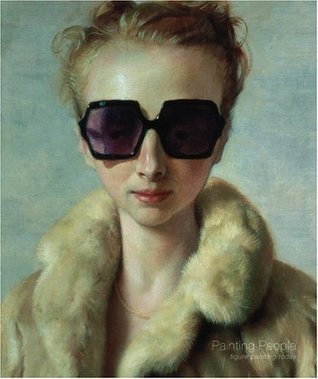
After a century in which the lexicon of artists' materials expanded from the classic oil, canvas, stone and plaster to include photography, film, performance, found objects and concepts, the spotlight has finally swung back. A new generation of artists--as well as some who never abandoned figurative painting in the first place--is relishing the solitary, slow, subtle set of processes involved in not just painting, but painting people. They are choosing paint's unique ability to distill a lifetime of events rather than photography's glimpse of a frozen moment. Painting People, edited by the prominent London art historian and critic Charlotte Mullins, unites and contrasts the work of a key group of artists from around the world, and investigates their richly varied accomplishments in lucid text with detailed commentaries, accompanied by more than 150 reproductions. The list of contributing artists is stellar, ranging from photo-based painters like Luc Tuymans, Peter Doig and Marlene Dumas to Pop artists like Sigmar Polke and Alex Katz, photorealists like Chuck Close and Gerhard Richter, Neoexpressionists like Cecily Brown, and comics-inspired painters like Yoshitomo Nara, Inka Essenhigh and Takashi Murakami. There are erotic grotesques from John Currin and Lisa Yuskavage, meditations on the muse by Elizabeth Peyton and Lucian Freud, "Repro-realistic" work from Neo Rauch and of course self-portraits by Philip Akkerman and Marcel Dzama, among others.
Charlotte Mullins has written widely on contemporary art, architecture, design and art history for specialist art magazines, newspapers and exhibition catalogues since 1995.
Charlotte Mullins is a highly respected British art critic and historian and her contribution to the milieu of figurative painting today is a major one. This book, PAINTING PEOPLE: FIGURE PAINTING TODAY, manages to give enough information about various approach to the figure, including the fusion of vision of artists with societal atmosphere at present to make it an immediately indispensable volume for students and art lovers and collectors. She writes very well and manages to stay comfortably away from the Artspeak that so often alienates the casual viewer. For that she is to be heartily congratulated: this book is readable even without images!
The best part of Mullins' writing is the segments she places beside the many images that generously flood the pages of this finely designed and produced volume. Readers who know the artists well may take exception to some of her 'diagnostic thoughts' about the meaning of some of the paintings, but at least she is making the attempt to pull the viewer into the paintings rather than simply posting images. Unfortunately the sizes of the paintings in this book are not listed, a factor that many seem unimportant to some, but when discussing the potency of standing in the presence of, say, the works of Cecily Brown, Jenny Saville, of Lucien Freud, size matters: the impact of the figures that are larger than life makes a difference on how they are perceived.
Anyone involved even tangentially with the artists who paint the figure may take exception to many of the artists included in this selection and be even more amazed at the paucity of the many giant figurative artists from the USA: listing the artists not included here would be an entire other book. And on the other hand, while it is informative to be exposed to the myriad types of artists Mullins does include, the quality of many of them beg indulgence with the company they keep! But here is an opportunity to study the thoughts of a well regarded critic about the current status of figurative painting, and for those of us who have been champions of figurative art for decades, this book is gratifyingly comprehensive. At least the Figure is being discussed in depth, even if too many of the artists who have devoted their lives and careers to the figure on canvas are ignored.
From Picabia to Eric Fischl to Glen Brown. "Painting People" organizes contemporary figure painters into sub-categories such as "The Urban Condition," "Other Worlds," "Folk Tales," and "The Past Deconstructed" you'll find yourself though flipping through this book without consideration of the chapters that try to define the issues that the painters are categorized to. The categories work best by selecting a more well known artists such as Daniel Richter and having more unknown artists of similar painting styles in the same chapter, such as Andrew Gunther, Peter Doig, and Henning Kles. Wonderful small bios of the artists and a unique selections of works make this worth picking up if you're painting the figure.
very good book. split up into various approaches to figurative painting; urban, other worlds, folk, past deconstructed. published in 2008 it's outdated, but still gives a good perspective on the direction figurative painting is going. I went through and compared current auction prices with the artists mentioned. it's interesting to see that several have thrived while others have languashed. apart from the older more established artist such as Marlene Dumas, Peter Doig, Zhang Xiaogang, John Currin (b 62) George Condo, and Luc Tuymans, there are a few younger, born after 1960, that are doing well; Jenny Saville, Micheal Borremans, Barnaby Furnas, Yan Pei Ming, Wangechi Mutu
It is not a bad book, but the categories are arbitrary and much of the work just third tier. If it is trying to dispel with a crises in painting, it fails - take for example the complete lack of difference between Peter Doig, Henning Kles, Daniel Richter, etc. to me shows the larger problem of figurative painting today. No real finds in here that weren't already known.
The quintessential resource on contemporary figure painting! The introduction and beginning of each chapter are a little difficult to get through (even for an art lover such as myself), but the captions accompanying the work provide a fresh take on the artists' inspiration and process. Beautiful reproductions. A must-read (and look!) for anyone even remotely interested in figure painting.
very inspiring paintings...funny though...shortly after looking at this book i stopped doing figures. but the narratives i think are what i took from it...