

What do you think?

The Joyful Child: Montessori, Global Wisdom for Birth to Three
This rich but brief introduction is based on the author's 50 years of experience as a teacher, parent, grandparent, school consultant, government consultant, speaker, and oral examiner for Montessori teacher training courses. Montessori guidelines presented here have held true all over the world, no matter what the culture of the child, for over 100 years and prove to be as true now as ever. It is the goal of this book to help parents look for, discover, appreciate, and support the mental, physical, and emotional needs of the child in the first three years of life, in their own culture. There are over 180 black and white pictures from the author’s work around the world with children from birth to three years of age. "The Joyful Child" is used in Montessori teacher training centers, middle school human development classes, birth preparation classes, and it is of interest to anyone studying education and child development. It has been translated into several languages and is often used as a text for parenting classes. The First Year—The Before birth; music and language; crying as communication; seeing and processing; the absorbent mind; materials The First Year—Reaching Out and The development of movement; toys that aid the natural development of movement; natural materials for toys The First Year—Sitting up and The child’s Work; eating and working while sitting up; safety concerns with new movement abilities; number of toys available at any one time, and learning to put them away; suggested toys The First Year—Freedom of movement; a safe and natural environment; crawling, pulling up, standing, and walking; toys and equipment that aid movement development The End of the First Year—Unique Development and the Child’s Each child’s path of development is unique; aiding the beginning of a good self-image; preparing the home to welcome the newborn; clothing that supports free movement; attachment and separation, preparation for weaning and toilet learning; sign language and elimination communication (EC); materials that support optimum growth and development; unconditional love; the end of the first year Age 1-3—Care of Self, Others, and the Participating in the real life of the family; kinds of practical life activities; the work environment and concentration; materials; undressing and dressing; a place for everything and everything in its place; The child's purpose; the needs of the parents; adults and children working together; the child's research of the rules of society; teach by teaching, NOT by correcting; offering choices Age 1-3—Toys and Selecting toys; organizing and rotating toys; learning to put toys away; respecting concentration; visual discrimination and eye-hand control; puzzle toys; open-ended toys Age 1-3— Dancing and singing; percussion instruments and other music materials Age 1-3— Listening comes first; a second language; listening and including the child in conversation; vocabulary, words, pictures, and books; formal language; storytelling, reading and writing; biting; imagination? lying?; materials; supporting language development Age 1-3— Art is more than drawing; art materials; art appreciation; art work Age 1-3— Daily life of people of the world; materials Age 1-3—Plants and A natural love of nature; experiencing and naming plants; gardening; observing and caring for animals; materials Age 1-3—Physical Science and The beginnings of physicals sciences; the beginnings of math Age 0-3—Preparing the What do we need for a new baby? safety; general environment principles; the environment and the absorbent mind; the outside environment; materials; conclusion Age 0-3—Parenting and Teaching
- GenresParentingNonfiction
227 pages, Kindle Edition
First published September 13, 2013
Ratings & Reviews
Friends & Following
Create a free account to discover what your friends think of this book!
Community Reviews
Displaying 1 - 14 of 14 reviews

December 3, 2019
Very informative but a little outdated
I loved this book until I read the appendix. At first, I was reading it and thinking how I wish I had read this book before I had my son. I would've done SO MANY things differently, but I was raised in a very authoritarian household, so some of the things I was taught still creep up although I try my best to raise my children with respect. I also found myself saying, "I do that too!"
•WHAT I LOVED:
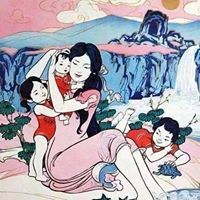
This book reinforced the gentle parenting approach I'm trying to take (although I have to confess it's not easy to do all the time). It also has a lot of ideas about activities to do with infants. Even if you think they're too young to do some of the things mentioned here, you should let them try. Oh! And I loved the cover art.
•THE NOT-SO-GREAT:
Typos! They make or break the experience, and this book has quite a few. It distracts me so much!!
Another thing I didn't care for was the insistence on using natural products and materials. I mean, I get it. I hate plastic too! But it felt more like a pushy, nagging, scolding mother. It was too much.
I would have also liked for more references to scientific studies about children's development. The contents of this book is more anecdotal in nature.
Finally, let's discuss the appendix, shall we? It's like a journal from the baby's perspective. They gave juice at 3 months of age and completely weaned by 11 months. When you give juice to a baby, you're eliminating the good fiber, but still, a 3-month-old who doesn't sit on its own is clearly not ready to start the weaning process. And children losing interest in breastfeeding by 6 months is NOT a thing.
•CONCLUSION
Although I had a few "what the heck" moments, I think it's still a really good book. I think every parent, caregiver, and teacher should read this. I was debating between a 3-4 star review, but the good is definitely more than the bad. Just skip the outdated info and follow the WHO recommendations on breastfeeding and weaning.
I loved this book until I read the appendix. At first, I was reading it and thinking how I wish I had read this book before I had my son. I would've done SO MANY things differently, but I was raised in a very authoritarian household, so some of the things I was taught still creep up although I try my best to raise my children with respect. I also found myself saying, "I do that too!"
•WHAT I LOVED:
This book reinforced the gentle parenting approach I'm trying to take (although I have to confess it's not easy to do all the time). It also has a lot of ideas about activities to do with infants. Even if you think they're too young to do some of the things mentioned here, you should let them try. Oh! And I loved the cover art.
•THE NOT-SO-GREAT:
Typos! They make or break the experience, and this book has quite a few. It distracts me so much!!
Another thing I didn't care for was the insistence on using natural products and materials. I mean, I get it. I hate plastic too! But it felt more like a pushy, nagging, scolding mother. It was too much.
I would have also liked for more references to scientific studies about children's development. The contents of this book is more anecdotal in nature.
Finally, let's discuss the appendix, shall we? It's like a journal from the baby's perspective. They gave juice at 3 months of age and completely weaned by 11 months. When you give juice to a baby, you're eliminating the good fiber, but still, a 3-month-old who doesn't sit on its own is clearly not ready to start the weaning process. And children losing interest in breastfeeding by 6 months is NOT a thing.
•CONCLUSION
Although I had a few "what the heck" moments, I think it's still a really good book. I think every parent, caregiver, and teacher should read this. I was debating between a 3-4 star review, but the good is definitely more than the bad. Just skip the outdated info and follow the WHO recommendations on breastfeeding and weaning.

September 8, 2021
Parent section is clutch!
I have read many Montessori guides and despite the great information they provide, this is the first I have found that helped me see how to implement it in my home.
I have read many Montessori guides and despite the great information they provide, this is the first I have found that helped me see how to implement it in my home.

April 22, 2020
Thought Flipper
When I was pregnant, my thinking of babies had been to baby them. The more that I read from varying professionals in the field is to start treating babies as mini-adults starting at 6 months. It floored me to think about making sure Jane's things could be accessed at Jane's level so that she could independently do some tasks without having to wait for an adult to do it for her. While some of the ideas, I think are overly idealistic, it definitely gave me a different way of thinking about parenting and is helpful planning for the next 2 years.
When I was pregnant, my thinking of babies had been to baby them. The more that I read from varying professionals in the field is to start treating babies as mini-adults starting at 6 months. It floored me to think about making sure Jane's things could be accessed at Jane's level so that she could independently do some tasks without having to wait for an adult to do it for her. While some of the ideas, I think are overly idealistic, it definitely gave me a different way of thinking about parenting and is helpful planning for the next 2 years.

February 9, 2017
I thought there were a few good points but mostly it felt unrealistic. I am down with the general premise but am not going to feel bad for having plastic toys and for not building a child-height coat rack for my son to feel the pride of hanging his own coat. I recommend magda Gerber's Your Self Confident Baby much more highly and am officially still on the search for toddler parenting books.
April 24, 2018
Simple and inspiring
It covers every aspect of first three years of development and it was written in a way that is easy to follow even for someone who is new to montessori pedagogy.
It covers every aspect of first three years of development and it was written in a way that is easy to follow even for someone who is new to montessori pedagogy.

August 31, 2018
Great book for first time parents
I find my parent philosophy resonated with the book, this book showed me how I can guide, support, and instill my family values to my child.
I find my parent philosophy resonated with the book, this book showed me how I can guide, support, and instill my family values to my child.
June 7, 2021
Good book to understand children
Practical examples given
insightful book
One must go through it
Montessori had eyes for future
Relatable book it is indeed
Practical examples given
insightful book
One must go through it
Montessori had eyes for future
Relatable book it is indeed

July 16, 2021
Lovely little read. I really enjoy these Montessori books, even if they take themselves a bit seriously.
June 3, 2022
not bad. some good things to be read, lots of filler.
Not bad. Some good things to be read, lots of filler. Nine more words are required. Nine more words are required.
Not bad. Some good things to be read, lots of filler. Nine more words are required. Nine more words are required.

April 23, 2015
Excellent Introduction to the Importance of the Child's Care and Development from Birth to Age 3
This is a fabulous book that goes into detail of why the Montessori philosophy is so novel in the western world, in regards to our infants and toddlers. It also gives a wonderful look into the relatively simple way one can help their own child, or a child they care for, from its earliest days.
This is a fabulous book that goes into detail of why the Montessori philosophy is so novel in the western world, in regards to our infants and toddlers. It also gives a wonderful look into the relatively simple way one can help their own child, or a child they care for, from its earliest days.
August 25, 2014
Really good for someone unaware of the Montessori philosophy of child-rearing. I read this to be a better Grandma to my grandchild due in February!
Good parenting is love, common sense and more love......
Good parenting is love, common sense and more love......
December 10, 2014
very very hippy dippy. Some good tips but also some over the top hippy crap. Overuse of the word Beautiful.

January 13, 2015
Great food for thought
Great read for someone trying to learn methods for teaching small children, especially if you ure unfamiliar with children general.
Great read for someone trying to learn methods for teaching small children, especially if you ure unfamiliar with children general.
Read
March 17, 2019Typos are present
Displaying 1 - 14 of 14 reviews