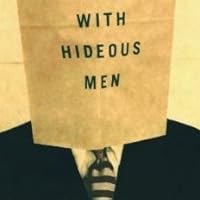
A new book by Boris Groys acknowledges the problem and potential of art's complex relationship to power. Art has its own power in the world, and is as much a force in the power play of global politics today as it once was in the arena of cold war politics. Art, argues the distinguished theoretician Boris Groys, is hardly a powerless commodity subject to the art market's fiats of inclusion and exclusion. In Art Power , Groys examines modern and contemporary art according to its ideological function. Art, Groys writes, is produced and brought before the public in two ways—as a commodity and as a tool of political propaganda. In the contemporary art scene, very little attention is paid to the latter function. Arguing for the inclusion of politically motivated art in contemporary art discourse, Groys considers art produced under totalitarianism, Socialism, and post-Communism. He also considers today's mainstream Western art—which he finds behaving more and more according the norms of ideological produced and exhibited for the masses at international exhibitions, biennials, and festivals. Contemporary art, Groys argues, demonstrates its power by appropriating the iconoclastic gestures directed against itself—by positioning itself simultaneously as an image and as a critique of the image. In Art Power , Groys examines this fundamental appropriation that produces the paradoxical object of the modern artwork.
Boris Efimovich Groys (born 19 March 1947) is an art critic, media theorist, and philosopher. He is currently a Global Distinguished Professor of Russian and Slavic Studies at New York University and Senior Research Fellow at the Karlsruhe University of Arts and Design in Karlsruhe, Germany. He has been a professor of Aesthetics, Art History, and Media Theory at the Karlsruhe University of Arts and Design/Center for Art and Media in Karlsruhe and an internationally acclaimed Professor at a number of universities in the United States and Europe, including the University of Pennsylvania, the University of Southern California and the Courtauld Institute of Art London.
I'm not going to write a review of this book because I'm really not equipped to do so. I found much of the content of interest, although I found the tone painfully pretentious. But I'm more than willing to admit that this is not my territory.
The second half of the book was very exciting to me in its exploration of politics and art; specifically, art and Hitler, art and the Soviet Union, and art and Europe today. Groys comments on the relationships between history and identity were stimulating. These are essays I will probably reread because, despite their brevity, they contain so much worth thinking through.
As is generally known, the figure of the art critic emerges at the end of the eighteenth and the beginning of the nineteenth century, alongside the gradual rise of a broad, democratic public. At that time, he was certainly not regarded as a representative of the art world but strictly as an outside observer whose function was to judge and criticize works of art in the name of the public exactly as would any other well-educated observer with the time and literary facility: good taste was seen as the expression of an aesthetic “common sense.” The art critic’s judgement should be incorruptible, i.e. bear no obligation to the artist. For a critic to give up his distance meant being corrupted by the art world and neglecting his professional responsibilities: this demand for disinterested art criticism in the name of the public sphere is the assertion of Kant’s third critique, the first aesthetic treatise of modernity.
The judicial ideal, however, was betrayed by the art criticism of the historical avant-garde. The art of the avant-garde consciously withdrew itself from the judgement of the public. It did not address the public as it was but instead spoke to a new humanity as it should – or at least could – be. The art of the avant-garde presupposed a different, new humanity for its reception – one that would be able to grasp the hidden meaning of pure colour and form (Kandinsky), to subject its imagination and even its daily life to the strict laws of geometry (Malevich, Mondrian, the Constructivists, Bauhaus), to recognize a urinal as a work of art (Duchamp). The avant-garde thus introduced a rupture in society not reducible to any previously existing social differences.
The new, artificial difference is the true artwork of the avant-garde. Now it is not the observer who judges the artwork, but the artwork that judges – and often condemns – it’s public. This strategy has often been called elitist, but it suggests an elite equally open to anyone in so far as it excludes everyone to the same degree. To be chosen doesn’t automatically mean dominance, even mastery. Every individual is free to place himself, against the rest of the public, on the side of the artwork – to number himself among those constituting the new humanity. Several art critics of the historical avant-garde did just that. In place of the critic in the name of society arose social critique in the name of art: the artwork doesn’t form the object of judgement but is instead taken as the point of departure for a critique aimed at society and the world.
The art critic of today inherited the older public office along with the avant-garde betrayal of this office. The paradoxical task of judging art in the name of the public while criticizing society in the name of art opens a deep rift within the discourse of contemporary criticism. And one can read today’s discourse as an attempt to bridge, or at least conceal, this divide. For example, there is the critic’s demand that art thematize existing social differences and position itself against the illusion of cultural homogeneity. That certainly sounds very avant-garde, but what one forgets is that the avant-garde didn’t thematize already-existing differences but introduced previously nonexistent ones. The public was equally bewildered in the face of Malevich’s Suprematism or that of Duchamp’s Dadaism, and it is this generalized nonunderstanding – bewilderment regardless of class, race, or gender – that is actually the democratic moment of the various avant-garde projects.
I think I'd rather give it 2.5 stars just because it's so pretentious. Too much academic jargon, which I actually found really funny because academics looove to be exclusive like that, but using big words doesn't make you a good writer. But some really interesting essays about modernity, postmodernity, the constantly evolving nature of the city, urban life, and art as politics.
Of course, Boris Groys is one of the most fascinating minds of our times. Of course, it's absolutely crucial that minds of this caliber investigate issues he investigates in real time. But the lack of "arguably" in this book is a definition of Groys - a monologue, a talking head, someone who knows all the answers and offers them to the world. No questions are raised, no gap for further discussion defined. With age, I become only more wary of someone who already knows everything.
Limited art criticism by Groys that takes well-documented examples (Broodthaers, Duchamp) and uses them as examples for the formation of new thinking in art. Much of this theory echoes art criticism from the 1990s and introduces very little in the line of new ideas. Some thoughts on technology begin in the early chapters but are not fully explored later. Disappointing, as I have read high praise of Groys and have not yet enjoyed any of his writing.
read for class, has lot of good insights in terms of modern and contemporary art and the surrounding politics and academic discourses in the art world, his flair for writing contains really dramatic metaphors and analogies, perhaps aligning with art philosophers. it is a fun read even for a general audience who wants to read and know about critical modern and contemporary art discourses. but man loves his duschamp and maelvich so wished there were more examples used
A set of individually convincing and elucidating essays on the role of the image across an relatively broad range of environments and eras. Contains compelling arguments for the importance of the museum, and a level-headed response to radical projects that does more than to simply dismiss their efforts. I wish the argument re: the independence of art + the equality of images argued in the earlier essays was continued in the later essays, and also wish that Groys would explore other potential arguments + interpretations.
Boris Groys olvasmányos és könnyed stílusban elemzi a kortárs művészet szerepét a kultúrában. Gyakran tesz kitérőket a modernitás kezdeteihez, de érdekes elemzéseket sorakoztat fel olyan változatos témákról is, mint a videóinstallációk vagy éppen Hitler művészetelmélete. Mindenhez kicsit szól hozzá, de intelligens meglátásokkal támasztja alá érveit. Néhány fejezethez kevesebb türelmem volt, de sikerült néhány gondolatot kiemelnem a könyvből, amit tudok használni a jövőben.
“Radical political projects have almost no chance today of being accepted by the public because they do not correlate with the dominant aesthetic sensibility. But the times are changing. And it is very possible that in the near future a new sensibility for radical art and politics will emerge again” (163)
Hard to review since often Groys books are a collection of essays, however, Groys is always sharp when he writes anything about art in the Stalinist era, curatorship, and Europe, and Art Power has that three elements.
Thought-provoking read, even if it suffers from a mix of over-complex and pretentious passages where the author seems to have the right interpretation for everything.
This guy has some pretty interesting ideas but I found his argumentation appalling. Or rather I didn't find much argumentation in his writing to begin with. At times he reaches conclusions that are by no means explained or proven, and often makes blanket statements. If he were to flesh out some of his ideas this book could turn into five books.
Son 100 yılda sanatın çeşitli toplumlara göre şekillenerek modernleşme sürecini kısa ve net şekilde ele almış. Modernleşmenin gelişen teknoloji ve değişen siyasetlerle birlikte sanata etkisini okumak isteyenlere tavsiye edilir
It would need a bit more of editing to avoid repeating same concepts more than twice as it's shown as a series of essays but are outlined like chapters. Could have been stronger if 20% shorter.