Jump to ratings and reviews
Rate this book

The Good Rat

Rate this book
Of course Pulitzer Prize winner Jimmy Breslin recognized Burton Kaplan right away as the Mafia witness of the ages. Breslin comes from the same Queens streets as mob bosses John Gotti and Vito Genovese. But even they couldn't match Kaplan in crime—and neither could anybody else. In his inimitable New York voice, Breslin, "the city's steadiest and most accurate chronicler" (Tom Robbins, Village Voice ), gives us a look through the keyhole at the people and places that define the mafia—characters like Sammy "The Bull" Gravano, Gaspipe Casso (named for his weapon of choice), Thomas "Three-Finger Brown" Lucchese, and Jimmy "The Clam" Eppolito, interwoven with the good rat himself, Burt Kaplan of Bensonhurst, the star witness in the recent trial of two New York City detectives indicted for acting as hit men in eight gangland executions. Breslin takes us to the old-time hangouts like Pep McGuire's, the legendary watering hole where reporters and gangsters (all hailing from the same working-class neighborhoods) rubbed elbows and traded stories; the dog-fight circles and body dumps at Ozone Park; and the back room at Midnight Rose's candy store, where Murder, Inc., hired and fired. Most compelling of all, Breslin captures the moments in which the Mafia was made and broken—Breslin was there the night John Gotti celebrated his acquittal at his Ravenite Social Club on Mulberry, having bribed his way to inno­cence only to incite the wrath of the FBI, who would later crush Gotti and others with the full force of the RICO laws. As in his unforgettable novel The Gang That Couldn't Shoot Straight , Breslin brings together these real-life and long-forgotten Mafia stories to brilliantly create a sharp-eyed portrait of the mob as it lived and breathed, as it sounded and survived.

288 pages, Hardcover

First published February 1, 2008

468 people are currently reading
1253 people want to read

About the author

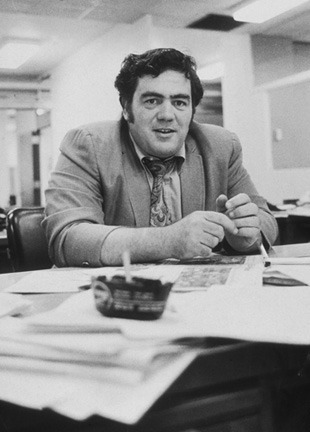
Jimmy Breslin

60 books93 followers
Jimmy Breslin was a Pulitzer Prize-winning American columnist and author. He wrote numerous novels, and pieces of his have appeared regularly in various newspapers in his hometown of New York City. He was a regular columnist for the newspaper Newsday until his retirement on November 2, 2004.

Among his notable columns, perhaps the best known was published the day after John F. Kennedy's funeral, focusing on the man who had dug the president's grave. The column is indicative of Breslin's style, which often highlights how major events or the actions of those considered "newsworthy" affect the "common man."

Ratings & Reviews

What do you think?
Rate this book

Friends & Following

Create a free account to discover what your friends think of this book!

Community Reviews

5 stars
369 (23%)
4 stars
505 (31%)
3 stars
524 (32%)
2 stars
160 (9%)
1 star
44 (2%)
Displaying 1 - 30 of 150 reviews
Profile Image for Jason Koivu.
Author 7 books1,411 followers
October 15, 2013
Jimmy Breslin made me an offer I couldn't refuse: a book with mobsters, crooked cops, a turncoat, and a trial in which a stool pigeon sings about the mafia's secrets.

Journalist Breslin made a career of following the mafia, writing of Queens, NY from the street-level. In The Good Rat he writes of the 2006 trial of two police detectives as they are brought down by the testimony of Burton Kaplan, an aging man with thick mob ties, who decided to come clean in hopes of seeing the outside again and spending time with his family before he dies.

As they are described, you can smell the streets and even feel as if you've walked into the mob-frequented bars alongside the writer, who spent much of his time in such joints. But beyond even that, Breslin's real talent is in creating a mind's eye image of these almost larger-than-life characters. I call these real-life men "characters," because what else do you call men with nicknames like Gaspipe, The Clam, Fat Tony and Three-Finger Brown?

The Good Rat masterfully interweaves the trial with NY mafia history, going back and forth to illuminate some time, place or person mentioned during Kaplan's testimony. Conversely, this background info is presented to set up thrilling reveals during the trial.

Who are the good guys? Who are the bad guys? Is a rat ever good? Sure, he's helping to put away some men who did terrible things, but after all, he wouldn't have the information with which to dig their graves unless he himself had gotten his hands dirty.
Profile Image for Pam.
709 reviews143 followers
November 17, 2020
“Good Rat” is of course ironic. Mafia was definitely one of Breslin’s meat and potato subjects and no one did it better. When this was written more than a dozen years ago he suggests that the mafia was not what it used to be. Of course psychopathic creeps and corruption never ends, but Breslin is so good. Straight court records demonstrating ice cold people mixed with crazy funny stories. You’se will like it!
Profile Image for Sonya S.
18 reviews4 followers
April 21, 2008
I wish that I could have enjoyed this book more. As it is, I feel that the narrative of this nonfiction was far too jumbled, too confused. I felt as though I was picking up the second or third novel in the series, rather than a stand-alone non-fiction. Perhaps, though, it is because I know nothing more than cursory information about organized crime lore and legends in America, especially of the modern sort. Many of the people were introduced without much background, and often the author himself was placed into the scenes without much explanation. It took me a good long while to figure everything out. I felt that there were, perhaps, three books being written into one, and the result was confusing. This is a pity, because I felt like the story of the main character was tremendously interesting.
Profile Image for Tiffany.
167 reviews54 followers
October 18, 2012
I listened to this on audiobook - it made my awful new D.C. commute much more bearable. Anyone thinking of reading this book - I would highly recommend the audiobook. I would give it 5-stars for narration/voice acting.

I liked how the book had sizable excerpts of the court case itself, interspersed with Breslin going deeper into the lives of the cast of characters.

This is the first book about the Mafia that I have ever read, and although I knew pretty much nothing about organized crime, I enjoyed the book. I also thought it was unique how Breslin talks about how he himself interacted with the gangsters during his journalistic career -- gave it a little more flair than the standard true crime or historical book.
Profile Image for Betty.
547 reviews61 followers
November 3, 2008
A surprisingly entertaining book considering the topic. Jimmy Breslin has built a story of the Mafia old and current around the court case against two extremely “dirty” cops in the NYPD. Burt Kaplan, working for the Mafia for decades, is the witness; now in his 70s and tired of prison life, he has turned “rat”. Kaplan is, from the book cover in this version “one of the most devastating turncoats of all time”. The court transcripts have a certain fascination which give great insight into the minds of the Mafia. Everything is run like a business, as is fairly well-known, but to hear it in the words of Kaplan, the descriptions of murder, making people disappear, comes across as just a day in the office. He tells everything straight as if describing ordering a meal to be delivered, or shipping a parcel out. Kaplan’s “voice” and Breslin’s style are what make the story so entertaining.

Breslin fills in background between sessions of the transcript with what appears to be the results of interviews through the years. Raised in the same location as the Families, he knew them personally and by reputation. This is what makes the story. He knows what he is talking about and has a wonderful flow between the transcripts and the “normal” lives of the people referred to. He gives us perhaps the most accurate picture of the history from the 1950s to the present of the “families” including their movement from Brooklyn to Staten Island, and on into the final crumbling days of the Dons. I was pleasantly surprised by this book, I thought it would be a lot of blood and guts described in great detail and do not usually read books to do with the Mafia. This book is so unexpected, I’m inclined to read Breslin’s other books on the same topics. I would recommend this book for it’s courtroom interest, it’s historical fact, and it’s entertainment value. Very good.
Author 10 books7 followers
September 15, 2012
this was a mess but a good mess, like a jumble of food thrown on a plate at a buffet. Breslin seemed to be writing out of obligation because this was kind of hobbled together. It is a look at the end of the mafia. Disjointed is the only word for it. But the writing is good and the mob characters are fascinating, so its a fine ramble, though with no straight path.
Profile Image for Patrick DiJusto.
Author 6 books62 followers
February 13, 2013

I never expected to find my uncle on Page 76! But there he is, large as life. Why is my uncle in a book about the Mafia? There are some things we don't talk about outside the family.

The book is another Breslin masterpiece. It's mostly about Louis Eppolito and Stephen Caracappa, NYPD officers known as the Mafia Cops because of their willingness -- let's face it, it was eagerness -- to do little jobs for the Mob, which quickly turned into big jobs like murder. As always, Breslin expresses his complete contempt for the mob mentality.

The Good Rat is almost a darker followup to his 1969 comic novel The Gang That Couldn't Shoot Straight.


Profile Image for Steve.
900 reviews275 followers
December 24, 2008
This is the first book I've read by Breslin, and it was pretty much impossible to put down. Car bombs, wise guys, torture (before murder), simple murder, murder for hire, dog murder (to be honest, the dog had it coming), mistaken murder(wrong guy with the same name of the intended), crooked cops who murder people for money, etc. One thing that always strikes me when reading mob books is that Hollywood, which can mess up anything, never understates the violent reality of the Mafia. These characters will kill you.

Beyond all the carnage, one reality Breslin consistently underscores, and which cuts down the romantic image more than a bit, is that this is an organization devasted by RICO, and Age. The two major contract killers in this book are a couple of bad cops -- not Mafia themselves. What you are left with are a bunch of 70 year old guys trying to rat each other out -- organization be-damned. Come to think of it, Breslin is a 70 something guy himself, and at the edges, the book is about him as well, as well as his city, its people, its ethnic neighbourhoods, Irish, Italian, Jewish, during a particular time when the "Good fellas" ruled, and fell. I was kind of reminded of the title of the Sergio Leone movie: Once Upon a Time in America.

One minor complaint I had was a Breslin comment in the book that Kaplan reminded him of Dostoyevsky's character from Crime and Punishment, Rashkolnikov. There is nothing to compare. Two completely different characters. Oh, there's plenty of Crime -- and Punishment in Breslin's book, it just has nothing to do with the great novel. So why go there? The story is compelling without the comparison. Kaplan, the "Good Rat" of the title, from what I read, was just as amoral in all things criminal as his murderous pals. There's nothing good about him. He was a tool for the mob, and became a tool for the Feds. Still, this is a great read. Check it out.
Profile Image for Marti.
444 reviews19 followers
June 30, 2021
Throughout this book, I get the feeling Breslin is mostly sad that the old-school Brooklyn Mafiosos, and their way of life are gone. He claimed that you do not have to be an especially great writer to cover these guys. All he did was transcribe what they said verbatim.

The story is focused on Burton Kaplan, who had a particularly good memory for detail, and who testified against two crooked cops who moonlighted as hitmen for hire while passing information on investigations to the mobsters. In exchange for this, Kaplan was to have his 40 year sentence reduced.

Kaplan was not a real mobster (he only worked with them) because, as Breslin explains, what he did required actual work, like transporting mountains of stolen goods and working out the logistics of such undertakings. The typical hoodlum avoids work like the plague.

In the old days, sentences were only about five years on average, which was not enough to induce people to break the code of silence. Most career-criminals claimed to be able to do that standing on their heads. However, once life-sentences became the norm, and RICO made it easier to convict, merely by association, all that changed. In 2006, when the book was written, suddenly everyone was willing to be "a rat."

However, the gangs themselves attribute their demise to John Gotti. In his arrogance, he broke all the unwritten rules that had been established between mobsters and FBI agents, who would actually do favors for one another. That, and he bought the jury at his trial (hence the term, "Teflon Don"). That was the real turning point that began the FBI's full scale retaliation.
Profile Image for Cynthia.
722 reviews51 followers
December 12, 2014
Damon Runyan meets Tom Wolfe. Or better yet, this is ... Jimmy Breslin, and requires no comparison. This is a book about the end of the Mafia in America. Much of it is a straight transcript (carefully edited for the truly mind-blowing bits) of a Jewish mobster named Burton Kaplan who was quite elderly and in prison and offered to share some incriminating stories from the old days. Breslin intersperses the transcript with some narrative and with his own extremely colorful memories of his days of hanging with the mob, and writing about its characters. When I was growing up, in the 1970s and 80s, john gotti was the most famous mobster. Breslin explains how gotti's rise in the mob signaled the end of the Mafia. This is a sort of loosely organized book but it's fascinating and a fast read.
Profile Image for Your local cryptid.
70 reviews50 followers
April 15, 2025
3.5 ✨ rounded up to 4 ✨

I’ve got nearly 50 mob books in my book collection so like this wasn’t the best mob book I’ve read but it wasn’t a bad read either. Easily middle of the road bc it had the parts where you couldn’t put it down but then some of it you were just like “uhhhhhh I don’t care?”

Also the narrative and how it was written timeline wise within the book was sometimes a little confusing and jumped around a little too much with no real connection for my liking.

Especially bc I’m also currently reading Blood and the Badge which is also about Eppolito and Caracappa and that chunk of mafia lore and that’s easily prob one of the best written mob books I’ve read thus far + has a very linear timeline thru out.
Profile Image for Tom Schulte.
3,426 reviews77 followers
February 4, 2012
Not only is the narrator very good, but this audio production uses different voices as in the courtoom scenes with an actor playing the part of Mob information Burton Kaplan and a third for the attorney questioning him.

The is a very detailed and revealing look at the post-Castellano, Gotti-era NY mob as it was fracturing and strange bedfellows relationship with Louis Eppolito and Stephen Caracappa are two former New York Police Department (NYPD) police detectives who worked on behalf of the New York Mafia while they committed various illegal activities.

Along with "I Hear You Paint Houses", this is the second non-fiction Mafia book that suggests to me that Richard "The Iceman" Kuklinski exagerrated and lied in many of his hitman "confessions".
Profile Image for Bookmarks Magazine.
2,042 reviews809 followers
Read
February 5, 2009

The Good Rule demythologizes the all-but-glamorous life of organized crime. While Breslin focuses on the trial of the "Mafia Cops," a story also recounted in Guy Lawson and William Oldham's The Brotherhoods (2006), Breslin, to critics' delight, uses the case to delve deep inside the Mafia's demise and the bloody, backstabbing stories within it. An unsentimental writer, Breslin sees the mob for what it is
Profile Image for Matt.
21 reviews
April 2, 2009
My first Breslin book. A punchy, true-life story about two NYPD cops who worked as contract killers for the Mob, and the old-school career criminal who takes the stand against them (the titular "Good Rat".) Lots of guys named "Joey-the-this" and "Frankie-the-that" if you're into that sort of thing.
Profile Image for Frank Taranto.
872 reviews8 followers
January 2, 2012
An interesting book about the Mafia in NY based around the trial of two cops who killed for them. The central character in the book is Burt Kaplan, who turned informer to get out of jail and to not be the fall guy when other mobsters turned states evidence. It is also about the history of the Mafia in NY as well as about Jimmy Breslin himself.
Profile Image for Angela Ryser.
181 reviews9 followers
January 10, 2009
Interesting stories about mobsters. Jumps around a bit and is somewhat hard to follow. Enjoyed it anyway. Makes me want to do some internet research on some of the figures portrayed.
Profile Image for columbialion.
256 reviews1 follower
October 30, 2013
Veteran columnist Breslin blow the lid off of the infamous mafia cops, in this true crime expose of murder deception and treachery of NYC crime annuls.
6 reviews
April 10, 2012
Great Jimmy Breslin. Gruff, plain language. NYC tabloid style writing at its best. Could've been a serial in the Daily News.
Profile Image for Jane.
416 reviews
April 5, 2015
Entertaining, at times garbled, and world weary recounting of Mafia mobsters in the waning days of La Costa Nostra.
Profile Image for Abu Syed sajib.
147 reviews15 followers
September 13, 2021
Brilliant!!

A book wrapped with nostalgia, The Good Rat by the famous journalist Jimmy Breslin revisits the golden era of Mafia in NY. The book tells us about gangsters like Lucky Luciano, Paul Castellano, John Gotti, actors like Robert De Niro, Al Pacino and even famous journalist like Abe Rosenthal.
But what makes it unique is its treatment of these characters, how the characters feels fresh,genuine,complex,human.
The main story is very simple. It's about a guy who was previously connected with the mob becoming an informant. For the first couple of pages it will feel like a crime thriller. But then the writer takes a drastic turn and takes us to a lane filled with anecdotes about different characters of Mafia. Soon it will feel like a nostalgia trip but that doesn't mean the main story is neglected. Rather these two story-lines corroborate each other.
The only complaint i have is that the ending is too abrupt. Hence the 4 star.

Recommended!!!
Profile Image for Catherine.
1,105 reviews
March 8, 2021
This book brought back many memories. It’s mostly about the trial of Stephen Caracappa and Louis Eppolito, two very dirty Mafia affiliated police officers who were convicted at a 2006 trial (and, spoiler alert, who each later died in prison serving their lengthy ensuing sentences.). Burton Kaplan, the star witness against them, is “The Good Rat” of the title. But the book also roams over NYC mob history, Breslin’s long beat. This anecdote rich journey rang many bells for me as I remember Breslin coming every day to the trial of John Gotti, in the infamous case in which Gotti and all his codefendants were acquitted and Gotti earned his “Teflon Don” sobriquet. I was there as I was a law clerk that year in the federal court trying the case — little did we know our jury foreman had accepted a huge bribe to fix the verdict. Breslin mentions that case and many other familiar names I learned then in the course of this sprawling tale. I enjoyed the gritty narration of this book by Richard Davidson too. One star off for the wandering style and the abrupt conclusion.
Profile Image for Hannah.
210 reviews
November 23, 2019
Good book, sometimes hard to follow. I can't believe it's TRUE but its true.
Profile Image for Nancy Mills.
457 reviews33 followers
May 20, 2018
I enjoyed this book immensely! I listened to the audiobook, which included 4 different readers depending on what character was testifying at the time, and the readers were just delightful. I felt like I was right there. Especially the guy who reads Kaplan.
Profile Image for Maduck831.
529 reviews1 follower
November 29, 2011
“The Mafia’s final hours pass in moments like this, of quiet anguish and betrayal. Once, a gangster might answer such questions in style, as was found in this account, among the papers of Chicago’s Mike Rokyo, the late national treasure, Q: Do you know Al Capone? A: No. Q: You don’t? A: No. Q: I show you this picture. Who is in the picture? A: Me and Al Capone. Q: You just said you didn’t know him.” A: I met him. That don’t mean I know him.” Q: What does Mr. Capone do for a living? A: He told me he sold ties.” (35) [Robert Blakey – RICO] “The language of a RICO indictment usually goes something like this: “On or about November12, 2006, the defendants Joseph Orlando and Jerry Degerolamo attended a meeting…” / That alone is a crime. And under RICO the sentences are diabolical. For a cup of coffee, you could do decades.” (37) [Mafia Cop by Eppolito] “I keep hearing people talk about the end of the Mafia, but I don’t know what that means. I do know that illegal gambling, which once was a glorious fountain of cash for the outfit, now is a government-owned lottery machine that buzzes in every newsstand and deli in the city.” (57) “The Mafia no longer sends great chords crashing down from the heavens. As it dissolves, you inspect it for what it actually was, grammar-school dropouts who kill each other and purport to live by codes from the hills of Sicily that are actually either unintelligible or ignored.” (61) “We talked briefly in a bar, the old Johnny Joyce’s on Second Avenue. De Niro looked like he was homeless. It was on a Friday. On Sunday morning I saw him again. He was going to Italy to learn the speech nuances of people in towns mentioned in the script. He was going there on his own. He was earning $750 a week for the movie. When he left, I remember thinking, Do not stand between this guy and whatever he wants.” (86) [Gaspipe Casso on 60 Minutes] “That day Detective George Terra was in his car when he heard the news. He remembers it was still light when he stopped at the Seventy-sixth Precinct. He went up the stairs to the detectives’ office and announced, “That Guido. They shout the wrong guy.” (109) “Had you caught snatches of their shoptalk, you would have thought they were steamfitters discussing a job. Kaplan, Casso, and the two cops called their trade in murder “work” or “a piece of work.” It was all done with the smoothness of an assembly line. Their kind of homicide gave organized crime its name.” (135) “And there are no more meetings between reporters and gangsters in places known for tough guys and neon and loud fun. News reporters get their information from Jerry Capeci’s Gang Land on the Internet. When their work is done, you find reporters at health clubs or going home to some suburb where they drink wine and the contest is who causes more boredom, the wife or the husband.” (151) “There are times when the expression “the roof caves in” has a certain validity. Sitting in the back row on this day, and lucky to be there, Fat Thomas took a huge breath. “I am having a cardiac arrested.” (190) “Their names were Joe the Boss and Lupo the Wolf and Lucky Luciano. Soon their children were growing up ferociously on crowded cement. Their murderous, larcenous hands reached everywhere. They swore one another to secrecy.” (198) “These imbeciles got so excited when they saw themselves on television or their pictures in the paper that they could barely breathe. There was no significant trend in organized crime that you had to be brilliantly perceptive to see.” (198) “Nobody could harm the Mafia on the magnitude of John Gotti’s destructive flare-ups.” (201) “So she had a fixed juror and a rat defendant, all unknown to her. The fixed jury acquitted. John Gotti ran out the back door of the courthouse and into a car that took him to a celebration at his Ravenite Club. He was the Teflon Don. You put me on trial, I fix your fucking jury and walk out in your face.” (202) [YouTube John Gotti interviews] “In handling domestic-violence calls, he first got the husband outside and beat him blind. Then he (Eppolito) went back later to see the wife. “Battered wives were the most vulnerable,” he said. “Every time we went on a call where a husband smacked his wife, I went back that night and smacked it to her, too.” (220) “Gaspipe Casso had eight pay phones around Staten Island that he used to talk to Eppolito and Caracappa when he was on the lam.” (243) “Their record of using DNA to open cell doors for people wrongly convicted and put away for a long sentence is astounding. They have freed some two hundred poor souls so far. If they don’t get a Nobel Prize, it is a contempt of life that even Judge Weinstein cannot correct.” (262)
Profile Image for Stop.
201 reviews78 followers
Read
January 23, 2009
Read the STOP SMILING interview with Jimmy Breslin


GO OUT AND GET A STORY: JIMMY BRESLIN

Interview BY JEREMY SCHAAP

(This interview originally appeared in the 2nd annual STOP SMILING 20 Interviews Issue)

As luxury condos tower over the once-downtrodden Bowery and a billionaire tech mogul reigns over a robust tourist mecca (and toast of the Republican National Convention), the days of the government telling New York City to drop dead are but a footnote to this new, untested era of scorched-earth gentrification. Yet the inequities and injustices of old still persist, even while the voices of dissent in the media are ominously silent (or are preoccupied crafting clever quips in the blogosphere). Then there’s Jimmy Breslin, a torchbearer from the days of big-city print journalism, the quintessential constant in an ever-changing megalopolis. As a Pulitzer Prize-winning columnist for multiple outlets, among them the New York Daily News, the same paper responsible for that infamous “Drop Dead” headline in 1977, Breslin earned his readers’ trust — or raised ire — through a time-tested formula: First, the simple dissemination of facts. Then, “somewhere in the middle, rising on strong, steel legs, is an opinion.”

Read the interview...


Profile Image for Mazola1.
253 reviews13 followers
June 18, 2008
Jimmy Breslin is a heck of a crime writer. Heck, Jimmy Breslin is a heck of a writer, period. At its best, this book shows why Breslin won the Pulitzer Prize and the big reputation he has. But the book isn't always Breslin at his best. When it's good, it's very good, and when it's not, it's not.

The Good Rat consists of tales and sketches of made men and killers and their victims, innocent and not so innocent, wrapped around the story of the trial of two murderous and corrupt NYPD cops and the rat who gave them up. Breslin's descriptions of New York mafioso are vivid, original and gritty, written in his unique and inimitable style, which allows the reader to rub shoulders vicariously with the dark underworld of organized crime. But the book is marred by too frequent and sometimes overly long excerpts from the trial transcript. Some excerpts blend seamlessly with the action, others interrupt and give the book a jerky pace and contribute to its already confusing tone.

While at times the transcript selections are dead on, and allow the reader to hear the rat in his own voice, at other times, they make the book seem a bit boring and Breslin a bit lazy. Nonetheless, Breslin gives the reader an insider's look through the keyhole at what is fast becoming history -- the world of the old time, big time mobster.
Profile Image for Forrest.
27 reviews4 followers
April 21, 2008
An NPR interview with the author, Jimmy Breslin, sent me off to buy this book.

If ever there were an auditory sketch of what I assumed all New Yorkers were like, it would take the form of Jimmy Breslin's voice. I guess that was the primary reason for the purchase.

The book examines the mob, viewed through the lens of one of its members who has decided to rat them out. He's a witness to the illegal exploits of two cops who were on the mob payroll for years, and his testimony paints a surprising picture of the level of violence, corruption, general depravity of the human species in some quarters of civilized America. That is the most surprising thing about it, I guess. There are people out there who routinely arrange to have their enemies smoked, sometimes employing human assets in places where you would expect to find protection against such things; in this case, the police department.

As a viewport into society most of us vanilla humans won't normally see, this book has great value. All kinds of crap goes on out there! Who'd a thunk?

Generally, it's a quick read, funny and sad is some places. I'd recommend checking it out from the library as opposed to owning it.
This entire review has been hidden because of spoilers.
Profile Image for Renee.
654 reviews7 followers
September 29, 2015
I’ll start off with the things I really liked about this book:
1. Who doesn’t love a good American mafia tale? The fact that it tells about all sorts of different story lines but always brings you back to the main character is great.
2. I love the mix of testimony, memories, and narrative of this. I think it made it really great to read and kept the book interesting and made it more of a page turner.
3. This was written in a way where you feel bad for the “bad” guys. You know you’re reading something good when you’re rooting for not the straightest arrow to get out of jail free.
Things I didn’t like:
1. As mentioned above I personally liked the style of writing but at times I was a little thrown off by it and felt like I had started reading one thing before jumping to another. It worked 80% of the time for me but unfortunately not continuous.
2. The story line, though very interesting and I really did like what I did read, fell a little flat in some areas. I feel like some of these things could have been written in a separate book and have been given a greater amount of time to absorb all the mafia tales.

I stick with the three stars because it was ok but I didn't feel like it was GREAT.
Profile Image for Jim.
3,110 reviews75 followers
July 19, 2016
Very interesting commentaries about mafia activities in New York, as well as crime journalism, by an acknowledged master writer. I got the feeling however that Breslin is a bit full of himself, even when he feigns humility. He is nostalgiac for the grand theater of the old mafia bosses and characters, though he is critical of their laziness and brutality (and stupidity). He is enamored with the main rat, Kaplan, and uses his turncoat testimony as the linchpin for fleshing out his remembrances of organized crime and his pursuit of the story (which, of course, did a lot more than just fall into his lap, as he claims). It is chilling just how many people are corrupt, seemingly from the top down. And the two murdering cops are especially despicable. I cannot say that I really loved Breslin's style---often I had little clue to just what events or individuals he was referring to (which may be because I do not hail from New York), but for the most part I could figure things out.
Displaying 1 - 30 of 150 reviews

Can't find what you're looking for?

Get help and learn more about the design.