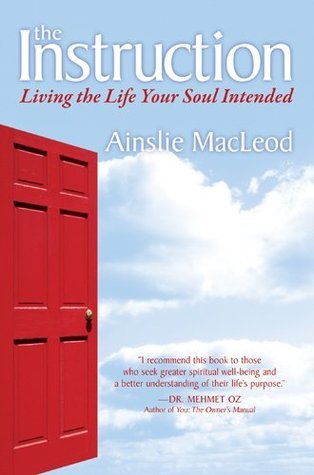
I am a skeptic when it comes to spiritual and supernatural beliefs; however, I struggle with the idea of living in a world that has no magic in it. Serendipity is the smoke bomb of otherworldly fireworks. I've tried reading twice since purchasing it and finally succeeded in finally completing a start-to-finish reading 10 years later. I leave this book without much change in my overall outlook of spirit guides, reincarnation, and any idea of afterlife. Was also hoping that reading something so 'not-my-brand' might provoke some musical creativity for my songwriting and lyrical perspective; but still blocked...
Part of my difficulty with the book was that you had to take the author at his word. That his spirit guides saved him from a potentially tragic end, and lead him to a more rewarding life far from his home. If there is any sort of acknowledgement of balance among good and evil (not necessarily binary, but as a spectrum); what are the odds that spirit guides may consist of the natures of both angels and demons? Why must they always be truthful? Does the soul's mission negate the concept of freewill?
The other element that I struggled with was the idea of everything breaking down into 10's. Have to admit the round number there is emotionally satisfying, but some of these ideas have a little overlap or leave a bit of a gap to hit the mark (the section on phobias comes to mind).
I consider myself fortunate enough to have figured out much of my 'placements' on the various spectrums without having to go through the spirit guide exercises. Not knocking the value of meditation, but almost everybody can get a feel for the criteria that relates to them and the attributes that do not. Though buying into any of it means buying into all of it, in terms of the argument, and it would be equally valid for someone not liking my critique to claim I'm in avoidance of this life's (true) mission; even if I felt different resonances after reviewing the options.
Conservative people will have a far different experience reading this book than progressive people might. Political values have a strong effect on determining one's soul age (level), soul purpose, and soul mission. I liked the semantic play of difficult people with lower soul levels working out remedial issues, rather than calling out beliefs, values, and behaviors that could be considered miserly, bigoted, or just ignorant. I appreciate the attempt to help us consider other factors that might make the individuals. Though everyone is viewing through different lenses...
Overall, I invited some cognitive dissonance into my space with each paragraph read; but have to say I appreciated it. It challenged some of my thoughts and beliefs, and had me trying to understand where this was taking me and why. I do have some reservations about making a general recommendation for the book, unless the reader can maintain a 'When in Rome' kind of attitude, and accept that this is one author's philosophy and method; and functions better as a jumping off point to deeper discussion than as an actual guide to determine and follow your soul's mission.