One family's grandchildren recount the eccentricities and foibles of their grandparents, whose lives have remained in the timewarp of World War I "fields of glory". Awarded the prestigious Goncourt Prize, this novel vaulted author Jean Rouaud from anonymity to acclaim as the freshest literary voice in France in decades.
Jean Rouaud (born December 13, 1952) is a French author, who was born in Campbon, Loire-Atlantique. In 1990 his novel Fields of Glory (French: Les Champs d'honneur) won the Prix Goncourt. First believed to be the first book in a trilogy, Fields of Glory turned out to be the first book in a series of five books on the family history of the author. In 2009 he published the novel La femme promise.
World Wars I and II underlay this novel that lulls you into believing that it is a piquant story of childhood in a rural French village of the 1950's. There are a lot of quirky relatives and fondly-remembered scenes of grandpa driving the family's old Renault on weekends to visit relatives and to go on picnics. Most of the quirky relatives are widowed aunts and grandmothers.
The wars are a distant memory of the old people, symbolized by a dusty box of yellowed letters, medals, a diary and other mementos from the wars. These wonderful childhood memories, with a lot of local color, are set in a small rural village in France in the 1950's. The children grow up experiencing the death of relatives as a sad inconvenience.
But the author has set us up.
Near the end of the novel, after the passing of the relatives, the now-adult children explore the box of mementos and the horror of war hits them and us full in the face. We now understand how the lives of these grandparents and widowed aunts were changed forever by the carnage of the wars.
The novel is translated from the French and the book won France's highest literary prize, the Prix Goncourt, in 1990. The book was an immediate best-seller in France and a sensation because the first-time author was a newsstand vendor.
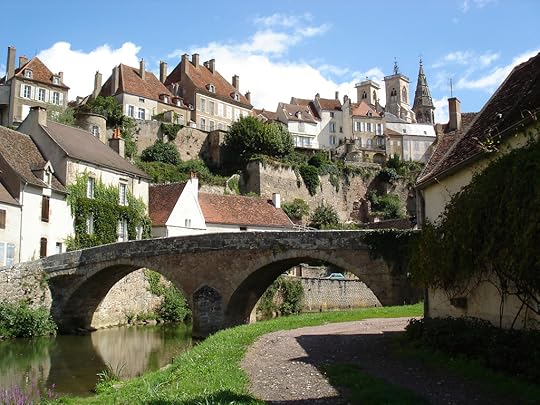
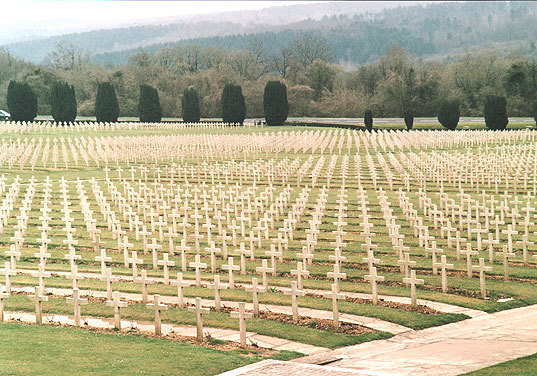
photo of French village from nigelhaselden on flickr.com photo of WW II cemetery in Lorraine from judydouglass.com
A few months ago, I reread Pierre Michon's Small Lives, a sort of family chronicle with a rather derogatory view of the author on his ancestors and on himself. When you start Rouaud's book, at first sight it seems that he is following in the same footsteps. But the tone is much more lighthearted, starting with a sympathetic portrayal of the author's idiosyncratic grandfather and the kamikaze-esque control of his '2CV'. Like Michon, Rouaud uses few words, but he is much more visual and expressive. For example, the restrained humorous portrait of his bigoted aunt Marie is simply delightful. But then the First World War pops up and we get a picture of the horrors in the trenches through the family of his father and grandfather. At that point we realize that the title, "Fields of Glory" is clearly meant to be sarcastic. Apparently, this short book was Rouaud's debut (immediately awarded the Goncourt): it seems deceptively simple and non-spectacular, yet efficient and expressive.
This is one of those books where one does not want to point out small flaws. This was an outstanding book.
I was reading along and very much relishing ( I don’t use that word lightly) the act of reading. The stories and characters were so enjoyable. It was written in memoir-style but it is a work of fiction. Anyway, I am reading along and in the back of my mind is knowledge of what I read on the back cover prior to reading the book concerning what the book was about – “Through a family chronicle – three generations of a middle-class family living on the French Atlantic coast – Jean Rouaud in this tragi-comic novel evokes the lingering heartache of a whole nation; the period is between the two world wars, but the unforgetting slaughter of the First World War dominates the narrative like a brooding presence.”
I was on P. 117 of the 155-page book and so far it was a humorous-at-times gentle read and I was asking myself “where is the mention of WWI?” Boom, that was most of the last 38 pages. It was like night and day. The horrors of what the French soldiers faced was graphically described. No sugar coating nor should there have been. This is what two of the characters mentioned in the first two parts of the book endured.
I had trouble figuring out the family tree while reading the novel. Major characters were Grandfather, Grandmother (but I don’t think they were the oldest), the brothers and sisters – (Aunt) Marie, Pierre (wife, Aline), Joseph, Emile, and Emile’s wife Mathilde (her mom and dad are Grandmother and Grandfather Burguad). Then there’s another Joseph (we’ll call him #2) who is son of Pierre and Aline who died at age 40…and his cousin is Remi who is son to Emile and Mathilde. That’s as best I can get it. And the narrator is, I think, Joseph (#2)’s son. And after re-reading parts of the book I could be wrong. But despite my confusion, that did not detract from how good this book was to me. It was because of how Rouaud structured the book…separating the comedy from the tragic and having the comedy come first. I’m not sure I would have liked it as much the other way around. nature of the book. The comedy formed the first 2/3 of the book and the tragedy the latter 1/3.
Aunt Marie the schoolteacher is not to be missed…she prayed to numerous saints who were to protect the living from such very specific things as glaucoma (St. Clare), blindness (St. Lucia), hornets (St. Friard), intestinal pain (St. Mamertus), and drought (St. Vio) and other saints to provide for such things as a good marriage (St. Barbara) and justice (St. Yves). She kept all of her saints in a card file, like a book of recipes.
I would not have read this book but for a GR friend…I happened on his review and he was enthusiastic and his well-written review piqued my curiosity enough that I ordered a copy of this book. This is some site!
داستانی با سبک رئال و درگیر با مرگ و جنگ و تبعاتش بر جامعه راوی کل دانا، اتوبیوگرافی بدون تاریخی خاص و روالی مشخص سبکی شاعرانه، توجه به جزئیات، و در کل کتابی جالب نبودد
Lại thêm một Goncourt nữa. :)) Quả thực, vì Goncourt mà tôi mê văn Pháp. Lấy bối cảnh là vùng Loire-Inferieure, nơi mà những cơn mưa phùn chính là điều đặc biệt. "Chúng tôi" đã lần theo hồi ức và ấn tượng mà thế hệ trước đã để lại: về ông bà ngoại Alphonse, ông bà nội Pierre và Aline, bà Mathilde cũng với sự xuất hiện của những anh chị em họ khác nữa. Tôi thấy thực sự ngạc nhiên: tại sao Jean Rouaud lại có thể tài năng đến vậy nhỉ? Cái cách mà ông miêu tả cùng với chất văn chương đặc trưng của mình khiến cho người đọc phải ngây ngất. Có lẽ tu đến hết đời này, tôi cũng chẳng thể tả được hay đến vậy. *cười*. 3/4 đầu, chẳng có gì, tất cả chỉ là những hồi ức, những cảm xúc về người thân, những đoạn miêu tả thuần tuý đan xen giọng điệu tưng tửng, hài hước kiểu...buồn cười. Để rồi đến 1/4 cuối, mọi thứ chợt vỡ oà: chiến tranh không chỉ có đại bác và súng đạn, chiến tranh hoá học đã nổ ra, người ta lợi dụng khí độc để tàn sát lẫn nhau, bất chấp sự đau đớn đến tận cùng, để lại sự tra tấn, những ảnh hưởng dài lâu không thể xoá nhoà trên cơ thể người chỉ để phục vụ cho mục tiêu chiến thắng. Hồi ức về những người đã ngã xuống, mà ở đây là Joseph và Émile cùng với cuộc hành trình về chiến trường xưa để tìm lại di cốt. Trái ngang thay khi dưới gốc cây những là 2 bộ xương, bộ nào mới là của người họ đang cần tìm? Và rồi thật buồn cười khi chúng ta phải sử dụng đến cả trò may rủi.... Chân thực là thế, đắng cay là thế, ấy vậy mà đọc ta vẫn muốn cười, cười ra nước mắt. Cùng là đề tài chiến tranh, nhưng Jean Rouaud đã viết về chiến tranh một cách đặc biệt. Nhẹ nhàng, bình thản mà cảm động nhưng lại khiến ta thấu hiểu được sự đớn đau hơn bao giờ hết.
Aslında savaş meydanlarında geçen bir hikaye değil bu. Küçük bir Fransız kasabasında yaşayan ve Birinci ve İkinci Dünya Savaşı’ndan da çokça etkilenmiş bir ailenin hikayesinin anlatımı. Birbirinden renkli karakterlerin olduğu bu ailenin hikayesini, kâh bir nesne kâh bir olayın sebep olduğu çağrışımlarla, zamanda geriye dönüşler ve ileri gidişlerle, anılarını anımsayan ailenin üçüncü kuşak ferdinin ağzından anlatıyor yazar. Her ailede olduğu gibi, yaşanan komik, tuhaf, hüzünlü ve mutlu olayların anılarının bir araya gelerek sıcacık bir aile hikayesi oluşturacağı hissiyatına kapılıyorsunuz önce ama sonra hikayenin üzerine savaşların gölgesi yavaş yavaş düşüyor ve ilerledikçe ailede yaşanan kayıpların izlerini sürüyorsunuz. Kuşaktan kuşağa bir ailenin hikayesini okurken, savaşın her kuşakta açtığı yaraları, sebep olduğu yıkımları ve bunların aktarımlarını okuyorsunuz. Şiirsel bir anlatımı olan yazar, okuru etkisi altına alan bir atmosfer de yaratmış metin boyunca. Benim gibi, savaşı, cephede yaşananların anlatımından ziyade, onun toplumların ya da bireylerin hayatına yansımalarını, insanlarda doğrudan ya da dolaylı olarak yarattığı tahribatı okumayı seviyorsanız mutlaka tavsiye ederim. Okuyacaklara naçizane önerim de mutlaka bir karakter listesi, hatta bir soyağacı oluşturmaları olur.
Everything is true in this novel - how a child sees his grandparent's generation as an odd, endearing assortment to the revelation of that generation's own youth - the horrors of war, the lives bent by death and made determined and brave by love and memory. What do we know about the life lived ( so many years!) of those we love before we were conscious of them? And what a joy and a burden we assume when we open that worn shoebox Mother kept in the bottom drawer of her dresser and begin to sift through its contents.
The chapter beginning "The use of poison gas in warfare had occurred the year before" is Dulce Et Decorum Est in prose.
This book won the Prix Goncourt in France, and the translation is very good. A poignant story of a French family looking for the body of an uncle / brother killed in WW1. One of the quotes I liked from this was in the midst of a discussion with an elder of the family of how to contact alien civilizations via radio. To paraphrase, the grandfather says, "Well, if we want them to think well of us, we should simply transmit the complete works of J.S. Bach over and over".
I enjoyed the gentle humor and description of familial affection in this book. By way of full disclosure, I am a confirmed Francophile, so I am inherently inclined to like this one.
Most novels we read are noisy; they shout at us: this one is quiet; it murmurs in our ears. Most run fast: this one runs slow like a stream between green banks. It’s beautiful. But there is darkness as well, indeed the later pages cast a deep shadow on what went before. Some early moments made me laugh. Some later moments misted my eyes with tears. Even in translation (by the wonderful Ralph Manheim) it is a triumph of fine prose, and even the darkest moments are softened by the love that is in every word and phrase.
"Jean Rouaud: Les champs d’honneur (Fields of Glory) Rouaud was only a humble newsvendor when he wrote this memoir-cum-novel and not an académicien but he won the Goncourt and went on to fame and fortune. The novel is simple. It harks back to the rural novels of the likes of Giono where rural society and the family are celebrated, rather than derided as modern novels are wont to do. There is not a great deal of plot, simply a superb evocation of the family (going back to World War I). The main characters are the ordinary yet wonderfully eccentric grandfather and the maiden aunt. Grandfather’s strange driving habits, his friendship with the local monk and his wandering off to see some garden, causing the entire village to search for him are just a few of the stories Rouaud treats us to. The aunt’s religious foibles and (of course) implied sexuality get similar loving but witty treatment. It’s not all fun and games as the novel does hearken back to World War I and the losses that the family suffered as a result of the war. But you will remember this novel for its charming evocation of rural France and the family."
Okuyacaklara tavsiyem kağıt kalemle aile ağacına hakim olsun kim kimin halası oğlu karıştırdım bir noktada.
Edit: Kitapla ilgili bir detay da, 150 sayfalık bir metin. Kitabın yarısından fazlası büyükbaba, halaya dair anılardan oluşuyor. E hani savaş vardı meydan nerede derken sonlara doğru savaşın içine düşüyoruz. Okuduktan sonra karakterlerin neden tuhaf davrandıklarına dair içinizde büyüyen bir roman. Kitaplığımdan ayırmamak üzere bir yerlere saklıyorum.
Voici un écrivain français surprenant, très vieille France avec un style suranné avec une construction faite de métaphore, de comparaison mais tout de même une belle écriture. La déception vient plutôt du sujet traité : une chronique familiale qui s'éternise sur des personnages pour lesquels on ne ressent aucune sympathie. Une vieille tante " punaise de sacristie, un grand-père qui se distinguait dans sa jeunesse par un talent musical mais qu'on nous présente à un grand âge irascible, taiseux et grand fumeur. Ils sont bien de leur époque ces personnages inspirés de la famille de l'auteur. C'est donc le sujet qui dérange dans la mesure où l'on a aucune sympathie pour ces mentalités dépassées et que le titre de l'oeuvre suggérait plutôt une chronique de la première grande guerre mondiale.
Enfin, on y arrive à la Grande guerre en fin de lecture avec un chapitre flamboyant sur les derniers jours de l'oncle Joseph, mort des suites d'une attaque des Allemands au gaz moutarde. Ce chapitre est à lui seul un petit chef d'oeuvre qui garde en alerte le lecteur suspendu au texte de Jean Rouaud. Pour cela, la lecture vaut son pesant d'or.
Strange little book which really seems to be in two quite separate halves - the first half a delightful snapshot of an extended Franch family living on the West coast on the Loire. This is a quirky brilliant observation of many things, especially small eccentric behaviours of different characters. The author really shows you how they must have seemed to him as a small child, how they spent their days, their quirky points and their common traits. Interstingly you watch them from outside, they rarely speak their thoughts, except when they talk to someone live as it were. But you get such a strong feeling about each of them. Maybe since I grew up in France i can see these people as so alive! I especially loved some of the descripti0ns, as of the weather (which lasts a whole chapter!) and life with a 2CV, amongst mamny others. And the lighthearted way they 'play' with the medals and other bits of family history they discover in the family 'box of treasures.
The second half - or maybe last quarter - of the book is the tragice tale of how several of the family died in WW1 or after it, badly scarred by it. Since the book's cover and back story describes this, i was kind of waiting for it and it never came. Then suddenly crash! my perspective changed completely.
I am sure this was a purposeful decision as you are lulled into the serenity of this rather quirky family, and then the horror of how war destroys living people lives as well as dead ones. Several of them struggle to come to terms with things via religion, but Rouaud is clearly unconvinced by this.
Interesting small birds eye view on an intimate life story of a family. I especially liked a line in a Goodreads 5 star review "Most novels we read are noisy; they shout at us: this one is quiet; it murmurs in our ears. Most run fast: this one runs slow like a stream between green banks."
J'ai acheté ce livre en pensant que c'était un livre sur la première guerre mondiale (influencé par la couverture certainement). Pas du tout ! C'est un livre qui raconte la vie de petites gens, membres de la famille du narrateur : son grand père, sa "petite" tante plus quelques oncles.
On replonge dans la France d'avant, probablement des années 1910 jusque dans les années 50/ 60 (je ne suis pas sûr), c'est agréable mais pas très excitant non plus, on peine à se passionner pour le vie de ces gens sans relief, et finalement sans histoires.
Ce qui sauve le livre, c'est sa prose absolument magnifique. Rouault a sans conteste un style élégant et précis, sachant toujours employer la bon mot, la bonne expression pour décrire la vie de tous les jours de ses personnages. Un excellent styliste sans aucun doute auquel il manque un petit peu d'intérêt à l'histoire qu'il nous conte. Ce n'est d'ailluers pas une surprise si les pages les plus intéressantes du livre sont celles où il nous dévoile la destinée de ceux de ces personnages qui sont mort au front pendant la guerre de 14 (oui, c'est vrai, on parle un peu de la première guerre mondiale, mais si peu ! Trop peu et c'est bien dommage).
Demorei algum tempo para entender exatamente o que o livro narrava (não tendo lido nenhum tipo de sinopse ou introdução ao mesmo.) Começa engraçado, o autor nunca perde seu estilo na prosa, bonita. Se tivesse de pensar em um único adjetivo para descrever o livro, iria com "familiar". A primeira parte demorou para ser digerida. A segunda desceu melhor. A terceira e a quarta me encantaram bastante e pintaram algumas imagens em minha mente (pude ver a Tiazinha perdendo a lucidez, como em um quadro.) Jean parece escrever sempre com um prenuncio de tragédia. O fim do livro é bastante triste e bonito, e faz refletir sobre a natureza da guerra, do sofrimento, e da morte (para aqueles que continuam aqui.)
A deceptively funny (initially) book that becomes a meditation on war and pain by its end. Rouaud's humor is not "comedy" in the usual sense of humorous books, but the deeply intelligent humor that arises from the careful depiction of characters' foibles and the usage on sharp bright language. Set in the '60s in small-town France, the tale of 3 deaths wraps into itself the attendant lives of the 3 and their loved ones, the feel of life in a lost, slower world, and a pungent reminder of what war does to human beings.
Một cách kể chuyện lạ lùng về đề tài chiến tranh. Đừng mong đợi những câu chuyện dài kỳ của một nhân vật chính trong khung cảnh chiến trường hỗn loạn của Thế chiến thứ I hay Thế chiến thứ II trong cuốn sách này. Hãy sẵn sàng cho những mẩu chuyện của nhiều nhân vật là thành viên các thế hệ trong một gia đình, họ đã sống ra sao, như thế nào, không phải trong khung cảnh một cuộc chiến, mà là trong sự hoài niệm tràn đầy, liên tục sau khi những người thân yêu lần lượt ra đi cùng với những chiến trường ...
My fault for not liking this book more. The words were enchanting, capturing reality and turning me into an eager observer; however, I got lost. I did not take the time to keep all the family members straight, so the impact of the last part of the book was lost to me. I need to revisit this book.
Que d’adjectifs dans ce roman ! La couverture du livre ainsi que le titre nous préparent à lire un récit sur la première guerre mondiale… erreur… ce récit n’arrive qu’à la dernière partie du livre, la meilleure partie d’ailleurs. Les premières parties du livre nous parlent de la mort du grand-père, puis de la tante Marie, d’Aline, la mère, puis encore de la tante Marie… De longues énumérations… Un vocabulaire recherché, mais une impresiion de suranné. J’ai été très surprise d’apprendre que Jean Rouaud est né en 1952, je le croyais vieil homme, à le lire… Il aura vécu mai ‘68 avec un épais imperméable.
“Chiến trường vinh quang,” đạt giải Goncourt năm 1990 của Jean Rouaud, là tiểu thuyết đầu tiên trong xê ri năm tập về lịch sử gia đình, đưa Rouaud từ một người bán báo vô danh lên vị trí ngôi sao trong giới văn chương. Cuốn tiểu thuyết với cách viết giản dị có phần tưng tửng nhưng lại đậm đặc miêu tả và cảm xúc, với sự dàn xếp tinh xảo của tác giả khi đặt chiếc hộp Pandora ở những chương cuối truyện, là một và nhiều câu chuyện bàng bạc cái chết và những đau thương nó hằn lại ở những con người oằn xuống vì chiến tranh.
Là một cuốn tiểu thuyết gia đình được ba đứa cháu xưng “chúng tôi” kể lại, “Chiến trường vinh quang” lần theo hồi ức và ấn tượng mà các thế hệ trước đã để lại trong tâm trí họ. Đó là ông bà ngoại Alphonse, ông bà nội Pierre và Aline, bà Mathilde, là một loạt cô dì chú bác anh chị em họ, trong một đại gia đình nhiều thành viên ở tỉnh này tỉnh kia mà người đọc nhanh chóng được làm quen và rơi vào một cơn rối. Lấy bối cảnh là vùng Loire-Inferieure, duyên hải phía Tây nước Pháp, nơi thời tiết mưa phùn là đặc sản, Jean Rouaud thành thạo và khéo léo biến cái phông nhiều biểu tượng ấy thành một đặc điểm cố hữu của cả văn phong lẫn cốt truyện của mình: cái chết thì rây rây như bụi nước, một thứ “[l]ặng lẽ rơi, ta không nghe thấy nó, không nhìn thấy nó, những ô cửa kính không lưu lại dấu vết của nó, mặt đất đón nhận nó một cách bình thản.”
4.5 stars. It's difficult to describe this as anything other than beautiful. Jean Rouaud had apparently worked in a wide variety of jobs before writing this, his first novel, aged 38. With it, for the first time in over 40 years, a previously-unpublished author won the Prix Goncourt. I don't think I've ever read anything else that won the Prix Goncourt, but if this is anything to go by, it's a much better imprimatur of a good read than our erratic Booker Prize. Mining his own family's history (I'd describe this as a novelised memoir rather than a pure work of fiction), he tells the story of the catastrophe which befell France's young men in the Great War - and much else besides - through an account of three generations of a well-to-do extended family from the Lower Loire region (the area around Nantes just south of Brittany). The writing, from his long-suffering descriptions of the area's geography and climate to the pathos of France's blood sacrifice in 1914-18, is superb even in translation. There are well-placed historical, artistic, and religious allusions, and much dry humour.
A few quotations which touched me: {on the relentless damp climate} "You feel that the world is coming slowly to an end, sinking into the muck, that, instead of the final fiery explosion announced by the religions of the desert, you are witnessing a vast programme of dilution."; {on his grandparents' arranged marriage} ".......for fear of imperilling their future the betrothed pair arranged to love each other."; {on the sadness of enforced 'downsizing' for the elderly} "The move from thirteen rooms to two meant parting not only with the accumulation of a lifetime but also with the bequests of previous generations"; "The result was an accumulation of petty resentments that oozed out of the occasion of a visit"; {institutional cooking perfectly crystallised} ".......nauseating kitchen odours (the same eternity-flavoured evening soup that is served in school refectories)"; {on the letter from an old comrade which finally extinguishes his aunt's hope that her brother, missing since 1917, might somehow have survived} "Not that the letter was telling her anything new; she had known for twelve years that Emile was dead; what dismayed her was the finality of it, the end of her waiting, the door that had closed."
A mordantly-witty passage describing how his eccentric aunt was gently eased into retirement from her job as a schoolmistress by the medium of a long-service award.......which meant she could no longer fib about the fact that she was well over mandatory retirement age.
Faults ? It doesn't get 5 stars from me because the central section about his religious-maniac aunt drags on too long for the agnostic.
And a nit-pick: a reference to the family's fear that his aunt may have been gassed by her domestic stove because of a funny smell in the house when she is found there unconscious: "as it happens, carbon dioxide is odourless". Yes it is, but he means carbon monoxide. Carbon dioxide is also not toxic. Or usable as a domestic fuel. Not sure whether this slip came from the pen of the author or the translator.
Hoy día les recomiendo la novela ganadora del Premio Goncourt el año 1990, “Los campos de honor”, que Anagrama ha publicado tanto en Panorama de Narrativas como en su colección “Otra vuelta de tuerca”, que busca darle otra vuelta a su catálogo respecto de obras cuya publicación sigue pareciendo “inevitable”. Jean Rouaud, un kioskero de París hasta entonces, sorprendió al mundo con esta novela que acude a la memoria y nos habla de su infancia en aquellos memorables viajes con su abuelo, abordando a partir de ello y la muerte de su generación la historia de toda Francia, en específico, cómo se vivió en un entorno rural de la costa atlántica los conflictos de la primera mitad del siglo XX, donde por más que la propaganda dijese con títulos de novela que los caídos construyen “campos de honor”, lo cierto es que nada puede esconder el horror y la muerte (algo que los sigue marcando).
“Está viendo ahora al joven alto con abrigo de luto inclinado sobre los suyos, fundiéndose con la curva de los cipreses que se mecen suavemente bajo las frescas ráfagas de noviembre. Parece como si dudase en tumbarse a su vez, en volver a ocupar entre ambos el cálido lugar del niño prodigio que fue, como si preparase ya a contestar presente a la próxima llamada. Su alta silueta se inmoviliza entre las tumbas, vacilante. Las fuerzas que le han llevado hasta allí parecen haberle abandonado. Aún no tiene 20 años, huérfano, sin recursos, y la guerra alrededor, ¿quién se atrevería a elegir por él?”.