An overview of the art historical antecedents to virtual reality and the impact of virtual reality on contemporary conceptions of art. Although many people view virtual reality as a totally new phenomenon, it has its foundations in an unrecognized history of immersive images. Indeed, the search for illusionary visual space can be traced back to antiquity. In this book, Oliver Grau shows how virtual art fits into the art history of illusion and immersion. He describes the metamorphosis of the concepts of art and the image and relates those concepts to interactive art, interface design, agents, telepresence, and image evolution. Grau retells art history as media history, helping us to understand the phenomenon of virtual reality beyond the hype. Grau shows how each epoch used the technical means available to produce maximum illusion. He discusses frescoes such as those in the Villa dei Misteri in Pompeii and the gardens of the Villa Livia near Primaporta, Renaissance and Baroque illusion spaces, and panoramas, which were the most developed form of illusion achieved through traditional methods of painting and the mass image medium before film. Through a detailed analysis of perhaps the most important German panorama, Anton von Werner's 1883 The Battle of Sedan, Grau shows how immersion produced emotional responses. He traces immersive cinema through Cinerama, Sensorama, Expanded Cinema, 3-D, Omnimax and IMAX, and the head mounted display with its military origins. He also examines those characteristics of virtual reality that distinguish it from earlier forms of illusionary art. His analysis draws on the work of contemporary artists and groups ART+COM, Maurice Benayoun, Charlotte Davies, Monika Fleischmann, Ken Goldberg, Agnes Hegedues, Eduardo Kac, Knowbotic Research, Laurent Mignonneau, Michael Naimark, Simon Penny, Daniela Plewe, Paul Sermon, Jeffrey Shaw, Karl Sims, Christa Sommerer, and Wolfgang Strauss. Grau offers not just a history of illusionary space but also a theoretical framework for analyzing its phenomenologies, functions, and strategies throughout history and into the future.
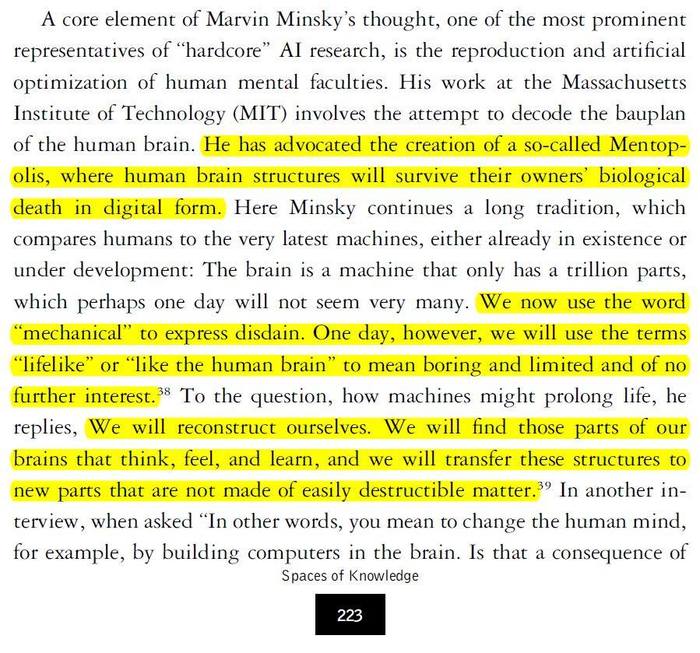
Great book! Various discourses on the topics of virtual reality, artificial inteligence and even artificial life and genetic art are all covered by lucid and to-the-core objective Grau and through very vivid examples you'll probably end up googling. It starts with historical perspectives, continues onto development of panoramas as propaganda tools (kind of a too long and a bit boring chapter imho), but afterwards the party starts! Book won't be hard to comprehend not even for one not familiar with the topic (though I had to use dictionary quite some, but it ain't my native language). The goal of this book is to give new perspective on art that hasn't been covered much, kind of a moan for multidisciplinarity directed to understanding evolution and life in general. I'll just attach a piece of probably my favourite part, although a lot of other pleaces were as overwhelming!