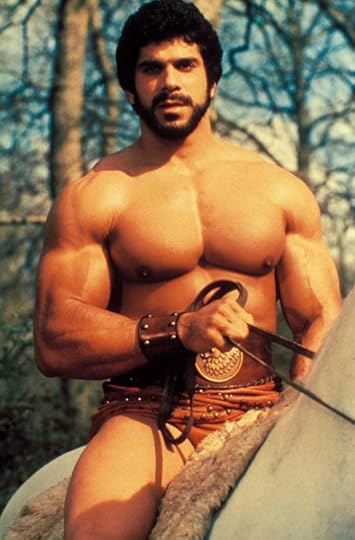
Duty or Pleasure? This was the legendary choice which faced Hercules and which preeminent philosopher AC Grayling uses as the starting point of his masterful new book. He shows us how much more people can understand about themselves and their world by reflecting on today's moral challenges. Above all, he explores the idea that certain demands and certain pleasures are necessary, not just because of their intrinsic merits but because of what they do for each other. The Good Life or the good life? With exceptional clarity and unrivaled prose, Grayling addresses the everyday ethical choices which confront us all.
Anthony Clifford "A. C." Grayling is a British philosopher. In 2011 he founded and became the first Master of New College of the Humanities, an independent undergraduate college in London. Until June 2011, he was Professor of Philosophy at Birkbeck, University of London, where he taught from 1991. He is also a supernumerary fellow of St Anne's College, Oxford.
He is a director and contributor at Prospect Magazine, as well as a Vice President of the British Humanist Association. His main academic interests lie in epistemology, metaphysics and philosophical logic. He has described himself as "a man of the left" and is associated in Britain with the new atheism movement, and is sometimes described as the 'Fifth Horseman of New Atheism'. He appears in the British media discussing philosophy.
A bit disappointed in the book. While I liked the topic (what does it mean to live a good life) and agreed with a lot of the things written in this respect, the book was focused on highlighting what is "good" without bothering really to dwell into the philosophical debate about things. It was just stating most of them as being self evident ..... so not really a good justification (though to be fair he made references to previous publications where these things are discussed).
In any case, due to this reason I felt the book made only a small contribution to the debate on the topic of a good life.
Target audience of the book: Common people, anyone interested in morality and the moral choices of everyday life. The book depicts (or at least attempts to) a sort of a practical philosophy.
About the author: According to Wikipedia, Anthony Clifford, or known as "A. C." Grayling, is a British philosopher. In 2011 he founded and became the first Master of New College of the Humanities, an independent undergraduate college in London. Until June 2011, he was Professor of Philosophy at Birkbeck, University of London, where he taught from 1991. From 1982 until 2013 he published around 30 works both independently and in collaboration with different writers.
Structure of the book: Around 200 pages, divided in 3 parts and 15 chapters. Part I: "The Individual Good"; Part II: "Practical Morality"; Part III: "Society."
Overview: The choice of Hercules refers to the ancient parable (Grayling calls it a "Renaissance trope" but it goes back to Xenophon) whereby the demi-god is approached by two women, one representing the path of duty, the other that of pleasure (or vice), and asked to make a choice between the two. Hercules chooses duty, of course; but Grayling uses the story as the starting point for a series of essays on what constitutes the good life, and whether or not both pleasure and duty have something to teach us. In Grayling's book, Hercules is the metaphor for the current society, which, in his view, seems to have chosen the easy path of "pleasure" instead of the hard path of "duty."
Strong points: Despite the complex subjects treated, the book is easy to read and it is not very long. Everyone can read it in a day or two.
Weaknesses: The book starts very good but ends bad. I personally felt that the reading was like a descending on quality. The first part is very good, the second is acceptable and the last is simply "blurry." The clarity of ideas and the path of explanations fades as you advance in the text, as if the author did not have the time to properly finish it. The last part of the book is a enumeration of his biases. To me, the Grayling from the beginning of the book was a genius and the Grayling from the end of the book was an icon of the liberalism and multiculturalism that is now on the brink of collapse.
As with Grayling’s other books, this one is elegantly written and closely argued.
Hercules was the product of Zeus’ dalliance with the mortal woman Alcmene, one of many dalliances. Hercules was physically impressive, but given to moods when he failed to control his great physical strength. In one of those moods, he murdered his hapless music tutor Linus, and was banished to a spell of shepherding by his earthly stepfather. During this time he was wooed by two figures, both beautiful, one representing Duty (or Virtue), the other representing Pleasure (or Vice). Duty was dressed in a simple white robe; pleasure was a vamp. Hercules choice was to pick which one he would listen to. The account of this in Xenophon’s “Memorabilia” doesn’t say explicitly which on Hercules chose, but since he was a semi-deity one can infer that it was Duty.
Hercules was also the object of the rage of Zeus’ wife, Hera. This seemed always to happen after each of Zeus’ dalliances. Hera drove Hercules temporarily mad, and during this insanity he killed his wife Megara and their children. Hera then compounded this nonsense by blaming Hercules for his violence and forcing him to undertake his famous twelve labours in penance. (Although it is these twelve labours that Hercules is best known for today, Grayling chooses Hercules choice between Duty and Pleasure as the motif for his book of essays.
All of Part III is worth reading, but the two essays that struck me most, sensitized as I have been by my current reading, were “Moral Attitudes and Ethics”, and “Civility and Civil Society”. Both these are good enough to be worth reproducing verbatim. But I’ve restrained myself.
A point worth noting in particular is the positioning by Grayling of three philosophers in the essay “Civility and Civil Society”, those philosophers being Ronald Dworkin, Isaiah Berlin, and John Rawls.
And a good quote from Cicero (p. 156):
“The fundamental principles of justice should not be deduced from a praetor’s proclamation, as some now assert, nor from the tables of the law, as our forefathers held, but from the innermost depths of philosophy.”
Readers expecting a book on present day moral challenges and the ethical choices that confront us may be a little disappointed with this book. While Mr. Grayling touches on various subjects that affect everybody, such as family relationships, sexual attitudes, mortality and human rights, the topics are presented in such a disjointed fashion, that it is difficult to follow his train of thought at times. We are also not presented with the values that represent the Good Life, as he is constantly falling back on the explanation that moral values are not the same in different communities, different religions and different countries.
I would say five stars for the first section, three for the following two. Grayling is a very readable philosopher with a simple and entertaining writing style; one I would happily recommend to those unfamiliar with philosophy. The book deals with living the 'good life'; the first section dealing with the elements that may make up such a life, followed by discussion on moral issues that affect one's life and the local and global community. I preferred the first section, lately because it spurred me to think on what I value for my own 'good life'. The last two sections didn't feel like anything new, perhaps because his liberal philosophy on morals and global human rights track very strongly to my own views, so I didn't feel I was seeing anything from a new perspective. I'm not sure the emotionally loaded tone of these sections would do much good in persuading someone of an opposing viewpoint, something he admits in the text.
Una reflexión sencilla, sincera y certera acerca del lugar del placer y del deber en la vida.
Grayling tiene varios libros similares, casi idénticos; este, a mi parecer y especialmente en sus primeros capítulos, condensa lo mejor de su mirada humanista, su mensaje razonable y razonado, y su profunda compasión: nada más que la consecuencia de comprender y aceptar esas “noches oscuras del alma” que persiguen a nuestros atardeceres, y que a veces los alcanzan.
My favourite modern philosopher, Grayling is as always thought-provocative, even shocking in his discussion on our everyday choices. The biggest one is the choice between pleasure or duty in life. I did not agree with some of his views but mostly I am on his side on many issues.
I wanted to give this another half a star. I found many of the arguments clear and helpful (despite reading it tired) but found the middle section rather hard work. It felt like personal axes were being ground a little too much
An incredibly shallow approach to the questions of the good life. Packed with one-sided discussions and straw men, this book fails to capture the imagination.