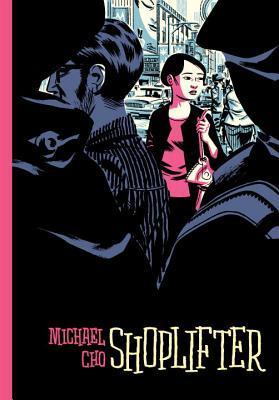
The brilliant debut graphic novel from the author of Back Alleys and Urban Landscapes about a young woman’s search for happiness and self-fulfillment in the big city. • “Perfectly convey[s] the loneliness of urban life.” — Entertainment Weekly
Corrina Park used to have big plans.
Studying English literature in college, she imagined writing a successful novel and leading the idealized life of an author. But she’s been working at the same advertising agency for the past five years and the only thing she’s written is ... copy. Corrina knows there must be more to life, but and she faces the same question as does everyone in her how to find it? (With two-color illustrations throughout.)
Inconsequential. I've said it before and I'll say it again: the world is so big, such a vast and interesting place. So why do 95% of graphic novels only focus on a tiny sliver of it? I don't care about disaffected 20 year olds living in ennui in NYC or SF. I don't care about virginal young white male art students or virginal Asian male art students or even, when you get right down to it, art students at all. I wish a Mongolian yak herder would pen a graphic novel about their life. I want to see graphic novels about interesting people's lives. People who have done something, been somewhere, lived outside the range of ordinary experience. Mountain climber comics, hospital comics, marine salvage comics . Poets with a thousand lovers, rap stars, prisoners, Ai Wei Wei, Sammy Davis Jr., Ida Tarbell, Joan of Arc, competitive cup stackers ... just no more angsty 20 something bicoastal urban hipsters or sad sack virginal unloved cartoonists. PLEASE!!
Like many of us, protagonist Corinna Park does not lead the kind of life she envisioned for herself when she was young. After studying English literature and dreaming of a career as a writer, she eventually had to wake up, smell the coffee, and settle for... you guessed it, a job in advertising. She has bills to pay, after all, and marketing is the name of the game. After five years of playing the game, however, Corinna feels increasingly frustrated: “God, I’ve fallen into the classic trap.” Even her personal relationships - largely limited to the social media - are governed by the cold laws of the market: “It’s like we’re so used to advertising, we’re now advertising ourselves. Trying to shine up and sell our pitiful little lives.” So what does Corinna do? Why, she develops the habit of stealing magazines in a local chain store, of course - just to spice things up a little: “I know it’s wrong but it makes me feel a little better. A little more alive.”
Beautifully illustrated in a style reminiscent of Darwyn Cooke's, Michael Cho’s Shoplifter is the story of a young adult desperately looking for a sense of purpose and a little human warmth in our increasingly commodified world. It is certainly a very relevant story that most young adults should be able to relate to. Unfortunately, though, it is also a very underdeveloped, obvious and predictable one that lacks subtleties and surprising insights. If you wanted to write a contemporary story about that old link between capitalism and alienation and had only three minutes to come up with characters and a plot, I think the result would be very similar to the story of Shoplifter: The advertisement agency represents our commercialized world, the repressed literary ambitions our inability to lead a meaningful and fulfilling life in it. Characters say things like “we can log every single human relationship and distill it into a plus or minus value” or “pictures or it didn’t happen” – things we have all heard or thought about many times. And the story's ending also does not exactly come as a surprise.
Bottom line: I get the impression that Michael Cho is a very talented artist but not the greatest of writers.
Tore through this during a library sitting. The cover drew me in; Cho's illustrations are lovely throughout. In terms of text substance, there isn't much here. Deciding to stop waiting for a life that's worth living & to go out & create it instead is Shoplifter's main takeaway. A crucial message, told in a simple, forgettable way.
Desiring to write for a living, Corrina pursued an English degree. While waiting for her dream to come true, she works at an ad agency. After five years of employment there, she comes to the horrifying realisation that all she's done is write copies; that she hasn't manifested her dreams at all. Depression & anxiety begin to kick in as she attempts to finagle her way to a more fulfilling life. To cope with this, she decides to shoplift magazines at a mass store. (*Never a mom & pop store because that would be robbing people- her theory.) Perhaps you have a point there, Corrina.
While Cho takes jabs at consumerism, I would have liked there to have been a more in depth discussion of this. At 96 pages, concepts are rushed & we never truly get to the heart of the issue: falling in the trap of staying with something that drains you until something 'better' comes along. Though I appreciated the predictable ending, I wish the entire story would have been fleshed out better. SHOPLIFTER works better in theory; the actual GN won't be one to stay with me.
Why does Corrina steal things she really doesn't need? The answers are much more complex than even she can imagine. I had a close friend who went through this with his 13 year old daughter; she was stealing small items even though she had money. when he asked her why she really could not give him an answer.
I picked this up because one of my favorite graphic novelists, Seth, said it would make "all cartoonists who read it weep with envy." Seth does that to readers, the weeping with envy and admiration, but not Cho, not in this weak book. Korean-Canadian Cho writes this story of a Korean-Canadian woman in her twenties who is an ex-English major writing ad copy. She's not happy, she can't get with the fun friends and dating scene. She needs to do something else. Eh, so quit already!
Cho doesn't create much sympathy for his heroine here, who engages in petty shoplifting as a kind of mindless escape. If we got deeper into her anguish maybe the shoplifting could have some existential meaning for her and us, but Cho is no Dostoevsky writing about the addiction of gambling. This girl is just a privileged urban woman who is bored and needs to get a life. She needs to make a connection with someone, with something, and never does. Meh. And maybe that's the point, that we are not supposed to sympathize with her, she's privileged and whiny and lost.
But the art, somewhat influenced by Seth, it would seem, is good, set in pink and black and white, though somewhat muted for the restless tone of the story.
This is the sort of horseshit that tries to be emotionally resonating through simplicity and the daily, shared feelings of doubt and wistfulness we all share. What happens is, essentially, nothing. The story isn't bad, just criminally boring.
Main character wants to be a writer. Main character had dreams of writing novels. Dreams are crushed by having a job (in advertising!) Contains a line about "falling into the classic trap" Continues falling into classic narrative traps. A minor bit of criminal activity makes the main character feel alive (But not alive enough to actually work on that fucking novel.) Upon discovery, main character is convinced by the salt-of-the-city convenience store worker to figure her life out. Main character pursues dreams and everything is great.
Stories like this are what perpetuate the myth that writers, if they are to be successful or fulfilled in any way, must write and only write. Why can't the main character come home from her work--and its not like you need to take advertising home with you, I'm assuming, because it's not social work or police work or anything haunting like that--and write a bit every night? Is she expecting to get paid to write immediately after leaving her advertising job? Just because you are a writer or want to be a writer doesn't mean you have to be a professor or a barista or a clerk at a food co-op. Some of us hang drywall and make beef jerky and, yes, even work in advertising.
The art is great, despite the terrible story. The two-tone look works well and I get a bit of a lighter Charles Burns vibe from the shapes and shadows. Maybe flip through this in the library and then put it back before you accidentally read it.
I got really excited about this when I first saw it pop up here on GR. And although ultimately I found it relatively forgettable (I had to flip through to remember much about it only a few weeks after I read it), the themes explored here did make me think a bit.
From a design standpoint, I think I would have appreciated the book more if it had been printed larger. And bound with a jacket, rather than "library-bound." But that may be my own perception.
Beautifully drawn but I thought the plot was under developed and the ending felt rushed -- there could have been more done with the shoplifting perhaps. Overall somewhat cliched though there were several lines that did resonate.
The artwork in this book is really beautiful, but everything else is totally predictable and anti-climatic. I agree with previous reviewers who have stated that this book reads like the beginning chapter of a longer novel.
Hoş kısımları yok değil ama benzer durumları bilmeyen (veya yaşamayan) kaldı mı gerçekten? Finalinin yarattığı tatminsizlik Mor ve Ötesi'nin bir şarkısını aklıma getirdi.
"Ucuz bir film gibi Başından sonu belli Ağlar içim Bu biz mi, o ben miyim"
Here you’ll find a very time-relevant story , one that drives its message home yet somehow never manages to come off preachy. It communicates a very real sense of loneliness despite being set in a busy urban jungle.
Shoplifter is very much about the quiet yet steady despair that comes with living in the big city. We plod on through life, wincing in silence as we go. Then out of the void, out of the fog, someone sees you - really sees you - and wakes you up, cold, sharp and without apology. What you do next is your choice alone.
If a graphic novel can make me cry, laugh and cry again before it’s even finished, it’s a winner. Shoplifter did this and much more.
severely mid, also if i’ve been out of college for years and am telling anyone who will listen that i’m an english major as much as this bitch, take me out back and shoot me like old yeller
Eine extrem schnelle Lektüre mit tollem Zeichenstil, jedoch einer eher enttäuschenden Story. Ich bin froh, dass ich nur 3,99€ dafür ausgegeben habe. Die Geschichte um die Protagonistin, die mit ihrem Leben unglücklich ist und aus Frustration ab und an Zeitschriften klaut, ist sehr einfach gestrickt. Keine Überraschungen. Eine Geschichte wie ich sie schon 100 Mal besser gelesen habe. Schade vor allen Dingen, weil der Klappentext das Thema Ladendiebstahl viel zu sehr in den Vordergrund rückt. Auf jeden Fall eine tolle Aufmachung von Egmont, der Inhalt kann da nur leider nicht mithalten.
It was okay. The art style was intriguing. Cho did an excellent job setting the scene and placing the reader in the environment Corrina was in.
It's pretty conspicuous that Michael Cho wants you to follow your dreams in spite of fear and not reply on the safety of monotony if it doesn't make you happy.
I feel like I'm missing something. I resonated with some of what Cho said, but I'm still in uni, so it's possible that the magnitude of his message hasn't hit me yet. I'm looking forward to re-reading this in a couple years.
A good, if very short, read. First become aware of Michael Cho through his Marvel Variant covers series and decided to try out his original graphic novel. His style is nice and is similar to other Canadian artists like Darwyn Cooke. It's just a short book. I take my time when I read mostly but I still finished this in about half an hour.
I read this a while ago and forgot to review it. I remember the story being super-short and the art being great. At some point I'll get it out of the library again so I can write a better review...
Коррина Парк переехала в большой город, отучилась в университете на филолога, временно устроилась в рекламное агенство, чтобы расплатиться со студенческим займом... и не заметила, как погрузилась в унылую рутину, превратившись в одинокую женщину с кошкой, которая засыпает под телевизор, а просыпается с отвращением к жизни и тащит ноги в ненавистный офис. Единственная отдушина в жизни Коррины — зайти вечером в круглосуточный магазин и получить укол адреналина, особым образом стащив глянцевый журнал.
Неплохой, очень здорово нарисованный slice-of-life про кризис молодого возраста, где юное дарование не может найти способ самореализации ни в работе, ни в новом городе, и в какой-то момент начинает метаться, как птица в клетке (или живёт всю жизнь в ожидании перемен, которые сами никогда не наступят). Простая история, но изящно рассказанная, и даже с ловкими сюжетными финтами. Диалоги и близко не доходят до уровня Адриана Томине, но и тут у автора есть любопытные мысли о рекламе, соцсетях и неожиданный комментарий к извечному "ах вот бы бросить всё, да свалить на природу".
В комиксе явно прослеживаются автобиографические черты, и если так, то можно считать, что финал у истории счастливый. Хотя, кто знает, конечно. Вот небольшое превью.
4.5* I really, really loved this. I especially loved that when I look at reviews, everyone gets something different out of Corinna's story - and I think that's a great sign for a book.
I really connected with Corinna feeling so lost and directionless. It's weird to wander out of school and into a job and still feel like you're floating untethered and Cho captured this feeling perfectly. I loved the drawings and the use of colour. I loved how real Corinna's struggles felt and how close to home her story hit.
It almost felt... unfinished at the end though? There was a lot of conflict building and internal struggle and then suddenly it was over. I would have loved to see more of Corinna's struggles and especially her decisions - I mean, both from a selfish "ok, but what do I do NOW?" standpoint, but also from a story standpoint. This book could have been half again as long and I think that would have allowed more space for the story and the themes that Cho explored.
Lettura leggera di nemmeno mezz'ora. Che dire, tutto molto classico e con il sapore di già visto: protagonista frustrata dalla vita che nelle poche pagine cambia la prospettiva della sua deprimente vita. Noia, noia. Oltretutto i piccoli furti del titolo sono una cosa così irrilevante...
Yet another "I had big dreams and they've all been smashed" plus "who do I want to be when I grow up for real?" told from the perspective of a twentysomething. These kinds of stories are exhausting and shallow. Could the author have expanded the story to demonstrate why stealing is what makes the young woman feel "confident"? Do her accomplishments not add to her sense of self-confidence? Does being single mean a woman must forever (or until she is no longer a twentysomething) "figure out" life? I have a number of problems with plots like this one. Young authors are focusing more on the bruised human and less on the achievements in balance with those bruises. Never once have I read a story about the sad twentysomething who was actually at a disadvantage of any kind (you know, broke in a way that means the individual isn't constantly drinking in bars, smoking, eating nice food or shopping. Exploited in a situation she couldn't escape, like staying with an abusive partner to avoid homelessness. Didn't have a family support system on which to fall back. Oppressed due to skin color or gender or sexuality. ET CETERA).
This is a simple little story but well told. And with nice artwork. The characters look like the people they reveal themselves to be, from the various oddball coworkers to the boss of the company to the shopkeeper at the store. Even though the art is entirely in pink and white and black, the overwhelming busyness of the cityscapes comes through to be contrasted by the peaceful beauty of a scenic scene remembered. The home alone scenes amplify her self isolation which contrasts with the chaotic jumble of people and sound on the streets and in the club.
While readers might fault the heroine for allowing herself to get trapped in a job she dislikes, it can happen to anyone. The first step to personal renewal is the recognition of the need for a change, but to break free and start anew requires courage, self-confidence and maybe a plan. Some people can’t do it.
As I said, this is a simple story of a young woman who is helped along by a simple act of kindness, forgiveness, and the recognition of her worth as a person by a man she really doesn’t know.
This graphic novel brings a few essential aspects of contemporary life. Corrina Park is, as lots of people in the world, an empty shell. She has no joy in her life. Her work doesn’t bring any satisfaction, she’s social awkward, has no friends and no love live. Not even her cat loves her. So she has to have a trill. A little something to make her feel alive. She shoplifts. These premises were interesting and relevant in this time and age. Nevertheless, I felt all the themes were treated only superficially. This should have been a longer graphic novel. I loved the art work. The drawing is beautifully made, and the choice to use only black and pink worked well. You easily feel the monotony and sadness of Corrina’s life.
I liked this book, especially the art, but I wanted to like it a lot more than I did. At least on the story level. On the other hand, this is one of those narratives that warrant multiple readings (which I've done) and requires some "sinking in time" after initial acquisition. Back to the art: it's really outstanding, and I like that Cho uses the monochrome throughout. I read in the promotional material that one endorser likens Cho's art to that of Darwyn Cooke's, and while that makes sense, I prefer to approach his work without that derivative filter and just see Cho as a new artist (at least for me) with a remarkable style.
The lettering was standard, the story went in expected directions, and the dialogues were quite flat.
The art in parts is solid. Generally I observe makers sticking to a structure (3x2 or 2x2 panelling), but here they range in decreasing size from double-page to full-page to 2x1 to 3x1 and 3x3 panelling, and it takes a bit of courage to explore that variety of visualization within the structure of a story, and then do a good job of it. The bigger sized visuals are of bustling city spaces, or night time sprawling high-rise apartments or open-spaces like a basketball court and done in black and white and just a single color tone of pink, along with great shading abilities, the melancholia in those visuals come across well. As the panel sizes go small, human visuals and dialogue come into focus and most characters' expressions seemed uni-dimensional, and in some panels, a bit of back and forth in dialogue wasn't sitting well with the static imagery.
With regards to the main character, she had a decent bit of story arc and emotional variations visually. That, and the title is linked well to the eventual happiness and self-realization of the character.
I'd probably prefer to read more of this maker's works if they are dialogue-free, lesser human characters, page-spread sized, and of a longer work overall.
Corinna is getting tired of her job. She wasn't suppose to be there this long. She was going to fulfill her dream after her student loans but then got comfy. Now in an uncomfortable situation, Corinna turns to the one thing she finds the most comfort in; Shoplifting. This was just the book I needed for a Friday night. It felt like a 45 min T.V. episode. It was quick but felt like a full series. I didn't feel confused or lost. There weren't any unanswered questions or anything at the end, it was good. I really liked the climax and the conclusion too. The art is great! Its really cool that it is done in all pink, black and white. There were a lot of cool cityscape splash pages as well. Overall, great read. Think it would make a great gift for people who don't usually read comics.
I should preface this by saying I met Michael Cho and had the privilege of hearing him speak about his process of making this book.
That being said, wow. If I ain't Corrina. This is a story I'm glad I read now, and not earlier in my life. I really loved the art; I mean the baby pink is so my aesthetic but in general I think mono-chromatic styles are perfect for 'slice of life' or character based comics.
I only wish I had more. More of Corrina questioning the systems of capitalism, more of Corrina yearning for a world unfiltered by technology, more of Corrina struggling with the isolation of city-life. So many deep themes touched but not fully explored.