

What do you think?

The Restraint of Beasts
Once upon a time in Scotland, there were three men who built high-tensile fences, the kind that keep animals in and humans out—or maybe the other way around. Magnus Mills gives us a wiry novel of tensile strength that proves him a writer of ferocious talent. Eerie, resonant, spare yet rich in tones both hilarious and ominous—as if a work by Irvine Welsh, or perhaps Macbeth, had been adapted by the Coen brothers—his story has a finale so ingenious, insidious, and satisfying, it remains locked in the mind long after the last wire has been strung into place.
292 pages, Kindle Edition
First published September 7, 1998
Ratings & Reviews
Friends & Following
Create a free account to discover what your friends think of this book!
Community Reviews
Displaying 1 - 30 of 433 reviews

April 14, 2018
FUNERAL PARTY

All’inizio colpisce la mini biografia di Magnus Mills nella bandella: operaio meccanico in Gran Bretagna e in Australia, poi autista di bus a Londra. Questo è il suo esordio narrativo.
E arrivò candidato al Booker Prize.
E quindi, Mills racconta di cose che sembra conoscere bene, ho letto che ha fatto anche lo stesso mestiere dei suoi tre protagonisti: uno scalcinato trio di operai che devono piantare paletti per recintare terreni da pascolo.
Scalcinato non è il termine più appropriato. Forse è meglio scansafatiche, alcolizzato.
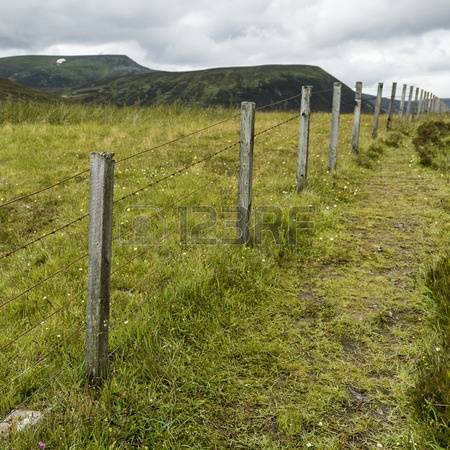
E, considerato che per un motivo o per un altro (troppa birra, troppa fretta, troppa distrazione, troppa pigrizia) fanno subito fuori il primo committente, delitto al quale ne seguono altri, e l’Inghilterra si va riempiendo di cadaveri seppelliti sotto i paletti delle recinzioni, il bestie del titolo è quanto mai adatto.
La mente corre a qualcosa di prossimo, altrettanto, e più divertente:
https://www.youtube.com/watch?v=yH97l...
https://www.youtube.com/watch?v=Sf1nv...
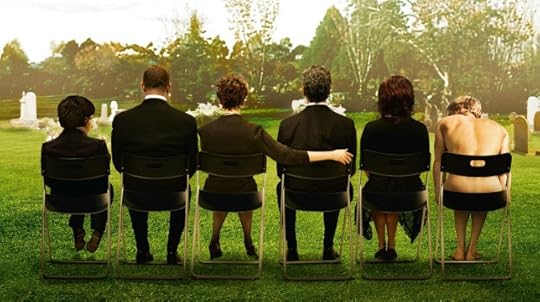
Frank Oz: Funeral Party, 2007.
Ad aumentare l’aspetto comico della faccenda è che i cadaveri finiscono sì, sotto paletti, ma i paletti sono piantati su verdi prati di Scozia popolati di placide mucche e pecore.
Umore nero, sapore di Bukowski, odore di certi film dei fratelli Cohen, black comedy, voglia di cinema, brutalità demenziale, la classe operaia andrà sempre all’inferno.
Il romanzo è insieme inquietante e spassoso, e fa pensare a una recinzione elettrificata: se ci mettete sopra le mani non riuscite più a staccarvi,
dice il New Yorker.
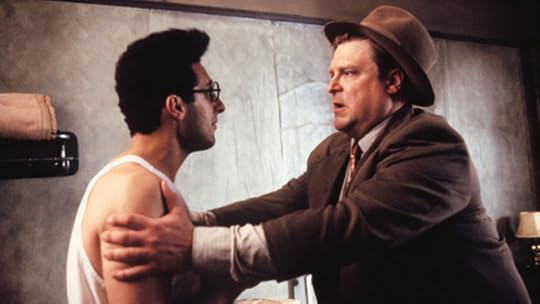
Joel e Ethan Coen: Barton Fink, 1991.
All’inizio colpisce la mini biografia di Magnus Mills nella bandella: operaio meccanico in Gran Bretagna e in Australia, poi autista di bus a Londra. Questo è il suo esordio narrativo.
E arrivò candidato al Booker Prize.
E quindi, Mills racconta di cose che sembra conoscere bene, ho letto che ha fatto anche lo stesso mestiere dei suoi tre protagonisti: uno scalcinato trio di operai che devono piantare paletti per recintare terreni da pascolo.
Scalcinato non è il termine più appropriato. Forse è meglio scansafatiche, alcolizzato.
E, considerato che per un motivo o per un altro (troppa birra, troppa fretta, troppa distrazione, troppa pigrizia) fanno subito fuori il primo committente, delitto al quale ne seguono altri, e l’Inghilterra si va riempiendo di cadaveri seppelliti sotto i paletti delle recinzioni, il bestie del titolo è quanto mai adatto.
La mente corre a qualcosa di prossimo, altrettanto, e più divertente:
https://www.youtube.com/watch?v=yH97l...
https://www.youtube.com/watch?v=Sf1nv...
Frank Oz: Funeral Party, 2007.
Ad aumentare l’aspetto comico della faccenda è che i cadaveri finiscono sì, sotto paletti, ma i paletti sono piantati su verdi prati di Scozia popolati di placide mucche e pecore.
Umore nero, sapore di Bukowski, odore di certi film dei fratelli Cohen, black comedy, voglia di cinema, brutalità demenziale, la classe operaia andrà sempre all’inferno.
Il romanzo è insieme inquietante e spassoso, e fa pensare a una recinzione elettrificata: se ci mettete sopra le mani non riuscite più a staccarvi,
dice il New Yorker.
Joel e Ethan Coen: Barton Fink, 1991.

February 5, 2018
An entirely compelling novel. Nonetheless, I am unable to tell you why. It is about fence building, but it's not only about fence-building. I highly recommend reading it in one, but no more than two sittings, if time and life allow.
P.s. For those readers like me who see a laudatory Pynchon blurb on the cover and experience undergrad PTSD (I know, I know, all my wise, well-read friends. I'm in the minority. However, I am confident I'm not alone in my hate...), fear not. Nothing in this novel will remind you of a Pynchon-authored masterwork.
P.s. For those readers like me who see a laudatory Pynchon blurb on the cover and experience undergrad PTSD (I know, I know, all my wise, well-read friends. I'm in the minority. However, I am confident I'm not alone in my hate...), fear not. Nothing in this novel will remind you of a Pynchon-authored masterwork.

December 17, 2016
Here is a deadpan black comedy about three fencing contractors whose preference in life would be drinking pints of beer in a pub for 9 hours a day and working for 4 hours a day instead of the other way round. You can tell it’s a black comedy because when the occasional death occurs it brightens up the proceedings. I did not lol, as they say, and indeed my own pan was dead throughout the reading of this novel, but inwardly (where it counts) I was smiling madly and guffawing gently. There might be some metaphorical intention with regard to the continual erection of fences and the title of the novel, which refers to what the fences are for, but I have found that if you don’t bother with metaphors they will not bother you.

Read
June 13, 2016The Restraint of Beasts is a novel about fencing. Post and rail, chainlink, wire stretched to tension, chestnut paling, barbed wire, and electric fencing. A novel about fencing the gang of fencers sent "into England" to erect high tensile fencing to separate the sheep from the sheep deep in the countryside.
This has nothing to do with this book but after watching Danish dramas on TV it is hard not to mentally read the author's first name as Mawnus. With such pronunciation all those lonely Gs must be left with no place to go other than Greenland where they gather together, shivering and shuffling to keep a little warm.
Which has nothing to do with this book - the great fencing novel of our times, I read The Rise of Silas Lapham in the belief that it would be the great American accountancy novel only to be cruelly deceived, yet finally in the days of my middle age I have lived to see high tensile fencing finally achieve its place in the world of literature.
None of which has anything to do with this book (apart from the fencing - that is fairly integral, if not structural).
I remember when this book was published, well I don't, but I remember the publicity. Magnus Mills had been working as a bus driver for London transport. I imagine the novel forming itself as he drove around his route everyday . Everyday his supervisor warning him to keep to his schedule. Everyday the traffic, the orderly queues at the bus stops all variable. This might have something to do with this book. Naturally this was a godsend for the publicists as it made for a better story than one of those monkeys with a type-writer spontaneously duplicating the complete works of Shakespeare, since as everybody knows one of the unwritten rules that make up the British constitution is that bus drivers aren't novelists and so it came to pass that shortly after getting his first book deal he did chuck in the day job.
Let me be careful, this isn't the kind of book to spoil by casually giving away the details of the plot, no, that is something to be done carefully, with forethought,and perhaps a touch of malice.
The temptation is to describe this as a working class novel, the offspring of a casual encounter between Kafka and Robert Tressell. Kafkaesque is an over used term, generally people seem to be peculiar in their own way rather than in his, perhaps however there is a hint of Kafka in the disruption that the senior Hall brother sees in Morag's presence, disturbing his bovine workforce, at the very end of the novel. On the whole though this feels like a novel born out of the experience of working life. There is micromanagement, psychological intimidation, domination (as indeed is implied by the fact that this is a novel about fencing), and recruitment by means of sausages and beer. It comes to spell constraint . And what is fencing except physical constraint? We go through a steady process of tightening, and it is all to no end, or rather constraint and restraining others is an end in itself. The bare offices bespeak no ambition beyond holding the beasts in restraint. Do you live to work, or work to live? If you labour to obtain coin of the realm to spend on the drink that refreshes and inebriates then you alone might be immune to the madness of demarcation that lopes through the pages with lolling tongue.
Narratively the style is fairly flat, occasionally my feeling was that the first person narrator - a newly appointed fencing foreman, an Englishman amongst Scots, was withholding information. The vocabulary is constrained, the voice consistent. Curiosity tells me that reading more of Mills novels would give me a feel for if he achieved something distinctive or if this is his natural narrative register.
But this is not just a book about fencing, hungry as the world's readers are for chain-link and feather edged panels. It is also funny. And when not funny then mildly surreal, but then when you come down to it fencing is a bit odd.
This has nothing to do with this book but after watching Danish dramas on TV it is hard not to mentally read the author's first name as Mawnus. With such pronunciation all those lonely Gs must be left with no place to go other than Greenland where they gather together, shivering and shuffling to keep a little warm.
Which has nothing to do with this book - the great fencing novel of our times, I read The Rise of Silas Lapham in the belief that it would be the great American accountancy novel only to be cruelly deceived, yet finally in the days of my middle age I have lived to see high tensile fencing finally achieve its place in the world of literature.
None of which has anything to do with this book (apart from the fencing - that is fairly integral, if not structural).
I remember when this book was published, well I don't, but I remember the publicity. Magnus Mills had been working as a bus driver for London transport. I imagine the novel forming itself as he drove around his route everyday . Everyday his supervisor warning him to keep to his schedule. Everyday the traffic, the orderly queues at the bus stops all variable. This might have something to do with this book. Naturally this was a godsend for the publicists as it made for a better story than one of those monkeys with a type-writer spontaneously duplicating the complete works of Shakespeare, since as everybody knows one of the unwritten rules that make up the British constitution is that bus drivers aren't novelists and so it came to pass that shortly after getting his first book deal he did chuck in the day job.
Let me be careful, this isn't the kind of book to spoil by casually giving away the details of the plot, no, that is something to be done carefully, with forethought,and perhaps a touch of malice.
The temptation is to describe this as a working class novel, the offspring of a casual encounter between Kafka and Robert Tressell. Kafkaesque is an over used term, generally people seem to be peculiar in their own way rather than in his, perhaps however there is a hint of Kafka in the disruption that the senior Hall brother sees in Morag's presence, disturbing his bovine workforce, at the very end of the novel. On the whole though this feels like a novel born out of the experience of working life. There is micromanagement, psychological intimidation, domination (as indeed is implied by the fact that this is a novel about fencing), and recruitment by means of sausages and beer. It comes to spell constraint . And what is fencing except physical constraint? We go through a steady process of tightening, and it is all to no end, or rather constraint and restraining others is an end in itself. The bare offices bespeak no ambition beyond holding the beasts in restraint. Do you live to work, or work to live? If you labour to obtain coin of the realm to spend on the drink that refreshes and inebriates then you alone might be immune to the madness of demarcation that lopes through the pages with lolling tongue.
Narratively the style is fairly flat, occasionally my feeling was that the first person narrator - a newly appointed fencing foreman, an Englishman amongst Scots, was withholding information. The vocabulary is constrained, the voice consistent. Curiosity tells me that reading more of Mills novels would give me a feel for if he achieved something distinctive or if this is his natural narrative register.
But this is not just a book about fencing, hungry as the world's readers are for chain-link and feather edged panels. It is also funny. And when not funny then mildly surreal, but then when you come down to it fencing is a bit odd.

December 22, 2018
Agricultural fencing may not seem the most promising subject for a black comedy, but this book is surprisingly funny and a very easy read.
The English narrator is working for a Scottish high-tensile fencing company, and has just been put in charge of a fencing gang whose other members are Tam and Richie, two truculent, lazy and hard drinking Scottish caricatures, one of whom is permanently in debt. Their mean and ambitious boss is another caricature. On their first job, the client farmer is accidentally killed, and they choose to bury him rather than report the death. This sets the tone for much of what follows, as we follow them to an English backwater where it emerges that they are treading on the toes of a sinister local gang.
A very enjoyable comic fantasy.
The English narrator is working for a Scottish high-tensile fencing company, and has just been put in charge of a fencing gang whose other members are Tam and Richie, two truculent, lazy and hard drinking Scottish caricatures, one of whom is permanently in debt. Their mean and ambitious boss is another caricature. On their first job, the client farmer is accidentally killed, and they choose to bury him rather than report the death. This sets the tone for much of what follows, as we follow them to an English backwater where it emerges that they are treading on the toes of a sinister local gang.
A very enjoyable comic fantasy.

March 9, 2013
Magnus Mills has a style unlike any other author I know.
His deadpan narratives creep up on you so stealthily you are hypnotised into surrendering your disbelief to whatever bonkers twist and turn the story takes. This is his best.
His deadpan narratives creep up on you so stealthily you are hypnotised into surrendering your disbelief to whatever bonkers twist and turn the story takes. This is his best.
August 20, 2025
Elated by The Restraint of Beasts by Magnus Mills…an absolute…’Magnus Opus’
10 out of 10
What a predestined name for the author of a Magnum opus…Magnus Mills has written a hilarious, simple and yet so rewarding, at the same time captivating and creative, without proposing the most preposterous outcomes – after all, when three people die, one after the other - and then a dog ends the circuit of Death- the Boys in the Hood have the same solution, burry the bodies at next to one of the pillars of the fences for The Restraint of Beasts – and this is not just the opinion of the undersigned, for The Washington Post has declared this to be ‘Funny, eerie and suspenseful...in every respect, this is a tantalizing, absolutely hypnotic novel'
Furthermore, this ‘Magnus Opus’ has been short listed for the Booker Prize in 1999 and it is also listed with the 1,000 Novels Everyone Must Read compiled by The Guardian and the Supreme Joy that you will get if you opt to read is undisputable…the only dispute that I see would be over why is this not better known and competing with the likes of the Da Vinci Code – admittedly, I have not read that bestseller, but still could not contemplate why is so damn successful, whereas The restraint of Beasts only has a few thousand votes on goodreads, compared to what I guess would be a few million for the Dan Brown contraption…actually, after writing this silly ‘irony’, I had to see myself writing a much less successful fabrication and how proud I would be to spend the money for it, no matter how silly it would be…
I'm putting you in charge of Tam (Finlayson - the ex-foreman)- and (Richie Campbell), said Donald…this is more or less the introduction into this mesmerizing narrative – which is so magical in its naturalness that one is puzzled to understand the secret of its success…my daughter, Hannah Renee, has called me yesterday – she does that about once a month – from Amsterdam and since there are no activities I can report to her , for I am not doing anything, except for reading, literally, I mentioned The Restraint of Beasts, but felt at a loss to transmit to her the fascination, immense jollity, exquisite trail of treats which the story of The Three Musketeers of the Tensile Fences offers to readers…
After all, like Seinfeld, this is a comedy wherein ‘nothing happens’, but the creator is so gifted as to make us love the narrator and his rather simple, thick, slow witted, quite lazy, futureless companions, look forward to turning the pages to see what else they will experience – albeit we know, they will go to the pub, if they find one, drink beer, stay away from any girls – again, if there are any – work even on Christmas Eve and right after New Year’s, smoke cigarettes with fervor, Richie keeping the packs in his breast pocket and the lighter in the pants, annoying the story teller initially – though he experiences what is called Hedonic Adaptation and does not care anymore later – and occasionally…kill someone…
This is one of the most extraordinary aspects of The Restraint of Beasts – incidentally, the name refers to the fences that our characters build – we have a few personages, such as the Hall Brothers, for whom the enclosures, pens are raised – and the plot revolves around this activity and the young men doing it, in what should be a quite boring, senseless construction, only it is on the contrary, sublime, enchanting and soothing at the same time – the mixture of a saga that follows the narrator, Richie and Tam, with a few supporting characters, on their Quest for the Holy Simple – not the Holy Grail, some might say the mindless, stupid…in reference to the novel, they say that we find symbols of fascism, in a Kafkaesque opus – which is occasionally sprinkled with the Extraordinary Event that gets the same simple treatment…
As they work to repair a shoddy fence that ‘has gone slack’, Tam and Richie have the same attitude towards their activity, which is to be more or less absent, procrastinating – it makes sense, given its repetitiveness – there would be mention of a machine that puts the pillars into the earth, that would take the jobs away – and one may think of the Calling, the way to choose a career that has a formula proposed by Harvard Professor Tal Ben-Shahar, find what you like, what you are good at and what has meaning for you and finally, see where these intersect and that is where you should look for your job, which will then be the Calling, an activity you will engage with and be paid for doing what you would love to do anyway…
They have left the tools and things on the wrong side of the fence and just as the owner of the land and client, Mr. McCrindle, has sneaked up again – we have been told that the reason why the fence had gone slack had been the habit the client had had to keep coming to the team and affecting their otherwise splendid performance…hahaha – Tam and Richie throw the pillars over and one hits the owner of the property on the head and…kills him, without in the least making this The Incident, The Climax of the story, or maybe at least the chapter…the death of a figure is treated with fantastic ease and they just scratch their heads a little and decide that they will bury him under one post for a future gate…
We could say well, this sort of thing might happen – we have long passed one million dead from a virus after all, and if India really gets going, may more million will be under way and I better hurry to finish this note, so that you know what more you find in the Restraint, before the covid gets me – but the absence of any fuss, the Restraint with which magnificent Magnus Mills continues with his ‘Magnus opus’ – I had to use this clever find again, you surely see that – is Absolutely Magical, Hideous kinky, Adjectival, Medicine – to use some expressions from other Magnus opera, Hideous Kinky by Esther Freud, The True History of The Kelly Gang by Peter Carey and Little Big Man by Thomas Berger respectively
This is not the only victim of the Gang of Three, for the next client falls prey to the same curse that may be following the three men – one could say the ineptitude, the ‘dolce far niente’ attitude that they have towards life and especially work…on the other hand, they may be Zen Buddhists, aware that all the hustle is not good for anything and the best thing to do is to limit waste and live in a sort of trance…however, the latter hypothesis is more of an attempt to amuse myself, for by now, all visitors to this so damn funny note will have gone to greener pastures alas…to be a merit finder, this means that I can say who the dead are, without fear of a backlash from readers who protest that I spoiled it for them, now that they know the end – which they do not, for these accidental deaths are happing along the way…by the way, or without connection, there have been some complaints, although from people who do not even read the first line, which explains what is about to happen and they claim…oh, I did not know that…but hey, it is there, in the first seven words – with the next corpse, they use the same method…and then again, what else.
10 out of 10
What a predestined name for the author of a Magnum opus…Magnus Mills has written a hilarious, simple and yet so rewarding, at the same time captivating and creative, without proposing the most preposterous outcomes – after all, when three people die, one after the other - and then a dog ends the circuit of Death- the Boys in the Hood have the same solution, burry the bodies at next to one of the pillars of the fences for The Restraint of Beasts – and this is not just the opinion of the undersigned, for The Washington Post has declared this to be ‘Funny, eerie and suspenseful...in every respect, this is a tantalizing, absolutely hypnotic novel'
Furthermore, this ‘Magnus Opus’ has been short listed for the Booker Prize in 1999 and it is also listed with the 1,000 Novels Everyone Must Read compiled by The Guardian and the Supreme Joy that you will get if you opt to read is undisputable…the only dispute that I see would be over why is this not better known and competing with the likes of the Da Vinci Code – admittedly, I have not read that bestseller, but still could not contemplate why is so damn successful, whereas The restraint of Beasts only has a few thousand votes on goodreads, compared to what I guess would be a few million for the Dan Brown contraption…actually, after writing this silly ‘irony’, I had to see myself writing a much less successful fabrication and how proud I would be to spend the money for it, no matter how silly it would be…
I'm putting you in charge of Tam (Finlayson - the ex-foreman)- and (Richie Campbell), said Donald…this is more or less the introduction into this mesmerizing narrative – which is so magical in its naturalness that one is puzzled to understand the secret of its success…my daughter, Hannah Renee, has called me yesterday – she does that about once a month – from Amsterdam and since there are no activities I can report to her , for I am not doing anything, except for reading, literally, I mentioned The Restraint of Beasts, but felt at a loss to transmit to her the fascination, immense jollity, exquisite trail of treats which the story of The Three Musketeers of the Tensile Fences offers to readers…
After all, like Seinfeld, this is a comedy wherein ‘nothing happens’, but the creator is so gifted as to make us love the narrator and his rather simple, thick, slow witted, quite lazy, futureless companions, look forward to turning the pages to see what else they will experience – albeit we know, they will go to the pub, if they find one, drink beer, stay away from any girls – again, if there are any – work even on Christmas Eve and right after New Year’s, smoke cigarettes with fervor, Richie keeping the packs in his breast pocket and the lighter in the pants, annoying the story teller initially – though he experiences what is called Hedonic Adaptation and does not care anymore later – and occasionally…kill someone…
This is one of the most extraordinary aspects of The Restraint of Beasts – incidentally, the name refers to the fences that our characters build – we have a few personages, such as the Hall Brothers, for whom the enclosures, pens are raised – and the plot revolves around this activity and the young men doing it, in what should be a quite boring, senseless construction, only it is on the contrary, sublime, enchanting and soothing at the same time – the mixture of a saga that follows the narrator, Richie and Tam, with a few supporting characters, on their Quest for the Holy Simple – not the Holy Grail, some might say the mindless, stupid…in reference to the novel, they say that we find symbols of fascism, in a Kafkaesque opus – which is occasionally sprinkled with the Extraordinary Event that gets the same simple treatment…
As they work to repair a shoddy fence that ‘has gone slack’, Tam and Richie have the same attitude towards their activity, which is to be more or less absent, procrastinating – it makes sense, given its repetitiveness – there would be mention of a machine that puts the pillars into the earth, that would take the jobs away – and one may think of the Calling, the way to choose a career that has a formula proposed by Harvard Professor Tal Ben-Shahar, find what you like, what you are good at and what has meaning for you and finally, see where these intersect and that is where you should look for your job, which will then be the Calling, an activity you will engage with and be paid for doing what you would love to do anyway…
They have left the tools and things on the wrong side of the fence and just as the owner of the land and client, Mr. McCrindle, has sneaked up again – we have been told that the reason why the fence had gone slack had been the habit the client had had to keep coming to the team and affecting their otherwise splendid performance…hahaha – Tam and Richie throw the pillars over and one hits the owner of the property on the head and…kills him, without in the least making this The Incident, The Climax of the story, or maybe at least the chapter…the death of a figure is treated with fantastic ease and they just scratch their heads a little and decide that they will bury him under one post for a future gate…
We could say well, this sort of thing might happen – we have long passed one million dead from a virus after all, and if India really gets going, may more million will be under way and I better hurry to finish this note, so that you know what more you find in the Restraint, before the covid gets me – but the absence of any fuss, the Restraint with which magnificent Magnus Mills continues with his ‘Magnus opus’ – I had to use this clever find again, you surely see that – is Absolutely Magical, Hideous kinky, Adjectival, Medicine – to use some expressions from other Magnus opera, Hideous Kinky by Esther Freud, The True History of The Kelly Gang by Peter Carey and Little Big Man by Thomas Berger respectively
This is not the only victim of the Gang of Three, for the next client falls prey to the same curse that may be following the three men – one could say the ineptitude, the ‘dolce far niente’ attitude that they have towards life and especially work…on the other hand, they may be Zen Buddhists, aware that all the hustle is not good for anything and the best thing to do is to limit waste and live in a sort of trance…however, the latter hypothesis is more of an attempt to amuse myself, for by now, all visitors to this so damn funny note will have gone to greener pastures alas…to be a merit finder, this means that I can say who the dead are, without fear of a backlash from readers who protest that I spoiled it for them, now that they know the end – which they do not, for these accidental deaths are happing along the way…by the way, or without connection, there have been some complaints, although from people who do not even read the first line, which explains what is about to happen and they claim…oh, I did not know that…but hey, it is there, in the first seven words – with the next corpse, they use the same method…and then again, what else.

February 5, 2013
Even before we turn to the first page, Magnus Mills ensures he gets the ball rolling with a title that highlights many of the novel’s thematic concerns. Who exactly are the beasts, we hear ourselves asking; who is restraining whom? These existential questions build at a creeping pace, gaining in magnitude with every newly erected fence.
The opening sequence of The Restraint of Beasts plunges us into mundanity, governed by dialogue rather than description, and written in a terse, dry tone that only heightens the monotony. A fence needs redoing, we learn, and the work is pretty boring stuff, where characters Tam, Richie, and our unnamed narrator, labour under the watchful eye of Mr McCrindle. Fifteen pages on, however, and we’re confronted with our first untimely murder, in trademark Mills’ fashion. As our narrator tells it:
Any distant observer of this scene would have probably assumed that the three figures standing by the new fence were in deep conversation about something. In fact, there were only two participants in the conversation.
Apparently, in Mills’ nightmarish yet altogether familiar world, the living and the dead cannot be distinguished, and this, of course, is the whole point. We work tedious jobs, Mills seems to be saying, we squander meagre pay, and then we die an ironically banal death. The novel’s fencing metaphor proves particularly important here, confirming suspicions that it us who enact the role of beasts, restrained by back breaking societal norms.
Needless to say, as the trio plod on to our narrator’s homeland, such implicit ideas begin to take hold. We realise that the torturous repetition is appeased, albeit temporarily, by trips to the pub, where smoking, drinking, and sexual encounters become commonplace. However, these moments of escape create a warped cycle of punishment and reward; in reality, freedom is never an option. Mills captures this in subtle ways, from the repossession of Richie’s guitar (triggered by the same system that enables him to buy it), to the slow debilitation of our unknown narrator.
Mills illustrates this permeating malaise well – writing in a ‘deceptively simple’ prose, which fires ammunition at more conventionally descriptive language. His characters too, adopt the everyday man persona that we see manifest in All Quiet on the Orient Express, and to our delight, themes in the latter appear to persist. Many critics have paired Mills’ style with Franz Kafka, primarily in their shared ability to transcend unfortunate heroes into a state of powerlessness. This is indicative of later chapters, as Mills layers dream like events with the ever-constant grind of the capitalist machine.
And yet, it is possible that these surreal and absurd deaths are all part of the narrator’s ultimate defence mechanism. Perhaps, in the end, it is the imagination with its bizarre and comic twists, which provide our narrator with the power of both liberation and restraint.
The opening sequence of The Restraint of Beasts plunges us into mundanity, governed by dialogue rather than description, and written in a terse, dry tone that only heightens the monotony. A fence needs redoing, we learn, and the work is pretty boring stuff, where characters Tam, Richie, and our unnamed narrator, labour under the watchful eye of Mr McCrindle. Fifteen pages on, however, and we’re confronted with our first untimely murder, in trademark Mills’ fashion. As our narrator tells it:
Any distant observer of this scene would have probably assumed that the three figures standing by the new fence were in deep conversation about something. In fact, there were only two participants in the conversation.
Apparently, in Mills’ nightmarish yet altogether familiar world, the living and the dead cannot be distinguished, and this, of course, is the whole point. We work tedious jobs, Mills seems to be saying, we squander meagre pay, and then we die an ironically banal death. The novel’s fencing metaphor proves particularly important here, confirming suspicions that it us who enact the role of beasts, restrained by back breaking societal norms.
Needless to say, as the trio plod on to our narrator’s homeland, such implicit ideas begin to take hold. We realise that the torturous repetition is appeased, albeit temporarily, by trips to the pub, where smoking, drinking, and sexual encounters become commonplace. However, these moments of escape create a warped cycle of punishment and reward; in reality, freedom is never an option. Mills captures this in subtle ways, from the repossession of Richie’s guitar (triggered by the same system that enables him to buy it), to the slow debilitation of our unknown narrator.
Mills illustrates this permeating malaise well – writing in a ‘deceptively simple’ prose, which fires ammunition at more conventionally descriptive language. His characters too, adopt the everyday man persona that we see manifest in All Quiet on the Orient Express, and to our delight, themes in the latter appear to persist. Many critics have paired Mills’ style with Franz Kafka, primarily in their shared ability to transcend unfortunate heroes into a state of powerlessness. This is indicative of later chapters, as Mills layers dream like events with the ever-constant grind of the capitalist machine.
And yet, it is possible that these surreal and absurd deaths are all part of the narrator’s ultimate defence mechanism. Perhaps, in the end, it is the imagination with its bizarre and comic twists, which provide our narrator with the power of both liberation and restraint.

May 4, 2008
I loved this one. Set in Scotland (with trips to England), but don't expect any descriptions of the places. There are none. This book is virtually all action and dialogue, which makes it an interesting study in technique. The humor is dry, black, and if you like that kind of humor, the novel is comic. If you don't like that kind of humor you'll spend the whole time wondering what in the hell is going on. And what exactly happened in the book is the real mystery. The book is an extended metaphor for something, and that part of the pleasure of reading it is figuring out what that metaphor is. In that sense the book might be too clever, but it is a quick read, and the writing is brilliant within its stylistic limitations.

June 19, 2020
The genius of this book is that you think, right, this is going to happen next. They're not going to get paid. The electric fence is going to be built around them and not the beasts who need restraining (which in a sense they are: the fences might not be the sort that you see, but they're still there). And every time you're wrong. You're always waiting for something to happen, and it never does. The randomness and the banality is what makes the narrative. Nothing happens, and yet everything happens. Whether you like the book or not, at least it's original. And there's not very many times you can say that anymore. Plus it's ridiculously easy to read.

January 13, 2015
Insomnia read -- and boy, was I surprised. Yow! More soon, but the darkness in this very short book sneaks up on you because part of the time you're laughing. But it's there, all the same. More to follow.

October 14, 2019
Being both a music and book freak I sometimes wonder about the following:
when I walk into a music store I perfectly know where to dig my treasures. I'll skip the German schlagers, the opera, musicals, country, rockabilly, indie, French chanson, crooner, happy hardcore and heavy metal sections and head right to the jazz, blues, world, hiphop, reggae, funk and flower power (I invented the latter) areas. That leaves me more than enough land to disc(over).
In the book store it's different. Maybe because fiction is just one huge crumbeled pie ordered alphabetically,
I have to check almost every shelve to make sure I won't miss out om my new favourite novel.
On the internet -where it's easier to explore genre by genre- I wonder why I know so much better which music styles to avoid than which literature is just not my cup of tea. It's like acknowleding Coldplay produce some fine music, but disliking it yourself. I wish it were that simple with books: knowing 'historical fiction' or 'young adult' is just never up your alley, so you can skip it blindly and move towards your favourite genres, 'cuz life is short. But (luckily?) there is always this exception, this unexpected revelation awaiting you.
As a result: rating on Goodreads is different from rating on IMDB or allmusic.com. We rate literature in a much broader sense than music consumers (f.e. jazz lovers will rarely rate RnB albums) because literature seems less fragmented than music.
Anyway, The restraint of beasts was my literary Coldplay and me giving it 3 stars feels like being a skate kid giving 3 stars to Bach's Cello Suites by Rostropovich. You rate the reading experience, not the actual book. So imagine if this and similar novels (Doggerland, Ben Smith) had this sticker on the cover with a 'Beckett in the 21th century with deadpan humor' I would be able to leave it untouched, because it just isn't my thing. (Altough maybe, just maybe, this would turn out to be the exception. Aaargh, what the heck, I'll read it anyway.)
when I walk into a music store I perfectly know where to dig my treasures. I'll skip the German schlagers, the opera, musicals, country, rockabilly, indie, French chanson, crooner, happy hardcore and heavy metal sections and head right to the jazz, blues, world, hiphop, reggae, funk and flower power (I invented the latter) areas. That leaves me more than enough land to disc(over).
In the book store it's different. Maybe because fiction is just one huge crumbeled pie ordered alphabetically,
I have to check almost every shelve to make sure I won't miss out om my new favourite novel.
On the internet -where it's easier to explore genre by genre- I wonder why I know so much better which music styles to avoid than which literature is just not my cup of tea. It's like acknowleding Coldplay produce some fine music, but disliking it yourself. I wish it were that simple with books: knowing 'historical fiction' or 'young adult' is just never up your alley, so you can skip it blindly and move towards your favourite genres, 'cuz life is short. But (luckily?) there is always this exception, this unexpected revelation awaiting you.
As a result: rating on Goodreads is different from rating on IMDB or allmusic.com. We rate literature in a much broader sense than music consumers (f.e. jazz lovers will rarely rate RnB albums) because literature seems less fragmented than music.
Anyway, The restraint of beasts was my literary Coldplay and me giving it 3 stars feels like being a skate kid giving 3 stars to Bach's Cello Suites by Rostropovich. You rate the reading experience, not the actual book. So imagine if this and similar novels (Doggerland, Ben Smith) had this sticker on the cover with a 'Beckett in the 21th century with deadpan humor' I would be able to leave it untouched, because it just isn't my thing. (Altough maybe, just maybe, this would turn out to be the exception. Aaargh, what the heck, I'll read it anyway.)
October 6, 2024
Somebody at work passed me this. Haven't blitzed a book as quick as this in a long time.
Absolutely brilliant. Of similiar ilk to Ken Loach or Shane Meadows.
A small group of fencers based in Scotland have to travel to England for a job, led by a new foreman. The workers are lazy, uncouth, big drinkers, work shy.
Really well written. Terse and fast paced. Hysterical at times as they attempt to complete the contract in time. Along the way they encounter a rival fencing firm, accidentally murder and bury various clients - and the pub the only escape from reality.
Will be checking out some other stuff from Mills as this was ace. Definitely recommend.
Absolutely brilliant. Of similiar ilk to Ken Loach or Shane Meadows.
A small group of fencers based in Scotland have to travel to England for a job, led by a new foreman. The workers are lazy, uncouth, big drinkers, work shy.
Really well written. Terse and fast paced. Hysterical at times as they attempt to complete the contract in time. Along the way they encounter a rival fencing firm, accidentally murder and bury various clients - and the pub the only escape from reality.
Will be checking out some other stuff from Mills as this was ace. Definitely recommend.

September 30, 2026
The GR blurb -
When sloth and alcohol lead to a horribly botched job, two fence-builders named Tam and Richie flee their native Scotland to England, where all hell quickly breaks loose, in an offbeat novel in the British comic tradition.
My take -
This offbeat novel could have been titled "How Much Beer Can You Drink and Still (Mostly) Get the Job Done". Humorous with downplayed tragedy as is usually found in dark humor. Recommended for those looking for something different. It went on a little too long for my taste, thus 3-stars.
When sloth and alcohol lead to a horribly botched job, two fence-builders named Tam and Richie flee their native Scotland to England, where all hell quickly breaks loose, in an offbeat novel in the British comic tradition.
My take -
This offbeat novel could have been titled "How Much Beer Can You Drink and Still (Mostly) Get the Job Done". Humorous with downplayed tragedy as is usually found in dark humor. Recommended for those looking for something different. It went on a little too long for my taste, thus 3-stars.

March 17, 2025
I think I missed something here with this one, but I’m glad I finished it. I can’t fathom out the point of this story, but I just had to keep reading. I know quite a bit about how to erect fences now, so there’s that. The Booker judges must’ve seen something that I didn’t! 🤷🏻♀️ That was such a weird experience! 😂
2 ⭐️ - It was okay.
2 ⭐️ - It was okay.

May 7, 2012
Who would have thought that the construction of high tensile fencing could be so funny? At first I thought I wouldn't like this book but as the story develops then I found myself liking the gang of three workers.
Tam and Richie go South to England with their long suffering English foreman after their misadventures in Scotland. Their foreman has to 'sub' them when they run out of beer money or break tools, often out of his own money to keep them motivated. The three men live in a caravan, living on baked beans, and going to the pub after hammering fence posts all day long. Things get more complicated when they get involved with a rival firm of Fencers; the 'Hall Brothers'.
This is a hilarious tale and this reminds me of Withnail and I - in fact it would make a great film albeit with a disturbing ending. A right riveting read.
Tam and Richie go South to England with their long suffering English foreman after their misadventures in Scotland. Their foreman has to 'sub' them when they run out of beer money or break tools, often out of his own money to keep them motivated. The three men live in a caravan, living on baked beans, and going to the pub after hammering fence posts all day long. Things get more complicated when they get involved with a rival firm of Fencers; the 'Hall Brothers'.
This is a hilarious tale and this reminds me of Withnail and I - in fact it would make a great film albeit with a disturbing ending. A right riveting read.

January 12, 2008
Spot on! Such an incredible book. And such an unassuming one, too. The irrealism comes on subtly, building ever taller, ever more elaborate fences around the characters, until they, and the reader, can no longer move. Kinda like if Kafka had written Post Office, and so true to life! Like every crap job I've ever had, and I've had a lot of them.

June 17, 2019
3.5 Deadpan, funny, and dark as f*ck. I greatly admire Mills for his ability to keep this book interesting and really quite compulsively readable despite the fact that it mostly details a trio of life's losers moving from one dead-end job to another, with each of these setting the men ever further on their downward path to an end that Mills blessedly only hints at.

May 5, 2021
Суцільний безпросвіт та абсурд. Все чекаєш чогось, і нічого не стається.

March 23, 2017
The restraint of who? – The restraint of beasts!
But where are the beasts?
Two workers, Tam and Ritchie, and the foreman, the narrator, are responsible for building high tensile fences on their clients’ farms. Their manager, Mr. Donald is a fastidious boss. So, they drive, smoke, rest, have tea, sleep, work, visit the local pub, look for women, have beer, get drunk, sleep. And again, and again. They need to be prodded, instigated, Tam and Ritchie, for them to be out of their beds and do some work. If not, they would rather have beer and sleep all day, and night of course. The fence is finally built and it’s looking good. Oh, but the client is accidentally killed. And buried.
So they move on to the next assignment. They drive, smoke, rest, have tea, sleep, work, visit the local pub, look for women, have beer, get drunk, sleep. And again, and again. The fence is finally built and it’s looking good. Oh, but the client is accidentally killed, and buried, yet again.
And then they move on to the next assignment.......
The fences are built, but there’s no sign of no animals, and now there are no owners as they peacefully lie in the depth of the buried earth.
I surprised myself by not getting bored with the ludicrously trite routine of the characters; rather enjoyed their idiosyncrasies. I grinned at their indolence as they reminded me of some people I’ve had the misfortune to work with.
The author, Magnus Mills has subtly and metaphorically drawn the need to restrain the two legged creature as much as is deemed necessary for the four legged ones (between 1979 and 1986 Magnus Mills built high-tensile fences for a living, an experience he drew upon for this novel). The need to be tamed, disciplined, berated, to move, to be motivated to move to greener pastures is felt needed by both; the safety in confines is the disposition of both. Like the beasts, we are born, live and die; we don’t give much thought to the goat that was served for dinner, do we, except maybe to the tenderness of the meat? Maybe, that explains the dead-pan humour (discovered this phrase when reading about the author) in the cold (accidental) killings of the clients. Was it sorrowful – no, was it deliberate – no, did it evoke reproach – no, was it funny – no, why should it? Was it forgotten – easily! Life goes on...
On another note, we feel free, safe in our confines, don’t we? We aren’t born to be free, we are born to be restrained – to do as we are told, do this, don’t do that, do it this way, behave, sit, stand, brush, eat, travel, go to work, return home, sleep, ready yourselves for another day of a mundane struggle – the more taut the string, the more effective the fence. An introvert would feel as free in a crowded party as would a garrulous person on a marooned island.
We are tethered by the invisible shackles of our thoughts and imposed values and we roam around feeling free only till we feel the tug of the chain, and then we saunter back to our safer grounds. We are herded into the influential lives that we live; only few choose to, resolve to break free and live in the wilderness.
As Oscar Wilde said “To define is to limit.” But then again, was that for humans? :)
But where are the beasts?
Two workers, Tam and Ritchie, and the foreman, the narrator, are responsible for building high tensile fences on their clients’ farms. Their manager, Mr. Donald is a fastidious boss. So, they drive, smoke, rest, have tea, sleep, work, visit the local pub, look for women, have beer, get drunk, sleep. And again, and again. They need to be prodded, instigated, Tam and Ritchie, for them to be out of their beds and do some work. If not, they would rather have beer and sleep all day, and night of course. The fence is finally built and it’s looking good. Oh, but the client is accidentally killed. And buried.
So they move on to the next assignment. They drive, smoke, rest, have tea, sleep, work, visit the local pub, look for women, have beer, get drunk, sleep. And again, and again. The fence is finally built and it’s looking good. Oh, but the client is accidentally killed, and buried, yet again.
And then they move on to the next assignment.......
The fences are built, but there’s no sign of no animals, and now there are no owners as they peacefully lie in the depth of the buried earth.
I surprised myself by not getting bored with the ludicrously trite routine of the characters; rather enjoyed their idiosyncrasies. I grinned at their indolence as they reminded me of some people I’ve had the misfortune to work with.
The author, Magnus Mills has subtly and metaphorically drawn the need to restrain the two legged creature as much as is deemed necessary for the four legged ones (between 1979 and 1986 Magnus Mills built high-tensile fences for a living, an experience he drew upon for this novel). The need to be tamed, disciplined, berated, to move, to be motivated to move to greener pastures is felt needed by both; the safety in confines is the disposition of both. Like the beasts, we are born, live and die; we don’t give much thought to the goat that was served for dinner, do we, except maybe to the tenderness of the meat? Maybe, that explains the dead-pan humour (discovered this phrase when reading about the author) in the cold (accidental) killings of the clients. Was it sorrowful – no, was it deliberate – no, did it evoke reproach – no, was it funny – no, why should it? Was it forgotten – easily! Life goes on...
On another note, we feel free, safe in our confines, don’t we? We aren’t born to be free, we are born to be restrained – to do as we are told, do this, don’t do that, do it this way, behave, sit, stand, brush, eat, travel, go to work, return home, sleep, ready yourselves for another day of a mundane struggle – the more taut the string, the more effective the fence. An introvert would feel as free in a crowded party as would a garrulous person on a marooned island.
We are tethered by the invisible shackles of our thoughts and imposed values and we roam around feeling free only till we feel the tug of the chain, and then we saunter back to our safer grounds. We are herded into the influential lives that we live; only few choose to, resolve to break free and live in the wilderness.
As Oscar Wilde said “To define is to limit.” But then again, was that for humans? :)

August 12, 2014
I enjoyed this book right up until the abruptness of the end. However I then spent 10 minutes thinking about it and realised that there was more to this than just a story about 2 lazy Scots and an unnamed English foreman. The whole book is a metaphor for the often dreary and repetitive lives we lead and the futility of some of the tasks we do. Without spoiling the plot even life has little value and given little consideration.
I think my disappointment comes from the fact that I had imagined a number of conclusions to the story and was looking forward to seeing if any off my ideas played out. These included the Halls being Napoleon, Snowball etc from Animal Farm, fencers being turned into sausages and corralled in 7 foot high electrified pens.
So in conclusion I enjoyed this book and my disappointment is now less so. It is important that you read this not as a story about 3 fencers and their humdrum lives expecting a straightforward denouement but rather you consider the deeper metaphor. Don't, like me, read this to quick!
I think my disappointment comes from the fact that I had imagined a number of conclusions to the story and was looking forward to seeing if any off my ideas played out. These included the Halls being Napoleon, Snowball etc from Animal Farm, fencers being turned into sausages and corralled in 7 foot high electrified pens.
So in conclusion I enjoyed this book and my disappointment is now less so. It is important that you read this not as a story about 3 fencers and their humdrum lives expecting a straightforward denouement but rather you consider the deeper metaphor. Don't, like me, read this to quick!

January 29, 2008
This book sneaks up on you, like a quiet acquaintance you've known for years and has only shown you the slightest signs of being off. Then one day, you realize your dealing with something else entirely... but your so invested by that point your helpless. Mill's humor seeps into the prose like a rising tide, carrying all rational defenses against the absurdity of banal existence with it.
In all honesty, a remarkable read.
In all honesty, a remarkable read.

February 2, 2023
This book started off amusing, then went to boring to menacing to baffling. The End.
2,5 stars rounded up to 3, because judging from the reviews here (and the Booker Prize), it wasn't the book, it was me. Thinking about the ending some more, I may understand it better now, but I am really not sure.
This is the third book by Magnus Mills I read, and I guess he is just not for me.
2,5 stars rounded up to 3, because judging from the reviews here (and the Booker Prize), it wasn't the book, it was me. Thinking about the ending some more, I may understand it better now, but I am really not sure.
This is the third book by Magnus Mills I read, and I guess he is just not for me.

September 8, 2017
Working class heroes!
https://pepperlines.blogspot.gr/2017/...
https://pepperlines.blogspot.gr/2017/...

August 17, 2011
First of all: I like novels with characters who actually work (as most of us do). Have you ever seen a character of novels by Salinger, Updike, Roth or the classics (Flaubert, the Brontes, Dostojewski and Tolstoj) work (as in sell their time, energy and health for money)? Mills goes the other way round. His characters seem only to work without any leisure time (except some pints of English beer in the Queen’s Head after a rainy day spent with erecting posts, gates and fences), hobbies, emotions or thoughts which don’t involve the next fencing-assignement.
But on the other hand I am not sure if they really do what they seem to do. Maybe Mr Hall is not the customer, but God or the Devil. Maybe the factory is not a factory but a concentration camp. Maybe Morag is not a waitress but an angel. Maybe I hear voices, see traps where there are none and look for a story Magnus Mills did not write. Many maybes and that only proves that Mills has outsmarted me once more.
But on the other hand I am not sure if they really do what they seem to do. Maybe Mr Hall is not the customer, but God or the Devil. Maybe the factory is not a factory but a concentration camp. Maybe Morag is not a waitress but an angel. Maybe I hear voices, see traps where there are none and look for a story Magnus Mills did not write. Many maybes and that only proves that Mills has outsmarted me once more.
July 14, 2021
**The joys of picking up your favorite book for a second read three years since your first read, and quickly realizing that it is so much better than you remember it being**
Imagine a setting that is a suffocating, bizarre, complex, bureaucratic hellscape such as the world of Franz Kafka's The Trial. Populate the world with the inveterate characters from Flannery O'Brien's The Third Policeman. Add in a plotline that rivals the absurdity (and banality) of Jerome K. Jerome's Three Men in a Boat.
If you can imagine that world, you have only just begun to appreciate what The Restraint of Beasts is. I have never read anything quite like this before and probably never will again.
(For what it's worth, it may be argued that Magnus Mills' second book, All Quiet on the Orient Express, is an even better book.)
Imagine a setting that is a suffocating, bizarre, complex, bureaucratic hellscape such as the world of Franz Kafka's The Trial. Populate the world with the inveterate characters from Flannery O'Brien's The Third Policeman. Add in a plotline that rivals the absurdity (and banality) of Jerome K. Jerome's Three Men in a Boat.
If you can imagine that world, you have only just begun to appreciate what The Restraint of Beasts is. I have never read anything quite like this before and probably never will again.
(For what it's worth, it may be argued that Magnus Mills' second book, All Quiet on the Orient Express, is an even better book.)
November 6, 2009
Probably my all-time favourite novel (about erecting high-tension fencing). This is the book that got me back into reading. Indeed, if you're in a reading wilderness, or tired of your preffered genre (as I was with SF) try a bit of Mills. By turns hilarious, dark as pitch and as terrifying as old Stephen King; the word 'sinister' applies here, but is so subtly woven into the narrative it creeps up on you like a sneak-thief. To mention the plot may repell potential readers as it concerns a gang of labourers, fence-posts and...really not much else. That said, Mills' efficient prose lends the banality of the setting an ominous air which enshrouds the reader into his very normal, very twisted world.

November 12, 2011
Oh, what a dark comedy read was this. I think I can even still hear the pounding of the fences being driven into the ground by the loafers who take pride in their lack of ambition. Of course, this book isn't about fence-building, but it's not about employment either. It's not about Scotland either. There.
Everything builds very slowly, and I, being the fool that I am, stayed right in step, believing the author was moving down one path, when he was taking me elsewhere. By the time I realized what was happening, it was just too late to retreat. Funny but serious.
The nice folks in the nice town of Portland recommended this one to me...which makes me start to wonder about the denizens of the Rose City.
Book Season = Autumn (find a pub)
Everything builds very slowly, and I, being the fool that I am, stayed right in step, believing the author was moving down one path, when he was taking me elsewhere. By the time I realized what was happening, it was just too late to retreat. Funny but serious.
The nice folks in the nice town of Portland recommended this one to me...which makes me start to wonder about the denizens of the Rose City.
Book Season = Autumn (find a pub)

April 22, 2014
Now I know why Magnus Mills's early novels struck such a chord with me. I recently discovered an article in The Guardian in which the novelist listed his ten favourite books. And I've read four of his top five (rather unlikely given the esoteric nature of the list and the sheer volume of books that have been published, most of which I haven't read). The top five were as follows:
1. Working for Ford, Huw Benyon
2. Heart of Darkness by Joseph Conrad
3. Typhoon by Joseph Conrad
4. The Third Policeman by Flann O'Brien
5. Gormenghast by Mervyn Peake
Which one haven't I read?
1. Working for Ford, Huw Benyon
2. Heart of Darkness by Joseph Conrad
3. Typhoon by Joseph Conrad
4. The Third Policeman by Flann O'Brien
5. Gormenghast by Mervyn Peake
Which one haven't I read?

April 26, 2012
My boss lent me "The Restraint of Beasts", saying I'd either love it or think it was overhyped. It was a love it.
Not a lot really happens in terms of a story. There are no character introductions, the book launches straight into the present. And leaves you hanging at the end too. But it made me laugh out loud several times. It's black black humour, my sort of humour. I'd be keen to read more Magnus Mills!
Not a lot really happens in terms of a story. There are no character introductions, the book launches straight into the present. And leaves you hanging at the end too. But it made me laugh out loud several times. It's black black humour, my sort of humour. I'd be keen to read more Magnus Mills!
Displaying 1 - 30 of 433 reviews