A father perches in his son's tree-house to spy on his friends. A dentist recognises his estranged wife in a famous painting. From the moment this collection first appeared in 1975, it was clear that Murray Bail had extended the possibilities of short fiction. In these deft and entertaining stories he creates strange and fascinating worlds.
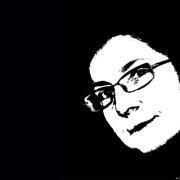
Murray Bail (born 22 September 1941) is an Australian writer of novels, short stories and non-fiction.
He was born in Adelaide, South Australia. He has lived most of his life in Australia except for sojourns in India (1968–70) and England and Europe (1970–74). He currently lives in Sydney.
He was trustee of the National Gallery of Australia from 1976 to 1981, and wrote a book on Australian artist Ian Fairweather.
A portrait of Bail by the artist Fred Williams is hung in the National Portrait Gallery in Canberra. The portrait was done while both Williams and Bail were Council members of the National Gallery of Australia
This is a brilliant collection of stories and I feel it is underrated. The stories often resemble those of Borges, Barthelme, Josipovici, Ballard, Sladek and the similarly underrated William Harrison. They are strange, cool, gnomic, inventive, ironically amusing. Three of the thirteen stories in this book are among the best I have ever read. The opening piece, 'Huebler', in which a man decides to photograph everyone in existence, starting with a random sample of twenty-three people, is a perfect example of a certain kind of cerebral fiction which reads more like a catalogue of bold ideas with neat summaries: in other words offbeat flash fictions within a framing device.
The oddly-titled 'Cul de Sac (Unfinished)' is another masterpiece, a kafkaesque adventure set in a world that is both like and unlike ours, some sort of mathematician's distorted utopia. Once again, there is a framing device of sorts within which ideas tumble or slide laterally. 'The Partitions' is pure absurdist farce, set in one of those dreamlike offices in which clerks perform baffling tasks while a race through the administrative labyrinth is taking place. Sladek would have been proud to have written this story.
The ten other stories in the volume aren't quite as great, but many of them are still good enough, even excellent. 'Portrait of Electricity' is mysterious and magnificent. 'The Silence', 'Healing' and the title story are all quietly satisfying works. The only stories in the book I felt were failures were 'Zoellner's Definition', which is an expansion of one of the ideas briefly mentioned in 'Huebler', and 'Ore' which is a story based on a clever analogy or extended metaphor that doesn't quite engage the reader (but it is still worth reading).
As a non-fan of short stories, I only downloaded this one from the library because I was desperate one night, sleepless, without a book. I'm glad I did. Murray Bail is a gifted writer. He celebrates the quirky, off-beat story and character. His short stories drew me in but still managed to leave me satisfied when they ended.
To be honest, I only read the short story, 'The Drover's Wife', after I'd read Leah Purcell's book of the same title. Just seven pages long, but it got me reading some of the other short stories. I'm not usually a fan of short stories but I like Murray Bail's style.
I didn’t enjoy this nearly as much as I hoped I would. The title story is very funny and the only one of his stories I was familiar with prior to reading this collection.
To be honest, I didn’t finish this – finding myself skimming over some of the stories, hoping that I would find one that I would enjoy as much as The Drover’s Wife, but not finding any.
I bought this book in a second hand bookshop and it must have been used as a text in high school at some stage. My main concern was that the characters just weren’t really there. The other problem was that many of the stories were written in remarkably short and aggressively active sentences. In fact, he was so determined to write in active sentences that I got a bit lost at times as in a single paragraph the subject would change so as to keep his short sentences in the active voice. Ahh…
The Life of the Party was a good little story with a good central idea (man invites his friends over to a party and hides in a tree house to be able to spy on them). But the first storyThe Seduction of My Sister, although it had some nice bits about newcomers entering our lives and making us revalue what we have and who we are, got a bit lost, I think. Not so much lost, as surreal. The game of throwing things over the house was ‘deeply symbolic’ but became increasingly irritating. It was like there was a bomb ticking that never went off – quite against the best advice of my mate Chekhov. But The Dog Show, where pet owners become quite literally like their pets – or A, B, C, D, E, was the last of the stories that I finished. Another story I felt ripped off by.
Ore which is set in the early 1970s as the US dollar is un-coupled from the gold standard is a great idea, but I still didn’t think it really worked. In fact, that is what I would say about this entire collection – some great ideas, but few of them really worked.