In the foreword the author points out that as a survivor of the residential school system “my experience resulted in a restricted world view, and the oppressive conditions under which I lived reduced my understanding of options available to me. In writing the book. I realized that I am still disassembling the restrictive world in which I once lived.”
I have learned so much from this book, even before the story started. Reading the forward, the preface, and the acknowledgements put the story to come into a new perspective from which I could better understand and appreciate the author’s writings.
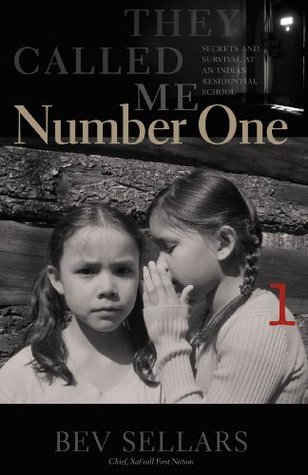
This is an interesting and informative account of a young girl’s life before and during her five years at a Canadian residential school in British Columbia. The author, Bev Sellars, is born in 1955 and early in her life is left in the care of her Gram, who thereafter raises her. Bev lives with her Grandparents on a reservation and like her mother and Gram before her is required by the government to go to a residential school.
Told in a matter of fact manner, the author describes her physical surroundings, her educational experiences, her emotional state, her religious guidance, and her peer interactions as well as the treatment of her and her classmates relating to each of these aspects of their lives during her stay at the Cariboo Indian School (St. Joseph Mission school). Her reflections are candid and forthright. Attending the school from the age of seven, she retells many anecdotes to highlight her experiences and her feelings. She recalls incidents of the hardships and humiliation, the punishment and abuses, the friendships, and even the joyful moments. She relates how these events felt at the time and shaped her at a very young age. Despite being “programmed” at a young age to believe that she is in every way something “less” than her white counterparts, Bev manages, as an adult, to move through and beyond her feelings to become a learned and respected community leader. Although this process takes time, she is guided by the rich values instilled by her Gram that enable her to overcome her feelings of shame and inadequacy.
Bev’s five years at the Mission were filled with chores, ridicule and punishment. Yet she points out that her two weeks at Christmas and two months every summer spent at home with her grandparents and siblings provided her the stability and joy of a happy and “normal” childhood, at least until she returned to the Mission.
The Mission was a “breeding ground for dysfunction”, as Bev acknowledges her five years there left her “…….emotionally and socially crippled in my ability to deal with the world.”
At age 12 Bev started school at home, integrated with the white kids…but they had separate buses. Panic attacks ensued, and she was now unable to make even the most simple decisions as everything was decided for her at the Mission….everything! What to wear, how to act, what to eat, how to feel, what to believe… everything was decided for her. Having to make her own decisions now was traumatic and stifling.
The author explains how, in her adult years, she was able to work through the issues created by residential school, although it was not initially obvious to her that that is what she was doing. As her confidence and self esteem grew she realized the trauma created by residential school was responsible for so many of the social problems in the lives of not only herself but all those subjected to its atmosphere. Her insight is well expressed, well thought out and makes a great deal of sense.
Bev’s story, as well as her storytelling, is very enlightening. It is definitely something that should be read, taught and discussed in schools. Only by talking about it, acknowledging it and learning from it will we be able to move forward with the hope that it will never be repeated.
Bev relays many “ah-ha” moments in her adult life where she was able to come to realize that she is so very much more than what the nuns and priests at the Mission said. Little by little her confidence and understanding grows, she learns to speak up and speak out. She encourages others to do the same.
I have read a few books that have relayed residential school history. While all reflect the traumatic experiences involving physical and mental abuse, hardship, humiliation, and punishment, this is one of few where the author has ventured into her journey out the vicious cycle created by the experiences. Incredibly moving, and telling, profound and poignant.
Certainly a “must-read”.