“A comprehensive and long-overdue examination of the immediate post–Tet offensive years [from a] first-rate historian.” —The New York Times Book Review
Neglected by scholars and journalists alike, the years of conflict in Vietnam from 1968 to 1975 offer surprises not only about how the war was fought, but about what was achieved. Drawing from thousands of hours of previously unavailable (and still classified) tape-recorded meetings between the highest levels of the American military command in Vietnam, A Better War is an insightful, factual, and superbly documented history of these final years. Through his exclusive access to authoritative materials, award-winning historian Lewis Sorley highlights the dramatic differences in conception, conduct, and—at least for a time—results between the early and later years of the war. Among his most important findings is that while the war was being lost at the peace table and in the U.S. Congress, the soldiers were winning on the ground. Meticulously researched and movingly told, A Better War sheds new light on the Vietnam War.
Lewis Stone "Bob" Sorley III was an American intelligence analyst and military historian. His books about the U.S. war in Vietnam, in which he served as an officer, have been highly influential in government circles.
This is a book that many American military commanders from the age of the Vietnam conflict would approve of. Lewis Sorley has written a congenial narrative that is more effective in soothing an army coming to grips with the failure in Vietnam than in presenting an objective, in-depth analysis of the American strategy there, with all its flaws and impracticality. Among the many accounts that criticize the MACV's approach to the war, his work stands out because it tells the story of a courageous officer who took over the mess that his predecessor had left for him to sort out, introduced a brave new strategy, and brought America to the brink of victory in Vietnam. For the eventual failure, Sorley blames the media, civilian officials, and anti-war demonstrators, who stopped supporting the war effort just when the American commanders and South Vietnam needed it the most. The army, in his version, had fulfilled all its obligations, and the Vietnam conflict had been won militarily but lost politically on the home front.
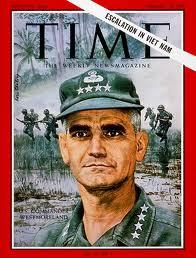
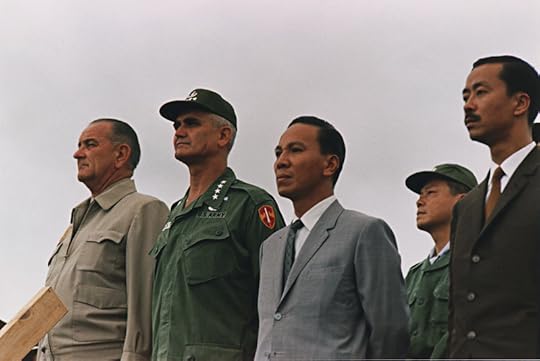
The courageous officer was the one and only Creighton Abrams, who succeeded General Westmoreland as MACV commander and, as the author's story goes, immediately abandoned his conventional tactics for a new strategy and replaced the ineffective search-and-destroy operations with "clear-and-hold" operations aimed at securing the population. The results were, allegedly, immediate: Abrams was proving that even a lost war could be won by the right leader. How close is this interpretation to what actually happened, though? Not much.
General Abrams, unlike the aloof, crisp Westmoreland, was known for his "candor, humor, self-effacement, and common-sense skepticism," so he appealed to the media and the public alike. Many believed that he would lead "a better war", a myth that would persist for decades because it offered hope at a time when it was becoming clear that the definition of what victory was might be changing in Vietnam and not for the better. The "better war" idea was promoted by a constant emphasis on Westmoreland's failures as a strategist, which had been decidedly proven by Tet, and by unfounded hopes that if Abrams did not win, he would at least make the war less costly and bring it to a dignified end. The media bought this myth and sold it to the public. Contrary to what Sorley wants the reader to believe, the new MACV commander was not actually a noble champion of a different, more rational war. He was just part of a well-crafted political device.
In the years of Abrams' command, the Vietnam conflict remained the same bloody stalemate it had been when Westmoreland was in charge, and because of this stalemate, the war expanded outside of South Vietnam's borders with the invasion of Cambodia. Furthermore, just like his predecessor, Abrams could not answer a significant question about the people of Vietnam – what it meant for them to be Vietnamese in a post-colonial era – finding an answer to which was important for winning the population's support and prevailing over the enemy. The American military strategy did not have any influence in the villages of Vietnam because the people there saw the Americans as outsiders – many as unwelcome outsiders.
The hope of "a better war" under Abrams and a different strategy to influence Saigon and the war's outcome did more harm than good by prolonging the Vietnam conflict. False expectations of what the new MACV commander could deliver gave President Nixon an excuse to continue the war, although Tet had shown that neither America was winning nor the American public was supporting the government's involvement in Vietnam. South Vietnam quaked under the way of new military campaigns, bombing strikes, and damages to its economic system, and so did Cambodia and Laos. All of this not only changed the society of Vietnam for the worse, but caused the Saigon government to lose whatever weak support it had still enjoyed among the people. In the apt words of war correspondent Jonathan Schell, "The more we won, the more we lost."
Sorley also claims that in late 1970, "the war was won. The fighting wasn't over, but the war was won." His statement does not rest on any credible proof. That spring, the American commanders definitely did not feel like they had won the war. MACV analysts speculated that the "enemy still retains a viable military and political apparatus throughout the Republic" despite President Nixon's hopes that the invasion of Cambodia would be a turning point in the Vietnam conflict. The Cambodian offensive scarcely affected the revolutionary units inside South Vietnam. One late summer investigation found the National Liberation Front “far from defeated," and Ambassador Robert Komer, head of the American civil operations effort, reported to Kissinger many unresolved issues, such as poor leadership in the ARVN and a “critical gap” in winning the political war against “the still strong VC shadow government.”
Other reports also indicated that the war was far from over. In Binh Dinh province, once the 173rd Airborne Brigade withdrew in December, the pacification effort collapsed. The energy and supply bases of the Communist soldiers from the North remained full. When one Laotian general cut the stomachs of dead Communist soldiers to check if they were eating enough, it became clear that they were well-fed. Abrams’s staff acknowledged that the enemy simply had diverted its resupply efforts through Laos and that “no new, more effective and less costly formula to solve this logistics interdiction equation has been found.” On the diplomatic front, the North Vietnamese envoys only toughened their position after Cambodia, and President Nixon, rather than celebrating victory, was about to settle for a huge compromise, which would have left thousands of Communist soldiers in South Vietnam at the end of the war. In general, the American situation was way less sunny than the author thinks.
A BETTER WAR is an analysis of the American strategy in Vietnam that is overly sympathetic to General Abrams. This book will not be of interest to readers looking for an objective account.
At best, Lewis Sorley's A Better War reads like a literate, peppy, reality-challenged Pentagon press release from the early '70s. Most of the book shamelessly fluffs the reputation of Creighton Abrams, who in Sorley's view salvaged America's debacle in Vietnam until the liberals and hippies snatched it back. This Abrams is a veritable Godhead capable of no wrong or ill thought: he's compassionate about the Vietnamese, passionate about good intelligence, appalled by unnecessary civilian casualties - none of which he really tries to support beyond bald statements and the man's own quotes. Or blatant revisionism, such as proclaiming the secret bombing of Cambodia legal (it was the media who was wrong for reporting it, of course) or that the disastrous Lam Son 719 raid was, somehow, a smashing success. Or self-contradiction, like claiming that Nixon's Cambodian "incursion" was both a decisive victory and a pointless distraction from the "real" project of pacifying South Vietnam, or cluelessly declaring the Vietcong "Red fascists." Or outright bullshit, as when he declares the war "won" by 1970, if only Congress and Walter Cronkite hadn't punted. I await the WWII historian brave enough to declare that Hitler won that conflict by 1940, only to be sabotaged by Claus von Stauffenberg and friends.
This book retains a strong, almost cult-like hold on certain conservatives and military brass, which is easy to understand. By Sorley's reckoning, even unwinnable wars can be won, and that American soldiers - especially men like Creighton Abrams, before whom Hannibal and Alexander and Caesar would tremble in envious, feeble homage - are invincible, righteous warrior gods who can only be brought down by the Jane Fondas and Ted Kennedys and Barack Obamas of the world. It's an appealing, reassuring narrative, but it sure as hell isn't history.
This book is very factual and informative--especially to someone like me, who was vaguely surprised to recall that General Abrams existed--but very biased. While Sorley makes no attempt to hide his bias, referring often to "the enemy" instead of the Vietcong or the North Vietnamese, I found it very distracting. His conclusion is that the war could have been won, but Americans at home lost their nerve. The only support he provides for this argument is evidence of a turn around in the effectiveness of the counterinsurgency strategy, but he gives no proof that this was in any way supportable on a permanent basis or that the North Vietnamese were at all ready to surrender the point.
I really was open to an argument that the Vietnam War was not unwinnable, but in spite of the fact dumping, I didn't feel the point was made. Still, this is a very detailed history of General Creighton Abrams' term in Vietnam.
The title comes from the idea that General Creighton Abrams deserved "a better war." He was a great general. Before him was the disastrous General William Westmoreland. The comparison shows the incredible importance of leadership.
Q: "Westmoreland's interest always lay in the big-unit war. Pacification bored him." In his enthusiasm for taking over the Main Force war, Westmoreland pushed the South Vietnamese out of the way. This essentially stunted their development for four critical years. I will say what the author did not say: This was racism. I know it because I saw it.
The Tet offensive of 1968 was a disaster for the North Vietnamese side, yet it proved a turning point against the war. I believe, like many others, that the North wanted the Viet Cong basically wiped out before the North took over. The so-called "uprising" proved only to get more support for the government of the South.
Q: "The tactics changed within 15 minutes of Abrams's taking command." Abrams knew that "war was a complex of interrelated contests on several levels . . . and the enemy had to be countered on each of those levels." It can be both "a guerilla war on one hand and a conventional on another." There were varying degrees that had to be considered at different times and places.
Abrams understood the need to "eliminate the enemy's covert shadow government."
Sorley makes the point "there was NEVER any popular uprising in support of the enemy in South Vietnam."
Sorley defends the secret bombing of Cambodia where the supply lines of NVA forces were stationed. Part of the reason for secrecy was to defend Prince Norodom Sihanouk for allowing it to happen. The poor Prince was desperately trying to remain neutral.
Sorley is critical of Walter Cronkite for "solemnly informing the viewing public of his judgement that the war was stalemated and could never be won." Sorley calls that statement a "failure."
Q: "CBS was far more critical of America's ally South Vietnam than America's enemy North Vietnam."
Sorley claims "many South Vietnamese resented" the term Vietnamization. That is what I was involved in. Never saw any resentment, but I get the point.
Abrams understood the South Vietnamese soldiers were not given anywhere enough material to provide for a good army.
By 1969, about 92% of the hamlets were "relatively secure." The People's Self-Defense Forces had mushroomed. Much of South Vietnam was safe by the time I arrived.
General Wheeler lamented the difficulty of convincing Nixon they were "dealing from a position of military strength."
Major General Ngo Quang Truong was South Vietnam's best field commander. I want to learn more about soldiers from the South. They are so ignored in history.
Imagine being a Vietnamese battalion commander fighting for almost a decade and then having to listen to your fifth or eighth American commander telling you what to do.
Land reform was critical to improvement. In March 1970, while I was there, President Thieu introduced a "Land to the Tiller" program. The legendary John Paul Vann said "In one fell swoop that program eliminated tenancy in Vietnam. All rents were suspended."
Rules of engagement allowed firing only when fired upon for planes, so they had to encourage someone to shoot at them before shooting back. A dangerous situation.
In 1972, the enemy's Easter offensive was turned back. It took them 3 years to mount another offensive.
I hope to read another book about Lam Son 719, the famous invasion of supply routes in Laos. It was portrayed in America as a failure. Photos showed South Vietnamese rangers hanging off the rungs of helicopters. The author paints a more successful picture. No Americans participated. Casualties went way down after both the Cambodian and Laotian offensives.
General Abrams showed great compassion for the South Vietnamese soldiers, especially since he knew what they would face in the future.
Personal story here: One day when I returned to America a teacher (an actual teacher!) asked me if it was "true that the Vietnamese didn't care about life." I had to explain to him as if he were a child that actually all human beings care about life and want to live.
A gallup poll showed that about 26% of Vietnam veterans wanted to go to Vietnam in the first place. And about 94% said they were glad for the experience. As for me: I did not want to go as a combat soldier, but I volunteered to go as a teacher. I would have loved to have been a medic. It was one of the greatest experiences of my life. I honestly don't care what that means to anyone.
The negative stereotype of the Vietnam veteran is not based on actual statistics. The author points out studies done showing that many people in prison claimed to have served in Vietnam and never actually did.
And men from prosperous communities were 10% more likely to be killed because they were often pilots or infantry officers. Almost 70% of the names on the Wall were volunteers. Of course, the author does not mention that they may have volunteered to avoid the draft. He also claims that the evidence is that "those who died in Vietnam were mostly white, middle class, and volunteers."
By 1972, the pacification program had "essentially eliminated the guerilla problem in most of the country."--William Colby
In January 1972, the legendary John Paul Vann said "We are now at the lowest level of fighting the war has ever seen. Today there is an air of prosperity throughout the rural areas of Vietnam, and it cannot be denied. Today the roads are open and the bridges are up . . . . This program of Vietnamization has gone kind of literally beyond my wildest dreams of success."
The North under General Giap felt the only response was massive invasions of NVA troops. The result was that "ARVN troops and even local forces stood and fought as never before."
Historian George Herring concluded that in 1972 "you had won the war. It was over." He believed the US could have dictated the terms for peace.
But the Paris Agreement allowed complete security for all NVA forces in South Vietnam. The last nail in the coffin. And then, just for emphasis, Congress cut off all support. The North just went on immediately after returning the POWs to completely ignoring the treaty. A Piece of Paper cannot solve anything.
Three of the most important South Vietnamese military leaders that I hope to find more about: Lt Gen Hoang Xuan Lam, Gen Cao Van Vien, and Maj Gen Ngo Quang Truong.
General Abrams died on September 4, 1974. He was spared watching the collapse.
General Vien said, "South Vietnam's senior leadership had done its best. . . . hope and prayers for the reemergence of a free South Vietnam in the not too distant future, a South Vietnam led by men of talent and high morals--the truly great leaders of Vietnamese history."
The book was an attempt by Lewis Sorley to show how the war could have been "won" by the South. But there were too many elephants in the room that he did not deal with adequately enough. China, opposition, America's unwillingness to stick with an ally. It was still well worth reading.
This fantastic book corrects many of the misconceptions about the war in Vietnam. For example, as Sorley explains, "There came a time when the war was won." The US military was not defeated in Vietnam. Though forced to fight with their hands tied---and never to "win"--our armed services inflicted defeat after defeat on the armies of North Vietnam. More importantly, after General Creighton Abrams succeeded General Westmoreland in command of US forces in Vietnam, the US strategy changed, and for the better. Westmoreland, like many of LBJ's decisions, was a disaster. Unfortunately, he continued to make mistakes in Washington that further hampered our mission in Vietnam.
General Creighton approached the war differently, understanding the importance of pacification, of securing the countryside, and preparing the Vietnamese to take over. The armies of South Vietnam acquitted themselves well when supported by US air and naval forces in the early 70s. However, the Nixon administration chose to cut and run, withdrawing our forces over the objections of the military commanders in the field. Nixon, Kissinger, and Haig then signed a peace agreement with the NVA that allowed NVA forces to stay in South Vietnam. Nixon repeatedly promised to punish the NVA for any breaches of the peace. Neither Nixon nor Ford kept those promise. Nor were the Vietnamese provided with the resources and support they were promised. The United States Congress led by the vermiculate Ted Kennedy abandoned South Vietnam.
It's difficult to believe that Richard Nixon or Ted Kennedy could fall any lower in my estimation, but this book accomplished precisely that. In addition, I lost all respect for Al Haig. Thank goodness his political aspirations ended with his gaffe that he was in charge at the White House following the attempt on Reagan's life. Elections have consequences. LBJ's election resulted in the appointment of the incompetent Westmoreland, who bungled the early years in Vietnam, wasting time that should have been spent preparing the Vietnamese to take over. His failures essentially ensured that men like General Abrams would ultimately run out of time when Congress and the American people lost patience with the war and Nixon failed to make the case that the war was worth fighting and winning.
There is much blame to go around when it comes to Vietnam. Little of it belongs with those responsible for fighting the war in the latter years. Much of it belongs to those on the homefront who supported the murderous communist North and worked to undermine the South. They have largely failed to apologize or admit their mistake, simply choosing to ignore the deaths of hundreds of thousands after the NVA defeated the South and plunged the country into decades of misery.
Revisionist account of the final years of the American involvement in Vietnam. Introduces Creighton Abrams, better known to Americans as the namesake of a tank, as a historical figure in his own right. The author argues that Abrams effectively learned the lessons from Westmoreland's earlier failures,and had essentially won the war on the ground by 1971. The strength and the weakness of this book is its focus on the decision-making process within the MACV command and staff itself. Most histories of Vietnam that I am familiar with focus either on the macro-level political and grand strategic decisions by American policymakers in Washington or on a grunt's-eye view of the war the jungles and rice paddies. Here we are seeing the war relatively uniquely from the specific viewpoint of Abrams and his staff. The value of this novel viewpoint is however offset by its inherent limitations. The author fails to develop sufficient distance from Abrams as a person (for whom the author has an obvious and deep sympathy) to make the reader confident of his objectivity. Also, this perspective reflects the isolation of the Abrams and his staff both from the realities of life on the ground for the troops and Vietnamese civilians and from the wider political situation at home (the real center of gravity of the war). The author also makes a few highly dubious or insufficiently supported statements,including: implausibly attributing most South Vietnamese civilian deaths to Vietnamese terrorism rather than US firepower; accepting more or less uncritically the legitimacy of South Vietnam as a nation (when it was an artificial creation that never existed before 1954); developing hints of a stab in the back hypothesis, focused on Clark Clifford and Averell Harriman's conduct of the peace negotiations. In spite of these flaws,this book is well worth reading, not the least because it is often cited in books about current US counterinsurgency efforts in Afghanistan and elsewhere.
An analysis of the last half of the Vietnam War. The outdated thinking of General William Westmoreland focused on the battlefields of Europe and the metric of "Bodycount" to no real effect because this was a new type of warfare. A warfare that was nebulous politically and much more cerebral in nature. No longer would brigades and divisions be the dominant units on the battlefield, but the company and regiment would become the driver on the battlefield. Most importantly protecting the populace and allowing them to live the life that they wanted to live in peace and prosperity. Unfortunately, American domestic affairs and the abandonment of the South Vietnamese would lead to the downfall of a free people in 1975.
I read this in my ongoing quest to really understand Vietnam, and counter-insurgency operations. I also read it as I had always heard it was on the bookshelves of political and military officials during the Iraq War.
To reiterate a previous review, this book does fill a void other works leave out- the Vietnam era after Tet. Most other histories of Vietnam cover the buildup, Westmoreland, and "Vietnamization." So, this book is quite informative in understanding the combat operations that were occurring during the start of the draw down in U.S. forces.
My criticism of this piece is that it's too one sided. Without a doubt, Westmoreland didn't understand many aspects of the war. However, Sorley seems to leave out that during the early years of active participation of U.S. combat forces (1965-68), the NVA was pursuing a big-unit war strategy at the same time that Westy was.
I do recommend this book, but more as a supplemental read to other material on the subject.
I had two civilian tours in Viet-Nam before General Abrams succeeded General Westmoreland, so much of the material that Colonel Sorley reviews was news to me. The book is well written. Colonel Sorley has an axe to grind - that under Abrams the war was winnable, indeed was being won - and he grinds it well, with compelling facts. Whether the war itself was a wise use of American power is not his field. I recommend this book as a good examination of a period that people in large part want to put behind them. But if we do that, how can we learn from the past?
Lewis Sorley’s “A Better War” is a book that compares and contrasts the two major command strategies of the US military during the Vietnam War. The strategies of the on-site commanders – one directed by General William Westmoreland and the other by General Creighton Abrams – could not have been more different. Westmoreland fashioned his strategy around conventional forces, even though it was a jungle war; his aim was killing off the enemy as fast as possible – search and destroy. Abrams, on the other hand, took a much more nuanced approach because he understood more of the complexities (e.g., political ramifications, stability of the community, pacification) of the situation; his approach was to secure the safety of the South Vietnamese people in their hamlets – clear and hold (Vietnamization). While there are many books on the Vietnam War, this is one worth reading. That said, Sorley's belief that the US could have 'won' the war is arguable.
While on the surface this book examined the change in strategies during the last years of the war, in the larger scope it suggested that the American military machine would have to reinvent its modus operandi if these irregular wars were the future. A Better War doesn’t really use the words insurgency and counterinsurgency much, but the themes are there. This book is one of the documents referred to by those that espoused a counterinsurgency strategy during the wars in Iraq and Afghanistan (see Fred Kaplan’s “The Insurgents”).
"When America defaulted south Vietnam was doomed..."
Yes, there are those "revisionary" people who believe the US could have won the Vietnam war. Sorley believes so. As commander Creighton Abrams replaced the "floundering" William Westmoreland in early 1968, there was a significant improvement in the military position of the US in Vietnam; the problem, according to Sorley, was the peace process thereafter [1972].
Lewis Sorley formed his Better War myth from one story in the New York Times, dated October 5, 1969, that contained opinions from Saigon-based U.S. reporters Kevin Buckley and Robert Shaplen.
But Sorley refused to disclose that in later news reports, Buckley and Shaplen condemned the Pacification program in the Mekong Delta when they discovered more about the tactics employed under Abrams. The verdict was especially harsh for General Julian Ewell of the 9th Division, who was later promoted by General Creighton Abrams as a reward for reporting a massive harvest of dead bodies. See “Letter From Saigon” by Shaplen in The New Yorker, January 31, 1970. And “Pacification’s Deadly Price” by Buckley in Newsweek, June 19, 1972.
The increased use of air strikes, indiscriminate firepower, and free fire zones led to a staggering number of civilian casualties. The results of Operations Apache Snow, Texas Star, Speedy Express and Rock Crusher is validation that Abrams continued to underscore importance of body counts (sometimes inflated with dead civilians) for measuring progress in the war.
The signature military operations of General Abrams were invasions of the A Shau Valley, Cambodia and Laos. This had nothing to do with Pacification, but the author fails to explain this away. Indeed as Guenter Lewy noted in 1978, “CORDS reports from Thua Thien province showed that while allied forces busied themselves in the far-away A Shau Valley, acts of terrorism against pacification teams in the lowlands increased and the pacification effort suffered.”
If we follow the money, it proves beyond doubt that General Abrams did not change emphasis from a battle of attrition to population security. From 1969-1971, less than 5% of U.S. spending in Vietnam went to civil operations including investment and Pacification.
U.S. spending in Vietnam, FY 1969: Civil Operations, including investment and Pacification: $400 Million Military Operations, including land, air, naval, support: $17.6 Billion
U.S. spending in Vietnam, FY 1971: Civil Operations, including investment and Pacification: $300 Million Military Operations, including land, air, naval, support: $11.3 Billion
See Thomas Thayer. War Without Fronts: The American Experience in Vietnam, pp.23-26
—
U.S. Vietnam war deaths 1967: 11,363 (Last full year of command for General Westmoreland) 1969: 11,780 (First full year of command for General Abrams)
See Vietnam War U.S. Military Fatal Casualty Statistics, U.S. National Archives
This is, more or less, Creighton Abram's version of the history of the Vietnam War--or, at least, the latter half of it, when he was in command. The author begins by pointing out that most of the famous accounts of the Vietnam war focus heavily on the first half, when pretty much nothing went right. The author (and, by implication, Abrams) make a plea for recognizing that there is more to the story.
The author describes how he got access to never-before-used recordings of Abrams' command and staff meetings, which gives his account of the war a personal immediacy. We get a front-row seat listening to the American command deliberate and assess the war through its most violent years.
The argument is straightforward: Abrams essentially won the war through pacification, Operation Phoenix, better training of the ARVN, interdiction of the Ho Chi Minh trail, and operations in Cambodia and Laos. Essentially, everything that the media and Congress hated about the war was exactly what worked. Then the media and Congress (and Nixon) managed to snatch defeat from the jaws of victory by withdrawing all US troops, prohibiting further US operations, cutting off US aid and air support, and abandoning the South Vietnamese just when the most needed help.
I'm not an expert on the Vietnam War, but I intend to read other accounts of the war. This isn't a definitive account of the war, and probably needs to be read in conjunction with others. But I suspect this book is probably a helpful corrective of the typical narrative, in which everything failed and was inevitably doomed to fail. Maybe something went right, even in Vietnam.
Lewis Sorley's excellent work deals with the final stage of the war in Vietnam following the Tet Offensive of 1968. Sorley paints a picture of the strategy that was conceived to turn the war around, and reveals that it worked. Ultimately, the effort in Southeast was doomed to fail because years of faulty strategy and policy had understandably eroded public support for the war. By the time General Creighton Abrams ascended to the command of MACV he was managing the war with ever decreasing levels of available troops, material, and time. In essence, the Viet Cong and the NVA did not defeat America in Vietnam. America defeated itself by first refusing to enact the right strategy and policies, then refusing to stay once better strategy and policies began to produce results. The necessity of the war itself is highly debatable, but there is no denying the fact that the war was grossly mismanaged once America committed itself to fighting it. In sum, this is a highly valuable work which examines a largely unexamined portion of the war. Furthermore it gives General Abrams the credit he is due for his superior leadership during a time of great crisis.
This is an important book. It deals with the"forgotten" part of the Vietnam war, the part where our strategy was succeeding. It may be impossible to tell if we could have ever actually "won" that war, but we did better than the histories of the time would have. This was to the credit of a deeply unappreciated military leader, GEN Creighton Abrams. Today GEN Stanley McChrystal is reading the book and it is doubtless shaping his ideas about Afghanistan. I have deep reservations if the number of troops that he has asked for can get the job done, but he could not have found a better play-book.
Very good study of counter insurgency in Vietnam. I was interested in this book and Baghdad Surprise to better understand the possibilities and pitfalls of the current war in Afghanistan. I now feel as though I have a good sense of what strategy/tactics wins and loses these type of conflicts. It was a complete surprise to me (even after reading dozens of books on the Vietnam conflict) how much Abrams and the South Vietnamese had accomplished by 1972. If you think Vietnam and/or Afganistan can not present winnable outcomes, you should read this book.
I agree with Stephen's review of July 18,2012 - the big detractor in this book is the author's close association with General Abrams.
But I give Mr. Sorley great kudos for the very informative and lucid expository account of the portion of the Vietnam War he chose for the subject of this book. For that alone, this book is worth the read.
Battlefield victories; securing local populations; wearing down the Viet Cong and NVA; winning, in some sense, the war - these are statements rarely used in connection with the Vietnam War, but are applied by Lewis Sorley, with much evidence, to the post-Westmoreland phase of the conflict. Under the supremely-talented leadership of Creighton Abrams and Ambassador Ellsworth Bunker, Sorley makes the case that Vietnam was won in the years between 1968-1972. Through enhanced intelligence capabilities, focus on pacification through the "one war" approach, empowering of native armed forces, and more precise interdiction of supply routes through Cambodia, Laos, and North Vietnam, US forces turned the tide of the war, wearing down North Vietnamese forces and building up a South Vietnam military establishment that, though by no means perfect, withstood sever tests such as the Easter Offensive of 1972.
Sorley's argument is indeed well-grounded in on-the-ground facts. One wonders, after reading these pages, what the war might have looked like with Creighton Abrams leading the effort i 1965 rather than 1968 (as well as a more committed and transparent administration under LBJ).
However, Sorley explicates that the US withdrawal from Vietnam - not just military, but also materiel and fiscal support - doomed the war effort and South Vietnam after withdrawal in 1973. If that is the case, one wonders what the answer would have been to the preservation of South Vietnam: US forces remaining indefinitely? US taxpayers funding South Vietnam in perpetuity? Sorley misses the fact that years of distrust, of both the South Vietnamese democracy and American administrations, made such a never-ending commitment politically impossible.
Abrams was no doubt a gifted leader and soothsayer in terms of what ailed the war effort under Westmoreland. No amount of grit, though, could change the reality of a South Vietnam distrusted by Americans and hardly loved by its own citizens.
Abrams fought a better war; but he was still fighting the wrong war.
Fascinating reading for someone who was there, albeit, at a very low level. It was good to get a strategic perspective as to what was happening, during this time, in the war.
I first arrived being in the USAF in Vietnam shortly after Tet in 1968. I was at Cam Rahn Bay Air Base attached to a C-130 unit doing resupply. The war at that time was like being in the wild west. Everyone felt great in that we had taken the best that the VC could give and beaten them back. There was still a lot of war on going but everyone felt good and that we could get it finished. My temporary duty there was short (3 months), but it was interesting work. Then I was back to the States where the feelings were anything but positive in civilian circles, on base the military, everything was still positive.
In December 71, I was back but at Danang AB working with F-4’s and AC-119 gunships. The war was more business-like, and everyone was very earnest to get the job accomplished. We knew and the Vietnamese knew we were leaving. The gunships killing trucks on the Ho Chi Minh Trail was a nightly occurrence but frustrating since we could never seem to kill enough of them, and they just kept coming. The F-4s were flying the trail by day and hitting other areas but it was both rewarding and frustrating. We might have a legitimate target, but it was hard to hit it with dumb bombs or we might just be making trees into toothpicks. The bombing halts were very frustrating for us, especially to see stacks and piles of supplies just inside the Norths border, and not be able to hit them. I witnessed Lam Song 719, debriefing the aircrews that returned from supporting the RVNAF’s efforts. The operation didn’t seem to be the glowing success that this book describes. If we were doing as well as depicted in this book, HQ never communicated that information to the lower levels that I knew of. What we heard from the aircrews was disorganization and chaos.
In December 1972 I was reassigned to Utapao AB, Thailand to support the B-52’s and KC-135’s. Working with Strategic Air Command (SAC) in a conventional war was interesting. My understanding of the Chain of Command was a lot different from this book. I know MACV coordinated with 8TH Air Force in Guam for tasking the BUFF’s, but they both had to get Higher HQ permissions. MACV had to go through PACAF (Pacific Air Force) and 8th AF (SAC on Guam) had to get permissions from SAC HQ at Offutt AFB, Nebraska before any targets and missions were tasked. This made for a cumbersome system. I remember very few diverted B-52 missions to tactical targets during my time there. The author makes it seem that the B-52’s were much more responsive to the ground situation. SAC avoided any high threat areas totally; they were deathly afraid of loosing a B-52 and their cloak of invincibility! Not until we went into North Vietnam in late 1973 did we ever really face an SA-2 or MIG threat. The North had tried to put SA-2’s in areas along the beginnings and upper parts of the Ho Chi Minh trail to get a BUFF but Tac air always managed to knock them out before they got a chance to fire anything. MIG’s also tried but the BUFFs diverted home and would leave the area at the first call of a MIG in the air. I left Thailand just a couple days before the first BUFF was lost over the North. It was a sad day for me.
Did we win as the author claims? I do not know. Could we have? Damn right! Militarily we did not lose. Could the Republic of Vietnam have survived? I believe so! But the Republic of Vietnam and its Armed Forces would have required our constant support and resupply. We did not do that! The example we showed the world was downright sad. Sad because yes, we were so close, but it would have taken something we as a nation didn’t/don’t have any longer. The resolve to honor our commitments. And, as recent events have proved, that still seems true!
Sorley's narrative focuses on the war after Tet, and offers a revisionist challenge to the widely held view that America's defeat in Vietnam was inevitable. His account relies heavily on reports and records from Abrams' MACV, although he makes extensive use of other sources, including Vietnamese. He makes a strong case but contradicts himself, for example, by stipulating that ultimate success depended on our Vietnamese partners and admitting that the Vietnamese never really managed to do what they needed to do, especially on the political side. But while stipulating that, he still tries to argue that the U.S., with a better strategy and better implementation, could have prevented South Vietnam's fall. Despite this and other issues, his book is well written, gives Abrams the respect he deserved, and should be on the shelf of any one interested in the Vietnam conflict.
Incredible work that shows the frictions between a 4 star headquarters, the Pentagon and national civilian leaders engaged in a politically difficult war. Given the detail of the interactions between the echelons of command, the examination of repeated requests for forces, resources and authorities by the commander in combat and their reception at the Pentagon and by elected officials this is a must read for the military professional serving in contemporary four star war fighting commands.
Sorley, a Vietnam veteran, obtained access to classified recordings of Abrams' staff conferences, which have led him to conclude that the war in Vietnam had essentially been won by Abrams' concentration on counterinsurgency operations, as opposed to big unit clashes.
Compelling narrative about US snatching defeat from jaws of victory in Vietnam. Saw lots of parallels with Afghanistan where there is a sense that something is different but needs time to develop.
Books focused on the US-Vietnam War after 1968 are rare, so this is a welcome work on that time. The author has an argument to make, and remarkable archival access; how successful he is at the argument is an excellent question to ponder.
I have read several books on the subject of Vietnam and this is one of the better books I've read. It provides an excellent accounting of the final years of the war.
A great book. All that one learns in school and hears from the media / documentaries is that Vietnam was a disaster. Although it certainly was, but why? This book highlighted the fact that things were not as bad as was being portrayed . And that progress was made. Things did stabilize especially after Tet and the removal of Westmoreland.
Yet the lost years trying to get it right had turned into discontent and opposition to the effort . Thus no matter what was happening in the later years, as highlighted in this book, it really did not matter. Abrams’ , who took over for Westmoreland, style and direction for fighting the Viet Cong and N. Vietnamese did indeed change the tide of the war. Yet too many in the anti war effort and the media were invested in things failing . Thus you never really heard about what Abrams had done to “fix” it.
Our failure to continue to support the S. Vietnam govt, was really disheartening when one looks at the progress that had been made by Abrams. Really pleased to have heard this book and learned that there was another side to the story. Well worth the read. Makes one understand that the media’s effort to set the agenda is not new!
In the spring of 1968, the United States stood at a crossroads in Vietnam. After three years of fighting the Vietcong (South Vietnamese communist guerrillas) and NVA (North Vietnamese Army) in South Vietnam, a military victory did not appear to be imminent. The communist Tet Offensive on January 30, 1968 shattered any optimistic military reports that the United States was on its way to achieving victory in the near future. At home, public support for the war was weakening and was a determining factor in President Johnson’s decision to not run for re-election in November.
It was at this time that President Johnson appointed General Creighton Abrams to succeed General William Westmoreland as the commander of United States forces in Vietnam. Author Lewis Sorley, begins his book, “A Better War: The Unexamined Victories and Final Tragedy of America’s Last Years in Vietnam” at the time of this decision and examines Abrams’ impact on the course of the war.
Contrary to many traditional analyses, Sorley argues that by 1970, the United States was winning the Vietnam War and should have carried out peace talks with the North Vietnamese government from a position of strength and not weakness. Sorley supports this conclusion by describing in great detail the positive results that Abrams’ approach to fighting the war had on both the battlefield and on the South Vietnamese civilian population. In contrast to Westmoreland, Abrams did not believe in using an enemy kill ratio as a measurement for military success. An increasing enemy body count only indicated that more people were fighting on the side of the enemy. Carrying out the type of search and destroy missions employed by Westmoreland also often resulted in massive civilian casualties. Such missions only led the civilian population to support the Vietcong guerrillas.
To reverse these negative trends, Abrams fought the enemy on more than just a military front. He placed greatest importance on protecting the civilian population. If the civilian population did not enjoy security, the United States and the South Vietnamese army would never defeat the Vietcong. The means to gaining this security was through obtaining superior intelligence; imbedding the military into the civilian population in smaller numbers; attacking the enemy at its infrastructure.
By the end of 1969, Abrams’ fighting methods had been in place for over a year and did achieve many positive results. Sorley backs up his claims of Abrams’ success with many statistical examples. The enemy’s supply lines were greatly reduced and the rural civilian population in South Vietnam did experience greater security once Abrams’ anti-guerilla fighting methods were enforced. The NVA and Vietcong suffered massive casualties during this period its infrastructure was weakened by Abrams targeting its political and local leaders.
Tragically, according to Sorley, these victories created a wasted opportunity by the United States because it had already begun the process to disengage itself from the Vietnam War at the moment that Abrams was achieving these military and political victories over the NVA and Vietcong. He places the blame for this wasted opportunity on the Unites States media for weakening the public’s resolve to support the war and on diplomatic and administrative errors by men such as Secretary of Defense, Clark Clifford and United States diplomat, Averell Harriman.
Although, I cannot say that I even remotely agree with Lewis Sorley’s reasons for the United States’ defeat in Vietnam, I found this book to be extremely interesting and would recommend it to anyone who is interested in learning how those who believe that the Vietnam War was a winnable war for the United States, frame their arguments for arriving at this conclusion. This is also a relevant book today, because many of General Abrams’ ideas were adopted by General Petraeus in the Iraq War once he took over command in Iraq in 2007. President Obama also referred to Sorley’s book when he deepened the United States commitment in Afghanistan in late 2009.