'Gloriously provocative...fearless in her writing and acute about female sexuality in a way we still rarely see.'--Kamila Shamsie, The Guardian In The Heart Breaks Free , set in pre-Independence UP, Bua, a free-spirited woman in a conservative Muslim household, is goaded into submission by the women in the family. But even as Bua surrenders to the forces of circumstance, Qudsia Apa, an uncomplaining abandoned wife, stuns everyone by transforming into a rebel. She rejects the life of celibacy and denial forced upon her and picks her own life partner, showing future generations the value and pleasure of subversion. The Wild One is the love story of a servant girl, Asha, and her 'master', Puran, in a feudal household where such a relationship can only be a horror and a tragedy unless it is conducted in secret and quickly forgotten. Yet, when Puran can't muster the strength to defy his class, it is gutsy Asha who manages to beat the odds and win him for herself. Provocative, witty and intensely human as always, Chughtai delivers in these novellas scathing critiques of the cant and hypocrisy of Indian society.
Ismat Chughtai (Urdu: عصمت چغتائی) (August 1915 – 24 October 1991) was an eminent Urdu writer, known for her indomitable spirit and a fierce feminist ideology. She was considered the grand dame of Urdu fiction, Along with Rashid Jahan, Wajeda Tabassum and Qurratulain Hyder, Ismat’s work stands for the birth of a revolutionary feminist politics and aesthetics in twentieth century Urdu literature. She explored feminine sexuality, middle-class gentility, and other evolving conflicts in the modern Muslim world. Her outspoken and controversial style of writing made her the passionate voice for the unheard, and she has become an inspiration for the younger generation of writers, readers and intellectuals.
Ismat Chugtai manages to vividly convey life in India at the time in which she was writing, especially the experiences of women. The first story contrasts the realities of two women of mourn for a lost love, one imaginary, one real and how society views them. There is unrequited love, women who submit and who rebel. The second story is about a forbidden relationship between Puran and Asha, who cannot be together because of their different class status, yet it is Asha who is the strong one right up to the end of the novel.
Ismat Chugtai looks at love and marriage and how so often those two have nothing to do with each other, female sexuality, the way the label of madness is used to disguise or denigrate and the different treatment and expectations of women versus men. Ismat Chugtai was apparently a controversial figure at the time she was writing but also an inspiration to others and you can easily see why in these two stories alone.
"Child, he's a man, no one can harm him. A woman's person is like a mirror, once there's a crack in it you'll forever see a crooked image of yourself."
'There is only one way life ends, with death. But we forget that every morning ends with night, slumber with waking, and laughter with silence. The beauty of sunrise would have gone unnoticed if it hadn't been for sunset, if the sun straddled the sky forever.'
This is the first of four novellas in a collection called "Chughtai Quartet" that I picked up from the Kolkata Book Fair 2016. I felt that this novella deserved a separate review from the rest of the collection because it stood out so much from the remaining ones. The story follows the lives of two women in a village, drawing from Chughtai's childhood memories in the same village. Both of their lives are irrevocably shaped by the men they are in love with or married to, who never appear in the story, since the story is set in an almost exclusively female domestic space. The first woman, Bua, lives alone and is happily in love with an imaginary man of her own choosing. Her happiness and self possession are regarded with suspicion and occasional reverence, but is so strange a quality in a woman that it is clearly seen as an affliction that needs to be "cured." The second woman, Qudsia, has been abandoned by her husband, she stays with her mother, weak and helpless in her fate, being showered with care and pity by the family. Although her husband has never stayed with her and is just as absent and unreal as Bua's lover for all practical purposes, no one questions her continuing mental association with him the way they do for Bua. The detrimental effect this has on Qudsia's physical and mental health is accepted as an inevitability, and there is no criticism of the husband's actions. As society (comprising mainly the women in Qudsia's family who form the background of the story) meddles in their affairs, starting off with the attempt to "cure" Bua, the lives of these two women and their power dynamics with the rest of the world rapidly start changing. Chughtai adroitly handles complex themes like forbidden love, feminism, social constructions of sanity, etc - all while telling a fairly simple story of the lives of two women. At a personal level, I also love the way she uses her words to create vivid images and sensations that make her village come to life all around me while I read, mingling with my own memories of my childhood village, to the point that I feel as though someone has rudely jerked me away from a different world with a hook when I finally close the book.
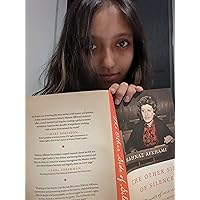
"Life's doors are shut on a young, frail girl, she wants to create a world of dreams and open a small window in it. But the stupid people around her don't allow it because she threatens their beliefs. And what happens? She shatters their beliefs and turns away from them." . . If there's one woman who has been unapologetic about what she has to say and how she chooses to say it in Indian writing scene in the 20th century it has to be Ismat Chughtai. Her stories talk about female sexuality in a way that we don't look at even today. She has faced obscenity trials and many of her stories were even banned. My relationship with Chughtai dates back to my graduation days. I read 'Lihaf' and oh boy, did I love it! As I picked up this book I was expecting a lot. . . This book consists of two short stories 'The Heart Breaks Free' and 'The Wild One'. Both the stories explore female sexuality, dissent and repressed desires in a way that is unprecedented. She shows us the eternal fight that liberated and aware women have to undergo every single day. . . 'The Heart Breaks Free' is set in pre-independence UP and Bua who can be best described as a free spirited and bold woman in an orthodox Muslim household is forced into giving in and submission and turned into a docile and obedient woman. It's now Qudsia Apa who undergoes a transformation. Once an uncomplaining abandoned wife now turns into a 'madwoman in the attic' and rejects the life which the society chooses for a woman whose husband has turned away from her and picks her own life partner and shows us the the power and pleasure in revolution and subversion. . . 'The Wild One' is essentially a love story that defies traditions. It is a story between a 'servant' Asha and 'master' Puran in a feudal household where such things are only seen as mistakes and tragedy, which are to be forgotten. When Puran can't escape his status and defy his class, it is Asha who manages to win him for herself. The ending of this story was absurd and unexpected! . . Except for a few grammatical errors, the book is perfect! Pick it up if you want to read something special & different.
#worldfullofstories - Urdu ✔️ #readingwomenchallenge - prompt 15 ✔️ . 🍁 . The Heart Breaks Free and The Wild One Ismat Chughtai. Speaking Tiger. Pp- 144.
From one of the revolutionary Indian writers from early times, Speaking Tiger brings to you two such provoking stories by Ismat Chughtai.
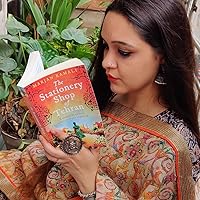
These stories, as the author is known for, speak of the hypocritical conflicts of the Indian society, specially around women, and how we confuse marriage with love. The book also revolves around themes like female sexuality, through different women, born out of similar circumstances but different in their ways to approach - accepting vs fighting. Ismat Chughtai discovers the thin line between sanity and insanity, and respectable and shameful. . 🍁 . The only Ismat Chughtai story I'd read before these two was The Quilt, and it was enough to get my attention to the author. . Strong, Liberal and Modern in more ways than one, it's a 4 on 5. . 🍁 . #bookstagramindia #bookstagrammer #bookstagram #bookstagrammer #review #bookreview #readdreamrepeat #blogger #bookblogger #delhibookstagrammer #indianblogger #igreads #delhiblogger #unitedbookstagram #indianauthor #february #februaryreads #shortbooks #slaythattbr #feminism #femalesexuality #feminismreads #ismatchugtai
23 down @htbrunch #htbrunchbookchallenge #BrunchBookChallenge #htbrunch
These are not places you want to willingly go, let alone linger - inside typical/conservative indian households - and watch what's happening, especially with women. I went along only because of Ismat Chugtai.
The stories are set in pre independence India - in UP. She captures the charade of innocence that is the Indian society so beautifully, so sweetly and then laces it with fire - You cannot help but admire the blazing courage. To call out the hypocrisy and be so damn true. The language is delightful, funny, wicked even - reading it is like breezing through a light hearted romance if you will just not in the manner it leaves you scathed.
"I don't like reality very much. But I do like meeting women and men who can summon up the courage to say boo to the world when it matters." Then maybe you should let her show you around the world a bit.
This novella narrates two stories about women who break barriers of class, caste and defy societal judgements in love. While one of the stories will please those wanting to follow their heart the other brings out what could be the cost of doing so. But does it matter to those in it? Read on to find out. Although, I read the English translation, the original in Urdu is said to be more beautifully worded.
These are excellent stories- with the right mixture of humor and drama which combine to produce a searing critique of social morality and the toll it takes on individuals especially women. But the quality of translation is rather poor. So much is lost in the mechanical sentence to sentence translation that has been undertaken. While Women Unlimited needs to be commended for bringing out this series on Chugtai's novellas and stories, I wish they had commissioned a fresh translation.