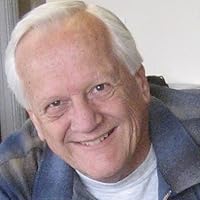
The first biography of journalist Robert Pierpoint, a contemporary of Edward R. Murrow, hired by him to cover the Korean War for CBS. He went on to cover the White House for CBS, through six presidents. In over 40 years with the network, he covered the Kennedy assassination, Watergate, Nixon's resignation, and the State Department, culminating in memorable reporting for "CBS Sunday Morning." He was the winner of two Emmy Awards for investigative reporting and helped shape the careers of many of today's journalists, including Bob Schieffer, Dan Rather, Lesly Stahl, and Diane Sawyer.
Tony Silvia’s Robert Pierpoint: A Life at CBS News traces Pierpoint’s journalistic career from the Korean War to the White House. As a White House correspondent, he covered six presidents from Eisenhower to Carter, and was in Dallas when John F. Kennedy was assassinated.
Robert Pierpoint had the rare opportunity to see these presidents up-close, and note their personalities (as well as frailties) that did not always match their public persona. For example, he observed the marriage infidelity of Kennedy at Palm Springs, California where he witnessed “JFK with a woman on his arm that wasn’t Jackie.” He saw them “getting into the back seat of the limousine and just then, the light inside the car went out.” Pierpoint was troubled whether to report this, but in the end decided to err on the side of the President’s “right to privacy.”
As intriguing as all these historic tidbits might be, the book provides a more important summary of the changes that have occurred in journalism with the ascendency of television. Pierpoint was hired by Edward R. Murrow to cover the war in Korea at a time when radio was still supreme and television was in its infancy. News coverage was regarded as a public service, and the job of the correspondent was to present the facts that the public needed to know. As the visual became more important and television executives worried about their ratings, a shift towards being more entertainment oriented occurred. It became more important to provide what the public was interested in seeing rather than what they needed to know. It became more important to give the “audience something interesting to look at, as opposed to something important to think about.” This ultimately led to the side-lining of “old timers” like Pierpoint. The new criteria was to provide good pictures as well as choosing newscasters that looked “intelligent and authoritative, as well as sound that way.” And, of course, “It helps a male to be handsome and dress well, and a female to be pretty and to master the art of coordinating makeup and clothes.”
Robert Pierpoint was the first to observe the cause-and-affect correlation between the presence of TV cameras and behavior. It didn’t simply record, it “intruded upon, even provoked behavior.” While in Korea he had recorded authentic audio from the heat of battle. He was ordered to do a visual reenactment to accompany this audio for Murrow’s See It Now series. As Pierpoint described it, “Lured by the fleeting fame television promised,” the GI’s “happily fired off their guns.” The same mentality can be seen today by those protest demonstrators who are more than willing to oblige the cameras.