What do you think?
Rate this book


Paperback
First published March 31, 2020
‘The Empire’s Southern Expansion Movement and so-called National Spirit Mobilization Movement had taken shape as imperial assimilation movements here in the colonies. Were they not, in essence, brute acts of erasing the distinctions of individual cultures? I couldn’t help but feel resistance and disgust whenever I considered the matter seriously.’
‘A novel is a piece of amber, one that coagulates both the “real” past and the “made-up” ideals. It is something that can be visited again and again in its unparalleled beauty.’
‘Because there was already a “translator” in the story, the structure allowed me to interject myself as a translator in the text in a way that’s not normally done in English-language translations, where there tends to be an emphasis on “seamlessness” that makes readers forget that they’re reading a translation at all.
‘Translation becomes an act of reclaiming, of recentering of the identity, a reterritorialozing operation. It does not create a new language, but it elevates a dialect to the status of a National and cultural language.’
‘A Taiwanese translator, while bringing the book to the ultimate colonial language of English, has struggled to determine how the Japanese colonial government would have pronounced Taiwanese terms and therefore consulted the Japanese translation of a Taiwanese novel that claims to be a Taiwanese translation of a Japanese novel.’
‘Whenever I start craving something, anything, my stomach burns with this insatiable greed until I get my hands on whatever it is. That’s the monster in me.’
‘You don't choose to make positive associations with the dominant group, but you are required to. All around you, that group is being paired with good things. You open the newspaper and you turn on the television, and you can't escape it.’
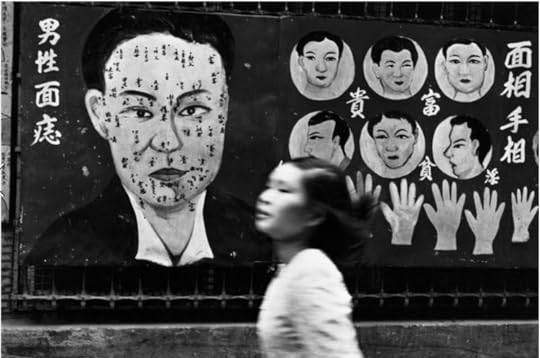
“Whenever Aoyama-sensei is traveling, there will be a local government staff member assigned to be your guide ... While you are in Taichū, I will have the privilege of acting as your interpreter and guide.”
“Thank you so much for your trouble.” After a beat, I asked, “If Mishima-san is to act as my guide, may I also ask you general questions about the Island?”
“Chi-chan, just like you have long been aware that I have another side of me that is arrogant and self-important, I have long been aware that you have another side to you that is secretive, unforthcoming, and perfectly capable of lying with a straight face—a masterful actor. It is this masterful actor whom I regard as my best friend.”
“…”
“What to do if the cuckoo does not sing?”
“In the style of Ieyasu? If the cuckoo does not sing, wait for it.”
А примітка пояснює, що відповідей на це питання за означенням кілька, і є страшніші: The question “What to do if the cuckoo does not sing?” comes from a famous Sengoku-period anecdote that delineates the respective personalities of Oda Nobunaga, Toyotomi Hideyoshi, and Tokugawa Ieyasu. Hideyoshi’s answer was, “If the cuckoo does not sing, coax it”; Ieyasu’s answer was, “Wait for it”; and Nobunaga’s answer was, “Kill it.”
“It’s brutish, isn’t it, to transplant Mainland sakura and force them upon the Island’s soil? You think so, too, don’t you?”
“I never said that, Aoyama-san.”
“But I was watching your face closely on the train, and I don’t believe I misread your expression.”
“…”
“It’s true that the Empire’s coercive methods are unpleasant, but the beautiful sakura are innocent of any crime.”
‘There is an island deeply rooted in my—heart. The trees were dense with blossoms, the same colour as a violet sunset. Those are chinaberry flowers—khóo-līng-á. Why translate into Mandarin? And why publish in Taiwan? She said, “It is a promise I have with the departed.” There was nothing I could say to object to this. It is my wish that one day, when Taiwan’s future has been reshaped—a complete version of this—will at last be able to reach readers of Mandarin.’
‘I complained about the Empire’s treatment of its colonies, about men’s treatment of women, about Mainlanders’ treatment of Islanders—I derided and protested these ridiculous ways of the world, yet I was but another citizen of this world with all its earthly flaws, unaware even of the subconscious conceit and prejudice in my heart.’
‘I do not wish to begrudge readers the right to form their own interpretations of the text. However, I would like to draw attention to one crucial point: that power imbalance is more subtle and delicate—as well as more ubiquitous—than most people imagine. Therefore, when reading this book, please remain cognizant of Aoyama Chizuko’s status as one of the colonisers within the story.’
‘One day, people will no longer remember the Islander way of life. But during the Qīng period, the Hoklo people also did the same thing to the native tribes’ ways of life here. How far back should one go when lamenting such cruelties? But the absurd thing about humanity is that we only feel pain when we’re on the receiving end. Ah, I beg your pardon. These are the words of a drunk person, and I do not even have that excuse.’
‘Even before the Japanese Empire received Taiwan, the majority of the population here has been Han people, who are originally from Shina and speak Hokkien. So their dialect has long been referred to as Taiwanese.’
‘As one family across the seas, there is no division of race—The Ō family is Hoklo. Specifically, we are Hoklo people from the Zhāngzhōu region in Fújiàn—In Hokkien, our name is pronounced not Ō but Ông—A hundred li’s distance breeds different habits, a thousand li’s distance breeds different ways of life. It is not because of such differences and complications that Aoyama-sensei needs an interpreter like myself?’
‘It was Plum Rain season in Taiwan. The downpour deluged the green willows outside my window; the teeming river coursed day and night—on the verge of sinking into a dream, I thought about how this music of rain would surely become one of my vivid memories of Taiwan.’
‘Hakka dishes evolved from food originally made for worshipping the gods—Hakka food is—pragmatic, with a wide variety of pickled and cured dishes—vegetables, seafood, foraged foods—I’ve heard that there are hundreds of options. I’ve heard that whereas Hoklo people only use one word for marinading, sīnn, Hakka people have four or five words, each with different nuances.’
‘Islanders call chefs tsóng-phòo or to-tsí, and a head chef who is capable of spearheading a full banquet is respectfully referred to as a tsóng-phòo-sai, a master chef—She’d been born to a gentry family in Zhāngzhōu during the Qīng period, but while she was still a girl she was separated from her family during political turmoil and had since spent her life as a civilian. She never married, instead drifting between the kitchens—learning Hoklo and Hakka cuisines of the Island as well as the Fukien and Canton cuisines of Shina.’
‘—whether on the Mainland or the Island—men claim to be ‘modern’ and ‘civilized’ and boast about believing in free will and love. These men complain about feeling suffocated by arranged marriages, yet they can also abandon their arranged wives after the wedding and continue pursuing their studies or their jobs. The so-called marriages they object to only span the few weeks between the wedding and the moment they go off to do whatever they please. But it is different for women. For women, marriage is always a division between her past life and the rest of her life—That’s why I can’t bear that you have to settle for a lesser life here on the Island. What can you do after marrying a man like that?’
‘Novelists use words to create worlds. I don’t possess that generative ability, but if I could translate their words—I can share this scenery with others. If one thinks about the origins of what one eats—it feels as though a dining table holds—multitudes of whole oceans and continents. The temple was dedicated to—Kannon Bodhisattva. Somewhere along the way, it was altered to focus on the goddess Mazu.’
‘In the dream was a bougainvillea tree in full bloom. Also in the dream was a cascade of orange trumpet flowers. An Islander boy and a Mainlander boy raced down the street, diving between the flowers. The Mainlander boy finally caught up to the Islander boy, throwing his arms around the latter. A spring wind rustled the trumpet flowers—beautiful and blinding. The majolica tiles gleamed.’
‘It’s true that the Empire’s coercive methods are unpleasant, but the beautiful sakura are innocent of any crime. I’ve accepted my status as wild ginseng and have every plan to continue living my life as such.’
‘Who did I want to share lychee and peanuts and water chestnuts with when I sat smoking on the veranda?’
‘Without waiting for her to reply, I continued pontificating on what I saw as “real living” and “real travel”: not just socialising and making business connections, but eating, walking, sleeping—the things that one would normally do at home. That was the way in which I wanted to gain a deeper understanding of the Islanders’ lives.’
‘Just three months prior, the scent that filled the air had been that of ripe melons; in the blink of an eye, it seemed, we were in sweet osmanthus season. The Island’s osmanthus blossoms were a milky white, whereas the ones on the Mainland were a bright orange. The ones on the Mainland bloomed in September, whereas the ones here did so in November.’
‘These may seem visually cumbersome to an English reader, but as a user of these three languages, I always find it frustrating when accents and tones are omitted in romanisation, which often means that a reader who knows the original language can’t determine how to pronounce the words—Surely Aoyama and Chi-chan would be tickled by this: a Taiwanese translator, while bringing the book to the ultimate colonial language of English, has struggled to determine how the Japanese colonial government would have pronounced Taiwanese terms and therefore consulted the Japanese translation of a Taiwanese novel that claims to be a Taiwanese translation of a Japanese novel.’ — from ‘Translator's Notes’ , Lin King.
‘Soshoku (苏东坡), the famed poet—once wrote, ‘The promise of three hundred lychees a day / would make me a willing Southerner.’’
![Profile Image for s.penkevich [hiatus-will return-miss you all].](https://i.gr-assets.com/images/S/compressed.photo.goodreads.com/users/1735525095i/6431467._UX200_CR0,11,200,200_.jpg)