

What do you think?

Playing God
To save an alien world, a human architect must risk destroying it
For two centuries, the planet of the Dedelphi has been riven by war. Though delicate, swanlike creatures, the planet’s natives are fierce in battle, and their ceaseless conflict has reduced their world to a wasteland. To save themselves and their world, the Dedelphi have forged a fragile peace and called for outside intervention. The Earth corporation Bioverse constructs a plan to heal the shattered planet. It’s the most ambitious engineering project the universe has ever seen, and if it backfires, the result will almost certainly be genocide.
Hired to oversee the massive undertaking is architect Lynn Nussbaumer. Rebuilding the planet will take decades, and Nussbaumer’s first challenge is to arrange for a generation of Dedelphi to live out their lives in orbit around their home. When old conflicts and fresh violence emerge aboard the station and on the planet’s surface, she finds that it takes more than a talent for design to draft a blueprint for peace.
For two centuries, the planet of the Dedelphi has been riven by war. Though delicate, swanlike creatures, the planet’s natives are fierce in battle, and their ceaseless conflict has reduced their world to a wasteland. To save themselves and their world, the Dedelphi have forged a fragile peace and called for outside intervention. The Earth corporation Bioverse constructs a plan to heal the shattered planet. It’s the most ambitious engineering project the universe has ever seen, and if it backfires, the result will almost certainly be genocide.
Hired to oversee the massive undertaking is architect Lynn Nussbaumer. Rebuilding the planet will take decades, and Nussbaumer’s first challenge is to arrange for a generation of Dedelphi to live out their lives in orbit around their home. When old conflicts and fresh violence emerge aboard the station and on the planet’s surface, she finds that it takes more than a talent for design to draft a blueprint for peace.
451 pages, Kindle Edition
First published January 1, 1998
About the author
Sarah Zettel
64 books444 followersSarah Zettel is the critically acclaimed author of more than twenty novels, spanning the full range of genre fiction. Her debut novel, Reclamation, won the Locus Award for Best First Novel. Her second release, Fool’s War, was a 1997 New York Times Notable Book, and the American Library Association named Playing God one of the Best Books for Young Adults of 1999. Her novel Bitter Angels won the Philip K. Dick Award for best science fiction paperback in 2009. Her latest novel, Dust Girl, was named as one of the best young adult books of the year by both Kirkus Reviews and the American Library Association. Zettel lives in Michigan with her husband, her rapidly growing son, and her cat, Buffy the Vermin Slayer.
Ratings & Reviews
Friends & Following
Create a free account to discover what your friends think of this book!
Community Reviews
Displaying 1 - 28 of 28 reviews

February 3, 2012
Give women the vote, suffragists said, and we’ll have a kinder, gentler, more peaceful government. Women got the vote, and the country went to war with a fury never before seen.
What if an entire planet were populated by women, with the male of the species being an enfeebled post-menopausal evolution of the female, existing only for procreation purposes? Would it be a planet free of war? Would it be more peaceful? Sarah Zettel, in her third novel and hardcover debut, takes a biological approach to these questions, sharing her perspective through a tightly-woven, fast-paced plot filled with alien worlds, creatures, cultures, space travel, and ecological reconstruction.
Zettel’s books represent the best characteristics of the science fiction genre. They contain extrapolated science, memorable characters, action-filled story lines, and a deep philosophical probing into social issues that society faces. Playing God lives up to these criteria.
Extrapolated Science
In Playing God, the planet All-Cradle has been beset by plagues as the result of fierce biological warfare among tribes of Dedelphi. The leaders of the planet managed to form a temporary truce—long enough to call in an Earth corporation to help them redevelop their planet. Bioverse, an Earth corporation, responds and they develop plans to move the entire population off the planet into ships so that the planet can be “regrown.”
Zettel is detailed and consistent in the science she “creates” to allow space travel, bio-reconstruction, and inter-stellar communication. More interesting in this novel, though, is the exploration into biological issues. The Dedelphi are a race of nearly all women. Eventually it is discovered that the “men” in their society are really evolved versions of the women. It is what women become when their uteruses drop. But don’t think that this is an anti-male or ultra-feminist book. It’s not. Instead, Zettel masterfully explores the ramifications of biology and its effects on a society. In this case, sisters become tightly bound, even more so than mothers and daughters.
Memorable Characters
One of my favorite aspects of Zettel’s books are the characters she creates. So expert is her painting that I feel as though I have met Praeis Shin t’Theria, and while I am reading the book, her problems become mine. She is passionate about everything in her life: her sisters, her daughters, her planet, her mission. She makes sacrifices for the good of others and is a determined and intelligent protagonist. Zettel is also able to make her emotions, fears, and anxiety come to life.
Lynn Nussbaumer, the Earth corporation’s representative, puts a human face on the otherwise cold face of Bioverse. She is diplomatic and must make difficult choices—it is she who must decide whether she is going to play God.
Arron Hagopian is also a fascinating character. An academic conducting research on the planet, he has formed close relationships with the enemies of Praeis’ tribe, the Getesaph. He is the closest the novel has to the traditional swashbuckler of many modern science fiction films. He is compassionate, clever, quick to action, and rash in speech and deed.
Action-Filled Story Line
While the novel does begin rather slowly, intricately knitting a universe where money and capitalism have made political governments irrelevant, it speeds up once the story reaches All-Cradle. From there, plot after twisted plot is revealed and the bitter results of the wars between the Dedelphi are demonstrated.
Once action moves to the planet, the reader discovers that there are forces that would sabotage the move. So deeply ingrained is the suspicion among races that each believes it is a plot by the other. The intrigue thickens until the reader is left uncertain whether a resolution is even possible. That Zettel is able to craft a believable, appropriate solution is a tribute to her skill and plotting.
Philosophical Probing
While I enjoy bubble gum reading as much as the next person, I also love a book that will keep me thinking long after I’ve closed the cover. Playing God succeeds at this. While one of the main themes of the book dealt with the interference of a technologically superior race with another for the purpose of “saving” them, I found the secondary theme of biological hatred the more interesting one.
The Dedelphi’s hatreds are expressed physically. They have bio-chemical reactions to the warfare that has gone on for generations. So great is their need to protect their sisters and their daughters, that no sacrifice becomes too great—not even the sacrifice of the planet on which they live. Does passionate love make us more violent in its protectiveness?
The evolution of woman to man and the loss of memories and coherency is also an interesting one. The different Dedelphi races treat their men differently. Some keep them hidden out of view and others allow them to wander the streets. All of them treat the men with a certain degree of protective respect.
If You Like Playing God…
If you like this novel, be sure to pick up her earlier two novels. Her first, Reclamation, won a Locus Award for best first novel, and her second (my personal favorite so far), Fool’s War, was named a New York Times Notable Book of 1997.
What if an entire planet were populated by women, with the male of the species being an enfeebled post-menopausal evolution of the female, existing only for procreation purposes? Would it be a planet free of war? Would it be more peaceful? Sarah Zettel, in her third novel and hardcover debut, takes a biological approach to these questions, sharing her perspective through a tightly-woven, fast-paced plot filled with alien worlds, creatures, cultures, space travel, and ecological reconstruction.
Zettel’s books represent the best characteristics of the science fiction genre. They contain extrapolated science, memorable characters, action-filled story lines, and a deep philosophical probing into social issues that society faces. Playing God lives up to these criteria.
Extrapolated Science
In Playing God, the planet All-Cradle has been beset by plagues as the result of fierce biological warfare among tribes of Dedelphi. The leaders of the planet managed to form a temporary truce—long enough to call in an Earth corporation to help them redevelop their planet. Bioverse, an Earth corporation, responds and they develop plans to move the entire population off the planet into ships so that the planet can be “regrown.”
Zettel is detailed and consistent in the science she “creates” to allow space travel, bio-reconstruction, and inter-stellar communication. More interesting in this novel, though, is the exploration into biological issues. The Dedelphi are a race of nearly all women. Eventually it is discovered that the “men” in their society are really evolved versions of the women. It is what women become when their uteruses drop. But don’t think that this is an anti-male or ultra-feminist book. It’s not. Instead, Zettel masterfully explores the ramifications of biology and its effects on a society. In this case, sisters become tightly bound, even more so than mothers and daughters.
Memorable Characters
One of my favorite aspects of Zettel’s books are the characters she creates. So expert is her painting that I feel as though I have met Praeis Shin t’Theria, and while I am reading the book, her problems become mine. She is passionate about everything in her life: her sisters, her daughters, her planet, her mission. She makes sacrifices for the good of others and is a determined and intelligent protagonist. Zettel is also able to make her emotions, fears, and anxiety come to life.
Lynn Nussbaumer, the Earth corporation’s representative, puts a human face on the otherwise cold face of Bioverse. She is diplomatic and must make difficult choices—it is she who must decide whether she is going to play God.
Arron Hagopian is also a fascinating character. An academic conducting research on the planet, he has formed close relationships with the enemies of Praeis’ tribe, the Getesaph. He is the closest the novel has to the traditional swashbuckler of many modern science fiction films. He is compassionate, clever, quick to action, and rash in speech and deed.
Action-Filled Story Line
While the novel does begin rather slowly, intricately knitting a universe where money and capitalism have made political governments irrelevant, it speeds up once the story reaches All-Cradle. From there, plot after twisted plot is revealed and the bitter results of the wars between the Dedelphi are demonstrated.
Once action moves to the planet, the reader discovers that there are forces that would sabotage the move. So deeply ingrained is the suspicion among races that each believes it is a plot by the other. The intrigue thickens until the reader is left uncertain whether a resolution is even possible. That Zettel is able to craft a believable, appropriate solution is a tribute to her skill and plotting.
Philosophical Probing
While I enjoy bubble gum reading as much as the next person, I also love a book that will keep me thinking long after I’ve closed the cover. Playing God succeeds at this. While one of the main themes of the book dealt with the interference of a technologically superior race with another for the purpose of “saving” them, I found the secondary theme of biological hatred the more interesting one.
The Dedelphi’s hatreds are expressed physically. They have bio-chemical reactions to the warfare that has gone on for generations. So great is their need to protect their sisters and their daughters, that no sacrifice becomes too great—not even the sacrifice of the planet on which they live. Does passionate love make us more violent in its protectiveness?
The evolution of woman to man and the loss of memories and coherency is also an interesting one. The different Dedelphi races treat their men differently. Some keep them hidden out of view and others allow them to wander the streets. All of them treat the men with a certain degree of protective respect.
If You Like Playing God…
If you like this novel, be sure to pick up her earlier two novels. Her first, Reclamation, won a Locus Award for best first novel, and her second (my personal favorite so far), Fool’s War, was named a New York Times Notable Book of 1997.
November 16, 2017
This was one of the best sci fi books I have read in years, it was so compelling I read it while I walked, while I commuted, while I stood in line, whilst on the...nevermind, just know I devoured it.
"The ultimate question is, Which way will the balance tip: toward evolutionary predisposition, cultural conditioning, or individual choice?" (Zettel). The writer does a masterful job of showing how such forces often clash and leave every side feeling attacked by the other, affording them all a sanctimonious stand point from which to retaliate. I often stopped to consider how these forces applied to my own species and to myself... speculation which all good sci fi should inspire.
Zettel's writing was exemplary, it was fast paced, the characters had just enough depth without it being a character driven story, her science was very respectable and in short....wait for it because this is a very rare statement from me... there was nothing about this book that annoyed me and lots of things I loved. I am absolutely going to be reading more Zettel.
"The ultimate question is, Which way will the balance tip: toward evolutionary predisposition, cultural conditioning, or individual choice?" (Zettel). The writer does a masterful job of showing how such forces often clash and leave every side feeling attacked by the other, affording them all a sanctimonious stand point from which to retaliate. I often stopped to consider how these forces applied to my own species and to myself... speculation which all good sci fi should inspire.
Zettel's writing was exemplary, it was fast paced, the characters had just enough depth without it being a character driven story, her science was very respectable and in short....wait for it because this is a very rare statement from me... there was nothing about this book that annoyed me and lots of things I loved. I am absolutely going to be reading more Zettel.

December 9, 2009
It's the future, and an alien planet needs our help. The Dedelphi are a maternal/sister-based family race who live on a planet of islands and archipelagos. It's in their very nature to war with other family groups, and as a result they have devastated their planet. Bioverse, Inc. has signed a deal to help the Dedelphi completely clean and renew their planet. Unfortunately Dedelphi are deathly allergic to humans, so while their planet is being restored, the aliens have to be relocated to giant ships and separated by family. But will the tenuous peace and agreements for relocation work?
I read this book as part of my "gender-bending sci-fi" monthly theme. I read it after The Left Hand of Darkness, which probably isn't fair. It's a bit like trying to perform in a talent show, only you're following Lady Gaga or something. (Wait, did I just compare Ursula LeGuin to Lady Gaga?)
The thing is that the gender issues aren't really central to the book. They are a curious characteristic to the aliens Zettel has imagined, but their unique sexual characteristics and the sociological implications aren't really explored. That's fine by me, but then you need to at least make the book a rip-roaring tale. I just wasn't that into it.
This is a very long story with tons of named characters. I think it's trying to be an epic tale, but it doesn't quite succeed. Sadly, I kept falling asleep while reading, only waking when the light on my eReader would turn off. Not really a good sign, is it?
That said, the writing is fine - better than most sci-fi. As a matter of fact, it kind of reminded me of Asimov. Nothing to write home about, but not cringe inducing either.
The best part of the story is the aliens. It's a non-technical matriarchial society who need constant companionship from their sisters. Zettel describes their physicality really well, which makes them the vivid image I'll probably always remember. They come in shades from blue to gray to pink and have giant emotive ears! Unfortunately their actions are pretty human - humans with big families. My Big Fat Alien Relocation.
At any rate, check out the cover! It's one of those awesome cheese-tastic sci-fi covers, but really illustrates the story.
I read this book as part of my "gender-bending sci-fi" monthly theme. I read it after The Left Hand of Darkness, which probably isn't fair. It's a bit like trying to perform in a talent show, only you're following Lady Gaga or something. (Wait, did I just compare Ursula LeGuin to Lady Gaga?)
The thing is that the gender issues aren't really central to the book. They are a curious characteristic to the aliens Zettel has imagined, but their unique sexual characteristics and the sociological implications aren't really explored. That's fine by me, but then you need to at least make the book a rip-roaring tale. I just wasn't that into it.
This is a very long story with tons of named characters. I think it's trying to be an epic tale, but it doesn't quite succeed. Sadly, I kept falling asleep while reading, only waking when the light on my eReader would turn off. Not really a good sign, is it?
That said, the writing is fine - better than most sci-fi. As a matter of fact, it kind of reminded me of Asimov. Nothing to write home about, but not cringe inducing either.
The best part of the story is the aliens. It's a non-technical matriarchial society who need constant companionship from their sisters. Zettel describes their physicality really well, which makes them the vivid image I'll probably always remember. They come in shades from blue to gray to pink and have giant emotive ears! Unfortunately their actions are pretty human - humans with big families. My Big Fat Alien Relocation.
At any rate, check out the cover! It's one of those awesome cheese-tastic sci-fi covers, but really illustrates the story.

October 22, 2021
This took a while for the engines to warm up - but once they did, it was totally worth it. Zettel concocts completely believable aliens, a female society that's both delicate and warlike, a wildly creative and interesting combination (it reminded me much of Becky Chambers who also creates kick-assly believable alien races). The plot is rip roaring geopolitical adventure; but there are kernels of truth all over this book about humanity. The aliens, who have been at war among themselves for a thousand generations, could be stand-ins for the many conflicts of earth (the Balkans come instantly to mind, which would have been fresh in Zettel's mind and newspapers as she was writing this book). The company at the center of this book, Bioverse, is using biological remediation to save the dedelphi's planet while also harvesting valuable biological matter that can be used as a profitable venture for the company; Facebook's mining of our data as a profitable venture could be a scary equivalent (even though Facebook wasn't even a twinkle in Mark Zuckerberg's eyes back then, I think). None of this would work without interesting, flawed characters that we can cheer on or hate, and that is what made this book so much fun. My blood pressure rose several times in anger at character actions in this book! It's that good.

February 5, 2024
Yet another five star read for me. What can I say? Zettel wrote really interesting aliens, culture and politics and wars and all that (similar to Foreigner that I really liked too).
This time we have the alien Dedelphi. Their city was covered in hazy smog, their river and seas choked with algae blooms, some places glowed in the dark (radiation?), so basically they've ruined their planet thoroughly much like ours. The difference was they've gone one step further and released engineered plagues that naturally went out of control and proceeded to wipe out much of their population. Luckily for them, we humans somehow have survived that phase and with our superior technology we promised to help them to clean up their planet and saved them from the plagues.
The problem was, the Dedelphi consisted of different Families and they have been at war with each other since forever. Naturally some refused to believe at the arrangements of the humans, believing it to be another trick concocted by their enemies. So with all these in the backgrounds, would the humans succeed in Playing God and saving the Dedelphi?
This time we have the alien Dedelphi. Their city was covered in hazy smog, their river and seas choked with algae blooms, some places glowed in the dark (radiation?), so basically they've ruined their planet thoroughly much like ours. The difference was they've gone one step further and released engineered plagues that naturally went out of control and proceeded to wipe out much of their population. Luckily for them, we humans somehow have survived that phase and with our superior technology we promised to help them to clean up their planet and saved them from the plagues.
The problem was, the Dedelphi consisted of different Families and they have been at war with each other since forever. Naturally some refused to believe at the arrangements of the humans, believing it to be another trick concocted by their enemies. So with all these in the backgrounds, would the humans succeed in Playing God and saving the Dedelphi?
November 5, 2008
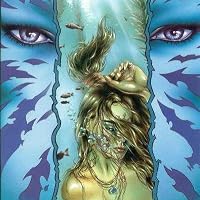
She has SUCH cool aliens!

February 17, 2018
Great universe building- fantastic aliens, a timely mirror for corporate colonialism, solid characters (including a strong female lead) and well paced. quality adventure sci-fi. Calling it a win.

October 15, 2025
“You’re sitting up here deciding the fate of the Dedelphi. You’re planning out their every move and correcting them when they go wrong. Why don’t you just get yourself a throne and a beard, declare yourself God, and finish it!”
A complex science fiction adventure involving family, good intentions, lies, and race hatred. Zettel establishes her characters and setting by immersing the reader in a dramatic change in the history of an alien planet and people. Complexities of Dedelphi biology and familial structure are scattered through the interactions of humans who have conflicting goals and loyalties.
“Somebody’s obviously decided that there’s something more important than saving the world, and we got in the way.”
Cross purposes abound between and within various factions. Imperfect knowledge of what their own side is doing, not to mention the actions of adversaries, force dilemmas on everyone.
“But this I promise you, my Sisters, as I promise my daughters in my womb. When our world is saved, the [redacted] will no longer walk on it to plague us.”
A complex science fiction adventure involving family, good intentions, lies, and race hatred. Zettel establishes her characters and setting by immersing the reader in a dramatic change in the history of an alien planet and people. Complexities of Dedelphi biology and familial structure are scattered through the interactions of humans who have conflicting goals and loyalties.
“Somebody’s obviously decided that there’s something more important than saving the world, and we got in the way.”
Cross purposes abound between and within various factions. Imperfect knowledge of what their own side is doing, not to mention the actions of adversaries, force dilemmas on everyone.
“But this I promise you, my Sisters, as I promise my daughters in my womb. When our world is saved, the [redacted] will no longer walk on it to plague us.”

January 29, 2018
My favorite part of this book is in the author's notes at the end where she explains how she came up with the ideas for the alien civilization and culture. Those ideas are very interesting and explain a lot about how the people in the book behave. The book itself is interesting but is reads more like a war and espionage story than one of science fiction.
I have very mixed feelings about this book. There are entertaining bits of very interesting sociological, historical, cultural, and psychological ideas that connect well with our species and make you think of the cultural and racial divisions that have lead to so much unhappiness and strife. There is drama and excitement that make the story interesting. Despite this, overall it wasn't a book I am excited to have read. I have already purchased some other books by Sarah Zettel and am hoping to enjoy them more.
I have very mixed feelings about this book. There are entertaining bits of very interesting sociological, historical, cultural, and psychological ideas that connect well with our species and make you think of the cultural and racial divisions that have lead to so much unhappiness and strife. There is drama and excitement that make the story interesting. Despite this, overall it wasn't a book I am excited to have read. I have already purchased some other books by Sarah Zettel and am hoping to enjoy them more.

August 5, 2019
8/10
A fascinating and unique alien species, complex issues of personal conviction, violence, and corporate greed, and timeless themes of loyalty, betrayal, and the meaning of family all add up to a really good science fiction book. High marks for plot depth and interesting characters, yet I kept wishing I understood some of the characters more fully. Zettel’s books will continue to be “must read” for me—consistently good quality, thought-provoking storytelling.
A fascinating and unique alien species, complex issues of personal conviction, violence, and corporate greed, and timeless themes of loyalty, betrayal, and the meaning of family all add up to a really good science fiction book. High marks for plot depth and interesting characters, yet I kept wishing I understood some of the characters more fully. Zettel’s books will continue to be “must read” for me—consistently good quality, thought-provoking storytelling.
November 29, 2025
Overall, Playing God has an unparalleled, compelling plot within a marvelous world, but at times it dragged and felt unpolished.

April 21, 2018
Honestly, I just picked up this book because it was on the sharing shelf at my gym, and it had a crazy cover, so I read it on a lark, thinking it would be a goofball adventure. I was very surprised that it was a seriously-written, well thought out, thought provoking book. I won't rehash the plot, but I particularly enjoyed the fresh takes on themes such as:
* the exploitation inherent in "save the savages," even if the more "advanced" help was requested
* physiology and social grouping driving the evolution of violence, and not in a way that I would have expected (the author's end notes were great)
* dealing with the decline of an aging parent.
* the exploitation inherent in "save the savages," even if the more "advanced" help was requested
* physiology and social grouping driving the evolution of violence, and not in a way that I would have expected (the author's end notes were great)
* dealing with the decline of an aging parent.

February 6, 2023
Dr Lynn Nussbaumer is trying to save an enitire planet. Unfortunately she meets challenges from with out and within. The planet All-Cradle has been in a state of civil war for centuries. Both sides will prevent her from doing her job in order to gain advantge over the other side. It is more difficult when her friends on All-Cradle get caught up in the intrigue. Its a book about making hard decesions in a difficult situation. Nussbaumer does her best to do deals with it in order to accomplish her job and clean up All-Cradle. Zettler does a great job in creating a conflict with no clear good guys and bad guys. Her alien design is great.

September 12, 2019
Interesting thought experiment, but too many flaws in the plot logic and portrayal of aliens. Still a fun read.
April 19, 2018
I enjoyed this book thoroughly - it described a people and a place so different, and so fascinating, and yet so approachable that I was immediately pulled in. It's hard to describe without telling too much - give it a try and I'm willing to warrant you'll love it too. The Dedelphi are a fascinating people and that kind I'd love to spend more time with - as are all the human characters. What a ride!
January 13, 2025
An ambitious book -- I'm glad she didn't spin it out as a trilogy. An alien race, divided up as tribe; warring with each other, have poisoned their planet. Human corporation brought in to clean up the world, but with a hidden agenda. Lots of intrigue and lots of conflict. An unusual biology that's slowly revealed.
Be sure to read the afterword. Published in 1998, but speaks to events of today as well.
Be sure to read the afterword. Published in 1998, but speaks to events of today as well.

February 19, 2020
Good pulp SF with some moral ideas about the nature of violence. Well-written, well developed characters and development of motivation - nobody is "evil." She shows how each character believes What they are doing is what is right. Plot: A biotech company comes to save a planet from disease and their own ecological destruction due to warfare.
August 20, 2018
Very cool book! The characters left an impression on me and I had so many feels by the end and I want to draw all of them!

May 12, 2020
tiptree shortlist 1998
June 9, 2009
I enjoyed this book. The characters were engaging and I felt, for the most part, that they were realistic (depite being put in many unrealistic situations). The aliens were interesting; however, they were more humanlike than not, which was fine. I thought the blind rage/protection imperative interesting, but it was not explored thoroughly enough.
In many ways, the book was both too simple and too complex. The multiple points of view did get a little out of hand; I felt some were unnecessary. Sometimes things jumped around for the sake of plot, at the expense of explanation, characterization, etc.
Overall I liked the idea of the book--humans helping an alien world clean up their ecological and medical mess that was a result of their intense tribal infighting and global wars. It dealt with, among other things, corporations vs. altruism, can cultures overcome their own prejudices, and can or should we humans force them to. It was a easy read, with a fast-paced plot and characters that were worth following.
In many ways, the book was both too simple and too complex. The multiple points of view did get a little out of hand; I felt some were unnecessary. Sometimes things jumped around for the sake of plot, at the expense of explanation, characterization, etc.
Overall I liked the idea of the book--humans helping an alien world clean up their ecological and medical mess that was a result of their intense tribal infighting and global wars. It dealt with, among other things, corporations vs. altruism, can cultures overcome their own prejudices, and can or should we humans force them to. It was a easy read, with a fast-paced plot and characters that were worth following.

December 10, 2014
This book had a good mix of agency on different levels. You've got the corporation the aliens hired to come in and clean up the planet. The different clans of aliens. The individual characters from the corporation and the alien clans. The friendships that had formed between the two. The desires of the royal family of Mars clear off in the distance and the wider human network. I never felt close to any of the characters and that may be because I was listening to this book at work and work needed more of my attention this week than usual so I had less for the book.
Still. Good read. Enjoyable. Interesting ending. What may have been missing is that the aliens existed mostly on one culture and somehow so did the humans even though I know the humans at least would have had more variety in beliefs.
Still. Good read. Enjoyable. Interesting ending. What may have been missing is that the aliens existed mostly on one culture and somehow so did the humans even though I know the humans at least would have had more variety in beliefs.

March 31, 2015
Zettel has created an interesting alien race and society, or I should say societies, since she wisely avoids the SF cliche of everybody on an alien planet having the same culture.
The book starts out slowly, with too many obvious attempts at avoiding expository lumps, the introduction of too many characters who end up not mattering much, and way too much discussion of what might happen, what could happen, what various factions want to have happen etc. But once the plot actually gets going, it becomes a decent (but not all that innovative) story that also raises questions of the influence of a high-tech culture on a lower-tech culture, and issues of war and peace and inherent tendencies toward violence.
However, the prose is often clunky and the structure of the book is clumsily put together.
I give it a B+ for concepts and worldbuilding, C for plot, and D for technique.
The book starts out slowly, with too many obvious attempts at avoiding expository lumps, the introduction of too many characters who end up not mattering much, and way too much discussion of what might happen, what could happen, what various factions want to have happen etc. But once the plot actually gets going, it becomes a decent (but not all that innovative) story that also raises questions of the influence of a high-tech culture on a lower-tech culture, and issues of war and peace and inherent tendencies toward violence.
However, the prose is often clunky and the structure of the book is clumsily put together.
I give it a B+ for concepts and worldbuilding, C for plot, and D for technique.

November 1, 2013
This story really grabbed my attention. The Dedelphi are a passionate race of aliens: mothers, sisters, and daughters. We don't find out much about the fathers until the story has progressed quite a bit. They are tall, with sail-like ears, and have their daughters in twos, in their pouches. They are also inclined to fight out their differences, and after more or less ruining their planet, and leasing a catastrophic virus, they call on the humans for help to restore their planet. Amidst the clash of cultures, distrust, and warfare, Lynn, the human who gets the job of managing the project, must find her way between the fine line of providing aid, or taking it upon herself to decide what she thinks is the way things should be.

April 29, 2014
Four and a half stars, being a touch slow at the beginning. A human corporation signs a contract to clean the entire ecology of a planet whose alien residents have been at constant war (sometimes biological and nuclear) for centuries, and are currently being wiped out by a manufactured plague. Once again the author does something that I love/hate--which is to make me emotionally invested in characters with radically conflicting agendas, so that no matter who comes out on top people I care about are going to lose (though, to be fair, here most of the central cast at least survives). Good stuff! A to A-

July 28, 2011
I didn't actually finish this book, but by page 65 I was getting bored with the uninteresting aliens. There was really nothing that made them alien aside from their physiology. I don't have much tolerance for that sort of alien in books (TV and movies, fine, but not for the investment of time I put into novels).
March 11, 2016
This book has believable aliens and an interesting premise. The characters are fleshed out and the story kept me interested. The end was a bit rushed though and not as believable as the rest.
This is a standalone novel.
This is a standalone novel.
February 9, 2014
Good Book!!

gave-up-on
April 17, 2014Somewhat appealing protagonists, but the aliens fail to interest me in any way. I also feel rather lost upon coming back to the book.
Displaying 1 - 28 of 28 reviews