The Bible, as we hold it today, is esteemed by many religious institutions and especially Conservative Christians to be the inspired, inerrant Word of God. This doctrinal position affirms that the Bible is unlike all other books or collections of works in that it is free of error due to having been “given by inspiration of God, and is profitable for doctrine, for reproof, for correction, for instruction in righteousness: that the man of God may be perfect, thoroughly furnished unto all good works” (2 Tim. 3:16, 17).
While no other text can claim this same unique authority, Apocryphal and Pseudepigraphal literature such as contained in the first volume of The Researchers Library of Ancient Texts (Volume One—The Apocrypha: Includes the Books of Enoch, Jasher, and Jubilees; also available on Kindle), provides literature that often precedes or follows the chronology of biblical texts, which frequently are used or assigned as supplemental works within academic settings to help students and scholars discover or better understand cultural and historical context within the Word of God. Whether or not the information contained in the apocryphal literature is entirely precise—as is the canon of Scripture—these ancient texts provide commentators’ valuable insight into what many ancient Jews and early Christians believed when, “God, who at sundry times and in divers manners spake in time past unto the fathers by the prophets” (Heb. 1:1).
"The Book of Judith is a deuterocanonical book, included in the Septuagint and the Catholic and Eastern Orthodox Christian Old Testament of the Bible, but excluded by Jews and Protestants. The book contains numerous historical anachronisms, which is why many scholars now accept it as non-historical; it has been considered a parable or perhaps the first historical novel." --Wikipedia
The book of Judith is available in The Researchers Library of Ancient Texts (Volume One—The Apocrypha: Includes the Books of Enoch, Jasher, and Jubilees; also available on Kindle), as well as The Book of Enoch, The Book of Jasher, The Book of Jubilees, 1 Esdras, 2 Esdras, 1 Maccabees, 2 Maccabees, Tobias, Wisdom, Sirach, Baruch, Susanna, Prayer of Azariah, Prayer of Manasseh, Bel and the Dragon, and Laodiceans.
Books can be attributed to "Anonymous" for several reasons:
* They are officially published under that name * They are traditional stories not attributed to a specific author * They are religious texts not generally attributed to a specific author
Books whose authorship is merely uncertain should be attributed to Unknown.
I just realised that I haven’t actually read any of the books of the Apocrypha, despite meaning to for quite a while. I had even purchased a Bible that contained it quite a while back, but it had ended up sitting on one of my shelves sort of gathering dust. Then again, the other reason I got that particular Bible is because some suggest that we should have multiple translations to get some of the nuances in the languages. Then again, these days we have Bible Gateway that does that job for us, though I sort of got sick of it with all the extremist ads that they display that contained some incredibly loaded questions (and I believe that it’s also owned by Rupert Murdoch – yep, according to Wikipedia, it is).
Anyway, a friend who is studying Theology (actually doing a PhD in the subject) decided to start a German Reading Group (namely because a lot of the theological texts that she is using happen to be written in German), and the group decided that they should read Judith (though I wanted to read Tintin, but that’s beside the point). Well, since the German is pretty hard, I decided to cheat and read an English translation first so that I didn’t get as lost when we started reading the German translation.
Now, the interesting thing is that it is generally believed that the Apocryphal books came out of the Septuagint, which is the Greek translation of the Old Testament. Mind you, the earliest complete copy of the Hebrew Scriptures dates back to the 10th Century AD (which is the Masoretic text). I did some research on the collection just before I wrote this, but suddenly I can’t find the sources anymore (it turns out I was looking at the Wikipedia entry for the Apocrypha as opposed to the entry for the Book of Judith). Anyway, the suggestion was that the Jews didn’t consider these books to be a part of scripture until late in the piece, and more so, the Dead Sea Scrolls didn’t contain any fragments of it either.
One suggestion was that the story doesn’t contain anything that isn’t mentioned elsewhere, and in fact, the story is very similar to the story of Yael killing Sisera in the book of Judges, namely Judith slips into the camp, sends all of the general’s men out, and proceeds to kill him. Actually, there are also some similarities with the story of Ehud in Judges as well (though Holophernes isn’t as fat as Ehud’s nemesis).
The other problem is that the historicity of the story is wrong. For instance, Nebuchadnezzar wasn’t an Assyrian King, he was a Neo-Babylonian king. Secondly, he conquered what remained of Israel, so he wasn’t driven off in the way that the Assyrians were driven off in this story. Also, Holophernes sounds a lot like a Greek name as opposed to an Assyrian name.
Still, it’s interesting, particularly since Judith is a widow, and after she saves Israel, we are told that pretty much everybody wants to marry her, but she remains unmarried for the rest of her life. Yeah, this came across as being pretty cool. Then again, we are also told that she was pretty wealthy, having inherited her husband’s wealth upon his death. This was certainly something that was uncommon, since widows tended to end up being rather poor once their husbands died, and especially so if they didn’t have any children. On the other hand, as I mentioned, Judith did have quite a bit of wealth, and it appeared as if she was childless as well (if the accounts of her will are anything to go by).
I’d probably put this down to being a story as opposed to anything particularly historical. This makes it a little odd though because people really didn’t write novels in the sense that we write novels these days, though we do have a couple of Roman examples (such as the Golden Ass, and there are a couple of other works that aren’t quite extant, such as the Satyricon). The other interesting thing is that a lot of the older Bibles still have copies of the Apocrypha, but these days, at least with the protestants, they tend to be excluded. Personally, these are interesting, but I’d consider them to be Jewish texts (if that, since it seems that they came about with the Septuagint) that aren’t actually part of the Bible, but have some uses nonetheless.
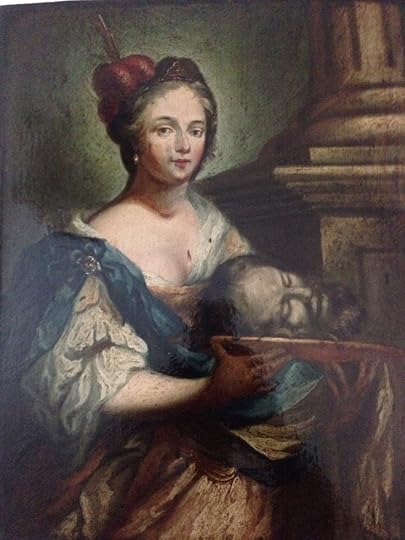
Oh, there is also plenty of artwork depicting the story, so here is one of them:
Tell me why I was smiling throughout the whole book? I read so fast because goodness- get this:
• A rich woman but sympathises and humbles herself. • Who is loyal to her husband past his death despite many proposals. • Beauty that CAPTIVATES every MAN. • Intelligence and wisdom to uplift an army. • Admirable faith to God. • Very charitable.
Honestly- why isn’t this added to the original Bible? Along with the book of Tobit as well. Both books amazing.
Could inspire many people, especially young woman, in faith to use intelligence and beauty! I love this.
16:9 “Her sandals delighted his eyes, her beauty captivated his soul, and the scimitar cut through his neck.” HSJSJDKD QUEEN 🔥
I personally think books of the Bible should count as a book, since the Bible is a compilation. Otherwise, I wouldn’t have a chance to comment on the Scripture I’ve been reading, and it’s all just too amazing to not write about. Judith?? Oh my goodness AMAZING. Love her so much. 100/5⭐️ Will read again and again until the day I die. *I read the Revised Standard Version of the Second Catholic Edition by Ignatius Press. Translated from the original version A.D. 1611*
Audible format. King James Version. This is a book about revenge, deception, seduction, betrayal, femme fatale, murder, justification, absence of remorse, war, triumph, and power. All of this in a well written, fascinating and relatively short story. This story would fit inconspicuously among other books of the Old Testament. Why some denominations include it in their canon and others do not if for the experts to determine. All I know is that I am glad I stumbled upon it and had the opportunity and pleasure of reading it. I highly recommend it.
Not part of the canon, yet an interesting book. I cannot speak to it's acurracy, though I've heard historically it is quite inaccurate, or it's truth, but reflecting much of the old testament, it is a story that could be true. Certainly, God has worked in similar ways throughout the history of Israel.
Long before James Bond, there was Judith; the original double agent. She just walks straight into the enemies camp and they were so awed by her beauty that she won the whole war for Israel by getting their general drunk and lopping off his head... She was a straight boss. "Her Beauty captivated his mind. The sword cut through his neck" yoooo.
Rei Nabucodonosor convoca outros reinos para lutar junto com ele contra Arfaxad, esses o ignoram, então ele enfrente o reino sozinho e vence (Jd 1). Apos a vitoria, ele chama seu general Holoferemes, e pede pra reunir o exercito para se vingar se todos os reinos que o ignoraram, e assim começa sua campanha contra todas as cidades vizinhas (Jd 2). Vários reinos e tribos se rendem ao rei, comemorando a sua chegada, ele porem destrui toda a sacralidade e religião local, "a fim de que as nações adorassem unicamente a Nabucodonosor, e todas as as línguas e tribos o invocassem como um deus" (Jt 3,8). Os israelitas souberam da aproximação de Holofernes, preparasse para o combate, e passaram dias rezam e jejuando pedindo ajuda a Deus que os escutou, o povo “(Jt 4,10) "cingiram seus rins com panos de saco. " (https://padrepauloricardo.org/episodi...) O general Holofernes questiona que sao os israelitas, que não vieram em seu encontro e se preparam pra batalha, e seu servo Aquior resume a historia do povo israelita e de sua força vendo de Deus.(Jd 5) O general Holofernes considera uma afronta o discurso de Aquior, e ordena amarra-lo perto da cidade para ser somente morto após vir a cidade destruída, o povo israelita o captura, e sabendo a razão dele ser punido, o homenageai e o libera (Jd 6). O general Holofernes bloqueia a nascente e faz um cerco na cidade bloqueando agua e comida, depois de 34 dias o povo pede para as lideranças se entregar, e Ozias pede 5 dias ao povo, e se nada mudar fará a vontade popular (Jd 7). Judite um viuva abastada e temente a Deus, chama os lideres é os censuram por prometer a vontade de Deus ao povo, visto que " Pois não sois capazes de sondar a profundeza do coração humano nem de captar as razões do seu pensamento: como então perscrutaríeis a Deus, que fez todas estas coisas, conheceríeis o seu pensamento e sondaríeis o seu projeto? Absolutamente, irmãos, não provoqueis o Senhor nosso Deus! " (Jt 8,14), e fala que tem plano pra sair da cidade e receber a benção de Deus. (Jt 8). Judite clama a gloria de Deus, e pede forças para executar um plano contra os assirios. (Jd 9) Judite se embeleza e vai em direção ao acampamento inimigo como uma espiã, e todos os homens "Admiravam-se da sua beleza e comentavam as suas palavras, que eram muito auspiciosas” (Jt 10,19) Judite entra na tenda de Holofernes e faz um discurso falando dos pecados de Israel e bajulas ao novo rei”. (Jt 11) Holoferne convidou Judite para um banquete, e ela se embelezou para ocasião, e o rei bebeu mais que toda a vida.(Jt 12) Judite fica só na tenda com Holofernes e o decapita, guarda sua sacola numa sacola e voltando para cidade escondida mostra a cabeça do rei ao povo. (Jt 13) Judite mandou chamou Aquior para confirmar a identidade da cabeça de Holofernes, e o povo hebreu começou uma investida contra o exercito assírio. (Jt 14) O povo hebreu massacra os assirios, e exalta Judite por sua ação (Jt 15). Povo louva ao senhor, e Judite tem uma boa morte. (Jt 16).
Nesse livro aparece um dos mais belos versiculos que é:
(Jt 8,12-15) "Quem sois vós, que hoje tentastes a Deus e vos pusestes no lugar de Deus em meio aos vossos irmãos? 13.Agora tentais o Senhor todo-poderoso, vós que nunca entendereis coisa alguma! 14.Pois não sois capazes de sondar a profundeza do coração humano nem de captar as razões do seu pensamento: como então perscrutaríeis a Deus, que fez todas estas coisas, conheceríeis o seu pensamento e sondaríeis o seu projeto? Absolutamente, irmãos, não provoqueis o Senhor nosso Deus! 1"
Gosto dessa passagem, pois exalta a: -Responsabilidade pessoal -Restrição do conhecimento -Pequinês humana perante Deus (humildade)
This is my first time reading the book of Judith since becoming Orthodox, and I was struck by how much this great Saint foreshadows the Theotokos. Just as God struck down Holofernes and the Assyrians through the hand of a humble widow, so He crushes the powers of sin, death, and the evil principalities through the obedience and faith of the Theotokos, who bore Christ into the world. Judith’s courage and trust in God all point to the greater victory accomplished by the Son and Word of God through the Virgin Mary, whose “yes” to God became the means by which the true Deliverer entered creation and defeated the noetic Holofernes: Satan, the deceiver.
Another Catholic/Christian Orthodox book. 16 chapters.(Judith is a woman) Difference - God doesn't talk to them directly. They assume what he does and wants.
Judith is the first really bad-ass woman in the bible. Her main role wasn't giving birth nor getting married. She defeated the enemy, and saved her land. She gave her slave freedom, she didn't get remarried. Remained loyal to her dead husband, and was more independent unlike all the other biblical women. Judith was cool. My favourite book so far! Well written and engaging too.(Only the beginning was a bit boring but necessary)
Location.Assyria = (parts of northern Iraq, Syria, Turkey and Iran). king - Nabuhondozor (not identified as an actual historical figure)
ch1 - Just a random shower thought. Cubits measurements are elbows in polish. They used to measure in elbows,some modern people measure in feet. Heh.
Fight between Assyria and Medes (North-west Iran)
Assyria asked tons of countries for help. No one does. They win alone. They seek revenge (soaked in blood) against those who refused to help them. They go against Israel (Betulia town)
ch5:13 hmm hmm.
ch8 - judith becomes a widow. gives speeches. ch9:10-14 - hmm, hmm. Asking god for power. ch10:03-04 - dressing up, rubbing in oils. + interesting fact, she owned a slave. ch12:10-12 - uh, oh. 12:16 - not rly romantic but well lol. 12:20 - he gets drunk ch13:08 - nice, savage. 13:11-14. 13:15. 13:16 - cool.
Judit: Für wen ist Heilige Schrift? Die protestantischen Apokryphen, Teil 1 von 11
Inhaltliche Notiz zu diesem Beitrag: Erwähnt sexualisierte Gewalt und Mord.
Inhalt: Das Judit-Buch erzählt von der Rettung des Königreichs Juda vor einer assyrischen Belagerung. Die titelgebende Figur Judit ist eine Witwe, die in das Heerlager der Assyrer geht und dort den feindlichen Heerführer Holofernes in dessen Schlafgemach tötet. Der Text ist tatsächlich spannend zu lesen, was wirklich besonders ist für einen Bibeltext.
Zum Buch und dessen Überlieferung: Es handelt sich bei der Erzählung um kein historisches Werk. Die Beschreibung der Gegner Judas vermischt Assyrer, Perser und Seleukiden miteinander. Auch Bethulia, der Ort der Handlung, ist mindestens ein ausgedachter Name für einen existierenden Ort, wahrscheinlich komplett fiktiv. Auch ohne tiefe Kenntnis der westasiatischen Antike dürfte der Anachronismus des Werkes auffallen, als Judit am Ende einen Psalm singt und über sich selbst in dritter Person singt. Wahrscheinlich stammt das Werk etwa aus der Zeit um 100 v. Chr., als das jüdische Geschlecht der Hasmonäer über Juda herrschte. Jedoch stammt das älteste überlieferte Manuskript aus der Septuaginta und es ist anzunehmen, dass das Judit-Buch Teil der Diaspora-Literatur war.
Sitz im Leben: Die spannendste Frage in der Auslegung von Texten ist die nach der Bedeutung für damalige Lesende. Das gilt im Übrigen auch für moderne Medien. So sagt uns der Film "Braveheart" sehr wenig über die tatsächlichen Hintergründe des ersten schottischen Unabhängigkeitskriegs, der Film sagt uns aber sehr viel über das romantische Verständnis von Heldentum, das der Regisseur Mel Gibson vertritt und welches kulturell im globalen Westen weit verbreitet ist. Der Charakter der Judit lässt sich lesen als Personifizierung Judas: Als Witwe lebt Judit ohne denjenigen, der ihr (im Patriarchat) den Lebensunterhalt sichert. Ihr verstorbener Mann trägt den gleichen Namen wie der König Manasse, der die längste Herrschaft in der Geschichte Judas hatte. Während der Hohepriester und die Statthalter das Gebiet Juda den Assyrern preisgeben wollen, entscheidet sich Judit dazu, Widerstand zu leisten. Sie geht in das Heerlager der Assyrer und umgarnt den Heerführer Holofernes. Dieser versucht, sie zu vergewaltigen, zum Glück ohne Erfolg: Judit köpft Holofernes auf seinem Bett. Daraufhin startet von ihrem Heimatort Bethulia aus eine Gegenoffensive, die die Assyrer erfolgreich abwehrt. Zwar geschieht in der Geschichte kein göttliches Wunder, aber man beim Lesen konstant erinnert, dass Judit aus ihrem Glauben heraus handelt. Dieser letzte Satz ist besonders wichtig für die Interpretation, denn im Angesicht von Bösem reicht es nicht aus, einfach nur Gott machen zu lassen. Unterdrückung, Auslöschung oder systemische Abwertungen werden nicht durch einen deus ex machina beendet, sondern durch Menschen, die Zivilcourage zeigen und bereit sind, aufs Ganze zu gehen.
Zur Stellung im Kanon: Luther's Argumentation, warum die Apokryphen aus dem Kanon der Heiligen Schrift entfernt werden, ist recht simpel: Was nicht im Tanach (hebräische Bibel) steht, ist nicht Teil des Alten Testaments. Luther macht es sich meiner Meinung zu leicht und die Inhalte des Juditbuches lassen mich vermuten, dass hier wohl vor allem Luther's stark ausgeprägte Frauenfeindlichkeit ihn davon abhielten, dies Werk als Heilige Schrift einzuordnen. Man muss sich im Klaren sein, dass die Bibel von Männern für Männer geschrieben wurde. Es war - und ist - eine patriarchale Gesellschaft und das Patriarchat kann sich nur durch konstante Selbst-Ernennung und einen dauerhaften Krisenzustand aufrecht erhalten. Das Buch Judit erzählt uns aber von einer rechtschaffenden, rechtgläubigen Frau. Sie ist schön, klug, körperlich stark. Sie rettet Juda. Sie ist sexuell selbstbestimmt, was auch nach der Holofernes-Episode nochmal bestätigt wird: sie nimmt sich keinen weiteren Mann mehr, obwohl sie Zeit Lebens umgarnt wurde. Was sie nochmal abhebt von Ruth und Ester, die auch eigene Bibelbücher haben, ist, dass ihr Todesalter Erwähnung findet: 105. Das ist zwar sicher nicht historisch korrekt, aber es ist eine theologische Aussage, die ihr Leben würdigt. Nur Eva und die Erzmütter Israels haben sonst diese Ehrung in der Bibel bekommen. Das muss Luther - und wohl auch viele männliche Schneeflocken heute - unfassbar stören. Das Besondere am Judit-Buch ist, dass es den Widerstand in die Hand einer Witwe legt. Einer Überlebenden. Die Ersten, an die sie nach ihrem Sieg denkt, sind die Kinder und jungen Frauen Israels, deren Schändung sie verhindert hat. Auch Judit's Gottesbild liest sich progressiv: "Denn nicht in der Übermacht liegt deine Kraft, und deine Herrschaft ruht nicht auf den Starken, sondern du bist ein Gott der Erniedrigten, ein Helfer der Geringen, ein Beistand der Schwachen, ein Beschützer der Verachteten und ein Retter der Hoffnungslosen!" Die Frage bei Heiliger Schrift ist nie einfach nur: Ist das heilig? Sondern man muss sich auch fragen: Für wen ist das heilig? (Für Luther anscheinend nicht.) Und weiter: Wem zeigt sich Gottes Liebe und Macht? Das Judit-Buch hat hierauf eine klare Antwort.
Anmerkungen zur verwendeten Fassung: Die Übersetzung der Lutherbibel 2017 wurde gewählt. Im Gegensatz zu vorherigen Luther-Übersetzungen wird in dieser Fassung der griechische Text der Septuaginta übersetzt. In vorherigen Fassungen wurde auf den lateinischen Text der Vulgata zurückgegriffen, welcher teils drastische Änderungen am Text vornahm.
I believe there is much for women to learn from the life of Yahudith. She is brave, quiet, knows what needs to be done and does it, relies on her Father in heaven in all things and is righteous in all her doings. A short yet powerful story. (I read the story from the Cepher version of the Bible.)
The heroine of this book is a beautiful widow named Judith/the Jewess (Judith is the feminine form of Judah). She saves the nation of Israel from besiege and death at the hands of Holofernes` army.
Not sure if this is cannon or not, but it’s pretty gas. Judith is the definition of a girl boss. Definitely would recommend reading with a good study resource.
The Book of Judith is an apocryphal book of the Hebrew Bible. The story was a favorite among artists and numerous works were created depicting scenes from it. One of the most famous of these is Artemisia Gentileschi's Judith Slaying Holofernes.
I read the Edgar J. Goodspeed translation.
Judith is mainly a story about how Judith, a widow of Bethulia, kills Holofernes, the commander of an army bent on destroying the Israelites for disobeying the King Nebuchadnezzar.
Nebuchadnezzar, so says Goodspeed, is clearly a fictional creation by the unknown author of this book. Here, he is supposed to be the King of Assyria and Nineveh, whereas the real Nebuchadnezzar was King of Babylon. Nebuchadnezzar is also an idol in this story, proclaiming himself to be of divine origin, and claiming a right to rule the earth. By making Nebuchadnezzar an idol, our author is positioning him as a rival to God (not simply of Israel). His might is contrasted with Judith, who is a widow, and is able to accomplish her goal alone. The story puts a marked emphasis that God is the God of the "lowly" and not of those who are puffed up, like Nebuchadnezzar.
Judith as a character is one of the most intelligent women in the Bible. When we first see her, she gives sage advice appertaining to how we ought to treat God. She is so trusted by the town leaders that her chastisement is accepted and agreed to. She is also courageous and trusts wholly in her God, two qualities that are ultimately the means by which she can use her femininity to kill Holofernes. (I say her femininity because Judith uses her beauty to beguile him.) Throughout the Hebrew Bible, we are constantly accosted with the idea that those who believe in God may not always trust in him (indeed, the townspeople in this story are seen to do just that), but here we see a woman of deep piety who is not subject to what one might ordinarily assume to be humanity's natural fallibility.
What is perhaps more unseemly than even the beheading of Holofernes is the festivities held by the Israelites upon the massacre of Nebuchadnezzar's retreating troops. We, as readers, can understand their happiness. We can sympathize with them because they are safe and they are freed from war. Nevertheless, one must think that war is evil in all it's incarnations, even when the winning side is the moral side, simply because the lives lost were human lives, and these lives could certainly have been saved if different circumstances were presented to them. In this sense, war is always a tragedy, and to celebrate a tragedy is evil.
The book of Judith is an apocryphal story of a widow heroine who shows extraordinary bravery and faith God when under siege of an enemy Assyrian army. Scholars believe this to be a work of fiction as many of the characters appear to be deliberately altered. For example King Nebuchadnezzar is not the ruler of Babylon in our story but instead is King of Assyria. The original text has never been discovered and is believed to be originally written in either Hebrew or Aramaic. However Judith’s story has survived over the years and can be found in many ancient languages such as Greek, Latin, and Syriac. It is believed to be first penned around 150 BCE.
Our protagonist, Judith is introduced about half way through the book when she discovers that the rulers of her city (Bethulia) plan to surrender to the enemy army encamped outside the city gates. She then approaches her leaders and proposes a plan to overcome the enemy army. She then removes her widow coverings and adorns herself with beauty and makes her way to the enemy camp and presents herself to general Holofernes. He is quite taken with her and invites her into his chamber as she uses deception and womanly allure to get close to him. She manages to get alone with the general and at the right moment unsheathes his sword and chops off his head with two blows. She then returns the head to Uzziah the leader of Bethulia in her satchel and the Assyrian army is filled with fear and is ultimately destroyed by the Israelites. Obviously I am summarizing and leaving out a lot of details but the overarching theme is this book is never loose faith in God and never give up or surrender. God will not be mocked and he can use even an unlikely heroine to come to the rescue.
This book is to be read as fiction and is certainly not cannon or inspired but is beneficial to read for the purpose of study and entertainment while looking at the overarching theme.
I loved this book so so much, I highly recommend any woman to read this
It’s about this wealthy, beautiful widowed woman who loved to wear so much beautiful jewelry, necklaces, rings, bracelets and earrings (When her husband died, he left her a nice house and lots of money and maids and servants)
She goes into enemy territory, and she gets the guy in charge drunk and then she decapitates him and then she becomes like the celebrity, a very well-respected woman of her town for the rest of her life
And the moral of her story is that she used her femininity and her faith in God to defeat an enemy 😂
Reading the Catholic books for the first time (these books are not in the Jewish Tanakh or Protestant Bible) -these stories are included in the Bible’s of the Catholic, Eastern Orthodox (both Greek and Slavic) & Oriental Orthadox
the Catholic books: Tobit Judith Wisdom of Solomon Sirach (Ecclesiastes) Baruch 1 Maccabees 2 Maccabees
What’s interesting is the Protestant reformation started in 1517 in Germany and they used to have these books in the Protestant Bible but then in the 1800s they got rid of them. So now the current Protestant Bibles do not have them, but they used to have them for the first almost 300 years after the Protestant reformation, even the first king James Bible had it, but it doesn’t have it anymore
So, Judith (literally, Jewess) is a bada$$. My understanding is this story is an epic war legend traditionally told at Passover where Judith plays the part of Moses as God deliverers Israel in a grave crisis. “As God had delivered his people by the hand of Moses, so he could deliver them by the hand of the pious widow Judith.”
On a canonical note, It’s interesting that St. Jerome prepared the Latin text; the preface I read noted that he did the translation with “some reluctance.” I’m assuming that was because he was hesitant that this story would become canonical, contrary to his own convictions (that Judith is a useful but uninspired text).
“Since it is no longer possible to determine with any precision the underlying events which may have given rise to this narrative, it is enough to note that the author sought to strengthen the faith of his people in God’s abiding presence among them.”
My favorite passages were Achiors speech in chapter 5 and allll of Judith’s parts in chapters 8-16. Havent read any commentaries yet and am interested in looking further Into this story and it’s significance.
My mom and dad’s Sunday school class has done some studying of the apocryphal books related to the Bible, talking about similarities and differences to the canonical 66 books. The teacher’s done a really good job IDing the fiction of the books while talking about commonalities with the accepted Word of God from Genesis to Revelation. After visiting their class one Sunday, I desired to read the book of Judith. The first half was far less compelling than the second half. There are 15 chapters in all, so it’s a medium-sized book as far as Bible books go. I won’t spoil anything here, but I will say the character of Judith is an interesting pseudo-heroine with some serious boldness in her actions. You can find the complete book in an Oxford Annotated Bible, individually published versions or, likely, online somewhere. Archive.org often offers free use of old, non-copyrighted texts, so check that out. In mom and dad’s Sunday school class, this book was compared to an early novella, and, after reading it, I think that’s an apt take.
The Book of Judith is about a Jewish widow from the Tribe of Simeon, who uses her beauty and charm to kill an Assyrian general named Holofornes who besieged her city Bethulia (also known as Shechem, the first capital of Northern Israel after the division of the united kingdom).
Judith is arguably the 'mega-heroine' of the deutero-cannonical books (traits similar to Esther and Deborah). The text is filled with symbolism, by telling the story of someone who is made beautiful in Gods image, wisdom, righteousness, and 'tongue' to defeat a foreign invader. She prays "Give me a beguiling tongue to wound and kill those who have formed such cruel designs against your covenant".
Judith emphasizes the importance of giving thanks to God during trials rather than to surrender. For a text that was written around 2nd Century BC, it is quite graphic as Judith cuts the head off the general after he has passed out from a celebration (drunk).
Judith is a strong female character nestled in a primarily male bible. She is a woman who serves God, is not caught up in her own outer beauty and doesn't require a man to take care of her. She loved one man, her husband, who died, and stayed faithful to him. So different than what women are taught today. To protect the honor of God and her people, she killed the evil general who had murdered and plundered a path to her door. Then, returning home, she led all in praising God. I like this woman.
Increíble la representación bíblica de la mujer y su conexión a Dios, además del empoderamiento que este mismo le da y la sencillez de ella para presentarse con sus debilidades y decir “Si” a Dios. Un increíble recuerdo de que la mujer SI es diferente mas no es menos que el hombre, las virtudes son tantas y Dios nos da la oportunidad y acompañamiento de crecer en la femineidad y enfrentarse a guerreros.
Inspiring story of God's deliverance for His people.
I love Judith 9:11 - "For your strength does not depend on numbers nor your might on the powerful. But you are the God of the lowly, helper of the oppressed, upholder of the weak, protector of the forsaken, savior of those without hope."
Judith's actions seem morally questionable to me: she uses seduction, deception, and assassination to accomplish her goals. Interesting to consider if her actions are justified or not.
I read the KJV, so like most of the Old Testament it's a lot of "and this person was the son of this guy" and place names and more grandiose language, but I read it in preparation for a drawing/painting I'm doing depicting Judith and Holofernes, so I thought it was a good idea to read up on the subject. This is probably the closest thing ancient (or even modern) Israel has to feminist lit. Definitely a technicality placing this as its own "read book" spot, but I read it nonetheless.
The BOOK OF JUDITH was 1 of the 7 apocrypha books of the Old Testament consisting of 16 chapters. This was a Girl Power story, quite similar with ESTHER but more overtly and aggressively bloody.
"Here is the head of Holoferness, the ranking general of the Assyrian forces, and here is the canopy under which he lay in his drunkenness. The Lord struck him down by the hand of a female (13:15)."