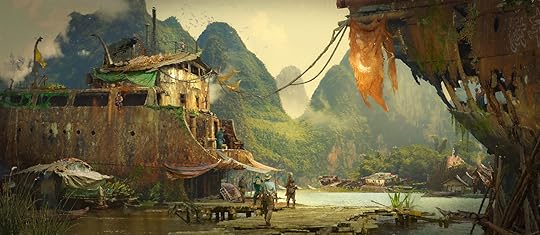
The Fabulous Riverboat, book two in The Riverworld series, continues to develop this constructed world of a millions mile long river and its resurrected occupants. Farmer leaves the quest of the first book’s protagonist, Sir Richard Burton, to focuses on another fascinating 19th century personality - Samuel Clemens, AKA Mark Twain. Clemens is driven by a dream of finding iron on this mineral-poor planet from which he can build a riverboat such as he piloted on Earth, to take him to the headwaters of the river. Emerging clues indicate that answers can be found to this confounding after-life, and Sam is a curious creature.
The Clemens we meet here is bitter, angry, and filled with guilt (pretty much real world old Sam Clemens). His ultimate motivation is to find those responsible for the mass resurrection of humanity, and to strike whatever blow he can against them in retaliation for bringing him back from the peace of the grave. With the help of a powerful "Mysterious Stranger", who may be a renegade member of the race responsible for this resurrection and Riverworld, Clemens is able to find the minerals he needs, and to form a colony dedicated to the project of building his fabulous riverboat.
Complications abound, however. The first and greatest is a partnership of necessity that Clemens must form with the deceitful and despicable King John Lackland, the most notorious of the old kings of England. Then there is the need to concentrate on developing the military might to hold and defend this unique area of the river that contains the minerals necessary to fulfilling his dream. And finally, there is Sam's personal, guilt-ridden agony over making the hard, amoral choices that have to be made if he is going to succeed in his quest.
This series strength is the opportunities its premise provides for historical persons from widely different periods to interact. In The Fabulous Riverboat we meet Lothar von Richthofen, brother and flying comrade of the Red Baron, Erik Bloodaxe, 10th century Viking leader, Odysseus, Cyrano de Bergerac, Hitler's toady Herman Goring, mountain man "Liver Eating" Johnson and more. Together with some well-drawn original characters, these make for a fascinating story.
Book two suffers less from stilted writing than did the first book, but great prose was never the reason to read Farmer. The characters and story are the strength of the book, and more than sufficient to provide both the thrills and intellectual stimulation to make reading it worthwhile.
After taking you on a thrill-ride of battles, assassinations, double crosses, and assorted intrigue, The Fabulous Riverboat leaves you with a cliff-hanging ending.
It is only fair to warn readers that the Riverworld series peaks with this book. Though the tale is incomplete, the mysteries unanswered, you may want to ponder whether or not to read on. Books three and four fall off sharply. Book five, which presented a reworked ending (series originally ended with book four) should only be attempted if you are a literary masochist.