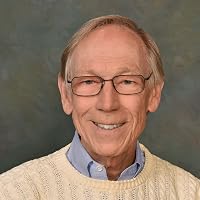
"Fireproof Moth" is a mystery worthy of fiction. That the memoir is true makes it hard to put down or to forget. When convinced that the secret police were going to arrange an "accident" to kill his friend, the missionary decided he had no choice but to help well known human rights leader Peng Ming-min escape from Taiwan. So successful was the getaway that when President Richard Nixon and Chinese Premier Chou En-lai met in Beijing two years later and wanted to know how Peng got out, neither of their vast intelligence systems could tell them. Even Generalissimo Chiang Kai-shek, who presided over Taiwan's Stalinist-style police state, went to his grave without knowing that a group of non-government novices managed to get Peng out undetected.
Milo Thornberry believed God called him to be a missionary to teach history and live the faith he professed. Taiwan wasn't his choice, but it was where the Methodist Church sent him at the end of 1965. "Fireproof Moth: A Missionary in Taiwan's White Terror" is an account of how becoming friends with Peng led to a double life, one in which Milo taught church history at Presbyterian seminaries, and the other in which he and his wife secretly collaborated with Peng and two of his former students in a variety of human rights activities, all of which were illegal and some of which were considered capital crimes under martial law. The constant threat of discovery by Chiang's secret police gave Milo his own taste of the White Terror. When police showed up at their door on March 3, 1971, Milo and his wife became the first missionaries arrested since the Nationalists took over the island in 1945. Although the Kuomintang leaked a panoply of charges to explain the arrest and deportation, Peng's escape and the Thornberry's other activities were not among them. Instead, officials in Taiwan reported them as terrorists. The line in Beijing was that they were CIA agents.
Although Thornberry did not suffer torture and imprisonment like Wei Ting-chao and Hsieh Tsung-min, nor Peng's twenty-year exile from his homeland, Milo was blacklisted by the U.S. State Department and denied a passport for nineteen years. Not allowed to resume his vocation as a missionary outside the United States, he completed his doctorate at Boston University, trained missionaries, and served as a pastor in Alaska and Oregon. His role in Peng's escape was not revealed until 2003 when Milo was invited back to the newly democratic Taiwan to be recognized for his human rights activities. Only in 2009 did he and Peng uncover the true reason for Milo's arrest thirty-eight years earlier. As a personal story, Milo's conflicts of conscience between ideals of justice, breaking the law, and being a guest in the country were not theoretical questions, but the daily cauldron in which he made his fateful decisions. As a political narrative, the author's portrayal of life in the White Terror casts an eerie shadow on contemporary relations between the United States, China, and Taiwan.
I'm only into chapter 3, but I am very excited about this book. It combines history, world affairs, suspense, and a personal story of a spiritual journey. I knew that Milo was a special person when, in transitioning to "retirement," he pastored my church in Chugiak, Alaska, for a year. I was hooked by the second line of his first sermon, delivered on the Fourth of July, paraphrased from memory here: If the 4th of July fell on a Sunday in 1776, would John Adams, Thomas Jefferson, and Ben Franklin gone to church? The short answer is 'yes, no, and maybe.' The long answer, as I recall, was just as intriguing as the short, and as reassuring as the short answer was entertaining.
Having just finished Peng Ming-Min’s Memoir “A Taste of Freedom” which highlighted his 1970 escape from the KMT Taiwan, this is a more detailed telling of the escape. When Peng wrote his book in 1972, he did not want to implicate any of the individuals who had helped in the escape, since they might be then subjected to torture, prison, or exile. Thomberry was one member of the amateur group that pulled off the planning and execution of Peng’s secret escape.
But the book is so much more. It provides a vivid sense of fear on the part of the author and his then wife, of the increasing frustration of having to fight his own country, the United States, to help people he saw in need for no other reason that they criticized the KMT leadership, in particular Chiang Kai-shek. It also put him at odds with the Methodist Church, which had officially aligned itself with Chiang’s regime and the US government.
Finally, he raises moral questions of whether and when it would be “right” to use force/violence to aid a cause. For him, this was important, and in retrospect he discovered he had unwittingly been involved in the potential use of force.
The author used effectively quotes from famous people at the start of each chapter. Many were inspiring. One of the chapter quotes that caught my eye was the following, in Chapter 14 Making It Happen, attributed to St Francis of Assisi Start by doing what’s necessary; Then do what’s possible; And suddenly you are doing the impossible.
Later, the author and his family were forcibly deported from Taiwan, and the author was refused a passport by the US Government for about twenty years after that.
He cited Reinhold Niebuhr several times. One statement in particular that struck me stated that “institutions by their nature do not have the capacity to act morally – to do the right thing when it conflicts with self-interest.” Thomberry’s example was the US’s desire, in the early 1970’s to accommodate the People’s Republic, and thereby threatening the de facto independence of Taiwan “by self-interest masked as the ‘greater good.’” He continues, “Individuals, argued Niebuhr, have the capability to act morally – to do the right thing even if it conflicts with their own self-interest.”
And as a message for our own time, I close quoting the final sentences of the book. “In Taiwan, a brutal and corrupt government [of Chiang Kai-shek] was enabled to stay in power due in no small measure to the support it received from the United States. I love my country and I loved the work the church had sent me to Taiwan to do, but my conscience didn’t allow the luxury of being politically uninvolved. By doing nothing, I believed I was putting my stamp of approval on what the U.S. government was doing there. As an act of faith, I chose otherwise.”
The book was written many years after the events of the late 60’s and early 70’s. In 2003 the author, along with others, was recognized by the new democratic government of Taiwan for his human rights activities in Taiwan. The memoir was published in 2011, long after the events it describes.
FB: A memoir of a silent hero, who tells a tale of the secret escape of dissident Peng Ming Min from Chiang Kai-shek’s Taiwan, relates his frustration of the complicity of both the US Government and the Methodist church of propping up that government, and struggles with the moral question of the use of force for “good.” He felt that his own religious views would not allow him to remain silent or inactive, and thereby putting a stamp of approval of the actions of the government or church.
Utterly fascinating, both from the perspective of Mr. Thornberry's path to missionary work, and this period of Taiwanese history. Questions abound: What is the role of outside powers (most especially the US)? When, and how, does one act ethically when these actions are considered treasonable by the host country? What of safety, you and your family, and those you are trying to help? Colonialism, patriarchy, revolution, religion... Lot's to chew on. And it is a story only recently revealed. I definitely recommend this book!