Jump to ratings and reviews
Rate this book

Silent Night: The Story of the World War I Christmas Truce

Rate this book
It was one of history's most powerful -- yet forgotten -- Christmas stories. It took place in the improbable setting of the mud, cold rain and senseless killing of the trenches of World War I. It happened in spite of orders to the contrary by superiors; it happened in spite of language barriers. And it still stands as the only time in history that peace spontaneously arose from the lower ranks in a major conflict, bubbling up to the officers and temporarily turning sworn enemies into friends. "Silent Night," by renowned military historian Stanley Weintraub, magically restores the 1914 Christmas Truce to history. It had been lost in the tide of horror that filled the battlefields of Europe for months and years afterward. Yet in December 1914 the Great War was still young, and the men who suddenly threw down their arms and came together across the front lines -- to sing carols, exchange gifts and letters, eat and drink and even play friendly games of soccer -- naively hoped that the war would be short-lived, and that they were fraternizing with future friends.

It began when German soldiers lit candles on small Christmas trees, and British, French, Belgian and German troops serenaded each other on Christmas Eve. Soon they were gathering and burying the dead, in an age-old custom of truces. But as the power of Christmas grew among them, they broke bread, exchanged addresses and letters and expressed deep admiration for one another. When angry superiors ordered them to recommence the shooting, many men aimed harmlessly high overhead.

Sometimes the greatest beauty emerges from deep tragedy. Surely the forgotten Christmas Truce was one of history's most beautiful moments, made allthe more beautiful in light of the carnage that followed it. Stanley Weintraub's moving re-creation demonstrates that peace can be more fragile than war, but also that ordinary men can bond with one another despite all efforts of politicians and generals to the contrary.

206 pages, Paperback

First published January 1, 2001

130 people are currently reading
4014 people want to read

About the author

Stanley Weintraub

178 books48 followers
Weintraub was born in Philadelphia, Pennsylvania, on April 17, 1929. He was the eldest child of Benjamin and Ray Segal Weintraub. He attended South Philadelphia High School, and then he attended West Chester State Teachers College (now West Chester University of Pennsylvania) where he received his B.S. in education in 1949. He continued his education at Temple University where he received his master's degree in English “in absentia,” as he was called to duty in the Korean War.

He received a commission as Army Second Lieutenant, and served with the Eighth Army in Korea receiving a Bronze Star.

After the War, he enrolled at Pennsylvania State University in September 1953; his doctoral dissertation “Bernard Shaw, Novelist” was accepted on May 6, 1956.

Except for visiting appointments, he remained at Penn State for all of his career, finally attaining the rank of Evan Pugh Professor of Arts and Humanities, with emeritus status on retirement in 2000. From 1970 to 1990 he was also Director of Penn State’s Institute for the Arts and Humanistic Studies

Ratings & Reviews

What do you think?
Rate this book

Friends & Following

Create a free account to discover what your friends think of this book!

Community Reviews

5 stars
1,112 (20%)
4 stars
1,637 (30%)
3 stars
1,948 (36%)
2 stars
507 (9%)
1 star
106 (1%)
Displaying 1 - 30 of 374 reviews
Profile Image for Paul Haspel.
726 reviews217 followers
December 15, 2024
“Silent Night,” with its slow, gentle, minor-key delivery of its Christmas message, may be the most melancholy of all the songs that are associated with the holiday season. Accordingly, the song provides a suitable title for historian Stanley Weintraub’s 2001 book Silent Night, as the book tells a previously overlooked story of how World War I combatants on both sides of the Western Front trench lines spontaneously put down their weapons and celebrated the Christmas season together. Against the backdrop of a time of year when people often indulge in easy talk of “peace on Earth,” these soldiers practiced peace on Earth.

Author Weintraub, an emeritus professor of humanities at Penn State University, has written a number of military histories relating to the two World Wars and the Korean conflict, making him well-suited to tell The Story of the World War I Christmas Truce (the book’s subtitle). The early part of the book tells how, by December of 1914, early German advances into French territory had bogged down along a battle front that covered hundreds of miles of trench lines. The war was only four months old; and yet – though no one could have known this at the time – those battle lines would move very little over the next four years.

But the soldiers on both sides knew that the promises that they had heard of a quick and easy victory were not coming true; and the coming of Christmas, the season that celebrates the birth of the Prince of Peace, reminded them how grotesque it was to be fighting such a hideous war in that season. The Germans, coming as they did from a country where Christmas traditions are particularly strong, placed decorated Christmas trees atop their trenches, and sang Christmas songs; and eventually, a few daring German soldiers, “after singing since daybreak, shouted for someone to arrange a ‘you no shoot, we no shoot’ day” (p. 25).

And thus, slowly and gradually, peace broke out along the Western Front, as soldiers on both sides later recalled it:

A German soldier named Rudolph recounted how one of his fellow soldiers in a rain-soaked trench “had produced a harmonica from a dry pocket. They began singing “Heilige Nacht” as if all was well. “After the third stanza, as we take a look over the parapet across to the English, we notice that they hearken to us attentively.” One battalion stood on its earthworks, cheered and waved its hats. Not only were the London Rifles attentive, according to W.R.M. Percy, who had left Prudential Assurance in Holborn to volunteer, [but] “The singing and playing continued all night, and the next day our fellows paid a visit to the German trenches, and they did likewise…” (p. 50).

Of course, not everyone was happy about this outbreak of peace, on either side of the battle line. Politicians and high-ranking military officers bristled with outrage at what they saw as a breach in military discipline. Even some ordinary soldiers at the front, “true believers” in their respective causes, opposed the Christmas truce and wanted to keep fighting. One Austrian-born corporal in the German army – a “distinctly odd” little man who “received no mail or parcels, never spoke of family or friends…and often brooded alone in his dugout” – raged against the truce: “Such a thing should not happen in wartime….Have you no German sense of honor left at all?” (p. 71). It will surprise no one to hear that this nasty little corporal’s first name was Adolf.

But for thousands of other soldiers, on both sides of the battle lines, the Christmas Truce provided a most welcome respite from the horrors of war. Soldiers exchanged gifts with their erstwhile enemies, held religious services together, and even – in one of the most famous elements of the Christmas Truce – set up sides, found impromptu pitches, and played some football matches (or soccer games, if you prefer). Weintraub remarks that

Whether a game of ‘footer’ actually occurred inside German lines is unproven, but references to football along the Flanders front are numerous. Unit histories are replete with reports of matches along their own lines, others played with the Germans themselves in No Man’s Land. One Highlander reported talking during the truce with a footballer from Leipzig who boasted of having been in Britain the year before with his home eleven, when they “beat Glasgow Celtic.” There is no record of the match, but he may have inflated their prowess. (pp. 101-02)

And that spirit of peace hung on with surprising force as late as the Third Day of Christmas:

On the morning after Boxing Day, thanks mostly to the weather, the pattern on the front remained one of tacit cease-fire in many areas. What Lieutenant John Wedderburn-Maxwell, who came late to it, on Christmas night, called ‘a soldier’s truce without any sanction by [field] officers and generals,’ was the shared feeling that the war would be decided at another place and time, and in another way – by some massive assault, or by negotiations after a wearing down of the desire of governments to continue a wasteful conflict. Since men in the trenches saw themselves…as only a sideshow which put them at useless risk, they preferred to make life at least marginally bearable. (p. 150)

Yet the Christmas Truce, perhaps inevitably, ended. Politicians and generals on both sides, wanting to see the war effort restored and carried forward to “victory,” took steps to ensure that the Christmas Truce of 1914 would not be renewed in 1915 or after. If war (as suggested in one definition I have seen) is the application of force by a nation or other belligerent party in order to gain certain political ends, then soldiers making peace with the enemy on their own represents, potentially, a breakdown of the entire process of war-making. War cannot be made if soldiers refuse to wage war; and in a haunting final chapter titled “What If – ?”, Weintraub wonders what might have happened if the spirit of the Christmas Truce had persisted, and even spread.

While “the fantasy world of alternative history” is always “an intriguing and illuminating, yet dangerous place to visit” (p. 161), it is impossible not to wonder what might have happened differently if that war had not ground on for another three years, with its vast cost in human life, and human misery, and economic and social chaos. Under those circumstances, would the world have drifted, in the same way, toward a second world war that would be even bloodier and more cruel than the first? Whatever one may think regarding such counterfactual scenarios, we can all agree that “The Christmas Truce reverberates with an incalculable sense of loss” (p. 169).

The story of the Christmas Truce is better-known nowadays than it once was, thanks in part to the film Joyeux Noël (2005), a British-French-German co-production that emphasizes the longing for peace among soldiers on all sides. Like this film, Weintraub’s book tells well this story of a peace arising in the midst of the horror and cruelty of war.

It makes one wonder: what if all the soldiers in all the wars everywhere simply put down their guns, deciding that nothing was worth killing a stranger just because said stranger is wearing a different uniform? It would be quite a thing to see, if the soldiers of some future war said to the politicians, and the generals, and the armchair patriots back home, what many a soldier in many a war has no doubt wanted to say: “If this war means so much to you, then pick up a gun and come down here and fight it out yourself.”

Like John Lennon’s 1971 song “Imagine,” Weintraub’s Silent Night invites us to imagine all the people living life in peace.
Profile Image for Lawyer.
384 reviews968 followers
December 20, 2014
Silent Night in No Man's Land: Christmas, 1914

Last night I had the strangest dream
I ever dreamed before
I dreamed the world had all agreed
To put an end to war
I dreamed I saw a mighty room
The room was filled with men
And the paper they were signing said
They'd never fight again

And when the papers all were signed
And a million copies made
They all joined hands and bowed their heads
And grateful prayers were prayed
And the people in the streets below
Were dancing round and round
And guns and swords and uniforms
Were scattered on the ground

Last night I had the strangest dream
I ever dreamed before
I dreamed the world had all agreed
To put an end to war

Ed McCurdy, 1950


 photo Christmas-truce_zps3ad78a0e.jpg
Christmas Day, Flanders, 1914


Where have all the flowers gone?
Long time passing
Where have all the flowers gone?
Long time ago-Pete Seger, 1955


There are no poppies blooming in Flanders' fields. It is winter. The ground has been churned to mud. Perhaps the last time anyone saw the poppies bloom was before the great war began in August, before the leave began to turn. When there were still trees.

Where have all the soldiers gone?
Long time passing
Where have all the soldiers gone?


It is nearing Christmas, 1914. Since the great war began a million soldiers have died. When will they ever learn? The generals, the Field Marshalls. Once again, the deadly efficiency of new weapons has overcome the outmoded tactics of previous wars. The soldiers on the front lines pay the price. Generals and Field Marshalls die in bed. It does not seem they ever learn. They do not pay the price.

May, 1970

I am seventeen. About to graduate High School. We have our Senior Banquet. I wear a blue blazer, pink shirt, white trousers, white bucks. I am thin, too thin, perhaps. The class song is "Those were the days." Mary Hopkins voice hauntingly floats over us all. We all sing with her.

Once upon a time there was a tavern
Where we used to raise a glass or two
Remember how we laughed away the hours
And dreamed of all the great things we would do

Those were the days my friend
We thought they'd never end
We'd sing and dance forever and a day
We'd live the life we choose
We'd fight and never lose
For we were young and sure to have our way.
La la la la...


I thought I would do great things. I would become a history professor. I had scholarships to the University of Alabama. If I didn't get drafted and sent to Vietnam.

We didn't think much about it. It hadn't touched us much. Jennifer's brother was shot down, flying a Phantom F-4. We didn't know why she went screaming down the halls when the principal called her out of class till later.

That business about the tavern. I had sneaked some Strawberry Hill out in the country. Didn't smoke. Had a 1963 Olds Rocket 88 with a big back seat. Never got past second base. But it was sweet. Someday. Maybe, if I didn't get shipped home in a box. We did have student deferments.

What if they gave a war and nobody came?
Why then the war would come to you!-Bertolt Brecht, 1930


The Christmas Truce, 1914

Peace is harder to wage than war.-Stanley Weintraub, A Stillness Heard Round the World, 1985


 photo Weintraub_zps77859591.jpg
Stanley Weintraub, Historian, Biographer

Although Weintraub is a historian down to his toes, he has written a moving account of the Christmas Truce of 1914. Weintraub leaves the reader reeling with a series of evolving and ever more powerful emotions as he unveils this riveting history. The truce comes alive through the words of those who were there. The truce lives in the letters and diaries of Englishmen, Scots, Germans.

This is a tale of sadness and hope. The men who recount these strange days in the midst of war are able to recognize the humanity in one another that exists no matter one's language, origin, or government. It is all the more amazing because it occurred almost sua sponte, as the result of the actions of the men in the trenches, of their own volition, something that sent shudders up the ranks of authority to the centers of their governments.

Christmas Eve, 1914

The Garwhal Rifles, a Regiment of Indian troops, noticed a line of lights appearing atop the German trenches across from them. They were the candles on Christmas trees. Earlier one of their number had written home, "It is more than horror, it is the end of the world." Though they did not have Christmas trees, the Indians thought the lights reminiscent of their Diwali, the "Festival of Lights." Strange, but there was a peacefulness about it all. In their Diwali, it was a time of forgiveness, new beginnings, and a time for the exchanging of gifts. For a short time, they would see all this happen.

"Thus, Christmas, the celebration of Love, managed to bring mortal enemies together as friends for a time...I told them we didn't want to shoot on the Second Day of Christmas, either."--from the diary of Kurt Zemisch, 134th Saxons

"I wouldn't have missed that unique and weird Christmas Day for anything. ... I spotted a German officer, some sort of lieutenant I should think, and being a bit of a collector, I intimated to him that I had taken a fancy to some of his buttons. ... I brought out my wire clippers and, with a few deft snips, removed a couple of his buttons and put them in my pocket. I then gave him two of mine in exchange. ... The last I saw was one of my machine gunners, who was a bit of an amateur hairdresser in civil life, cutting the unnaturally long hair of a docile Boche, who was patiently kneeling on the ground whilst the automatic clippers crept up the back of his neck."

Signs appeared above the trenches on both sides of the lines. "Merry Christmas." Carols were sung. Troops poured out of the trenches and met in No Man's Land. They shook hands. Exchanged souvenirs, gifts, newspapers. The rain that had turned everything to mire had stopped. It turned cold and clear. There was a hard freeze. War took a holiday.

Christmas Day, 1914

It continued the next day. Christmas day. In different ways. Some units helped one another bury their dead. In other areas, men continued to mingle freely, exchanging gifts. There were seemingly incredible small world moments, an Englishman recognizing his former German barber who had been called home to serve the Fatherland. Regimental histories recorded soccer matches occurring in No Man's Land.

 photo SoccerTruce_zps2518444a.jpg
Footers, English and German, play the game

Boxing Day, The Second Day of Christmas, 1914

The truce remained in full force, though the upper echelons were beginning to rumble.

"Dear Mother, I am writing from the trenches. It is 11 o'clock in the morning. Beside me is a coke fire, opposite me a 'dug-out' (wet) with straw in it. The ground is sloppy in the actual trench, but frozen elsewhere. In my mouth is a pipe presented by the Princess Mary. In the pipe is tobacco. Of course, you say. But wait. In the pipe is German tobacco. Haha, you say, from a prisoner or found in a captured trench. Oh dear, no! From a German soldier. Yes a live German soldier from his own trench. Yesterday the British & Germans met & shook hands in the Ground between the trenches, & exchanged souvenirs, & shook hands. Yes, all day Xmas day, & as I write. Marvellous, isn't it?"-Private Henry Williamson, Age 19, London Rifle Brigade

 photo BoxingDay_zpsc69d9e7a.jpg
German soldiers of the 134th Saxon Regiment and British soldiers of the Royal Warwickshire Regiment meet in no man's land, December 26, Boxing Day, 1914

Letters, uncensored at the time, were sent home. The letters were forwarded to newspapers where they were reprinted. The Christmas truce became public news.

Might the "Truce" be the beginning of the end of the war? It might have been. But, as we know, it was not. Strict orders were passed down from the highest command of all powers that any form of fraternization would be strictly disciplined. Any soldier found in possession of material belonging to another power was subject to punishment.

Not all soldiers and officers at the front during the Christmas truce of 1914 approved of it. No one should be surprised that the young Adolph Hitler did not. Hitler, a Corporal, had been awarded the Iron Cross, Second Class by Kaiser Wilhelm personally. In Mein Kampf, Hitler described the occasion as the happiest day in his life. Regarding the "Truce," Hitler said, "Such a thing should not happen in wartime. Have you no German sense of honor left at all?"

By New Year's, 1915, the Christmas truce was effectively over. It would continue until November 11, 1918. The death toll of combatants was four-thousand-six-hundred per day.

August 31, 1970

Well, come on generals, let's move fast;
Your big chance has come at last.
Now you can go out and get those reds
'Cause the only good commie is the one that's dead
And you know that peace can only be won
When we've blown 'em all to kingdom come-Country Joe McDonald, 1965


I turned eighteen on August 31, after I graduated from high school. My grandfather told me we had somewhere to go that morning. "Where," I asked. We were having coffee at the kitchen table. He shook his pack of Camel unfiltereds in my direction. His signal he had something to say. I took the cigarette that popped out the end of the pack, pecked an end of it on the placemat to pack the tobacco down and lit it with my Zippo.

"Well, Son, first we're gonna get you a haircut."

"I've been working. All summer. Like you wanted."

"Yes, you have. Stuck it out. All the men say you worked hard."

"So, what's up?" I knew what was up.

"You get your draft card today. Not going down there like a hippie."

It was the only fight we ever had. I got my hair cut. Got my draft card. Was always opposed to the war. My hair grew back and over my collar. I joined the Student Mobilization Committee. There's a yellowing photograph of me on the cover of the college paper on the steps of the old Student Union during a protest. I'm with Vietnam Veterans Against the War. A curious mix, some thought. But I was never against the soldiers.

As to the Class of Seventy, in due time, the war began to touch it. The lonely ones. The outcasts. The guys on the top row at the pep rallies. The ones on the smoking court. The fellows that didn't give a flip about their grades that took the vocational courses because they never planned to go to college. No deferments for them. First to go. Their names are on the wall in D.C. and on the monument downtown in front of the Courthouse.

Me? I was a fortunate son. Even though I was no Senator's son. I did not become a history professor, but a lawyer. I remain a student of history.

When will we ever learn? Probably never. But we can hope.

Why not Five Stars?

It's a beautiful read. One that will haunt the reader, linger in the memory long after the final page is turned. BUT...Weintraub engages in a lengthy chapter, "What if?" This chapter dulls the impact of the narrative that precedes it. It is an exercise in alternative history. What if a peace had been reached as a result of the Christmas Truce? While such exercises can fuel many a speculative conversation, we can hypothesize from now till death do us part. Would a Germany reaching a peace that left it in substantially all of the territory it occupied have prevented the Third Reich? We'll simply never know. The acts of those who were participants in the Christmas Truce should not be diminished by an anticlimactic exercise in speculation.

So....4.5 Stars. Highly recommended.

EXTRA!

For a Magnificent Film about the Christmas Truce, I highly recommend "Joyeux Noel" which my wife and I watch each year.
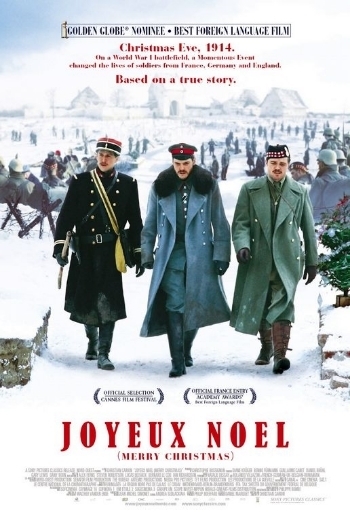
 photo joyeux_noel_zpsee8332c4.jpg

Soundtrack

A Collection of Protest Songs

Last Night I Had the Strangest Dream

I Ain't Marching Anymore

Where Have All the Flowers Gone

Blowing in the Wind

Seven O'Clock News Silent Night

You're the Voice



Profile Image for Meara Breuker.
9 reviews
February 26, 2014
I cannot understand why this book has such high ratings. It's an interesting topic that could have made for a compelling book. The book could have benefited greatly from a discussion of geography, as not all of us intimately know the places described in the book. In addition, a discussion of the different groups of soldiers (Saxons, Westphalians, Prussians, etc.) and a brief history on their backgrounds and conflicts and where they hail from would have been helpful. A map of the front and a list of all the companies and such on each side by country would have helped, too.

As it is this book reads like a list of seemingly identical occurrences. It is monotonous and repetitive. And when I got to the end and the author stepped completely away from history into an opinionated and abbreviated scenario of "what if?" he totally lost all credibility.

My advice, read something else.
Profile Image for Sue.
1,438 reviews650 followers
December 28, 2014
The Christmas Truce has lingered strikingly in the
memory even when its details have disappeared into myth.
What began as "the Wonderful Day" to its participants
remains a potent stimulus to the creative memory. Christmas
1914 evokes the stubborn humanity within us, and suggests
an unrealized potential to burst its seams and rewrite a
century. It lives also in the sardonic soldier exchanges
in Oh! What a Lovely War! and even in the fantasy
encounters of the intrepid Snoopy and the Red Baron, in
which chivalry wins out for a brief moment over rivalry.

(p 173)

In Silent Night, Stanley Weintraub presents the history of Christmas, 1914 along the stalled front lines of war. Using excerpts from letters home, later interviews with combatants from the German, British and French armies as well as reporting done at the front and records of orders sent to the front, he reconstructs the apparent spontaneous acts of camaraderie that "broke out" at various times and places from Christmas Eve through to New Years, 100 years ago this week. The Truce appeared largely initiated by the Germans and accepted by their opposites, possibly more readily by the British than the French. Details seemed to vary by location, but they all practiced the direct ignoring of orders sent from commanders to get on with the job of war and killing.

There is so much detail here, perhaps too much at times--my only complaint is that the degree of detail with the listing of the various military units involved in each setting becomes a bit tedious. The other side of this coin, however, can be that there were times in the past that the Christmas Truce was considered a myth, so Weintraub has backed up his history with all details necessary. He also provides a section of sources at the back of the book as supplement.

It is difficult not to wonder what might have happened had the soldiers simply decided not to return to the war, but haven't we been wondering that with every war since (and probably before). Certainly I recall a popular saying from my younger days to the effect: what if they gave a war and nobody came?
Profile Image for Samantha.
Author 20 books420 followers
December 14, 2014
The WWI Christmas truce is a historical phenomena that has sadly begun to fall from general knowledge. Prior to the heavy losses of the Somme and decades of animosity that would result between German and British forces, the unofficial Christmas truce in 1914 demonstrated that few ordinary men were, at that time, interested in killing each other.

I have read several novelized versions of the truce, which really did a better job of painting a picture of what it was like to experience this unique ceasefire and holiday celebration. While I learned a few factual tidbits from this book, I was disappointed in the confusing, disjointed method of narration.

Rather than telling one cohesive story, the author chose to collect short testimonies of the days surrounding Christmas 1914. The lack of organization and inclusion of fictional portrayals of the truce made the narration difficult to follow and frustratingly repetitious.

The final chapter holds a rambling tangent on how the world may have been different had those involved in the Christmas truce "stuck to their guns" and refused to fight further. Had WWI ended then and there, the author wonders, would the US be a modern world power, would the Holocaust have happened? I don't know, but I thought that this chapter made unusual and unnecessary statements about the supposed future we could have had.

This topic is a valuable one to visit as we sit comfortably in our warm homes next to beautiful Christmas trees. The contrast between my own setting and the men I was reading about struggling in mud and cold was stark, and I enjoyed this reminder that leads to thankfulness during the Christmas season. Unfortunately, I wish this had been better written and organized.
Profile Image for Nick.
745 reviews132 followers
January 17, 2024
The World War I Christmas truce is one of those events I have heard about for years with only a cursory knowledge of the facts. So when I spotted this book at Half-Price Books, I knew I had to snag it. I’m glad I read it, but it was a slog to get through.

What this book did well was offer a multitude of firsthand accounts from journals and letters. Unfortunately, it all started to sound the same after a while. It became difficult to know what was new information and what was a rehash of the same event from someone else’s eyes. In the end, I guess, you have a full sense of the array of experiences British, French, and German soldiers had in December 1914.

Three chapters in I found myself wanting to skim, but it was difficult to do so well. The last chapter and the epilogue were much more interesting. The seventh chapter, entitled “What if—?“ was a fascinating mental exercise in what would have played out in world politics, if the unofficial truce had ended the war.

“But what if –? Had the war ended abruptly with the Christmas truce one enters the fantasy world of alternative history. It is an intriguing and illuminating, yet dangerous place to visit.“

If I am rating this, it is only from an experiential point view. I found myself struggling to maintain an orderly sense of the events, and was plagued by feelings of déjà vu, as page after page restated the same types of things. However, there were new nuggets of info throughout, and some excellent quotes that I will probably use later. in the end, the last chapter and the epilogue elevated it a half a star. So, all in all, I would rate this 3 1/2 stars.
Profile Image for Chris.
178 reviews9 followers
March 2, 2019
My first exposure to the WWI Christmas Truce was when I saw the foreign movie Noel many years ago. The concept of an unsanctioned wartime truce between soldiers in the midst of a brutal world war was something I was immediately infatuated by, for how often does one hear of such things happening today – or ever, for that matter? The movie perfectly captured the emotion of the event, but I was reluctant to believe in its authenticity, for movies are, of course, known for exaggerating the truth and dramatizing historical events to the point where they no longer resemble reality. Thus, I sought out a copy of Silent Night: The Story of the World War I Christmas Truce in order to learn exactly what took place on that fateful Christmas day from a historian's perspective.

I will say, right off the bat, that Silent Night is a very well researched account of the 1914 Christmas Truce. Stanley Weintraub recounts the events leading up to the truce, the truce itself, and the aftermath of the truce, all in stunning detail which would rival most textbooks on the subject. The level of detail in this book is so in-depth that it can oftentimes feel a little bit overwhelming to readers whose contextual knowledge of WWI is less than expansive. If you fancy yourself a history buff, especially for WWI, then this book will be right at home in your hands. For those readers who are less in-the-know regarding the Great War, however, getting through this book may be a bit of a daunting task. Although Weintraub's attention to detail is highly commendable, I felt that the abundance of information, at times, overwhelmed the greater narrative at hand – that of the truce itself. That is to say, the book would have benefited greatly if it had restrained itself to some degree regarding every little detail – including that seemingly insignificant – and instead culled only the most pertinent aspects of this historical moment. Though Weintraub prides himself on giving readers the most in-depth account of the truce to be published, the average reader would have undoubtedly enjoyed the book more had the focus been on the extraordinary camaraderie between enemy forces on one of the most significant holidays of the year rather than making such a strained effort to include such menial details that, although would appeal to the historians, do little for regular readers such as myself.

When it had a clear focus and ran with it, one of Silent Night's best strengths was in is its alternating perspectives. This book does not simply chronicle the events of that truce like a typical history book. Rather, this book explores the human element to great lengths, taking care to include detailed accounts from the soldiers on the front lines of both sides. We get to follow several soldiers – British, German, Scottish, Indian, French – as they each experience and process the absurdity of the truce in their own unique ways. Through this lens, the reader can better come to realize that, though we may fight for opposing sides, we are not that different from one another after all. Fraternization between the British and the Germans, in particular, demonstrated their similarities to such a degree that I felt like they were on the same side at times despite being embroiled in a terribly vicious conflict. The juxtaposition of human kindness and generosity over a war-torn backdrop littered with dead bodies and blood gave the whole event a chilling feel; a feeling which the book encapsulated quite well through its varying viewpoints. If you want more out of your history book than the typically unfeeling recollection of the past, then Silent Night will be right up your alley, providing both a great deal of history whilst simultaneously telling a timeless story of the human condition.

For those interested in exploring alternate history, Silent Night's “What If?” chapter will appeal to you. In it, the author speculates about history beyond WWI had the truce held firm and ended the war right then and there. Imagining how the world today would be if WWI ended so quickly is both fascinating as well as poignantly haunting. All the lives that could have been spared from the horrors of the Holocaust and WWII immediately come to mind, for were it not for Germany's complete and utter defeat by the Allied forces and its subsequent humiliation on the world stage, a figure like Adolf Hitler may never have come into power to bring about such a catastrophic war and genocide. For as interesting as the truce itself was to me, thinking about the “what if?” component of it all proved just as entertaining, if not more so, due to the wealth of rich potential which lay in such historical contemplation.

In 1914, in the midst of the First World War, soldiers from both sides came together to form a temporary truce on Christmas day in order to honor the sanctity of that holy holiday; the spirit of Christmas had never before been as robust as it had been on that fateful day during one of the world's most devastating armed conflicts. Men who had just days before been killing one another came together to shake hands, exchange gifts, sing together, play soccer, and make plans to meet up again once the war was over. Although this momentary time of peace had its detractors, the ceasefire largely held up across the front lines in Europe, proving that human compassion has the power to win out over hatred no matter the adversity. Even though this temporary respite from the Great War did not result in a more permanent end to the bloodshed, the lessons of the truce reverberate to this day to teach us all that human virtues – kindness, generosity, empathy – never stray too far out of mind, for if such fraternal displays could occur during a world war of all times and places, then surely human solidarity can thrive at any time, in any place, with any group of people, regardless of the adversities we face as one family of beings. If you want to indulge in this Christmas tale of the heart, I would recommend Silent Night: The Story of the World War I Christmas Truce to true history buffs and sentimental believers of the human spirit; though the book may have only garnered three stars out of me, the event itself is entirely worthy of five stars.
Profile Image for Caroline.
515 reviews22 followers
January 21, 2013
The Christmas truce of WWI has gained fame through movies and historical fiction but how does one separate truth from fiction? This is a wonderful work based on research of journals and letters written by the soldiers and officers who were there when it happened.

Only a few months into the First World War, troops from Scotland, India, Germany, France, Prussia, England and Belgium on the rain soaked battlefields of Flanders were already sick of the soggy, cold and muddy conditions of war. They were in the front line and under constant fire from, their trenches were constantly flooding, they had nowhere dry to sleep, rats were running around, they were surrounded by filth and now dead bodies of their fallen comrades.

By tacit understanding and overtures started apparently by the Germans who took Christmas extremely seriously and were shipped little Christmas trees which they lit with candles and then placed on their parapets, there was less fighting in the days coming up to Christmas Eve. Some soldiers clearly started to adopt a live and let live attitude to the war, trading vocal insults with the opposite enemy but without much heat behind their words. Then signboards with Christmas greetings went up and responded to by the opposite side. Some soldiers and officers gradually stood on their parapets, clearly unarmed, and asked for a truce to celebrate Christmas Eve and Christmas Day. They understood that the war would have to resume at some point, but they just wanted to celebrate Christmas and to bury their dead.

I had previously thought that the Christmas Truce took place only between a particular German troop and an opposing English platoon. It came as a surprise to me to learn that this truce was conducted across multiple sections of the Flanders and between the Germans and some of their enemies even up to New Year's. Not all embraced the truce and there were a few French and German officers who spurned overtures.

The emerging stories highlighted that decisions for wars are often decided on by leaders sitting far away from the action while those on the front line bear the worst consequences of their decisions.
Profile Image for Sara.
401 reviews2 followers
July 28, 2016
It is with awe that people speak of the unprecedented Christmas Eve truce amongst those all along the Western Front in 1914, the first winter of World War I. Nothing like it had ever been seen before or since. The German troops risked life and limb to place their Christmas trees along the parapets and trenches. Guns fell silent, replace by the sound of voices raised in harmony to sing carols. Men from oppossing forces came together,, crossing into No-Man's Land to exchange gifts of cigarrettes and Christmas treats sent from home. It is a singularly unique event in the history of war.

This makes for a fascinating topic, but sadly a not so fascinating book. The book is simply a collection of anecdotes, letters from or to soldiers, fictional accounts of this event, and memories of the soldiers who were there, even references to soongs in which it is mentioned (think Snoopy and the Red Baron). While at first this was interesting, by page 50 it had become quite repetitive. By page 175 it was tedious. Thanfully that was the end. The book is very well-researched with a thorough bibliography. I really wish I could have rated this book higher. I wanted to like it, but in the end it just didn't work for me.
Profile Image for Johanna Lehto.
218 reviews38 followers
January 5, 2022
Didn't knew about this un-official truce before watching the video from the Historic Travels- channel.

Interesting book about an unbelivable event! That an event like this could have happened is so unimagenable!

It truely was "A Christmas miracle"
-Sam Pence aka. Historic Travels

This book by Stanley Weintraub was a very informative and interesting. A lot of reasarch was put and sources in forms of personal letters from soldiers to interviews etc. was put into the book.

It's sad to know that how the events will be later on in the war. Nothing like that Christmas truce in 1914 might never happen again in a war...
Profile Image for Jeff.
287 reviews27 followers
December 12, 2024
The magic of Christmas reveals itself in Silent Night; or maybe it's just the futility of war and the frustrations of stagnation.

Stanley Weintraub tells the story of the pause in action over several days in December, 1914, along the front line in France. It's a different kind of holiday tale, evoking feelings of both hope and sorrow.

Very well written, and with no noticeable editing errors, Silent Night places the reader in the trenches, up to their knees in mud, and in No Man's Land, exchanging gifts with the enemy. The reader feel the risks taken as the truce slowly comes about, and can see the Weihnachtsbäume on German parapets.

The book relies too much on legends, pop culture, and fiction for my taste, but there may just not be enough first-hand accounts available for a purely non-fiction account, which the Weintraub acknowledges in his Sources.

After a chapter on makeshift football matches, joy mostly takes over the story. But then killing inevitably resumes, creating a glaring contradiction that is hard to process in written form; impossible to understand how a soldier could face it.

The final chapter is titled "What If---?," and delves into an alternate future of hypotheticals. That's also something I try to avoid, but the chapter is a short one, and doesn't spend too much time on guesswork. Even so, it seems a moot point to me, since there was never a chance the peace would hold: It happened from the bottom up, and was never approved by those in charge far away from the front. If peace was attainable with such gentle motivation, the First World War would never have started.

The magic of Christmas, or just boredom and exhaustion in the trenches?
Profile Image for Rebecca Hemphill.
145 reviews38 followers
December 22, 2019
It was very factual. Lacked any emotion. The story was great, but the writing was hard to get through and some things were repeated a few times.
Profile Image for Tarissa.
1,580 reviews83 followers
January 16, 2021
What an interesting topic to read about. This title has actually been on my TBR list for a few years, but I finally decided to read it after Christmas this year. So glad I did! The history is pretty intriguing to read through.

It shares several accounts of the informal peace treaty that took place all along the frontlines of battle during Christmas 1914 in World War I. Food was exchanged between enemies. Men saw each other as men. There were even football (soccer) games held. Musical concerts were held on both sides. The author pieces everything together in a way that kept me going. Great book!

Recommended for: Adults
Suitable for: 13 and up (for a few instances of coarse language and some minor violence)
465 reviews17 followers
April 25, 2019
This is a plain, but well-researched history of the "Silent Night", the spontaneous truce initiated (largely) by the Germans on the first Christmas of WWI. Some of the complaints I've read about it are true, in the sense that you have to kind of know what WWI was, the significance of Flanders field, the horrors of trench warfare, and so on. It's not a WWI primer. And I'll say that the book those people want would be a very cool book, too.

But there's something very winning about relying on primary sources. It means that we're spared Weintraub's opinion, for the most part, and given the opinions of those on the ground. It means that, while we don't get a simple, charming narrative, we do get the truce in all of its complexities, breakdowns, flaws and so on. This is a fine thing.

After presenting the complexity both in the build-up and break-down of the truce, Weintraub engages in some sketchy what-if-ism which, while interesting, made me glad he had let the troops (and others of the time) speak for this.
Profile Image for Jeanne.
698 reviews40 followers
November 17, 2018
I read this book for my November book discussion group, where we all were told to choose any book written about WW I. I had seen the movie "Joyeux Noel" which is a fictionalized account of the Christmas truce that sprang into being along the trenches of 1914 Flanders. The movie is one of the most beautiful films I have ever seen. That is why I chose this book. However I am a fiction fan, and I found the non-fiction book a difficult read. I am glad to have read the piece because the subject matter engrosses and inspires me, but the style of writing in this non-fiction history was not my cup of tea.
That being said, I would absolutely recommend this book to history lovers, to those interested in WW I, who enjoy non-fiction.
Profile Image for Tom.
140 reviews4 followers
January 4, 2010
Its become a common theme of my reviews to say this, but, yet again, its the best way to describe what I just read: There just was not enough information here to fill an entire almost 200 page book. This is a magazine length story lengthened to book length by overuse of quotes, overly minor details, counterfactual speculation, and undeveloped ruminations on the paradoxes of warfare.

Mixed in with all of that excess baggage, there is a nice human story. Warring parties mingling to play soccer and swap rations. Thats good stuff. Too bad Weintraub serves that little bit of tasty meat with platefuls of stale bland rice.
9 reviews1 follower
February 6, 2011
Cory Mortell 2/4/11
Silent Night: The Story of the World
War I Christmas Truce by Stanley Weintraub

The Christmas Truce that occurred during World War I in 1914 is one of the most memorable and amazing events in the history of war. Stanley Weintraub’s Silent Night depicts this event in detail from his own knowledge, diaries, journal entries and other records from actual soldiers in the war. I enjoyed reading this book a lot, and it also helped me get a better grasp on the history of the World War I and this time period. Though, Weintraub’s evaluation at the end of the book may be wrong in some cases, his factional information that he presents, shows what really happened during the Christmas truce and after it, not what could’ve happened without it. If I didn’t read this book I believe that I wouldn’t look at the heart of a soldier the same as I do now.
This story takes place in the early part of World War I in December 1914, mainly between the nations of Germany, France, Britain, and Russia. In this book Weintraub tells of the truce that the soldiers of opposing countries would endure on Christmas Eve and Day. The book starts off with talk of a truce between the Germans and the British, and they eventually agree that on Christmas Eve and Christmas day there will be no fighting. Throughout the ranks and companies there are many other instances and stories of this happening. During this pause in terrible war and death, generals and soldiers would go out into “No Man’s Land” and “fraternize” with the enemy by exchanging tobacco, coffee, beer, newspapers, and most of all Christmas carols. Soldiers from opposing sides would sing out Christmas carols with passion, such as “Stille Nacht, heilige Nacht” (Silent Night, Holy Night) and cheer for each other with much joy. Along with this they would have massive “Football” (soccer) matches and help bury each other’s dead. Even though most soldiers never wanted this truce to end, their head generals and officers forbid fraternization towards the end of Christmas. Right after Christmas ended so did the truce and the soldiers went right back to fighting, with more blood and casualties then ever. This would continue until 1918 when World War I would conclude. After finishing his tale of the Christmas Truce Stanley Weintraub concludes this story by questioning “What if the Christmas Truce” was successful and did end the war. He goes on to talk about what he thinks would’ve happened such as “women...being deprived of the opportunity to replace men in the workforce.”(168, Weintraub), along with many more conspiracies. In reading this book he does a great job of expressing the happenings of the Christmas Truce.
Stanley Weintraub’s Silent Night is a historical narrative that grabbed my attention well, through the different sources he uses from actual soldiers during the war. These sources are from newspapers, journals, letters, diaries, war records, and books, most of which written by soldiers. For example in chapter 4 Weintraub puts in a quote from Lieutenant Albert Winn of the Royal Field Artillery saying that “ We (British, French and Germans) played football in No Man’s Land and by midnight, the shells opened up and we were at it again.”(104, Weintraub) This was an actual piece written from this lieutenant in the war. In reading and analyzing this book I could not find a bias against any group of people or event. With that, from the last chapter and the rest of the book, I got a good grasp on his reasons for writing this book. One reason I believe is to stress the fact that “human feelings continue to go on even, when men do not know anything but killing and murdering.”(144, Weintraub) As Corporal Josef Wenzl put it, during his experiences in the Christmas truce. Another major reason why I believe he wrote this book is to show how big of an event this was and without it many things would be different. Even though this was without a doubt a big deal, he believes much more would’ve happened without it, such as “the refugee scientists so much a part of American breakthroughs in physics and chemistry might have remained productively at home in Central Europe.”(166, Weintraub) Which is a stretch and I do not agree with this because I think even if Europe were to benefit from a truce in World War I scientists would’ve still come to the U.S.A in search of a better environment for their studies. Even with this, in this book I believe the pros outweigh the cons, and in my opinion was an enjoyable book.
Prior to reading this book I did not know much about World War I and I had never heard of the Christmas truce. When finishing, I had a better grasp on the origins of World War I and I understood the Christmas Truce perfectly. For example one specific thing I gained about World War I was that there were many more countries involved than I thought there was. More specifically Russia, France, Britain, UK, USA, Australia, and Canada were all engaged in battle. Similar to Corporal Josef Wenzl, I learned more deeply that even in war when people are killing each other, the best traits and natural feelings still show in a person. This was proved through every aspect of the Christmas truce, in how for one night and one day the killing and murdering of the enemy stopped with peace and joy and twenty four hours later the brutal killing started again. Along with this, one surprising thing I learned was that the Christmas Truce and World War I helped the spread and love for the game of football (soccer). During the truce many soldiers would participate in football games with the enemy. One example of this in the book is when Kurt Zehmisch of the 134th Saxons is quoted “The English brought a soccer ball and soon a lively game ensued. How marvelously wonderful yet strange it was” (105, Weintraub). As you can see, this book represents an indirect examination of human nature and still provides a great storyline.
In my opinion the Christmas Truce of World War I in 1914 depicted by Stanley Weintraub’s Silent Night, is one of the most amazing events in the history of war. The thought that people who are killing each other can come together in peace for any amount of time is truly inspiring. With that, this book kept me very interested throughout reading it and I learned a lot from it. I would recommend this book to anybody who is looking to further there knowledge of World War I, The Christmas Truce, or just to enjoy a good book. As long as war and humanity continue on earth, the story of the World War I Christmas Truce, expressed ever so clearly by Stanley Weintraub, will live on forever showing the true nature of a soldier.
Profile Image for Stephen.
1,943 reviews140 followers
December 8, 2020
One of the most extraordinary stories to come out of the Great War is that of the Christmas Truce, a spontaneous outbreak of caritas in which English, Scottish, and German soldiers decided to stop fighting in observance of the holiday. It's a bit difficult to sing about peace on Earth, and goodwill towards men while lining up artillery shots on them. The peace was not one ordered or condoned by leadership, but one that stemmed from the fighting men's own moral convictions, and recognition of the insanity of this conflict that was only a few months old. Why should an English machinist want to murder a German baker, or a German longshoreman do violence to a French carpenter, just because some old ass with a mustache said? Let the Asquiths and Wilhelms live in the mud and dodge rats and kill each other if they want war.

Silent Night is replete with heartwarming anecdotes about men recognizing one another as fellow Christians and laying down their arms, sometimes advancing into the unknown middle ground with gifts in hand and only sweet hope defending them from the other side's bullets. As such, it makes splendid Christmas reading for those who enjoy history: as a history book in its own right, however, it's short on context and general narrative. We just read about one instance after another until at the end, Weinstraub goes into an interesting bit of alt-history speculation, pondering what might have happened if Christ had triumphed over Caesar and the Christmas Truce had led to a general armistice and peace talks. There's no connections drawn to Christian pacifism or anything like that, just the record of instances. What I most appreciated about the history, though, was recognizing that the Christmas truce was spontaneous and bottom-up: fighting simply petered out, and as different sectors fell quiet and began to get chummy with the other side, other units took inspiration from that and observed the spirit of Christmas as well. (And observe they did, with singing, drinking, and gift-giving!)
Profile Image for Tamara Evans.
1,019 reviews47 followers
December 7, 2023
“Silent Night: The Story of the World War I Christmas Truce” is a nonfiction book shedding light on a the powerful yet forgotten story of a truce between German, British, French, and Belgian soldiers on Christmas Eve and Christmas Day during World War I in December 1914.

The book consists of an introduction, seven chapters, sources, acknowledgments, and an index.

Prior to the introduction, a map in shown of The Western Front on Christmas 1914.

In the introduction, the author, Stanley Weintraub, presents three myths that arose during World War I (also known as The Great War) which were Russian soldiers arrived in England with snow on their boots, in France spirits appeared to cover retreating British soldiers, and lastly, in late December 1914, opponents in the West laid down their weapons and celebrated Christmas together in a gesture of peace on Earth and good-will to men. The introduction ends with a group of nine British soldiers reuniting in 1999 to recreate the unusual occurrence so many years ago are surprised when local villagers permanently memorize their makeshift war memorial. This occurrence was dismissed in official histories, remembered only by those who lived through it.

In chapter one, “An Outbreak of Peace,” Weintraub writes of the experience on the battlefield known as “No Man’s Land” of Belgian, French, British, Prussians, Saxons, Bavarians, and Westphalians and the dire conditions in the war trenches. As the war progresses, German soldiers make the first step in establishing a temporary truce to celebrate Christmas Eve and Christmas Day. Soon the German and British soldiers sing Christmas songs, exchange a gift of sausages and chocolates and meet face to face sharing a bottle of alcohol.

In chapter two, “Christmas Eve,” Weintraub describes how the news of the Christmas truce quickly moves up through the ranks, German soldiers creating a Christmas tree, singing “Silent Night, Holy Night,” soldiers remember what it took to create the impromptu Christmas held on the battlefield including writing letters to girlfriends back home, friendly insults, exchanging holiday greetings, and even returning a religious relic to Belgian soldiers. Although some soldiers were initially apprehensive of German’s calling for a Christmas truce, the opposition is eventually softened when hearing holiday songs sung and gifts are exchanged. As the army command becomes notified of peaceful gestures by German soldiers, those responsible are replaced.

In chapter three, “The Dead,” Weintraub describes how the dead were disposed of on the battlefield. Sad to read how at the time, collecting buttons from dead opponents were popular among both British and German soldiers. During the Christmas truce, respect is shown as both British and German soldiers take a break from fighting to bury their dead and any shooting during that time would not be met with aggression and the offending person would apologize. In addition to jointly burying soldiers from the opposition, there was also a makeshift church service held in English and German. The truce was written by the French as something only done between the British and Germans and the French did not participate in the truce except to jointly bury their dead. Most interesting to read about Adolf Hitler’s time as a solider and him being awarded the Iron Cross, Second Class due to saving his high commander and his lack of participation in a temporary Christmas truce with the British. The chapter ends with a solider writing in his diary the magic and beauty of the Christmas truce and how unbelievable the occurrence was.

In chapter four, “Our Friends, the Enemy,” the German soldiers singing a song in perfect English and the English soldiers responding by meeting the German soldier half way much to the anger of some commanding officers. Although some captains were hopeful that another similar truce would be made on New Year’s Day, this was not meant to be. Fascinating to read of impromptu Christmas dinners and stories of soldiers sampling enemy rations as well as their own. The chapter ends with the description of a musical concert orchestrated by a German soldier as well as lyrics from a ballad recalling how during the truce, all the soldiers temporarily forgot they were at war.

In chapter five, “Football,” Weintraub discusses how during the Christmas truce, German and British soldiers exchange address with plans to write each other after the war, as well as football (soccer) match with the game ending in a draw. A children’s book “War Game” is written by Michael Foreman is created depicting the football match for young readers. The chapter ends with the mention of a reenactment of the Christmas truce football game in 1999-2000 at a diorama in the Football Association Premier League Hall of Fame.

In chapter six, “How It Ended,” discusses the Christmas truce ending by orders and threats with random acts of violence. Despite battle resuming, enemies discover common ground as having come from children, being born German but growing up in Britain, and have known each other as a former employee and customer. Higher ups believe that you can’t interrupt “freedom” on account of Christmas and works to break up the truce. Weintraub refers to various soldiers killed during the truce and having their death during the temporary peace time covered up at being killed in action.
With both armies at commanded to renew fighting, both sides were reluctant to restart the fighting and the get around resuming fighting by shooting in the air. Some soldiers also agree upon a truce on Boxing Day or even later. For some, the truce ended after Christmas Day while some extended the true to Boxing Day or shortly after the New Year. The chapter ends with uncensored letters being published from soldiers writing about the spontaneous truce and its end.

In chapter seven, “What If—?” Weintraub writes how the official British history glosses over the 1914 Christmas truce. Weintraub explores how the world could have changed if the Christmas truce held including Bolshevism being a failed movement, Germany becoming a republic, France becoming Fascist, new Arab states splitting more deliberately and Japan moving against Britain, African becoming anti-British while aligning with Germany. Other future forecasts involve the tank taking longer to be developed, as well as aircraft and rocket development being slowed. Without military urgency, submarines and atomic weapons would be discovered by not utilized in violent ways. In a world of a shortened World War I, figures such as Winston Churchill succeeds while Theodore Roosevelt would have returned to being a lawyer. The book ends with mentions of other attempts at establishing a truce in 1916, 1917, and 1928 which were met with violence.

As I finished reading the book, I was surprised to learn about this previously unknown historical event if a truce established by soldiers without sanction from any officers or generals. Likewise, the inclusion of photos and book excerpts from the time period works to bring his written words to life. Weintraub creates an intriguing, fascinating, and informative glimpse into an impromptu peace during war as well as how a longer peace could have led to a more permanent peace.
This entire review has been hidden because of spoilers.
Profile Image for Tweedledum .
859 reviews67 followers
October 27, 2016
The 1914 unofficial Christmas truce in the trenches was something I was dimly aware of but hadn't really thought much about until, having been sent a copy of the official log of my grandfather's battalion in WW1.... 2KOSB , suddenly there it was in neat faded sepia handwriting.... A little note of peaceful exchanges noted on Chrustmas day followed by stark orders that this cease on the very next entry. Suddenly this made it so real... Not only had it really happened, but my grandfather was there and must have personally witnessed it. Stumbling across Weintraub's book I was fascinated to read how extensive this was and an editorial of the time surprisingly allowed to go into print sums up so much of the reality:

" the soldier's heart rarely has any hatred in it. He goes out to fight because that is his job. What came before - the causes of war and the why and wherefore - bother him little. He fights for his country's enemies. Collectively they are to be condemned and blown to pieces. Individually he knows they are not bad sorts..." Daily Mirror Editorial 2nd January 1915.

I found the last chapter... The speculative "what if" . Weintraub's asks what might have been the consequences for world history if the truce had turned into a mass refusal to continue fighting and his list of the probable outcomes is mind blowing. Beginning of course with the absence from history of the rise of Nazi Germany and all it's subsequent history. However Weintraub's suggests that it is equally likely that in the absence of Lenin being "slipped into Russia in 1917 by the Germans" the Russian Revolution may never have ignited or taken a very different path.

In today's world in certain parts of the world we have ordinary people who are actively being taught to hate before being trained in warfare and enlisted in suicide missions. Yet as the Christmas truce illustrates the heart of man is basically inclined towards love of the neighbour or at least tolerance... It is man who teaches man to hate.
This entire review has been hidden because of spoilers.
Profile Image for Jordan Kinsey.
420 reviews2 followers
December 22, 2021
Probably the most poorly crafted book I’ve ever read. An absolutely beautiful and important story that was annihilated at the hands on an incompetent writer. The only thing worse than his sentence structure is his paragraph structure, which is surpassed only by the chapter organization. Sometimes he will provide parenthetical translations when he chooses for no valid reason to write in a foreign language, sometimes you’re on your own. Just an absolutely dreadful book. He has ruined Christmas for me and I hope he gets coal and visits from three ghosts.
Profile Image for Colleen.
753 reviews54 followers
February 6, 2018
While not a bad book, this is not quite a book.. Honestly, I was expecting more but at 175 pages, it has a VERY padded feel--the pointless padding and repetitions removed from this book would probably bring it down to an interesting 50 pages, which might make it too long for magazine article, far too short for a book. 1914 flashmob truces mixed with 1985 children's literature. And I'm not even kidding. Every mention of the truce, no matter what year, or genre, or fictional or laboriously documented, is mentioned, and it's a mish-mash. I had trouble telling if the author was recounting some fictional YA with what actually happened, because there's very little organization in this book.

The parts that make it interesting--the Saxons wanting no war with U.K., the Prussians and French (for the most part) bitterly determined to fight on, regardless of Christmas trees, and the Hindus in the trenches thinking about Diwali, are almost wasted. Why? There's no rhyme or reason to this book--no semi-organization to where the lines of combat were and which parts decided to go all "Merry Christmas! I promise not to shoot you!" and get to soccer and gift-exchanging and which sides said "Happy Holidays" and called their snipers and artillery in, except in passing. That being said, the crux of this is still interesting--the 3 myths of WW1--the Russians shaking snow off their boots in England, the ghosts of Agincourt laying down archery fire to the retreating English, and the happy Xmas soccer game in No-Man's Land--one of those was real and spontaneous--and this book, even in its slimness and unfortunate embrace of all genres involving soccer & trench warfare, dutifully covers it all.

What's interesting in this book though, at least for particular points of the line (although this book is maddeningly vague on both the scale and in particular what parts, though I suppose I could look it up after the fact with the regiments cited and locations), is the reluctance to fight suddenly that fell upon the participants. Reading about German and Scottish or English regiments swarming upon each other in no-man's land to exchange buttons and mess kits, while quickly burying their dead to choral renditions of Silent Night is heart warming, and I guess goes to show the drumbeat of war forcing people to fight people they would never want to hurt (one of the main themes of this book is exchanging addresses to correspond later or going out of your way to aid the "enemy"), especially in a war as nebulous as WW1, there's no getting around it. I could have read more about the officers who were denied any promotion after the fact because their troops took part in the Xmas pageantry or the poor bastards who got killed accidentally after dropping off gifts to various sides (seems like many instances of this).

If you want a book that details every mention of the 1914 Christmas, this might be perfect, but if you are looking for something in depth besides a glossary, skip.
Profile Image for Dirk Langeveld.
Author 1 book1 follower
February 22, 2021
This account of the temporary truce on the Western Front during the first Christmas of World War I is immersive and well-researched, but unfortunately loses its focus at several points and often fails to put the event within a larger context.

Weintraub relies on newspaper accounts, personal letters, and a plethora of other first-person accounts to give detailed stories related to the brief cessation of hostilities in 1914. He shows how the truce often started on Christmas Eve and lingered into Boxing Day but is careful not to mythologize the event, demonstrating how many soldiers were opposed to fraternizing with the enemy and how many participants used the opportunity to scout enemy positions. The book also gives a detailed dive into some topics, such as the accounts of opposing soldiers playing football in No Man's Land.

The biggest shortcoming of "Silent Night" is how it occasionally gets sidetracked into talking more about how the truce is remembered than the event itself. Along the way, Weintraub randomly references pop culture references to the truce ranging from Snoopy to Garth Brooks. Most egregiously, an entire chapter (about 10 percent of the book overall) is dedicated to "what if" speculation imagining how drastically history would have been changed if the truce had held.

The book's narrative is also zeroed in to the front lines, with little discussion of how it fit within the ongoing events of the war. I'm currently reading Adam Hochschild's "To End All Wars," which dedicates only a couple of pages to the truce but notes how it was of great importance to the antiwar and socialist movements of the time. "Silent Night" simply looks at how the guns stopped firing for awhile and then started up again.

A compact, engaging book that could have been trimmed in some areas and fleshed out in others.
Profile Image for Jennifer.
601 reviews44 followers
December 8, 2019
The story as a whole is good. The novel could benefit from some editing. Oftentimes, I felt I was rereading a passage because an event would be explained and then re-explained nearly verbatim due to the author using multiple sources that say the same thing to convey that these events actually happened. I felt the novel would have benefited from footnotes. There were texts in German and other languages that were not translated, which I had to use google to look up or continue reading using context to guess what it said. Also, my version did not have pictures, but some of the text was written as it was a caption of a picture so that was confusing. All in all, an interesting read. Some of the military men were featured on multiple pages such as the bicycle-riding Scotsman. It would also have been beneficial for me to have those characters fleshed out a bit more, so the book would feel as if it had a story with characters you can follow along with. Lastly, this book assumes that you have decent knowledge about World War I. It's been decades since I've studied WWI in school, so if you are not a history buff, some of the information is just going to go over your head. The sentiment of the book was wonderful. The last chapter of the book "What If..." presupposes how the world may have looked globally if the 1914 Christmas Truce had inspired a quick end to the War...it's interesting to see how the author interprets the end of World War I to map out a different future for the global powers involved. Although you can not predict what would have happened, you can inference some things such as war heroes from later in the war not existing if the war ended earlier. My favorite part of the book was the reference to Snoopy and the Red Baron because it was the most relatable to me.
Profile Image for Nadina.
3,178 reviews5 followers
May 26, 2019
As a reader I struggle with non-fiction, war is not my favorite topic, and in the past I have struggled with reading for history.
That being said I picked up this book because the Christmas Truce is one of the few aspects of war, specifically World War One, that interests me.
I liked that this was really not too long, only 7 chapters, and each chapter covered a different aspect of the truce as it started, progressed and ended.
It was interesting to read the "what if" chapter at the end, because while if the truce had continued and the war had ended earlier than it did there would have been fewer lives lost, it is questionable how good some of the other possibilities were (such as women's rights-or potential lack there of/longer fight for).
It did take me longer than I thought to read this, but not because I didn't want to, rather life and work getting in the way.
I wonder if my family was involved with any of this, as the german part of my family comes from Westphalia and I also have English family from Manchester (both mentioned in here). Though then again it is quite possible none of my family was involved.
This was definitely an interesting read, and I found it good for my no non-fiction brain.
Profile Image for Amberly.
554 reviews12 followers
January 5, 2020
This book was well-researched and well-written. The story of the Christmas truce is remarkable. A far shorter version would have held my interest more, but that is specific to me.

The sources and index at the back add great value to an excellent work. If I were to rate this based on the quality of the research and writing alone I would give it 5 stars. But it wasn’t a page turner for me based on my own interests so a 3 feels more appropriate.

I was fascinated by the author’s suggestions of how the world would be completely different had the Christmas truce helped facilitate an earlier end to the war. I was especially surprised to consider how the length of WWI led to women working more, being necessary in the workforce, and how that likely sped up women gaining the right to vote and other equality experiences.
Profile Image for Reagan Faith Waggoner.
303 reviews2 followers
July 4, 2022
Haunting and remarkable all at the same time.. a tale of simultaneous sanity and insanity at the frontlines. Exchanges of gifts, sports games, caroling, conversations. Then right back to war.

Defiance of superiors, the cry for peace by battered frontline men, a moment of silence during incessant battle

Oh ye who read this truthful rime,
From Flanders kneel and say:
God speed the time when every day
Shall be as Christmas Day
Profile Image for Alina Cristea.
253 reviews31 followers
December 20, 2020
The Christmas truce of 1914 was a unique, impressive and heartbreaking moment in history, which highlighted the absurdity of what was going on. This book recounts the events of December 1914 and ponders on a possible alternative outcome for the world, had the spontaneous ceasefire put an early end to the Great War.
Displaying 1 - 30 of 374 reviews

Join the discussion

Can't find what you're looking for?

Get help and learn more about the design.