

What do you think?

New And Collected Poems: A Poetry Collection―A Pulitzer Prize Winner
This volume represents virtually all of Wilbur’s published poetry to date, including his six earlier collections, twenty-seven new poems, and a cantata. Winner of the 1989 Pulitzer Prize and the Los Angeles Times Book Award for Poetry.
416 pages, Paperback
First published January 1, 1988
About the author
Richard Wilbur
259 books76 followersEarly years :
Wilbur was born in New York City and grew up in North Caldwell, New Jersey.He graduated from Montclair High School in 1938, having worked on the school newspaper as a student there. He graduated from Amherst College in 1942 and then served in the United States Army from 1943 to 1945 during World War II. After the Army and graduate school at Harvard University, Wilbur taught at Wesleyan University for two decades and at Smith College for another decade. At Wesleyan, he was instrumental in founding the award-winning poetry series of the University Press.He received two Pulitzer Prizes for Poetry and, as of 2011, teaches at Amherst College.He is also on the editorial board of the literary magazine The Common, based at Amherst College.He married Charlotte Hayes Ward in 1942 after his graduation from Amherst; she was a student at nearby Smith College.
Career :
When only 8 years old, Wilbur published his first poem in John Martin's Magazine. His first book, The Beautiful Changes and Other Poems, appeared in 1947. Since then he has published several volumes of poetry, including New and Collected Poems (Faber, 1989). Wilbur is also a translator, specializing in the 17th century French comedies of Molière and the dramas of Jean Racine. His translation of Tartuffe has become the standard English version of the play, and has been presented on television twice (a 1978 production is available on DVD.)
Continuing the tradition of Robert Frost and W. H. Auden, Wilbur's poetry finds illumination in everyday experiences. Less well-known is Wilbur's foray into lyric writing. He provided lyrics to several songs in Leonard Bernstein's 1956 musical, Candide, including the famous "Glitter and Be Gay" and "Make Our Garden Grow." He has also produced several unpublished works such as "The Wing" and "To Beatrice".
His honors include the 1983 Drama Desk Special Award for his translation of The Misanthrope, the Pulitzer Prize for Poetry and the National Book Award, both in 1957, the Edna St Vincent Millay award, the Bollingen Prize, and the Chevalier, Ordre National des Palmes Académiques. He was elected a Fellow of the American Academy of Arts and Sciences in 1959.In 1987 Wilbur became the second poet, after Robert Penn Warren, to be named U.S. Poet Laureate after the position's title was changed from Poetry Consultant. In 1989 he won a second Pulitzer, this one for his New and Collected Poems. On October 14, 1994, he received the National Medal of Arts from President Clinton. In 2006, Wilbur won the Ruth Lilly Poetry Prize. In 2010 he won the National Translation Award for the translation of The Theatre of Illusion by Pierre Corneille.
Wilbur was born in New York City and grew up in North Caldwell, New Jersey.He graduated from Montclair High School in 1938, having worked on the school newspaper as a student there. He graduated from Amherst College in 1942 and then served in the United States Army from 1943 to 1945 during World War II. After the Army and graduate school at Harvard University, Wilbur taught at Wesleyan University for two decades and at Smith College for another decade. At Wesleyan, he was instrumental in founding the award-winning poetry series of the University Press.He received two Pulitzer Prizes for Poetry and, as of 2011, teaches at Amherst College.He is also on the editorial board of the literary magazine The Common, based at Amherst College.He married Charlotte Hayes Ward in 1942 after his graduation from Amherst; she was a student at nearby Smith College.
Career :
When only 8 years old, Wilbur published his first poem in John Martin's Magazine. His first book, The Beautiful Changes and Other Poems, appeared in 1947. Since then he has published several volumes of poetry, including New and Collected Poems (Faber, 1989). Wilbur is also a translator, specializing in the 17th century French comedies of Molière and the dramas of Jean Racine. His translation of Tartuffe has become the standard English version of the play, and has been presented on television twice (a 1978 production is available on DVD.)
Continuing the tradition of Robert Frost and W. H. Auden, Wilbur's poetry finds illumination in everyday experiences. Less well-known is Wilbur's foray into lyric writing. He provided lyrics to several songs in Leonard Bernstein's 1956 musical, Candide, including the famous "Glitter and Be Gay" and "Make Our Garden Grow." He has also produced several unpublished works such as "The Wing" and "To Beatrice".
His honors include the 1983 Drama Desk Special Award for his translation of The Misanthrope, the Pulitzer Prize for Poetry and the National Book Award, both in 1957, the Edna St Vincent Millay award, the Bollingen Prize, and the Chevalier, Ordre National des Palmes Académiques. He was elected a Fellow of the American Academy of Arts and Sciences in 1959.In 1987 Wilbur became the second poet, after Robert Penn Warren, to be named U.S. Poet Laureate after the position's title was changed from Poetry Consultant. In 1989 he won a second Pulitzer, this one for his New and Collected Poems. On October 14, 1994, he received the National Medal of Arts from President Clinton. In 2006, Wilbur won the Ruth Lilly Poetry Prize. In 2010 he won the National Translation Award for the translation of The Theatre of Illusion by Pierre Corneille.
Ratings & Reviews
Friends & Following
Create a free account to discover what your friends think of this book!
Community Reviews
Displaying 1 - 30 of 30 reviews

November 24, 2018
"And doubtless it is dangerous to love
This somersault of seasons;
But I am weary of
The winter way of loving things for reasons."
-Richard Wilbur, from "Winter Spring"
What can one say about a master deserving of the title? A few of the early and middle-era poems are a tad dull with visibly trying too hard, tripping over themselves and falling into obscurity, but the later work achieves a steadily sure, spare, lucid, mellow tragedy that is sublime. Exquisite care went into every word choice in this book -- there's not a single lazily or imprecisely chosen verb, but each shines with Wilbur's gift for seeing metaphorical congruences and his sensitive attention to detail. The nonce forms vary with acrobatic suppleness, artfully braiding lines short and long, to create a multiplicity of primally affecting rhythmic cadences and achieve a unique harmony with subject and tone ("Water Walker" stands out as a particularly brilliant example). My favorite poems split themselves between the earliest and latest periods: "First Snow in Alsace," "June Light," "The Walgh-Vogel," "A Glance From the Bridge," and "Still, Citizen Sparrow" from the 1940s; "The Ride," "Alatus," "Leaving," "Orchard Trees, January," and "A Finished Man" from the 1970s and '80s. The Andrei Voznesensky translations are also a revelation, evoking a voice so fresh and original it vibrates us to the core. This is a body of work in which we can put our faith, trusting that, by its light, our eye will "never know the dry disease / Of thinking things no more than what he sees."
This somersault of seasons;
But I am weary of
The winter way of loving things for reasons."
-Richard Wilbur, from "Winter Spring"
What can one say about a master deserving of the title? A few of the early and middle-era poems are a tad dull with visibly trying too hard, tripping over themselves and falling into obscurity, but the later work achieves a steadily sure, spare, lucid, mellow tragedy that is sublime. Exquisite care went into every word choice in this book -- there's not a single lazily or imprecisely chosen verb, but each shines with Wilbur's gift for seeing metaphorical congruences and his sensitive attention to detail. The nonce forms vary with acrobatic suppleness, artfully braiding lines short and long, to create a multiplicity of primally affecting rhythmic cadences and achieve a unique harmony with subject and tone ("Water Walker" stands out as a particularly brilliant example). My favorite poems split themselves between the earliest and latest periods: "First Snow in Alsace," "June Light," "The Walgh-Vogel," "A Glance From the Bridge," and "Still, Citizen Sparrow" from the 1940s; "The Ride," "Alatus," "Leaving," "Orchard Trees, January," and "A Finished Man" from the 1970s and '80s. The Andrei Voznesensky translations are also a revelation, evoking a voice so fresh and original it vibrates us to the core. This is a body of work in which we can put our faith, trusting that, by its light, our eye will "never know the dry disease / Of thinking things no more than what he sees."

May 17, 2020
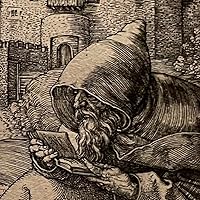
As always with Richard Wilbur, a joy to read. This short poem is but one example.
Wyeth’s Milk Cans
Beyond them, hill and field
Harden, and summer’s easy
Wheel-ruts lie congealed.
What if these two bells tolled?
They’d make the bark-splintering
Music of pure cold.
Wyeth’s Milk Cans
Beyond them, hill and field
Harden, and summer’s easy
Wheel-ruts lie congealed.
What if these two bells tolled?
They’d make the bark-splintering
Music of pure cold.
August 20, 2026
“Odd that a thing is most itself when likened”

March 11, 2023
This book was a wedding gift from a dear friend. Challenging, playful, full of wit and depth. I’m glad I finally pulled it off the shelf.

August 18, 2007
Wilbur has been one of my primary influences for a long time. His poetic voice is clear yet startling. Like Rumi, he is a mystic, able to see the spiritual in the everyday.

Want to Read
June 22, 2019The beautiful Changes
"..
Your hands hold roses always in a way that says
They are not only yours; the beautiful changes
In such kind ways,
Wishing ever to sunder
Things and Thing's selves for a second finding, to lose
For a moment all that it touches back to wonder. "
"..
Your hands hold roses always in a way that says
They are not only yours; the beautiful changes
In such kind ways,
Wishing ever to sunder
Things and Thing's selves for a second finding, to lose
For a moment all that it touches back to wonder. "

September 9, 2015
Richard Wilbur may be my favorite poet... that's right! I said it! I'm new to him but I'm falling in love with him. He's the perfect hybrid of Romanticism and Modernism; his reverence and love of nature is BEAUTIFUL but he's engaging and negotiating the challenges of life after both the World Wars. He's a poet's poet, for sure. Everything that he does is meticulous and methodical, from his rhyme schemes to his meter. But my God... the beauty. I will be forever grateful to a friend who gave me these poems when I graduated, especially this one:
"The Beautiful Changes"
One wading a Fall meadow finds on all sides
The Queen Anne’s Lace lying like lilies
On water; it glides
So from the walker, it turns
Dry grass to a lake, as the slightest shade of you
Valleys my mind in fabulous blue Lucernes.
The beautiful changes as a forest is changed
By a chameleon’s tuning his skin to it;
As a mantis, arranged
On a green leaf, grows
Into it, makes the leaf leafier, and proves
Any greenness is deeper than anyone knows.
Your hands hold roses always in a way that says
They are not only yours; the beautiful changes
In such kind ways,
Wishing ever to sunder
Things and things’ selves for a second finding, to lose
For a moment all that it touches back to wonder.
If there were ever a time for a sensitive, tear-filled mic drop, this would be it.
Love him forever.
"The Beautiful Changes"
One wading a Fall meadow finds on all sides
The Queen Anne’s Lace lying like lilies
On water; it glides
So from the walker, it turns
Dry grass to a lake, as the slightest shade of you
Valleys my mind in fabulous blue Lucernes.
The beautiful changes as a forest is changed
By a chameleon’s tuning his skin to it;
As a mantis, arranged
On a green leaf, grows
Into it, makes the leaf leafier, and proves
Any greenness is deeper than anyone knows.
Your hands hold roses always in a way that says
They are not only yours; the beautiful changes
In such kind ways,
Wishing ever to sunder
Things and things’ selves for a second finding, to lose
For a moment all that it touches back to wonder.
If there were ever a time for a sensitive, tear-filled mic drop, this would be it.
Love him forever.
April 23, 2012
I personally prefer Wilbur's earlier work, but this is probably the easiest way to get introduced to the finest American poet of the last 40 years. I'd encourage everyone to read 'Two Voices in a Meadow' - since you're already here, I'll put them here for you:
A Milkweed
Anonymous as cherubs
Over the crib of God,
White seeds are floating
Out of my burst pod.
What power had I
Before I learned to yield?
Shatter me, great wind;
I shall possess the field.
A Stone
As casual as cow-dung
Under the crib of God,
I lie where chance would have me,
Up to the ears in sod.
Why should I move? To move
Befits a light desire.
The sill of Heaven would founder,
Did such as I aspire.
A Milkweed
Anonymous as cherubs
Over the crib of God,
White seeds are floating
Out of my burst pod.
What power had I
Before I learned to yield?
Shatter me, great wind;
I shall possess the field.
A Stone
As casual as cow-dung
Under the crib of God,
I lie where chance would have me,
Up to the ears in sod.
Why should I move? To move
Befits a light desire.
The sill of Heaven would founder,
Did such as I aspire.

October 28, 2007
This book is what keeps me going as a poet. I cannot be without it.

January 16, 2022
3.5 stars
This a large collection of the Poet Laureate's works. He is a master of words to be sure.
This a large collection of the Poet Laureate's works. He is a master of words to be sure.

April 9, 2021
I have been at this collection for almost a year! I do feel a bit like I have limped to the finish, but here I am. Since I have an old used copy of this, I dog eared all the poems that stood out to me in some way. Some time I would like to go back and read those poems more fully and meditatively. Once again, like with Shakespeare, it feels absurd to give this a rating because I am not at all qualified to judge Wilbur’s poetry by any stretch of the mind. However, I will say that it is erudite. I knew so many references were going straight over my head. I could use an annotated Wilbur to help me grasp the depth of the connections he’s making in his poems because I don’t think I could ever get there on my own. That being said, returning to a work in time almost always brings more understanding, so I do look forward to revisiting this collection in the future. I’d like to memorize some of his poems too, though when I will have the mental space and energy to do that in these COVID days is unclear.

March 5, 2025
Took me a long time to work through these--Wilbur's poetry is so rich, you physically can't breeze through them. Like, your brains tire out.
Wilbur essentially writes in riddles (sometimes literally, see e.g. "Some Riddles from Symphosius"). I don't really mean this in the sense that they're difficult, but that the process of figuring out what the poem is ~doing is the same process as figuring out what the poem is ~describing, which is hidden at first glance. It takes a bit of reader effort to picture the fish in "Trolling for Blues" for instance, but that focus Wilbur forces on you is necessary legwork for the wonder of the poem's final stanza. The fish you've been struggling to capture in your mind's eye slips away from the speaker's eye, leaving you both alone with the ocean depths.
Wilbur essentially writes in riddles (sometimes literally, see e.g. "Some Riddles from Symphosius"). I don't really mean this in the sense that they're difficult, but that the process of figuring out what the poem is ~doing is the same process as figuring out what the poem is ~describing, which is hidden at first glance. It takes a bit of reader effort to picture the fish in "Trolling for Blues" for instance, but that focus Wilbur forces on you is necessary legwork for the wonder of the poem's final stanza. The fish you've been struggling to capture in your mind's eye slips away from the speaker's eye, leaving you both alone with the ocean depths.

August 2, 2022
I hope all interested readers of poetry know and feel slight awe at "The Beautiful Changes," which showed up as the last poem in this collection, which makes me hope that it holds the same emotional place for Wilbur as "Crossing the Bar" did for Tennyson. Anyway, Wilbur's poetry is precise, meaningful, and probably health-giving.
I'll quote this impossible-to-imagine-improving quatrain and suggest that you read more of the gentleman's work:
On Having Mis-identified a Wild Flower
A thrush, because I'd been wrong,
Burst rightly into song
In a world not vague, not lonely,
Not governed by me only.
I'll quote this impossible-to-imagine-improving quatrain and suggest that you read more of the gentleman's work:
On Having Mis-identified a Wild Flower
A thrush, because I'd been wrong,
Burst rightly into song
In a world not vague, not lonely,
Not governed by me only.
February 16, 2019
I doubt I will ever finish reading this book. Richard Wilbur is my favorite poet since Byron. A Dubious Night is probably my favorite poem - it is brilliant - “the senses were unstrung”.
“In summer sunk and stupefied” is where I want to be right now.
His translation of Anna Akhmatova’s poem Lot’s Wife is gorgeous.
“In summer sunk and stupefied” is where I want to be right now.
His translation of Anna Akhmatova’s poem Lot’s Wife is gorgeous.

May 1, 2023
I’m glad I tried sitting with one poet for several months. His more formal poems intrigued me most and I found a dozen or more that I want to read again and again. He’s not a “heart” poet for me, but I enjoyed my time with him.
October 6, 2024
This was a genuinely enjoyable collection of poems.
I'm not very good at reviewing poetry but I enjoyed the topics addressed in the poems and the rhythm and meter of the poetry was interesting and enjoyable.
I'm not very good at reviewing poetry but I enjoyed the topics addressed in the poems and the rhythm and meter of the poetry was interesting and enjoyable.
July 27, 2018
This books of poems was great to read.

July 25, 2020
There's a deepness to the beauty of Wilbur's poems. I liked his middle years the most, I think. Some poems seemed more about telling me Wilbur knew his classic mythology, but that was usually ok.

September 3, 2020
This collection is quite a commitment! Loved seeing how Wilbur’s poetry varied and shifted through the years of his work.

September 19, 2020
What a joy that was.

March 19, 2014
Invested as Poet Laureate of the United States and the recipient of the Pulitzer Prize, Wilbur certainly can stake a claim as a major American poet. Where other poets dominate with imagery, Wilbur does not seem to have any unifying theme and does not dazzle or evoke passions. His poetry is wonderful for its formal, technical excellence, specifically metaphor.
At times, Wilbur not too subtly criticizes the world around him. Thoughts of mutually assured destruction immediately spring to mind in the moral of his “Fable”:
Security, alas, can give
A threatening impression;
Too much defense-initiative
Can prompt aggression.
At other times, the language is dizzying. A verse from “Piccola Commedia” springs to mind:
Laughter. A combine whined
On past, and dry grass bent
In the backwash; liquor went
Like an ice-pick into my mind.
His older work, for me, is his most magical, however. I sincerely believe that “Cottage Street, 1953” is a technical, haunting, representative masterpiece.
Framed in her phoenix fire-screen, Edna Ward
Bends to the tray of Canton, pouring tea
For frightened Mrs. Plath; then, turning toward
The pale, slumped daughter, and my wife, and me,
Asks if we would prefer it weak or strong.
Will we have milk or lemon, she enquires?
The visit seems already strained and long.
Each in his turn, we tell her our desires.
It is my office to exemplify
The published poet in his happiness,
Thus cheering Sylvia, who has wished to die;
But half-ashamed, and impotent to bless,
I am a stupid life-guard who has found,
Swept to his shallows by the tide, a girl
Who, far from shore, has been immensely drowned,
And stares through water now with eyes of pearl.
How large is her refusal; and how slight
The genteel chat whereby we recommend
Life, of a summer afternoon, despite
The brewing dusk which hints that it may end.
And Edna Ward shall die in fifteen years,
After her eight-and-eighty summers of
Such grace and courage as permit no tears,
Then thin hand reaching out, the last word love,
Outliving Sylvia who, condemned to live,
Shall study for a decade, as she must,
To state at last her brilliant negative
In poems free and helpless and unjust.
Similarly I love “In a Churchyard” for the same haunting qualities:
That flower unseen, that gem of purest ray,
Bright thoughts uncut by men:
Strange that you need but speak them, Thomas Gray,
And the mind skips and dives beyond its ken,
Finding at once the wild supposed bloom,
Or in the imagined cave
Some pulse of crystal staving off the gloom
As covertly as phosphorus in a grave.
Void notions proper to a buried head!
Beneath these tombstones here
Unseenness fills the sockets of the dead,
Whatever to their souls may now appear;
And who but those unfathomably deaf
Who quiet all this ground
Could catch, within the ear’s diminished clef,
A music innocent of time and sound?
What do the living hear, then, when the bell
Hangs plumb within the tower
Of the still church, and still their thoughts compel
Pure tollings that intend no mortal hour?
As when a ferry for the shore of death
Glides looming toward the dock,
Her engines cut, her spirits bating breath
As the ranked pilings narrow toward the shock,
So memory and expectation set
Some pulseless clangor free
Of circumstance, and charm us to forget
This twilight crumbling in the churchyard tree,
Those swifts or swallows which do not pertain,
Scuffed voices in the drive,
That light flicked on behind the vestry pane,
Till, unperplexed from all that is alive,
It shadows all our thought, balked imminence
Of uncommitted sound,
And still would tower at the sill of sense
Were not, as now, its honed abeyance crowned
With a mauled boom of summons far more strange
Than any stroke unheard,
Which breaks again with unimagined range
Through all reverberations of the word,
Pooling the mystery of things that are,
The buzz of prayer said,
The scent of grass, the earliest-blooming star,
These unseen gravestones, and the darker dead.
Toward the end of the collection, there is perhaps a poem that represents Wilbur’s legacy. He is technical, and cold. This is not to say the language is not beautiful. Perhaps it is best to appreciate Wilbur in the winter way, as he describes in “Winter Spring:
A script of trees before the hill
Spells cold, with laden serifs; all the walls
Are battlemented still;
But winter spring is winnowing the air
Of chill, and crawls
Wet-sparkling on the gutters;
Everywhere
Walls wince, and there’s the steal of waters.
Now all this proud royaume
Is Veniced. Through the drift’s mined dome
One sees the rowdy rusted grass,
And we’re amazed as windows stricken bright.
This too-soon spring will pass
Perhaps tonight,
And doubtless it is dangerous to love
This somersault of seasons;
But I am weary of
The winter way of loving things for reasons.
Wilbur does not blow the reader away. He challenges the reader with formal metaphors and densely packed language. As a reader, it is easy to be impressed, but hard to fall in love with, the poems.
At times, Wilbur not too subtly criticizes the world around him. Thoughts of mutually assured destruction immediately spring to mind in the moral of his “Fable”:
Security, alas, can give
A threatening impression;
Too much defense-initiative
Can prompt aggression.
At other times, the language is dizzying. A verse from “Piccola Commedia” springs to mind:
Laughter. A combine whined
On past, and dry grass bent
In the backwash; liquor went
Like an ice-pick into my mind.
His older work, for me, is his most magical, however. I sincerely believe that “Cottage Street, 1953” is a technical, haunting, representative masterpiece.
Framed in her phoenix fire-screen, Edna Ward
Bends to the tray of Canton, pouring tea
For frightened Mrs. Plath; then, turning toward
The pale, slumped daughter, and my wife, and me,
Asks if we would prefer it weak or strong.
Will we have milk or lemon, she enquires?
The visit seems already strained and long.
Each in his turn, we tell her our desires.
It is my office to exemplify
The published poet in his happiness,
Thus cheering Sylvia, who has wished to die;
But half-ashamed, and impotent to bless,
I am a stupid life-guard who has found,
Swept to his shallows by the tide, a girl
Who, far from shore, has been immensely drowned,
And stares through water now with eyes of pearl.
How large is her refusal; and how slight
The genteel chat whereby we recommend
Life, of a summer afternoon, despite
The brewing dusk which hints that it may end.
And Edna Ward shall die in fifteen years,
After her eight-and-eighty summers of
Such grace and courage as permit no tears,
Then thin hand reaching out, the last word love,
Outliving Sylvia who, condemned to live,
Shall study for a decade, as she must,
To state at last her brilliant negative
In poems free and helpless and unjust.
Similarly I love “In a Churchyard” for the same haunting qualities:
That flower unseen, that gem of purest ray,
Bright thoughts uncut by men:
Strange that you need but speak them, Thomas Gray,
And the mind skips and dives beyond its ken,
Finding at once the wild supposed bloom,
Or in the imagined cave
Some pulse of crystal staving off the gloom
As covertly as phosphorus in a grave.
Void notions proper to a buried head!
Beneath these tombstones here
Unseenness fills the sockets of the dead,
Whatever to their souls may now appear;
And who but those unfathomably deaf
Who quiet all this ground
Could catch, within the ear’s diminished clef,
A music innocent of time and sound?
What do the living hear, then, when the bell
Hangs plumb within the tower
Of the still church, and still their thoughts compel
Pure tollings that intend no mortal hour?
As when a ferry for the shore of death
Glides looming toward the dock,
Her engines cut, her spirits bating breath
As the ranked pilings narrow toward the shock,
So memory and expectation set
Some pulseless clangor free
Of circumstance, and charm us to forget
This twilight crumbling in the churchyard tree,
Those swifts or swallows which do not pertain,
Scuffed voices in the drive,
That light flicked on behind the vestry pane,
Till, unperplexed from all that is alive,
It shadows all our thought, balked imminence
Of uncommitted sound,
And still would tower at the sill of sense
Were not, as now, its honed abeyance crowned
With a mauled boom of summons far more strange
Than any stroke unheard,
Which breaks again with unimagined range
Through all reverberations of the word,
Pooling the mystery of things that are,
The buzz of prayer said,
The scent of grass, the earliest-blooming star,
These unseen gravestones, and the darker dead.
Toward the end of the collection, there is perhaps a poem that represents Wilbur’s legacy. He is technical, and cold. This is not to say the language is not beautiful. Perhaps it is best to appreciate Wilbur in the winter way, as he describes in “Winter Spring:
A script of trees before the hill
Spells cold, with laden serifs; all the walls
Are battlemented still;
But winter spring is winnowing the air
Of chill, and crawls
Wet-sparkling on the gutters;
Everywhere
Walls wince, and there’s the steal of waters.
Now all this proud royaume
Is Veniced. Through the drift’s mined dome
One sees the rowdy rusted grass,
And we’re amazed as windows stricken bright.
This too-soon spring will pass
Perhaps tonight,
And doubtless it is dangerous to love
This somersault of seasons;
But I am weary of
The winter way of loving things for reasons.
Wilbur does not blow the reader away. He challenges the reader with formal metaphors and densely packed language. As a reader, it is easy to be impressed, but hard to fall in love with, the poems.
February 18, 2022
I did not finish this collection in my first undertaking. I read poetry slowly because I run the danger that I will glaze over and so entirely miss the point of reading it. So while I do feel the need to wade in fairly deeply, I don't berate myself, knowing I will pick it up again, when I set it aside.
Making sense of the syntax is my hardest challenge with some poets. Wilbur frequently rights rhyming poetry, and unfortunately I find this the most difficult, as I keep on hearing the poem in sing-song, one rhyming line after another, and I neglect following the punctuation, which keeps the sense of the thought. My strategy therefore is to follow the punctuation to a fault, try to keep the rhythm of the whole sentence as if reading it out loud; in that way, however, the rhymes are subdued. So often I really don't have a complete understanding of a poem.
But here is the point. However poor my appreciation of Wilbur's poetry, there are brilliantly faceted jewels in this collection. I usually read a poem several times at once, and in the case of this poet's work, a wonderfully balanced set of thoughts and images emerge. I struggled getting through some of this work ( the fault is mine, it will be easier for most who read this ), but when I was able to speak the whole poem in my mind, I found many of Wilbur's to be stunningly beautiful.
Making sense of the syntax is my hardest challenge with some poets. Wilbur frequently rights rhyming poetry, and unfortunately I find this the most difficult, as I keep on hearing the poem in sing-song, one rhyming line after another, and I neglect following the punctuation, which keeps the sense of the thought. My strategy therefore is to follow the punctuation to a fault, try to keep the rhythm of the whole sentence as if reading it out loud; in that way, however, the rhymes are subdued. So often I really don't have a complete understanding of a poem.
But here is the point. However poor my appreciation of Wilbur's poetry, there are brilliantly faceted jewels in this collection. I usually read a poem several times at once, and in the case of this poet's work, a wonderfully balanced set of thoughts and images emerge. I struggled getting through some of this work ( the fault is mine, it will be easier for most who read this ), but when I was able to speak the whole poem in my mind, I found many of Wilbur's to be stunningly beautiful.
May 28, 2018
Apology
A word sticks in the wind’s throat;
A wind-launch drifts in the swells of rye;
Sometimes, in broad silence,
The hanging apples distil their darkness.
You, in a green dress, calling, and with brown hair,
Who come by the field-path now, whose name I say
Softly, forgive me love if also I call you
Wind’s word, apple-heart, haven of grasses.
Exeunt
Piecemeal the summer dies;
At the field's edge a daisy lives alone;
A last shawl of burning lies
On a gray field-stone.
All cries are thin and terse;
The field has droned the summer's final mass;
A cricket like a dwindled hearse
Crawls from the dry grass.
*

March 12, 2009
I did not read this entire book of poems. I enjoyed what I read, and will probably read more of Wilbur's poetry. The book is arranged in an interesting way. The most recent poems are at the beginning, and the oldest are at the end. So you are kind of reading backwards through the thoughts and works of this man.
I do not read alot of poetry because I like to read fast, and poetry slows me down. So this was read in an effort to "read slowly" and think about what the poet is saying. A worthwhile effort, and I will come back later to read more.
I do not read alot of poetry because I like to read fast, and poetry slows me down. So this was read in an effort to "read slowly" and think about what the poet is saying. A worthwhile effort, and I will come back later to read more.

February 21, 2013
One of the greatest American "formalist" poets ever. An absolute must read for anyone who wants to be familiar with the best in American poetry. The poem "Loves Of The Puppets" is just one haunting masterpiece among many.

June 15, 2016
I have only read this one collection of poems by this poet, but I think he could become a good person for me to read. Enough humor mixed with fake history and seriousness.
I enjoyed his poem about Playboy and the one that was funny about sex. I cracked up laughs.
I enjoyed his poem about Playboy and the one that was funny about sex. I cracked up laughs.
January 27, 2019
published in 1989 and Pulitzer winner.
Found a copy on the last night Aardvark Books (at CHurch and Market) was open.
Contains the awesome poem Hamlen Brook...
like many 'collected poems of..." books I imagine I'll never truly 'finish' this one
Found a copy on the last night Aardvark Books (at CHurch and Market) was open.
Contains the awesome poem Hamlen Brook...
like many 'collected poems of..." books I imagine I'll never truly 'finish' this one

October 21, 2007
Elegant formal poetry applied to modern topics. Full of wit and charm.

July 12, 2013
Perhaps my favorite poem, "Love Calls Us to the Things of This World" is reprinted in this complete collection, having first appeared in Things of This World (1956).
January 23, 2016
Rhyming !! And interesting. Poetry from everyday scenes, experiences, objects.
Displaying 1 - 30 of 30 reviews