From Simon & Schuster, The Halakchic Mind is an essay on Jewish tradition and modern thought from Rabbi Joseph B. Soloveitchik.
Discusses the conflict between philosophy and science, examines the growth of religious knowledge, and shows how the Halakha, Jewish religious law, can be used to formulate a new religious outlook.
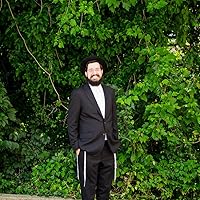
Rabbi Joseph B. Soloveitchik was born into a family already known for its great Torah learning. His grandfather and father, emphasized a thorough analysis of Talmud, and it is in this way that Rav Soloveitchik studied and taught his own students. He was awarded a Ph.D. from the University of Berlin, and then settled in Boston in the early 1930’s. He became Rosh HaYeshiva of Yeshiva University, and gave weekly shiurim to senior students, while delivering philosophy lectures to graduate students. His accomplishments in both Halachic study and secular study made him a unique Torah personality to Torah scholars all over.
His limitless expertise in and appreciation of secular disciplines never lessened his total devotion to Torah study. Indeed Torah study was the central focus of his life and his teachings. His public historic shiurim in memory of his great father, Rav Moshe Soloveitchik, and his public shiurim between Rosh Hashana and Yom Kippur organized by the Rabbinical Council of America known as Kinus T’Shuva, were attended by thousands of Torah students from all groupings in the Torah community. Thus he was one of the leaders of the generation.
He never engaged in pejorative or invectives when speaking of non-orthodox Jews. He was polite and respectful to others. Yet he was firm and inflexible in protecting and advocating the Mesorah of Torah tradition. His ruling, written by him, that one is not allowed to pray in a house of worship that violates Halachic standards even if it would result in not fulfilling the Mitzvah of Tekiath Shofar is an illustration of his strong stand on Torah and Mesorah.
This can also be seen from his opinion that while dialogue with non-Jewish faiths may be necessary, it may not deal with theological topics. This was a historic principle which guided his disciples in all their dealings with non-Jewish clergy, and continues to this very day.
His teachings and shiurim are responsible for literally thousands of men and women in the educational and academic community today.
It's a book dense with philosophy (and science) from the mid-20th century so it isn't easy to read. The book overall asks what "homo religiosus" should do now that science and metaphysics' aim to unify have come apart in the 20th century. His solution seems to post something like the distinction Wilfred Sellars would later make between the scientific image and the manifest image, except Soloveitchik's manifest image is an ordering of a religious consciousness.
The middle third of the book is a lot of talk about objective and subjective which I couldn't really follow, but the end of the book seems to suggest that the view Soloveitchik offers about the religious consciousness (or Halakhic mind) is one where the Jewish teaching are accepted instead of justified through other domains like self-interest, practicality, or even scientific truth. Instead of genetic questioning of the rules, its more about the "what"s, the rules that structure the consciousness.
Again, this is a complex text philosophically and I don't know how much I'm reading right, and how much is just me reading my views into the text.