

What do you think?

Looking for Transwonderland: Travels in Nigeria
A “remarkable chronicle” of a journey back to this West African nation after years of exile (The New York Times Book Review).Noo Saro-Wiwa was brought up in England, but every summer she was dragged back to visit her father in Nigeria—a country she viewed as an annoying parallel universe where she had to relinquish all her creature comforts and sense of individuality. After her father, activist Ken Saro-Wiwa, was killed there, she didn’t return for several years. Then she decided to come to terms with the country her father given his life for.Traveling from the exuberant chaos of Lagos to the calm beauty of the eastern mountains; from the eccentricity of a Nigerian dog show to the decrepit kitsch of the Transwonderland Amusement Park, she explores Nigerian Christianity, delves into the country’s history of slavery, examines the corrupting effect of oil, and ponders the huge success of Nollywood.She finds the country as exasperating as ever, and frequently despairs at the corruption and inefficiency she encounters. But she also discovers that it is far more beautiful and varied than she had ever imagined, with its captivating thick tropical rain forest and ancient palaces and monuments—and most engagingly and entertainingly, its unforgettable people.“The author allows her love-hate relationship with Nigeria to flavor this thoughtful travel journal, lending it irony, wit and frankness.” —Kirkus Reviews
272 pages, Kindle Edition
First published January 5, 2012
About the author
Noo Saro-Wiwa
8 books40 followersNoo Saro-Wiwa is an author and journalist. Born in Port Harcourt, Nigeria, and raised in England, she attended King's College London and Columbia University in New York.
She writes for Condé Nast Traveller magazine, and has contributed book reviews, travel, opinion and analysis articles for The Guardian newspaper, The Financial Times, The Times Literary Supplement, City AM, Chatham House and The New York Times, among others.
Her first book, Looking for Transwonderland: Travels in Nigeria (Granta), was published to critical acclaim in 2012. Her second book, Black Ghosts, explores the African community in China and was published by Canongate in 2023.
She writes for Condé Nast Traveller magazine, and has contributed book reviews, travel, opinion and analysis articles for The Guardian newspaper, The Financial Times, The Times Literary Supplement, City AM, Chatham House and The New York Times, among others.
Her first book, Looking for Transwonderland: Travels in Nigeria (Granta), was published to critical acclaim in 2012. Her second book, Black Ghosts, explores the African community in China and was published by Canongate in 2023.
Ratings & Reviews
Friends & Following
Create a free account to discover what your friends think of this book!
Community Reviews
Displaying 1 - 30 of 158 reviews

November 4, 2015
GRADI DI SEPARAZIONE
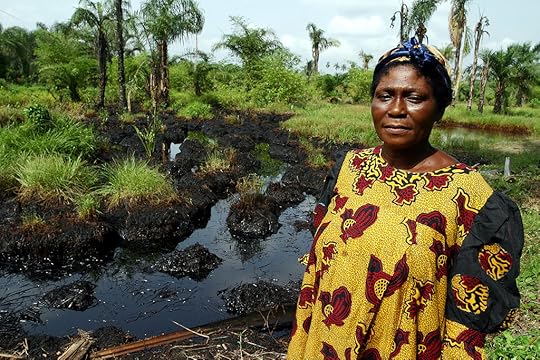
Ogoniland e la Shell.
Difficile avere un compagno di viaggio migliore di Noo Saro-Wiva, viaggiatrice e scrittrice di guide turistiche, qui in viaggio in uno dei paesi meno turistici del mondo.
Questa volta va oltre la guida turistica.
E va oltre il reportage di viaggio.
È una riflessione sulla Nigeria, il suo paese di origine, che abbraccia anche un’ampia parte dell’Africa, più o meno direttamente.
Ed è anche un percorso familiare.
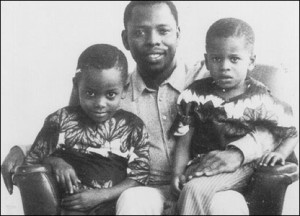
Perché Noo è la figlia di Ken, l’autore del magnifico ‘Sozaboy’, letterato e attivista politico, impegnato nella difesa dei diritti del popolo ogone, contro le multinazionali del petrolio e contro il governo del suo paese che insieme distruggevano il delta del Niger per estrarre petrolio. Così impegnato da finire sulla forca nel 1995, quando Noo era ancora adolescente.
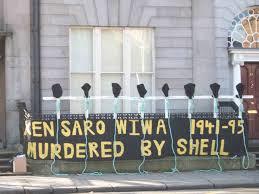
La famiglia Saro-Wiwa si era trasferita in Inghilterra: educazione inglese, vacanze nigeriane.
Per tutto quel periodo, Noo aveva subito i ritorni estivi a ‘casa’, le visite ai parenti: dopo la morte del padre, smette di tornare, è troppo arrabbiata, troppo ferita, odia la Nigeria. È comprensibile, è condivisibile.
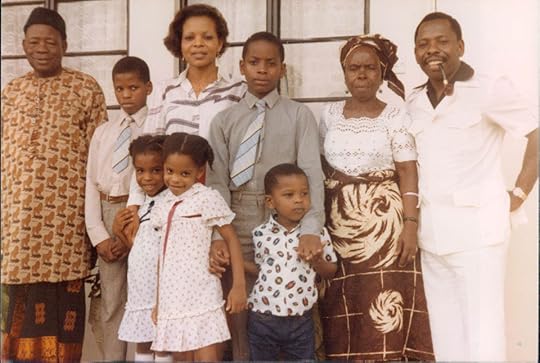
La famiglia Saro-Wiwa quando Noo era bambina. Da sinistra: il nonno Jim Wiwa, il fratello Gian, Noo, la madre Maria, la sorella gemella Zin, il fratello Ken jr, il fratello Tedum, la nonna Jesse Wiwa, il padre Ken.
A circa trent’anni decide di concedersi un lungo periodo nella sua terra d’origine, un ritorno che dura mesi, viaggiando ovunque, dove non è mai stata, e sulle orme del padre.
Un viaggio alla ricerca del fantasma del padre: senza risentimento, una riscoperta di luoghi noti, altri rimossi, perfino cancellati, e posti nuovi da scoprire.
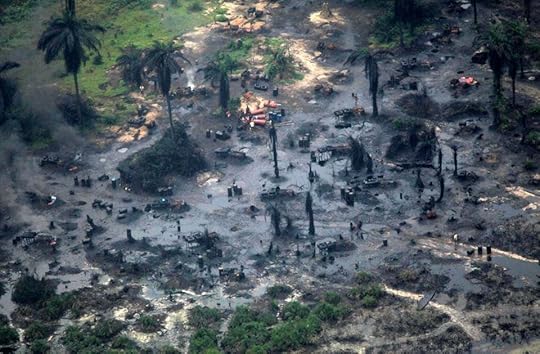
Ogoniland
Noo è attenta, intelligente, elastica, acuta, spiritosa, irriverente ma sensibile, sa guardare oltre che vedere, il suo sguardo penetra le cose e oltrepassa la superficie. Avrebbe potuta essere patetica e lacrimevole, o arrabbiata e risentita: invece è una guida obiettiva per capire dove va la Nigeria oggi.
E con essa una buona parte del continente africano.
PS
Il paese che è al dodicesimo posto nella classifica mondiale dei produttori di petrolio, continua a importare benzina per miliardi di dollari perché mancano le raffinerie e perché chi può speculi sull’importazione.
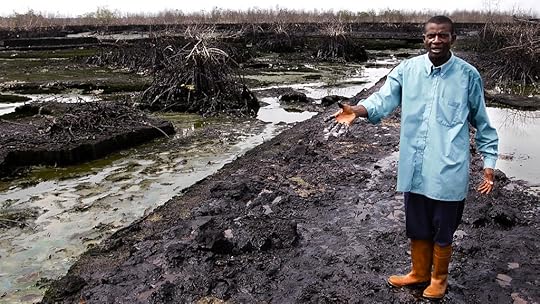
Ogoniland
Ogoniland e la Shell.
Difficile avere un compagno di viaggio migliore di Noo Saro-Wiva, viaggiatrice e scrittrice di guide turistiche, qui in viaggio in uno dei paesi meno turistici del mondo.
Questa volta va oltre la guida turistica.
E va oltre il reportage di viaggio.
È una riflessione sulla Nigeria, il suo paese di origine, che abbraccia anche un’ampia parte dell’Africa, più o meno direttamente.
Ed è anche un percorso familiare.
Perché Noo è la figlia di Ken, l’autore del magnifico ‘Sozaboy’, letterato e attivista politico, impegnato nella difesa dei diritti del popolo ogone, contro le multinazionali del petrolio e contro il governo del suo paese che insieme distruggevano il delta del Niger per estrarre petrolio. Così impegnato da finire sulla forca nel 1995, quando Noo era ancora adolescente.
La famiglia Saro-Wiwa si era trasferita in Inghilterra: educazione inglese, vacanze nigeriane.
Per tutto quel periodo, Noo aveva subito i ritorni estivi a ‘casa’, le visite ai parenti: dopo la morte del padre, smette di tornare, è troppo arrabbiata, troppo ferita, odia la Nigeria. È comprensibile, è condivisibile.
La famiglia Saro-Wiwa quando Noo era bambina. Da sinistra: il nonno Jim Wiwa, il fratello Gian, Noo, la madre Maria, la sorella gemella Zin, il fratello Ken jr, il fratello Tedum, la nonna Jesse Wiwa, il padre Ken.
A circa trent’anni decide di concedersi un lungo periodo nella sua terra d’origine, un ritorno che dura mesi, viaggiando ovunque, dove non è mai stata, e sulle orme del padre.
Un viaggio alla ricerca del fantasma del padre: senza risentimento, una riscoperta di luoghi noti, altri rimossi, perfino cancellati, e posti nuovi da scoprire.
Ogoniland
Noo è attenta, intelligente, elastica, acuta, spiritosa, irriverente ma sensibile, sa guardare oltre che vedere, il suo sguardo penetra le cose e oltrepassa la superficie. Avrebbe potuta essere patetica e lacrimevole, o arrabbiata e risentita: invece è una guida obiettiva per capire dove va la Nigeria oggi.
E con essa una buona parte del continente africano.
PS
Il paese che è al dodicesimo posto nella classifica mondiale dei produttori di petrolio, continua a importare benzina per miliardi di dollari perché mancano le raffinerie e perché chi può speculi sull’importazione.
Ogoniland

February 6, 2012
Memoir meets travelogue meets popculture. It's ok, nothing memorable. The only thing I really got from this book was that the general fraudulency and crookedness of Nigeria where the begging letter scam is a whole semi-legitimate business is being replaced by the utter corruption and cruelty of the Islamic movement sweeping the country. It is opposed only by evangelical Christians and that means whatever it is like now it's going to get bloodier and as always with any of these recent Islamic movements, it's going to get worse for women.
The rich who are obscenely rich now will get even richer, the poor who are begging on the streets don't really have anywhere to sink to, but if there is somewhere that is where they will be, and those who foster corruption will enforce their desires with violence. It's all kind of Haitian plus Islamic fervour.
Not a nice place, but great music. Everywhere has something!
The rich who are obscenely rich now will get even richer, the poor who are begging on the streets don't really have anywhere to sink to, but if there is somewhere that is where they will be, and those who foster corruption will enforce their desires with violence. It's all kind of Haitian plus Islamic fervour.
Not a nice place, but great music. Everywhere has something!

July 12, 2014
I imagined this would bear some similarity to Kenyan writer Binyavanga Wainaina's Some Day I Will Write About This Place, but there is nothing parallel here to Wainaina's sardonic critique of neo-colonial representations of his country and continent. There isn't time for it! I fear that this, the white 'liberal' clamour to be educated by the 'Other', was what prevented me from connecting with Saro-Wiwa quickly; it took me about 200 pages to warm up to her, more or less as she started to write appreciatively about pre-colonial art and artefacts. The Africa of my barely half-decolonised imaginary is so fraught and exciting that the casual treatment of Nigeria as an actual place threatened to fall flat.
Saro-Wiwa's journey, while highly personal and freighted with various loads of emotional baggage, is narrated in factual, linear, unembellished style. She avoids overloading the text with excessive incidental detail, seems not to be prone to digression, keeps the structure simple and rarely segues into extended reflections. For long stretches I wasn't able to latch onto her emotionally. She tends to tell rather than show her own character, giving an impression of fearlessness, mild cynicism, and not much else! The occasional failure of her enthusiasm, her sense of a less-than-delightful job to be got through on the journey occasionally clouded my enjoyment of the transparency of the window she opens on incredible places, but I should have empathised rather than feeling impatient as I was oppressed by the same nihilistic Baudelairian boredom at times on my travels in Brazil.
For most of the way she is a judgemental observer, constantly complaining about the havoc and inconvenience wrought by 'inefficiency' and corruption, comparing places she visits unfavourably with London and the 'developed' world generally. What I read as an uncritical, wholehearted acceptance of capitalism and enthusiasm for what I see as (neo)colonial notions of 'development' kept pulling me up short. But I had to pull myself up - is it actually necessary to précis Decolonising the Mind as a preface to a politically acceptable demand for running water and electricity? What could be more characteristic of the coloniser mindset than my belief that I know better? I finally accepted that while Noo and I might not be on the same page at times, I would simply have to calm down and enjoy the ride, even if I couldn't enjoy a barside discussion on such topics as community:
The book succeeds in conveying just how diverse Nigeria is in every sense. Saro-Wiwa, born in Nigeria but mainly raised and resident in the UK, is constantly identified as a foreigner, but this seems extraordinarily perceptive of those she meets, considering the plethora of ethnic and linguistic identities cohabiting the clearly artificially bounded state. Even more striking to me is the contrast between the characters of the various cities she visits and attendant disparities in lifestyle. That Saro-Wiwa feels able to make a few generalisations about Nigerian national character at all is quite surprising, but it's less so that she frequently admires the population's ability to make Nigeria's unlikely nation statehood work, at least on the interpersonal/intercultural level (if not the political) where easygoing, good humoured attitudes to cultural difference and religious tolerance generally set the tone, aided rather than hindered, it seems, by the national trait of frankness and love of argument.
Geographical diversity is beautifully rendered and I gained a richly layered sense of place in each of her calling points. Saro-Wiwa's sketches of people she encounters, I feel, are sometimes shallow and unanimated, but occasionally humorous quotations made me wish for more, more people, more personality, more feeling. Perhaps it's apt to find myself wishing for more passion from a text that opens with a lament over Nigerian people's propensity for exaggerated public emoting; Saro-Wiwa as a writer seems to rather to err on the side of English reserve. Or perhaps I suffered a massive failure of empathy. As an intermediary between me and one of her homes, Saro-Wiwa was more negative and ambivalent than I wanted to be myself, and while this uncomfortable tension gave me a kind of fascinated traction, it made me irritable and impatient. I was a bad companion. Every traveller has her ghosts, and the reader should patiently accept her particular habit of carrying them.
Saro-Wiwa's journey, while highly personal and freighted with various loads of emotional baggage, is narrated in factual, linear, unembellished style. She avoids overloading the text with excessive incidental detail, seems not to be prone to digression, keeps the structure simple and rarely segues into extended reflections. For long stretches I wasn't able to latch onto her emotionally. She tends to tell rather than show her own character, giving an impression of fearlessness, mild cynicism, and not much else! The occasional failure of her enthusiasm, her sense of a less-than-delightful job to be got through on the journey occasionally clouded my enjoyment of the transparency of the window she opens on incredible places, but I should have empathised rather than feeling impatient as I was oppressed by the same nihilistic Baudelairian boredom at times on my travels in Brazil.
For most of the way she is a judgemental observer, constantly complaining about the havoc and inconvenience wrought by 'inefficiency' and corruption, comparing places she visits unfavourably with London and the 'developed' world generally. What I read as an uncritical, wholehearted acceptance of capitalism and enthusiasm for what I see as (neo)colonial notions of 'development' kept pulling me up short. But I had to pull myself up - is it actually necessary to précis Decolonising the Mind as a preface to a politically acceptable demand for running water and electricity? What could be more characteristic of the coloniser mindset than my belief that I know better? I finally accepted that while Noo and I might not be on the same page at times, I would simply have to calm down and enjoy the ride, even if I couldn't enjoy a barside discussion on such topics as community:
For all its benefits, the social fabric of extended family doesn't wash well in a free-market economy; it hinders it badly, I think. Corruption and nepotism increase when pressure is placed on successful individuals to look after dozens of clinging family members. Many a Nigerian office is staffed with unqualified uncles and cousins who bring little innovation and creativityStuff 'em then, relations = (
The book succeeds in conveying just how diverse Nigeria is in every sense. Saro-Wiwa, born in Nigeria but mainly raised and resident in the UK, is constantly identified as a foreigner, but this seems extraordinarily perceptive of those she meets, considering the plethora of ethnic and linguistic identities cohabiting the clearly artificially bounded state. Even more striking to me is the contrast between the characters of the various cities she visits and attendant disparities in lifestyle. That Saro-Wiwa feels able to make a few generalisations about Nigerian national character at all is quite surprising, but it's less so that she frequently admires the population's ability to make Nigeria's unlikely nation statehood work, at least on the interpersonal/intercultural level (if not the political) where easygoing, good humoured attitudes to cultural difference and religious tolerance generally set the tone, aided rather than hindered, it seems, by the national trait of frankness and love of argument.
Geographical diversity is beautifully rendered and I gained a richly layered sense of place in each of her calling points. Saro-Wiwa's sketches of people she encounters, I feel, are sometimes shallow and unanimated, but occasionally humorous quotations made me wish for more, more people, more personality, more feeling. Perhaps it's apt to find myself wishing for more passion from a text that opens with a lament over Nigerian people's propensity for exaggerated public emoting; Saro-Wiwa as a writer seems to rather to err on the side of English reserve. Or perhaps I suffered a massive failure of empathy. As an intermediary between me and one of her homes, Saro-Wiwa was more negative and ambivalent than I wanted to be myself, and while this uncomfortable tension gave me a kind of fascinated traction, it made me irritable and impatient. I was a bad companion. Every traveller has her ghosts, and the reader should patiently accept her particular habit of carrying them.

April 2, 2013
I loved this book. It was everything I wanted and expected.It took me to all the places in Nigeria that I haven't been able to go and it was from a point of view I could really relate to (that of an outsider, an insider and neither). Noo (properly pronounced "Naw") has written a very rare and insightful book that shows sides of Nigeria that are not explored enough. And this book has moments that were funny as hell (my favorite was when a woman shouted, "You're crazy!" at a danfo driver that drove off before she and the baby had fully disembarked and the danfo driver shouted back, "You're baby is crazy!"...HAHAHAHAHA!!). It has moments that made me want to cry, as well (one in particular near the end DID make me cry. I won't spoil it for you by revealing the exact moment but I am confident when you get to it, you will know. It shocked me so deeply...I never knew). Lastly, read this book along with the works of contemporary and classic Nigerian fiction and watch your understanding of Nigeria blossom like flower.

January 21, 2015
I thoroughly enjoyed this, somewhat to my surprise, since I am often impatient with travelogue segments in fiction. But then, a nonfiction travel book succeeds if it informs and entertains the reader with information about a place, while fictional travels all too often serve as cover for lack of plot.
And this book both informs and entertains. Saro-Wiwa is Nigerian by birth, but was raised and currently lives in England. After years of avoiding her home country, following uncomfortable childhood experiences and her activist father’s murder at the hands of one of several dictatorships, she took several months to travel around Nigeria and reacquaint herself with the country. This insider/outsider perspective is a valuable one, as Saro-Wiwa has both an eye for interesting detail and contrast with the Western world, and a familiarity with the culture and a network of friends and relatives throughout the country.
The writing is engaging, and the author provides historical information where it’s helpful, along with going the extra mile herself for interesting stories, whether it’s a death-defying bus ride in Lagos or pretending to be a prospective sugar mama long enough to call and interview men advertising themselves as gigolos. She also talks her way into the inside scoop on many of Nigeria’s most interesting (but neglected) tourist sites. The book occasionally shades into memoir, and I would have been interested to read more about the author than is included here; but I get the sense she is a bit neurotic and was perhaps wise not to let her own preoccupations consume the book. She does have strong opinions on various aspects of Nigerian life, particularly government corruption, and by discussing these issues with people she meets along the way, provides a deeper understanding of the challenges the country faces.
At any rate, Nigeria is a large and diverse country – from the Muslim north to the evangelical Christian south, from tropical forests to the mountains where a few ancient tribes still maintain their traditional way of life, from teeming cities to remote villages – and I enjoyed vicariously sharing the author’s trip (likely much more than I would have enjoyed it in person, what with the constant power cuts, delays, everything breaking down, etc.). If I have a criticism of this book, it’s that it is already becoming dated: Saro-Wiwa’s trip apparently took place in 2007, but the book was not published until 2012, and by the time of my reading in 2015, Nigeria has changed quite a bit. There is nothing here about Boko Haram, for instance. That said, it is a personal story and covers a great deal of ground, so I still consider it absolutely worth reading. I always looked forward to sitting down with it for a chapter or two, and would recommend it to anyone interested in travel writing or contemporary Africa.
And this book both informs and entertains. Saro-Wiwa is Nigerian by birth, but was raised and currently lives in England. After years of avoiding her home country, following uncomfortable childhood experiences and her activist father’s murder at the hands of one of several dictatorships, she took several months to travel around Nigeria and reacquaint herself with the country. This insider/outsider perspective is a valuable one, as Saro-Wiwa has both an eye for interesting detail and contrast with the Western world, and a familiarity with the culture and a network of friends and relatives throughout the country.
The writing is engaging, and the author provides historical information where it’s helpful, along with going the extra mile herself for interesting stories, whether it’s a death-defying bus ride in Lagos or pretending to be a prospective sugar mama long enough to call and interview men advertising themselves as gigolos. She also talks her way into the inside scoop on many of Nigeria’s most interesting (but neglected) tourist sites. The book occasionally shades into memoir, and I would have been interested to read more about the author than is included here; but I get the sense she is a bit neurotic and was perhaps wise not to let her own preoccupations consume the book. She does have strong opinions on various aspects of Nigerian life, particularly government corruption, and by discussing these issues with people she meets along the way, provides a deeper understanding of the challenges the country faces.
At any rate, Nigeria is a large and diverse country – from the Muslim north to the evangelical Christian south, from tropical forests to the mountains where a few ancient tribes still maintain their traditional way of life, from teeming cities to remote villages – and I enjoyed vicariously sharing the author’s trip (likely much more than I would have enjoyed it in person, what with the constant power cuts, delays, everything breaking down, etc.). If I have a criticism of this book, it’s that it is already becoming dated: Saro-Wiwa’s trip apparently took place in 2007, but the book was not published until 2012, and by the time of my reading in 2015, Nigeria has changed quite a bit. There is nothing here about Boko Haram, for instance. That said, it is a personal story and covers a great deal of ground, so I still consider it absolutely worth reading. I always looked forward to sitting down with it for a chapter or two, and would recommend it to anyone interested in travel writing or contemporary Africa.

July 7, 2020
The most interesting thing for me in this book, as a Northern Nigerian, is how uncomfortable Noo was in the North. How, somehow, a lot of the people she met and interacted with over there were still Southerners. Although, I know, without a doubt, that I would feel the same in the South (except that I'd be able to communicate with more people because I speak English). And there's the rub -- can you write about a people without being able to communicate with them? Can you write about a people with dignity and give them agency in their humanity without an understanding of their language?
It's weird being a Nigerian that's Hausa-Fulani. Really, it's wild when I think about it. On one hand, you're a majority in the North (and arguably the country -- the Hausa part, not so much the Fulani), and you're also very visible in politics. Yet, you're poorer, less educated, and less travelled than the rest of the country, so much so that if you do manage to leave and go elsewhere, people who claim to "know Nigerians" will deny your Nigerianess.
It's wild because despite being in the majority, somehow, you're also invisible.
Anyway, I love this book. If nothing else, Noo made me want to visit Calabar. And for someone who's only ever been to Lagos in the South, that's not nothing.
It's weird being a Nigerian that's Hausa-Fulani. Really, it's wild when I think about it. On one hand, you're a majority in the North (and arguably the country -- the Hausa part, not so much the Fulani), and you're also very visible in politics. Yet, you're poorer, less educated, and less travelled than the rest of the country, so much so that if you do manage to leave and go elsewhere, people who claim to "know Nigerians" will deny your Nigerianess.
It's wild because despite being in the majority, somehow, you're also invisible.
Anyway, I love this book. If nothing else, Noo made me want to visit Calabar. And for someone who's only ever been to Lagos in the South, that's not nothing.

December 10, 2013
Author (who's first name is pronounced "gnaw") travels through several regions of Nigeria in an attempt to determine how much she fits in there, having lived in England almost her entire life, except for extended summer visits "back home" as a child. Other readers have criticized the book for her flying visits from city to city, which I found to be the point -- the country is so diverse that nowhere (except perhaps Lagos) is particularly "typically" Nigerian. Final chapter in her hometown of Port Harcourt was the only part that struck me as unusually grim, but she explains that being the center of the oil region has attracted the most widespread corruption, and associated crime. I suppose if the book is missing anything, I would like to have heard more about her famous father's "other" family.
I found the book quite well written, and always fascinating each time I picked it up for a couple of chapters. Definitely recommended.
I found the book quite well written, and always fascinating each time I picked it up for a couple of chapters. Definitely recommended.

April 20, 2013
My thoughts:
• I really enjoyed this book – it is part travelogue, part memoir, part history lesson, part commentary written in an engaging thoughtful informative manner.
• I have read several books on Nigeria but most of the books concentrated on one region or a specific conflict regarding a specific event or a specific ethnic group. But this book gave me a great introduction to Nigeria as a whole and as separate regions – it open up my eyes on how much more I have to learn.
• I especially liked how the author sought out historical sites in each of the places she visited – also providing the history of the place. It was heartbreaking to read about the historical sites being neglected and/or the valuable artifacts that exist outside of Nigeria
• Sometimes you have to be away from a situation to fully comprehend the situation and I thought the author wrote with honesty and compassion on what she observed and what the future potential could be.
• One of the interesting commentaries throughout the book dealt with corruption and the government – and how most of the people see spoke to in Nigeria had the same attitude about it - but in contradiction the author mentions that she could leave her bags in an open truck, etc and they would not be stolen – that corruption/stealing did not extend to that everyday individual level.
• This book will enhance my future reading of stories set in Nigeria as I have better overview of the landscape and the connection between the regions.
• The only thing is I wish that a map with the cities was included – but this is just a nitpick thing with me as I am visual and like to understand where places are relative to others – so I just looked at a map of Nigeria every time the author moved to another place.
• I really enjoyed this book – it is part travelogue, part memoir, part history lesson, part commentary written in an engaging thoughtful informative manner.
• I have read several books on Nigeria but most of the books concentrated on one region or a specific conflict regarding a specific event or a specific ethnic group. But this book gave me a great introduction to Nigeria as a whole and as separate regions – it open up my eyes on how much more I have to learn.
• I especially liked how the author sought out historical sites in each of the places she visited – also providing the history of the place. It was heartbreaking to read about the historical sites being neglected and/or the valuable artifacts that exist outside of Nigeria
• Sometimes you have to be away from a situation to fully comprehend the situation and I thought the author wrote with honesty and compassion on what she observed and what the future potential could be.
• One of the interesting commentaries throughout the book dealt with corruption and the government – and how most of the people see spoke to in Nigeria had the same attitude about it - but in contradiction the author mentions that she could leave her bags in an open truck, etc and they would not be stolen – that corruption/stealing did not extend to that everyday individual level.
• This book will enhance my future reading of stories set in Nigeria as I have better overview of the landscape and the connection between the regions.
• The only thing is I wish that a map with the cities was included – but this is just a nitpick thing with me as I am visual and like to understand where places are relative to others – so I just looked at a map of Nigeria every time the author moved to another place.

September 12, 2012
i read this rather impulsively as soon as I found out about it. I've read a lot of Nigerian literature over the past few years and I have done quite a bit of nonfiction reading of Nigeria too. Nigeria is one of those beguilingly complex countries that i don't ever want to stop learning about and someday i would like to be able to visit it. But in the meantime, Saro-Wiwa's book was a good stand-in for that trip that may never happen, taking me to a lot of the areas that i have read and learned about.
Her book was more than just a travelogue, though. As a Nigerian who grew up primarily in the U.K., she took this trip in an attempt to get to know her parents' country, and also to reconcile herself with it. It was part of a first step in making a decision about whether she would or could return there to live full time. I don't think she made her decision in the course of her trip, but it was interesting to watch her consider the reasons for and against such a move.
But for me the most interesting part of her journey was her relationship with and to her father, Ken Saro-Wiwa, an environmental and civil rights activist who was killed by Sani Abacha in the 1990s. Noo encountered people who knew or remembered her father in almost every place she went. She didn't shy away from the fact that she is his daughter. She seemed genuinely interested in hearing peoples' stories about him and how he had inspired them (although not every such counter was especially positive). But she didn't romanticize her father; she reflected a lot on their father-daughter relationship, considering carefully why he had said or done things they way he did as a father, and missing him deeply now that she is an adult.
I hope Noo Saro-Wiwa continues to write because i'm looking forward to reading more from her.
Her book was more than just a travelogue, though. As a Nigerian who grew up primarily in the U.K., she took this trip in an attempt to get to know her parents' country, and also to reconcile herself with it. It was part of a first step in making a decision about whether she would or could return there to live full time. I don't think she made her decision in the course of her trip, but it was interesting to watch her consider the reasons for and against such a move.
But for me the most interesting part of her journey was her relationship with and to her father, Ken Saro-Wiwa, an environmental and civil rights activist who was killed by Sani Abacha in the 1990s. Noo encountered people who knew or remembered her father in almost every place she went. She didn't shy away from the fact that she is his daughter. She seemed genuinely interested in hearing peoples' stories about him and how he had inspired them (although not every such counter was especially positive). But she didn't romanticize her father; she reflected a lot on their father-daughter relationship, considering carefully why he had said or done things they way he did as a father, and missing him deeply now that she is an adult.
I hope Noo Saro-Wiwa continues to write because i'm looking forward to reading more from her.

September 27, 2022
This book is a good reminder that the past is a foreign country. Even though she was born and grew up there, she has Saro-Wira has lived most of her life in the UK. Whilst she returned regularly after her father was murdered, she hadn’t returned for a long time.
Returning there became safe after a change of government and this would be the opportunity to see her home country through adult eyes and see if she could find the things that her late father loved so much about the place.
It is a place that is full of life and people and noise and smells and brings the memories flooding back. Growing up there she was not allowed the freedoms that she now had to travel all over the country and find family members and speak to all manner of people. Having lived away from Nigeria for a while gave her an insight into the pulse of the country and its foibles and strengths.
She comes to realise what her father loved and hated in equal measure about the country. The corruption is rife, from the very top to the bottom and even though the politics is cleaner than it was, there is still a dark undercurrent. I really liked this book, the writing shows the passion that she has for Nigeria still and she is a great describer of the characters that she meets, both family and the people in the street. Even though this was published nearly 10 years ago, this is still worth reading for an insider’s view of Nigeria.
Returning there became safe after a change of government and this would be the opportunity to see her home country through adult eyes and see if she could find the things that her late father loved so much about the place.
It is a place that is full of life and people and noise and smells and brings the memories flooding back. Growing up there she was not allowed the freedoms that she now had to travel all over the country and find family members and speak to all manner of people. Having lived away from Nigeria for a while gave her an insight into the pulse of the country and its foibles and strengths.
She comes to realise what her father loved and hated in equal measure about the country. The corruption is rife, from the very top to the bottom and even though the politics is cleaner than it was, there is still a dark undercurrent. I really liked this book, the writing shows the passion that she has for Nigeria still and she is a great describer of the characters that she meets, both family and the people in the street. Even though this was published nearly 10 years ago, this is still worth reading for an insider’s view of Nigeria.

January 24, 2018
Puoi trovare questa recensione anche sul mio blog, La siepe di more
La prima cose che mi sento di scrivere su questo libro è che Noo Saro-Wiwa è una donna molto intelligente, che, nonostante non abbia ricordi molto positivi del suo Paese d’origine, la Nigeria, riesce a mantenere uno sguardo critico scevro da qualunque rancore e risentimento. Il punto di vista di Saro-Wiwa è acuto e questo fa di In cerca di Transwonderland un preziosissimo libro sulla Nigeria.
La seconda cosa è che Saro-Wiwa non è una turista, ma una viaggiatrice: non si limita a provare luoghi di interesse turistico per poi riportarne le sue impressioni, ma vive ogni posto nel quale si reca e ci trasmette innanzitutto cultura e spirito, qualcosa che non si trova nelle classiche guide turistiche e che mi ha fatto amare In cerca di Transwonderland (che, detto per inciso, è appassionante come un romanzo… si macinano pagine perché non si vede l’ora di visitare il prossimo luogo e di sapere cosa vi troverà Saro-Wiwa).
Infine, l’autrice è molto adattabile. Per quanto, infatti, da piccola abbia passato le vacanze estive nel villaggio d’origine, stiamo parlando di una donna abituata a tutte le comodità di una città inglese: a parole siamo tutt* brav*, ma pensate anche solo alla possibilità di non avere la corrente elettrica a vostra disposizione quando ne avete bisogno o alla necessità di prendere un okada, che sfreccia nel caotico traffico cittadino incurante di qualunque codice stradale…
La prima cose che mi sento di scrivere su questo libro è che Noo Saro-Wiwa è una donna molto intelligente, che, nonostante non abbia ricordi molto positivi del suo Paese d’origine, la Nigeria, riesce a mantenere uno sguardo critico scevro da qualunque rancore e risentimento. Il punto di vista di Saro-Wiwa è acuto e questo fa di In cerca di Transwonderland un preziosissimo libro sulla Nigeria.
La seconda cosa è che Saro-Wiwa non è una turista, ma una viaggiatrice: non si limita a provare luoghi di interesse turistico per poi riportarne le sue impressioni, ma vive ogni posto nel quale si reca e ci trasmette innanzitutto cultura e spirito, qualcosa che non si trova nelle classiche guide turistiche e che mi ha fatto amare In cerca di Transwonderland (che, detto per inciso, è appassionante come un romanzo… si macinano pagine perché non si vede l’ora di visitare il prossimo luogo e di sapere cosa vi troverà Saro-Wiwa).
Infine, l’autrice è molto adattabile. Per quanto, infatti, da piccola abbia passato le vacanze estive nel villaggio d’origine, stiamo parlando di una donna abituata a tutte le comodità di una città inglese: a parole siamo tutt* brav*, ma pensate anche solo alla possibilità di non avere la corrente elettrica a vostra disposizione quando ne avete bisogno o alla necessità di prendere un okada, che sfreccia nel caotico traffico cittadino incurante di qualunque codice stradale…

November 14, 2021
Great travel book on Nigeria, the West-African giant that frightens and inspires. The book is interesting because of the authors, background, as Noo Saro-Wiwa is the famous Ogoni activist, Ken Saro-Wiwa's daughter. Noo has grown up in the UK and entertains an ambiguous relation with her mother country. This book relates her travel throughout Nigera during which she is confronted with the challenges posed by past and present.
I did like her reflections, though sometimes she seems a bit too westernized (as in how isolated these parts of Africa would have been during history). I also liked the idea of how Nigeria might be better prepared for future (and thus in advance on the West), as this future might bring chaos and hence the need for resilience and creative ways of dealing with adversities.
The book is a brilliant introduction to Nigerian society and culture, the massive and mysterious country that continues to surprise... She has written it about ten years ago, and the past decade has not been kind to Nigeria and its people.
I did like her reflections, though sometimes she seems a bit too westernized (as in how isolated these parts of Africa would have been during history). I also liked the idea of how Nigeria might be better prepared for future (and thus in advance on the West), as this future might bring chaos and hence the need for resilience and creative ways of dealing with adversities.
The book is a brilliant introduction to Nigerian society and culture, the massive and mysterious country that continues to surprise... She has written it about ten years ago, and the past decade has not been kind to Nigeria and its people.

January 25, 2012
Reading Noo Saro-Wiwa's account of her travels in Nigeria, Looking For Transwonderland (pub. Granta), it is difficult to avoid the conclusion that the current wave of Islamist terror gripping the country's north was inevitable, if not overdue.
That a hopelessly corrupt and wholly uncontrollable nation of upwards of one hundred and sixty million people, swinging from strict Sharia law in cities like Kano to evangelical christianity in Lagos, has survived so long as a single entity seems remarkable enough.
On visiting Kano, Saro-Wiwa writes:
'Our sporadic flashes of violence don't reflect complete failure.. but instead the occasional spewings of an active volcano that Nigerian society has done remarkably well to contain.'
Saro-Wiwa is in a better position than most to pass judgement on the state of Nigeria today. She is the daughter of Ken Saro-Wiwa, the author and environmental activist who was hanged by the military government of Sani Abacha in 1995 - to international fury - following his campaign against the oil industry.
In 'Lost In Transwonderland', Saro-Wiwa returns to the country of her birth for her first sustained visit since her father's death. Despite having just cause to rail against almost everything modern Nigeria appears to represent, not least the endemic corruption which has wriggled its way into every aspect of its society, she is by turns patriotic and proud, becoming frustrated when her accent or attire marks her out for preferential treatment as a foreigner.
Saro-Wiwa hurls herself back into her country's culture and lifestyle with an admirable lack of caution. She braves the madness of Lagos head-on by using the death-defying okadas, or motorcyle taxis. Later she heads, via the clinical official capital of Abuja, to the fascinating, simmering muslim north.
The nation's many paradoxes are plain to see, not least in a religious fervour which seems so cruelly at odds with the everyday predicament of those who seem keenest to preach it.
'If there's a country more religious than Nigeria then I haven't been there. According to the Bible, God made the earth in six days and took a rest on the seventh. But by creating Nigerians, he ensured that that was the last day off he's enjoyed ever since. Twenty-four hours a day and seven days a week we call on his services, connecting with him, singing his praise, establishing dialogue with him (and extremely loud dialogue at that). In my time in Lagos I had heard hairdressers singing their hallelujahs at salons; evangelical radio stations resounding in internet cafes; bus passengers collectively breaking out into ovine choruses of 'Jeezos is my father… he never, never fail me.''
In the gleaming show-city of Abuja, Saro-Wiwa finally comes to despair of the corruption which leads to so little being done. Government contracts are dished out for the sake of back-handers rather than any sense of civic improvement. Seemingly little has changed since the days when her father's nemesis Abacha stashed six billion US dollars in overseas bank accounts: government limousines crash down pot-holed roads; sumptuous palaces are powered by noisy generators. Saro-Wiwa writes:
'I couldn't understand why these kleptomaniacs preferred to be kings of a slum rather than live amongst equals in paradise.'
Indeed, the assumption of corruption has become so ingrained that no-one is spared.
'Everyone is corrupt,' she is told by a local in Kano. 'Even that Ken Saro-Wiwa. I've heard he wasn't honest either.'
'Ken Saro-Wiwa was my father.'
Ravi's face fell. 'I'm sorry - '.
In Saro-Wiwa's vividly portrayed Nigeria, the hotel rooms seldom have running water, and the hazy TV sets flick out WWE wrestling in between powercuts. But perhaps nothing sums up its parlous state better than the eponymous Transwonderland, a half-abandoned theme park outside Abuja. There, a rusting rollercoaster lurches and creaks yet defies seemingly insurmountable odds to stay on track. Finally, it deposits its shaken traveller back where they started, having failed to get anywhere fast.
That said, by the end of her brave, tireless voyage, Saro-Wiwa's patriotism remains largely intact. She has painted a revealing portrait of a nation which, for all its faults, can point to its continued existence as perhaps its greatest success story. Never mind its squandered oil billions. It is the energy and evident lust for life of its inhabitants that it will need to harness in order to see off its latest threat, and secure its future.
That a hopelessly corrupt and wholly uncontrollable nation of upwards of one hundred and sixty million people, swinging from strict Sharia law in cities like Kano to evangelical christianity in Lagos, has survived so long as a single entity seems remarkable enough.
On visiting Kano, Saro-Wiwa writes:
'Our sporadic flashes of violence don't reflect complete failure.. but instead the occasional spewings of an active volcano that Nigerian society has done remarkably well to contain.'
Saro-Wiwa is in a better position than most to pass judgement on the state of Nigeria today. She is the daughter of Ken Saro-Wiwa, the author and environmental activist who was hanged by the military government of Sani Abacha in 1995 - to international fury - following his campaign against the oil industry.
In 'Lost In Transwonderland', Saro-Wiwa returns to the country of her birth for her first sustained visit since her father's death. Despite having just cause to rail against almost everything modern Nigeria appears to represent, not least the endemic corruption which has wriggled its way into every aspect of its society, she is by turns patriotic and proud, becoming frustrated when her accent or attire marks her out for preferential treatment as a foreigner.
Saro-Wiwa hurls herself back into her country's culture and lifestyle with an admirable lack of caution. She braves the madness of Lagos head-on by using the death-defying okadas, or motorcyle taxis. Later she heads, via the clinical official capital of Abuja, to the fascinating, simmering muslim north.
The nation's many paradoxes are plain to see, not least in a religious fervour which seems so cruelly at odds with the everyday predicament of those who seem keenest to preach it.
'If there's a country more religious than Nigeria then I haven't been there. According to the Bible, God made the earth in six days and took a rest on the seventh. But by creating Nigerians, he ensured that that was the last day off he's enjoyed ever since. Twenty-four hours a day and seven days a week we call on his services, connecting with him, singing his praise, establishing dialogue with him (and extremely loud dialogue at that). In my time in Lagos I had heard hairdressers singing their hallelujahs at salons; evangelical radio stations resounding in internet cafes; bus passengers collectively breaking out into ovine choruses of 'Jeezos is my father… he never, never fail me.''
In the gleaming show-city of Abuja, Saro-Wiwa finally comes to despair of the corruption which leads to so little being done. Government contracts are dished out for the sake of back-handers rather than any sense of civic improvement. Seemingly little has changed since the days when her father's nemesis Abacha stashed six billion US dollars in overseas bank accounts: government limousines crash down pot-holed roads; sumptuous palaces are powered by noisy generators. Saro-Wiwa writes:
'I couldn't understand why these kleptomaniacs preferred to be kings of a slum rather than live amongst equals in paradise.'
Indeed, the assumption of corruption has become so ingrained that no-one is spared.
'Everyone is corrupt,' she is told by a local in Kano. 'Even that Ken Saro-Wiwa. I've heard he wasn't honest either.'
'Ken Saro-Wiwa was my father.'
Ravi's face fell. 'I'm sorry - '.
In Saro-Wiwa's vividly portrayed Nigeria, the hotel rooms seldom have running water, and the hazy TV sets flick out WWE wrestling in between powercuts. But perhaps nothing sums up its parlous state better than the eponymous Transwonderland, a half-abandoned theme park outside Abuja. There, a rusting rollercoaster lurches and creaks yet defies seemingly insurmountable odds to stay on track. Finally, it deposits its shaken traveller back where they started, having failed to get anywhere fast.
That said, by the end of her brave, tireless voyage, Saro-Wiwa's patriotism remains largely intact. She has painted a revealing portrait of a nation which, for all its faults, can point to its continued existence as perhaps its greatest success story. Never mind its squandered oil billions. It is the energy and evident lust for life of its inhabitants that it will need to harness in order to see off its latest threat, and secure its future.

December 4, 2013
Saro-Wiwa is not a spectacular writer but she is a great travelling companion and when she comes to the end of her strange journey you want her to just keep on writing about wherever she goes next. I do wish there had been a map included, here's a good one if you want to see where she went: http://www.nationsonline.org/oneworld....

June 19, 2025
Noo Saro-Wiwa reluctantly returns to her home country, Nigeria, a place full of her bad memories, to write a travelogue and have a kumbaya moment of self-recognition. The immigrant returns and realizes her home (London in this case, where she has lived most of her life) is in fact her false home.
She writes the travelogue, but there is no reinvention. It's an honest book. She doesn't try to hide her Eurocentric and frankly insecure judgments, she compares everything to London, and most of it comes up lacking. She has many bad things to say, much of it about Nigeria's religious fanaticism and corruption, though she develops an affection for the Okadas, the motorcycle taxis, and their violently reckless drivers.
It reminds me of Naipaul's book about India, another story of a diasporic exile returning to the motherland with expectations of self-discovery which are disappointed. Noo lacks Naipaul's contempt, however. Her judgements are mostly bemused and resigned; unlike Naipaul in India, she sees in Nigeria the potential for change
She writes the travelogue, but there is no reinvention. It's an honest book. She doesn't try to hide her Eurocentric and frankly insecure judgments, she compares everything to London, and most of it comes up lacking. She has many bad things to say, much of it about Nigeria's religious fanaticism and corruption, though she develops an affection for the Okadas, the motorcycle taxis, and their violently reckless drivers.
It reminds me of Naipaul's book about India, another story of a diasporic exile returning to the motherland with expectations of self-discovery which are disappointed. Noo lacks Naipaul's contempt, however. Her judgements are mostly bemused and resigned; unlike Naipaul in India, she sees in Nigeria the potential for change
February 3, 2024
I was torn between a 4-star and a 5-star rating. I suppose part of me wants to be more conservative about giving out 5-star ratings. I could read an excellent book and still only give it 4 stars because "even though I enjoyed the book, I just did not love it." The question I had to ask myself was 'did I love this book?"
Noo writes so excellently about Nigeria. This book scratched a long present itch I have had; it did so satisfyingly. I have wanted to see solid documentation of the chaos that is being Nigerian. I find that Nigerian authors, especially fiction, fall short of offering me this. They often forcefully insert metaphors in places where the truth is enough. Noo wrote about Nigeria from a place of discovery. Maybe there is something about not yet being desensitised that lets you see that when it comes to Nigeria, all the drama is already there, you don't have to invent anything new.
I loved this book.
5 stars.
Noo writes so excellently about Nigeria. This book scratched a long present itch I have had; it did so satisfyingly. I have wanted to see solid documentation of the chaos that is being Nigerian. I find that Nigerian authors, especially fiction, fall short of offering me this. They often forcefully insert metaphors in places where the truth is enough. Noo wrote about Nigeria from a place of discovery. Maybe there is something about not yet being desensitised that lets you see that when it comes to Nigeria, all the drama is already there, you don't have to invent anything new.
I loved this book.
5 stars.

July 5, 2025
3.5 stars.

May 22, 2021
Is it a travel book? She tries going to the barely existing tourist sites across Nigeria and laments the disrepair and shoddy conditions - actually sort of proclaiming the British Museum defence of stolen culture and artefacts "They can't look after it themselves"...
Is it a 'going back to find yourself'-book? She travels to visit family and in her famous father's footsteps, but there are few and far between reflections on her feelings doing this.
There is however a lot of descriptions. Of the cities and okada rides and the humidity. But to be honest it leaves we wanting: There seems to be little point in the stories, and then we jump to a new one. While she conveys the facts (but too little to make it educational, which I'd have liked) we seem to be getting the sparsely labeled museum artefacts in her summary - I'd have loved more detail, and am assuming some research could have cleared ud some of the sketchy details? But okay, maybe it's not that kind of book.
However if it is the personal inner travel, then I still want more details: Why is the misogyni and the complications of travelling alone as a perceived "rich foreigner" glossed over, to only pop up 300 pages in as something that has been happening all along? I guess the mess is conveying the mixed identity 'messiness' of being at once a foreigner and a native, a tourist and a daughter of a bit of a national hero. Feeling at home in a village she hated being sent to as a child, surrounded my her mother's tongue, that she can't speak.
There is so much interesting potential for gripping stories about selv, identity, diaspora children, family dynamics, society, development, corruption and Nigeria past and present in this book, so it's a shame that (to me anyway) it feels like a missed opportunity. An interesting read, but it could have been so much more.
Is it a 'going back to find yourself'-book? She travels to visit family and in her famous father's footsteps, but there are few and far between reflections on her feelings doing this.
There is however a lot of descriptions. Of the cities and okada rides and the humidity. But to be honest it leaves we wanting: There seems to be little point in the stories, and then we jump to a new one. While she conveys the facts (but too little to make it educational, which I'd have liked) we seem to be getting the sparsely labeled museum artefacts in her summary - I'd have loved more detail, and am assuming some research could have cleared ud some of the sketchy details? But okay, maybe it's not that kind of book.
However if it is the personal inner travel, then I still want more details: Why is the misogyni and the complications of travelling alone as a perceived "rich foreigner" glossed over, to only pop up 300 pages in as something that has been happening all along? I guess the mess is conveying the mixed identity 'messiness' of being at once a foreigner and a native, a tourist and a daughter of a bit of a national hero. Feeling at home in a village she hated being sent to as a child, surrounded my her mother's tongue, that she can't speak.
There is so much interesting potential for gripping stories about selv, identity, diaspora children, family dynamics, society, development, corruption and Nigeria past and present in this book, so it's a shame that (to me anyway) it feels like a missed opportunity. An interesting read, but it could have been so much more.

June 17, 2014
A fascinating, if somewhat depressing, look at modern Nigeria from the point of view of a Nigerian raised in the UK. The author's relationship with Nigeria is complicated by her murdered activist father's story and her discomfort with certain aspects of her cultural homeland make for some interesting clashes. Saro-Wiwa explores many different regions and aspects of Nigeria and its history (although in the end this is more of a personal travelogue than a history or sociology book) in a lively and entertaining way.
But don't expect a book which will make you want to visit the place. If anything I'm now more determ,ined than ever never to set foot there, what with the heat, violent crime inescapable corruption and noisy, overbearingly religious people.
But don't expect a book which will make you want to visit the place. If anything I'm now more determ,ined than ever never to set foot there, what with the heat, violent crime inescapable corruption and noisy, overbearingly religious people.

August 19, 2013
I am enjoying an education on a country I know very little about. I was wishing for a map of Nigeria in the book. Have a map handy. Also, I found many pics online of the various sites and cities. The book is decent but Nigeria doesn't seem like a very nice place. It points out how Nigeria used to be an educated, progressive country but has since become plagued with a religious & ideological fervor where environmental degradation and poverty rule. Nigeria has recently become the largest economy in Africa where multinational oil companies rule. I can't help but compare it to the US. And hope we are not headed in that direction.

October 13, 2016
interesting and sometimes funny travelogue of the daughter of ken saro-wiwa as she remembers her childhood memories whilst visiting modern day nigeria

January 5, 2021
I need to watch one of these Nollywood films Noo keeps falling asleep to.

August 18, 2018
Noo Saro-Wiwa has a flair for writing. From a language perspective, this is a beautifully written book, with very rich passages. Many sentences are a real work of art. Very cleverly crafted.
As for the content, I really felt like I was experiencing Nigeria in all its woes and wonders. I enjoyed the book but I wasn't addicted to it or desperate to carry on reading. And yet, with each chapter, I became pleasantly surprised by a completely different landscape of Nigeria. From bustling markets, to Bible bashers on overcrowded buses to eerily clean cities and, endless desert journies to rainforests rich in biodiversity and prehistoric villages in mountainous regions- Nigeria seems to have it all.
I loved what the author had to say about identity clashes between her Nigerian roots and British upbringing. I could very much relate to the stereotypes to which she was subject as a Diasporan from London. Ditto for eating rice and goat meat every day!
The author also draws on the topics of religion, history, politics and the environment in Nigeria. Her writing seems brutally honest and often pessimistic. But then there are great wedding and concert scenes to make up for it!
As for the content, I really felt like I was experiencing Nigeria in all its woes and wonders. I enjoyed the book but I wasn't addicted to it or desperate to carry on reading. And yet, with each chapter, I became pleasantly surprised by a completely different landscape of Nigeria. From bustling markets, to Bible bashers on overcrowded buses to eerily clean cities and, endless desert journies to rainforests rich in biodiversity and prehistoric villages in mountainous regions- Nigeria seems to have it all.
I loved what the author had to say about identity clashes between her Nigerian roots and British upbringing. I could very much relate to the stereotypes to which she was subject as a Diasporan from London. Ditto for eating rice and goat meat every day!
The author also draws on the topics of religion, history, politics and the environment in Nigeria. Her writing seems brutally honest and often pessimistic. But then there are great wedding and concert scenes to make up for it!

August 22, 2017

Noo Saro-Wiwa is the daughter of human rights activist Ken Saro-Wiwa, who was murdered by the Nigerian government as part of their efforts to keep Shell Oil Company happy. Sara-Wiwa grew up in Britain, but spent her summers in Nigeria until her father's burial, at which point she never returned. Now, decades later, she returns to travel all over the enormous (much larger than Texas) and diverse country. Looking for Transwonderland is her account of her travels.
Saro-Wiwa is the ideal traveling companion for Nigeria. She is both native and stranger, intimately familiar with the country's history and culture, while also standing slightly outside of it, which allows her to explain and describe Nigeria in a way that was clear and fascinating to this non-Nigerian, while able to travel and explore with the freedom of someone born in that country.
And Nigeria is more than worthy of a guided tour. It's a diverse place, with artificially created borders containing three major and over 300 minor people groups. The country's size means it's land encompasses both desert and rainforest. Sara-Wiwa travels all over Nigeria, hunting down wildlife refuges, historically significant landmarks and art while talking to people from all walks of life about life in Nigeria. Sara-Wiwa is an opinionated and humorous guide and I would love to accompany her through any other county she chooses to write about.
September 9, 2024
A fascinating and often frightening voyage through vastly differing vistas of Nigeria. Noo is warm and funny. She feels like a friend.

May 5, 2022
A number of reviews describe this as a ‘mediocre’ travel book. I think that reflects either a misunderstanding of the project of this book, or too narrow a conception of what travel writing is. Noo Saro-Wia travels and writes from the unusual posture of a diasporan. We don’t get to see much of her identity enacted in Britain, but that’s clearly her home growing up, though she’s read by other Brits as Nigerian. Her travels through Nigeria are both an effort to know the country of her parents and origins better, and to come to terms with her identity as a diasporan. The book offers a rich journey on both counts, and is both enabled and constrained by Saro-Wia’s status - it’s a book that neither an expat nor a homegrown Nigerian could write.
On the travel side, most of the book offers a tour of Nigeria’s multiple geographies and regional cultures. I loved this aspect of the book; I haven’t found other accounts of the country that do this. Saro-Wia doesn’t narrate all her days blow by blow, but she includes enough details about the mechanics of getting around, eating, and finding places to stay that you get a feel for the logistics of travel, especially going around towns on okadas, hired motorcycles where you sit on the back behind the driver. To her annoyance, she’s constantly being pegged as a diasporan (by her accent), but she enjoys access that a native Nigerian might not, and has conversations that are less distanced than an expat might acheive. One of the pleasures of the book is the richness and diversity of Nigeria’s precolonial past. Because many of the museums and historic sites Saro-Wia visits are badly curated, she can’t share a lot of detail about them, but her account will serve as a good jumping-off point to find information from more academic sources.
Coming to terms with her identity is necessarily the more introspective side of the book, and is dominated by conflicts between her internalized British/western liberal democratic values and the worldviews of her Nigerian extended family and friends. Especially, she has a generally secular outlook; she routinely encounters the intense religious beliefs of her evangelical Christian relatives across southern Nigeria. She is repeatedly surprised when observing evidence of governmental corruption - mostly diversion of public resources to private/tribal/client gain - to hear Nigerian friends accept it as inevitable or even admire leaders for taking care of their own. The process of understanding how the world can look this way is itself a journey, and that’s a key part of the trip Saro-Wia is helping her readers make - not to affirm corruption and disfunction, but to understand how people make meaningful lives in this social environment.
Ultimately, Saro-Wia describes herself as ‘not brave enough’ to return to Nigeria and live in this evolving cultural context. That’s perhaps a gracious place to land; she can also clearly see how the combination of fatalism (for example, prayer warrioring rather than strategic problem solving), diversion of public resources, and lack of consistent authority creates a social and economic environment that - at least for now - defeats individual initiative and imposes unnecessary hardships on residents’ lives. She loves the culture, the energy, the chaos, but she doesn’t want to have to fight those constraints constantly.
In a rare un-insightful sentence late in the book, she expresses surprise that she, a secular city-dweller, has grown so attached to Nigeria’s natural landscapes and animist cultural past. Except that’s not actually surprising at all: those are the parts of her heritage as a diasporan that don’t force a conflict with her western sensibilities - we have a clear script for appreciating and re-interpreting nature and the pre-modern past. It’s the bustling, tribe-based, faith-saturated, proto-anarcho-capitalist universe of modern Lagos (my descriptors, not hers) that ultimately can’t mesh with her values. Fortunately for her, it doesn’t have to; she can live and travel in the globalized free world and also retain an emotional tie to her place and history in Nigeria. I suspect that’s a healthy landing spot for many diasporans.
On the travel side, most of the book offers a tour of Nigeria’s multiple geographies and regional cultures. I loved this aspect of the book; I haven’t found other accounts of the country that do this. Saro-Wia doesn’t narrate all her days blow by blow, but she includes enough details about the mechanics of getting around, eating, and finding places to stay that you get a feel for the logistics of travel, especially going around towns on okadas, hired motorcycles where you sit on the back behind the driver. To her annoyance, she’s constantly being pegged as a diasporan (by her accent), but she enjoys access that a native Nigerian might not, and has conversations that are less distanced than an expat might acheive. One of the pleasures of the book is the richness and diversity of Nigeria’s precolonial past. Because many of the museums and historic sites Saro-Wia visits are badly curated, she can’t share a lot of detail about them, but her account will serve as a good jumping-off point to find information from more academic sources.
Coming to terms with her identity is necessarily the more introspective side of the book, and is dominated by conflicts between her internalized British/western liberal democratic values and the worldviews of her Nigerian extended family and friends. Especially, she has a generally secular outlook; she routinely encounters the intense religious beliefs of her evangelical Christian relatives across southern Nigeria. She is repeatedly surprised when observing evidence of governmental corruption - mostly diversion of public resources to private/tribal/client gain - to hear Nigerian friends accept it as inevitable or even admire leaders for taking care of their own. The process of understanding how the world can look this way is itself a journey, and that’s a key part of the trip Saro-Wia is helping her readers make - not to affirm corruption and disfunction, but to understand how people make meaningful lives in this social environment.
Ultimately, Saro-Wia describes herself as ‘not brave enough’ to return to Nigeria and live in this evolving cultural context. That’s perhaps a gracious place to land; she can also clearly see how the combination of fatalism (for example, prayer warrioring rather than strategic problem solving), diversion of public resources, and lack of consistent authority creates a social and economic environment that - at least for now - defeats individual initiative and imposes unnecessary hardships on residents’ lives. She loves the culture, the energy, the chaos, but she doesn’t want to have to fight those constraints constantly.
In a rare un-insightful sentence late in the book, she expresses surprise that she, a secular city-dweller, has grown so attached to Nigeria’s natural landscapes and animist cultural past. Except that’s not actually surprising at all: those are the parts of her heritage as a diasporan that don’t force a conflict with her western sensibilities - we have a clear script for appreciating and re-interpreting nature and the pre-modern past. It’s the bustling, tribe-based, faith-saturated, proto-anarcho-capitalist universe of modern Lagos (my descriptors, not hers) that ultimately can’t mesh with her values. Fortunately for her, it doesn’t have to; she can live and travel in the globalized free world and also retain an emotional tie to her place and history in Nigeria. I suspect that’s a healthy landing spot for many diasporans.

November 14, 2014
This book really struck a chord with me as the author goes back to her country of origin to find out about its many wonders but also to renew her acquaintance with it - something I'm certainly familiar with. Seeking out her roots, she decides to go to Nigeria from Britain and travel across it extensively for four months. The daughter of a murdered environmental Nigerian activist, Noo feels anxious about this endeavour. Flying over Nigeria, her childhood memories come back to her with feelings of oppression, heat and forced holidays in her father's country house. However, as she travels across the nation from Lagos to Ibadan, to Abuja, to Port Harcourt and through many of its wildlife reserves, and areas of artistic interest, she drops the idea of finding Transwonderland in Nigeria, and decides that the colourful, noisy Nigerian jagga jagga is far more worth it. Her commentary and regret at the state of Nigeria somehow echoes Paul Theroux's Africa in Dark Star Safari - twenty years dilapidation and neglect are all encompassing after decades of corruption and mismanagement. Soil erosion, traffic noise, money grabbing politicians, religious bigotry and violent beggars - who lash out at her during a festival as she refuses to give them any money - have ruined a country with enormous potential. However, her genes and her identity are inextricably linked to this nation, and positives do emerge - new farming techniques imported by Zimbaweans, Calabar City, and the resilient spirit of the many hard-working Nigerians could lead to a hugely wealthy nation. If only. I loved the way she juxtaposes her acquired British empirical thought process with scenes of communal life and culture in her family, somehow struggling to reconcile the two. It's a classic. Her merit is to describe it so thoroughly perfectly, that I could identify with her internal turmoil. Brilliantly written.

July 7, 2019
A mediocre travel book. Saro-Wiwa is too often unwilling to engage with other people along the way. For example, when visiting the (underwhelming, powerless) National Museum in Lagos, she is annoyed when the staffers focus on a German tourist: "All interest in me disappeared. I felt irked. Why focus all their attention on this German when they'd be better off getting a juicy tip fro him and me both?" Instead of learning anything from the museum employees, she takes it as an opportunity to be offended and wanders around the museum by herself.
The author gets some of her self worth from her identity as a Nigerian, but she is also afraid of it (her father was killed for political reasons), and she largely doesn't like Nigeria or Nigerians. It is interesting to read about her conflicted feelings about the country. The eventual positive epiphany to me was disappointing, seemingly contrived and insincere. Nigeria has great dancers? Admittedly I have never seen Nigerian dancing, but it doesn't seem quite enough.
> Mabel and I set off one day to the local NEPA office in Satellite Town to pay the electricity bill. In her hand was a cheque for 4,000, NEPA's fee for giving us less than four hours of electricity that month. The NEPA man sat in a tiny office, watching an evangelical church service on his portable DVD player. The device was powered by batteries since there was no electricity in the building.
> In other countries I marvel at ancient ruins found among their modern streets, but in Nigeria, a modern jewel among our ruins was deeply impressive: vanilla ice cream, glossy magazines and other banal consumer items never seemed more enchanting.
> Two months in Nigeria was all it had taken for me to capitulate to the culture of transgression. Throwing plastic bottles into ditches or ignoring my seatbelt had become second nature to me.
The author gets some of her self worth from her identity as a Nigerian, but she is also afraid of it (her father was killed for political reasons), and she largely doesn't like Nigeria or Nigerians. It is interesting to read about her conflicted feelings about the country. The eventual positive epiphany to me was disappointing, seemingly contrived and insincere. Nigeria has great dancers? Admittedly I have never seen Nigerian dancing, but it doesn't seem quite enough.
> Mabel and I set off one day to the local NEPA office in Satellite Town to pay the electricity bill. In her hand was a cheque for 4,000, NEPA's fee for giving us less than four hours of electricity that month. The NEPA man sat in a tiny office, watching an evangelical church service on his portable DVD player. The device was powered by batteries since there was no electricity in the building.
> In other countries I marvel at ancient ruins found among their modern streets, but in Nigeria, a modern jewel among our ruins was deeply impressive: vanilla ice cream, glossy magazines and other banal consumer items never seemed more enchanting.
> Two months in Nigeria was all it had taken for me to capitulate to the culture of transgression. Throwing plastic bottles into ditches or ignoring my seatbelt had become second nature to me.
July 7, 2012
I enjoyed this book. We don't hear enough stories about Africa written by Africans. That obviously creates a disparity in representation. Views can be stereotypical -- I remember the photo floating around the web a few months ago about how all books about Africa had a picture of sunset over the Serengeti with a giraffe or elephant in silhouette.
Africa isn't ALL like that.
Which is one of reasons why I REALLY liked Noo (pronounced gnaw) Saro-Wiwa's travel memoir. It was honest. It was her experience. It was unapologetic and not romantic. I think that every writer has a responsibility (if they choose to take it) to not feel cornered in a box of what they should and should not do.
That said, Noo Saro-Wiwa's experience of a Nigeria really really easily falls into the tropes about the country. Corruption. Corruption. Corruption. It's all true. That's so real. But I wonder what this memoir could have been like if Saro-Wiwa had let go of her expectations.
I think the book could have been balanced with more humor and lightheartedness -- which is definitely there at moments, but I wanted to hear more of that.
But this isn't fiction. So again, I appreciate her honesty on the page. Overall I connected a lot with this book. I learned about things/places I'd never heard about this country that also in some weird way belongs to me too. It's complicated, but reading this book reminded me that complicated feelings are OK.
Africa isn't ALL like that.
Which is one of reasons why I REALLY liked Noo (pronounced gnaw) Saro-Wiwa's travel memoir. It was honest. It was her experience. It was unapologetic and not romantic. I think that every writer has a responsibility (if they choose to take it) to not feel cornered in a box of what they should and should not do.
That said, Noo Saro-Wiwa's experience of a Nigeria really really easily falls into the tropes about the country. Corruption. Corruption. Corruption. It's all true. That's so real. But I wonder what this memoir could have been like if Saro-Wiwa had let go of her expectations.
I think the book could have been balanced with more humor and lightheartedness -- which is definitely there at moments, but I wanted to hear more of that.
But this isn't fiction. So again, I appreciate her honesty on the page. Overall I connected a lot with this book. I learned about things/places I'd never heard about this country that also in some weird way belongs to me too. It's complicated, but reading this book reminded me that complicated feelings are OK.
January 1, 2016
A really interesting portrait of and travelogue about Nigeria, made all the more interesting by the fact that the author, Noo Saro-Wiwa is herself Nigerian, but grew up in England and then stopped going back to the country all together after the murder of her activist father. This is by no means a memoir. Saro-Wiwa's does occasionally dip into her own and her family's personal history, but always maintains a certain distance from events in her past and doesn't delve too much into her own emotions or feelings—even when describing, for instance, the process of reassembling her father's skeleton years after his death, once his body had been recovered and returned to his family. I think she could have written this book as a more introspective memoir and probably would have done a great job with it, but Saro-Wiwa is a travel writer (she's written several travel guides) and it makes sense that she'd opt for a more hybrid approach.
I've read several books now that are set in Lagos, and it was interesting to see that churning, chaotic, vibrant, and sometimes frightening environment recreated here, often with long discussions of some of the urban fixtures and institutions that have been discussed and/or critiqued by other authors (I'm thinking of Teju Cole's Every Day is For the Thief, specifically) like the National Museum or the danfo buses. But it was also fascinating to read more about areas of Nigeria that I had not only never heard of, but also which returned a pretty shockingly sparse selection of images when I tried to Google them. (I think this is a book that would have benefited immensely from the inclusion of some photographs, even in black and white.)
I've read several books now that are set in Lagos, and it was interesting to see that churning, chaotic, vibrant, and sometimes frightening environment recreated here, often with long discussions of some of the urban fixtures and institutions that have been discussed and/or critiqued by other authors (I'm thinking of Teju Cole's Every Day is For the Thief, specifically) like the National Museum or the danfo buses. But it was also fascinating to read more about areas of Nigeria that I had not only never heard of, but also which returned a pretty shockingly sparse selection of images when I tried to Google them. (I think this is a book that would have benefited immensely from the inclusion of some photographs, even in black and white.)
Displaying 1 - 30 of 158 reviews