"Equal parts baseball and mystery are the perfect proportion." --Robert Parker
A Race To Stay Alive
1922. Another year, another team. Utility infielder Mickey Rawlings is now warming the pine for the St. Louis Browns, a team poised to go all the way. Rawlings should be overjoyed with the situation but the lack of playing time has him sneaking off to play incognito in the semi-pros. The competition is just as rough, though. In fact, some of the best players to ever throw a curveball or line up for a swing are his opponents. The only reason they aren't in the majors is because of their team color--black. Turns out that's the least of their worries. When the star pitcher of the Negro East St. Louis Cubs is found lynched after a win, Rawlings has to do everything he can to track down the killer and prevent a repeat of the deadly race riots of 1917. If he can stay alive. . .
Praise for the Mickey Rawlings Baseball Mysteries
"Full of life." --The New York Times Book Review on Hanging Curve
"A richly atmospheric journey through time." --Booklist on Hanging Curve
"A perfect book for the rain delay. . .a winner!" --USA Today on Murder at Fenway Park
"Delightful. . .mixing suspense, period detail that will leave readers eager for subsequent innings." --Publishers Weekly on Murder at Fenway Park
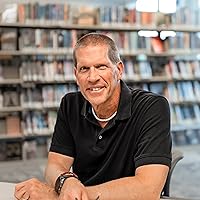
Troy Soos is a writer and teacher based in Winter Park, Florida. Soos is best known for his "Mickey Rawlings" series of historical baseball novels (seven books set from 1912 to 1923). He also authored a four-book historical mystery series set in 1890s New York featuring Marshall Webb and Rebecca Davies. Soos has written a nonfiction history of early New England baseball history, "Before the Curse," and two mystery short stories ("Pick-Off Play" and "Decision of the Umpire") now available as e-books. His newest release is "The Tomb That Ruth Built," the seventh in the Mickey Rawlings series (published March 2014). Series: * Mickey Rawlings * Marshall Webb and Rebecca Davies
Baseball season finally started a little over a week ago. Listening to the games on the radio with simulated crowd noise, the games seem almost normal. My mood has improved tremendously knowing that (keeping figures crossed) from now until the end of October, there will be a baseball game played everyday. With the season getting into full swing, I decided to resume my baseball reading. I had read four of Troy Soos’ historical mystery series returning veteran utility man turned detective Mickey Rawlings, and I thought this year was as good as a time as any to complete it. Hanging Curve takes us back to 1922 St Louis, when the Browns were better than the bumbling Cardinals and racial tensions were as heightened as they are today.
Mickey Rawlings has been in the big leagues for ten years, seemingly suiting up for different team each year. His travels have taken him to Boston, Chicago, New York, Detroit, Cincinnati, and now St Louis. At each stop along the way he played alongside future hall of famers on teams destined for the fall classic, yet Rawlings has never played in the World Series. With Babe Ruth suspended for thirty games to begin the season for participating in a barnstorming tour against negro players, 1922 presents Rawlings with as good a chance as any to finally play in the World Series. The Browns might not have as much name recognition as the Yankees, but, with a pitching staff lead by Urban Shocker and a lineup paced by George Sisler, the Browns seem poised to challenge for the pennant. On the home front, Rawlings and long time girl friend Margie Turner have turned their St Louis apartment into an inviting home; feelings have never been as amicable between the two. With his life at an all time high, Rawlings decides to participate in a one time semipro game against a team of negro stars. He had heard that the best negros could hold their own in the major leagues and wanted to find out just how good they were for himself.
As in Soos’ other mysteries, he deftly weaves in the historical happenings of the day into the plot. The night after the negro team lead by a young Cool Papa Bell defeated their white counterparts, the pitcher for the negro team is found murdered. Rawlings’ friend the journalist Karl Landfors shows up to work on an anti-lynching bill and along with prominent African American attorney Franklin Aubury, they plead with Rawlings to take the case; they know the police never will. After being suspended for fifteen games by the Browns for participating in the game against the negro stars, Rawlings has nothing but time to crack the case. His research takes him back to the 1917 East St Louis race riots, precipitated by the idea that blacks were taking jobs from whites, and tensions look as though they are about to flare up again. Another negro player has his house burnt to the ground, and the team’s field is set on fire by the Ku Klux Klan. If Rawlings and Aubury do not act fast, St Louis could be awash in racial riots again.
Rawlings’ research takes him to Indianapolis where he attends a negro league game between the St Louis Stars and the Indianapolis ABCs. The ABCs are lead by Oscar Charleston, to this day considered the best negro league player in history. With the National Negro League organized in 1920, young African American kids admire Charleston as much as white kids admire Babe Ruth; he is their hero. Rawlings finds out that the newly formed Eastern Negro League has sent scouts to persuade the National Negro League players to join their new teams. If Bell or Charleston could defect, it would be seen as a marketing coup. Perhaps the pitcher was killed by one of his own, a remote possibility but with money involved, Rawlings is not about to rule out anything. Rawlings detecting also leads him to a Ku Klux Klan rally where he discovers that the organization acts in the name of patriotism and protecting the decency of Protestant society. In the early 1920s, the Klan was accumulating a large national following; Indiana had the largest membership and organizers targeted St Louis next. Rawlings found the group despicable and wanted nothing more than to bring the pitcher’s murderer to justice, even at a risk to his own life.
Hanging Curve displays 1920s life front and center- speakeasies, the current feeling of a separate but equal society and an attempt to eradicate it, and the name dropping of baseball icons. Branch Rickey makes a cameo appearance, telling Rawlings his belief about the race in baseball. Eventually, Rawlings does crack the case, but the Yankees take the pennant from the Browns yet again, denying Rawlings his best shot at the World Series. Time is running short on his career, so hopefully he will get another crack in a future case. In a brief note, Soos explains to readers about the formation of the negro league and the first negro league World Series in 1924. Oscar Charleston and Cool Papa Bell never got to play in the major leagues although they did get inducted into the hall of fame during the 1970s. On this 100th anniversary of the formation of the negro leagues, I thought it appropriate to read about the league’s formation. I think this is Soos’ most detailed Rawlings mystery yet, and I look forward to reading the series to completion.
I enjoy this series. It’s fun to get see baseball 100 years ago. I really like Mickey and he has a true sense of justice. I’m from the Midwest and I don’t associate the segregation with it as much as I do the south so I found all the racial tension in the story to be interesting. It very much made me appreciate that I live now and I was able to out to dinner with friends if a different race.
St. Louis, 1922. Babe Ruth reigns as the king of baseball. Mickey Rawlings is no king, not even a prince, but he is at least in the peerage: a utility infielder for the St. Louis Browns. This season, though, there’s more than baseball on his mind. A man has been murdered, and his death may plunge the city into bedlam. The story started when Rawlings, desperate for a chance to play baseball instead of sitting in the dugout, accepted an intriguing offer to play one game between two local clubs -- one of them being part of the Negro Leagues. Professional white ball players are forbidden from taking the field with black players by MLB management, and Mickey was eager to test his skills against such obvious talent. Crawford pitched magnificently, humbling the opposition, and then – days later – he was found lynched, hanging from the stadium’s walls. There had been a fistfight at the game, and members of the Klan hovered about, but – would anyone murder for a baseball game? With little else to do on the bench, Rawlings digs for answers. His search casts a light on the simmering racial tensions in Missouri, the widespread influence of the Midwest Ku Ku Klux, and a prenatal Civil Rights movement.
The golden age of baseball was not a golden age for its black fans. Segregation flourished in early 20th century America, especially as southern blacks streamed northward in search of jobs. Rising racial tension led to a burgeoning Klan, and not only in its old home of the South: the 1920s Klan was strongest in the midwest, practically taking over Indiana. Racial unrest is the backdrop of Hanging Curve; five years before its start, labor riots turned into a race war, leaving areas of East St. Louis utterly ruined. The death and mayhem of those hours haunts the memory of those who remain, but matters are rapidly deteriorating once again, apparently instigated by a baseball team. After Rawlings plays his match against members of the Negro League, matters go awry. He played unsuspectingly, with a team sponsored by an auto dealership, and many on it held an association with the Ku Klux Klan. First a black player is hung, then beatings and arsons follow in reprisals and counterstrikes. Those who survived the riots on both sides know where this is going, and it isn't a road anyone wants to go down. Blood feuds can take on a life of their own, though, and Rawlings has to work overtime to find a way to nip this one in the bud. He works closely not only with one of the dealership's Klan members, but with a NAACP lawyer to investigate who killed Crawford...and why. These budding relationships introduce Rawlings to two worlds which he had been otherwise blind to: the widespread popularity and influence of the Klan, and the segregated existence of America's black citizenry. Although the courts maintained segregation as separate but equal, not until Rawlings struck up a friendship with a black lawyer did he realize how factually bankrupt those claims were. In St. Louis, for instance, the streetcars maintained two seperate lines, but alloted so few cars and conductors to the black line that passengers were forced to wait far longer than their white counterparts. The Klan, too, was a surprise: Rawlings thought it just a gang for roughneck racists, not suspecting the organization had a more sinister attraction on the respectable, masquerading as a civic organization. The pieces of the puzzle indicate to Rawlings that the true motive for that first murder are just as hidden in deception as the Klan members who hovered around the game.
Hanging Curve is one of the most interesting mysteries I've ever read, with a setting that invokes both warm, sentimental nostalgia for the lovely game of baseball and the sad reality of racial tension in America. Consider: the St. Louis Browns, who played in a city a stone's throw from Ferguson, are these days better known as the Baltimore Orioles. But as Rawlings discovers in Hanging Curve, there is more to social dramas both in our day and in his than mere racism. Rawlings was able to tease out the truth, but will we?
A friend & colleague loaned me this book because he knows of my interest in Negro League Baseball. I haven’t read any of Troy Soos books before but I might now—an MLB player/detective? Works for me. I not only enjoyed the story but Cool Papa Bell is one of my favorite players. I learned quite a bit about baseball in the early and mid 20th century and more disturbingly, I learned about the influence and activity of the KKK—I’ve never had the desire to learn more or read anything about that organization but as an American I need to know that part of our history so as not to repeat it. I was ready to read and enjoy this book after reading Buck O’Neil’s review on the back of the book.
In the novel "HANGING CURVE", we are reunited with the major league utility ballplayer Mickey Rawlings. It is the spring of 1922 and Rawlings is now playing for the St. Louis Browns of the American League (AL), a team that would be vying for the AL pennant that year. He's chafing over seeing so little playing time with the Browns that he accepts the invitation of a former major league teammate to play 1 game with a white semi-pro team against the East St. Louis Cubs, a Negro semi-pro team. (Rawlings, when he had played for the Detroit Tigers, had had the opportunity to see some of the other Negro baseball teams play and was deeply impressed by the quality of play these teams showed. Indeed, he wished he could play against them. But with the new baseball commissioner Kinnesaw Mountain Landis in firm charge of Major League Baseball, he generally forbade major league players playing against Negro baseball teams.)
Anyway, Rawlings accepted the offer and, under an assumed name, joined the Elcars in their game against the East St. Louis Cubs in East St. Louis, IL (just across the border from Missouri and very close to St. Louis). On the Cubs was a Negro pitcher by the name of 'Skip' Crawford who pitched brilliantly against the Elcars, striking out Rawlings in a dazzling display of pitching. The game was intense and tempers flared from the Elcars, who were outclassed by the Cubs. Subsequently, Crawford is found dead in the same ballpark several days later, apparently a victim of lynching.
Rawlings is deeply affected by Crawford's murder and takes it upon himself to investigate the murder. In the process, he learns first-hand about the darker side of America as it was in the 1920s when overt racism against Negroes (African Americans) was often condoned or generally accepted without demur by most Americans. Indeed, Rawlings is made painfully aware of the growing power and influence the Ku Klux Klan exerted in several state legislatures beyond the South (e.g. in Indiana, Illinois, and Missouri) and in the local police department.
On the whole, "HANGING CURVE" is a fascinating novel that faithfully conveys the thrilling drama of professional baseball juxtaposed with Rawlings' sleuthing skills and the various personalities in his life whose relationships with Rawlings spice up the novel all the more.
As I mentioned in my review of the first book in this series, I love baseball, history, and mysteries. Therefore, it's amazing to me that I had never read any entries in this series before, given that the books combine all three of those loves.
As I also mentioned in that review, I I know I've seen these books in bookstores over the years. And I think I even thumbed through one of them a time or two. But for some reason, I never read them...until now. And I'm SO glad I did - I've really enjoyed reading the series.
This next-to-last entry in the series was a tough one for me to rate. Throughout most of the book, I was turned off by how dark this entry was. Not only did the plot revolve around the rise of the KKK in the early 1920s, but protagonist (utility infielder Mickey Rawlings) encountered serious relationship problems with his love interest: former actress Margie Turner. I never go into plot details to avoid spoilers, but I will say that the usually happy couple actually separates for a while in this novel.
But I enjoyed the novel more and more the further I went. And by the end, I thought four stars was more accurate than my first reaction, which was three stars...even though it remained a VERY dark novel. I look forward to finishing the final book in the series: "The Tomb that Ruth Built."
Once you read the first two or three chapters, you realize what the title refers to. This reminded me of "Murder, She Wrote" with an athlete instead of an author, and with more gritty, realistic dialogue and crimes. The short Author's Note at the end provides the facts and chronology that put this fictional story in the real world; so disheartening to read of how "things used to be" in the late 19th and early 20th centuries and are still deplorable now, in baseball and society at-large.
This was actually Book #6 in the Mickey Rawling's series. Story was not bad, more like a YA read. The most interesting parts of the story was the history of the negro baseball league (I'm a huge fan of that era) and the workings of the KKK in the Midwest and what they try to accomplish through bullying and intimidation.
quick read that bring you back to America in the 1920s, a country divided, a ball player that just wants to play baseball with the best despite their skin color. He finds himself in the middle of a murder investigation. Though this is a fiction story, the author does an incredible job of taking you back in time and making you feel like you are there.
What a book! Combines baseball history with American history. Very eye-opening about the 1917 riots in East St. Louis, with which I was unfamiliar. Definitely recommend this read.
Mickey Rawlings Mystery Series #6. This year Mickey is with the St. Louis Browns. A lot of the book is tied to the Negro leagues and racial injustices. Enjoyable read.
You would think that my favorite old-time baseball mystery by Troy Soos would be the one dating back to when the Chicago Cubs were actually a major league team (Bitter fan alert!). Well, I liked Murder at Wrigley Field but I like Hanging Curve even better. I like Hanging Curve even though protagonist Mickey Rawlings plays for the ultra-evil, most despicable, far below human, St. Louis Cardinals (Intense rivalry alert). But the real reason that I was fascinated by this mystery was that Hanging Curve deals more with the Negro Baseball Leagues than with the Cardinals of the classic, early 20th century.
Even better, Hanging Curve deals with the socio-political upheaval of race relations in St. Louis (and the rest of the Midwest, too) in a few years after the 1917 East Saint Louis riot. The title offers a brilliant foreshadowing of a story that mixes baseball and a lynching, the Ku Klux Klan and greats like Cool Papa Bell and Oscar Charleston. There are even cameos from Rogers Hornsby and Branch Rickey. To be honest, Hanging Curve is as much about the Klan as about the murder. It touches on the propaganda and how innocent citizens would be drawn into it because of the alleged values the organization espoused.
So, as astute readers have probably guessed from the foregoing paragraph, there is a lynching which takes place in the book, some arson, and some beatings/intimidation—all of which appear to be laid at the feet of the Klan. Yet, there is significant doubt as to whether the lynching was really predicated upon something related to baseball or something larger. And, the larger mystery is spiced by some interpersonal drama between Mickey and his paramour, Margie (former actress Marguerite Turner in the novels). Ironically, the “drama” begins with a formal proposal of marriage that seems to set off an unexpected firestorm. Let’s just say that things prove complicated and complications tend to make for interesting reading.
The story is excellent, the mystery is challenging, the history is interesting, and the book rates highly overall in my opinion. I do have to warn about one portion of the style that bothered me on about three or four occasions. There is a tendency that I call the Quincy Syndrome, after the old Quincy, M.E. television series where Jack Klugman played a “medical examiner” (aka “coroner”) and solved cases largely through letting the spokesperson for the “cause of the week” preach at him for about 20 minutes of an hour show. There were times that Mickey’s old activist friend, Karl Landfors, performed that Quincy Syndrome function and times that the African-American attorney, Franklin Aubury, performed that function. It wasn’t quite as blatant as the sermonettes on the old television show, but it danced dangerously over the line for me.
Yet, the overall impact of the mystery was that I was personally off-balance in my suspicions until very late in the book (not unheard of, but somewhat unusual for me) and that I was truly caught up in the lives of these professional ballplayers on both sides of the color line. I also appreciated the fact that Troy Soos portrayed a tense, racial landscape where prejudice was not restricted to the South. I also rather enjoyed the ambiguity of the novel where several things Rawlings did which were commendable ended up coming back to bite him. Of all the mysteries written by Soos which I’ve encountered, Hanging Curve seems the most realistic and the most satisfying.
Trade paperbacks. I delve into them every once in awhile. I have no problem with them except that too often, there is a sense that something is missing. This book had the makings of a perfect fit for me. Baseball is the one subject I feel I can converse at length about. Basic history is another. The story here takes place in 1922, the dawn of the Roaring 20s. Prohibition is in place. The Great War is four years gone. Baseball is ready to enter the the modern era. Mickey Rawlings (too cliche), is a utility infielder for the now defunct St. Louis Browns. He agrees to be a ringer on a semi-pro team in a game against a "colored" team. Even writing the term now makes me squirm with unease. Baseball was yet to be integrated for another quarter century. Rawlings notes the tension between the two teams and is shocked to learn of a crime occurring not long after their meeting. He then fancies himself as a detective of sorts, teaming up with an old friend, whose life is never quite captured, and a black lawyer named Franklin Aubury. They go on a quest to solve this crime as continued racial violence springs up around them periodically. Their only connection at first is the 1917 race riots in East St. Louis. I loved the inclusion of real baseball players, especially those from the old Negro Leagues. These are players I never got to see play, but I grew up idolizing anyway because of their legend. I knew Jimmy Bell was "Cool Papa" before his nickname was revealed, and I had heard the tale before of him being so fast, that when he flipped the switch, he was in bed before it got dark. I had heard of Oscar Charleston and Rogers Hornsby and Ken Williams and certainly Babe Ruth. In that sense, the book took me back a bit to my childhood when baseball Hall of Famers were my gods. But to me, the pace of the book was somewhat slow, regressing eventually to the main character (Mickey) asking himself a bunch of interior monologue type questions that I wanted to shout out answers to just to keep the book moving. The ending wrapped up in quite a flurry of quick events that could have occurred 100 pages earlier. Overall, some saving grace in the sport/history portion, but not even the best baseball book I've ever read.
I picked up this book because it was a baseball novel. I started it because it was fiction. Once I realized it was a mystery I was very interested. It combines two of my favorite genres: baseball and mystery. Then to find that it is set in St. Louis, which in less than two weeks will be my home, was an added bonus.
Set in the early 1920s, centering not only on baseball of that era (both the Major Leagues and Negro Leagues) but also on the Ku Klux Klan, I learned a lot while thoroughly enjoying the story. I was aware of race riots, but not the extent to which they occurred in East St. Louis in 1917. I'd heard about the Ku Klux Klan and that for many it was just another fraternal organization while for others it was much more insidious and hate-filled, but learned a great deal more from reading this book. I'd even known about Rogers Hornsby and the St. Louis Browns (now the Baltimore Orioles) and Branch Rickey (most famously associated with Jackie Robinson) but received much insight into baseball of the 1920s.
The mystery was interesting, and may have been central to the plot, but main character and baseball journeyman Mickey Rawling's romantic relationship (and its storminess a major part of the book) also added glue to the story.
After reading this I will seek out other Mickey Rawlings mysteries; I have a new series to absorb. Not much wrong with this book, and a lot very right. It would be good reading for anyone interested in baseball of the 1920s, race relations pre-1965, or just a good mystery.
This book is number six in the series of Mickey Rawlings baseball mysteries. I enjoyed the series a lot, and this was probably my second favorite of the six.
The inside jacket cover of the copy I got called this book a "stunning departure" for the author. I did not get that at all from reading the book. I thought it was very much in line with the rest of the series, which was fine by me.
Like the rest of the series, this book deftly combines baseball, mystery, and history in some way that involves a social issue at the time. Some of the issues in the series were unions, anti-German sentiment during WWI, and now racial tensions between white and black people within America. Obviously, looking at that list we still have lingering issues that were present in the 1920s.
If you enjoyed the rest of the Mickey Rawlings books, like I did, I think you will enjoy the final entry in the series. If you have not read the series but are a fan of baseball, mystery, and history I recommend you give it a try!
Final entry in the Mickey Rawlings historical baseball series. The books' settings are each spaced out by a few years, and this one takes place in 1922 St. Louis as Mickey, still a utility infielder, plays for the St. Louis Browns. Each of his books also deals with social issues of the day, and this one deals with the Negro baseball leagues, Jim Crow laws, the Ku Klux Klan and lynchings, and it was a very painful book to listen to. It was excellent--just made me mad as hell.
I am sad, too, that there are no more books in this series. I've thoroughly enjoyed knowing Mickey and Margie, his friends and (the author's real strength) the historical settings and social issues happening in the different cities Mickey's played in. I've listened to all these in the audio format, read by Johnny Heller, who does an excellent job with the 'tone' of the books and has become Mickey's voice to me. Farewell, Mickey, and thanks for the entertainment! A.
I am really glad I read this book, because my dad really wanted me to. It's about 1923 St. Louis and the racial divide in baseball and in general life. I learned a lot about history, such as the rise of the Ku Klux Klan, especially in Indiana. I don't understand how people believed it was a good Christian organization. Makes me sick - how did they miss what was really happening?
I thought this was a good man book. Baseball, and historical facts. I tended to get a little bogged down by the facts, but it was still a good read. Fairly easy and fast. I did kind of giggle at the amount of prohibition alcohol the characters took in.
The seven Mickey Rawlings books are all pretty good, but this one has an extra element: the divisions within baseball between white teams and teams made up of black players denied access to the major leagues despite their clear talent. Rawlings, who plays for the St. Louis Browns, looks forward to playing, but not all (many) whites share his views, so the commission of murder seems all too likely. Soon depicts baseball in the 20s well, and has done some significant research into both the Negro Leagues and East St. Louis itself. He also provides a sympathetic amateur investigator in Rawlings and a smooth writing style.
really liked this book. It was my first Troy Soos novel and I plan to read others when I find them. It really taught you about the laws back then. I was shocked to read that Micky and his girlfriend were living together and not married as most books based in the 1920's would have them married. I guess things like that happened back then but just wasn't talked about that much. I heard this was the last in the series and that is a shame. I would like to read more.
The author weaves information about the Negro Baseball League, the Klu Klux Klan and race riots 1917-1922. The mystery itself was well-hidden and unfolded with many false or misleading aspects to the investigation. A negro league pitching star is hanged after his team defeats a white team. Though the story should have been compelling, the author failed to make the characters and the cause as interesting as the plot sounded. However, the end turned out to be more tense and interesting.
Perfect winter escape reading for me. Murder mystery, baseball and history all rolled into one. The author includes a good amount of factual information in this book, particularly in the beginning chapters. I was concerned that the story would never truly kick in, but I was wrong. By the final third of the book, I had that delicious "when can I sit down and read" feeling.
Although the main character of this book is a major league ballplayer, the main story is about the murder of a black ball player in 1922. The author describes the racial tensions and rise of the KKK along with the successful season the St. Louis Browns had that summer. A good detective novel, even if you don't like baseball.
More of a historical novel than a mystery. Light but enjoyable, especially if you are into the history of the early days of baseball—particularly prior to the integration of baseball. The book is full of the early days of baseball with enough of a whodunnit plot line to qualify it as a mystery—but barely.
What a turn of a story. This was an outstanding mystery. I use examples of it when teaching the 1920's and the growth of the KKK. Probably my favorite of the Mickey Rawlings stories. : and they are my favorite mystery series. Come on Troy give us some more.
For all you baseball and mysterhogans who have wished to combine the two in one great joy, this book is for you. Based on some real life events. I now want to read all of Troy Soos' books!! GO CARDS!!! ( couldn't pass up the opportunity to say this!!
Really enjoyable period baseball book. I really liked how the story revolved around true incidents and how the baseball story weave throughout. Too bad it's the last book by the author in the series.