I found this book utterly disappointing. It circles around the most primitive punctuation mistakes and repeats them at no end. It did not answer any of my punctuation questions.
If you know that the plural of, let's say, "egg" is "eggs" and not "egg's", you don't need this book; that is, unless you want to get some good laughs about ignorant people who don't know that you don't use an apostrophe to build a plural. And if you should happen to be an elementary-school dropout, you better get yourself a different book to help you catch up on grammar and punctuation.
I also had only limited interest in all the philosophy about the use of punctuation during different times in history and in other languages. I wanted solid information regarding contemporary English punctuation, and I didn't get it.
Sticklers unite for a wonderful tale of grammar and punctuation!
“In this chapter I want to examine punctuation as an art” , if this statement sounds a bit too wacky for you than this isn't the book for you. If the statement stirs amusement then you will certainly enjoy this witty discussion of grammar and punctuation.
It is a useful guide for people who require an understanding of some grammar and punctuation rules. The book is filled with clear examples that soundly explain the logical reasons for certain rules, which make it easy to grasp an understanding of a subject that can sometimes be daunting.
However I do feel this is a book for people who are sticklers for grammar and punctuation. Truss does become quite passionate throughout the book and if you don’t share a similar passion you may find it overbearing. I loved it and found myself smiling and laughing out loud many times.
There is no doubt that Eats Shoots and Leaves is a fantastic book about grammar and punctuation. Truss takes the subject to the next level with intelligence, humour and above all, passion. Truss’s passion is embedded in every word giving what could have been a very ordinary book a delightful personality that is easy and enjoyable to read.
Fun Fact from the book: The punctuation mark ?! is called an ‘interrobang’? How marvellous is that?!
SIDE NOTE: Microsoft Office doesn't have the word ‘interrobang’ in its vocabulary. This is an example of how dangerous it is to rely on spellcheck and the importance of having a sound understanding of grammar and punctuation, and a robust vocabulary.
I read a different edition of this. It was much-hyped and was somewhat of a disappointment. The gap between hype and reality isn't the author's fault, but I just didn't much like the tone of it.
I'm a trained sub-editor and have edited novels for people, including journalists. English is a living language - unlike French, which is so strictly regulated that it's dying - which is why it has won the language war. There's a limit to just how strict the rules of grammar should be. I think it's now perfectly acceptable to split infinitives now. I think there was even a ruling on it a couple of years ago.
Humorous and educational, this book should be required reading for high school students to polish up their writing skills before graduating. I love language in all forms and colors. I seethe when I read internet comments that are full of improper word choice and void of all punctuation. I know English punctuation and grammar can be tricky, but there are a few basics, which should be preserved no matter what electronic age tries. And really, the difference between extra-marital sex and extra marital sex is too delicious to lose. Though this book is amusing, short, sweet and to the point, I did find myself getting a bit bored by the end. I think it was because what was being said was self-evident. However, I will seek out Truss' follow up book Talk To The Hand.
A boring, pretentious book about punctuation. Truss talks about how she is awesome at punctuating and writing, declares that her book is for "sticklers," but only reviews the most basic forms. I found myself caught in a cycle of feeling insulted (sticklers need to know how to use commas in a list?), and bored to tears (why am I reading about when to use a period?).
Yeah, it was funny. Not as funny as I expected but with a title like that, I was over-hyped.
Now, I know where, to use, my commas. Not comma's--that would get you shot in this book. And yes, my first sentence was a blatant illustration of where not to use your commas. I know better now.
And I do so much want to get a dark red sharpie and carry it everywhere in my hip pocket, whipping it out and applying it fearlessly whenever an apostrophe is abused! Or missing! (Although I may have to carry the book in my other pocket and check it from time to time. It's hard to see what's not there.)
Correct? the teacher's chair--yes. Correct? The children's chair--better check! Children is already a plural so maybe it doesn't need an apostrophe.
This is a must-read book for all authors. Read, digest...then forget it all. Unfortunately modern (American) publishers don't want semi-colons or, God-forbid, colons. So, just as you've finally got the hang of all the stuff you didn't learn in your dreadful let's-all-be-completely-equal-and-not-stifle-creativity '60s English lessons, you have to ignore it. But it's fun to know how to do it right, even if your editor slashes it all out.
Worth reading, not as a manuel, but more as a collection of inside-jokes for the few among us who still know or care about grammar. It is generally well written, but at times Truss can be a bit much- and those who are truly "sticklers" may notice a couple instances where she is guilty of doing what she proscribes. Either way, it will make you laugh.
A humorous, well-written, and informative guide to punctuation. Truss's philosophy is basically sound: punctuation, though conventional, is a means of clarifying meaning, and thus we should cultivate as much consistency, clarity, and logic in its usage as we can.
Gelesen habe ich die deutsche Adaption, die bei goodreads.com nicht geführt wird. Ich hielt es für einen feuchten Traum, dass ein auf Deutsch geschriebenes Buch sich mit englischer Grammatik befasst. Leider entpuppte sich dies als ein Griff ins Klo :( "Ich fühl's nicht" Erwähnenswert ist Lynne Truss' Enthusiasmus, die Grammatikmissstände zu beseitigen und sie geizt nicht mit Pladoyers für korrekte Zeichensetzung. Leider ist das Buch zu kurz, behandelt zuviel auf zu wenigen Seiten und damit verblasst leider der (potenzielle) Lerneffekt. Das Fazit, das ich aus der wunderbar positiven Stimmung der Autorin ziehe ist aber, hin und wieder in meinem Duden zu stöbern - und was könnte die Autorin sich mehr wünschen?
I cannot even tell you how much I enjoyed reading this book. I learned a lot, both in terms of how right I am about some punctuation and sometimes how wrong. The book was readable and funny and had great example sentences drawn from real literature and news. It often made me laugh out loud. Here are two quotes that I loved:
... "to be honest western systems of punctuation were damned unsatisfactory for the next five hundred years until one man - one fabulous Venetian printer - finally wrestled with the issue and pinned it to the mat. That man was Aldus Manutius the Elder (1450-1515) and I will happily admit I hadn't heard of him until about a year ago, but am now absolutely kicking myself that I never volunteered to have his babies." Lynn Truss
and "The big final rule for the comma is one that you won't find in any books by grammarians. It is quite easy to remember, however. The rule is: don't use commas like a stupid person. I mean it." Lynn Truss
An interesting book about punctuation. I think what I gain from this book is a sense of appreciation about the development of language and how even a comma or any other punctuation symbol can change the perspective of readers.
However, even though the author writes in humorous style, sometimes I just feel it's a bit too exaggerated, and therefore brings me a bit of uncomfortable feeling reading it.
As an editor of fiction, non-fiction, verse, scripts, and even song lyrics, I was tickled by Garisson Keillor's yarn about running into Bod Dylan at the University of Minnesota, where long ago both had been classmates. Keillor told Bob it should be "Lie Lady Lie," not "Lay Lady Lay," unless Dylan wanted the female lying across his big brass bed to be a chicken.
Keillor then added, somewhat ruefully, that it was Dylan rather than himself who was awarded the Nobel Prize for Literature.
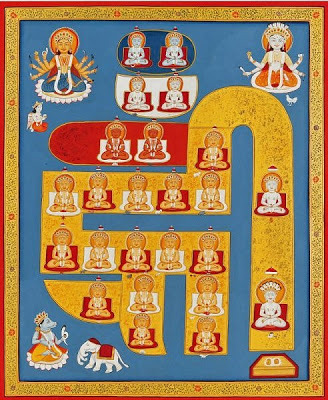
That being the case, are editors and other grammar police really necessary? Some answers for this come from India's Vedic tradition, where language is sacred and grammar capable of conferring enlightenment. After all, despite our minds, intellects, powers of reasoning, and intelligence, we remain riddles to ourselves, bound within the labyrinth of language. We cannot step back from language, or leap or fly over it. For it is our minds, bound in language, that would leap, and the very sky into which we would escape is but another creation of our thought. Thus we measure out our lives syllable by syllable. We can never really have a knowledge of language, but only in language. To penetrate in language, to the center, is to find the core of our own being and of the universe.
Each syllable measuring out the dimensions of our world is, in essence, measureless--infinite, eternal. In exploring the depth of language we find that the universe is a spoken reality, that the Word speaks through us and through all things.
Our dwelling is within the Word, and the dimensions of our dwelling are precisely equal to the depth our our awareness of that Word. Poetry is a measuring, a fathoming of the vastness of that dwelling. In the highest realm of speech, the dwelling is without limit. This is the summit of the poetic.
Language not only reveals but also conceals itself. It weaves illusions that artfully bewitch us. In fact, the seer grammarians of the Vedas saw the entire creation as nothing but the mirage-making power of the Word. They had a name for this spell casting--they called it māyā.
The eternity of the Word is measureless. When it begins to flow, a measuring occurs and the beginning of an illusion emerges. The spell of māyā, the illusion of measurement, is cast as directions, time, space, words, and worlds arise from their silent source.
The seers of the Word envisioned her as a beautiful Goddess whose unadorned radiance is revealed only to those who love her. Each syllable of the Vedas, each movement of this Goddess, conceals the ontological depths of silence. Yet each syllable is capable of revealing inmost beauty, just as a radiant woman sheds her garments. The verses of the Vedas, the sounds and images, like the clothing of a woman, suggest an underlying beauty. She is her own authority, requiring no commentary to reveal her greatest mystery. Embracing and transcending Heaven and Earth, she moves in concert with and upholds all the luminous divinities. She grants visions, illumining herself, making her lovers powerful and wise seers. She is at once the diversity of names and forms, and the unity of formless, poetic intuition. She is both communication and communion. She is concealed in the heart and revealed through love and worship. Among those who see her luminous nature, there is true friendship. Only among those who do not know her fully does she cause struggle and even death. To those who know her intimately, Heaven and Earth are abundant, for she is the essence of the human heart and of the entire creation. Simply by attending to language wisely, the entire mystery of creation opens.
Each syllable of the Goddess blooms from inmost silence. Each flowering, each unfolding, is also an enfolding. Each blossom enfolds silence, creating a particular sound and form. Each word and object in creation is thus an embrace of the Goddess, opening to eternity. When the indusium of words is lifted, an inward penetration and flowering reveals the most intimate life of the Goddess, the Word.
The grammarian Pāṇini tells of how grammar polices itself. As the story goes, a demon named Indrashatru (Conquerer of Indra), who mispronounced his own name by only one accent, thus changing the meaning to Whose Conqueror is Indra. Thereby the demon thereby immediately perished.
To prevent such mishaps, 2,500 years ago India's first grammarian, Pāṇini, composed the world's first grammar. It was of the Sanskrit language. When the grammar was "discovered" by 19th century European Europeans, it formed the basis of modern linguistics and has been the template for every grammar. As if this were not enough, the Backus-Naur form or BNF grammars used to describe modern programming languages have significant similarities to Pāṇini's grammar rules.
Furthermore, Pāṇini is important in Artificial Intelligence research, which, among other things, attempts to shed light on the computational structure of nature and of the mind.
This calendar is great fun, and also educational. I gave it to several people this year` and they all were eager to open it and start laughing. definitely recommend to 5 and older
This is a fairly entertaining though sometimes self-important book about the poor state of contemporary punctuation. Much of the book feels half-baked, with Truss wanting to truly get at something substantial, but often ending up scratching the surface and merely being content with adding in one of the dozens of poor punctuation examples in this book and then saying, "Eh? Eh? This is pretty bad, isn't it?"
There is also an inconsistency in the message of this book. On the front cover, the sub-heading reads: "The Zero Tolerance Approach to Punctuation". Truss's battle cry is also, "Sticklers unite". Sounds promising and like there will be some very hard facts and answers provided! However, Truss quickly admits that punctuation is fairly malleable once you really get down to it, and much of it comes down to a preference for style. Sure, much of the information regarding commas and apostrophes is undeniable in this book, but Truss then backs away from taking a hard stance at other points.
I finished this book in a day, and while it was enjoyable due to Truss's ability to keep things interesting with her obvious talent for writing, it felt oddly incomplete. Even the way it ended felt very sudden, as if someone had decided to stamp a period on the project where a semi-colon would have kept it going.
All of this said, I enjoyed this. The examples of poor punctuation are often entertaining; the basic rules for commas and apostrophes are important to refresh; finally, there likely is something new in here for you, especially if you're not someone who teaches reading or writing at some level.
I'd breeze through this and then get a dedicated style guide if you're really itching for more.
I think I've always avoided this book because of two false assumptions: that my grammar is excellent and that a book about grammar will inevitably be boring. In the former case, it turns out that there were enough rules that I didn't know to make some brush-up worthwhile, and in the latter that a book on grammar can be quite enjoyable, provided that the author is quite mad.
Truss styles herself as the arch-stickler when it comes to grammar, and it's hard not to be amused by her vitriol at those fiends that would insert an apostrophe where it's not needed or omit it where it is (e.g., Toms Groceries'). The book is full of interesting quotes by authors and others, some declaring punctuation to be king while others refer to the comma as "servile", all delivered in a dryly humorous style that really worked for me.
One thing to note though is that the book is primarily focused on British grammar conventions. This was fine for me since Canada generally follows the UK in spelling and grammar, but may be less useful for American readers. Truss seemed to call-out American exceptions to the rules she was describing though, so it's not as though American readers would get nothing out of the book.
I bought this book at the library for two dollars. I thought it would be something to read before bed that I wouldn't be tempted to stay up all night to finish. I also wanted to test the theory about not looking at a bright screen before bed--not that I think e-ink is bright. It didn't help me sleep any better, though it did fit the purpose of not staying up to finish.
I must say I find to book to be very entertaining. Who knew a book about grammar would be so interesting. She explains the rules for punctuation, how they originated and how they might be changing. Her examples are very clever. For instance, when she discusses hyphens, she uses as an example the difference between extra-marital sex, and extra marital sex.
I even considered buying the e-book so I could highlight the passages I liked and transfer them to Evernote, but alas Penguin wanted too much money. Seriously, I should spend $12.99 for a book I don't really own. So I guess, they got their way--I bought the print copy for $2.00. Of course, since it was used--Penquin got nothing.
Never had so much fun!!! I have read it before, but as I was cleaning up my book shelf, we exchanged looks and I understood that it wanted me to go through its pages once more. I had to read it again! It is an outstanding book! Hors concours!
This is a riot of a read. I haven't laughed so much since Bennett's 'The Uncommon Reader'! It is a laugh out-loud read, and I so identify with the quivering indignation of improper punctuation. Having said that, there were some beautiful surprises in there about punctuation and my confusion over some of the aspects, not least the difference between the 80s (which I deem correct), and the 80's (which drives me insane). Turns out the latter is American (and possibly the ensuing insanity). Very well written, superbly clever, well researched, and yes, this is now the one person I'd have dinner with in those quiz games that have the question, 'If you could have dinner with anyone in the world, who would it be and what would you ask?' It used to be anyone autistic, but for real escapism, I'd have dinner with a punctuation stickler, ah the joy of pure unfettered outrage. Love it. I might even buy my own copy so I can use the emergency rescue punctuation kit.
Punctuation snobs unite! This book is a quick, fun read about the uses (and misuses) of punctuation both in early British and American literature and in popular use today. It is a very entertaining look at the history and evolution of the most overlooked keys on your keyboard in these modern days of texting and e-mails. If you've ever wanted to learn the difference between "whose" and "who's", "they're" "their" and "there", and "its" and "it's", this is the book for you. Perhaps you're like me and already knew the rules and wanted reaffirmation that you weren't alone in your obsession. I am no longer intimidated into avoiding use of the semicolon; I know where it belongs and how to wield its immense power. Highly recommended. Lighthearted, yet informative, there were several laugh-out-loud moments.
As a book of grammar this is about as best as it gets. The book is humorous and very informational. While occasionally lacking in gripping stories or examples, this book does its best to teach its readers about grammar and does so in a pleasant way. Would I have read this book outside of an AP English Language and Composition class? No. Did I learn quite a bit and now have a better and firmer grasp on numerous punctuation? Yes. So, all in all, this book is very well written if you are looking for a book on how to become a better writer that won't make you want to pull your hair out. If you're looking for a riveting book about something other than grammar, keep on looking.
Lynne Truss's "Eats, Shoots & Leaves: The Zero Tolerance Approach to Punctuation" is a must-read for those who love the English language. And it should be read who those who don't understand the English language and the need for proper punctuation. Ms. Truss has written a witty and informative book all about commas, semicolons, colons, periods, and other forms of punctuation and how they are to be properly used. She has a deep affection for language and is ready to defend proper punctuation on all levels, including the Internet, texting, and other areas of new media. It's a fun read as well as an educational one -- a great combination.