Jump to ratings and reviews
Rate this book

Sämtliche Gedichte

Rate this book
Ingeborg Bachmanns Ruhm als eine der größten Dichterinnen der europäischen Moderne. Sämtliche vollendeten Gedichte, von der frühen Lyrik bis zur »Anrufung des Großen Bären«, bilden den Kern ihres facettenreichen Werkes und gehören zu den großen dichterischen Leistungen des 20. Jahrhunderts.

240 pages, Taschenbuch

First published January 1, 1978

Loading...
Loading...

About the author

Ingeborg Bachmann

170 books632 followers
“What actually is possible, however, is transformation. And the transformative effect that emanates from new works leads us to new perception, to a new feeling, new consciousness.” This sentence from Ingeborg Bachmann’s Frankfurt Lectures on Poetics (1959-60) can also be applied to her own self-consciousness as an author, and to the history of her reception. Whether in the form of lyric poetry, short prose, radio plays, libretti, lectures and essays or longer fiction, Bachmann’s œuvre had as its goal and effect “to draw people into the experiences of the writers,” into “new experiences of suffering.” (GuI 139-140). But it was especially her penetrating and artistically original representation of female subjectivity within male-dominated society that unleashed a new wave in the reception of her works.

Although Bachmann’s spectacular early fame derived from her lyric poetry (she received the prestigious Prize of the Gruppe 47 in 1954), she turned more and more towards prose during the 1950’s, having experienced severe doubts about the validity of poetic language. The stories in the collection Das dreißigste Jahr (The Thirtieth Year; 1961) typically present a sudden insight into the inadequacy of the world and its “orders” (e.g. of language, law, politics, or gender roles) and reveal a utopian longing for and effort to imagine a new and truer order. The two stories told from an explicitly female perspective, “Ein Schritt nach Gomorrha” (“A Step towards Gomorrah”) and “Undine geht” (“Undine Goes/Leaves”), are among the earliest feminist texts in postwar German-language literature. Undine accuses male humanity of having ruined not only her life as a woman but the world in general: “You monsters named Hans!” In her later prose (Malina 1971; Simultan 1972; and the posthumously published Der Fall Franza und Requiem für Fanny Goldmann) Bachmann was again ahead of her time, often employing experimental forms to portray women as they are damaged or even destroyed by patriarchal society, in this case modern Vienna. Here one sees how intertwined Bachmann’s preoccupation with female identity and patriarchy is with her diagnosis of the sickness of our age: “I’ve reflected about this question already: where does fascism begin? It doesn’t begin with the first bombs that were dropped…. It begins in relationships between people. Fascism lies at the root of the relationship between a man and a woman….”(GuI 144)

As the daughter of a teacher and a mother who hadn’t been allowed to go to university, Bachmann enjoyed the support and encouragement of both parents; after the war she studied philosophy, German literature and psychology in Innsbruck, Graz and Vienna. She wrote her doctoral dissertation (1950) on the critical reception of Heidegger, whose ideas she condemned as “a seduction … to German irrationality of thought” (GuI 137). From 1957 to 1963, the time of her troubled relationship with Swiss author Max Frisch, Bachmann alternated between Zurich and Rome. She rejected marriage as “an impossible institution. Impossible for a woman who works and thinks and wants something herself” (GuI 144).

From the end of 1965 on Bachmann resided in Rome. Despite her precarious health—she was addicted to pills for years following a faulty medical procedure—she traveled to Poland in 1973. She was just planning a move to Vienna when she died of complications following an accidental fire.

Joey Horsley

Ratings & Reviews

What do you think?
Rate this book

Friends & Following

Create a free account to discover what your friends think of this book!

Community Reviews

5 stars
451 (52%)
4 stars
284 (33%)
3 stars
93 (10%)
2 stars
20 (2%)
1 star
4 (<1%)
Displaying 1 - 30 of 59 reviews
Profile Image for Sawsan.
1,000 reviews
October 21, 2022
Harder days are coming
the withdrawal of deferred time
is visible on the horizon..
over there your lover sinks in the sand
it reaches up to her flowing hair
it cuts off her words
it orders her to be silent
it finds she's mortal
and willing to leave
after every embrace
don't look around
harder days are coming.
------------
Used together: seasons, books, a piece of music
the keys, teacups, bread basket, sheet and a bed
a hope chest of words, of gestures, brought back, used, used up
a household order maintained. said. done. and always a head was there
I've fallen in love with winter, with a Viennese septet, with summer
with village maps, a mountain nest, a beach and a bed
kept a calendar cult, declared promises irrevocable
It's not you I've lost
but the world.
-------------
More beautiful than the remarkable moon and her noble light
more beautiful than the stars, the famous medals of the night
more beautiful than the fiery entrance a comet makes
and called to a part far more splendid than any other planet's
because daily your life and my life depend on it, is the sun.
Profile Image for Katia N.
733 reviews1,205 followers
Read
March 10, 2026
This is the poetry* that makes you probe each word in your mouth, feel every throbbing little bite on the inner chick, grind your teeth with helplessness how the words can wound so deep, tear you open, become your thoughts without being your words. The words written in a language you do not understand, initially presented to you through other peoples’ filter; later, you take the words and use a machine not because you do not trust the translators: on the contrary, they made you want to get nearer to the original words, they raised the bar for you. But you want to hear just the words so you can get to the unfiltered thing: just the mind of this woman, her presence, her thoughts and no more humans in between. And for some scraps of her text you start to put these words together in a language that is not totally yours; you put them together so they can get out of your mind and your mouth and leave you; so you can be just you again without the ghost of this woman inside. Still you’ve been reminded about the existence of this dark vulnerable place, like a deep well inside you, unavailable to your own words that those other words could reach. The place where they drop, slosh, ring, the words stop being signs melt into particles, sounds, shapes of light and darkness, betray you, split into shards, cut you and then heal.

Ingeborg Bachmann has rushed into post-war literary scene like a comet. But when i think about her i imagine something alive: not a comet, but a bird, a warm light-feathery creature with the wings letting her to experience the freedom of flying but at the same time disarming her with knowledge that this couldn’t last.

She has started with studying philosophy but after some time she has switched to poetry. After becoming familiar with early Ludwig Wittgenstein she has probably come to the conclusion that poetry was better use of the language if one is about to reveal any ‘truth’. However, it has to be a reinvented language. In her interviews Bachmann said:

I think that we cannot, indeed that we may not, use the old images, the way, say, Mörike or Goethe used them, because they would sound insincere coming from our mouths. We must find true sentences, which are worthy of our own zone of consciousness and of our changed world...I try to be sufficiently suspicious, suspect the words, the language, I have often told myself, heighten this suspicion—so that someday, maybe, something New can come into being.


And so she has started. With this unbearable sense of urgency and passion, she was creating new images, to shape this new consciousness, this new language for a changed world.

And so I lean into you, making the shadows ring. (In Twilight)

The string of silence stretched across the wave of blood, I seized your resounding heart. (To speak darkly)


Imagine ‘the shadows ring’. They would if you try hard enough. Imagine how one can cover a betrayal or sense of loss - any bleeding wound inside - with silence. (By writing this, do i risk to replace her stunning imagery with my cliches? Anyway i feel inspired to speak by her so i will speak for now.)

The wheels grind to a halt. Through the dust and cloud husks,
the Ferris wheel slurs the coat that covered our love.
 
Nowhere are last kisses guaranteed before the first
as they are here. You simply carry on in silence with the
sound of their aftertaste on your tongue.
(Tr. Lilian M Friedberg)


’Nowhere are last kisses guaranteed before the first’. People write novels wasting words, paper and everyone’s time, while this is a perfect poignant love story in a single phrase. She rushed to live, to experience and feel as if she knew she had a very limited time:

Silver-tinseled birds rise, and the scent of cinnamon!
I am alone with my murderer, Time.
We cocoon ourselves half-seas over in blues.
(Tr. Lilian M Friedberg)


Like a tight string on a violine, she was acutely attuned to time, to its rhythm both her internal and historical.

It was the first decade after the war. There were no active battlefields anymore. But the battles are ongoing in the souls of people. Their visible and hidden wounds weren't necessarily healing. What was certainly reappearing was hypocrisy in the society where the necessity of reconciliation might prevail over necessity of justice. Where your father might be an avid supporter of a genocidal regime while your lover might be its victim. And you have to live with this somehow. Where there was a shadow of the new ‘colder’ war is growing.

The war is no longer declared,
But rather continued. The outrageous
has become everyday. The hero
is absent from the battle. The weak
have been thrust into the firing line.
(Tr. Lilian M Friedberg)


Also she had to use not simply a language, but German language. The language that has been recently used to give orders to decimate innocent people in mass and to glorify people giving those orders. She needed to use this language to create beauty, to shape new meaning. Never-mind this: she needed this tongue to be understood in her daily life. It wasn't a theoretical question, it was a daily experience. She didn’t have the luxury of choice being surrounded by its cloud:

I drift through all languages
with the German tongue —
this cloud I hold around me
like a house
 
Oh, but the way it darkens
the sinister, the tenor of rain
only a few of them fall
 
Then it lifts the dead man into the lighter zones.
(Tr. Lilian M Friedberg)


This is a fragment from ‘Exile’, the poem she has written from a perspective of an old man; or was it just a voice she couldn’t help but hearing inside?

She wasn’t the only one grappling with this issue of German language. In his acceptance speech for the Bremer Literature Prize, Paul Celan, a fellow poet and her on-and-off lover, whose parents have perished in Holocaust, had tried to describe this phenomenon:

It, the language, remained, not lost, yes, in spite of everything. But it had to pass through its own answerlessness, pass through frightful muting, pass through the thousand darknesses of death bringing speech. It passed through and gave back no words for that which happened; yet it passed through this happening. Passed through and could come to light again, ‘enriched’ by all this.


At this stage, they were both optimistic and hopeful about the power of that new ‘enriched’ language and their own power over it. Maybe they’ve won the first battle. They’ve found new words, metaphors. They’ve reinvented the tongue. But it cost them dearly: it was too painful. They’ve won the battle but both of them have ended up losing a war, the war within themselves, for themselves. But I am running ahead.

Ingeborg was a celebrity. She has published two very successful collections of poetry; she did a lot for radio. She was always a centre of attention surrounded by a bunch of bohemian friends. And it seemed she has found love in the relationship with Max Frisch, a Swiss writer. However, any relationship, any steady occupation, even being famous constrains personal freedom. And it seems she was just too free for all of that. A bird need to be in flight: no single person or a single place is good enough.

Her relationship with Frisch, their complicated reckless love for each other, their betrayals has had a tremendous impact on her work. Her poetry that she hardly published at that time has become almost unbearably revealing about two people who cannot be together but cannot be apart either. It was hard on her. It was hard for him as well. In his novel Montauk many years later, Max Frisch wrote:

Her independence was part of her radiance. Jealousy was the price I had to pay for it, and I paid it in full. Lying on the summery balcony with its view across Rome, I slept with my face in my own vomit. By suffering I only increased my tender longings. But when she was there, she was there.


He loved her for her ‘radiance’ but it came together with her desire to be free. He was not a boy, he was forty eight and more than decade of her senior. According to La Rochefoucauld, ’Jealousy contains more of self-love than of love’. I am not sure how it works in this case, but ‘the green-eyed monster’ did mock both of them.

In parallel she seemed to struggle to define her femininity: not that much in her relationship with men but in her writing. It seemed a tortuous process for her. She felt she could only know how to tell a story from a masculine position. But I have often asked myself: why, really? I have not understood it, not even in the case of the short stories, why I so often had to adopt the voice of the masculine ‘I’​.

It is strange as initially reading her earlier poems, I would never imagine that they could be written by anyone apart from a young woman. But when I’ve learned that reflection of hers, I went back and started to see this duality. Many poems were still very feminine, even girlish. But some others clearly presented a perspective of a man and did it very naturally. A poem ‘Borrowed Time’ (Die gestundete Zeit) is a good example. I was amazing how could she do it with such an authenticity. But apparently it was troubling her. She could not write from a female perspective without feeling this controlling male voice inside.

This has reminded me of her masterpiece Malina a feminist classic. In that novel she was very successful in conveying this duality, this turbulent coexistence of the feminine and masculine through seemingly splitting these sides into two separate characters. In any case, it seems almost certain that in her later work she has succeeded in fully expressing her feminine side.

Eventually they did break up with Frisch. There is no single photo of them together. She didn’t take it lightly - she felt lost.

A kind of loss (Eine Art Verlust)

We’ve used to share: seasons, books, and music.
The keys, the mugs, the breadbasket, the sheets
And a bed.
A dowry of words, of gestures, brought along,
used, used up.
The house made orderly. Said. Done. And always
The hand - to your hand.

In winter, in a Viennese septet and in summer I
fell in love.
In maps, in an alpine hideout, in a beach and in
A bed.
Making a cult with dates, with unbreakable promises,
idolising a Something, pious before a Nothing

(-the folded newspaper, the aches got cold,
the scrap with a note)

Fearless in religion, for the church was this bed.

A view of the lake was infinite source of my painting.
From the balcony the peoples, my neighbours,
Might be greeted
By the fireplace’s safety, my hair has gained its full colour
A doorbell ringing was the alarm for my joy.

I haven’t lost you, i’ve lost the world.
(my translation)**


Here is stunning pulsating song the french artist Delphine Dora has composed with German lyric of this poem. It cannot live a human being unmoved. This is definitely as feminine poem as any other woman could imagine. It seems through losing him she has managed to tune into this very light, very female way of voicing out inner feelings. However, the darkness inside and inability to get it out into the open would never release her from its grip for too long. This struggle helped her to produce brilliant poetry, but it caused pain, anxiety and fuelled her tendency to dull it with the pills and alcohol.

That it was worse yesterday

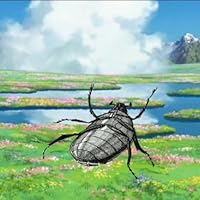
In the crack in the wall I saw in a moment of panic a black beetle who was playing dead.
I’d like to speak to him,
to show him a way out of this lovely house, to show him an exit, or stomp on him right away.

I learned something from him, I myself
am also playing dead, having fallen into the crack of Berlin, disappearing from the face of the planet,
stared at as well by those eyes between two fire walls, with whom I can no longer speak with in a moment of panic.

To finally stomp on me also occurs to him, and to me
in my madness, I being the same one who stares at both me and the beetle, holding a novel
heavy enough to kill this beetle.
(tr. by Peter Filkins)


This scream of a poem reverberates with Malina. In the novel, her character eventually also disappears into a crack of the wall while her flatmate coldly accepts it's happening. Yet again in this poem it seems she was perceiving her mental struggle as a fundamental fight between the feminine and the masculine parts of her personality, I being the same one who stares at both me and the beetle where the masculine (Jung might have called this ‘Animus’) was destroying the defenceless gentle goodness that the feminine side tried to propagate.

It is uncanny that approximately at the same time when this poem was written Clarice Lispector has published her iconic novel The Passion According to G.H.. In this book, her main character does kill an insect; not a beetle, but a cockroach. Staring at this dead roach, she seems to be feeling similar to Bachmann’s poetic alter-ego: unbearably and existentially connected to this insect. At some point Lispector’s character exclaims:

I don't know what to do with the horrifying freedom that can destroy me.


Did Ingeborg start to realise exactly this thing in that time? We would never know. But we know that she has become disenchanted with poetry: specifically with its ability to be instrumental in shaping the new consciousness she was aspiring to earlier. In private life the words didn’t lead to any understanding, just to more pain. In the public realm she continued to see the same hypocrisy and cruelty in spite of the material conditions getting better.

In 1964 she said the final farewell by writing her last poem ever.

No Delicacies (Keine Delikatessen);

Nothing appeals to me anymore.
 
Should I
garnish a metaphor
with an almond blossom?
crucify the syntax
to  halation?
Who would wrack the brain
over such trivialities —
 
I have learned one thing
from the words
that exist
(for the lowest class)
 
hunger
    humiliation
        tears
and
                      darkness.
 
I will get by on the
unclean heaving of my shoulders,
on the desperation
(and desperation may yet drive me to despair)
over the widespread suffering,
the ills, the cost of living.
 
It’s not the Word I neglect,
it’s myself.
God knows
the others can help themselves
to comfort in words.
But I am not my own assistant.
 
Should I
imprison a thought,
surrender it to the well-lit cell of a sentence?
pamper eye and ear
with first-class morsels of words?
research the libido of a vowel,
determine the collectible value of consonants?
 
Must I
with a hammering head,
with this writer’s cramp in my hand,
under pressure of the three hundredth night,
rift away at the paper,
sweeping away these authorial operatic scraps,
with a vengeance: I you and he/she/it
 
we, all of you?
 
(Should indeed. Should leave it to the others.)
 
And let my part be lost.
Tr. Lilian M Friedberg


In The Passion According to G.H., the character says: “Language is my human effort. My destiny is to search and my destiny is to return empty-handed. But - I return with the unsayable. The unsayable can only be given to me through the failure of my language.’ . It seems in Bachmann’s case, she did not return empty-handed, she returned with hands full of darkness. In the earlier poem she writes ‘I know only darkness to speak.’. And in this last poem she acknowledges she has lost her part of the game: ‘It’s not the word i neglect it is myself’. She has stopped writing any poetry. But it seems she has not totally given up on her project of searching for a new way of using the language. She focused on prose and has conceived a series of novels planning to address those things that ‘exist’: ‘hunger, humiliation, tears and darkness’ without poetic metaphors. Her project was called Todesarten, (‘ways of dying’ is a possible translation). 'Malina' was supposed to become ‘overture’ of the cycle. In spite of such a title, the project did have a dreamy, utopian side to it. Still it seems she wanted to show the ubiquitousness of violence: internal within a human soul as well, the hidden one in a hypocritical society and the one spilling out into the open on a daily basis (especially against women). It seems she was trying to investigate whether it was at all possible to invent a new language ‘game’ (usinge Wittgenstein’s terminology) to fight this.

On September 14, 1966, Clarice Lispector suffered an accident in her apartment. After taking a sleeping pill, she fell asleep in her bed with a lit cigarette. She was seriously injured and her right hand almost had to be amputated. But she has survived. (Wiki)

On October 18, 1973 The New York Times has published the following:

ROME, Oct. 17 — Ingeborg Bachmann, an Austrian poet and writer, died here last night from extensive burns. She was 47 years old. Miss Bachmann was taken to the hospital three weeks ago following an accident thought to have been caused by her falling asleep with a lighted cigarette.


There is no mystery here just tragic coincidence. But how one can comprehend this without assigning some symbolism? Maybe it was simple: maybe it was just that quite a few gifted women of post-war generation (feeling hope but still feeling smoke in the air) have seen their hopes crashed and had to compromise their unlimited capacity to dream with their inability to fulfil those dreams in a way they wished. Bachmann seemed to have it all: early fame, abundance of talent and love of men. But it was not enough. Something was lacking.

She knew how to talk to the birds. In the one of her early poems My Bird (Mein Vogel), she has shared her vision:

When I, crowned with smoke,
know again, whatever happens,
my bird, my nightly accomplice,
when I am ablaze at night,
a dark grove begins to crackle
and I strike the sparks from within me.
(tr. Peter Filkins)
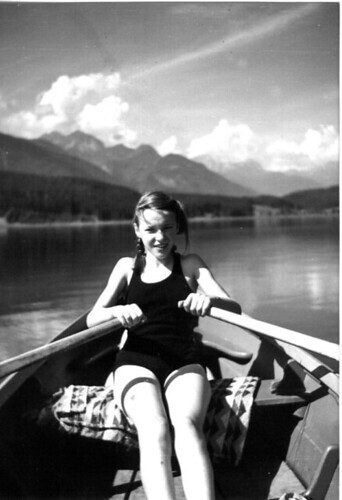
Ingeborg Bachmann
Profile Image for Jonfaith.
2,185 reviews1,773 followers
August 20, 2019
The cards are backed with pictures
displaying all the world.
You've stacked up all the images
and shuffled them with words.


Reading such poetry can be stressful; it may induce pain. My wife bought these for my birthday, I am grateful, if reluctantly situated, with an eye towards the terminal. Ms. Bachmann notes the dirty business with words but also that poetry is bread for a scientific time. As the reader progresses the goals for Bachmann veer from transcendence and instead become sleep and ultimately morphine. Drinking and nightmares plague Bachmann but birdsong and the laughter of children prop open a window of contentment. A catalogue of emotional debris ensues. I don't know enough to speculate if the turn away from poetry was a result of a deficit, a calling or a collapse? Rimbaud baffled as he became gun runner. Bachmann studied Heidegger and then in a certain sense drifted into libretto.
Profile Image for Great-O-Khan.
488 reviews132 followers
January 20, 2023
Verzweiflung und Ungewissheit spricht aus diesen bildmächtigen Gedichten. Der Krieg ist noch nicht lange her und hat seine Spuren hinterlassen. Die Erfahrungen sind subjektiv und für mich nicht immer nachvollziehbar. Das mag aber daran liegen, dass ich nur wenige Gedichte lese. Dass es sich hier vielfach um Meisterwerke handelt, ist aber selbst für mich offensichtlich.
Profile Image for Troy.
300 reviews195 followers
December 1, 2013
When are you done with a book of poetry? When you read every poem in the book? When you tire of the poems or the poet?

I can only say I'm "finished" with this book because I had to give it back to my dear friend who loaned it to me. But I'm not at all finished with this book. Not even close.

---------------------------

My first encounter with Bachmann was from my former beloved. I can't remember if she read me something or not. I'm sure she did, but it's a blur with manifold other poems and poets she read me—too much to differentiate. I do remember that she liked Bachmann more than Celan, but she also read like a hummingbird, pulling bits of nectar from here, now there, now something new.

After we were kaput, I searched for Bachmann's book, but it was nowhere to be found; unavailable anywhere in NYC, and I couldn't stand to order it online.

Then I was in Berlin and I met this beautiful poet, a calm swirl of stuttering intellect, and she leant me the book. I was elated! I immediately started reading and was immediately in love. I also loved the penciled in notes scribbled in the margins by my new intoxicating friend who was obviously working through translating various poems. (Someone wrote that all real poets try translation—that it's vital to being a poet.) But as I read the book I realized that I was smelling something not evoked from the text, but a sweet flowery smell directly redolent of the book. The Bachmann book smelled of flowers... or something. I couldn't tell, and realized I don't know anything about smells. When I finally asked her what the smell was, she sheepishly laughed and said, It's probably patchouli.
I laughed and said, You damn hippie!
But she added, It might be jasmine or tea tree oil. And then she let me smell her bag, which was full of books, and ¡there it was!— jasmine, tea tree oil, and patchouli. And the smell of her bag was as beautiful as the smell of the book. I knew immediately that from this moment forward that that mix of smells would forever remind me of Bachmann and my willowy friend. She laughed and said, But the smell fits Bachmann.
What? I exclaimed, Bachmann was no hippie!
No, she said, But Bachmann smells of rotting autumn. And Bachmann does. Does smell of rotting autumn. And that combo of tea tree oil, pachouli, and jasmine is the smell of rotting autumn.

Last, another friend; a friend I met in NYC; a Berliner friend; a clad-in-black whirlwind bounding through life with penetrating clear eyes that also remind of Bachmann; Bachmann, who constantly refers to clear dead eyes, or even a dead eye, cold; but my friend's eyes are far from cold, and at my anarco-whirlwind friend's place she read me Bachmann in Deutsch and I read it back to her in English. And the musicality! Wow, the language sang. Sang of sadness and depression and despondency, sure, but sang anyway. (The only happy Bachmann poem I've read is about getting drunk.)

Ok... the book. Wow. Decaying autumn and the only happiness the happiness of drunkenness.

I've only finished Borrowed Time, which is one of the two books Bachmann published in her lifetime. Darkness Spoken includes all of her poems. The other book published in her lifetime is Invocation of the Great Bear. The rest of the book is divided in five large sections of poems, broken up into various periods of her life.

Here, listen (and I mean listen: that is, read it out loud):

from Fall Down Heart

Fall down, heart, from the tree of of time,
fall, you leaves, from icy branches
that once the sun embraced,
fall, as tears fall from longing eyes.

or...

from Darkness Spoken

The string of silence
taut on the pulse of blood,
I grasped your beating heart.
Your curls were transformed
into the shadow hair of night,
black flakes of darkness
buried your face.

or...

from Borrowed Time

Harder days are coming.
The loan of borrowed time
will be due on the horizon.
Soon you must lace up your boots
and chase the hounds back to the marsh farms.
For the entrails of fish
have grown cold in the wind.
Dimly burns the light of lupines.
Your gaze makes out in fog:
the loan of borrowed time
will be due on the horizon.

or...

from Theme and Variation

All summer long the hives produced no honey.
Queen bees gave up and led their swarms away,
the strawberry patch dried up in a day,
and without work, the gatherers went home early.

All sweetness was carried away on a beam of light
in a single night's sleep. Who slept while this happened?
Honey and berries? He knows no misfortune,
he who lacks for nothing. For him, it all comes right.

What she does beautifully (like Celan) is use repetition for dramatic effect.
Profile Image for Steven Godin.
2,806 reviews3,504 followers
February 3, 2023

I am a dead man who wanders
registered nowhere
unknown in the realm of the prefect
superfluous in the golden cities
and the greening land

written off long ago
bequeathed nothing

Save wind and time and sound

I who cannot live among people

I with the German language
this cloud about me
that I keep as a house
drive through all languages

Oh how this cloud darkens
the somber ones the rain notes
only a few fall

Into brighter places it bears the dead man high
Profile Image for Greg.
1,128 reviews2,174 followers
March 11, 2009
I'm pretty sure one is not supposed to read all (most) of the poems by one of the greatest half dozen German writers of the second half of the 20th century (so says Susan Sontag) in about two hours. But I did have to get the book back to the library, and I wasn't allowed anymore renewals, and I kept putting off reading this till I was in the proper mood to really enjoy them. That time didn't seem to come, so sitting on a crowded subway, on a bus and then in the lounge at school while some of the dumbest conversations seemed to be going on around me was the best I could muster. I will need to give these poems more of a chance to get more out of them, but from my speed reading through them I really liked what I read.
Author 6 books258 followers
June 1, 2020
I'm very anti-reviewing poetry, but not above a crass, unsolicited recommendation to anyone who likes it.
Bachmann is certainly one of the most wonderful German language poets, if not any-language poets. well-honed, sharp poetry, dark, moody, and beautiful all at once. Nice collection, too, has the original German on the facing page of the translations, which seem pretty spot-on.
Profile Image for Narjes Dorzade.
284 reviews298 followers
November 16, 2019
<< ابر، این جنازه‌ی فسرده‌جان را بالا خواهد کشید تا روشنا>>

آنجا که سلان از مشغولیتش به ادبیات و شعر به عنوان تلاشی برای فراموش کردن خاطره‌ی هولوکاست یاد می‌کند: تنها یک چیز باقی ماند،قابل دسترسی،نزدیک و امن،در میان همه‌ی چیزهایی که نابود شده‌اند: زبان.
چنین به نظر می‌رسد که باخمن به یار و همراه دیرینش پیامی می‌فرستد، با زبان شعر: که (( رفیق! ما دیگر نابود نمی‌شویم!))

برای او که وادار به سکوت شده،
انزوا، آنقدر با تارهای عیانش
به آرامی دیوانگی را می‌تند
تا سرانجام از جهان پیرامونش،
تنها نقشِ مهمان‌خانه‌ای ماند شیشه‌ای

آثار شاعرانه‌ی او_ در نظم و نثر_ پاسخی است به سکوت: زنانی که از سوی مردان وادار به سکوت شده‌اند، ملت‌هایی که ملل دیگر سکوت را به آنان تحمیل کرده‌اند، و سکوتی که کلام شاعرانه در برابر فلسفه و علم برگزیده است؛ و نیز در برابر هجومِ مادی‌گرایی.
فیلسوف محبوب او لودویگ ویتگنشتاین در پایانِ رساله‌ی منطقی_فلسفی (که بعد از جنگ‌جهانی اول در وین منتشر شد) نوشت: (( هر آنچه را نتوان درباره‌اش سخن گفت باید درباره‌اش خاموش ماند)).
اینگبورگ باخمن، مورخ، فیلسوف و شاعر هرگز خاموش نماند.
Profile Image for Harper Curtis.
38 reviews24 followers
January 2, 2014
Disarming.

If you know German, you can hear her read "To the Sun" here:
http://www.youtube.com/watch?v=J8e0Xj...

The poem begins in praise and then ends in lament, a deep, passionate lamentation which at the same time feels to me understated.

... And my enchanted eyes
Widen again and blink and burn themselves sore.

Beautiful sun, which even from dust deserves the highest praise,
Causing me to raise a cry, not to the moon,
The stars, the night's garish comets that name me a fool,
But rather to you, and ultimately to you alone,
As I lament the inevitable loss of my sight.
Author 2 books467 followers
Read
January 18, 2022
"Bugüne kadar neden okumadım" denebilecek kitaplardan birisi. İmgeler çok güçlü, uçsuz bucaksız bir düşler dünyasından süzülüyor adeta.
Profile Image for Gabriela Pistol.
670 reviews254 followers
April 13, 2022
Recunosc originalitatea și marele grad de abstractizare, dar nu rezonez deloc cu poezia ei. M-am oprit la jumătatea volumului.
Profile Image for Özgür Atmaca.
Author 2 books115 followers
September 15, 2017
“Ancak Şiir yazmadan yaşanamayacak hale gelinmesi durumunda şiir yazmak gerekiyor ” demiş şairimiz. Felsefesi olan şairlerden ama felsefesi fazlaca şiirine bulaşmış gibi.. Şiir başlı başına, çözülmek ve sindirilmek zorunda olan edebi bir delilik olduğu için, felsefeyle daha ağır bir göktaşı haline gelebiliyor.

Kitap çok başlıklı fakat benim için iki bölümden oluşuyor. Kendimce ayırdığım ilk kısımda, “Kendi dilinin üzerine çıkmış, başka dillere ve özdeyişlere dokunan bir hali var. Bu kısım gerçekten beni etkiledi.

İkinci kısıma geldiğimde ise, Her batılı yazar ve şair gibi, W. Sheakspeare atıfta bulunan, öykünen ve güzellemelerle onun etrafında dolaşan bir durum oluşmuş. Bu bir süre sonra sıkıcı olmaya başlıyor. Burada W. Sheakspeare dokunan bir halim yok ama bir şairin de cesur olması ve kendi sularının sınırlarını belirlemesi gerektiğini düşünüyorum.
Kitapta, dünya şehirleri için yazılmış şiirlerin çok sempatik olduğunu düşünüyorum.
Ve tabi ki “tüm harflerin cennetidir şiir” diyerek altını çizdiklerime buyurun derim…

“Ben de Orpheus gibi çalıyorum şimdi
Hayatın tellerinde ölümün ezgisini
Ve yeryüzünün, bir de cennetin efendisi
Gözlerinin güzelliğine söyleyebileceklerim
Karanlık şarkılardır yalnızca”

“Gecenin çarmıhlarına gerilmiş
Uyumaktalar, her şeylerinin yitirenler,
Gürültülerle sarsılan dehlizlerde,
Ama biz neredeysek, orada ışık var.”

“Uzun günlerde ekerler bizi, fikrimizi sormadan,
O çarpık ve uzun çizgiler boyunca ve
Çekilir yıldızlar. Bizler ise o tarlalarda
Gelişigüzel ya yeşerir ya da çürürüz,
Yağmurun ve ardından gün ışığının”

“Bir ekmeği yağmurla paylaşıyoruz,
Bir ekmeği, bir borcu ve bir evi”

“Bakma etrafına.
Bağla pabuçlarını.
Geri kovala köpekleri.
Dök balıkları denize.
Söndür kandilleri!
Daha çetin günler gelmekte.”


Profile Image for İrem Hira Yuca Vurucu.
270 reviews78 followers
April 27, 2024
Oldukça dokunaklı, taş gibi sert.
Yasın ve yitirişin şiirleri bunlar.
Bachmann tüm o ölü (artık yabancı) bedenlerin üzerinde cılız bir umudun şarkısını söylüyor.
Profile Image for Jale.
120 reviews44 followers
June 24, 2015
Inge bir mektubunda, peşinden umutsuzca sürüklendiği Paul Celan'a, "senin en güzel şiirin Corona" diyordu. Ve Inge'nin en güzel şiiri de yitirilen aşka yazılmış şu ağıttır:
Birlikte kullanılmış: Mevsimler, kitaplar ve bir müzik.
Anahtarlar, çay fincanları, ekmek sepeti, çarşaflar ve bir yatak.
Sözcüklerden, jestlerden oluşma bir çeyiz, beraber getirilmiş, kullanılmış, eskitilmiş.
Uyulmuş bir ev düzeni. Söylenmiş. Yapılmış. Ve hep el verilmiş.
Kışa, bir Viyana ezgisine ve yaza gönül verdim.
Haritalara, dağlara, bir yuvaya, bir kıyıya ve bir yatağa.
Kutsal saydım randevuları, vaadleri dönülmez ilan ettim.
....
Sen değilsin yitirdiğim,
dünya.
This entire review has been hidden because of spoilers.
Profile Image for Jellie.
23 reviews1 follower
Read
February 12, 2023
Mir fällt es schwer, dieser Gedichtesammlung eine Bewertung zu geben, weswegen ich das fürs Erste nicht machen werde.
Ich bin nicht besonders geübt darin, Gedichte zu lesen oder zu interpretieren, weswegen es einige gab, die mich eher unschlüssig zurückließen.
Es war manchmal eine Herausforderung, Bachmanns Zeilen folgen zu können, aber wenn ich es konnte erschlossen sich mir wunderschöne Sprachbilder und ergreifende Beschreibungen, die mich sehr beeindruckten.

Meine Favoriten:
[Es könnte viel bedeuten]
Entfremdung
Betrunkner Abend
Vision
Die Welt ist weit
Ausfahrt
Alle Tage
Reklame
Toter Hafen
Brief in zwei Fassungen
Keine Delikatessen
Profile Image for Cristian Sirb.
326 reviews101 followers
October 27, 2021
Este genul de poezie care, ca să te asiguri de o cât mai bună “receptare” a ei, este condiționată de a afla câte ceva, înainte de a o citi, despre viața și gândirea autoarei. Ceea ce, într-o anumită măsură, nu îmi face plăcere.

Opinia mea este că orice text literar trebuie să fie capabil să grăiască fără a cerși autorului să-l țină de mână, ca pe un copil neajutorat, la întâlnirea cu fiecare cititor.
Profile Image for prashant.
168 reviews254 followers
December 16, 2024
no idea what to rate this but here are my faves

The Life Line

Each night I dream of it.

Tonight I dream of it.
In my hand I see something, the line short, broken off, ripped apart, and I see one, two deaths, three deaths, everything
dead

and in the morning I press the damp cloth on the spot. I open the window, that also relates to the spot.
I set out the tea, that also relates to the spot. Everything connects to this severing, and thus I see while awake:

I want to collapse like an old dress, to have fragile joints,
to shrivel up, shrivel like an apple, to become small, ancient and stone gray, and one day bend over to lie beneath a root and laugh at all the deaths and expire, not violently, so that I hardly notice where I begin to cease, where I cease, then belong.

————————
Night of Love
In a night of love, after a long night, I again learned to speak and I wept
when a word escaped me. I learned to walk again, I walked to the window and said hunger and light, and night was what was light for me.

After a night that was too long, once again I sleep peacefully, entrusting myself.

I spoke easier in darkness, and I spoke more the next day.
My finger moved across my face, I was no longer dead.
Fire emerged from the bush at night.
My avenger stepped forth and called himself life.
I said to it: let me die, and fearlessly meant my own dear death.

————————
The Night of the Lost/The End of Love

A moon, a sky, and the dark sea.
Now everything is dark.
Only because it is night and there is nothing human inherent in this scene.
What are you accusing me of and with such bitterness?
Don't do it.
I didn't know any better than to love you, I did not think
that through the skin's sweat there would be the ___ world
and I would finally understand.
Profile Image for MT.
201 reviews
March 17, 2021
"Now the journey is ending,
the wind is losing heart.
Into your hands it's falling,
a rickety house of cards.

The cards are backed with pictures
displaying all the world.
You've stacked up all the images
and shuffled them with words.

And how profound the playing
that once again begins!
Stay, the card you're drawing
is the only world you'll win."

_____

"I step outside
myself, out of my eyes,
hands, mouth, outside
of myself I
step, a bundle
of goodness and godliness
that must make good
this devilry
that has happened."
Profile Image for Dionysius the Areopagite.
383 reviews163 followers
October 31, 2013
O eyes, scorched by the reservoir of sun on earth,

weighted with the rain of all eyes,

and now absorbed, interwoven

by the tragic spiders of the present.

.

In the hollow of my muteness

lay a word

and raise tall forests on both sides,

such that my mouth

lies wholly in shade
Profile Image for Anka.
1,124 reviews65 followers
June 30, 2024
Ich werde die Gedichte wohl noch einige Male lesen müssen, um sie ganz zu verstehen.
Profile Image for Dorien.
33 reviews4 followers
January 30, 2022
"Ich werde da sein, indem ich nicht da bin."

Schaurig rätselhafte Zeilen in unschlagbarer Schönheit der Sprache.

These were eerily enigmatic lines in an unbeatable beauty of language.
Let me cite and do my best for the impossibility of a translation.
Check for a deep emotional soul in post-war Germany.

"Botschaft

Aus der leichenwarmen Vorhalle des Himmels tritt die Sonne.
Es sind dort nicht die Unsterblichen,
sondern die Gefallenen, vernehmen wir.

Und Glanz kehrt nicht an Verwesung. Unsere Gottheit,
die Geschichte, hat uns ein Grab bestellt,
aus dem es keine Auferstehung gibt."


"A message

From the corpse-warm antechamber of heaven the sun emerges.
It's not the immortals there, we learn,
but the fallen.

And splendor does not return with decay. Our deity,
history, ordered us a grave,
from which there is no resurrection."

--


"Die Liebe hat einen Triumph und der Tod hat einen,
die Zeit und die Zeit danach.
Wir haben keinen.

Nur Sinken um uns von Gestirnen. Abglanz und Schweigen.
Doch das Lied überm Staub danach
wird uns übersteigen."


"Love has a triumph and death has one,
the time and the time after.
We have none.

Just sinking around us from the stars. Reflection and silence.
But the song above the dust afterwards
will surpass us."
Profile Image for Murat.
631 reviews
October 27, 2024
...

" Bitti yolculuk,
ama varabilmiş değilim hiçbir sona,
her diyar bir şeyler götürmüş sevgimden,
bir gözümü yakmış her ışık,
giysilerim parçalanmış her gölgelikte.

Bitti yolculuk.
Ama prangasındayım henüz bütün uzaklıkların,
hiçbir kuş taşımamış beni sınırların ötesine,
denize akan hiçbir nehir,
sürüklememiş aşağılara bakan yüzümü,
ne de gezinmek istemeyen uykumu kucaklamış...
Biliyorum, şimdi daha yakında dünya, ve sessiz."

...
Profile Image for Ana-Maria.
708 reviews60 followers
August 29, 2022
Un volum ametitor, cu poeme care nu se lasa descoperite de la prima lectura, dar care in ciuda dificultatii se cer recitite. Pe mine volumul de poeme m-a captivat si l-am parcurs in intregime, citind, recitind, revenind. Pana la urma, cred ca acesta este rostul poeziilor, sa ne invite la o altfel de lectura, mai introspectiva, mai lenta, mai cu sincope si cu intrebari.

Am simțit nevoia să mă depărtez de romane și să citesc ceva mai concentrat, mai terapeutic, mai rafinat. Am parcurs poeziile selectate de echipa de la Humanitas în “Voi,cuvinte” și o colecție cu corespondență dintre Ingeborg Bachmann și poetul Paul Celan, scrisori de la sfârșitul anilor ‘40 până în anii ‘60. Cu această ocazie am aflat nu doar despre viața lui Ingeborg, dar și a poetului. Celan s-a născut la Cernăuți, părinții lui au fost deportați de regimul Antonescu în Transnistria, unde au și murit, iar poetul a supraviețuit regimului de muncă silnică. Dragostea lor neîmplinită, experiențele comune legate de nazism, viața după al doilea război mondial într-o lume care încă procesa ororile fascismului, talentul lor extraordinar, moartea lor precoce (Celan se sinucide aruncându-se în Sena, Bachmann este victima unui incendiu accidental) crează un fundal dramatic pentru poezii. Contextul de atunci pare că aduce și cu lumea de azi, poemele ei sunt și ale noastre. De exemplu, poemul "Toate zilele" din 1953.

Războiul nu mai e declarat,
ci dus mai departe. Senzaționalul
a devenit banal. Eroul
rămâne departe de lupte. Ajuns
în zonele de foc e cel slab.
Uniforma zilei este răbdarea,
decorația, sărăcăcioasa stea
a speranței deasupra inimii.

E decernată
când nu se mai întâmplă nimic,
când rafalele focului amuțesc,
când dușmanul a devenit invizibil
și umbra veșnicei înarmări
acoperă cerul.

E decernată
pentru fuga de sub steaguri,
pentru vitejia față de prieteni,
pentru trădarea unei taine nedemne
și neîndeplinirea
nici unui ordin.

Profile Image for Yuval.
79 reviews73 followers
August 4, 2010
Dark, imaginative collisions of words and images.
"Klaffend ein tiefer Grund
Zwischen gewolltem Sein
Und seines schalen Erfüllens
Engendem Rund."
Profile Image for Raul Popescu.
Author 4 books28 followers
May 5, 2022
„Născută în 1926, în Austria, Ingeborg Bachmann a debutat în 1953, cu „Die gestundete Zeit” („Timp amânat”), pentru ca în 1956 să publice cel de-al doilea volum de versuri, „Anrufung des Großen Bären” („Invocarea Ursei Mari”). La 27 de ani îi apărea, iată, primul volum de poezie, iar la 30 de ani, cel de-al doilea. Nu miră, așadar, că Bachmann a devenit peste noapte un fel de pop icon – interviuri, apariții TV, premii literare. Cu toate acestea, cota scriitoarei austriece va crește, în S.U.A. cel puțin, de-abia în anii ’80, prin interpretările și perspectivele feministe asupra prozei sale.

Poezia lui Bachmann, în schimb, s-a impus într-o perioadă de criză, într-un spațiu cultural – cel de limbă germană, desigur – aflat în căutarea unui limbaj literar novator, capabil să exprime traumele exterioare, dar și interioare, care au marcat o generație trecută prin ororile războiului și care, în anii ’50, spera într-o reînnoire vindecătoare, în ciuda scepticismului unui, de exemplu, Theodor Adorno, care se întreba dacă mai e posibilă o literatură după momentul Auschwitz. Mulți dintre scriitorii care au frecventat Grupul 47 (Gruppe 47), printre care și Ingeborg Bachmann, Paul Celan sau Hans Magnus Enzensberger, au mizat – neavând, ce-i drept, prea multe opțiuni – pe o reîntoarcere la poetica de început de secol XX, dominată de experimentalismul avangardelor, cu o focusare specială pe ceea ce am putea numi hermetismul, fragmentarismul, laconicul, ba chiar și „haosul” din expresionism și suprarealism. Toate aceste elemente sunt prezente și în poezia lui Ingeborg Bachmann, mai ales în cea din ultima perioadă.” (Raul Popescu, „Ingeborg Bachmann – o vină imposibil de depășit”, Literomania nr. 234, 2022; https://www.litero-mania.com/ingeborg...)
Profile Image for Víctor Bermúdez.
541 reviews42 followers
March 27, 2023
«Die Saite des Schweigens
gespannt auf die Welle von Blut,
griff ich dein tönendes Herz.
Verwandelt ward deine Locke
ins Schattenhaar der Nacht,
der Finsternis schwarze Flocken
beschneiten dein Antlitz».

«La cuerda del silencio
tensada sobre la ola de sangre,
toqué tu corazón sonoro.
Tu bucle fue transformado
en el cabello sombrío de la noche,
los negros copos de las tinieblas
nevaron sobre tu rostro».

Trad. Cecilia Dreymüller
Profile Image for İlhanCa.
953 reviews7 followers
February 8, 2026
Türkçe Özet

Ingeborg Bachmann'ın "Toplu Şiirler"inde, savaş sonrası Avrupa'nın ruh halini, aşkı ve duyguları muazzam işliyor.

Şiirleri hem çok sarsıcı hem de okuru yormayan, doğrudan kalbe dokunan bir akıcılığa sahip, adeta sizi karşısına alıp dertleşiyor. Bachmann’ın kelimeleri kullanma biçimi ve insana dair gözlemleri gerçekten harika.
Displaying 1 - 30 of 59 reviews