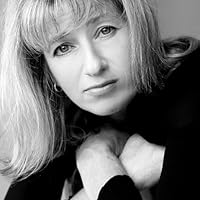
For more than fifty years, Geoffrey Hartman has been a pivotal figure in the humanities. In his first book, in 1954, he helped establish the study of Romanticism as key to the problems of modernity. Later, his writings were crucial to the explosive developments in literary theory in the late seventies, and he was a pioneer in Jewish studies, trauma studies, and studies of the Holocaust. At Yale, he was a founder of its Judaic Studies program, as well as of the first major video archive for Holocaust testimonies.
Generations of students have benefited from Hartman’s generosity, his penetrating and incisive questioning, the wizardry of his close reading, and his sense that the work of a literary scholar, no less than that of an artist, is a creative act.
All these qualities shine forth in this intellectual memoir, which will stand as his autobiography. Hartman describes his early education, uncanny sense of vocation, and development as a literary scholar and cultural critic. He looks back at how his career was influenced by his experience, at the age of nine, of being a refugee from Nazi Germany in the Kindertransport. He spent the next six years at school in England, where he developed his love of English literature and the English countryside, before leaving to join his mother in America. Hartman treats us to a “biobibliography” of his engagements with the major trends in literary criticism. He covers the exciting period at Yale handled so controversially by the media and gives us vivid portraits, in particular, of Harold Bloom, Paul de Man, and Jacques Derrida.
All this is set in the context of his gradual self-awareness of what scholarship implies and how his personal displacements strengthened his calling to mediate between European and American literary cultures. Anyone looking for a rich, intelligible account of the last half-century of combative literary studies will want to read Geoffrey Hartman’s unapologetic scholar’s tale.
From NYT obituary: Geoffrey H. Hartman, a literary critic whose work took in the Romantic poets, Judaic sacred texts, Holocaust studies, deconstruction and the workings of memory — and took on the very function of criticism itself — died on March 14 at his home in Hamden, Conn. He was 86.
His death was announced by Yale University, where he was the Sterling professor emeritus of English and comparative literature.
Considered one of the world’s foremost scholars of literature, Professor Hartman was associated with the “Yale School,” a cohort of literary theorists that included Harold Bloom, J. Hillis Miller and Paul de Man. Their work was rooted in deconstruction, the approach to analyzing the multilayered relationship between a text and its meaning that was advanced by the 20th-century French philosopher Jacques Derrida.
Professor Hartman was renowned for his vast Continental erudition. His scholarly attention ranged over Wordsworth, to whom he was long devoted; the poetry of Gerard Manley Hopkins; Judaica (he helped found the Judaic studies program at Yale); Alfred Hitchcock; Freud; detective stories; and the nature of trauma, the memory of trauma and testimony about trauma — interests borne of his own wartime experience — as well as the ways in which traumatic recollections can be filtered through the creative imagination.
Among his best-known books are “Wordsworth’s Poetry, 1787-1814” (1964); “Criticism in the Wilderness: The Study of Literature Today” (1980), considered a landmark in the field; “The Longest Shadow: In the Aftermath of the Holocaust” (1996); and a memoir, “A Scholar’s Tale: Intellectual Journey of a Displaced Child of Europe” (2007).
He was the first director of what is now the Fortunoff Video Archive for Holocaust Testimonies at Yale. Begun in 1979, the archive, which is open to the public, comprises more than 4,000 interviews with Holocaust survivors, witnesses and liberators from around the world.
As a result of his association with the Yale School, Professor Hartman was often called a deconstructionist, but his critical stance eluded tidy classification.
Deconstruction maintains that any given text is, below its surface, a roiling system of conflicting semantic signs. As such, the text has no one empirical reading; it is, rather, a network of competing meanings — a quicksilver state of affairs that a critical analysis of that text must take into account.
Early on, Professor Hartman championed this approach. But over time he went deconstruction one better, arguing that a literary text is so pregnant with possible readings that to make an evaluative judgment about it — or even, perhaps, to extract an inventory of its meanings — is futile.
By longstanding tradition, as Professor Hartman reminded his readers, literary criticism was seen as a handmaiden of literature — an adjunct whose sole raison d’être was literature itself.
In “Criticism in the Wilderness,” he argued that criticism should not only stand on an equal footing with literature but also be literature. (Classifying criticism as literature inevitably triggers a hall-of-mirrors effect, the kind of Talmudic paradox that was to Professor Hartman a source of unalloyed delight: If criticism becomes literature, it is thus amenable to critical analysis. How, then, does one classify the criticism that results?)
In elevating criticism to the status of literature, Professor Hartman did not mean merely that it should be well written. What he also meant was that criticism should function for criticism’s sake alone.
“The spectacle of the critic’s mind disoriented, bewildered, caught in some ‘wild surmise’ about the text and struggling to adjust — is not that one of the interests critical writing has for us?” he wrote in “Criticism in the Wilderness.”
He continued: “In more casual acts of reading this bewilderment can be muted, for there is always the hint of a resolution further on, or an enticement to enter for its own
Oscar Wilde once declared that “literary criticism is the only civilized form of autobiography,” and Geoffrey Hartman has obviously taken this apothegm to heart. Closely associated with Yale University for most of his professional life, Hartman is one of the most well-known literary critics in the United States, and often identified with the Yale school of deconstruction, even though no overarching methodology can be applied to the entire body of his work.
First, a word on the audience at which this book is aimed: it will be of little interest for most readers who are not at least moderately familiar with the last fifty years of literary criticism in Europe, and especially the American upending thereof in the 1970s and 1980s. The title of the book both is and is not a bit of self-conscious omphaloskepsis: while Hartman does a lot of name-dropping, he discusses many of those names in detail, or at least as much detail as a 180-page book could. Those particularly interested in Hartman’s contributions to Holocaust studies, memorial studies, and digitization will certainly find something interesting.
Born in 1929 in Germany, Hartman was taken via Kindertransport to England until the end of World War II, when he was able to move to the United States to pursue his education. While he was doing his graduate work at Yale, and later when he was a professor there, he met a number of important people in the field, including but not limited to Paul de Man, Hans Robert Jauss, Derrida, Harold Bloom, Rene Wellek, and Erich Auerbach. Instead of turning his formidable power as analyst and critic toward himself, he looks at their ideas and offers the occasional insight of them as people, including passionate defenses of both de Man and Jauss against accusations concerning their questionable pasts. The book ends with a beautiful tribute to the German critic Erich Auerbach, whose “Mimesis: The Representation of Reality in Western Literature” is one of the most important contributions to the genre.
Beyond these occasional coruscations, we get precious few glimpses into his inner life, which is perhaps what many readers might want. But this wouldn’t be the first time in his life that he bucked a trend. The material in the book is wholly refracted through scholarly apparatus and his contribution to it, and therefore comes across as more aloof and impersonal. Hartman is a gentle, avuncular soul with a capacious intellect. His call for the continued close reading of literature is a vital one, as is his continuing suspicion of literary fads like postmodernism, in its all sundry incarnations. I recommend it for those interested in a meditative account of a life in reading and learning, both of which Hartman does with a considerable joie de vivre.
Entirely by accident I encountered him in the fall/winter at Iowa of '64, my first graduate class. I remember puzzling about Collin's logic and expression in his Ode as much as Hartman was from the front of the room filled with coats and boots and scarves. He says in Tale that he wanted to write "beyond the middle style" 152 unwilling to give up a visionary kind of verse, but was a realist, not a Baptist who takes the kingdom of God by force. He wanted "to stand in the presence--a wish that has never left me. I have kept a belief in the possibility of a direct line to the truth, if only through the medium of literature" (8) He says to his seminar that it might take all their time to unpack "strange fits of passion I have known" but he outwardly looks in.
I come to this grateful to have a chance to understand the civilizations in their highest and best thoughts, marginally anyway, for I was never the companion or even had discussions with these sensibilities outside of John Cullen in graduate school. Geoffrey Hartman may be an example of one who has known them all. He cites Christopher Smart several times in his Scholar's Tale for his poetry that would pierce "the screen Twist thing and word...language straight from the soul." Smart's life would not be sought as a trade off for this. Hartman says he would "consider that [the poet] a mad and heroic endeavor beyond" (84) himself. I have loved Smart from the first contact, but all the understanding I have of philosophy and criticism comes not from the Influence that Bloom so celebrates and Hartman documents, but from wrestling with poetic issues first hand. Only because of that and not from brilliant study do I recognize the importance when Hartman cites the oblique circuitry, the history of trash, the extracanonical, multidirectional reading, thesaurus of old stories, fantasies against the scientifically correct. To me this demonstrates that we ourselves are capable of ourselves. I admit to being kindled to this thought. One explanation of my absence from academic discourse is that these faculties are so desperately dull and self consumed.
The first assignment was to pick a poem of Blake and write about it, no other restrictions. For no reason I remember I sat down that weekend with the Tyger and there gradually emerged, as if the poem opened up, a vista of Blake's system. The essay was to be four pages but mine was closer to six, which I achieved by 1 1/2 spacing with small elite typewriter.
Who could better presume to direct apprehension of truth than an American, someone brash as Bloom, who arrogates to himself the privilege of his own illusions, but this is not Hartman, a European with a love of the philosophic mind, even if his saga is most privileged and unlikely, in the right place at the right time, left in Frankfurt, evacuated to the Rothschilds, who meets his wife in the Yale commons after she is released from Belsen. But it is not his experience of the emigre that makes him one, it is the cast of his mind, which is from birth, that I share with him, but exiles he shared with the brightest lights of 20th century critics, Auerbach, Spitzler...hired guns, after a fashion, going to the high bidders at Yale...is it reward or punishment to live in exile by the power of the mind?
I feel some relation to Hartman's dispossession of the one thing he wanted, the inner émigré, 82, the refugee, the one thing we all want, to know the direct truth without intermediaries the way the priest asked the urim and thummim what was truth, that truth residing in the spirit within. David was always asking and dialoguing with instructions in the night, awaking with praise on his bed, being sent in the moment, before the fact. Precognition humbles a man. Salvation delivers him. For the man to awaken in the emotion of worship, to feel joy and the sudden prompting is the measure of his gratitude, as it says, blessed are those who have learned to acclaim you, who walk in the light of your presence Yahweh! The light of the presence can be had in the songs, spiritual songs and praises at all times, rejoicing in His Name all day long, exulting in His Righteousness, since His Word and His Name are exalted above all things. All of this is of course from the Psalms.
When Psalm 119 says Thy Word is a lamp, it meditates over and over, so that when the apostle says sing spiritual songs and psalms in your hearts all day long that meditation of the word grows. For David the word was the Torah, for the unfolding meditation it is all the prophets and writings too, language filled with the songs of hearts that blesses and sustains. David had Torah we have David, and we have Isaiah and Daniel and all the history and biography of the sacred to meditate and we have the gospels and the letters too. So our meditation is complete. When that word says, because he loves me says the Lord I will rescue him, or, I will surround him with songs of deliverance, these are the strength of a life so that truly Blessed are those who have learned to acclaim him, who walk in the light of the presence Yahweh. We rejoice in your name all day long...in your name and your word as the Psalm says, we rejoice for its own sake and because by your favor you have exalted our horn. We are exalted in spirit, joy, peace. Blessing and love overflow us as we walk. Being so led He leads, to lie down, he leads beside still waters, he restores my soul, He leads me, His rod and staff comfort me, He prepares a table... this goes on and on in the songs and spiritual psalms that surround us and deliver us.
Hartman quotes Stevens wistfully, and Blake and Wordsworth who he knew so well. He was drawn to "the mysteries of biblical figures that had to shoulder the burden of a divine election (3). ...literary sublimities I could not live up to, even in maturity." I feel his separation from himself and from the emotion he does not have for the readings of midrash or Psalms, "I hear only the void shouting back." "I adopted myself out to the words blowing in the wind and insights that detached themselves from what I read" (Tale, 147). He loves Blake because of his direct apprehension, questions the visionary company of the Romantics, cites Numbers 11 that "would that all the Lord's people were prophets." But poetry is removed from direct access which is not in words, to "walk in the light of your presence of Lord, we rejoice in your Name all day long, we exult in your righteousness." Of course this fine gentleman had zero acquaintance of such existence but I get to live through his last four books the gemütlichkeit I forfeited to live the estranged life. Further sympathies with Hartman "wish to be affirmed, to stand in the presence--a wish that has never left me. I have kept a belief in the possibility of a direct line to the truth, if only through the medium of literature" (Tale, 8), his quoting Stevens that the great poem of earth is still to come, the interlingual cues that make him aware of similarities, 124, the minimalism of a memory trigger that can produce by sonic accident some associational string, the realia, the sound value of words he locates in Smart, a literal "sound reasoning."The first two notions I hold of this obscurity are the Elizabethans who were obscure, especially Donne, but Herbert, even if they're not exactly Elizabethans. The poets are always read after their deaths, and not only the letters of their ancestors are remaking their lives as we live. The second is the inevitable conspiracy conclusion that if the work does not serve the foreordained purposes of hierarchy then it must be obscured, although to what purpose, when it can be easily ignored, one knows not. Is the apple cart that insecure that it might overturn this modern phenom since '45, shall we say from the beginning of cloning?
Geoffrey Hartman remains a cool voice in literary and cultural studies. He has made a career out of a love of Wordsworth and the intricacies of poetic reading, and out of an embrace of plurality. As he says, he is not a polemicist and I admire him for this. The act of critical inquiry is not a competition; the scoring of points is not the object of our study. And so Hartman is not as flamboyant or even as influential as some of his colleagues at Yale (e.g. Harold Bloom, that Urizen of critical method), but he is a voice of reason in its most exalted mood. In short, he is a Romanticist. And when I speak of influence, what book is more influential than Mr. Hartman's 1964 study of Wordsworth's poetry? As much as I admire Hartman's work, it has a stiffness that suggests something held back, something unsaid and repressed. His passing reference to films (only Ikiru is named) and to Bob Dylan and Joan Baez indicate an uneasy relationship with what we might refer to as "in between culture," cultural expressions that are not (traditionally at least) a part of high culture and yet are more than low culture. Hartman wants to embrace such in between culture, but something holds him back. He is a democrat in the manner of Northrp Frye - criticism is for everyone, but he also has his, what?, Leavisite side.