

What do you think?

留学
カトリック神学生の工藤、日本最初のヨーロッパ留学生である十七世紀の荒木トマス、仏文学者の田中の三人を主人公とした『ルーアンの夏』『留学生』『爾も、また』の三章から成る。時代は違っても、三人の留学生の悩みは共通であり、それぞれにヨーロッパ文明の壁に挑んで懸命に生きるが、宗教や文化その他の精神風土の絶対的な相違によって空しく挫折してゆく姿を描く力作。
201 pages, Kindle Edition
First published January 1, 1965
About the author
Shūsaku Endō
381 books1,116 followersShusaku Endo (遠藤周作), born in Tokyo in 1923, was raised by his mother and an aunt in Kobe where he converted to Roman Catholicism at the age of eleven. At Tokyo's Keio University he majored in French literature, graduating BA in 1949, before furthering his studies in French Catholic literature at the University of Lyon in France between 1950 and 1953. A major theme running through his books, which have been translated into many languages, including English, French, Russian and Swedish, is the failure of Japanese soil to nurture the growth of Christianity. Before his death in 1996, Endo was the recipient of a number of outstanding Japanese literary awards: the Akutagawa Prize, Mainichi Cultural Prize, Shincho Prize, and Tanizaki Prize.
(from the backcover of Volcano).
(from the backcover of Volcano).
Ratings & Reviews
Friends & Following
Create a free account to discover what your friends think of this book!
Community Reviews
Displaying 1 - 30 of 31 reviews

April 18, 2019
An excruciatingly shy and even asocial Japanese assistant professor comes to Paris right after World War II to complete his doctoral work on the Marquis de Sade. He’s one of a very small group of Japanese scholars in France since the war just ended, and, of course, Japan and France were enemies.
He gets rebuffed by some French scholars who don’t understand what he is doing there and why a Japanese scholar could be interested in Sade. He always says the wrong thing among the few Japanese scholars who meet every evening in the bars and restaurants. They unabashedly discuss the inferiority of Japanese writing to French and European masterpieces. And they debate the relative pros and cons of their various literary roles: poor imitators trying to write Japanese versions of European classics; translators and literary critics. With his poor social skills the main character stumbles over the elaborate hierarchy of Japanese culture in terms of expected deference based on age and seniority of position. He always messes it up.
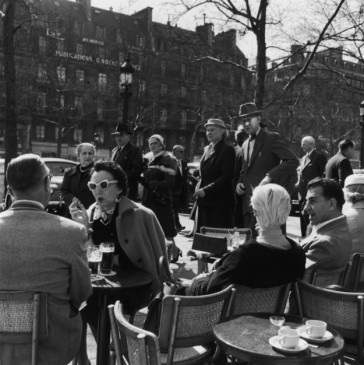
So our main characters shuns the group (and is shunned by them) and he ends up spending 16 hours a day in libraries and then spends his evenings all alone in his room eating stale bread dipped in wine. He does have one Japanese friend, another outcast by the group, but that friend gets tuberculosis and leaves to go back home – Back home he left a new wife and a newborn baby. But work comes first.
The only joy he has is in visiting sites where Sade lived or was imprisoned. (His hotel is where Proust died.) His work on Sade is basically on Sade’s women but he comes to realize how totally unprepared he is to interpret what Sade means even in French culture, never mind to Japanese culture. The main character had no relations with women other than his wife which was an arranged marriage. He comes to believe that Sade cannot be understood in the context of Japanese culture (almost like the author’s position on Catholicism in his early thinking about religion.)
In this edition of the book there are two short stories appended before the main story. The main story of the title takes up ¾ of the book so these two shorts seem unrelated to the real novel and I suggest reading them last, not first, where they are placed in the book. One is on a similar theme to the main story: a young Japanese scholar comes to a French home shortly after the War as a visiting student. He finds that the local priest, bishop and family have overly-high expectations for him: to replace a dead French son of the family who had intended to go to Japan to convert Japanese to Catholicism.
The other short story is set in the 1500’s to 1600’s and is about the persecution of early Catholic missionaries in Japan. Clearly this short is precursor to the author’s famous historical novel, Silence, on the same subject, which was published more than 30 years later. The theme here, which is the same as in Silence, is that the persecution was so great at that time that becoming a Catholic meant becoming a martyr.

I found the main story quite fascinating. It’s certainly a tribute to the stamina and dedication of a man so far from home in such a foreign environment, sacrificing everything, including his health for his scholarship.
Here are links to my reviews of other books by Endo:
Scandal
Silence
Five by Endo – short stories
Top photo Paris in the 1950's from slaq.am
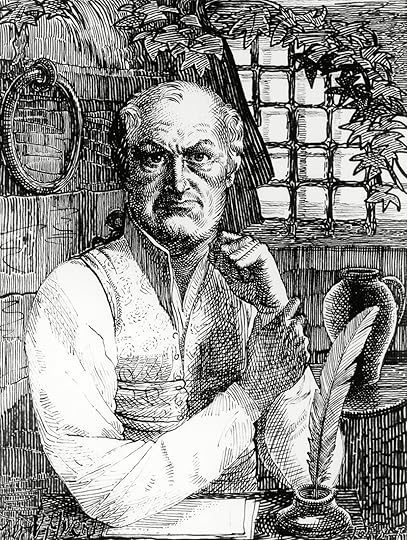
Middle photo Marquis de Sade from cdn.britannica
Photo of the author from Goodreads
He gets rebuffed by some French scholars who don’t understand what he is doing there and why a Japanese scholar could be interested in Sade. He always says the wrong thing among the few Japanese scholars who meet every evening in the bars and restaurants. They unabashedly discuss the inferiority of Japanese writing to French and European masterpieces. And they debate the relative pros and cons of their various literary roles: poor imitators trying to write Japanese versions of European classics; translators and literary critics. With his poor social skills the main character stumbles over the elaborate hierarchy of Japanese culture in terms of expected deference based on age and seniority of position. He always messes it up.
So our main characters shuns the group (and is shunned by them) and he ends up spending 16 hours a day in libraries and then spends his evenings all alone in his room eating stale bread dipped in wine. He does have one Japanese friend, another outcast by the group, but that friend gets tuberculosis and leaves to go back home – Back home he left a new wife and a newborn baby. But work comes first.
The only joy he has is in visiting sites where Sade lived or was imprisoned. (His hotel is where Proust died.) His work on Sade is basically on Sade’s women but he comes to realize how totally unprepared he is to interpret what Sade means even in French culture, never mind to Japanese culture. The main character had no relations with women other than his wife which was an arranged marriage. He comes to believe that Sade cannot be understood in the context of Japanese culture (almost like the author’s position on Catholicism in his early thinking about religion.)
In this edition of the book there are two short stories appended before the main story. The main story of the title takes up ¾ of the book so these two shorts seem unrelated to the real novel and I suggest reading them last, not first, where they are placed in the book. One is on a similar theme to the main story: a young Japanese scholar comes to a French home shortly after the War as a visiting student. He finds that the local priest, bishop and family have overly-high expectations for him: to replace a dead French son of the family who had intended to go to Japan to convert Japanese to Catholicism.
The other short story is set in the 1500’s to 1600’s and is about the persecution of early Catholic missionaries in Japan. Clearly this short is precursor to the author’s famous historical novel, Silence, on the same subject, which was published more than 30 years later. The theme here, which is the same as in Silence, is that the persecution was so great at that time that becoming a Catholic meant becoming a martyr.
I found the main story quite fascinating. It’s certainly a tribute to the stamina and dedication of a man so far from home in such a foreign environment, sacrificing everything, including his health for his scholarship.
Here are links to my reviews of other books by Endo:
Scandal
Silence
Five by Endo – short stories
Top photo Paris in the 1950's from slaq.am
Middle photo Marquis de Sade from cdn.britannica
Photo of the author from Goodreads

June 30, 2017
Foreign Studies is actually a collection of two short stories and one novel, but all of them deal with the topic of studying abroad (specifically, in France). And since it's Endo, I picked it up as soon as I saw it.
The first story is 'A Summer in Roan' and is about a Japanese student in the village of Roan. Though everyone is kind, he feels like he doesn't belong and the longer he stays, the more he feels like a coward for remaining polite and in the village.
The second story, 'Araki Thomas', has a more factual tone and talks about one of the Japanese students who went abroad in the 17th century and came back to a closed country and persecution to Christians. This is the same period that Silence takes place in, but the protagonist is a Japanese rather than a foreigner. The factual tone makes me wonder if it's a mini-biography but I haven't done any research so I can't tell.
The third and longest story (probably can be classified as a novel) is 'And You, Too'. It follows the path of Tanaka, who came to Paris to study Sade. It's more complicated than the other two, since there is a Japanese community in Paris, so Tanaka must negotiate both a foreign culture and a culture that is home-but-not-quite and which will influence his standing when he returns home.
All three stories are rather bleak and they convey a sense of discontent and distance. In the introduction by Endo (which really should be read only after you've finished the stories), he mentions that this book arose out of his struggle in trying to reconcile two seemingly different cultures.
What is interesting is how his views have changed. His younger self thought that there was no way that Japanese people could understand French culture and vice versa, but twenty years later, he became "convinced that meaningful communication between East and West is possible."
I feel that the sense of alienation that Endo describes in this story is universal to anyone who has lived overseas. We are in a totally different country after all. But, I think his characters have chosen to look at the differences with bitterness, and that leads them to a state of mental anguish. Personally, I think that to see insights, to see slights and 'microagressions' and to read malicious meanings into perfectly kind actions is the road to an unhappy life.
I would recommend this book to anyone, especially those who have lived overseas for any period of time.
This review was first posted at Inside the mind of a Bibliophile
The first story is 'A Summer in Roan' and is about a Japanese student in the village of Roan. Though everyone is kind, he feels like he doesn't belong and the longer he stays, the more he feels like a coward for remaining polite and in the village.
The second story, 'Araki Thomas', has a more factual tone and talks about one of the Japanese students who went abroad in the 17th century and came back to a closed country and persecution to Christians. This is the same period that Silence takes place in, but the protagonist is a Japanese rather than a foreigner. The factual tone makes me wonder if it's a mini-biography but I haven't done any research so I can't tell.
The third and longest story (probably can be classified as a novel) is 'And You, Too'. It follows the path of Tanaka, who came to Paris to study Sade. It's more complicated than the other two, since there is a Japanese community in Paris, so Tanaka must negotiate both a foreign culture and a culture that is home-but-not-quite and which will influence his standing when he returns home.
All three stories are rather bleak and they convey a sense of discontent and distance. In the introduction by Endo (which really should be read only after you've finished the stories), he mentions that this book arose out of his struggle in trying to reconcile two seemingly different cultures.
What is interesting is how his views have changed. His younger self thought that there was no way that Japanese people could understand French culture and vice versa, but twenty years later, he became "convinced that meaningful communication between East and West is possible."
I feel that the sense of alienation that Endo describes in this story is universal to anyone who has lived overseas. We are in a totally different country after all. But, I think his characters have chosen to look at the differences with bitterness, and that leads them to a state of mental anguish. Personally, I think that to see insights, to see slights and 'microagressions' and to read malicious meanings into perfectly kind actions is the road to an unhappy life.
I would recommend this book to anyone, especially those who have lived overseas for any period of time.
This review was first posted at Inside the mind of a Bibliophile

November 21, 2023
Ние, европейците, често обичаме да описваме какво изпитваме, докато живеем сред чужди и се сблъскваме с чужда култура. Но тук имаме нещо свежо - един представител на една от тези "чужди култури" сега е в Европа. Третата новела беше най-отличителна с това, макар и трите, включени в книгата, да описват едно и също. Приликите и разликите в изпитването на чуждото са повече, отколкото европейците са свикнали да очакват... може би.
Прекрасна книга. Силно препоръчвам, въпреки че поначало не съм най-големият фен на Ендо Шусаку. Той постоянно се бори с мнението ми за творбите му, разбира се. Тези разкази ще отанат дълго с мен, обзалагам се.
Прекрасна книга. Силно препоръчвам, въпреки че поначало не съм най-големият фен на Ендо Шусаку. Той постоянно се бори с мнението ми за творбите му, разбира се. Тези разкази ще отанат дълго с мен, обзалагам се.

November 12, 2014
This, for me, wasn't the best of Endo's novels although it contains the similar theme of the great divide between eastern and western cultures. The third story that occupies the majority of the novel felt overly bleak and depressing and I was struggling a little to finish it. Nevertheless, it's the first Endo novel that I didn't like as much as his other novels.
December 14, 2012
This is very introspective and sad, like a lot of Japanese literature I've read. There were moments in this book where I felt that the author had captured a feeling perfectly, or created a tone extremely well. I very much enjoyed it. Would have given it five stars but I found the second of the three stories pretty uninteresting.

August 12, 2011
A little dated as the globalised world and mass travel has changed things enormously since this was written, but the reflections on not fitting in (being foreign) are timeless. Subtle and thoughtful.
April 21, 2026
My main reason for reading this book was that it was the only interesting-looking one among the extremely limited Japanese section at the local second-hand book exchange (not feeling ready to dive into Kant's kritik der reinen vernunft in Japanese just yet). It still managed to disappoint.
The main story (part 3, part 1 and 2 are not even worth mentioning) seems to be a thinly veiled rant about Endō's own time abroad, and could have been half the size with some good editing. For a book about foreign exchange, all the characters strangely keep hammering on culturally essentialist oneliners ('Europian life is simply not suitable to us Japanese people'), and nobody seems to be happy to be there. Environmental descriptions are also extremely repetitive - something about the way the light falls, closed shutters, or sleet-filled streets. And the MC's inner thoughts are so very monotonous and predictable.
The result is a book that constantly regurgitates an oppresive sense of dread clouding studying abroad which is somehow deeply unnatural and must be paid for dearly. This could very well be read as Endō's attempt to find meaning in his own bout of sickness while studying abroad, which forced him to move back home prematurely just like the MC.
To me, the most interesting sections were those on Marquis the Sade and the handful of times the MC actually decided to have an in-depth conversation with someone.
The main story (part 3, part 1 and 2 are not even worth mentioning) seems to be a thinly veiled rant about Endō's own time abroad, and could have been half the size with some good editing. For a book about foreign exchange, all the characters strangely keep hammering on culturally essentialist oneliners ('Europian life is simply not suitable to us Japanese people'), and nobody seems to be happy to be there. Environmental descriptions are also extremely repetitive - something about the way the light falls, closed shutters, or sleet-filled streets. And the MC's inner thoughts are so very monotonous and predictable.
The result is a book that constantly regurgitates an oppresive sense of dread clouding studying abroad which is somehow deeply unnatural and must be paid for dearly. This could very well be read as Endō's attempt to find meaning in his own bout of sickness while studying abroad, which forced him to move back home prematurely just like the MC.
To me, the most interesting sections were those on Marquis the Sade and the handful of times the MC actually decided to have an in-depth conversation with someone.

November 12, 2024
Part 1: A Summer in Rouen

April 12, 2011
Although not the best of Shusaku Endo's books (The Samurai and Silence seemed better), Foreign Studies is perhaps the closest to a memoir. Built as a collection of short stories, the longest spanning about 100 pages, this book follows the Japanese on a first, student visit to Europe. The three stories cover each a facet of this story, with the longest of the three focusing on the life of Tanaka, the French literature student who sets for Paris around 1965; the other two are set in obscure 1950s and 17th century settings. These stories transmit the same main messages: of cultural conflict, of home-sickness, of expat bickering, of being Endo (precise, meticulous, searching for a meaning even in the trivial). It is perhaps coincidental that the stories also talk of the academic life (although far better on the subject are Lucky Jim, The History Man, most of David Lodge's, and Galatea 2.2). Like all the other books written by Endo, Foreign Studies is difficult to read. Yet, suddenly, a paragraph will reveal the precise formulation of your own thoughts on the matter, a moment of "I wish I've written that" that more than compensates the general tediousness of the book. Overall, I liked this book, but it's for you only if you always finish the books you start.

January 12, 2019
It is made up of three short stories of Japanese men living in France for their study just after and decades after the war.
The scholarship and expectation from people and the difference between the ideal self and the actual self without any talent can be overwhelming from time to time. This book captures the hardship of alienation and the loss of confidence very well, through the word of the introspective narrators.
The scholarship and expectation from people and the difference between the ideal self and the actual self without any talent can be overwhelming from time to time. This book captures the hardship of alienation and the loss of confidence very well, through the word of the introspective narrators.

January 26, 2015
from 65, mostly a book about the feelings of inadequacy and loneliness experienced by lecturer Tanaka during a stay in Paris to research the Marquis de Sade, prefaced by two shorter pieces. melancholy, but involving and enjoyable too. ultimately scary because Tanaka is so emotionally detached from de Sade's madness
June 2, 2011
Interesting look at Japanese expats in Europe through the ages. 2 short stories and one novel covering the same topic.
Melancholic in tone. Well written. I would give it a higher star rating if it hadn't have depressed me so.
Melancholic in tone. Well written. I would give it a higher star rating if it hadn't have depressed me so.

Read
March 6, 2007I read this set of novellas while living in Beijing. That was a head trip.
February 8, 2017
Excellent sensitive account of the tribulations of studying in an alien culture. Insightful aspects of cross cultural issues.

May 27, 2017
Closer to 3.5/5... I have liked everything I've read by Endo so far.
September 15, 2017
Thematically OK, but, such sleepy prose. I've noticed the same with other Japanese authors I've read. Perhaps this is the nature of Japanese literature, or the nature of the translations, I dunno

March 29, 2020
I'm reviewing a translation from 1989 by Mark Williams. The Japanese-language original was published in 1965. The edition I read was a paperback published by Peter Owen Publishers in 2009, containing Mark Williams' Forward, written for that edition.
So as to present as pure a review as possible, I am writing this without having yet read the translator's Forward or the author's Introduction.
FOREIGN STUDIES is a novel in three parts, the third part of which ("And You, Too") makes up 98 per cent of the book. The first part ("A Summer In Rouen") is a short story about a student from Japan visiting France just after World War Two as part of a Catholic missionary program. It is a character study worthy of James Joyce and acts to set the tone for the novel. The second part ("Araki Thomas") is essentially a biographical sketch of a Catholic priest from Japan who visits Rome in the 17th-century just as a crackdown on Catholicism occurs in Japan. The major portion of the novel focuses on a university professor from Japan as he explores France perhaps ten or fifteen years after World war Two. His alienation from Japanese ex-patriates and from the French is thorough. The very loose connection between the protagonists of each section of this book is the loss of identity. I believe that the student we meet at the beginning is studying the 17th-century priest of the second part of the book. The student wishes to please the church group sponsoring him on his visit, but he secretly wishes to learn about the Marquis de Sade. The protagonist of the third part is in France for the sole purpose of researching de Sade. The priest is like both the other protagonists in that he is fascinated with the west (if only, in his case, because he is a Catholic) but winds up giving up the faith of the west on his return to Japan. Giving that up, though, is not strictly cultural, because many of the small group of Japanese Catholics are horrified he has ceased to be Catholic. Tanaka, the professor whose mind we are in for the bulk of FOREIGN STUDIES, is not even remotely religious. He simply wants to get ahead. He has chosen to study the Marquis de Sade, the late-eighteenth-century French author of sadomasochistic works, not because of an intrinsic interest in him but because his rivals have decided to focus on other figures or aspects of French culture. Tanaka has absolutely no transgressive urges. But he has one thing over any other scholar of de Sade: He relishes being in the places de Sade stood. That is, the human connection means a great deal to him.
I, of course, am discussing a translation. (It's interesting that a fair percentage of FOREIGN STUDIES has to do with other scholars mocking Tanaka for being a mere translator. One of them keeps calling him a "Mina Bird.") But I found it very poetic. I won't say FOREIGN STUDIES is ironic; but I will say it avoids being sardonic. It utterly captures the sense of isolation a traveler feels. There is a very touching relationship in the book. Tanaka befriends a fellow Japanese scholar who feels equally alienated in Paris.
So as to present as pure a review as possible, I am writing this without having yet read the translator's Forward or the author's Introduction.
FOREIGN STUDIES is a novel in three parts, the third part of which ("And You, Too") makes up 98 per cent of the book. The first part ("A Summer In Rouen") is a short story about a student from Japan visiting France just after World War Two as part of a Catholic missionary program. It is a character study worthy of James Joyce and acts to set the tone for the novel. The second part ("Araki Thomas") is essentially a biographical sketch of a Catholic priest from Japan who visits Rome in the 17th-century just as a crackdown on Catholicism occurs in Japan. The major portion of the novel focuses on a university professor from Japan as he explores France perhaps ten or fifteen years after World war Two. His alienation from Japanese ex-patriates and from the French is thorough. The very loose connection between the protagonists of each section of this book is the loss of identity. I believe that the student we meet at the beginning is studying the 17th-century priest of the second part of the book. The student wishes to please the church group sponsoring him on his visit, but he secretly wishes to learn about the Marquis de Sade. The protagonist of the third part is in France for the sole purpose of researching de Sade. The priest is like both the other protagonists in that he is fascinated with the west (if only, in his case, because he is a Catholic) but winds up giving up the faith of the west on his return to Japan. Giving that up, though, is not strictly cultural, because many of the small group of Japanese Catholics are horrified he has ceased to be Catholic. Tanaka, the professor whose mind we are in for the bulk of FOREIGN STUDIES, is not even remotely religious. He simply wants to get ahead. He has chosen to study the Marquis de Sade, the late-eighteenth-century French author of sadomasochistic works, not because of an intrinsic interest in him but because his rivals have decided to focus on other figures or aspects of French culture. Tanaka has absolutely no transgressive urges. But he has one thing over any other scholar of de Sade: He relishes being in the places de Sade stood. That is, the human connection means a great deal to him.
I, of course, am discussing a translation. (It's interesting that a fair percentage of FOREIGN STUDIES has to do with other scholars mocking Tanaka for being a mere translator. One of them keeps calling him a "Mina Bird.") But I found it very poetic. I won't say FOREIGN STUDIES is ironic; but I will say it avoids being sardonic. It utterly captures the sense of isolation a traveler feels. There is a very touching relationship in the book. Tanaka befriends a fellow Japanese scholar who feels equally alienated in Paris.

April 22, 2024
I loved this collection of two very short stories, and one novella, about young Japanese men studying abroad in France. It is unapologetic about the miseries of straddling two cultures/nationalities, no matter the time period. Endo's writing also stands out for his imagery and sense of place, harmonizing his overall themes. I recommend to anyone planning to or returning from study or work abroad (particularly if their connection is through Japan or France), missionaries, or academics--especially if your experience was not as glamorous as everyone wants you to say it was.
This collection accomplished what no "study abroad" book has yet done for me, which was to rewind the clock ten years and place me exactly back in my mere d'acceuil'shome, trying to get along and still be myself. I personally resonated deeply with all three stories, which nailed the feelings of representing your entire country to a group of strangers with preconceived ideas, navigating the connections between your faith and your native culture, the pressures of scholarship/academia augmented in a foreign country, the sense that you no longer belong in either cultural context, the realization of what the experience is costing you, the frustration of being thought less of and wanting to show people that ExCUsE YOu, i'M a UniVErSiTY LeCTuReR iN JapAN, the guilt of not doing well, and the feeling of being tired, so tired, all the time, even as you occasionally encounter the joy that inspired your trip in the first place.
Experiencing Tanaka (from the titular novella) is, to borrow a word from another reviewer, excruciating. But I feel for him. I remembered all the times I was terrible and saying all the wrong things all the time, not in a language-learning mishap sense, but a social one. The choice to have his area of study be the Marquis de Sade was of course deliberate, and I'd love to dig into it in a book club sometime. So invite me to your book club if you want me to crush your dreams about working abroad.
Foreign Studies is also a great read if you're someone who likes testing out new authors through short stories, because if you liked these you'll probably appreciate the novel for which Endo is primarily known: Silence.
This collection accomplished what no "study abroad" book has yet done for me, which was to rewind the clock ten years and place me exactly back in my mere d'acceuil'shome, trying to get along and still be myself. I personally resonated deeply with all three stories, which nailed the feelings of representing your entire country to a group of strangers with preconceived ideas, navigating the connections between your faith and your native culture, the pressures of scholarship/academia augmented in a foreign country, the sense that you no longer belong in either cultural context, the realization of what the experience is costing you, the frustration of being thought less of and wanting to show people that ExCUsE YOu, i'M a UniVErSiTY LeCTuReR iN JapAN, the guilt of not doing well, and the feeling of being tired, so tired, all the time, even as you occasionally encounter the joy that inspired your trip in the first place.
Experiencing Tanaka (from the titular novella) is, to borrow a word from another reviewer, excruciating. But I feel for him. I remembered all the times I was terrible and saying all the wrong things all the time, not in a language-learning mishap sense, but a social one. The choice to have his area of study be the Marquis de Sade was of course deliberate, and I'd love to dig into it in a book club sometime. So invite me to your book club if you want me to crush your dreams about working abroad.
Foreign Studies is also a great read if you're someone who likes testing out new authors through short stories, because if you liked these you'll probably appreciate the novel for which Endo is primarily known: Silence.

Read
October 24, 2022I picked up Foreign Studies based on my love of Endo's better known novel, Silence. Published only a year apart, the two books are fascinating companion pieces that explore the complicated history between Japan and Europe.
Foreign studies is divided into three parts, two short stories and a novella. The first part, "A Summer in Rouen," was easily my favorite. Set shortly after World War II, it tells the story of Kudo, a Japanese student living with a French couple who are coping with the death of their son. It's an uncomfortable story about a quiet man suffering from unreasonable expectations and benevolence that comes with strings attached. Part Two, "Araki Thomas," is an interesting stylistic departure that reads more like a historical account than fiction. Like Silence, it follows a Catholic protagonist facing religious persecution in 17th century Japan.
Part Three, "And You, Too," makes up the vast majority of the book. While it does overstay its welcome compared to the first two, it contains too many complex characterizations and relationships to be relegated to a short story. I find its protagonist Tanaka far less sympathetic than Kudo and Araki Thomas, but compelling in his own right. A lecturer from a prestigious Japanese university, he is drawn to France to study the life of Marquis de Sade. "And You, Too" offers the book's most thorough exploration of alienation, prejudice, and the cultural divide Endo sensed between Japan and Europe.
Foreign Studies is remarkably cohesive despite its odd structure. Taken as a whole, these three stories present a melancholic portrait of people struggling to connect with one another as they grapple with the weight of history.
Foreign studies is divided into three parts, two short stories and a novella. The first part, "A Summer in Rouen," was easily my favorite. Set shortly after World War II, it tells the story of Kudo, a Japanese student living with a French couple who are coping with the death of their son. It's an uncomfortable story about a quiet man suffering from unreasonable expectations and benevolence that comes with strings attached. Part Two, "Araki Thomas," is an interesting stylistic departure that reads more like a historical account than fiction. Like Silence, it follows a Catholic protagonist facing religious persecution in 17th century Japan.
Part Three, "And You, Too," makes up the vast majority of the book. While it does overstay its welcome compared to the first two, it contains too many complex characterizations and relationships to be relegated to a short story. I find its protagonist Tanaka far less sympathetic than Kudo and Araki Thomas, but compelling in his own right. A lecturer from a prestigious Japanese university, he is drawn to France to study the life of Marquis de Sade. "And You, Too" offers the book's most thorough exploration of alienation, prejudice, and the cultural divide Endo sensed between Japan and Europe.
Foreign Studies is remarkably cohesive despite its odd structure. Taken as a whole, these three stories present a melancholic portrait of people struggling to connect with one another as they grapple with the weight of history.

August 20, 2023
This 'novel' actually collects together a short story, an essay and a novella on the theme of Japanese young men studying in Europe, an experience Endō himself went through in the 1950s. In the short story, the protagonist is patronised in every sense of the word by the Catholic community in France, and while some of the metaphors employed are a bit forced, Endō captures the tension between gratitude and resentment quite well. The historical essay is even more overtly critical of the Catholic church's attempts to convert the Japanese – to an extent that's surprising for a Catholic author.
The final piece strips out religion from the scenario – the protagonist is a professor of French literature sent to Paris by his university, and while he is too shy to act on the various temptations of living abroad and away from his young family, he has no hang-ups about it. Endō is skillful in foregrounding Tanaka's faults – jealousy, pride, pettiness, irritability – while still making the reader sympathise with his situation. The thrust of the story is about being overwhelmed by the sheer scale of European culture. Successful foreign students have to somehow ignore that realisation in order to survive – trying to fully immerse yourself ultimately triggers illness so severe that the scholar has to be sent home. For me, that idea wasn't as convincing as the smaller instances where Tanaka feels forced to assume a role he is uncomfortable with. His study of De Sade becomes an obsession, partly because of Tanaka's admiration for De Sade's flamboyant rejection of the social and ethical expectations of his day, and the suffering he experienced as a result. The moments of identification with this outcast figure are the most powerful in the book.
The final piece strips out religion from the scenario – the protagonist is a professor of French literature sent to Paris by his university, and while he is too shy to act on the various temptations of living abroad and away from his young family, he has no hang-ups about it. Endō is skillful in foregrounding Tanaka's faults – jealousy, pride, pettiness, irritability – while still making the reader sympathise with his situation. The thrust of the story is about being overwhelmed by the sheer scale of European culture. Successful foreign students have to somehow ignore that realisation in order to survive – trying to fully immerse yourself ultimately triggers illness so severe that the scholar has to be sent home. For me, that idea wasn't as convincing as the smaller instances where Tanaka feels forced to assume a role he is uncomfortable with. His study of De Sade becomes an obsession, partly because of Tanaka's admiration for De Sade's flamboyant rejection of the social and ethical expectations of his day, and the suffering he experienced as a result. The moments of identification with this outcast figure are the most powerful in the book.

November 28, 2025
Foreign Studies (1965), published a year before Silence, provides a more in depth examination of what I thought was Silence's most intriguing theme: the question of whether East and West are ultimately incomprehensible to each other. Or, more broadly, the question of whether the student from abroad can ever come to see their host country's culture through the same eyes as people in that host country.
The book is an anthology of two short stories and a novella: "A Summer in Rouen," "Araki Thomas," and And You, Too. But the three narratives tie themselves together thematically.
"A Summer in Rouen" follows Kudo. Kudo is taken in by a mother in 1940s France who calls him "Paul," after her dead son, and expects him to become a missionary when he returns to Japan. He becomes depressed when he tries to explain things like tatami mats or the nature of religion in Japan, because his listeners begin making assumptions. He is unable to correct them or smoothly communicate nuances due to still working on his facility in speaking French.
"Araki Thomas" is more history than story. It's a fascinating account taking place some 350 years earlier about a man's studies in Rome and subsequent life in Japan. He feels the same pressure from the people around him, only worse, because the expectation in this setting is that martyrdom for Christians in Japan at that time was inevitable.
And You, Too is the real substance of this book (the two previous stories make up the first 25 percent). Following Tanaka, a lecturer in the French department of a Japanese university, it sees him travel in Paris, Chartres, Lyon, Avignon, and Marseilles studying the life of Marquis de Sade (infamous for sadism, a term which derives from his name).
Tanaka is sometimes a frustrating character to read, though his increasing distrust of people and asocial manners are always understandable due to the exhausting games of tenure and reshuffling departments playing out at home behind his back and within the expatriate community in Paris. Suganuma, a junior assistant professor who joins him in Paris part way through the book, is the one bound to replace him as a lecturer as a result of the games being played. But I read Suganuma as an honest, earnest fellow. He entreats Tanaka to engage more with the Japanese community in Paris because he doesn't like hearing them badmouth Tanaka behind his back. Tanaka also internally regrets how he cannot seem to speak a word to Suganuma without inflecting it with sarcasm.
Tanaka's relationship with Sakisaka, an architecture student who returns to Japan early because of a bout of tuberculosis, is more positive. Sakisaka had already been in Paris some two years before Tanaka showed up, and he shares with Tanaka the view that true understanding between East and West is somehow impossible. It's worth quoting at length from a letter of his to Tanaka near the end:
The longer both Tanaka and Sakisaka stayed in France, the longer the West seemed to weigh on them, both mentally and physically. Their attempt to stay in the "flow," to actively grapple with the West and try to understand it in their foreign studies, brought them to despair as to whether such an endeavor is even possible. What does it mean to be engaged in foreign studies? Can one truly bridge the gap? And even if it is possible, can this be communicated back to one's countrymen or to the foreigners one studies?
I leave this book once again impressed with Endo's writing, both for his character writing and for the profound themes that echo in well-captured prose and dialogue throughout.
The book is an anthology of two short stories and a novella: "A Summer in Rouen," "Araki Thomas," and And You, Too. But the three narratives tie themselves together thematically.
"A Summer in Rouen" follows Kudo. Kudo is taken in by a mother in 1940s France who calls him "Paul," after her dead son, and expects him to become a missionary when he returns to Japan. He becomes depressed when he tries to explain things like tatami mats or the nature of religion in Japan, because his listeners begin making assumptions. He is unable to correct them or smoothly communicate nuances due to still working on his facility in speaking French.
"Araki Thomas" is more history than story. It's a fascinating account taking place some 350 years earlier about a man's studies in Rome and subsequent life in Japan. He feels the same pressure from the people around him, only worse, because the expectation in this setting is that martyrdom for Christians in Japan at that time was inevitable.
And You, Too is the real substance of this book (the two previous stories make up the first 25 percent). Following Tanaka, a lecturer in the French department of a Japanese university, it sees him travel in Paris, Chartres, Lyon, Avignon, and Marseilles studying the life of Marquis de Sade (infamous for sadism, a term which derives from his name).
Tanaka is sometimes a frustrating character to read, though his increasing distrust of people and asocial manners are always understandable due to the exhausting games of tenure and reshuffling departments playing out at home behind his back and within the expatriate community in Paris. Suganuma, a junior assistant professor who joins him in Paris part way through the book, is the one bound to replace him as a lecturer as a result of the games being played. But I read Suganuma as an honest, earnest fellow. He entreats Tanaka to engage more with the Japanese community in Paris because he doesn't like hearing them badmouth Tanaka behind his back. Tanaka also internally regrets how he cannot seem to speak a word to Suganuma without inflecting it with sarcasm.
Tanaka's relationship with Sakisaka, an architecture student who returns to Japan early because of a bout of tuberculosis, is more positive. Sakisaka had already been in Paris some two years before Tanaka showed up, and he shares with Tanaka the view that true understanding between East and West is somehow impossible. It's worth quoting at length from a letter of his to Tanaka near the end:
Since my return home, I find it even harder to fathom those students who return home fatter after their period of study abroad. Such people must have closed their eyes to what is most important during their study abroad. There are just so many students who return home acclaiming the great progress they made in their studies whilst away! And yet how are they able to make progress like that? Why don't they end up tired and exhausted like me when they go over there? I am more inclined to empathize with those who claim that, during their stay abroad, they were unable to stand up to the great lava flow with which they came into contact. . . . When I was depressed, I would visualize these expressions of the similarities between East and West and attempt to convince myself that that great lava flow did not exist. That way I felt much better. . . . But ultimately all I learnt in that hotel was the insuperable distance between the cathedral at Chartres and the Horyuji temple, the unfathomable disparity between the statue of St Anna and the Maitreya Bodhisattva. From the outside they may appear similar, but the blood of those who created them was very different. (224–25)
The longer both Tanaka and Sakisaka stayed in France, the longer the West seemed to weigh on them, both mentally and physically. Their attempt to stay in the "flow," to actively grapple with the West and try to understand it in their foreign studies, brought them to despair as to whether such an endeavor is even possible. What does it mean to be engaged in foreign studies? Can one truly bridge the gap? And even if it is possible, can this be communicated back to one's countrymen or to the foreigners one studies?
I leave this book once again impressed with Endo's writing, both for his character writing and for the profound themes that echo in well-captured prose and dialogue throughout.

April 16, 2022
I struggled to describe the pacing of this book until a review by Jeff called it: 'sleepy pose'. Can't agree more, this book feels exhausted in its writing and it took me sometime to get through. I didn't like this as I was reading it since its very slow paced but I suppose it's perfect for the subject matter and the theme it is trying to bring across - an international student who is tired, lonely, and humiliated. As an ex-international student myself, it's interested how a man from a background so dissimilar to mine in a very different time, had such a similar experience. Moving abroad for something you are passionate about is very romanticized but in all honestly, a very difficult experience that leaves you to be an empty shell of what you once were. Only to not be able to go back. Truth is you'll never be the same again, constantly in a limbo state. This book really captured this with its sadness and introspection.

June 7, 2025
Endo spent time as a foreign student and wrote this fictional story based on his experiences. The main character is a Christian Japanese brought to France to study by a French Catholic group who are happy to help out a foreign Christian. They do not care so much about him as a person, and his alienation assists in his not-so-Christian study of the Marquis de Sade. Endo describes a fair amount of de Sade's life aka. de Sade's moral and sexual depravity. The struggle of the character is why he should be studying this French figure as a foreigner and what he is even doing abroad. The underlying struggle is against ill-health. Essentially, this looks into the superficiality of study abroad for the sake of studying abroad.

May 25, 2020
a reread for me- first read this maybe 25 years ago. not sure.
Shusaku Endo is one of the Japanese writers that I find most interesting. A common theme for him is how Western Christianity just does not fit Japan as it is.... must be shifted a bit in order to fit better. Foreign studies is a book made up of 2 short stories and 1 short novel.... all describing the visit of a Japanese scholar to the Western world. Very introspective. A bit sad and depressing. The stories describe the uneasiness, the sense of difference. Not my favourite Endo book, but worth the read if you like introspective literature.
Shusaku Endo is one of the Japanese writers that I find most interesting. A common theme for him is how Western Christianity just does not fit Japan as it is.... must be shifted a bit in order to fit better. Foreign studies is a book made up of 2 short stories and 1 short novel.... all describing the visit of a Japanese scholar to the Western world. Very introspective. A bit sad and depressing. The stories describe the uneasiness, the sense of difference. Not my favourite Endo book, but worth the read if you like introspective literature.
April 10, 2025
A bit bleak, empty and lonely. Accurately reflecting the main character's experience but perhaps too void of varied character development. I wonder if this narrative is now a little dated also - with the change that technology has/is bringing to the lives of today's foreign students.

February 14, 2023
agonizing to read this guy project his life onto his characters for 200+ pages.

September 27, 2024
Never studied abroad, but this is exactly how I imagined it would go for me.
Tanaka's character was way too relatable.
Hated it. Loved it.
Tanaka's character was way too relatable.
Hated it. Loved it.

February 17, 2025
An excellent biographic take of studying aboard and the mix of ambition, alienation and suspicion.

April 9, 2025
Vad implicerar detta?
November 10, 2025
it's weird because as much as the protagonist in part 1 is clearly in the wrong, I can't help but sympathize with him because I had the same experiences with the French. Part 3 is pretty good though
Displaying 1 - 30 of 31 reviews