

What do you think?

Return to Tsugaru: Travels of a Purple Tramp
As World War II was coming to an end, Osamu Dazai (born Shuji Tsushima) returned to his home in the northern tip of Honshu, Japan on assignment from a publisher to travel and write about the part of Japan where he was born and raised.
He writes with humor and warmth about old friends, the people (family and servants) who nurtured him, his obsession with crabs, and his worries over sake in times of rationing. He writes with pride about his home even as he learns about some of its customs and history for the first time. This travel journal is part travelogue, part history lesson, and part love story.
He writes with humor and warmth about old friends, the people (family and servants) who nurtured him, his obsession with crabs, and his worries over sake in times of rationing. He writes with pride about his home even as he learns about some of its customs and history for the first time. This travel journal is part travelogue, part history lesson, and part love story.
236 pages, Paperback
First published January 1, 1944
About the author
Osamu Dazai
1,438 books10.3k followersOsamu DAZAI (native name: 太宰治, real name Shūji Tsushima) was a Japanese author who is considered one of the foremost fiction writers of 20th-century Japan. A number of his most popular works, such as Shayō (The Setting Sun) and Ningen Shikkaku (No Longer Human), are considered modern-day classics in Japan.
With a semi-autobiographical style and transparency into his personal life, Dazai’s stories have intrigued the minds of many readers. His books also bring about awareness to a number of important topics such as human nature, mental illness, social relationships, and postwar Japan.
With a semi-autobiographical style and transparency into his personal life, Dazai’s stories have intrigued the minds of many readers. His books also bring about awareness to a number of important topics such as human nature, mental illness, social relationships, and postwar Japan.
Ratings & Reviews
Friends & Following
Create a free account to discover what your friends think of this book!
Community Reviews
Displaying 1 - 30 of 98 reviews

May 23, 2022
'One spring I traveled, for the first time in my life, around the Tsugaru Peninsula. This trip, which lasted for about three weeks, was one of the most important events of my thirty-odd years.'
Beautifully poetic and passionate writings about Tsugaru, and other areas in the Aomori Prefecture region of northern Honshu. Interesting to learn about the Dazai family history, Tsugaru Peninsula history, its inhabitants and their culture, from the hot springs to the farmlands; the mountains to the lakes, especially being as this is a part of Japan that I'd known very little about before.
The Dazai novels I've read have incorporated some of the ailments and personal demons that blighted his short life, giving them a sombre semi-autobiographical feel, but there isn't anything really that sombre here. It's a much lighter and joyful read, with some passages that were just so heavenly on the eye -
'Kanita had presented us with beautiful, calm weather. There was not a breath of wind. The cherry blossoms of Kanran Hill appeared to be at their best now. Peacefully they bloomed, delicate and transitory. To describe them as luxuriant would be wrong. Their petals faintly transparent, they were almost forlorn, as if cleansed by the snow.'
About as close as we get to anything dark, is a self-reflection on his fondness for alcohol. He liked a drink alright, and it felt to me that he spent almost half of his travel time, in good spirits, getting drunk -
'Thousands of times I have experienced this kind of self-loathing, which I always get after drinking too much. So far it has not resulted in a decision to put a resolute stop to my drinking, although others tend to look down on me because of my weakness for alcohol. Gazing blankly at the Tsugaru Plain through the train window, I seriously contemplated the ludicrous idea that, but for the existence of alcohol, I might have been a saint.'
A good selection of photos are around the halfway point, including one of the last of Dazai before his death in 1948. I've read most of the major Japanese writers now, and I'd say I admire the writing of Dazai probably more than any other.

April 26, 2016
Osamu Dazai bir kara kutu. Özellikle Türk okurlar için henüz üç kitabı çevrilmişken, keşfedilecek çok yanı olduğunu düşünüyorum. Ben "Batan Güneş"i ve "İnsanlığımı Yitirirken"i fazlasıyla grotesk duran bir karamsarlığa sahip olması ile eleştirmiştim. Ta ki yazarın hayatını okuyana kadar. Yazarların yazıkları şeylerle tamamen gerçek bir bağı olması beni her zaman etkilemiştir. Ancak Batılı yazarlar kurmaca dünyaları ile kendi dünyaları arasındaki sınırları 19.yy romancılığında çizmeyi öğrendiler. Artık daha düşünsel bir süreç işliyor. Bundan şikayet ediyor değilim. Fakat tamamen otobiyografik ögelerle yazan, yazarlara olan ilgim de halen canlı. Bu işin bence en iyi örneklerini Osamu Dazai veriyor. Onun hayatı boyunca tepesinde seyreden kara bulutlar, şeytanlar, lanetler; yazdıklarında anlattığı dünyalarda da aynen görülüyor. En popüler iki romanı bunun net örnekleri.
Fakat bunların gerçek olması benim için Dazai'yi inanılmaz çekici kılmıştı. O yüzden yazdığı her şeyi okumak ve onun hakkında daha çok bilgi sahibi olmak istiyordum. Bu kitabı da uzun süre bulamadım. Sonunda okuyabildiğim de aklımda olan soruların çoğuna cevap bulabildim. "Mor Bir Serserinin Gezi Notları" Dazai'nin kendini bir gezi kitabı içinde, kurmacayla değil doğrudan anlattığı bir kitap. Hep bir cümlede özetlenen 'zengin bir ailenin çocuğu' tanımlamasının nasıl üstünkörü bir tanımlama olduğunu bu kitap da anlıyoruz. Yazarın meraklıları için çok etkileyici bir kitap. Ancak onun dışında yazarın en zor okunan kitabı olabilir. ÖZellikle bir roman beklentisi ile kitabı edinmeye çalışmayın. Bu kitap Dazai'nin çocukluğu, alışkanlıkları, düşünceleri ve doğup/yetiştiği çevreyle ilgili onun öznel düşüncelerini içeren bir yolculuk anlatısı.
Dazai'nin henüz çevrilmemiş eserlerini okumak için sabırsızlanıyorum.
10/8.5
Fakat bunların gerçek olması benim için Dazai'yi inanılmaz çekici kılmıştı. O yüzden yazdığı her şeyi okumak ve onun hakkında daha çok bilgi sahibi olmak istiyordum. Bu kitabı da uzun süre bulamadım. Sonunda okuyabildiğim de aklımda olan soruların çoğuna cevap bulabildim. "Mor Bir Serserinin Gezi Notları" Dazai'nin kendini bir gezi kitabı içinde, kurmacayla değil doğrudan anlattığı bir kitap. Hep bir cümlede özetlenen 'zengin bir ailenin çocuğu' tanımlamasının nasıl üstünkörü bir tanımlama olduğunu bu kitap da anlıyoruz. Yazarın meraklıları için çok etkileyici bir kitap. Ancak onun dışında yazarın en zor okunan kitabı olabilir. ÖZellikle bir roman beklentisi ile kitabı edinmeye çalışmayın. Bu kitap Dazai'nin çocukluğu, alışkanlıkları, düşünceleri ve doğup/yetiştiği çevreyle ilgili onun öznel düşüncelerini içeren bir yolculuk anlatısı.
Dazai'nin henüz çevrilmemiş eserlerini okumak için sabırsızlanıyorum.
10/8.5

August 6, 2019

(ben kitap okurken, paragrafın bitmesini beklemeden; hatta bazen cümlenin bile bitmesini beklemeden not alabilirim kenara; düşündüklerimi birkaç satır sonra görmenin verdiği hazzı çok az şeye değişirim.)
japon edebiyatı hakkında “hiçbişi” bilmiyorum.
daha önce, allah cevat çapandan razı olsun, bir iki haiku hariç de bişi okumadım. ama okumak istediğim kitaplar listemde ekli ve sanırım hep listemde ekli olacak bkz: murakami.
Normalde bildiğim minicik bile bişi varsa haddimi aşarım, burada bildiğim hiçbir şey olmadığı için bağışlayın. Her zamankinden farklı olmayarak aldığım lezzeti yazacağım.
kitabı, ben, allah benim belamı vesin, minx club haziran ayı okuması için seçtiM. Çünkü ben sandım ki, arka kapak yazısının hakkını verecek. Arka kapak yalan söylemiyor; ama arka kapak gibi edebi bişi beklememek gerekiyormuş. Kitabı müsait zamanda, gide gele okusam belki bu kadar sıkmaz ama bir aya sığdırmaya çalışmak yani kitabın ortasında kendimi vurasım geldi.
Ben; “hac yolculuğu” yapan Dazai'nin daha çok içine düşeceğimizi düşündüm; yani kastım, Dazai'nin kendini satır aralarında daha fazla vereceği ve geri kalan satırlarda tarihi, pastoral bir gezi yapacağız diye umut ettim. Olmadı :(
Normalde tarih okumayı sevmem, ama tarihi şeyler okumayı severim (çıkın işin içinden). O yüzden bunda sıkıntı yaşamam diye düşündüm çünkü aslında sinemasıyla ve kimi gelenekleriyle beni meraklandıran bir ülke Japonya. So, ha girip Wikipedia'dan ya da Ana Britannica'dan bir şeyler okumuşum (inanmayana ansiklopedi önünden selfie atabilirim afasdfasdf) fark etmez diye düşünmüştüm.
Çok düşünmüştüm abi böyle melonkolik triplerde Japonya kırsalında dolanacağız ve geçmişten ve Daza'nin geçmişinden bir şey öğreneceğiz diye.
“Hakikat insanın inandığı şeylerdir ama hakikat insanın bir şeylere inanmasını sağlamaz.”
Nys niye olmadığına geleyim.
Metin, Yedi Fudaki Dizi için özel bir cilt olarak Tsugaru'ya ait tarihi topografik bir klavuz oluşturmak isteyen Oyama Yayınevi, Dazai'ye başvuruyor çünkü kendisi orada doğmuş-oralı. James Westerhoven'ın önsöz'ü yeterince açıklama yapıyor. Mesela diyor ki “İçinde çok etkileyici bir üslupla yazılmış pek çok bölüm olsa da, kitap bir klavuz olarak planlandığından fazla edebi değer taşımayan bölümleri de vardır. Bu dengesizlik okuru caydırmasın - kitap sabrın karşılığını bol bol vermektedir.” Bunu bilemiyorum. Kendi beklediğimi bir kenara bırakarak söyleyebilirim; bu kitabın yine böyle olacağını bileyim, okumam (Ama romanlarını okuyacağım). Üstelik Dazai'nin kendini sık sık anlattığı tüm bölümleri hesaba katarak söylüyorum. Ki -şimdi psikanaliz yapmayacağım- Dazai kısmen arınma gibi yazdığı (iddia edilen ve hissedilen kurgulu otobiyografiye bakarak kısmen diyorum); çocukluk ve ergenlik ve aile travmaları (travmatik bir adam mı, bilemem); çirkin oluş, dadı ve teyze tarafından büyütülme, köhne bir kasabada yetişme gibi şeylerden sıyrılmaya çalıştığı ama o kahrolası sonunda ‘noldu lan şimdi’ dediğiniz iç hesaplaşmalı bir metin ötesine geçmemiş. Bilinç akışı kullansa idi bilmem ne der idi büyüklerimiz olsa idi. Dazai'nin tüm o siniri, ezikliği ve serseriliği bana geçmedi varın gayrısını düşünün.
Kitabın sadece Giriş kısmına bakarak çakarım 5'i. Çünkü ben geçmiş travmaları olan romantik bir existential-phile bir insanım. Çoğu bölümde çok zevk aldım ama nasıl ki iş yok bilmem ne kaç kilo, hasatta hangi yıllar ne vermişe gelince baydı beni. (tablo halinde ya da ansiklopedi alıntısı; yoksa mesela bir bölgede hatırlamıyorum, bilmem kaç yılda bir fekaletten ürün alamamalar, zayiatlar ve kıtlıklar ilginç ama bunu tabloyla ve bir sürü rakamlara gerek yok, klavuz olduğu için gerek var ise, Dazai'nin yaşamına ne gerek var. Ben o kısmı, yani Dazai'nin Mor Serseri'si ile Tsugaru klavuzunu ayırt edemedim zaten; klavuzla kitap aynı mı değil mi...).
İşte bu Westerhoven'ın sözünü ettiği dengesizlik bunaltıyor. Kitabın ortalarında beddua ettim kendime. Eğer daha girift bir metin olsaydı, sevebilirdim. Ama ne hac yolculuğu hac gibi, ne içseli içsel, ne klavuzu klavuz gibi hissettirdi. Fazla kopuktu. Otobiyografik satırlar ile gezi yazısı iç içe değildi. İç içeden de kastım birbirine referans versin, Dazai tepede bir tek ağaç görünce geçmişindeki bir yalnızlığa gitsin değil, ki keza öyle oluyor. Ama daha oturaklı bir metin arzuladığım aşikar.
“Tokyo'yla Ovani arasındaki yollar, Asamuşi'ye giden yollardan çok daha bozuk, bu da benim iyimser olmam için yeterli.”
Existential-phile biriyim demiştim.
Westerhoven aynı şekilde gerçeklikten ziyade romantik demiş, hakkı var (Wester da diyo ki siktir lan sen kimsin). Bana bakmayın kırık bir çıta petek görsem şiir yazarım ona ama Dazai'nin kendinden bir şeyler verdiği yerler ile yolculuğunda anlattıklarına bakınca ‘Dazai bunu yaşadığına ve hissettiğine ve düşündüğüne emin miyiz burada?’ diyesim gelmedi değil. Yani iki uçtan birinde riya var. Masukagami denen bir amcanın şarkısından bir söz var kitapta, Dazai'nin arkadaşı N. sarhoş olunca çığırmaya başlıyor:
“Artık maziyi kendi bildiğim gibi yazıyorum.”
Enteresan bir ironi. Bilinçli mi düşündürüyor.
Kitapta gördüğüm-görmeye çalıştığım-görüyorum sandığım altmetinleri vs aktarmayacağım. Onlar kitabımın içinde derkenar olarak kalın ünlemleri ile dursun. Buraya, metne geçirmeye üşendiğim bir şeyi ekleyeceğim sadece.

“Yalnız bir kuş şakımaya başladığında, tepeler daha da sessizleşir.” Vang An-şih denen bir emince demiş bunu.
“Yerel hikayeleri araştırmanın cazibesi, herkesin kendine göre bir açıklaması olmasından ve hangisinin doğru olduğunun asla bilinmemesinden geliyor.” Yıllardır bunu anlatmaya çalışıyorum insanlara; beyaz yaka edebiyatından nefret eden bir beyaz yakalıyım ama bu yerel-eski-mazi-nostalji çılgınlığı beni deli ediyor, ben de bayılıyorum da bi bok yok (biliyorum bunla alakası yok gibi ama var).
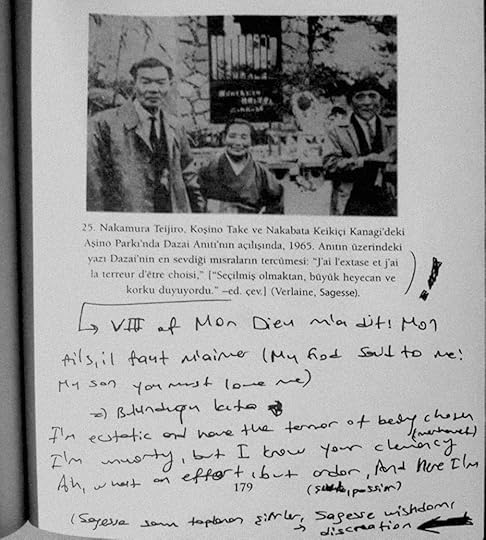
205'in son paragrafı olan Aşina Parkı hakkındaki kısım inanılmaz bir lezzetti, bilmiyorum. Yazarın hakikaten sıradan olanın sıradan oluşuna şaşırması mı, bunun neredeyse bilinmeyen durakta yaşanması mı, yoksa yaşananın öykü tadında da yaşanabilecek bir şey oluşu mu, Dazai aktarırken zaten bir öyküye dönüşmüş oluşu mu, sıradan sandığımız şeylerin aslında istediğimiz şeyler olup ıskalayışımız mı, herkesin dünya gözününün farklı oluşuna mı... Çok konuşabilirim.
“Bir keresinde Tokyo'dan dönen Kanagi Belediye Başkanı, Ueno İstasyonu'ndan Aşino Parkı'na bir bilet istemiş. Kendisine böyle bir istasyonun olmadığının söylenmesi üzerine Tsugaru demiryolu hattındaki Aşino Parkı'nı hiç duymadınız mı diye sormuş. İstasyondaki görevlinin yarım saatlik araştırmasının ardından nihayet biletini alabilmiş. Pencereden başımı çıkarıp küçük istasyona bakarken bu olayı hatırladım. Mavi desenli, pamuklu bir kimono ve pamuklu bol pantolon giymiş genç bir kız koşarak giriş kapısına geldi, iki eliyle koca bir bohçayı tutmuş, biletini dişlerinin arasına sıkıştırmıştı. Gözlerini hafif kısarak bileti ağzıyla yakışıklı genç biletçiye uzattı, delikanlı işini biliyordu: Usta bir diş hekiminin diş çekmesi gibi maharetli bir hareketle, inci gibi iki sıra diş arasına sıkışmış kırmızı bileti zımbaladı. Ne kız ne de delikanlı bir an olsun gülmediler. Sanki bu dünyanın en normal şeyiymiş gibi davranıyorlardı. Kız biner binmez tren tekrar hareket etti, sanki makinist onu beklemişti. Bütün ülkede bu kadar pastoral bir istasyon çok az bulunabilir. Kanagi Belediye Başkanı Ueno İstasyonu'na bir daha gittiğinde ‘Aşino Parkı’ ismini daha yüksek sesle telaffuz etmeli.”
Bu da kalsın burda bi ara dönücem
oxoxo
iko

May 15, 2024
Home to Tsugaru was a stark contrast to Dazai-san's usual works. Showing his zeal towards the places he frequented and his adventures with his closed ones, it was a sweet delight to read. I love that he prefers an idyllic lifestyle over the usual humdrum. His detailed travelogue account with his friends and the times he spent in those places brought a sense of tranquility. He is funny and has a charm that I would describe cool irrespective of the time. He's a true theatre kid and a literature student in my eyes. I'm still on my mission to read as many stuff from him.

May 12, 2017
"herhalde bu kitap tekrar basılana kadar okuyamam" diyordum. Çok teşekkür ederim Deniz ki sayende okuyabildim.
kitap Dazai sevenler için çok gusel. yazarın kendi ağzından kendi kõklerine dair birseyler okumak çok keyifli.
bir de japonya ya merakınız varsa hele de ücra bi köşesinde Dazai ile birlikte gezmek hosunuza giderse mutlaka tavsiye edilir.
kitap Dazai sevenler için çok gusel. yazarın kendi ağzından kendi kõklerine dair birseyler okumak çok keyifli.
bir de japonya ya merakınız varsa hele de ücra bi köşesinde Dazai ile birlikte gezmek hosunuza giderse mutlaka tavsiye edilir.

May 9, 2020
Çocukluk, aile, yaşanılan yer, yaşanılamayan yer, yaşanılmak istenen yer, fikir üzerine, insan üzerine, kaybedilenler, kaybedilmek istenmeyenler, ağaçlar, şelaler, trenler, dağlar, yemekler ve yaşama dair her şey Osamu Çelebi fikriyatından gözlerinize akıyor. 10 gün sonra bu yolculuktan dönmek zor olacak.

October 23, 2018
Kitap, bir yayınevinin talebi üzerine; Tsugaru bölgesinin coğrafyası, tarihi, adetleri hakkında bilgi veren, tarihi bir topografik kaydını içeren bir metin olarak yazar tarafından hazırlanan, “Yeni Fudoki Serisi” kılavuz dizisinin bir cildidir. Kendi memleketi ile ilgili bu çalışma, Dazai için bir arınma sürecine dönüşmüş. Biyografik öğelerin de yer aldığı metin, kılavuzun yıllar sonra bile okunan eşsiz bir cildi olmasını sağlamış. Bir gezi notu olarak değerlendirdiğim metnin, biyografik öğeler dışındaki -ne kadarının günümüz için de geçerli olduğunu bilmediğim- bazı bölümleri ilginç. Fakat daha çok ilgimi çeken, Dazai’nin çocukluk ve gençlik dönemlerinin travmalarına ilişkin ipuçları. Metni yazdığı ve ağabeyi kadar olmasa da tanınan bir yazar olduğu dönemde bile, Dazai’nin, ağabeyi ile karşılaştığı anda anında ortaya çıkan kendine güvensizliği; zor geçen kısa hayatına ilişkin çok üzücü bir ipucu.
“...Yalnız bir kuş şakımaya başladığında, tepeler daha da sessizleşir...”, (şair Vang An-şih),
sf:149.
“...Yalnız bir kuş şakımaya başladığında, tepeler daha da sessizleşir...”, (şair Vang An-şih),
sf:149.

July 12, 2018
Osamu Dazai morlara bürünüp,doğduğu,ilk gençlik yıllarını geçirdiği topraklara gidiyor,hayatına değen kişilerle buluşuyor yeniden.Bu yolculukta ılımlı bir Dazai görmek pek mümkün değil aslında.
Mesela şöyle diyor:
“Yetişkinler yalnızdır.Birbirimizi sevsek bile herkesin yanında bunu belli etmemeye çalışırız.Bu kadar temkin neden?Cevabı basit:Çünkü insanlar sık sık ihanete uğrar ve herkesin arasında rezil olur.Gençlerin yetişkinliğe geçerken ilk öğrendikleri,kimseye güvenmemelidir gerektiğidir.Yetişkinler ihanete uğramış ergenlerdir.”
Ve karakterini,korkularını,özlemlerini gizlemiyor yazar.Belki bu yüzden her eserinde kendine bağlamayı da başarıyor..
Mesela şöyle diyor:
“Yetişkinler yalnızdır.Birbirimizi sevsek bile herkesin yanında bunu belli etmemeye çalışırız.Bu kadar temkin neden?Cevabı basit:Çünkü insanlar sık sık ihanete uğrar ve herkesin arasında rezil olur.Gençlerin yetişkinliğe geçerken ilk öğrendikleri,kimseye güvenmemelidir gerektiğidir.Yetişkinler ihanete uğramış ergenlerdir.”
Ve karakterini,korkularını,özlemlerini gizlemiyor yazar.Belki bu yüzden her eserinde kendine bağlamayı da başarıyor..

April 8, 2021
Kitap, Dazai'nin doğduğu topraklara yaptığı geziyi anlatıyor. Aslında bir Tsugaru kılavuzu yazması istenmiş Dazai'den. Dazai, kendine hayatına dair bir şeyler de yazınca ortaya bu kitap çıkmış. Ne yalan söyleyim Tsugaru'yla ilgili şeyler (tarihi, coğrafyası) hiç ilgimi çekmedi, hiçbir şey ifade etmedi bana. Bazı kısımları hızlı hızlı geçtim. Dazai'nin kendi yaşamıyla ilgili olan detaylar merak ettiğim kısımlardı. Dazai'nin hayatıyla ilgili olan kısımları beğenmekle birlikte kitabı okumasam da olurdu diye düşünmeden edemedim.
Kısacası, Dazai'yi yeni başlamak isteyenlere önermem. Dazai'nin başka kitaplarını okumuş ve bu kitabı okumak isteyenler de roman yapısında olmadığını bilsinler. Bir gezi kitabı, yer yer ansiklopedik bilgiler veren bir kılavuz olduğunu aklınızda bulundurun derim.
Kısacası, Dazai'yi yeni başlamak isteyenlere önermem. Dazai'nin başka kitaplarını okumuş ve bu kitabı okumak isteyenler de roman yapısında olmadığını bilsinler. Bir gezi kitabı, yer yer ansiklopedik bilgiler veren bir kılavuz olduğunu aklınızda bulundurun derim.
September 21, 2018
Tüm karamsarlığına ya da güzelliğine rağmen kimseye "Bu kitabı okuyun" demeyeceğim çünkü bazı yazar ve kitapları insanın kendisinin keşfetmesi gerektiğini düşünüyorum.
İnanıyorum ki bir gün Dazai size gelecek, öyle ya gelmemişse; henüz hazır değilsiniz demektir.
Kendisi benim için daima özel kalacak, hissettirdikleri bir kez daha unutulmayacak.
AH!
İnanıyorum ki bir gün Dazai size gelecek, öyle ya gelmemişse; henüz hazır değilsiniz demektir.
Kendisi benim için daima özel kalacak, hissettirdikleri bir kez daha unutulmayacak.
AH!

March 6, 2014
Without a doubt one of the all time great travel diaries ever. Even though he made up some of the narratives here, it doesn't take away his genius at looking at his life and somehow improve on it via writing. He's the writer for me that made me what I am now, as a writer.

Read
January 21, 2011"Yüreğimin derinliklerinde Japon olmanın çok hoş bir şey olduğunu hissettim; burası gerçekten de Doğan Güneşin Ülkesi."

March 22, 2023
Tsugaru, published in November 1944, offers a journey that delves deeply into the themes of cultural identity, family, class, and personal introspection. Far from being a simple travel narrative, Dazai Osamu’s work reflects a layered introspection that weaves folklore, nostalgia, and existential reflection into a cohesive exploration of both the self and society. Despite being written during a period of heavy wartime censorship in Japan, when literature was encouraged to promote national unity, Tsugaru retains an unfiltered intimacy, grounded in Dazai’s conflicted sense of belonging to the Tsugaru region and his existential longing to understand himself against this cultural and geographical backdrop.
The structure of Tsugaru is distinctive among Dazai’s works. Each chapter focuses on a different area within Tsugaru, creating a mosaic of regions that contribute to Dazai’s unique form of “geopsychological discovery.” This structure allows Dazai to explore each area as both a literal landscape and as a metaphor for parts of his psyche shaped by Tsugaru. The book draws on traditional Japanese travel writing or fudoki, regional chronicles that documented local resources and cultural specifics, dating back to the 8th century. In Tsugaru, however, Dazai goes beyond traditional fudoki to explore not only topography but also the emotional and psychological landscapes that have influenced his identity.
Dazai begins his journey with a striking lack of pretension. He dismisses any desire to offer “pseudospecialist pronouncements,” framing his journey as an act of “love” for Tsugaru- a love complicated by his relationship to the Tsushima family’s legacy. His goal is not to simply document Tsugaru’s landscapes but to understand how this harsh, unforgiving region has shaped him, both as a writer and as a member of the Tsushima family. The journey serves as both a homage to Tsugaru’s resilience and an introspective inquiry into Dazai’s complex identity, revealing how deeply intertwined his personal fate is with the land he once left behind.
The historical context of Japanese travel literature greatly informs Tsugaru. The Edo period saw an explosion in travel writing as restrictions eased and guides documenting local delicacies and famous spots gained popularity. Unlike this approach, Dazai’s narrative evokes a pre-modern perspective that emphasises local uniqueness, juxtaposing it against the Meiji era’s push toward national homogeneity. Dazai’s interest in folklore, which he began exploring in works like Shinshaku shokoku hanashi (1945) and Otogi-zōshi (1945), surfaces here, enriching his portrayal of Tsugaru with cultural details that both preserve and critique the region’s traditional values in the face of encroaching modernity.
Throughout Tsugaru, Dazai reflects on the tension between tradition and modernisation, which had placed immense pressure on rural Japan to adopt the same uniform identity promoted in urban centres. In embracing Tsugaru’s rugged landscape and the cultural eccentricities of its people, he indirectly critiques this push for homogeneity. This act of reclaiming regional identity, however, is not a nationalist stance; it is a deeply personal endeavour to reconcile his own roots within a rapidly modernising Japan. While Tsugaru does resonate with the series’ intent to bridge the gap between urban and rural Japan, Dazai’s motivations are intensely personal. The journey feels less about reconnecting readers to the countryside and more about grounding himself in the authenticity he finds lacking in Tokyo’s refined but impersonal culture.
This authenticity Dazai admires in Tsugaru’s people is evident in their rugged, honest, and proud nature. Dazai contrasts the “mediocrity” he finds comforting in Tsugaru with the societal pressure for cultural refinement he faces in Tokyo. The severe climate of Tsugaru, characterised by Siberian winds, harsh winters, and frequent floods, forges a community that is resilient, honest, and self-reliant. Dazai notes how this harshness has produced a culture that values modesty over pretension, aligning with his own desire for authenticity in a world that often feels superficial. This unfiltered nature of the Tsugaru people mirrors Dazai’s own sense of self, making Tsugaru not just a place he returns to but a symbol of an identity he seeks to reclaim.
A recurring figure in Tsugaru is the renowned haikai poet Matsuo Basho, who epitomised the concept of wabi- the aesthetic of simplicity and transience. Basho’s journey in Oku no hosomichi, a work that is considered one of the pinnacles of Japanese travel writing, provides a counterpoint to Dazai’s own journey. However, unlike Basho, who embraced the journey as an ongoing path and saw beauty in life’s ephemerality, Dazai’s journey is rooted in a desire to reconnect with his origins, to “return home” both physically and emotionally. This distinction is vital: while Basho’s travel led away from home in search of fleeting beauty, Dazai’s journey back to Tsugaru is a search for grounding and continuity amidst a life he often perceives as fractured and transient.
Dazai’s reflections are underscored by an awareness of mortality, a theme that permeates much of his writing. In Tsugaru, he contemplates the deaths of his contemporaries and the inevitability of his own, remarking how the region’s hardships have “fixed his fate.” This tone of fatalism extends to his exploration of class, as he reflects on his privileged position as a member of the Tsushima family. Despite his desire for equality, he recognises that his background inherently separates him from his childhood friends. For instance, Dazai notes how his friend T uses formal language, while he speaks casually- a subtle reminder of the social dynamics ingrained in their interactions since youth. This discomfort with his privileged status is part of the existential struggle that defines Dazai’s return to Tsugaru, where he seeks a place of belonging that transcends class.
A pivotal aspect of Dazai’s journey is his visit to his brother, with whom he shares a strained relationship due to the weight of family expectations. Despite his attempts to reconnect, he remains overshadowed by his brother’s role as the family’s patriarch. Through storytelling with his nieces and sister-in-law, however, Dazai carves out a sense of belonging. His tales of childhood become a medium through which he momentarily transcends social difference, reaffirming his connection to his family on his own terms. In these interactions, storytelling and literature become his tools for bridging gaps within his family, allowing him to reclaim his individuality and defy the rigid class structures that have long defined him.
One of the most poignant moments in Tsugaru is Dazai’s search for his “missing mother,” embodied in his visit to Take, his childhood babysitter. This reunion is a central expression of furusato (hometown) as a space of maternal comfort and escape from individuality’s burdens. Dazai’s yearning for Take symbolises a deep-seated desire for emotional security, a “return to the mother” that psychoanalysts like Fromm and Funk might interpret as a yearning to merge with the mother figure to alleviate existential anxiety. This idealised reunion, however, is complicated by the reality of Take’s socio-economic status; her family, once independent farmers, became tenants of the Tsushima family due to mounting debts. Dazai’s memory romanticises their connection, while Take recalls him as detached, reminiscing with an acquaintance rather than truly connecting with her, highlighting the emotional chasm that still remains between them.
In Tsugaru, Dazai’s reflections on the theme of truth versus fabrication are integral to his narrative style. He openly admits to embellishing details, noting that “Recollections” contains “farcical fiction” yet remains emotionally truthful. Dazai’s belief that “reality consists in what you believe” underscores his narrative approach in Tsugaru, where fact and fiction blend to create an authentic portrayal of his subjective experiences. This candid mix of reality and fiction reflects his inner conflict, as he seeks a “true history of the subjective self” rather than an objective account. By doing so, he encourages readers to trust his emotional sincerity, even as he blurs the boundaries of truth.
In describing Dazai’s style, Reiko Abe Auestad notes that his “critical project” of self-exposure blends self-irony and vulnerability, creating a complex but genuine connection with his readers. This interactive aspect of Dazai’s narrative invites readers to become “co-conspirators” in his exploration of identity and selfhood. His concluding sentiment- “Art is me”- underscores the deeply personal nature of his work, framing his writing as a tool for navigating the complexities of his fragmented identity within both his familial and cultural context.
Ultimately, Tsugaru resists any simple conclusions. Dazai’s journey back to Tsugaru is not a return to wholeness but an exploration of the fluid and fractured nature of his identity. The land itself, with its unyielding climate and resilient people, mirrors the trials and resilience that define Dazai’s life. In Tsugaru, he captures the modernisation of Japan and its impact on rural identity while confronting the limitations of individual autonomy within the confines of family, class, and cultural expectation. In this narrative, Dazai transcends the personal and touches upon a universal search for belonging, ultimately revealing that identity- like Tsugaru’s rugged landscape- is shaped by both beauty and hardship, grounding him in a place that is as much a part of him as he is a part of it.
The structure of Tsugaru is distinctive among Dazai’s works. Each chapter focuses on a different area within Tsugaru, creating a mosaic of regions that contribute to Dazai’s unique form of “geopsychological discovery.” This structure allows Dazai to explore each area as both a literal landscape and as a metaphor for parts of his psyche shaped by Tsugaru. The book draws on traditional Japanese travel writing or fudoki, regional chronicles that documented local resources and cultural specifics, dating back to the 8th century. In Tsugaru, however, Dazai goes beyond traditional fudoki to explore not only topography but also the emotional and psychological landscapes that have influenced his identity.
Dazai begins his journey with a striking lack of pretension. He dismisses any desire to offer “pseudospecialist pronouncements,” framing his journey as an act of “love” for Tsugaru- a love complicated by his relationship to the Tsushima family’s legacy. His goal is not to simply document Tsugaru’s landscapes but to understand how this harsh, unforgiving region has shaped him, both as a writer and as a member of the Tsushima family. The journey serves as both a homage to Tsugaru’s resilience and an introspective inquiry into Dazai’s complex identity, revealing how deeply intertwined his personal fate is with the land he once left behind.
The historical context of Japanese travel literature greatly informs Tsugaru. The Edo period saw an explosion in travel writing as restrictions eased and guides documenting local delicacies and famous spots gained popularity. Unlike this approach, Dazai’s narrative evokes a pre-modern perspective that emphasises local uniqueness, juxtaposing it against the Meiji era’s push toward national homogeneity. Dazai’s interest in folklore, which he began exploring in works like Shinshaku shokoku hanashi (1945) and Otogi-zōshi (1945), surfaces here, enriching his portrayal of Tsugaru with cultural details that both preserve and critique the region’s traditional values in the face of encroaching modernity.
Throughout Tsugaru, Dazai reflects on the tension between tradition and modernisation, which had placed immense pressure on rural Japan to adopt the same uniform identity promoted in urban centres. In embracing Tsugaru’s rugged landscape and the cultural eccentricities of its people, he indirectly critiques this push for homogeneity. This act of reclaiming regional identity, however, is not a nationalist stance; it is a deeply personal endeavour to reconcile his own roots within a rapidly modernising Japan. While Tsugaru does resonate with the series’ intent to bridge the gap between urban and rural Japan, Dazai’s motivations are intensely personal. The journey feels less about reconnecting readers to the countryside and more about grounding himself in the authenticity he finds lacking in Tokyo’s refined but impersonal culture.
This authenticity Dazai admires in Tsugaru’s people is evident in their rugged, honest, and proud nature. Dazai contrasts the “mediocrity” he finds comforting in Tsugaru with the societal pressure for cultural refinement he faces in Tokyo. The severe climate of Tsugaru, characterised by Siberian winds, harsh winters, and frequent floods, forges a community that is resilient, honest, and self-reliant. Dazai notes how this harshness has produced a culture that values modesty over pretension, aligning with his own desire for authenticity in a world that often feels superficial. This unfiltered nature of the Tsugaru people mirrors Dazai’s own sense of self, making Tsugaru not just a place he returns to but a symbol of an identity he seeks to reclaim.
A recurring figure in Tsugaru is the renowned haikai poet Matsuo Basho, who epitomised the concept of wabi- the aesthetic of simplicity and transience. Basho’s journey in Oku no hosomichi, a work that is considered one of the pinnacles of Japanese travel writing, provides a counterpoint to Dazai’s own journey. However, unlike Basho, who embraced the journey as an ongoing path and saw beauty in life’s ephemerality, Dazai’s journey is rooted in a desire to reconnect with his origins, to “return home” both physically and emotionally. This distinction is vital: while Basho’s travel led away from home in search of fleeting beauty, Dazai’s journey back to Tsugaru is a search for grounding and continuity amidst a life he often perceives as fractured and transient.
Dazai’s reflections are underscored by an awareness of mortality, a theme that permeates much of his writing. In Tsugaru, he contemplates the deaths of his contemporaries and the inevitability of his own, remarking how the region’s hardships have “fixed his fate.” This tone of fatalism extends to his exploration of class, as he reflects on his privileged position as a member of the Tsushima family. Despite his desire for equality, he recognises that his background inherently separates him from his childhood friends. For instance, Dazai notes how his friend T uses formal language, while he speaks casually- a subtle reminder of the social dynamics ingrained in their interactions since youth. This discomfort with his privileged status is part of the existential struggle that defines Dazai’s return to Tsugaru, where he seeks a place of belonging that transcends class.
A pivotal aspect of Dazai’s journey is his visit to his brother, with whom he shares a strained relationship due to the weight of family expectations. Despite his attempts to reconnect, he remains overshadowed by his brother’s role as the family’s patriarch. Through storytelling with his nieces and sister-in-law, however, Dazai carves out a sense of belonging. His tales of childhood become a medium through which he momentarily transcends social difference, reaffirming his connection to his family on his own terms. In these interactions, storytelling and literature become his tools for bridging gaps within his family, allowing him to reclaim his individuality and defy the rigid class structures that have long defined him.
One of the most poignant moments in Tsugaru is Dazai’s search for his “missing mother,” embodied in his visit to Take, his childhood babysitter. This reunion is a central expression of furusato (hometown) as a space of maternal comfort and escape from individuality’s burdens. Dazai’s yearning for Take symbolises a deep-seated desire for emotional security, a “return to the mother” that psychoanalysts like Fromm and Funk might interpret as a yearning to merge with the mother figure to alleviate existential anxiety. This idealised reunion, however, is complicated by the reality of Take’s socio-economic status; her family, once independent farmers, became tenants of the Tsushima family due to mounting debts. Dazai’s memory romanticises their connection, while Take recalls him as detached, reminiscing with an acquaintance rather than truly connecting with her, highlighting the emotional chasm that still remains between them.
In Tsugaru, Dazai’s reflections on the theme of truth versus fabrication are integral to his narrative style. He openly admits to embellishing details, noting that “Recollections” contains “farcical fiction” yet remains emotionally truthful. Dazai’s belief that “reality consists in what you believe” underscores his narrative approach in Tsugaru, where fact and fiction blend to create an authentic portrayal of his subjective experiences. This candid mix of reality and fiction reflects his inner conflict, as he seeks a “true history of the subjective self” rather than an objective account. By doing so, he encourages readers to trust his emotional sincerity, even as he blurs the boundaries of truth.
In describing Dazai’s style, Reiko Abe Auestad notes that his “critical project” of self-exposure blends self-irony and vulnerability, creating a complex but genuine connection with his readers. This interactive aspect of Dazai’s narrative invites readers to become “co-conspirators” in his exploration of identity and selfhood. His concluding sentiment- “Art is me”- underscores the deeply personal nature of his work, framing his writing as a tool for navigating the complexities of his fragmented identity within both his familial and cultural context.
Ultimately, Tsugaru resists any simple conclusions. Dazai’s journey back to Tsugaru is not a return to wholeness but an exploration of the fluid and fractured nature of his identity. The land itself, with its unyielding climate and resilient people, mirrors the trials and resilience that define Dazai’s life. In Tsugaru, he captures the modernisation of Japan and its impact on rural identity while confronting the limitations of individual autonomy within the confines of family, class, and cultural expectation. In this narrative, Dazai transcends the personal and touches upon a universal search for belonging, ultimately revealing that identity- like Tsugaru’s rugged landscape- is shaped by both beauty and hardship, grounding him in a place that is as much a part of him as he is a part of it.

July 21, 2023
["Huzur" denen duygu bu mu? Eğer buysa, yüreğim hayatta huzuru ilk olarak tecrübe ediyordu diyebilirim. Birkaç sene önce ölen gerçek annem son derece asil, nazik ve iyi bir anneydi ama bana bu tuhaf güven duygusunu hiç vermemişti. Merak ediyorum: Bu dünyadaki bütün anneler çocuklarına böyle bir
huzur veriyorlar mı, annenin her zaman sana yardım etmek için yanında olacağını bilen zihnin huzurunu veriyorlar mı?
Eğer öyleyse, insanın ana babasına karşı ne pahasına olursa olsun iyi davranma arzusu doğal olarak bu histen kaynaklanıyor olmalı. İnsanlar hem bu muhteşem şeye, anneye sahip olup hem de nasıl bunalıma kapılıyorlar ya da yoldan çıkıyorlar bilmem. Evlat sadakati doğal bir duygu, zorlama bir davranış tarzı değil.]
Dazai'ın kendi ağzından köklerinin kaynağına Tsugaru'ya yaptığı yolculuğu okuyoruz. Uzun bir aradan sonra memleketine doğru yola koyulmak onun için zorda olsa gerek! Fotoğrafik anlatımlarla öyle güzel anlatmışki bu yolculukta yan koltuktaymış gibi hissediyorsunuz😊 Başo'nun Kuzeye Giden İnce Yol'unu okur gibi de hissettim; zaten birçok yerde de değiniyor buna tek fark bu yolculuğu birinin yayan diğerinin ulaşım araçlarını kullanarak yapması diyebiliriz belkide😅
İçinde bulunduğu duygusal geçişleri de çok derinden hissedebiliyorsunuz. Ayrıca verdiği tarihi ve coğrafi bilgilerde çok etkileyici. Bazılarını Büyük Japon Ansiklopedisi'nden almış; Meydan Laurosue hissi de vardı tabi😅 Ama kendi betimlemeleri ve anlatımları mükemmeldi. Ayrıca bir çok kitaptan da bahsediyor ve bunların hepsi kitap sonunda listelenmiş.
Okumadıysanız mutlaka okuyun derim 😉👌👌👌💜
huzur veriyorlar mı, annenin her zaman sana yardım etmek için yanında olacağını bilen zihnin huzurunu veriyorlar mı?
Eğer öyleyse, insanın ana babasına karşı ne pahasına olursa olsun iyi davranma arzusu doğal olarak bu histen kaynaklanıyor olmalı. İnsanlar hem bu muhteşem şeye, anneye sahip olup hem de nasıl bunalıma kapılıyorlar ya da yoldan çıkıyorlar bilmem. Evlat sadakati doğal bir duygu, zorlama bir davranış tarzı değil.]
Dazai'ın kendi ağzından köklerinin kaynağına Tsugaru'ya yaptığı yolculuğu okuyoruz. Uzun bir aradan sonra memleketine doğru yola koyulmak onun için zorda olsa gerek! Fotoğrafik anlatımlarla öyle güzel anlatmışki bu yolculukta yan koltuktaymış gibi hissediyorsunuz😊 Başo'nun Kuzeye Giden İnce Yol'unu okur gibi de hissettim; zaten birçok yerde de değiniyor buna tek fark bu yolculuğu birinin yayan diğerinin ulaşım araçlarını kullanarak yapması diyebiliriz belkide😅
İçinde bulunduğu duygusal geçişleri de çok derinden hissedebiliyorsunuz. Ayrıca verdiği tarihi ve coğrafi bilgilerde çok etkileyici. Bazılarını Büyük Japon Ansiklopedisi'nden almış; Meydan Laurosue hissi de vardı tabi😅 Ama kendi betimlemeleri ve anlatımları mükemmeldi. Ayrıca bir çok kitaptan da bahsediyor ve bunların hepsi kitap sonunda listelenmiş.
Okumadıysanız mutlaka okuyun derim 😉👌👌👌💜

Read
January 22, 2023Dazai'nin bir derginin isteği üzerine, oraları tanıtmak amacıyla, doğduğu ve büyüdüğü Tsugara'yaptığı yolculuğu anlatıyor bu kitap. Klasik bir gezi kitabı değil elbette. Gezdiği yerleri anlatırken eskiden tanıdığı insanlarla olan ilişkilerini, onlarla yaptığı sohbetleri, çocukluğunu vs. de anlatmış. Zaman zaman gittiği bölgenin tarihçesine değinmiş ama genel olarak eskiye, anılarına döndüğü, kendisiyle hesaplaştığı bir anı kitabı demek daha doğru olur. Son bölümde, kendisine altı yıl boyunca bakan dadısını otuz yıl sonra arayıp bulmasını ve duyduğu mutluluğu yazmış ama kitabın başındaki giriş yazısında bunun hiç gerçekleşmediği ya da anlatıldığı gibi bir karşılaşma olmadığı bilgisi var. Bazı yerlerde hayal gücünün devreye girmesi de Dazai'den beklenmeyecek bir şey değil.

November 30, 2025
Aż poszłabym pochodzić po moich wsiowych terenach 😆
To była odświeżająca podróż po rodzinnych stronach Dazaia, który nie tylko potrafi zaciekawić nie tylko swoimi przemyśleniami i perspektywą, ale również historycznymi wzmiankami i opisami krajobrazów 🫶🏼
To była odświeżająca podróż po rodzinnych stronach Dazaia, który nie tylko potrafi zaciekawić nie tylko swoimi przemyśleniami i perspektywą, ale również historycznymi wzmiankami i opisami krajobrazów 🫶🏼

August 26, 2024
DIARIO DE UN VIAJE POR TSUGARU
AUTOR: OSAMU DAZAI
EDITORIAL: @tambienelcaracol
TRADUCCOION: MAXIMILIANO ALVAREZ, LUCIA TANONI Y MARIANA ALONSO.
PAGINAS: 284
Siempre es grato leer a Osamu Dazai, en cada obra nos adentramos en su pesimismo y en su crítica social en un periodo tan álgido, y dónde el autor en cierta forma a través de la "autoficción" descubrimos parte de la personalidad del autor. En este Diario de Viaje, el autor tiene otro interés, y pese a que hay pequeñas señales de su oscuridad, el autor aquí hace un recorrido como los antiguos literatos japoneses. Dentro de una modernidad y una crudeza de la guerra de esos momentos, el autor hace un recorrido por su pasado familiar.
A lo largo de cada página, nos encontramos no solo con un diario de viaje, sino con una historia bastante resumida de la región de Tsugaru, ya que nuestro querido Shuji Tsuchima, decide inteligentemente poner obras de consulta para abordar esta región del norte de Japón, de una manera magistral nos adentra en su historia y en un recorrido por diferentes pueblos y personas de su pasado, que marcaron sobretodo su infancia. El autor además resalta el pasado de esta región que habitaron el pueblo originario de los Emishi y además como estos fueron sometidos y en cierta forma borrados. Otro dato interesante de esta región es una pintura viviente con diferentes escenarios naturales, como el mar, los arrozales y diferentes pueblos como Kizukuri, Aomori, Godhigawara, Kanagi y Kodomari, entre otros mas.
El autor nos lleva a una ruta profunda, en dónde descubrimos que su familia de sangre, no es tan unida con el y Dazai es más cercano a otras personas que lo marcaron en su vida, en específico su "madre adoptiva" la historia de Dazai estuvo marcada por ausencias de padres (fallecidos) y hermanos que vivieron lejos, fue un hombre distinto a su familia Rica, y aquí mismo lo resalta. En esta narrativa y estudio, el autor describe algunos aspectos de soledad, pero también de esa conexión con su pasado. Es importante destacar que este libro es una radiografía de la región y así mismo, tenemos que el sake es un elemento fundamental que nos hace conocer a Shuji Tsuchima el hombre detrás del escritor Osamu Dazai.
AUTOR: OSAMU DAZAI
EDITORIAL: @tambienelcaracol
TRADUCCOION: MAXIMILIANO ALVAREZ, LUCIA TANONI Y MARIANA ALONSO.
PAGINAS: 284
Siempre es grato leer a Osamu Dazai, en cada obra nos adentramos en su pesimismo y en su crítica social en un periodo tan álgido, y dónde el autor en cierta forma a través de la "autoficción" descubrimos parte de la personalidad del autor. En este Diario de Viaje, el autor tiene otro interés, y pese a que hay pequeñas señales de su oscuridad, el autor aquí hace un recorrido como los antiguos literatos japoneses. Dentro de una modernidad y una crudeza de la guerra de esos momentos, el autor hace un recorrido por su pasado familiar.
A lo largo de cada página, nos encontramos no solo con un diario de viaje, sino con una historia bastante resumida de la región de Tsugaru, ya que nuestro querido Shuji Tsuchima, decide inteligentemente poner obras de consulta para abordar esta región del norte de Japón, de una manera magistral nos adentra en su historia y en un recorrido por diferentes pueblos y personas de su pasado, que marcaron sobretodo su infancia. El autor además resalta el pasado de esta región que habitaron el pueblo originario de los Emishi y además como estos fueron sometidos y en cierta forma borrados. Otro dato interesante de esta región es una pintura viviente con diferentes escenarios naturales, como el mar, los arrozales y diferentes pueblos como Kizukuri, Aomori, Godhigawara, Kanagi y Kodomari, entre otros mas.
El autor nos lleva a una ruta profunda, en dónde descubrimos que su familia de sangre, no es tan unida con el y Dazai es más cercano a otras personas que lo marcaron en su vida, en específico su "madre adoptiva" la historia de Dazai estuvo marcada por ausencias de padres (fallecidos) y hermanos que vivieron lejos, fue un hombre distinto a su familia Rica, y aquí mismo lo resalta. En esta narrativa y estudio, el autor describe algunos aspectos de soledad, pero también de esa conexión con su pasado. Es importante destacar que este libro es una radiografía de la región y así mismo, tenemos que el sake es un elemento fundamental que nos hace conocer a Shuji Tsuchima el hombre detrás del escritor Osamu Dazai.

November 10, 2021
Puanım 3/5 (%62/100)
Öncelikle sesli kitap olarak "okuduğumu" söylemek istiyorum. Dazai ile Öğrenci Kız okuduktan sonra tanışmıştım ve hakkında çok olumlu şeyler duyduğum için o kitabı oldukça beğenmiştim. Ona göre karşılaştıracak olursam bir tık daha az sevdim. Bu da tamamen kitabın türünden kaynaklanıyor diye düşünüyorum. Kitap Dazai'nin gezi blogu olarak görülebilir ve çoğu yerde otobiyografik olarak geçse de bazı yerlerde kurgu gibi karşımıza çıkıyor. Dazai'in dili, betimlemeleri ve normalde sıkılacağım bir gezi kitabını bile ilginç hale getirmesi bence onun yeteneğini gösteriyor. Yani kitap genel olarak güzeldi fakat beklediğim kadar ilgimi çekmedi. Sesli kitap olarak dinlemek de ayrı güzel oldu.
Öncelikle sesli kitap olarak "okuduğumu" söylemek istiyorum. Dazai ile Öğrenci Kız okuduktan sonra tanışmıştım ve hakkında çok olumlu şeyler duyduğum için o kitabı oldukça beğenmiştim. Ona göre karşılaştıracak olursam bir tık daha az sevdim. Bu da tamamen kitabın türünden kaynaklanıyor diye düşünüyorum. Kitap Dazai'nin gezi blogu olarak görülebilir ve çoğu yerde otobiyografik olarak geçse de bazı yerlerde kurgu gibi karşımıza çıkıyor. Dazai'in dili, betimlemeleri ve normalde sıkılacağım bir gezi kitabını bile ilginç hale getirmesi bence onun yeteneğini gösteriyor. Yani kitap genel olarak güzeldi fakat beklediğim kadar ilgimi çekmedi. Sesli kitap olarak dinlemek de ayrı güzel oldu.

August 11, 2024
Nawet lista zakupów tego człowieka byłaby interesująco napisana

August 27, 2019
“I am, so to speak, of pure Tsugaru stock; that explains why I can speak ill of Tsugaru without reserve. But if people from other parts of the country were to dismiss Tsugaru because of my criticisms, I would of course feel unhappy, because, no matter what I may say, I love Tsugaru.”

Being a travelogue, this book is quite different from what Osamu Dazai normally does. It still falls in his semi-autobiographical narrative, but the focal point is not on his personal life but his upbringing. Specifically, where he grew up, the Aomori prefecture. Most of Northern Japan was unknown, even considered backwards/outdated during Dazai’s era. Even today there are still notions of the north being outdated. But during Dazai’s era there was a bigger divide between Central Japan and Northern Japan, and the divide caused a lot of problems in regards of being socially accepted. Dazai himself struggled to adapt the Tokyo dialect and style of livelihood. This book was a request that Dazai accepted mostly because he needed the money. Yet, it was an opportunity for him to compare the differences between where he came from and where he lived. It was also an opportunity for him to learn more about the place he came from. Despite having spent the first 20 years of his life in Tsugaru and the Aomori prefecture, Dazai knew very little about his own district. It makes sense given that most of us don’t necessarily know much about the place we come from. We adapt behaviours, language, habits, etc. but no one actually sits us down and make us learn the textbook history/culture of the place we come from. Any history we do learn is a collective history of the nation we come from, but it’s not always subdivided and specialized into districts and prefectures. That mostly falls on the academics, hence, most people know little to nothing about specific histories.
Review Continued Here

September 22, 2024
książka reklamowana jest jako najbardziej osobista dazaia, co uważam za mylące. w porównaniu z zatraceniem i zmierzchem, powrót do tsugaru nie jest w połowie tak szczery i wyznaniowy. co prawda dazai pisze o sobie w pierwszej osobie, nie ma alter ego w postaci narratora, ale mimo to nawet bardziej prywatne czy życiowe momenty książki są dosyć anegdotyczne. czasem robi się wręcz nudno, gdy dazai przytacza fragmenty z encyklopedii albo szczegółowo przedstawia poszczególne odcinki podróży koleją. mimo wszystko, te fragmenty, w których ukazuje siebie w relacjach międzyludzkich bywają zabawne, czasem poruszające. dazai jest szczery, narcystyczny a zarazem pozbawiony wszelkiego poczucia własnej wartości, i jego monologi na temat własnej, w moim odczuciu ujmującej, osoby czyta się jak zwykle świetnie, pomimo parszywego charakteru. ponadto, niektóre fragmenty o samym tsugaru były bardzo ciekawe, przedstawiając pominięty przez japończyków, a co dopiero obcy mi, fragment kraju i jego historię.

December 25, 2024
mi última intención en mi paso por japón era ir a aomori, en el norte, justo antes de pasar a la isla de hokkaido. pero fue difícil salir de la abstracción y el ritmo de tokio. que suerte encontrarme con este libro, que vendría siendo como esas antiguas rutas copec, con mapa incluido y todo, para guiar un viaje por esta zona de donde dazai es oriundo. los repasos de tsushima por la historia local, los paisajes, los pueblos originarios masacrados y su vida personal en cada ciudad me emocionaron mucho jaja ya estoy ansiosa de poder hacer este viaje pronto!
como siempre el ensayo previo de miguel sardegna está increíble.
como siempre el ensayo previo de miguel sardegna está increíble.

June 27, 2025
3.5 Esta obra de Dazai muestra un viaje por sus origines y con él las transparencias del mismo autor.
"(...) Adiós, volvamos a encontrarnos si seguimos vivos. Mantengámonos fuertes de ánimo. No desesperemos. Bueno, entonces, con su permiso... "
"(...) Adiós, volvamos a encontrarnos si seguimos vivos. Mantengámonos fuertes de ánimo. No desesperemos. Bueno, entonces, con su permiso... "

July 5, 2025
Franchement, de tous les livres de mon cher Dazai celui-là m'a pris du temps, beaucoup de temps ! Je suis moins fan de la narration ici, Dazai m'a emmené partout et j'ai fini par me perdre : dans ses pensées, ses aparthés (parfois de deux ou trois pages..) ses longues idées abstraites. Mais j'ai senti que ce livre lui tenait à cœur dans son triste parcours de vie, car il dénote d'une positivité réconfortante. Retour à Tsugaru est construit de bons souvenirs et d'une passion enfantine de l'auteur pour sa province natale. Celle-ci lui rappelle aussi, lors de brèves mélancolies, son décalage incessant avec la société, et ses exigences personnelles face à sa famille.

March 1, 2016
The author was born on the Tsugaru peninsula in Aomori Prefecture, Northern Japan, one of the poorest and remotest areas of Japan, known for its folklore and Tsugaru shamisen music. Dazai's family's house in Goshogawara, "Shayokan," is now a museum. During the war years, a publisher was bringing out a series on various regions in the country and asked Dazai to contribute a volume on Tsugaru. Dazai therefore travels to Tsugaru to get inspiration and the result is not a travelogue (the author is totally unconcerned with scenery or history), but rather a book on meetings with figures from his childhood. In Japan (including by Dazai himself) Tsugaru is regarded as a Shishosetsu rather than as non-fiction, on a par with Dazai's other work. Dazai writes about himself, love, art, landscape, another writers as Naoya Shiga and Basho. During his family visits he always remains close to the sake bottle.

December 16, 2013
津軽の紀行文。知り合いを訪ね、思い出に浸りながら、だらだらと進むが、たまに太宰のユーモアが光る。最後に少し心暖まる。太宰の気遣いや自虐的な性格が垣間見え、「人生疲れるだろうなー。こりゃ、自殺するわ。。。」と思った。

May 27, 2015
This is so unlike 'No Longer Human' that it makes me sad to think of Dazai's fate. It still works tremendously well, and although it's just a simple travelogue, I was completely fascinated.

June 12, 2024
Quanto mi è piaciuto questo libro!
Chi conosce l’autore e conosce anche quella che è stata la sua vita, non si aspetterebbe di leggere un romanzo così “attaccato” alla bellezza delle cose semplici e genuine. Il libro parla del ritorno alla terra natia dell’autore durante il periodo della seconda guerra mondiale. Questo ritorno alle origini porta con sé considerazioni importanti in merito alla vita e alle differenze sostanziali che intercorrono tra la vita nelle città e quella nelle campagne, sopratutto in un periodo storico così delicato e disperato. Dazai descrive con trasporto e calore i paesaggi, il cibo, la storia e sopratutto le persone da cui ha deciso di fare ritorno. Le sue parole trasudano ammirazione, io personalmente mi sono ritrovata spesso ad immaginare con forza quanto veniva descritto, nella speranza di riuscire ad acciuffare un po’ di quella naturale bellezza così tanto elogiata. Anche questo, come altri suoi scritti, risulta un romanzo confessionale, dove gli eventi nella storia raccontata corrispondono agli eventi della vita dell'autore, narrati in prima persona, con tono colloquiale che avvicina ancora più il lettore alla storia. Io amo questo tipo di scrittura. Questo presente tuffo nel passato porta inevitabilmente l’anima tormentata di Dazai a fare i conti anche con i ricordi del passato, e con le cose “rimaste in sospeso”, sopratutto per quanto riguarda l’ambito familiare.
Per chi non lo sapesse, Dazai aveva tantissimi fratelli, ed il padre non era mai stato troppo presente nella sua vita, tant’è che venne cresciuto dalla servitù.
È stato un piacere leggere un Dazai “nuovo”, che non è quello del suo celebre “Lo Squalificato”. Un Dazai vivo, curioso, nostalgico, romantico.
Chi conosce l’autore e conosce anche quella che è stata la sua vita, non si aspetterebbe di leggere un romanzo così “attaccato” alla bellezza delle cose semplici e genuine. Il libro parla del ritorno alla terra natia dell’autore durante il periodo della seconda guerra mondiale. Questo ritorno alle origini porta con sé considerazioni importanti in merito alla vita e alle differenze sostanziali che intercorrono tra la vita nelle città e quella nelle campagne, sopratutto in un periodo storico così delicato e disperato. Dazai descrive con trasporto e calore i paesaggi, il cibo, la storia e sopratutto le persone da cui ha deciso di fare ritorno. Le sue parole trasudano ammirazione, io personalmente mi sono ritrovata spesso ad immaginare con forza quanto veniva descritto, nella speranza di riuscire ad acciuffare un po’ di quella naturale bellezza così tanto elogiata. Anche questo, come altri suoi scritti, risulta un romanzo confessionale, dove gli eventi nella storia raccontata corrispondono agli eventi della vita dell'autore, narrati in prima persona, con tono colloquiale che avvicina ancora più il lettore alla storia. Io amo questo tipo di scrittura. Questo presente tuffo nel passato porta inevitabilmente l’anima tormentata di Dazai a fare i conti anche con i ricordi del passato, e con le cose “rimaste in sospeso”, sopratutto per quanto riguarda l’ambito familiare.
Per chi non lo sapesse, Dazai aveva tantissimi fratelli, ed il padre non era mai stato troppo presente nella sua vita, tant’è che venne cresciuto dalla servitù.
È stato un piacere leggere un Dazai “nuovo”, che non è quello del suo celebre “Lo Squalificato”. Un Dazai vivo, curioso, nostalgico, romantico.

June 6, 2026
Tsugaru on monella tapaa aika hienostunut kirja. Vähän matkaopasta, kauniita kuvauksia, itsereflektioita, vähän liikaa sakea ja erilaisten hallitsijoiden nimiä. Jotenkin aika hurmaava pieni kirja, veikeyttä ja syvyyttä oikeassa suhteessa.
Toisen maailmansodan aikana Osamu Dazai sai toimeksiannon kirjoittaa Tsugarun alueesta (joka on siis Honshun saaren pohjoisimman maakunnan Aomorin itäinen puoli). Dazai itse oli kotoisin Tsugarusta, pienestä Kanakin kylästä, mutta oli tässä kohtaa asunut jo pidemmän aikaa Tokiossa. Paluu pitkästä aikaa lapsuuden maisemiin ja toisaalta tutustuminen oman kotiseutunsa vieraampiin paikkoihin luo hienon mahdollisuuden Dazaille tyypilliseen itsereflektioon.
Kirja on muodoltaan sangen kiinnostava: ollakseen matkakertomus se on hyvin romaanimainen. Mukaan on toki ripoteltu aimo annos lainauksia alueen historian tuntijoilta, mutta nekin nivoutuvat osaksi Dazain henkilökohtaista kuvailua. Itse alueen kuvaus suodattuu henkilökohtaisen linssin läpi eikä Dazai pyri varsinaisesti objektiivisuuteen. Useammasta paikasta tuli silti sellainen fiilis, että olisipa ollut siistiä nähdä nuo kylät ja kaupungit tuohon aikaan.
Tsugarussa on myös oma fragmentaarinen tarinallisuutensa. Dazai kertoo erilaisista sangen arkisista kommelluksista tuttaviensa luona. Sota-aika syrjäseudulla on sosiaalisena taustamiljöönä sangen kiinnostava. Toki Dazain kohdalla tämä näkyy vahviten kysymyksenä siitä mistä saisi lisää sakea. Tietty vakavampi tarinallisuus liittyy Dazain perhesuhteisiin, herkän tuhlaajapojan paluuseen.
Tsugaru on siis monitahoinen kirja, joka tuo oivasti esille Dazain kirjalliset lahjat. Olen aiemmin lukenut häneltä vain Ei enää ihmisen, täytyy jossain kohtaa tarttua muihinkin tuoreisiin suomennoksiin.
Toisen maailmansodan aikana Osamu Dazai sai toimeksiannon kirjoittaa Tsugarun alueesta (joka on siis Honshun saaren pohjoisimman maakunnan Aomorin itäinen puoli). Dazai itse oli kotoisin Tsugarusta, pienestä Kanakin kylästä, mutta oli tässä kohtaa asunut jo pidemmän aikaa Tokiossa. Paluu pitkästä aikaa lapsuuden maisemiin ja toisaalta tutustuminen oman kotiseutunsa vieraampiin paikkoihin luo hienon mahdollisuuden Dazaille tyypilliseen itsereflektioon.
Kirja on muodoltaan sangen kiinnostava: ollakseen matkakertomus se on hyvin romaanimainen. Mukaan on toki ripoteltu aimo annos lainauksia alueen historian tuntijoilta, mutta nekin nivoutuvat osaksi Dazain henkilökohtaista kuvailua. Itse alueen kuvaus suodattuu henkilökohtaisen linssin läpi eikä Dazai pyri varsinaisesti objektiivisuuteen. Useammasta paikasta tuli silti sellainen fiilis, että olisipa ollut siistiä nähdä nuo kylät ja kaupungit tuohon aikaan.
Tsugarussa on myös oma fragmentaarinen tarinallisuutensa. Dazai kertoo erilaisista sangen arkisista kommelluksista tuttaviensa luona. Sota-aika syrjäseudulla on sosiaalisena taustamiljöönä sangen kiinnostava. Toki Dazain kohdalla tämä näkyy vahviten kysymyksenä siitä mistä saisi lisää sakea. Tietty vakavampi tarinallisuus liittyy Dazain perhesuhteisiin, herkän tuhlaajapojan paluuseen.
Tsugaru on siis monitahoinen kirja, joka tuo oivasti esille Dazain kirjalliset lahjat. Olen aiemmin lukenut häneltä vain Ei enää ihmisen, täytyy jossain kohtaa tarttua muihinkin tuoreisiin suomennoksiin.
January 26, 2026
Foncez
Je me retrouve dans cette citation, comme Dazai Osamu :
“ J'ai dit beaucoup de mal de Hirosaki, mais non par antipathie pour cette ville ; disons que c'est pour moi une manière d'introspection. Je suis un enfant de Tsugaru. Mes ancêtres génération après génération, étaient des paysans du fief. je puis dire que je suis un pur produit de la région. C'est bien ce qui m'a donné toute licence pour critiquer vertement Tsugaru comme je l'ai fait. Mais que des "étrangers" , pour m'avoir entendu parler de la sorte, aillent se croire tout permis et se mettent à regarder Tsugaru de haut, et j'en serai tout de même fort mécontent. Parce que j'ai beau dire, j'aime Tsugaru. “
Je me retrouve dans cette citation, comme Dazai Osamu :
“ J'ai dit beaucoup de mal de Hirosaki, mais non par antipathie pour cette ville ; disons que c'est pour moi une manière d'introspection. Je suis un enfant de Tsugaru. Mes ancêtres génération après génération, étaient des paysans du fief. je puis dire que je suis un pur produit de la région. C'est bien ce qui m'a donné toute licence pour critiquer vertement Tsugaru comme je l'ai fait. Mais que des "étrangers" , pour m'avoir entendu parler de la sorte, aillent se croire tout permis et se mettent à regarder Tsugaru de haut, et j'en serai tout de même fort mécontent. Parce que j'ai beau dire, j'aime Tsugaru. “
Displaying 1 - 30 of 98 reviews