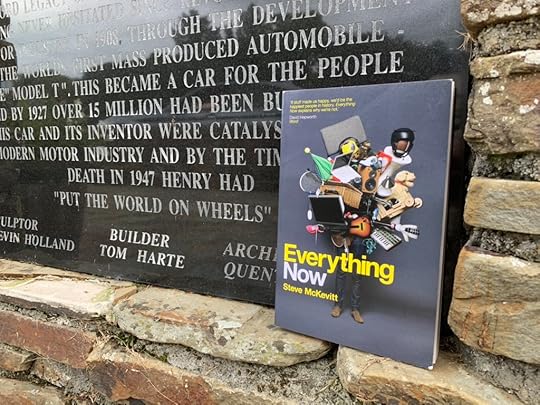
We know the world does not revolve around us, but for consumers in the instant society of the 21st Century, it very much looks like it does.
Throughout the course of a normal day, we are bombarded with around 3,000 messages. Each one is an attempt to make an emotional connection in order to sell something – a product, service, policy or even an idea.
Steve McKevitt is an expert in communication. He has spent over 20 years working for some of the world’s biggest brands: from Nike to Coca-Cola. He reveals the techniques that are employed to mould public opinion, shape how we behave and control what we think.
We learn what is really going on when we chose between a Pepsi or a Coke; how even the most boring product can become the most exciting brand; and ultimately discover why it is that, in a world of allegedly endless choice, most of us are living out virtually identical lives.
At times hilarious and shocking, Everything Now reveals how the constant drive to provide us with products we don’t actually need demands that we are kept in a permanent state of dissatisfaction and is preventing us from addressing the biggest issues of our time.
"Thinking is the hardest work there is, which is probably the reason why so few engage in it." - Henry Ford
Everything Now by Steve McKevitt perfectly analyses the distinction between "want versus need" and our perspectives and unique individuality. What we require versus what we yearn for can differ from person to person. McKevitt has captured a moment in time that historians may look back on and wonder why so many people in the 21st-century society put personal possessions and inanimate objects over what matters in life.
I think it's essential to understand that governments and companies aren't alien bodies that we negotiate with. We, the people, work together to make up these governments and companies. Thus, it is also very much our responsibility to be self-disciplined and control our greed so that we can hold ourselves accountable, allowing us to work together to improve our society, first locally, then nationally, and eventually globally.
It's so sad that the more you know about climate and economic reality, the more you feel like our egoism and money-driven economy are just too much to solve such a big problem, and there's hardly anything you can do as an individual! It's so frustrating when you think about it.
The general argument is that while we're presented with the illusion of choice, the vast majority of us still "live out virtually identical lives". We are constantly being manipulated by the things around us, which makes us question the barcodes of products to the thoughts of our friends and family.
Disclaimer: While I aim to be unbiased, I received a copy of this for free to review.
Steve McKevitt is the British Seth Godin, a visionary with a keen eye for the way that the world works - in Everything Now, he explains his (plausible) theory that "we are healthier, longer lived, better fed, watered, educated and entertained than any generation in history. But we are not happier."
The general argument is that while we're presented with the illusion of choice, the vast majority of us still "live out virtually identical lives". This, he argues, is caused largely by the way that we are constantly manipulated by the things that surround us, from branding and press coverage to the opinions of friends and family.
One particular example that stuck in my mind was this: "In 2009, there were 5,664 people studying forensic science, made popular through glamorous TV programmes like CSI, but only 5,000 people in total working in the UK forensic science industry."
McKevitt is an interesting character in his own right, an author, internet entrepreneur and former bassist of an indie band called The Bollweevils, who received airplay from the great John Peel. That aside, though, his writing his phenomenal - I'll definitely be reading some more.
The other side to hoarding--why are we buying all this stuff anyway? Quite interesting, especially the bit about how all our innovation skills are being wasted on creating new wants, instead of working on solving actual problems.