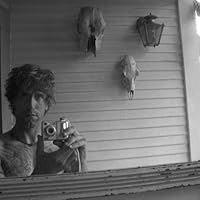
This powerful debut collection, set in the light-filled deserts of Nevada and Arizona, introduces a darkly inventive new voice. Like an early Richard Ford, Don Waters writes with skill, empathy, and an edgy wit of worlds not often celebrated in contemporary literature. In Desert Gothic, Waters unleashes a wild and gritty cast and points them down paths of reckoning, where the characters earn the grace of their hard-won wisdom. Set in bars, mortuaries, nursing homes, truck stops, and the “poverty motels that encircled downtown’s casino corridor,” Waters’s ten stories are full of misfit transients like Julian, a crematorium worker who decorates abandoned urns to create a “lush underground island,” and the instant Mormon missionary Eli, a hapless divorcé who “always likes people better when they’re a little broken.” Limo drivers, ultra-marathoners, vagabonds, and a distraught novelist-to-be populate the pages of these gritty stories.
“Desert defined the limits of civilized space. It offered an unobtrusive canvas in which everyday matter diminished or enlarged in proportion to the day’s light.”
The first of these stories establishes the desert as adjacent to civilization, and the remainder use this space to examine the grittiness of humanity. Like most short story collections, this ranges a ton—a couple of these fell flat for me, but a larger number seemed to grasp something profound. Enjoyed a ton!
I'd had this on my Amazon wishlist for about a year, then finally bought it and it sat on my Kindle for another few months before I read it. I don't know why I was dicking around so much, this book was pretty awesome.
It's ostensibly a short story collection, but these are mostly not really stories, more like extended vignettes, and except for their setting (Nevada desert) and general tone (pretty unhappy), they really don't resemble each other. It starts out with the fucking awesome "What to Do with the Dead," a story about a young dude who's job is delivering the ashes of the deceased back to the families. I never thought about a job like that, I imagine it's pretty weird, "Mrs... uh... Mrs Smith? I got your husband here." Weird.
There are stories about a long-distance ultra-marathoner who's an incredible dick, a dude who makes a living buying cheap medicine for families with members in nursing homes, usually on the way out, and he's asked by a client to buy him some drugs he knows he'll take to kill himself with, a dude who makes a living smuggling illegals from Mexico who finds a mysterious guy who wants to go back, a pretty funny story about a guy who's wife is cheating on him and he pulls these little pranks to get at her, but they keep backfiring, and there's always the specter of the dude he thinks she's fucking, Stephen, in the background.
Overall these stories are about broken people basically crumbling back into dust in the middle of BFE, sometimes funny, more often sad, sometimes actually touching.
I was also really happy to feel that the author has a deep-seated dislike of Elton John. Me too.
here was the script for the presentation I gave in class for this book:
About the author: These Boys and Their Fathers: memoir, he grew up without a dad and this is the story he wrote about reconnecting with his father Sunland: takes place in Tuscon; very similar to “Mr. Epstein and the Dealer”, about a man short on funds and between jobs who enters the “trade” of smuggling medications over the Mexican border to take care of his grandmother; Goodreads lists categorizes it as “humor” so it probably aligns with the dry sense of humor that is present in Desert Gothic Rattlesnake Mountain: also set in the American Southwest, features a similar cast of characters as Desert Gothic, a “stirring tribute to the lives, loves, and hopes of the faithful and the dispossessed”
Book summary: This collection of short stories is unlike most things that we’ve read so far in the class, of course in that it’s a short story collection, but also in that it is being told by an author who belongs to the people who don’t belong to the land These stories capture the American southwest as a place that is a “failure” of the American Dream and a “lost cause” of manifest destiny
Themes: Overindulgence: the theme of overindulgence is seen throughout the book in basically every story, which I think is part of this dry sense of humor that Don Waters writes with because none of the characters are in good enough economic or health or whatever standing to really have the capacity to “overindulge” in the ways that they do. Casinos are a really big repetitive representation of this hedonism, but I broke it down into sort of three big branches of indulgence: sexuality, specifically masculinity, drugs, and materialism Sexuality: many, many more that can be included. Emasculation in the story about Jessie and Dennis (“Little Sins”); Brokeback Mountain-type ending of Dan Buck. Lots of porn. So much of these stories are about sex and failure to form human connections, even when people have partners that they can go home to. Even more are about people that don’t have anyone else and the industries that exploit these lost connections, like the bunny ranch in “Blood Management” which is designed for the truckers that have been on the road Drugs: I didn’t include any quotes because it’s more the constant inclusion of characters that smoke or drink or sometimes heavier stuff like in “Sheets” that drives this point home. Multiple mentions of characters that were into 1 or 2 or 3 packs a day Materialism: materialism seems to be a pretty ingrained cultural aspect of the communities described in these books, like Geoff’s Cadillac that he bought on a loan which he can’t even fit in his driveway (“Blood Management”), or the California king bed that the narrator finds when he breaks into the hotel in “Sheets”
Nonchalance of death and violence: Death is spoken of very casually in these stories, from the way that certain phrases are used intentionally (“dead air” in “What to Do with the Dead”; “death crawls” in “Dan Buck”; “as good as invisible” instead of “as good as dead” on page 109, “The Bulls at San Luis”) to the fact that entire stories revolve around death, like “Mr. Epstein and the Dealer” which is literally about the dealer going across the border to help Mr. Epstein get pills that he can kill himself with, and the nonchalance of the Julian and Melvin at their job at the crematorium The desert as an unwanted space: the desert is a permanent home to these people, as opposed to some of the other works that we’ve read in which it is just a place that people pass through. Letters from the Desert, Carlo Carretto was there for a while but once he completed his spiritual journey he left. The Devil’s Highway, most people’s aim is to get out as quickly as they can, hopefully aiming for an industrial city that they can slip into like Chicago or New York. “Sahara”, the movie, the desert is a space for warfare, and characters constantly reference how much they look forward to going home, like the Italian guy showing the pictures of his family. However, this being said, most characters do not give the place the love or affection that most people associate with their homes. This goes hand in hand with the theme of mythology, which is actually something I gathered from the little interview section of The Devil’s Highway (pg 5 of reading group guide): “These brave people heading west, imposing themselves on a population that didn’t want them there, forced to live in dire straits, were our heroes because they were part of our myth. But those pioneers heading north, imposing themselves on a population that doesn’t want them, living in dire straits, are our pariahs because they are not part of our noble myth.” → characters in the book create mythologies that contribute to the overall culture of the region because there is a lack thereof. This is most clear in “Mineral and Steel”, where the narrator creates much of his own perception of the desert based on the mythologies he’s created (both mentally and physically, through writing) of Mark Twain
Desert Gothic, Don Waters's Iowa Short Fiction Award winning debut collection (2007), has been on my shelf for quite some time. Had I known I was going to enjoy so much, I would have read it much sooner.
The ten stories in Desert Gothic are set in the southwest, mostly in and around Nevada, and the sense of place in these stories is very strong. You get the sense that the characters would be different people if they lived in different place, and I think that's one of the marks of how well a writer uses a particular setting.
Waters's stories are also full of great characters in interesting situations - that's really the easiest way to describe the collection. For example, the excellent opening story, "What to Do with the Dead," is about an artist who works at a crematorium out in the desert and has to deliver ashes/remains to the deceased's next of kin; in "Mr. Epstein and the Dealer," a man, only known as "the dealer" travels to Mexico every month to buy large quantities of pharmaceuticals and smuggles them across the border to sell to elderly people at retirement homes; "The Bulls of San Luis," is about a dying man who works as a pick-up man in an illegal immigrant border-crossing operation; and in "Mormons in Heat," an irreverent, recently-divorced thirty year-old LDS convert is paired up with nineteen year-old for their respective missions, only Eli, the convert, is only interested in escaping his life for an "all-expenses-paid" two year vacation and sleeping with women on the road. I don't want my too-brief, over-simplified summaries of these stories to give you the wrong idea: Waters's stories are more than just clever scenarios. They're well crafted, and they expertly walk the very difficult line between funny and serious, particularly in a story like "Mormons in Heat."
There were a couple of stories I didn't care as much for, but all in all, this collection is good. If you are interested in the American southwest specifically, or regionalism more generally, then I'd check this collection out.
This reminded me of my own writing. Not because I am as accomplished a writer as Waters or that we both write in the same style, it's actually the fact that most of these stories seem to be reasonably unfinished. I am left wanting more, and that isn't a compliment; it has to do with not knowing how to finish, or how to tie-in the characters and their resolutions. In the end I'm left asking, "What's the point?"
Don Waters is a fantastic writer. The men in this extraordinary collection are simultaneously hardened and curious, wise and fumbling. My favorite stories are Sheets and What to Do with the Dead--but Mr. Epstein and the Dealer is also a stunner. And if you enjoy running, you're bound to laugh at The Marathoner. Take this book with you on your next desert road trip. You won't be disappointed!
THis was a very good book of short stories that only got better as it went on. The two best stories, Mormons in Heat and Mineral and Steel, rank up among the best shorts I have ever read. The whole book is about redemption in the desert. Any of these stories could be tranfered into a novel that I would devour in one sitting. Good work here.
It's like Raymond Carver had a son, who sees things in the same sad way but he grew up in, and writes about, the bleak deserts of the Southwest instead of the gray and rainy Pacific Northwest.
Deeply original. Not to be related to the style of Southwest drama that McCarthy has pioneered. One of the best books of short fiction I've read in a long time.
this, robin romm's "the mother garden," ben percy's "refresh refresh," and jonathan messinger's "hiding out" comprise my favorite collections of 07. Waters' stories are dark, gritty, with touches of wonder and black humor. deeply moving.
This is probably my favorite book of short stories that I've read this year. "What to Do with the Dead" and "Holiday at the Shamrock" are both knock-outs.