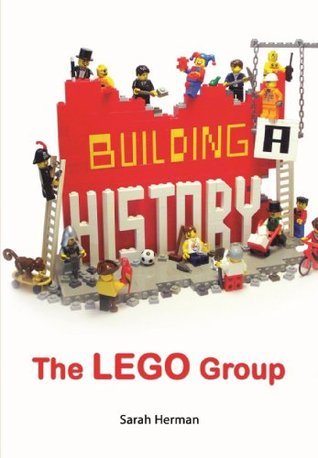
The story of these beloved bricks and the people who built an empire with them. From its inception in the early 1930s right up until today, the LEGO Group’s history is as colorful as the toys it makes. Few other playthings share the LEGO brand’s creative spirit, educational benefits, resilience, quality, and universal appeal. This history charts the birth of the LEGO Group from the workshop of a Danish carpenter and its steady growth as a small, family-run toy manufacturer to its current position as a market-leading, award-winning brand. The company’s growing catalogue of products—including the earliest wooden toys, plastic bricks, play themes and other building systems such as DUPLO, Technic, and MINDSTORMS—are chronicled in detail, alongside the manufacturing process, LEGOLAND parks, licensed toys, and computer games. Learn all about how LEGO pulled itself out of an economic crisis and embraced technology to make building blocks relevant to twenty-first century children, and discover the vibrant fan community of kids and adults whose conventions, websites, and artwork keep the LEGO spirit alive. Building a History will have you reminiscing about old Classic Space sets, rummaging through the attic for forgotten minifigure friends, and playing with whatever LEGO bricks you can get your hands on (even if it means sharing with your kids).
The history of the Lego group stretches right back to 1932 when the Ole Kirk starts a company producing wooden toys. A couple of years later he changes the name to Lego, meaning I put together, in Latin, but he was not aware of it at the time.
The wooden toys were reasonably successful, and they continued to sell wooden toys up until 1947 when they took the bold step of investing in new plastic moulding technology. They took the chance and spent a fortune on a tool for a model tractor and sold them as complete and as a kit. As the investment paid off they started to look at other opportunities and decided to make some basic bricks. Other manufacturers were also making bricks and one was making interlocking bricks too. Legos first bricks were produced in 1949, but they were not really well made. The break through came in the fifties when the stud and tube method of fixing the bricks together was developed.
herman goes onto to detail the evolution of the Lego products, from the basic sets, the invention of the Lego wheel, the massively popular miniature figures and the more modern toys and new technologies like Mindstorms. There is lots of the success of the company, and details on the near financial collapse.
It is a very comprehensive book, but because of that it does get a little bit tedious after a while. Whilst a chronology of the different types of sets is probably interesting to some, I didn't find it that interesting. It would have been better to separate these sections. Ended up skimming it in the end.
The first couple of chapters were good in terms of the history of the LEGO company and how it started. After that it gets more into describing the themes and the sub themes which most collectors would be reasonably familiar with. It doesn’t help that discussions around some of the themes are outdated now.
I love LEGO. If I didn't have bills to pay I would be drowning in the brilliant little bricks. That was the reason I chose to read this book. I knew the basic history of the company, and I thought it would be great to know more. So I'm kind of sad to only be able to give it 3 out of 5. It started off well, giving an in depth background on the birth of The Lego Company as a wooden toy manufacturer, and it's progression through time and technology to become the largest manufacture of tyres in the world, with a Minifig population which out numbers humans! But it then got quite dry. Sarah Herman has obviously done her research here, without question it covers the all the genres that the Lego bricks have covered from castle to space and all the sub genre in between but I found it really difficult to read. I borrowed it from the library and extended my loan for an extra month, but I wasn't compelled to pick it up and finish it. Finally I ended skipping big chunks of it that I felt were probably not of interest to me so I could return it to the library on the last day of my loan period. If you are a hard core Lego fan, then you probably already know all the information that this book contains. If you're not and you want an in depth history of the company, then this might be the book for you. Play Well.