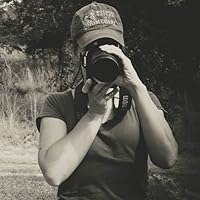
Award-winning author Nancy Owens Barnes' Moose for Breakfast leads readers into a humbling world where crawdads school us, where rivers beckon us, and where the true texture of life reveals itself. With crystal clear imagery Barnes' writing inspires renewed awareness and appreciation of one's natural surroundings. Three of the poems included in Moose for Breakfast won first place in the 2008 Pacific Northwest Writers Association Literary Contest, for which the author received the Zola Award for Poetry.
I enjoyed Nancy Owens Barnes' descriptions of landscapes I love and places I have yet to visit, especially since I long to travel and find myself homebound for the moment. Tonight I will dig out the atlas and plot a closer trip that will not include Washington, Idaho, or Montana; and maybe I'll look back at those places I've been, would like to go again, and spots I may have missed for next summer.
My favorite poem in the collection is probably "Disappearance" from pp. 84-85 because it takes me back to my visit last summer to the neighboring ghost towns of Garnet and Coloma in Montana and reminds me of the writing and photography project I abandoned as summer ended and the school year came swiftly rushing toward me. It reminds me that, as much as I want to go go go, I need to slow down and take the time to reflect, record, create; or I'll lose myself and the benefit of my experiences in the busyness of life and the hunger to greedily gulp and swallow the whole world.
Disappearance
Many wilderness days and still no face at the cabin window checking weather solving outside sounds, no silhouette shifting in dim light, panes dark as mine shafts in the silty dusk.
No soft plume of smoke calls from the stack where heat once cracked like the snap of bone where hemlock coals pulsed beneath meals, potatoes, beans now an unattended garden boxed beneath the table.
New snow drowns old footprints to the woodpile, to the moss-chinked wall where steel traps hung tangled.
Again, the spiny limb of black spruce tremors as the magpie crooks its head looking for its handout, eyeing the closed plank door
where threads of wind grieve between hand-hewn logs-- a kettle cold on the stove a flannel shirt limp on a nail.