

What do you think?

Bracebridge Hall
This book was converted from its physical edition to the digital format by a community of volunteers. You may find it for free on the web. Purchase of the Kindle edition includes wireless delivery.
416 pages, Kindle Edition
First published June 1, 1822
About the author
Washington Irving
5,965 books1,097 followersPeople remember American writer Washington Irving for the stories "
Rip Van Winkle
" and "
The Legend of Sleepy Hollow
," contained in
The Sketch Book
(1820).
This author, essayist, biographer and historian of the early 19th century wrote newspaper articles under the pseudonym Jonathan Oldstyle to begin his literary career at the age of nineteen years.
In 1809, he published The History of New York under his most popular public persona, Diedrich Knickerbocker.
Historical works of Irving include a five volume biography of George Washington (after whom he was named) as well as biographies of Oliver Goldsmith, Muhammad, and several histories, dealing with subjects, such as Christopher Columbus, the Moors, and the Alhambra, of 15th-century Spain. John Tyler, president, appointed Irving to serve as the first Spanish speaking United States minister to Spain from 1842 to 1846.
This author, essayist, biographer and historian of the early 19th century wrote newspaper articles under the pseudonym Jonathan Oldstyle to begin his literary career at the age of nineteen years.
In 1809, he published The History of New York under his most popular public persona, Diedrich Knickerbocker.
Historical works of Irving include a five volume biography of George Washington (after whom he was named) as well as biographies of Oliver Goldsmith, Muhammad, and several histories, dealing with subjects, such as Christopher Columbus, the Moors, and the Alhambra, of 15th-century Spain. John Tyler, president, appointed Irving to serve as the first Spanish speaking United States minister to Spain from 1842 to 1846.
Ratings & Reviews
Friends & Following
Create a free account to discover what your friends think of this book!
Community Reviews
Displaying 1 - 18 of 18 reviews

March 15, 2020
It is an unusual sort of book, in which the author at the beginning cautions the reader: "[I] have nothing of intricate plot, or marvelous adventure, to promise the reader. The Hall of which I treat has, for aught I know, neither trap-door, nor sliding-panel, nor donjon-keep: and indeed appears to have no mystery about it...In a word, I cannot foresee a single extraordinary event that is likely to occur in the whole term of my sojourn at the Hall."
Indeed, nothing does. The narrator is an American, visiting an acquaintance of his who is a squire in Yorkshire, whose son is due to be married soon. In due course, the couple are married. If we were to summarize the plot, it would be roughly:
1) guests arrive
2) servants and villagers gossip
3) they get married
4) The End
This is, however, not at all a problem; it was an enchanting read. What we have, is essentially a series of several dozen character sketches. By the time we are done, we have learned enough about a few dozen folk (high, middle, and lower class) as to feel we know them well. Some of them, one recognizes all too well. Regarding the local radical, newly arrived:
"He has shocked several of the staunchest villagers by talking lightly of the squire and his family; and hinting that it would be better the park should be cut up into small farms and kitchen gardens, or feed good mutton instead of worthless deer. He is a great thorn in the side of the squire, who is sadly afraid that he will introduce politics into the village, and turn it into an unhappy, thinking community."
Fear not, the radical does not succeed in attaining too prominent a place in the tale, he is but one more character among many. Here is the schoolteacher, Slingsby:
"The only misfortune is, that having banished the birch [i.e. corporal punishment], honest Slingsby has not studied Roger Ascham sufficiently to find out a substitute, or rather he has not the management in his nature to apply one; his school, therefore, though one of the happiest, is one of the most unruly in the country; and never was a pedagogue more liked, or less heeded, by his disciples than Slingsby."
There is a May fair. There is a failed attempt at reviving the ancient sport of falconry. There is the attempted theft of some livestock. There are gypsy fortunetellers. There is a bit of coquettery, and a young would-be couple squabble a bit. There is little else that, so to speak, actually occurs.
It is, believe it or not, great fun. I felt like I recognized them all.
The illustrations of this edition were by the legendary Caldecott, he for whom the later Caldecott Medal was named. They are exceptional as well. One wonders what the English illustrator, drawing them several decades after Washington Irving had written the words, thought of the depiction of old English life by an American author. Judging from the excellence of his drawings, he found enough in them to warrant his attention.
There can be no doubt, of course, that Bracebridge Hall is in no way realistic, however human and recognizable the characters are. Those in authority are all soft-hearted and generous, those who are poor are never starving, the young are all beautiful and the old are all, if not exactly wise, then at least respected and well-meaning. This is not a book to give you a glimpse of early 1800's Yorkshire; it is, however, perhaps a good glimpse of early 1800's Yorkshire on its best days, or its best daydreams. I wish there were more of it to read.
Indeed, nothing does. The narrator is an American, visiting an acquaintance of his who is a squire in Yorkshire, whose son is due to be married soon. In due course, the couple are married. If we were to summarize the plot, it would be roughly:
1) guests arrive
2) servants and villagers gossip
3) they get married
4) The End
This is, however, not at all a problem; it was an enchanting read. What we have, is essentially a series of several dozen character sketches. By the time we are done, we have learned enough about a few dozen folk (high, middle, and lower class) as to feel we know them well. Some of them, one recognizes all too well. Regarding the local radical, newly arrived:
"He has shocked several of the staunchest villagers by talking lightly of the squire and his family; and hinting that it would be better the park should be cut up into small farms and kitchen gardens, or feed good mutton instead of worthless deer. He is a great thorn in the side of the squire, who is sadly afraid that he will introduce politics into the village, and turn it into an unhappy, thinking community."
Fear not, the radical does not succeed in attaining too prominent a place in the tale, he is but one more character among many. Here is the schoolteacher, Slingsby:
"The only misfortune is, that having banished the birch [i.e. corporal punishment], honest Slingsby has not studied Roger Ascham sufficiently to find out a substitute, or rather he has not the management in his nature to apply one; his school, therefore, though one of the happiest, is one of the most unruly in the country; and never was a pedagogue more liked, or less heeded, by his disciples than Slingsby."
There is a May fair. There is a failed attempt at reviving the ancient sport of falconry. There is the attempted theft of some livestock. There are gypsy fortunetellers. There is a bit of coquettery, and a young would-be couple squabble a bit. There is little else that, so to speak, actually occurs.
It is, believe it or not, great fun. I felt like I recognized them all.
The illustrations of this edition were by the legendary Caldecott, he for whom the later Caldecott Medal was named. They are exceptional as well. One wonders what the English illustrator, drawing them several decades after Washington Irving had written the words, thought of the depiction of old English life by an American author. Judging from the excellence of his drawings, he found enough in them to warrant his attention.
There can be no doubt, of course, that Bracebridge Hall is in no way realistic, however human and recognizable the characters are. Those in authority are all soft-hearted and generous, those who are poor are never starving, the young are all beautiful and the old are all, if not exactly wise, then at least respected and well-meaning. This is not a book to give you a glimpse of early 1800's Yorkshire; it is, however, perhaps a good glimpse of early 1800's Yorkshire on its best days, or its best daydreams. I wish there were more of it to read.

December 16, 2014
A Show About Nothing
… and yet, as that other „show about nothing“ dating from the 1990s, very intriguing still. Washington Irving noted in his preface to Bracebridge Hall, which was published under the nom de plume of Geoffrey Crayon in 1821,
This is exactly what the reader will get – nothing more, nor anything less but a set of leisurely interwoven sketches featuring the different inhabitants of Bracebridge Hall, a mansion in an idyllically secluded rural part of England, and the adjoining village. Except for the impending marriage of the squire’s daughter and some other harmless affairs of love, quarrel and reconciliation, there is hardly any coherent plot, only situations and characters described in an idealized, but nonetheless amusing and spirited way. We learn of the squire’s untiring attempts at reviving country traditions, of rural superstitions and of other such things, and there are also some tales woven into these sketches, namely
- “The Stout Gentleman”, a facetious cock-and-bull-story,
- “The Student of Salamanca”, a rather long and dramatic love story whose narrative perspective is somewhat flawed, but which is still quite enjoyable,
- “Annette Delarbre”, a dark and psychologically convincing tale of love, guilt and forgiveness,
- “Dolph Heyliger” and “The Storm-Ship”, a rambling ghost story in the vein of “The Legend of Sleepy Hollow”, which does not take itself too seriously.
If you like reading a collection of sketches and tales that will mostly centre on the humorous and quaint side of life, Bracebridge Hall will be a treasure trove for you. For me it was definitely a most delightful experience and just the thing I like to read between Christmas and the New Year, when time somehow seems to stand still and one wonders at small and quite silent things.
… and yet, as that other „show about nothing“ dating from the 1990s, very intriguing still. Washington Irving noted in his preface to Bracebridge Hall, which was published under the nom de plume of Geoffrey Crayon in 1821,
”I would have it understood, however, that I am not writing a novel, and have nothing of intricate plot, or marvellous adventure, to promise the reader. The Hall of which I treat has, for aught I know, neither trap-door, nor sliding-panel, nor donjon-keep: and indeed appears to have no mystery about it. The family is a worthy, well-meaning family, that, in all probability, will eat and drink, and go to bed, and get up regularly, from one end of my work to the other; and the squire is so kind-hearted an old gentleman, that I see no likelihood of his throwing any kind of distress in the way of the approaching nuptials. In a word, I cannot foresee a single extraordinary event that is likely to occur in the whole term of my sojourn at the Hall.
I tell this honestly to the reader, lest when he find me dallying along, through every-day English scenes, he may hurry ahead, in hopes of meeting with some marvellous adventure farther on. I invite him, on the contrary, to ramble gently on with me, as he would saunter out into the fields, stopping occasionally to gather a flower, or listen to a bird, or admire a prospect, without any anxiety to arrive at the end of his career.”
This is exactly what the reader will get – nothing more, nor anything less but a set of leisurely interwoven sketches featuring the different inhabitants of Bracebridge Hall, a mansion in an idyllically secluded rural part of England, and the adjoining village. Except for the impending marriage of the squire’s daughter and some other harmless affairs of love, quarrel and reconciliation, there is hardly any coherent plot, only situations and characters described in an idealized, but nonetheless amusing and spirited way. We learn of the squire’s untiring attempts at reviving country traditions, of rural superstitions and of other such things, and there are also some tales woven into these sketches, namely
- “The Stout Gentleman”, a facetious cock-and-bull-story,
- “The Student of Salamanca”, a rather long and dramatic love story whose narrative perspective is somewhat flawed, but which is still quite enjoyable,
- “Annette Delarbre”, a dark and psychologically convincing tale of love, guilt and forgiveness,
- “Dolph Heyliger” and “The Storm-Ship”, a rambling ghost story in the vein of “The Legend of Sleepy Hollow”, which does not take itself too seriously.
If you like reading a collection of sketches and tales that will mostly centre on the humorous and quaint side of life, Bracebridge Hall will be a treasure trove for you. For me it was definitely a most delightful experience and just the thing I like to read between Christmas and the New Year, when time somehow seems to stand still and one wonders at small and quite silent things.
August 24, 2021
5 Stars for a great collection of Irving's "sketches" or musings on the occupants of an English manor which was actually based on Aston Hall, near Birmingham, England, which was occupied by members of the Bracebridge family Irving visited while in England.
I thought this overview aptly summarizes Irving's "sketches" of rural England. "Few American writers gained famed for their extensive work outside of the United States. Washington Irving was unique in many respects, not the least of which was his enthusiastic curiosity of the 'homeland' of so many Americans who were born literally around the time America was. His detailed writings of life in the early 19th century and the changes that were already taking over the more rural areas, can’t help but make one yearn for the even simpler times prior to his visit." https://www.allyoucanbooks.com/ebook/...
The Author - 3.5 Stars
The Hall - 3.5 Stars
The Busy Man - 3.5 Stars
Family Servants - 4 Stars
The Widow - 3.5 Stars
The Lovers - 3.5 Stars
Family Reliques - 4 Stars
An Old Soldier - 3.5 Stars
The Widow’s Retinue - 3 Stars
Ready-Money Jack - 3.5 Stars
Bachelors - 3.5 Stars
Wives - 3 Stars
Story-Telling: The Stout Gentleman- 3.5 Stars
Forest Trees - 3.5 Stars
A Literary Antiquary - 3.5 Stars
The Farm-House - 3.5 Stars
Horsemanship - 4 Stars
Love Symptoms - 4 Stars
Falconry -3.5 Stars
Hawking - 4 Stars
St. Mark's Eve - 4 Stars
Gentility - 3 Stars
Fortune-Telling - 3.5 Stars
Love-Charms - 4 Stars
The Library: The Student of Salamanca - 5 Stars
English Country Gentlemen - 3 Stars
A Bachelor’s Confessions - 3.5 Stars
English Gravity - 3 Stars
Gipsies - 3.5 Stars
May-Day Customs - 3.5 Stars
Village Worthies - 3.5 Stars
The Schoolmaster - 4 Stars
The School - 4 Stars
A Village Politician - 3 Stars
The Rookery - 4 Stars
May-Day -4 Stars
The Manuscript: Annette Delarbre - 4.5 Stars
Traveling - 3.5 Stars
Popular Superstitions - 3.5 Stars
The Culprit - 4 Stars
Family Misfortunes - 3.5 Stars
Lovers’ Troubles - 3.5 Stars
The Historian - 3.5 Stars
The Haunted House - 3.5 Stars
Dolph Heyliger - 5 Stars
The Storm-Ship - 5 Stars
The Wedding - 4.5 Stars
The Author's Farewell - 3.5 Stars
Abbotsford and Newstead Abbey - 5 Stars
I thought this overview aptly summarizes Irving's "sketches" of rural England. "Few American writers gained famed for their extensive work outside of the United States. Washington Irving was unique in many respects, not the least of which was his enthusiastic curiosity of the 'homeland' of so many Americans who were born literally around the time America was. His detailed writings of life in the early 19th century and the changes that were already taking over the more rural areas, can’t help but make one yearn for the even simpler times prior to his visit." https://www.allyoucanbooks.com/ebook/...
The Author - 3.5 Stars
The Hall - 3.5 Stars
The Busy Man - 3.5 Stars
Family Servants - 4 Stars
The Widow - 3.5 Stars
The Lovers - 3.5 Stars
Family Reliques - 4 Stars
An Old Soldier - 3.5 Stars
The Widow’s Retinue - 3 Stars
Ready-Money Jack - 3.5 Stars
Bachelors - 3.5 Stars
Wives - 3 Stars
Story-Telling: The Stout Gentleman- 3.5 Stars
Forest Trees - 3.5 Stars
A Literary Antiquary - 3.5 Stars
The Farm-House - 3.5 Stars
Horsemanship - 4 Stars
Love Symptoms - 4 Stars
Falconry -3.5 Stars
Hawking - 4 Stars
St. Mark's Eve - 4 Stars
Gentility - 3 Stars
Fortune-Telling - 3.5 Stars
Love-Charms - 4 Stars
The Library: The Student of Salamanca - 5 Stars
English Country Gentlemen - 3 Stars
A Bachelor’s Confessions - 3.5 Stars
English Gravity - 3 Stars
Gipsies - 3.5 Stars
May-Day Customs - 3.5 Stars
Village Worthies - 3.5 Stars
The Schoolmaster - 4 Stars
The School - 4 Stars
A Village Politician - 3 Stars
The Rookery - 4 Stars
May-Day -4 Stars
The Manuscript: Annette Delarbre - 4.5 Stars
Traveling - 3.5 Stars
Popular Superstitions - 3.5 Stars
The Culprit - 4 Stars
Family Misfortunes - 3.5 Stars
Lovers’ Troubles - 3.5 Stars
The Historian - 3.5 Stars
The Haunted House - 3.5 Stars
Dolph Heyliger - 5 Stars
The Storm-Ship - 5 Stars
The Wedding - 4.5 Stars
The Author's Farewell - 3.5 Stars
Abbotsford and Newstead Abbey - 5 Stars

July 17, 2022
Perfectly pleasant, just what I needed! I randomly pulled this off a condo library shelf, having never heard of this and what a surprise! There is a bit of a narrative within a series of good to great character sketches and short stories/novellas with numerous travel anecdotes. But best of all, everywhere, there is a sparkling sense of humor all the way from subtle one-liners to lol jokes. And so many subsequent authors must have borrowed from Irving. There are "...great superannuated building[s] of the kind with supernatural inhabitants...called Dobbies" (200 years later there is Rowling/Harry Potter, natch). A character is "...launched strangely and suddenly on the world, and under full way to explore the regions of wonder..." (30 years later Melville launches Ishmael off on his exploration). And there is no doubt in my mind that Twain based his travel writings on Irving's far superior work represented here (in "Bracebridge Hall" we simply encounter Negroes who are just as prone to small town gossip as anyone else. And thankfully, this author never stoops to very bad xenophobic Jewish jokes, for example, found in "Innocent's Abroad"). "Hall" is timeless fun for all ages. I can't give this five stars as a two of the three novellas here run a bit too long, but I will say I must read more of Washington Irving.

July 30, 2011
Personally this is what I really like, usual country life in good old days. 5stars. It seems my grading is minor in this website. Personally I wanna read W.Irving more after this novel.

October 24, 2016
A charming, idealised picture of rural life in early 19th century England with just the faintest hint of brimstone in the form of Cobbettism.

September 7, 2021
Irving warns us in the first chapter that this is not a novel of great adventure, it’s one of everyday English scenes in the country, and he’s right about that. Character sketches can be interesting but for the most part the ones here seem cliché, and the novel is uninteresting. I give it one star because of the joy I found in picking up the 1887 edition in a Berkeley bookstore, featuring an inlaid cover and gilt pages, and I give it another star for including roughly 150 illustrations from R. Caldecott. This book was previously in the library of one E.T. May (Christmas ’88), then Henry F. May, Jr (March 27, 1947), and now it’s in mine. On whose bookshelf will it reside next?
Quotes:
On scholars and the past:
“…though a jovial song of the present day was but a foolish sound in the ears of wisdom, and beneath the notice of a learned man, yet a trowl written by a tosspot several hundred years since was a matter worthy of the gravest research, and enough to set whole colleges by the ears.”
On transience:
“The fair Julia was leaning on her lover’s arm, listening to his conversation, with her eyes cast down, a soft blush on her cheek, and a quiet smile on her lips, while in the hand that hung negligently by her side was a bunch of flowers. In this way they were sauntering slowly along, and when I considered them, and the scene in which they were moving, I could not but think it a thousand pities that the season should ever change, or that young people should ever grow older, or that blossoms should give way to fruit, or that lovers should ever get married.”
And this, the most scene in the book:
“When I look at these faint records of gallantry and tenderness; when I contemplate the fading portrait of these beautiful girls, and think, too, that they have long since bloomed, reigned, grown old, died, and passed away, and with them all their graces, their triumphs, their rivalries, their admirers; the whole empire of love and pleasure in which they ruled – ‘all dead, all buried, all forgotten,’ I find a cloud of melancholy stealing over the present gaieties around me. I was gazing, in a musing mood, this very morning, at the portrait of the lady whose husband was killed abroad, when the fair Julia entered the gallery, leaning on the arm of the captain. The sun shone through the row of windows on her as she passed along, and she seemed to beam out each time into brightness, and relapse into shade, until the door at the bottom of the gallery closed after her. I felt a sadness of heart at the idea, that this was an emblem of her lot: a few more years of sunshine and shade, and all this life, and loveliness, and enjoyment, will have ceased, and nothing be left to commemorate this beautiful being but one more perishable portrait; to awaken, perhaps, the trite speculations of some future loiterer, like myself, when I and my scribblings shall have lived through our brief existence and been forgotten.”
Quotes:
On scholars and the past:
“…though a jovial song of the present day was but a foolish sound in the ears of wisdom, and beneath the notice of a learned man, yet a trowl written by a tosspot several hundred years since was a matter worthy of the gravest research, and enough to set whole colleges by the ears.”
On transience:
“The fair Julia was leaning on her lover’s arm, listening to his conversation, with her eyes cast down, a soft blush on her cheek, and a quiet smile on her lips, while in the hand that hung negligently by her side was a bunch of flowers. In this way they were sauntering slowly along, and when I considered them, and the scene in which they were moving, I could not but think it a thousand pities that the season should ever change, or that young people should ever grow older, or that blossoms should give way to fruit, or that lovers should ever get married.”
And this, the most scene in the book:
“When I look at these faint records of gallantry and tenderness; when I contemplate the fading portrait of these beautiful girls, and think, too, that they have long since bloomed, reigned, grown old, died, and passed away, and with them all their graces, their triumphs, their rivalries, their admirers; the whole empire of love and pleasure in which they ruled – ‘all dead, all buried, all forgotten,’ I find a cloud of melancholy stealing over the present gaieties around me. I was gazing, in a musing mood, this very morning, at the portrait of the lady whose husband was killed abroad, when the fair Julia entered the gallery, leaning on the arm of the captain. The sun shone through the row of windows on her as she passed along, and she seemed to beam out each time into brightness, and relapse into shade, until the door at the bottom of the gallery closed after her. I felt a sadness of heart at the idea, that this was an emblem of her lot: a few more years of sunshine and shade, and all this life, and loveliness, and enjoyment, will have ceased, and nothing be left to commemorate this beautiful being but one more perishable portrait; to awaken, perhaps, the trite speculations of some future loiterer, like myself, when I and my scribblings shall have lived through our brief existence and been forgotten.”

November 19, 2021
Washington Irving's Bracebridge Hall is a "medley" of different English characters and scenes. It has little plot (of course, there is a plot--Phoebe Wilkin's love affair; the marriage; the general and Lady Lillycraft's love affair; the general downward slope of tradition in favor of modernity, and the Squire's wish to push back against it; and others--all come to mind immediately) and rather functions as a form of pleasing literature in mostly sketch format, by our esteemed author. (Which is not to say that it isn't interesting literature: Irving often gives his opinion on things, like wifehood, which can easily furnish contemplation--in this case, contemplation of how horrible Irving's opinion on the concept of the wife is.) Alongside the more tranquil aspect of the text are a few of Irving's most powerful stories--here, we see the description of the Stout Gentleman, and here we have the totality of Dolph Heyliger--and these stories provide the text with even more allure. Many of Irving's references (those that he mentions within the text as well as those that feature as beginning poetry/prose) also offer a substantial list of further reading that is usually of an antiquated date. (A plus for some, a negative for others, I presume.)
As was mentioned previously, many of the stories contained herein are sketches--a form of literature that emphasizes individuals events or scenes with little plot. In Irving, we read sketches that capture a feeling or theme, whether real or imagined, that never seems to subsume the topic at hand, but which nevertheless carries with it a clear tinge of Irving himself. The text Major American Short Stories by A. Walton Litz (1980) describes Irving's work, at his best, in the sketch format, as evincing a "unity of scene and feeling", which I feel is an adequate form of describing it.
According to Charles Neider, the editor of a Doubleday edition of all Irving's short stories, the Stout Gentleman and the whole of Dolph Heyliger are masterpieces of fiction. His coloration of Irving as an author has helped me appreciate his work, and I agree with his assessment of Bracebridge Hall more than his assessment of Tales of a Traveller.
As was mentioned previously, many of the stories contained herein are sketches--a form of literature that emphasizes individuals events or scenes with little plot. In Irving, we read sketches that capture a feeling or theme, whether real or imagined, that never seems to subsume the topic at hand, but which nevertheless carries with it a clear tinge of Irving himself. The text Major American Short Stories by A. Walton Litz (1980) describes Irving's work, at his best, in the sketch format, as evincing a "unity of scene and feeling", which I feel is an adequate form of describing it.
According to Charles Neider, the editor of a Doubleday edition of all Irving's short stories, the Stout Gentleman and the whole of Dolph Heyliger are masterpieces of fiction. His coloration of Irving as an author has helped me appreciate his work, and I agree with his assessment of Bracebridge Hall more than his assessment of Tales of a Traveller.

November 17, 2010
Cute Cute Cute
Irving writes about a visitor to Bracebridge Hall and the happenings in preparation for an upcoming wedding. This was MUCH better than The Sketch Book. The "Author's Farewell" was the only time that hints of The Sketch Book came into play with politics and droning.
I particularly loved the "chapters" or short stories where the characters were telling stories. These included "The Student of Salamanca", "Annette Delarbre", and the continued stories of "The Haunted House", "Dolph Heylinger", and "The Storm-Ship".
One item of note is that Irving is a fan of birds. There was much time devoted to falconry and the rookery (homes of rooks, like crows but not). For those of you who know me and know my horrible affliction to birds, you will know that the descriptions of the rookery and the falconry were just about enough to evoke nightmares. Very descriptive, I tell you.
Overall, cute book and would recommend to fans of Irving.
Irving writes about a visitor to Bracebridge Hall and the happenings in preparation for an upcoming wedding. This was MUCH better than The Sketch Book. The "Author's Farewell" was the only time that hints of The Sketch Book came into play with politics and droning.
I particularly loved the "chapters" or short stories where the characters were telling stories. These included "The Student of Salamanca", "Annette Delarbre", and the continued stories of "The Haunted House", "Dolph Heylinger", and "The Storm-Ship".
One item of note is that Irving is a fan of birds. There was much time devoted to falconry and the rookery (homes of rooks, like crows but not). For those of you who know me and know my horrible affliction to birds, you will know that the descriptions of the rookery and the falconry were just about enough to evoke nightmares. Very descriptive, I tell you.
Overall, cute book and would recommend to fans of Irving.
September 6, 2021
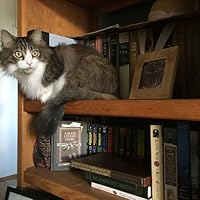
I was extremely busy this summer and had hardly a spare moment with my books! Honesly, by fluke then I had chosen the perfect book.
Does it have a plot? No. It is, however, well written with engaging, sympathetic characters who are fun to check in on when you get a moment. It is a bit like getting to step into the English countryside for a bit. Quite relaxing.
The ahort stories interspersed aren’t quite so relaxing: they will have you on the edge of your seat! If you read no other part of this book, for heaven’s sake at least read The Student of Salmanca and Dolph Heyliger/The Storm-Ship.
Does it have a plot? No. It is, however, well written with engaging, sympathetic characters who are fun to check in on when you get a moment. It is a bit like getting to step into the English countryside for a bit. Quite relaxing.
The ahort stories interspersed aren’t quite so relaxing: they will have you on the edge of your seat! If you read no other part of this book, for heaven’s sake at least read The Student of Salmanca and Dolph Heyliger/The Storm-Ship.

September 7, 2012
Irving has a gift for creating relatively quick but vivid sketches of characters, settings, and scenes that can still put a smile on a reader's face so many years later. Irving doesn't relate any deep themes or involved plots. His stay at Bracebridge Hall provides us a pleasant diversion, however, with charming illustrations alongside.

October 23, 2016
I love Irving's style and his return to Bracebridge Hall did not disappoint. The stories within the story took up a little too much time for my taste, but this may have been because I was reading this on my phone during stolen moments. I wish there were proper editions of this work still in print, that I could pour over at my leisure.
September 9, 2014
I don't know whether Washington Irving took existing stereotypes of English country people, or if he invented them, but that's certainly what we find here. It's fairly harmless stuff, though, and written in an efficiently readable style of the flowery journalese type.

July 3, 2016
This was an audio book from LibriVox. https://librivox.org/bracebridge-hall...

May 24, 2017
Interesting, easy to read and full of supernatural elements. A very pleasant read.

April 2, 2020
If you feel like you were born in the wrong century read this book. It's a little slice of English country life with humor and sweetness. Not for someone looking for action or drama.
July 12, 2023
A quiet story
I liked it for it was a quiet story about gentle people and easy storyline. It was meant for crazy summer days
I liked it for it was a quiet story about gentle people and easy storyline. It was meant for crazy summer days

Want to Read
July 2, 20183* The Legend of Sleepy Hollow
3* A Fantastic Christmas Story to Remember - The Christmas Dinner
3* The Adventure of the German Student
2* The Stout Gentleman
TR Bracebridge Hall
TR Spanish Papers
TR The Sketch-Book
TR The Alhambra
TR Bracebridge Hall
TR Astoria, or, anecdotes of an enterprise beyond the Rocky Mountains
3* A Fantastic Christmas Story to Remember - The Christmas Dinner
3* The Adventure of the German Student
2* The Stout Gentleman
TR Bracebridge Hall
TR Spanish Papers
TR The Sketch-Book
TR The Alhambra
TR Bracebridge Hall
TR Astoria, or, anecdotes of an enterprise beyond the Rocky Mountains
Displaying 1 - 18 of 18 reviews