“Somebody had to make a start! What we said and wrote are what many people are thinking. They just don’t dare say it out loud!”
Sophie Schol
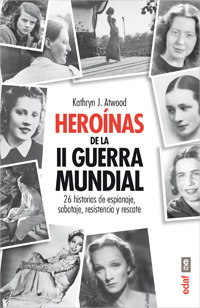
Andava a fazer-me espécie contar com uma obra de ficção como última leitura sobre o tema da participação feminina na II Guerra Mundial e foi esse mal estar que me trouxe até este livro. E embora Women Heroes of World War II caia no género YA (curioso como muitas obras de não ficção que versam sobre mulheres recaem neste género...), a escolha das 26 biografias feita pela autora surpreendentemente refrescante.
E não será justo, dada a extensão de atuação limitada destas mulheres, procurar diminuir o valor destes relatos porque muitas vezes se repetem (quase como um trma que subjaz ao livro). É claro que não vamos encontrar aqui referências às grandes movimentações militares, aos debates estratégicos ou às grandes vitórias bélicas a não ser como pano de fundo para resgates, transmissão de mensagens, espionagem, transporte de correio numa cadeia de repetição ad infinitum...mas é muito fácil usar de um discurso que menoriza o papel destas mulheres no decurso de uma guerra de ocupação, perante manobras vistosas e dispendiosas de poderio masculino, e este livro não o faz. Eis um grande ponto a favor!
Women were involved in all aspects and all levels of Resistance work, although the most common job for a female in the Resistance was that of a courier, someone who carried messages and documents from place to place. Courier work was crucial during the occupation because phone lines were tapped and mail was censored to root out Resistance activities. And since most men in occupied countries were supposed to be working in German munitions factories, it was dangerous for them to be seen in public. Women, less in demand for factory work, could move about in public more freely. Plus, the Germans did not—at first—imagine that women could possibly be involved in Resistance activities.
Apesar de apresentar alguns nomes bem conhecidos, como Joséphine Baker ou Marlene Dietrich, a escolha espanta por dar a conhecer várias mulheres relativamente anónimas, e espanta pela simplicidade e pela variedade da condição destas mulheres.
Há as grandes herdeiras que se fazem valer da proximidade com o regime para atuar a coberto das aparências...
It began with strange phone calls. Hans Hirschel, the Jewish boyfriend of Maria von Maltzan, was hiding from the Nazis in Maria’s Berlin apartment. He noticed that during some evenings, the phone would ring twice, then stop. Even if she was right next
to the phone, Maria wouldn’t pick it up. Instead, she would look at her watch. One minute would pass. Then the phone would again ring twice and stop. Another minute would pass. Then, when the phone rang again, Maria would finally pick it up. The conversations were always extremely short, and Hans couldn’t hear what was being said.These phone calls were always followed by Maria abruptly going out into the night. Maria ignored Hans’s questions and continued to respond to the short, strange phone calls by heading out, night after night.
One night, Maria came home from one of these outings and calmly began to apply some antiseptic to a wound on her neck.
Hans was shocked. “For God’s sake, Marushka,” he said to Maria, “that’s a bullet wound! What’s going on?” “Hans,” Maria said calmly, “never ask me about where I’ve
been and what I’ve done. It’s better that you don’t know.”
(..)
Maria von Maltzan personally rescued more than 60 Jews and political enemies of the Nazis and assisted in the rescue of many
others.
...há as pequenas grandes mulheres que abdicam das brincadeiras juvenis para defender os vizinhos a todo o custo...
Later that evening, Rügemer returned to the villa. He was drunk. He told Irene that he would keep her secret and that the
three women (the only ones he knew about) could remain hidden in his house. But his silence would come with a price: Irene [Gut] was to become his mistress and willingly share his bed. Irene was shocked and humiliated. Not only was she extremely religious, and Rügemer an old man, but her only experience with men so far had been the horrendous rape by Soviet soldiers. However, she wouldn’t let innocent people die. Without telling her friends what their safety was costing her, Irene agreed to Major
Rügemer’s demand. This situation lasted for several months until the Soviet army
pushed the Germans westward, back toward Germany, and everyone in Ternopol fled to avoid the approaching Soviet armies.
...para defender a família e a missão de Resistente até às últimas consequências...
Hortense [Daman]had been only 13 when Germany had invaded Poland in 1939.
[...]Soon, Hortense was doing regular courier work(...) delivering important items from place to place. [...]
Hortense was interrogated every day for 30 days and beaten severely every time
she refused to tell François’s location. This refusal landed her on the train headed for Ravensbruck.
Not only did Hortense survive the horrors of the Women’s Inferno for nearly a year—including attempted sterilization and
being injected with gangrene as part of a medical experiment— but after her mother arrived there too, Hortense did everything in
her power to see that her mother also survived, endangering her own life several times.
Há mulheres despojadas de qualquer receio...
A petite Polish woman approached the nine-foot wall of the Warsaw ghetto. The entrance was blocked with barbed wire and
armed guards. The woman told the guards that she was a social worker and was there to assist the sick. That statement was true,
but she was there for an additional reason, one that she dared not share with the guards. In her pocket she had the addresses of several homes. The people who lived there weren’t necessarily sick, but they all had children. She was going to get these children out if she could.
The woman was Irena Sendler.
[...]
The Gestapo interrogated Irena in two locations, the second time at the infamous Pawiak Prison, doing whatever they could
to get her to talk. They showed her a list of informers who had betrayed her, and they advised her to do the same. They tortured
her repeatedly, beating her feet and legs until they broke her bones. She refused to say anything, so the Nazis finally decided
to execute her.
Just before she was to be executed, Irena was suddenly released instead. Zegota Resistance workers had bribed a Nazi official to free her.
...e mulheres de espírito inquebrável:
On January 13, 1944, Monica [Wishfeld] was woken by two heavily armed Gestapo agents who pointed their revolvers in her face and ordered her to get up immediately.
Monica dressed slowly, then walked downstairs under the watchful eye of the Gestapo agents and ordered the cook to make breakfast. She turned to the Gestapo agents, who were now filling the room, and asked them calmly if she could get them tea or coffee. They declined. One of them found a pile of maps that had red circles around the cities that had been captured by the Allies. “You are obviously pro-Allies?” he asked.
Monica laughed. “Two of my brothers are fighting in the British army; a third was killed on the Somme in the First World War. What do you expect me to be, pro-German?”
A somar a estas heroínas, há ainda mulheres que se expõem às linhas da frente para dar a conhecer ao mundo o horror que testemunham na primeira pessoa...
Martha was the first female journalist to report on the D-day invasion. But because she had crossed the Channel without the
proper permission, she was deprived of her travel papers and ration cards. This didn’t stop her. For the duration of the war, Martha relied on her charm and spunk to persuade many commanders to let her hitch a ride with their troops so she could see the war firsthand. She had wanted very much to fly in an Allied air mission over Germany, and one night she talked her way into becoming
the first female journalist to do so.
While traveling through many Martha Gellhorn was married to Ernest Hemingway(...) in December 1940. Gellhorn greatly admired
Hemingway’s novels, and he sometimes gave her advice on writing fiction. The marriage ended in 1945, in part because Martha
wanted to continue reporting on World War II after their marriage and Hemingway preferred she stay home and write novels.
...e mulheres que participaram de forma determinante no desfecho de seis anos de guerra...
Marie-Madeleine managed to keep Alliance going strong until the end of the war, providing the Allies with not only invaluable
information regarding German troop movements, the location of weapons arsenals, and the nature of the new German Vergeltungswaffen (“vengeance weapons”)—the V-1 buzz bombs and the V-2 rockets—but also a detailed map showing the locations of German defenses on part of the Normandy coast that the Allies used when they invaded Nazi-occupied France on D-day, June 6, 1944.
...mulheres desafiantes até ao fim:
Hannie was determined to take the most dangerous jobs available(...)In addition to participating in more assassination and sabotage work(...), Hannie [Schaft] also busied herself with courier work, transporting weapons and illegal Resistance newspapers from place to place.
(...)
On April 17, 1945, three weeks before the liberation of the Netherlands, Hannie Schaft was taken to the sand dunes near
Bloemendaal. A German SS officer took a shot, but only grazed Hannie’s temple. “I am a much better shot!” Hannie cried. Then
a Dutch NSB agent took out a submachine gun and fired. Hannie was dead. Her body was buried in a shallow grave.
After the war, the bodies of more than 400 resisters were found in those dunes, all men and one woman—Hannie Schaft.
Em comum estas mulheres têm todas duas coisas: Coragem e Coração. O importante aqui não é o horror que passam, mas o facto de se arriscarem a tudo isso e muito mais por perfeitos desconhecidos. E estas duas dúzias servem de amostra das milhares de outras que participaram no passado século, e sempre, nas grandes revoluções da vida humana.
In 1941, Great Britain required that all women aged 18 through 60 be registered
for a military draft. By 1943, nearly 90 percent of all single women and 80 percent of all married women were employed in some type
of war effort.
The Women’s Land Army (WLA) was made of young women who generally came from British cities to work on farms so that the
male farm workers could be free to join the armed services. The work of the women in the WLA prevented a national famine during
the war. Idle Women, most inappropriately named, worked long grueling hours transporting cargo along Britain’s inland waterways.
Female air raid wardens provided first aid and organized emergency measures when a German bomb struck. The women in the
Women’s Voluntary Service (WVS)—which had over one million members—supported the work of the air raid wardens, organized
evacuations, and ran mobile canteens that provided refreshments and entertainment for soldiers. Female air raid wardens and the
women in the WVS were often in considerable danger.
Each branch of the British military had a section for women, and nearly 500,000 British women were involved in the branches.
The Auxiliary Territorial Service (ATS) was attached to the army.
Women could also join the Women’s Royal Naval Service (WRNS) or the Women’s Auxiliary Air Force (WAAF). Some of these jobs were clerical and far from the fighting, but others were closer to danger. For instance, some women involved with the ATS assisted men who operated antiaircraft guns, working searchlights and radar equipment that would help the men hit their targets. The
women in these jobs were exposed to the same dangers as the men.
[...]
The First Aid Nursing Yeomanry (FANY) was the first women’s voluntary corps in Great Britain. It was created in 1907, utilized
during World War I, and continued during World War II (attached to the ATS). Women involved with FANY drove ambulances and
jeeps and worked in canteens, hospitals, and military headquarters. Many women who signed up for the FANY, however, did so
only to provide a cover—a false reason—to be away from home. They had really been recruited for the Resistance organization the
Special Operations Executive (SOE).
For the first time in U.S. history, women had their own branches of the armed services. The first—and largest—of these divisions
was the Women’s Army Corps (WAC), which had approximately 140,000 women in its membership. (...) Many civilian women also supported the war effort. When
American men left farms and factories to join the armed services, there was a huge labor shortage. The Women’s Land Army hired
thousands of women—from the cities and the country—to work U.S. farms to prevent a national famine.