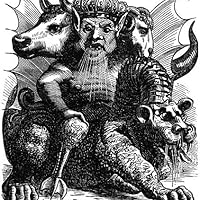
Here again in these sixteen stories are the gorgeous, luxuriant, and feverishly distorted visions of infinite spheres and multiple dimensions which have made of Clark Ashton Smith's work something unique in the annals of the macabre. In this collection there are tales of Hyperborea, Zothique, Averoigne, Atlantis, Xiccarph, and other vanished worlds of Smith's unparalleled creation. Here are such unforgettable tales as Vulthoom, The Colossus of Ylourgne, The Charnel God, The Black Abbot of Puuthuum, The Weaver in the Vault, and others.
None strikes the note of cosmic horror as well as Clark Ashton Smith. In sheer daemonic strangeness and fertility of conception, Smith is perhaps unexcelled by any other writer, dead or living - H.P. Lovecraft
He had a monstrously vivid imagination, a keenly ironic sense of humour, and an uninhibited bent for the macabre. - L. Sprague de Camp
Clark Ashton Smith was a poet, sculptor, painter and author of fantasy, horror and science fiction short stories. It is for these stories, and his literary friendship with H. P. Lovecraft from 1922 until Lovecraft's death in 1937, that he is mainly remembered today. With Lovecraft and Robert E. Howard, also a friend and correspondent, Smith remains one of the most famous contributors to the pulp magazine Weird Tales.
Genius Loci is a collection of stories by Clark Ashton Smith, published by Arkham House in 1948. I read the Panther edition of 1974, which features an amazing wraparound cover by Bruce Pennington. The book consists of tales originally published in magazines between 1928 and 1938. Smith is at the height of his powers in Genius Loci, and its contents are equal in quality to those of Out of Space and Time or Lost Worlds.
The first half of the book is a mixture of horror, science fiction, and lost‑worlds tales. Notably, “The Willow Landscape” was reprinted in Poseidonis and “Vulthoom” was reprinted in Xiccarph, two volumes of the Ballantine Adult Fantasy series edited by Lin Carter. The latter is one of Smith’s few stories with a Martian setting, and I sometimes wonder whether Smith's Mars inspired Ray Bradbury and, in turn, Philip K. Dick in their own Martian tales.
The second half of the book is divided between Averoigne stories and Zothique stories. All four examples of the latter were also included in Zothique, a third Ballantine Adult Fantasy volume: “The Black Abbot of Puthuum,” “The Charnel God,” “The Garden of Adompha,” and “The Weaver in the Vault.” It’s difficult to pick a favourite among them, as they are all very strong. Rereading them, I’m not surprised that they inspired first Jack Vance and then Gene Wolfe in their dying‑sun, far‑future stories. In various ways, Smith’s influence cascaded through twentieth‑century fantasy and science fiction.
However, Averoigne’s version of a decaying medieval French province—beset by ghouls, vampires, and sorcerers—is perhaps my favourite of Smith’s settings. Carter had planned a fifth Ballantine Adult Fantasy volume devoted to Smith’s Averoigne stories, but it never came to be. They remain scattered across various Arkham House and later Panther editions of Smith’s work. Fortunately, Hippocampus Press gathered them all in The Averoigne Chronicles in 2021. Genius Loci contains “The Disinterment of Venus,” “The Satyr,” and “The Colossus of Ylourgne.” The last, one of Smith’s longer stories, is among the very best in the book. Averoigne is reminiscent of James Branch Cabell’s invented medieval French province of Poictesme, although in this case Cabell came first, and perhaps he was an inspiration for Smith.
Smith was a pioneer of opulent, ornate dark fantasy. Genius Loci contains a wide variety of his story types and settings, and not a single tale among them is a dud. In my view, it is one of the best collections of Clark Ashton Smith’s work.
I've been looking forward to reading another collection by this author for a while now after being extremely impressed with the first two reprints of the Arkham House collections I read (Out of Space and Time and Lost Worlds). Unfortuantely, Bison haven't yet brought this collection back into print but I finally managed to aquire an old panther reprint from the 70's.
Once again, it is a pleasure to immerse myself in his dense, rich and iridescent prose. No one paints alien landscapes as vividly as Smith. He has a masterful command over the English language and throws words together in ways you never thought possible. He delights in stretching the reader's imagination to the utmost limits and and challenges himself to help the reader visualise the indescribable. This is Smith's forte and in this regard he knows no equal (that I know of).
His weaknesses are perhaps his character and plot development. They are mere vehicles for exploring his luscious landscapes and experiencing his fearfully imagined grotesqueries. For some, this may impair their enjoyment of his work. All I can say is you can't have everything.
Having said that, this collection is not as strong as the previous two I mentioned. Whilst still having some very good stories in here, rarely does he rich the dizzy hights of excellence achieved in previous collections. Some of the stories feel a little rushed, not quite as carefully thought out as they might have been. I would not recommend this as the place to start with this author.
As in the previous collections, there are a wide variety of stories coming from the various cycles he is famous for (Hyperborea, Averoigne and Zothique). There are dark fantasties, tales of science fiction and outright horror. My favourites include: "The Eternal World", "A Star-Change", "The Disinterment of Venus", "The Garden of Adompha" and "The Black Abbot of Puthuum".
Here the whole is greater than the sum of the parts because the stories span many genres. Clark Ashton Smith collections could have been done by genre, i.e. "Clark Ashton's Science Fiction Stories" etc. but I'm glad they didn't. It's fun to alternate between them. Overall I'm classifying it as fantasy because that's the largest chunk.
Genius Loci - horror story about a vampiric pond. Pretty good start! The Willow Landscape - fantasy tale about a poor man's escape into the world of his favorite tapestry The Ninth Skeleton- horror tale about a strange experience with skeletons while out walking The Phantoms of the Fire - horror tale about a man who left his family, decides to return, and has a vision of them dying in a fire only days after it actually happened The Eternal World- science fiction story about a space-ship of sorts that can hurl the passenger into another dimension. Our protagonist gets caught up in an alien planet's war where they try to use beings of great power to attack one another. Vulthoom - one of my favorites! Science fiction tale about a couple of Earthmen who get recruited to aid an ancient alien who landed on Mars and now wants to relocate to Earth and they try to stop his evil plan. A Star-Change - Science fiction tale of alien abduction and trying to fit in on a new planet The Primal City - horror tale about a journey to a long ruined city still guarded by formidable spirits The Disinterment of Venus - the fantasy section begins with a succubus in statue form by day who stalks a monastery to corrupt the monks The Colossus of Ylourgne - a fantasy novella that is featured in the D&D module X2 Castle Amber and is its cover art. A sociopathic necromancer constructs a massive titan to lay siege to Averoigne. The Satyr - a horror tale about a lover's tryst that goes horribly wrong The Garden of Adompha - I read this the same day I finished Last Unicorn. Both feature bored kings who do horrible things to get their kicks. In this case, a necromantic garden. The Charnel God - somebody please make this into a D&D module? A city whose god consumes every dead body, but our protaganist's wife isn't really dead, just cataleptic. And yes, also features the third necromantic wizard of the book. The Black Abbot of Puthuum - another D&D adventure. Our 2 heroes face off with what is in D&D terms an ogre mage who abducts their caravan and uses illusions against them. The Weaver in the Vault - starts off with great promise as another D&D adventure, as our 3 heroes enter long-abandoned crypts haunted by what is in D&D terms a will-o-wisp. But then it turns horror. I'd love to see this rewritten, extended, and turned heroic.
A collection of short fiction by the friend of H P Lovecraft and generally reckoned to be a better wordsmith than Lovecraft. Smith's prose is baroque and lavish, full of detailed descriptions, long words and some you need to resort to a dictionary to understand. The effect of his prose is stronger in landscape building and imagery than in plot.
The stories usually have downbeat endings: 'The Charnel God' is one of the few with a happy ending for the protagonist and his wife. Some, like 'The Willow Landscape', concern the hostile intrustion into our world of malevolent forces both in the contemporary period when the stories were written and the distant past, such as Medieval France; others deal with Smith's imaginary ancient kingdoms or what could be termed as science fiction but of a rather metaphysical kind or set in a Martian environment which even at that date must have been becoming increasingly unlikely. Routinely the characters are victims or passive onlookers, such as in 'The Eternal World' where the sole human character can only witness the destruction of an entire star system.
I think I enjoyed his work much more when I first read it as a teenager but now find it emotionally uninvolving so can award only a 3 star rating.
"Gorgeous, luxuriant, and feverishly distorted visions of infinite spheres and multiple dimensions" - it may be the standard quote about Clark Ashton Smith, but it's still hard to surpass. In his ancient horrors and wily heroes, Smith had clear points of contact with the better known Weird Tales peers who gave us Cthulhu and Conan. But where Lovecraft was scared of vaginas and Howard had the love of honest muscularity which bespeaks a terribly sad closet case, Smith's visions always had that more wry and decadent edge. Whether the other world lies far in our past, in our future, in space or in some other direction, it is always immeasurably ancient, usually crumbling, and generally rife with exotic (if barely delineated) vice. You could call some of the tales early sword & sorcery, except that swords generally cease to avail these rogues and bravos just as Smith lights on them to recount their last adventures. I would quote some of his more bejewelled and opiated passages, were it not that even within fairly short stories, much of their power derives from length and cumulative effect - much, though, is now out of copyright and free online for those who want a decent-sized taster of his rich prose.
This was my first time reading Clark Ashton Smith, a writer from around the same era as Lovecraft that writes in a similar vein but with a more sci-fi fantasy feel. Smith had a little more character development and dialogue in his stories than Lovecraft, but he definitely needed to lay off the ol’ thesaurus! . This collection starts out with some earth based tales about haunted willow groves, magically entering paintings, daydream nightmares and apparitions, before going full on trippy with other worldly space alien stuff. Within these stories we get some great imagery including skeletons carrying baby skeletons, ten foot tall aliens, drug hallucinations, strange flowers, moonfish discs, goblins, necromancy, Gods, magicians, satyrs, priests, walking corpses, giant demons, and my personal favourite... human body parts grafted onto plants in a garden. . My issues were that quite a few of these stories felt like I was being dropped into the middle of worlds that Smith has created without any prior introduction. Also these were not easy reading page turners. They were dense and for all that wordiness I dont recall getting overly moved emotionally or scared by any of the stories. . Overall Smith didn’t make as much of an impact on me as Lovecraft but I thought that these were fun, imaginative stories and I’ll pick up more of his work if I come across it. . I give this 3.75 ⭐️ overall. . Genius Loci - 5 ⭐️. The Willow Landscape - 3 ⭐️. The Ninth Skeleton - 3 ⭐️. The Phantoms of the Fire - 3 ⭐️. The Eternal World - 4 ⭐️. Vulthoom - 4.5 ⭐️. A Star-Change - 4.5 ⭐️. The Primal City - 4 ⭐️. The Disinterment of Venus - 3 ⭐️. The Colossus of Ylournge - 4 ⭐️. The Satyr - 3.5 ⭐️. The Garden of Adompha - 4 ⭐️. The Charnel God - 3.5 ⭐️. The Black Abbot of Puthoom - 3.5 ⭐️. The Weaver in the Vault - 3.5 ⭐️.
Still outstanding after all these years. Genius Loci is a collection of some of Smith's short stories from the 1930s, including Vulthoom (set on a very alien Mars) and the creepy The Colossus of Ylourgne, one of his longer stories. Smith's predilection for imaginative, metaphor-decorated prose is well known, and these collected tales further showcase the extent of his astonishing imagination. Wonderful cover art from these 1970s Panther editions too - the artwork wraps right round the book, and frame the stories perfectly.
I like the gentle and subtle fantasy of a Robert Nathan love story (Portrait Of Jennie or The Married Look) that may involve time travel or mystical figures appearing from mists; but the heavier fantasy of full blown descriptions of landscapes with purple skies, strange creatures and armoured warriors with appropriately fantastical names living in worlds and cultures that are painstakingly described are not my thing. Even in the little fantasy (and sci-fi) that I read, I want something to latch onto. With Nathan it’s the emotion and longing between believable characters; or merely characters finding themselves in bizarre situations (The Enchanted Voyage). Call me intolerant if you like, but I don’t much care for a diaphanous jelly, nor paragraphs of fantastical landscape descriptions populated by beings with complex hierarchical setups.
OK, blahdy-blah, so why did I read this in the first place? Quite simply because I’d read the title story, Genius Loci, in another collection. I loved the atmospheric tale of a painter haunted by a landscape, and a man appearing at the corner of his eye. As it turned out, when I bought this book made up of all Clark Ashton-Smith stories, Genius Loci turned out not to be the norm. There were two other stories mind you that I did like. A Star-Change is perhaps more sci-fi, about a man taken by aliens and changed for life - a truly horrific ending. And lastly, there’s The Colossus Of Ylourgne, in which the followers of a dying wizard (?) carry out his wishes to build something huge. These three stories are probably more horror based and not the descriptive prose that make up much of this collection.
Clark Ashton-Smith is a very literate writer and as long as his stories steer away from the out and out fantasy, he holds my interest. The Willow Landscape, The Phantoms Of Fire, Vulthoom, The Primal City, The Disinterment Of Venus and The Satyr are all readable.
I gave it a go, but I’m not sure (for me) it’s worth wading through stories of endless wordy descriptions to find the odd gold nugget.
Again, just the title book read here, not the whole compendium.
Now this, this is the definition of a slow burn. When I first started I was like 'bah, this is just going to be a story describing an evil meadow' and nearly stopped. I am very glad that I chose to keep going as my efforts were truly rewarded.
ACS's work is so, so, beautifully descriptive I challenge anyone to not read his books and be swept up in the imagery. The sense of place is almost a character in the book itself (and more interesting than most of the actual characters) and my lord can he build up the dread to a stunning climax.
I honestly think if we was to sit and try to understand what is truly lurking around us, as described by ACS and HPL and their merry band of followers, we would all go mad. Ah cosmic horror, you cruel, dark mistress.
This collection of Clark Ashton Smith short stories, and particularly this Panther edition with the sweet red and purple bat-thing cover, holds a special place in my heart. It was the first CAS that I read, way back in my late teens. I’ve owned three or four of them over the years, always very beat up and with covers that were rubbed and creased. Inevitably they seem to vanish, and I am at a loss as to what exactly happened to them. Then I buy another banged up copy, and treasure it as if it were the original that I had with me back in Cape Town. The stories in this collection are all fantastic, and span the range of Smith’s settings. It includes the Averoigne story, “The Colossus of Ylourngne”, which is in my list of top five short stories of all time.
Clark Ashton Smith's Genius Loci and Other Tales, first published by Arkham House in 1948 and reprinted by Neville Spearman in 1972, presents 15 stories originally appearing in magazines such as Weird Tales between 1928 and 1936. As with those of the 1942 Out of Space and Time and the 1944 Lost Worlds, the stories here depict situations ranging from cloyingly creepy to the shockingly horrible. Style, of course, is syrupy and adjective-heavy and polysyllabic, including the use of words both obsolete and idiosyncratically re-formed, such that perhaps a dictionary might come in handy, though general meaning will be clear from context. It is a book for readers who enjoy the old and baroque rather than someone looking for, say, crisp Hemingway or a breezy beach read.
With Lost Worlds, every now and then I felt a particular story was decent, but just not quite top-notch, perhaps being a bit lightweight or gimmicky. Genius Loci and Other Tales, however, was very solidly entertaining throughout. Yes, there is variation of quality, with some being just a tad more predictable, but these close-but-not-quites are more than offset by numerous others that scintillate like a dark gem in the eye of an idol in the long-buried subterranean temple of some mercifully forgotten cult of dread cycles past.
The book starts out with the title story, told by a first-person narrator visiting a friend in the country, namely an artist who reports that he has been "compelled to make a drawing..., almost against [his] will," of a nearby "sedgy meadow, surrounded on three sides by slopes of yellow pine," that is "silent and desolate" and somehow "evil--it is unholy in a way that [he] simply can't describe" (1972 Spearman hardcover, page 3). This may sound like some sick Poe-esque fixation, but the narrator "examine[s] the drawings attentively," and across a description of nearly a full page, he, too, is "impressed immediately by a profound horror that lurked in these simple elements" of the sketches (page 4):
"[E]ver, as he looked, the abomination of a strange evil, a spirit of despair, malignity, desolation, leered from the drawing more openly and hatefully. The spot seemed to wear a macabre and Satanic grimace. One felt that it might speak aloud, might utter the imprecations of some gigantic devil, or the raucous derision of a thousand birds of ill omen. The evil conveyed was something wholly outside of humanity--more ancient than man. Somehow--fantastic as this will seem--the meadow had that air of a vampire, grown old and hideous with unutterable infamies. Subtly, indefinably, it thirsted for other things than the sluggish trickle of water by which it was fed." (pages 4-5)
So...although we of course see roughly where this is headed--a place where modern skepticism falters and a siren's song calls toward an irresistible doom--the details still need to be picked out bit by morbidly thrilling bit.
Aside from "Genius Loci," there are many more. "Vulthoom," for example, shows two Earthmen caught up in treachery and danger in secret caverns below the surface of a Mars whose "civilizations had grown old in diverse complexity before the foundering of Lemuria" (page 58). In "The Primal City," a pair of explorers trek the high Andes "to verify a strange and fearful theory which [they] had formed regarding the nature of earth's primal inhabitants" (page 103). "The Disinternment of Venus" relates "certain highly deplorable and scandalous events in the year 1550," when monks discover a buried marble nude with "full hips and rounded thighs" (page 111) and lips "half pouting, half smiling with ambiguous allure," a statue of "languorous beauty" that is "sly and cruelly voluptuous" and redolent "of dark orgies, ready for her descent into the Hollow Hill" (page 112).
Smith's obvious delight in handling scenes of necromancy is showcased here as well, of course. "The Colossus of Ylourgne" gives us "coffins,...[lying] aslant or [standing] protruding upright from the mould, offering all appearance of having been shattered from within as if by the use of extrahuman strength," and "the fresh earth itself...upheaved, as if the dead men, in some awful, untimely resurrection, ha[ve] actually dug their way to the surface" (page 121)--nor shall that flesh be spared further indignity and torture. And while "The Charnel God" features a city's god that requires all dead be brought unto his temple, there to be fed upon, "The Black Abbot of Puthuum" has a foil to its titular character in what, through the "hopeless sorrow" of half-heard whispering, appears to be "a dead man who had sinned long ago, and had repented his sin through black sepulchral ages" (page 206), and whose "half-decayed corpse" lies in a bone- and mummy-piled catacomb with a "charnel stench so overpowering" that a battle-hardened warrior "turn[s] his face away and [is] like to have vomited" (page 207).
These stories are good--very good. As the foregoing suggests, for connoisseurs of "weird" and fantastic horror of the pulp era of the late 1920s and 1930s, Smith's Genius Loci and Other Stories is a wonderful 5-star read.
'Here again in these sixteen stories are the ‘gorgeous, luxuriant, and feverishly distorted visions of infinite spheres and multiple dimensions’ which have made of Clark Ashton Smith’s work something unique in the annals of the macabre. In this collection, there are tales of Hyperborea, Zothique, Averoigne, Atlantis, Xiccarph, and other vanished worlds of Smith’s unparalleled creation. Here are such unforgettable tales as Vulthoom, The Collosus of Ylourgne, The Charnel God, The Black Abbot of Puuthuum, The Weaver in the Vault, and others.’
Blurb from the 1974 Panther paperback edition
Genius Loci (Weird Tales, Jun 1933) The Willow Landscape (The Double Shadow and Other Fantasies 1933) The Ninth Skeleton (Weird Tales, Sep 1928) The Phantoms of The Fire (Weird Tales, Sep 1930) The Eternal World (Wonder Stories, Mar 1932) Vulthoom (Weird Tales, Sep 1935) A Star-Change (vt The Visitors from Mlok) (Wonder Stories May 1933) The Primal City (The Fantasy Fan Nov 1934) The Disinterment of Venus (Weird Tales Jul 1934) The Colossus of Ylourgne (Weird Tales Jun 1934) The Satyr (La Paree Stories Jul 1931) The Garden of Adompha (Weird Tales Apr 1938) The Charnel God (Weird Tales Mar 1934) The Black Abbot of Puthuum (Weird Tales Mar 1936) The Weaver in the Vault (Weird Tales Jan 1934)
Genius Loci
The narrator becomes concerned about the artist Amberville who becomes increasingly obsessed with a desolate area where a willow hangs over a stagnant pool. The artist suspects it is the lair of a malign elemental force which may have destroyed the mind of the previous owner of the land.
The Willow Landscape
A short and unusually romantic tale from Smith of the owner of a Chinese silk painting which he loves, but has to sell, in order to pay for his brother’s education.
The Ninth Skeleton
A short piece in which a traveller finds himself transported to a land where female skeletons carry their skeleton babies around.
The Phantoms of The Fire
Another short and somewhat unsatisfying tale of a drunken husband returning home to his family’s house among the pines. However, fire has ravaged the area, and, having seen his family, who do not appear to see him, he has a vision of flame and awakens in the ashes of his home, days after his family were burnt alive.
The Eternal World
One of Smith’s occasional forays into SF sees an adventurer using a fantastical machine to generate negative time-energy and send his body in a capsule across time. He is captured, along with some apparently dormant diamond shaped creatures, by odd amorphous beings and taken to a world at war.
Vulthoom
Two Earthmen on mars are approached by an ancient Martian and given an ultimatum, to serve Vulthoom, an ancient godlike alien, in his attempt to travel to Earth
A Star-Change (vt The Visitors from Mlok)
A jaded artist is transported to the planet Mlok by iridescent aliens where he is biologically redesigned with the senses of the Mlokians.
The Primal City
A short piece set in a ‘little-visited land’ where the narrator attempts to find the Primal City but is deterred by vast amorphous guardians.
The Disinterment of Venus (Weird Tales Jul 1934) – Averoigne
The pious brothers of a monastery discover a statue of Venus buried in the vegetable garden which subsequently exerts a disturbing influence over the monks.
The Colossus of Ylourgne (Weird Tales Jun 1934) – Averoigne
A dying sorcerer of Averoigne constructs a colossus from the corpses of locals and goes on the rampage.
The Satyr (La Paree Stories Jul 1931) – Averoigne
A brief and odd tale of a poet who seeks to seduce the wife of a local lord, but they encounter a Satyr in the woods
The Garden of Adompha (Weird Tales Apr 1938) – Zothique
A somewhat gruesome tale of a king who employs a sorcerer to tend a secret garden in which he grafts various limbs or members of his enemies onto otherworldly plants
The Charnel God (Weird Tales Mar 1934) – Zothique
A young wife is thought to be dead, although she suffers from a sleeping sickness, and the local priests seek to take her as an offering to the local god, Mordiggian, who receives all who die within the city wall.
The Black Abbot of Puthuum (Weird Tales Mar 1936) – Zothique
Two soldiers and a eunuch are returning across the deserts of Zothique with a young lady destined for a harem when they are ensorcelled by the Black Abbot of Puthuum, the lecherous child of a demon. The Abbot is actually black, i.e. ‘a negro’ as described in the text.
The Weaver in the Vault (Weird Tales Jan 1934) - Zothique
A group of soldiers are sent to an abandoned necropolis to recover the remains of a king. However, all the mummies have disappeared. they have been consumed by a creature from an earthhquake chasm that weaves webs of light
Clark Ashton Smith sounds like a firm of estate agents, was in fact a pulp weird fiction writer, contemporary and bestie pen pal of H P Lovecraft, writing in the 20's and 30's.
I acquired a second-hand short story collection, Genius Loci,because of the HPL connection, and jumped right in. It's a mix of horror, fantasy and SF which reminds you forcefully just how weak the boundaries were between genres during the first blossoming of mass market speculative fiction.
Genius Loci demonstrates CAS's chief accomplishment as a writer: depicting the gruesome, haunting image. Whether it's Hobbes' leviathan made flesh through dark sorcery (The Colossus of Ylourgne) a garden adorned with grafted body parts (The Garden of Adompha), or a statue of the goddess of love entwined with an amorous corpse (The Disinterment of Venus) the images remain with me even though the stories themselves may sometimes be ephermeral.
To put it another way, unlike Lovecraft, all horror for CAS is fundamentally describable and speakable.
Smith was an artist as well as an author, and while a flippant response to his work would be to say as a writer he makes a pretty good painter, it's interesting to see the uncanniness of his pulp fiction as a pop counterpart to the visual revolution of surrealism happening at the same time across the Atlantic in a very different milieu. This may well be a strong misreading of his influences, but I prefer to see it as the same cultural currents coming to the surface in different ways.
Certainly, reading CAS reminds me of nothing more than Dali's photorealist nightmares.
But does Clark Ashton Smith still matter, three-quarters of a century later? Well, the SF tales are hard going, tending towards the dated OMG it's a polygon from Pluto strain also found in Lovecraft, the prose regularly empurples, and his attitudes to women (victims, fiancees and concubines, in the main) are very much of his time. Yet in spite of all this, he cuts through all this back to the original Gothic spirit of awful sublimity in a way which would do Ann Radcliffe proud.
And it's telling that a pulp writer working in your grandparents' or great-grandparents' idiom has bags more imagination and creativity, more downright erudition placed in the service of his craft, than most fantasy authors today. If we can't match the high-water marks of interwar weird fiction, then frankly the genre is in trouble.
A fine collection of Clark Ashton Smith's stories. From the striking cover of the Arkham House edition through to the final chilling lines of its closing tale, 'The Weaver in the Vault', this is essential reading, and not just for weird fiction affectionados. Smith inhabits his own universe, occasionally touching on that of HP Lovecraft, but unique in its imaginative scope. The 'Zothique' stories are the strongest here. CAS uses a loosely 'sword and sorcery' framework to conjure genuinely chilling and hallucinatory works that burrow into your subconscious with the latent power of half remembered fever dreams. He wears his influences on his sleeve throughout, but radically improves on the likes of Lord Dunsany, forging a more overtly macabre atmosphere than his contemporaries and utilizing his obvious power as a prose poet to produce something that transcends the genre he worked in. The 'science fiction' themed tales are the weakest here, but with inclusions as strong as 'The Charnel God', 'The Black Abbot of Puthuum' 'The Garden of Adompha' and 'Genius Loci' this is indispensable stuff.
reprint of an Arkham House edition, this is a collection of tales from various worlds CAS imagined. his language is archaic and ornate, his descriptions so detailed you can see the settings come to life right off the page. a natural successor to Lovecraft, but his morbid imagination is all his own, and he excels especially at portraying the decadence and decay of civilizations and characters that have lived too long beyond their time. an acquired taste, perhaps, but he's worth acquiring.
Wonderfully imaginative - so much so that I easily forgave Smith's wordiness and occasional weaknesses in plot. Each story is fresh and delightfully free of cliche, presenting alternately some of the best classic horror, science fiction, and fantasy I've read.
When I found out that Iron Maiden's song "Still Life" was based on this short story, I had to read it. It's not bad. I like the Maiden tune better than the story, though.