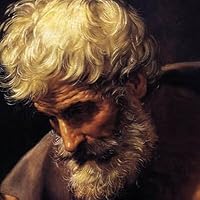
What can the lay person learn from the life of a monk? Solitude and Silence are two pillars of monastic life that many people quickly point to as the hardest and most confusing parts of this kind of religious consecration. However, the great spiritual writer Thomas à Kempis, author of The Imitation of Christ, helps us to understand that all Christians are called to some solitude and silence in our lives while not taking on a complete eremitical life. He recommends the systematic and intentional incorporation of solitude and silence in a manner which is consistent with each one’s vocation and state of life.
It is important for us to cultivate these two habits in order to enter into contemplation and conversation with God. This vision of God may also be experienced (to varying degrees) even in this world, through the grace of contemplative prayer. And silence and solitude are the hallowed doors through which one must pass to arrive at this delightful and serene state of holy contemplation.
Thomas Hammerken (or Hammerlein -- both mean "little hammer") / Thomas de Kempis / Thomas Hamerken von Kempen was born at Kempen (hence the "A Kempis") in the duchy of Cleves in Germany around 1380. He was educated by a religious order called the Brethren of the Common Life, and in due course joined the order, was ordained a priest, became sub-prior of his house (in the low Countries), and died 25 July 1471 (his feast is observed a day early to avoid conflict with that of James bar-Zebedee the Apostle).
Thomas is known almost entirely for composing or compiling a manual of spiritual advice known as The Imitation of Christ, in which he urges the reader to seek to follow the example of Jesus Christ and to be conformed in all things to His will.
Unexpected. Profound. Transformative. Fresh ideas and seeds are planted within my heart. The vintage tone written in the 15th century of relating with God’s divinity explodes. Requiring multiple readings. Practice. Speechless.
Feels as though I’ve moved into a new neighborhood. Lots to explore.
The book arrived after the choice of two words, Solitude and Silence, for 2025. In response, God gave me this gift.
What I like most, this book though brief at less than 60 pages or a couple of listening hours packs a robust godly connection practice. Meaning ways to ground and expand one’s relationship with oneself, people, and most important … Him who loves me best. And, me Him 😁
“Through silence, we return to our heavenly origin, where there is nothing but calm, peace, repose, silent contemplation, and adoration of the radiant face of God.” ~ Robert Cardinal Sarah
Every year pick a word to help me focus on growth in an area. This year broke the one word rule. Chose the noise of two words, solitude and silence. When distractions disappear what’s left is what’s now and in this a lot is happening. If ya don’t believe me, try sitting still for 15 minutes 😁
First time picking two words perfect for focus and aspiration support. Stumbled on this gem of a book, ‘Solitude and Silence: The Cloister of the Heart’, by Thomas À Kempis.
Nabbed multiple free print versions. Picked one to share if you’re interested in reading visually. Added the Audible link read by Tom Gilligan who does a brilliant job narrating (see below)👇🏼
If you’d like to listen check out Solitude and Silence on Audible:
I converted the link using iPhone “Books” app. If you upload there it’ll become a PDF. Or whatever app you prefer for conversion.
If you’d like to convert to audio, rather than buy on Audible, can download the website link or PDF to Speechify to listen. This is a paid app I use for everything from Kindle listening to articles, link downloads, edit writing, etc.
After reading this book changed my annual Goodreads goal from 52 to 12. Though will likely read many more.
This shift is opening me up to completing twelve reviews for 2025. Deeper dives in context and more room for practicing what I’m learning. Plus offer the opportunity to reread a book without the pressure of differentiating titles that became a focus I’ve decided to change. Mix things up a bit.
Help me focus and accomplish important goals as an emerging author of children’s lit and an author interviewer during book tour travels.
Not sure if you’re someone who ever considered picking a word for any year to encourage growth. Learn new things. Become more for yourself and others. Or, maybe a topic like organize is needed. Whatever the word might be, it is never too late to start a new ritual that can take you to new levels of development. Joy. Peace. Love. And, happiness.
Happy New Year. New you. New me. New us. New happiness 😁
If I were to review the first half of this book alone, I would have given it two stars. It was intellectually sloppy, dangerous and contradictory, while looking oh-so-reasonable on the surface. If it did not have Thomas a Kempis on the cover, I would have thought it was written by someone of this century, who is so steeped in modernism that they cannot even see what they have done.
The second half is actually quite decent. But since this is a 63 page book, and the last chapter is lifted from the Imitation of Christ, it begins to be an awful small piece of valuable for the relatively large price tag.
In this brief (61 pages) book, the author of the classic The Imitation of Christ" eloquently extols the spiritual virtues of silence and solitude, warning the would-be disciple away from seeking satisfaction outside of one's self and cell. The themes will be familiar to anyone who has read his more famous book, but his manner is so congenial it's a pleasure to revisit them. This is the first English translation of the book, and it is very readable and well-footnoted.
What does a book written in 1400’s by a Monk have to say to us in 2025? Much!
This book contains gems to be considered and applied. Even though written for a monastic order, I found much to reflect on and helpful in my life today. Maybe more so because of the constant barrage of information and noise coming at me all the time.
I thoroughly enjoyed the first half of this book. Kempis reminded me of my need to draw away and into God.
I have internal conflict about his (or better, the whole monastic movement’s) emphasis on little speech. I do think there is value in being careful with the words we speak, but the emphasis is taken too far for me.
Listening to it in the car one day. Super brief audiobook- didn’t get much out of it, but I think that was more a me issue and being distracted in the car. Might be worth sitting down and reading instead of the audiobook.