

What do you think?

Miss Anne in Harlem: The White Women of the Black Renaissance – A Vivid History of Jazz, Freedom, and Crossing Boundaries in 1920s New York
Celebrated scholar Carla Kaplan’s cultural biography, Miss Anne in The White Women of the Black Renaissance , focuses on white women, collectively called “Miss Anne,” who became Harlem Renaissance insiders.
The 1920s in New York City was a time of freedom, experimentation, and passion—with Harlem at the epicenter. White men could go uptown to see jazz and modern dance, but women who embraced black culture too enthusiastically could be ostracized.
Miss Anne in Harlem focuses on six of the unconventional, free-thinking women, some from Manhattan high society, many Jewish, who crossed race lines and defied social conventions to become a part of the culture and heartbeat of Harlem.
Ethnic and gender studies professor Carla Kaplan brings the interracial history of the Harlem Renaissance to life with vivid prose, extensive research, and period photographs.
The 1920s in New York City was a time of freedom, experimentation, and passion—with Harlem at the epicenter. White men could go uptown to see jazz and modern dance, but women who embraced black culture too enthusiastically could be ostracized.
Miss Anne in Harlem focuses on six of the unconventional, free-thinking women, some from Manhattan high society, many Jewish, who crossed race lines and defied social conventions to become a part of the culture and heartbeat of Harlem.
Ethnic and gender studies professor Carla Kaplan brings the interracial history of the Harlem Renaissance to life with vivid prose, extensive research, and period photographs.
544 pages, Paperback
First published September 10, 2013
About the author
Carla Kaplan
10 books6 followersCarla Kaplan is the Davis Distinguished Professor of American Literature at Northeastern University. She is the author of The Erotics of Talk: Women's Writing and Feminist Paradigms, Zora Neale Hurston: A Life in Letters, and Miss Anne in Harlem: The White Women of the Black Renaissance She is also editor of Every Tongue Got to Confess: Negro Folk Tales from the Gulf States and Dark Symphony and Other Works by Elizabeth Laura Adams.
Ratings & Reviews
Friends & Following
Create a free account to discover what your friends think of this book!
Community Reviews
Displaying 1 - 30 of 83 reviews

November 30, 2013
The more I grow interested in this era of American Literature, the more I talk about it with friends and academics, the more I learn just how unaware people are about this "symbol of liberty" to African Americans in the 1920s. Read Thurman, Locke or Hughes and you learn that Harlem provided artistic respite from racial tensions and animosity faced. These writers were barely seen as humans elsewhere in their country, but in Harlem they were stars.
The Harlem Renaissance was a period when "patrons wanted to support black artists" and foundations were actively seeking African-American talent." After reading about the literary patrons in Langston Hughes' The Big Sea and I Wonder as I Wander: An Autobiographical Journey, I was interested in uncovering more about Hughes' white patron, Charlotte Ogswood Mason, particularly during this Women's History Month.
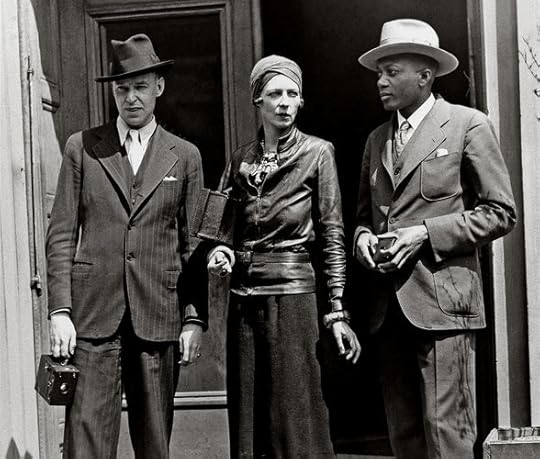
(Image of Nancy Cunard )
In the 1920s, both black and white writers "wrote with an eye toward Harlem and a hope of attracting its attention, just as international modernists wrote about the Left Bank." It is not that surprising then, that there were a few white women of the Harlem Renaissance who tried to make a place for themselves in this black community. What caused angst was most likely the pivotal, yet ignored factor: black writers saw Harlem not only as a literary retreat, but as a place necessary to provide a voice, a place where they too, became visible.
Women like Mason, although initially good-hearted, became dictatorial. Instead of simply acting as a writing sponsor, she treated her writers like disobedient children in some instances. Hughes wrote about this daunting experience in both of his autobiographies, and Zora Neale Hurston's relationship with Mason also ended sourly for several reasons but perhaps a major underlying one: Harlem gave "extraordinary latitude to its interested whites," even though their white communities were closed to Harlemites, but what Harlemites did not negotiate was the moral forces of the thematic contexts that provided the foundation for the Harlem Renaissance.
Poet to Patron (by Langston Hughes)
What right has anyone to say
That I
Must throw out pieces of my heart
For pay?
For bread that helps to make
My heart beat true,
I must sell myself
To you?
The introduction to this book is stellar (5-star deserving), in fact I bought it immediately after reading it because I assumed the pacing and structure of the rest of the book would follow suit. The structural pacing may have been too slow and information-heavy for my biography taste, but the first few pages of each chapter artfully consider the reader, introduce tensions and solidify the juxtapositions between fact and idea.
Imagine Zora Neale Hurston as a writer and playwright in the 1920s. Hurston was a colleague of Fannie Hurst's, a white writer who interviewed Hurston to get details about the black characters she depicted. Now consider the reality of Hurston out of Harlem, where she makes a living doing odd jobs as a driver for Fannie Hurst and sleeps in her car while Hurst sleeps at an upscale whites-only hotel. There were other exceptional stories of white women of the Harlem Renaissance and the oddity of their standing within the community; such as Nancy Cunard, Lillian Wood, Mary White Ovington, Josephine Cogdell Schuyler, and Annie Nathan Meyer. Some of the stories, like Meyer's and Ovington's, are a bit encouraging while others beg the question asked in this book: "What can we make of someone who saw herself as a champion of black people even as she used them to her own advantage?"
The Harlem Renaissance was a period when "patrons wanted to support black artists" and foundations were actively seeking African-American talent." After reading about the literary patrons in Langston Hughes' The Big Sea and I Wonder as I Wander: An Autobiographical Journey, I was interested in uncovering more about Hughes' white patron, Charlotte Ogswood Mason, particularly during this Women's History Month.
(Image of Nancy Cunard )
In the 1920s, both black and white writers "wrote with an eye toward Harlem and a hope of attracting its attention, just as international modernists wrote about the Left Bank." It is not that surprising then, that there were a few white women of the Harlem Renaissance who tried to make a place for themselves in this black community. What caused angst was most likely the pivotal, yet ignored factor: black writers saw Harlem not only as a literary retreat, but as a place necessary to provide a voice, a place where they too, became visible.
Women like Mason, although initially good-hearted, became dictatorial. Instead of simply acting as a writing sponsor, she treated her writers like disobedient children in some instances. Hughes wrote about this daunting experience in both of his autobiographies, and Zora Neale Hurston's relationship with Mason also ended sourly for several reasons but perhaps a major underlying one: Harlem gave "extraordinary latitude to its interested whites," even though their white communities were closed to Harlemites, but what Harlemites did not negotiate was the moral forces of the thematic contexts that provided the foundation for the Harlem Renaissance.
Poet to Patron (by Langston Hughes)
What right has anyone to say
That I
Must throw out pieces of my heart
For pay?
For bread that helps to make
My heart beat true,
I must sell myself
To you?
The introduction to this book is stellar (5-star deserving), in fact I bought it immediately after reading it because I assumed the pacing and structure of the rest of the book would follow suit. The structural pacing may have been too slow and information-heavy for my biography taste, but the first few pages of each chapter artfully consider the reader, introduce tensions and solidify the juxtapositions between fact and idea.
Imagine Zora Neale Hurston as a writer and playwright in the 1920s. Hurston was a colleague of Fannie Hurst's, a white writer who interviewed Hurston to get details about the black characters she depicted. Now consider the reality of Hurston out of Harlem, where she makes a living doing odd jobs as a driver for Fannie Hurst and sleeps in her car while Hurst sleeps at an upscale whites-only hotel. There were other exceptional stories of white women of the Harlem Renaissance and the oddity of their standing within the community; such as Nancy Cunard, Lillian Wood, Mary White Ovington, Josephine Cogdell Schuyler, and Annie Nathan Meyer. Some of the stories, like Meyer's and Ovington's, are a bit encouraging while others beg the question asked in this book: "What can we make of someone who saw herself as a champion of black people even as she used them to her own advantage?"

February 5, 2014
Miss Anne In Harlem
In African-American slang, "Miss Anne" refers to a white woman. The "free play of identity" is a modern concept which suggests that individual identities can be changing and fluid rather than fixed. Individuals often try to remake or reinvent themselves in various ways and choose an understanding of themselves different from the categories into which they were born.
Miss Anne and the free play of identity are brought together and explored in Carla Kaplan's new book, "Miss Anne in Harlem: the White Women of the Harlem Renaissance". The book is a group biography of six white women who, during the 1920s and 1930s reinvented themselves to varying degrees as African-American. The women became part of the cultural movement loosely described as the Harlem Renaissance. Kaplan, the Davis Distinguished Professor of American Literature at Northeastern University, is the recipient of a Guggenheim fellowship and the author of a biography of Zora Neale Hurston, among other works.
Although the Harlem Renaissance has been studied extensively, the Miss Annes of the period have received little attention. Kaplan's goal was first to find them, to study what they did, and to enter upon the treacherous world of determining motivation. From about 60 women whom Kaplan initially identified as plausible candidates, she narrowed her field down to the six individuals that make the focus of the book, Others make frequent appearances throughout the work. Kaplan states that her book is informed by modern cultural studies, including "critical race theory, identity theory, whiteness studies and contemporary feminism" but she rightly says that the book is a biography and does not demand commitment to these fields by the reader. She identifies several questions that the Miss Annes of her book faced and that individuals still struggle with in considering questions of identity:
"Can we alter our identities at will, and if so, how? What if anything, do we owe those with whom we are categorized? Does freedom mean escaping our social categories or instead being able to inhabit those that don't seem to belong to us? The white women of Harlem lived those questions every day, with varying degrees of awareness and varying degrees of success."
There was a tension in how African American intellectuals in the Harlem Renaissance viewed race. On the one hand, many frequently sought to break down racial barriers by taking an anti-essentialist view of race. On the other hand, these same individuals frequently found a need for political and cultural solidarity as African Americans sought to better their condition and end the dehabilitating effects of racism. African Americans thus tended to be ambivalent about the Miss Annes who claimed somehow to understand their conditions. In the white society from which they came, the Miss Annes faced ostracism and ridicule.
Much of the focus of the book is sexual. In the opening chapter, Kaplan discusses several notorious early 20th Century cases of African American men marrying white women with the resulting tumult. Several but not all the Miss Annes in her book had intimate relationships with African American men while others wrote about such relationships.
She also offers an overview of the Harlem Renaissance which stresses how it attracted a great deal of participation from whites. Men found it much easier to cross into Harlem than did women.
Kaplan arranges the six women in her book in pairs, with one shorter and one longer story in each group. They are arranged under themes: "Choosing Blackness: Sex, Love, and Passing", "Repudiating Whiteness" Politics, Patronage, and Primitivism" and "Rewards and Costs: Publishing, Performance and Modern Rebellion." She offers a biography of each woman which focuses on the part of their lives they spent in reinventing themselves. Here are the six Miss Annes.
Lillian Wood never lived in Harlem. She was a midwestern woman who volunteered in mid-life to teach at an African American school in Morristown, Tennessee, where she lived from 1907 -- 1954. In 1925, she wrote a novel, "Let my People Go". When Wood was studied at all, she was thought, mistakenly, to be black.
Josephine Cogdell Schuyler was born to privilege and wealth on a large Texas ranch. She rebelled early, living in San Francisco. Moving to New York City, she was attracted to Harlem and married a famous African American writer, George Schuyler, best known for his book, "Black no More" and for his turn to political conservatism late in life. Mrs.Schuyler wrote essays and poems under a pseudonym. The marriage endured but proved unhappy to both parties.
Annie Nathan Meyer was born to a wealthy assimilated Jewish family but rebelled early in life against its expectations. Meyer had a long career and is best known as a founder of Barnard University. In 1924 she wrote a searing play called "Black Souls" about lynching and about the sexual attraction of a white woman for an African American man. The play was produced in Greenwich Village in 1932 where it failed and was, for the most part forgotten.
Charlotte Osgood Mason inherited a fortune in her marriage and used it at first to study American Indians. She then became fascinated with African and African American life and gave generous grants to Harlem Renaissance figures Alain Locke,Langston Hughes, and Zora Neale Hurston. Mason was a controlling, difficult figure who ultimately alienated the individuals she tried to assist.
Fannie Hurst was born to a Jewish family and became in her day the most financially successful writer in the United States. She became involved in Harlem affairs and wrote the novel for which she is remains remembered, "Imitation of Life". The novel uses many white stereotypes of African Americans, and it alienated Hurst from much of her Harlem base.
The sixth Miss Anne, Nancy Cunard, was born to British aristocracy and was heiress to Cunard shipping. She abandoned her home early for a free modern life in Paris. She became romantically involved with an African American musician and composer and ultimately came to see herself as black. Her family disinherited her. Cunard had a controversial, erratic life, but she produced an important work, "The Negro" which was an anthology of over 800 pages of writings on African American life.
The Miss Annes in this book are well worth knowing in their own right. I particularly enjoyed the detailed discussion of their books, which were all unknown to me and, in the case of Wood and Meyer, almost forgotten. I am not sure what conclusions I would draw from the biographies about the nature of identity and its free play, other than that people are diverse, individual, and complex. The characters in the book are compelling.
The book includes intriguing photographs and a valuable bibliography which is arranged in headings under the six major characters and then under topics, such as "passing" addressed in the book.
This fascinating book will appeal to readers interested in the Harlem Renaissance, African American history, and American literature.
Robin Friedman
In African-American slang, "Miss Anne" refers to a white woman. The "free play of identity" is a modern concept which suggests that individual identities can be changing and fluid rather than fixed. Individuals often try to remake or reinvent themselves in various ways and choose an understanding of themselves different from the categories into which they were born.
Miss Anne and the free play of identity are brought together and explored in Carla Kaplan's new book, "Miss Anne in Harlem: the White Women of the Harlem Renaissance". The book is a group biography of six white women who, during the 1920s and 1930s reinvented themselves to varying degrees as African-American. The women became part of the cultural movement loosely described as the Harlem Renaissance. Kaplan, the Davis Distinguished Professor of American Literature at Northeastern University, is the recipient of a Guggenheim fellowship and the author of a biography of Zora Neale Hurston, among other works.
Although the Harlem Renaissance has been studied extensively, the Miss Annes of the period have received little attention. Kaplan's goal was first to find them, to study what they did, and to enter upon the treacherous world of determining motivation. From about 60 women whom Kaplan initially identified as plausible candidates, she narrowed her field down to the six individuals that make the focus of the book, Others make frequent appearances throughout the work. Kaplan states that her book is informed by modern cultural studies, including "critical race theory, identity theory, whiteness studies and contemporary feminism" but she rightly says that the book is a biography and does not demand commitment to these fields by the reader. She identifies several questions that the Miss Annes of her book faced and that individuals still struggle with in considering questions of identity:
"Can we alter our identities at will, and if so, how? What if anything, do we owe those with whom we are categorized? Does freedom mean escaping our social categories or instead being able to inhabit those that don't seem to belong to us? The white women of Harlem lived those questions every day, with varying degrees of awareness and varying degrees of success."
There was a tension in how African American intellectuals in the Harlem Renaissance viewed race. On the one hand, many frequently sought to break down racial barriers by taking an anti-essentialist view of race. On the other hand, these same individuals frequently found a need for political and cultural solidarity as African Americans sought to better their condition and end the dehabilitating effects of racism. African Americans thus tended to be ambivalent about the Miss Annes who claimed somehow to understand their conditions. In the white society from which they came, the Miss Annes faced ostracism and ridicule.
Much of the focus of the book is sexual. In the opening chapter, Kaplan discusses several notorious early 20th Century cases of African American men marrying white women with the resulting tumult. Several but not all the Miss Annes in her book had intimate relationships with African American men while others wrote about such relationships.
She also offers an overview of the Harlem Renaissance which stresses how it attracted a great deal of participation from whites. Men found it much easier to cross into Harlem than did women.
Kaplan arranges the six women in her book in pairs, with one shorter and one longer story in each group. They are arranged under themes: "Choosing Blackness: Sex, Love, and Passing", "Repudiating Whiteness" Politics, Patronage, and Primitivism" and "Rewards and Costs: Publishing, Performance and Modern Rebellion." She offers a biography of each woman which focuses on the part of their lives they spent in reinventing themselves. Here are the six Miss Annes.
Lillian Wood never lived in Harlem. She was a midwestern woman who volunteered in mid-life to teach at an African American school in Morristown, Tennessee, where she lived from 1907 -- 1954. In 1925, she wrote a novel, "Let my People Go". When Wood was studied at all, she was thought, mistakenly, to be black.
Josephine Cogdell Schuyler was born to privilege and wealth on a large Texas ranch. She rebelled early, living in San Francisco. Moving to New York City, she was attracted to Harlem and married a famous African American writer, George Schuyler, best known for his book, "Black no More" and for his turn to political conservatism late in life. Mrs.Schuyler wrote essays and poems under a pseudonym. The marriage endured but proved unhappy to both parties.
Annie Nathan Meyer was born to a wealthy assimilated Jewish family but rebelled early in life against its expectations. Meyer had a long career and is best known as a founder of Barnard University. In 1924 she wrote a searing play called "Black Souls" about lynching and about the sexual attraction of a white woman for an African American man. The play was produced in Greenwich Village in 1932 where it failed and was, for the most part forgotten.
Charlotte Osgood Mason inherited a fortune in her marriage and used it at first to study American Indians. She then became fascinated with African and African American life and gave generous grants to Harlem Renaissance figures Alain Locke,Langston Hughes, and Zora Neale Hurston. Mason was a controlling, difficult figure who ultimately alienated the individuals she tried to assist.
Fannie Hurst was born to a Jewish family and became in her day the most financially successful writer in the United States. She became involved in Harlem affairs and wrote the novel for which she is remains remembered, "Imitation of Life". The novel uses many white stereotypes of African Americans, and it alienated Hurst from much of her Harlem base.
The sixth Miss Anne, Nancy Cunard, was born to British aristocracy and was heiress to Cunard shipping. She abandoned her home early for a free modern life in Paris. She became romantically involved with an African American musician and composer and ultimately came to see herself as black. Her family disinherited her. Cunard had a controversial, erratic life, but she produced an important work, "The Negro" which was an anthology of over 800 pages of writings on African American life.
The Miss Annes in this book are well worth knowing in their own right. I particularly enjoyed the detailed discussion of their books, which were all unknown to me and, in the case of Wood and Meyer, almost forgotten. I am not sure what conclusions I would draw from the biographies about the nature of identity and its free play, other than that people are diverse, individual, and complex. The characters in the book are compelling.
The book includes intriguing photographs and a valuable bibliography which is arranged in headings under the six major characters and then under topics, such as "passing" addressed in the book.
This fascinating book will appeal to readers interested in the Harlem Renaissance, African American history, and American literature.
Robin Friedman

February 2, 2014
Jungle fever in 1920's Harlem
This book tells the story of white women in black Harlem collectively referred to as "Miss Anne," has never been told until now. White women who wrote impassioned pleas such as "A white girl's prayer" about their longings to escape the "curse" of whiteness were overlooked. The press sexualized and sensationalized their stories as sexual adventurers or lesbians. For blacks, she was unpredictable, and a "gleeful pickaninny." She is a woman of wealth who thinks she has the right to speak for blacks or a woman looking for a "sheikh," a term referred to young black men with athletic build. For most residents in Harlem, she was an intrusive guest and do not deserve a serious enquiry. Northeastern University professor Carla Kaplan has done a fascinating job of researching and writing this book about the forgotten white women who revolutionized and reformed the racial and ethnic mixing in 1920s Harlem. This story comes out of hard to get original archival material in the form of letters, journals, diaries and notebooks. Many women mentioned in this book are scarcely mentioned in other literary work although their experiences in Harlem were the most important and exciting period of these women's lives. NAACP founder Mary White Ovington, Harlem librarian Ernestine Rose, and philanthropist Amy Spingarn were most effective because they drew least attention.
The author analyzes facts to find what made these women to go to Harlem. In their days, Nancy Cunard was dismissed as bed-hopping communist, Josephine Cogdell Schuyler, and Charlotte Osgood Mason, widely regarded as a malignant force, all followed their African dreams to black New York. The race spirit of Harlem renaissance was militant rebellion born from the galvanizing return of Harlem's triumphant regiment after WWI. This historical moment largely precluded white Negrotarians flooding Harlem except for few male white philanthropists who could find their way in if insider status was their goal. White women could do no such thing, most devoted white women activists were at the sea trying to find their way in. These women were documented in every imaginable form of female identity in the Jazz age; the New Woman, the Spinster, the Flapper, the Gibson Girl, the Bachelor girl, the Bohemian, the Twenties "mannish" lesbian, the Suffragist, the inverts, and so on.
The six women discussed in this book are grouped in three parts. "Choosing blackness: Sex, Love and Passing," Repudiating Whiteness: Politics, Patronage and Primitivism," and "Rewards and Costs: Publishing, Performance, and Modern Rebellion." The women discussed in this book are; Lillian E Wood, Josephine Cogdell Schuyler, Annie Nathan Meyer, Charlotte Osgood Mason, Fannie Hurst and Nancy Cunard.
All six women had influence and impact. Schuyler married one of the most important figures of Harlem renaissance and became a Harlem voice. Mason was most influential patron of Harlem and Cunard edited most comprehensive anthology of the era. Fannie Hurst remained famous because of her successful novel, "Imitation of Life."
These six biographies are an effort to hear what "Miss Anne" had to say about herself and her involvement with most volatile issue of the day that race is not a social construction and a white woman's place is certainly not in Black Harlem. The race erotica was unthinkable and unimaginable. This book aims to provide a sense of tension that the women in this book experienced and suggest how their efforts were viewed in their day. It provides a context in which their isolation and loneliness as well as their longing to belong, and everyone understand from their perspectives.
The following poem from form "A White girl's prayer" by Edna Margaret Johnson briefly illustrates the sentiments of the six women discussed in this book:
I writhe on the self -contempt, O God -
My Nordic flesh is but curse;
The black girl loathes to clasp my hand;
She doubts my love because I'm white.
From Nancy Cunard:
Last advice to the crackers:
Bake your own white meat-
Last advice to the lynchers;
Hang your brother by the feet.
One sitting pretty Black Man
is a million-strong on heat.
This book tells the story of white women in black Harlem collectively referred to as "Miss Anne," has never been told until now. White women who wrote impassioned pleas such as "A white girl's prayer" about their longings to escape the "curse" of whiteness were overlooked. The press sexualized and sensationalized their stories as sexual adventurers or lesbians. For blacks, she was unpredictable, and a "gleeful pickaninny." She is a woman of wealth who thinks she has the right to speak for blacks or a woman looking for a "sheikh," a term referred to young black men with athletic build. For most residents in Harlem, she was an intrusive guest and do not deserve a serious enquiry. Northeastern University professor Carla Kaplan has done a fascinating job of researching and writing this book about the forgotten white women who revolutionized and reformed the racial and ethnic mixing in 1920s Harlem. This story comes out of hard to get original archival material in the form of letters, journals, diaries and notebooks. Many women mentioned in this book are scarcely mentioned in other literary work although their experiences in Harlem were the most important and exciting period of these women's lives. NAACP founder Mary White Ovington, Harlem librarian Ernestine Rose, and philanthropist Amy Spingarn were most effective because they drew least attention.
The author analyzes facts to find what made these women to go to Harlem. In their days, Nancy Cunard was dismissed as bed-hopping communist, Josephine Cogdell Schuyler, and Charlotte Osgood Mason, widely regarded as a malignant force, all followed their African dreams to black New York. The race spirit of Harlem renaissance was militant rebellion born from the galvanizing return of Harlem's triumphant regiment after WWI. This historical moment largely precluded white Negrotarians flooding Harlem except for few male white philanthropists who could find their way in if insider status was their goal. White women could do no such thing, most devoted white women activists were at the sea trying to find their way in. These women were documented in every imaginable form of female identity in the Jazz age; the New Woman, the Spinster, the Flapper, the Gibson Girl, the Bachelor girl, the Bohemian, the Twenties "mannish" lesbian, the Suffragist, the inverts, and so on.
The six women discussed in this book are grouped in three parts. "Choosing blackness: Sex, Love and Passing," Repudiating Whiteness: Politics, Patronage and Primitivism," and "Rewards and Costs: Publishing, Performance, and Modern Rebellion." The women discussed in this book are; Lillian E Wood, Josephine Cogdell Schuyler, Annie Nathan Meyer, Charlotte Osgood Mason, Fannie Hurst and Nancy Cunard.
All six women had influence and impact. Schuyler married one of the most important figures of Harlem renaissance and became a Harlem voice. Mason was most influential patron of Harlem and Cunard edited most comprehensive anthology of the era. Fannie Hurst remained famous because of her successful novel, "Imitation of Life."
These six biographies are an effort to hear what "Miss Anne" had to say about herself and her involvement with most volatile issue of the day that race is not a social construction and a white woman's place is certainly not in Black Harlem. The race erotica was unthinkable and unimaginable. This book aims to provide a sense of tension that the women in this book experienced and suggest how their efforts were viewed in their day. It provides a context in which their isolation and loneliness as well as their longing to belong, and everyone understand from their perspectives.
The following poem from form "A White girl's prayer" by Edna Margaret Johnson briefly illustrates the sentiments of the six women discussed in this book:
I writhe on the self -contempt, O God -
My Nordic flesh is but curse;
The black girl loathes to clasp my hand;
She doubts my love because I'm white.
From Nancy Cunard:
Last advice to the crackers:
Bake your own white meat-
Last advice to the lynchers;
Hang your brother by the feet.
One sitting pretty Black Man
is a million-strong on heat.

September 30, 2013
'First they ignore you... then sexualize you...and then call you crazy and write you off as a social misfit...' is the overriding theme I found most revealing, or should I say telling, in the reading about defining Miss Anne. Prior to reading this book Miss Anne was either a prissy young girl, or a white woman. It's in this respect that makes this collected timepiece of narratives and researched events of women referred to as Miss Anne, overall compellingly interesting. Many of the narratives contain small surprises, and others really tug on the heartstrings. In all instances a great amount of research went into pulling the accounts together.

November 1, 2013
This history and group biography of several of the strong minded but sometimes misguided white women who inserted themselves into the Harlem Renaissance is a fascinating look at the rich culture of the time, black and white. Though the 1920's is thought of as an era of freethinking flappers, views of race were rigid and and punishments for crossing the color line were harsh. These "Miss Anne" white women wanted to help bring about a paradigm shift, but they met with a lot of resistance from both sides then, and are largely forgotten today.
Miss Anne in Harlem: The White Women of the Black Renaissance is a scholarly book with end-notes and a bibliography, but it is anything but dry. The women's stories are told in sensitive but unvarnished detail and their lives are varied and highly interesting. I picked up the book because I wanted to read about forward thinking novelist Fannie Hurst and rebel British aristocrat Nancy Cunard, but the other women profiled include organizers, educators, and authors whose struggles, choices, personal lives, and public personas are just as compelling.
Miss Anne in Harlem: The White Women of the Black Renaissance is a scholarly book with end-notes and a bibliography, but it is anything but dry. The women's stories are told in sensitive but unvarnished detail and their lives are varied and highly interesting. I picked up the book because I wanted to read about forward thinking novelist Fannie Hurst and rebel British aristocrat Nancy Cunard, but the other women profiled include organizers, educators, and authors whose struggles, choices, personal lives, and public personas are just as compelling.

August 8, 2013
Although the women known collectively as "Miss Anne" had a few things in common -- they were white, they came from middle or upper class families, and they had an intense interest in the lives of the black people of Harlem -- they were very different individuals. Fortunately, each of the six women that Professor Carla Kaplan profiles is a biography-worthy character in her own right.
Kaplan puts the late 19th century and early 20th century divisions between the races into perspective and shows how these white women, all well-intentioned, but eventually tragic in some way, tried to cross the line. Even the most well-intentioned women, those who wanted to see the artists of the Harlem Renaissance get their deserved recognition, were patronizing in their attitudes toward blacks, and some of them were simply drama queens who loved the attention they got from flouting social conventions. Even when those they purported to help recognized their good intentions, they were also put off by the superior attitude of Miss Anne.
Most tragic was probably Josephine Cogdell, who had a career as a successful writer when she married a black writer, George Schuyler. His writing improved abruptly when he married Cogdell, though no one seemed to make the connection at the time. It was an unhappy marriage and Cogdell concentrated on educating their prodigy daughter, Philippa, who eventually became a concert pianist and then a journalist. One reason the marriage was unhappy was that George's political views took a sharp turn to the right and he became a member of the John Birch Society. When Philippa followed in her father's political footsteps, it must have been difficult for Josephine.
Miss Anne in Harlem is an enlightening read on a topic not much written about. I'd like to read more about these women and others.
Kaplan puts the late 19th century and early 20th century divisions between the races into perspective and shows how these white women, all well-intentioned, but eventually tragic in some way, tried to cross the line. Even the most well-intentioned women, those who wanted to see the artists of the Harlem Renaissance get their deserved recognition, were patronizing in their attitudes toward blacks, and some of them were simply drama queens who loved the attention they got from flouting social conventions. Even when those they purported to help recognized their good intentions, they were also put off by the superior attitude of Miss Anne.
Most tragic was probably Josephine Cogdell, who had a career as a successful writer when she married a black writer, George Schuyler. His writing improved abruptly when he married Cogdell, though no one seemed to make the connection at the time. It was an unhappy marriage and Cogdell concentrated on educating their prodigy daughter, Philippa, who eventually became a concert pianist and then a journalist. One reason the marriage was unhappy was that George's political views took a sharp turn to the right and he became a member of the John Birch Society. When Philippa followed in her father's political footsteps, it must have been difficult for Josephine.
Miss Anne in Harlem is an enlightening read on a topic not much written about. I'd like to read more about these women and others.

February 12, 2021
This was stellar! Well-researched and heavily end-noted, but also smoothly written and engaging. Kaplan’s interest is white women who chose to participate in the Harlem Renaissance, and her focus is on a half dozen of them in particular. They’re a really interesting bunch. Josephine Cogdell Schuyler, for example, had quite a life, from small town Texan wealth to bohemian San Francisco to marriage to a prominent black journalist. Lillian Wood, long believed to have been a black novelist, turns out to have been an older white teacher at a black college in Tennessee. And Nancy Cunard was quite something - a wealthy, headstrong Englishwoman determined to shed her background in solidarity with black Americans. Kaplan doesn’t merely bring attention to her subjects’ lives, fascinating as that would be. She draws on their stories to sensitively illuminate the contradictions of identity and race, and the complexities of their time. Really, really good.

November 4, 2013
An interesting study on the social upheaval caused by early interracial social and intellectual exchange. It offers a glimpse of how parts of the American population are truly isolated and what happens when attempts are made to bridge that isolation. Carla Kaplan provides an excellent background and examples in the six women she profiles in this book.

July 8, 2014
update:
Well-researched and written, a fascinating account of six white women who passionately involved themselves, to varying degrees of success, in the lives of Blacks in Harlem.
* *
Heard the author speak yesterday at the Mount, Edith Wharton's home. Highly informative, passionate and engaging. Looks like a great read.
Well-researched and written, a fascinating account of six white women who passionately involved themselves, to varying degrees of success, in the lives of Blacks in Harlem.
* *
Heard the author speak yesterday at the Mount, Edith Wharton's home. Highly informative, passionate and engaging. Looks like a great read.

October 17, 2013
This non-fiction book is about the "Miss Anne"s of the Harlem Renaissance. "Miss Anne" was a derogative term the residents of Harlem used for the (usually wealthy, upper class) white women who became patrons to the black artists and writers in Harlem.
The Miss Annes were often a double edged sword: while their financial contributions were welcome, it came with advice and, sometimes, conditions. One of the Miss Annes required the people she helped to call her "Godmother" and tried to control every aspect of their lives. Another Miss Anne claimed she "speaks for the black people", despite the fact she was born a rich white heiress in England.
I thought this book was fascinating. I didn't know much about the Harlem Renaissance, and nothing about the wealthy white patrons. I learned quite a bit about both after reading Miss Anne in Harlem. The book is well written, and easy to follow.
The Miss Annes were often a double edged sword: while their financial contributions were welcome, it came with advice and, sometimes, conditions. One of the Miss Annes required the people she helped to call her "Godmother" and tried to control every aspect of their lives. Another Miss Anne claimed she "speaks for the black people", despite the fact she was born a rich white heiress in England.
I thought this book was fascinating. I didn't know much about the Harlem Renaissance, and nothing about the wealthy white patrons. I learned quite a bit about both after reading Miss Anne in Harlem. The book is well written, and easy to follow.

September 2, 2019
There is definitely some ironic privilege at work in a book that focuses on the white people involved in the achievements of black people, but I do feel this book offers some interesting insight into Harlem Renaissance writers. Personally I was very interested in the many interesting tidbits about Zora Neale Hurston. Also, I think an examination of how Harlem Renaissance writing was funded can give us insight into how much of that writing was written sincerely versus to please certain audiences. Perhaps the most interesting aspect of the book though is the exploration of allies in the fight for social justice and the fuzzy line between advocacy and appropriation. This is an important read for lovers of literature, as well as for anyone curious about allyship and social justice.

August 1, 2013
This book is a keeper. Miss Anne in Harlem: The White Women of the Black Renaissance by Carla Kaplan is an amazing piece of research and was difficult to stop reading. The term “Miss Ann” was brand new to me.
Most often, the women who were called "Miss Ann" thought it was a curse that they were white. One woman, Josephine Cogdell Schulyer pushed for "intermarriage as a solution to the race problem". She married a black man herself. She was able to keep her marriage secret from her parents by visiting them without her husband and her daughter. She really wants to make her mark in the world but after marrying, she pushed that aside and concentrated on homemaking. She found herself without women friends and her marriage was a disappointment. Her story is heart wrenching and very sad.
This book is set in the 1920s and 1930s in Harlem mostly. Carla Kaplan concentrated on lives of six women who qualify as "Miss Anns" but their lives were all different. The author picked these women because their lives had the most documentation. But there were many white women who flocked to Harlem and their stories will never be told.
Harlem at that time seemed to be big experiment. Whites wanted to go to Harlem so they could shock their friends and relatives with amazing tales. Blacks and Whites danced and drank together. It seemed that Whites could loosen up there. Harlem was exploding with Black art, poetry, literature, dance and acting. Duke Ellington played to an all White audience in the cotton club but usually blacks and whites played together in the nightclubs.
The black people who lived there saw them as intruders. Celebrities like Tallulah Bankhead and her friend came in drag. Jimmy Durante was there so many recognizable celebrities and politicians came. Writers told of their experiences there. There were even tour guides. It took the Great Depression to end the Harlem Renaissance.
This book is full of history that I never read about Harlem and Miss Ann.
I received this book as a win from First Reads and that in no way influenced my thoughts or feelings in my review.
Most often, the women who were called "Miss Ann" thought it was a curse that they were white. One woman, Josephine Cogdell Schulyer pushed for "intermarriage as a solution to the race problem". She married a black man herself. She was able to keep her marriage secret from her parents by visiting them without her husband and her daughter. She really wants to make her mark in the world but after marrying, she pushed that aside and concentrated on homemaking. She found herself without women friends and her marriage was a disappointment. Her story is heart wrenching and very sad.
This book is set in the 1920s and 1930s in Harlem mostly. Carla Kaplan concentrated on lives of six women who qualify as "Miss Anns" but their lives were all different. The author picked these women because their lives had the most documentation. But there were many white women who flocked to Harlem and their stories will never be told.
Harlem at that time seemed to be big experiment. Whites wanted to go to Harlem so they could shock their friends and relatives with amazing tales. Blacks and Whites danced and drank together. It seemed that Whites could loosen up there. Harlem was exploding with Black art, poetry, literature, dance and acting. Duke Ellington played to an all White audience in the cotton club but usually blacks and whites played together in the nightclubs.
The black people who lived there saw them as intruders. Celebrities like Tallulah Bankhead and her friend came in drag. Jimmy Durante was there so many recognizable celebrities and politicians came. Writers told of their experiences there. There were even tour guides. It took the Great Depression to end the Harlem Renaissance.
This book is full of history that I never read about Harlem and Miss Ann.
I received this book as a win from First Reads and that in no way influenced my thoughts or feelings in my review.

November 16, 2014
An Interracial Renaissance
The Harlem Renaissance - the end of the 19th century and beginning of the 20th, a time when jazz was in the height of music. New York City. An artistic and social revolution for dance, literature, art, and music. Professor Carla Kaplan realized that there was so much research on the African American side of things during that pivotal time, yet the one story or narrative that was not being told was the part that white women played during this period. This group of women was known as “Miss Anne.”
White women were so into the social aspect of African Americans that they wanted to be part of something they viewed as exciting. Some had the intention of wanting to help those of color rise and be known for their artistic abilities. Others just loved the limelight of what Harlem represented during the time. Many of these women were wealthy and well known in their communities. Professor Kaplan writes about six in particular; women who risked being shunned by their families and communities.
Carla Kaplan is a well-known and award-winning professor and author. The reason I mention this is because she obviously has insight and has done extensive research not only on the Harlem Renaissance, but she has delved deeper than that of previous writers.
There are so many interesting facts that many of us are not aware of when it comes to this timeframe. For example: Did you know that women of color who were suspected of passing for white could be made to stand before judge and jury and disrobe for them to decide if indeed she was colored? There is so much to be learned between the pages of this book.
“Miss Anne in Harlem: The White Women of the Black Renaissance” is thought-provoking. Some things will shock you. Others will leave you disgusted. This is a very good book, but it is very descriptive and lengthy. I would recommend it.
Reviewed by: LeonaR
The Harlem Renaissance - the end of the 19th century and beginning of the 20th, a time when jazz was in the height of music. New York City. An artistic and social revolution for dance, literature, art, and music. Professor Carla Kaplan realized that there was so much research on the African American side of things during that pivotal time, yet the one story or narrative that was not being told was the part that white women played during this period. This group of women was known as “Miss Anne.”
White women were so into the social aspect of African Americans that they wanted to be part of something they viewed as exciting. Some had the intention of wanting to help those of color rise and be known for their artistic abilities. Others just loved the limelight of what Harlem represented during the time. Many of these women were wealthy and well known in their communities. Professor Kaplan writes about six in particular; women who risked being shunned by their families and communities.
Carla Kaplan is a well-known and award-winning professor and author. The reason I mention this is because she obviously has insight and has done extensive research not only on the Harlem Renaissance, but she has delved deeper than that of previous writers.
There are so many interesting facts that many of us are not aware of when it comes to this timeframe. For example: Did you know that women of color who were suspected of passing for white could be made to stand before judge and jury and disrobe for them to decide if indeed she was colored? There is so much to be learned between the pages of this book.
“Miss Anne in Harlem: The White Women of the Black Renaissance” is thought-provoking. Some things will shock you. Others will leave you disgusted. This is a very good book, but it is very descriptive and lengthy. I would recommend it.
Reviewed by: LeonaR

August 28, 2017
This book will probably seem too scholarly for some readers. There are over 150 pages of notes at the end, and Carla Kaplan throws a lot of names, facts and ideas at the reader in the first 50 pages. Stick with it, though, if you're thinking of giving it up. Or at least go read the chapters about each Miss Anne: Lillian E. Wood, Josephine Cogdell Schuyler, Annie Nathan Meyer, Charlotte Osgood Mason, Fannie Hurst and Nancy Cunard. You'll be reading the most interesting stories of six women who are probably unknown to the majority of readers. Women who were living daring and dangerous lives during the era of Jim Crow laws, which were always claimed to be needed mostly to protect white women from black men.
My favorite chapter was on Josephine Cogdell Schuyler, a writer from Texas who moved to Harlem, married a black writer, and had a genius daughter named Philippa. Even though her marriage received attention from the national press, her family back in Texas apparently never knew of her marriage or her child, even though some came to visit her in New York! To learn more about her daughter Philippa, read Composition in Black and White: The Life of Philippa Schuyler.
(Note: I received a free ARC of this book from Amazon Vine.)
My favorite chapter was on Josephine Cogdell Schuyler, a writer from Texas who moved to Harlem, married a black writer, and had a genius daughter named Philippa. Even though her marriage received attention from the national press, her family back in Texas apparently never knew of her marriage or her child, even though some came to visit her in New York! To learn more about her daughter Philippa, read Composition in Black and White: The Life of Philippa Schuyler.
(Note: I received a free ARC of this book from Amazon Vine.)

September 18, 2013
One French Vanity Fair reporter wrote that he could not take his eyes off the "tom-toms" in Montmartre's jazz and the white ladies "swaying luxuriously in the long arms of the dark cowboys."
This comment and so many more make this book a joy to read. The white Women of the Harlem Renaissance were strong, but fragile, humble with a huge ego, every juxtaposition one can think of.
Nancy Cunard will always be my hero...always.
Thank you Ms. Kaplan for your selfless research & delightful writing style. I applaud you!
This comment and so many more make this book a joy to read. The white Women of the Harlem Renaissance were strong, but fragile, humble with a huge ego, every juxtaposition one can think of.
Nancy Cunard will always be my hero...always.
Thank you Ms. Kaplan for your selfless research & delightful writing style. I applaud you!

October 24, 2013
I read this book because of my interest in the Harlem Renaissance and civil rights. While the book opens up new background on Miss Anne and this important period in race relations, I found it tedious to read. There was too much detail about the individuals covered in the book that did not relate to the central theme.
July 19, 2014
Very interesting book about a little known, little discussed aspect of the Harlem Renaissance. Excellent and thorough research. Starts off a little slow, and can be a tedious read...but each story gets better and better. Amazing how these women consistently disavowed Whiteness and unconsciously used their privilege to co-opt Blackness for their own salvation. The epilogue nails it!

August 23, 2013
An interesting slice of history, made less interesting by the author's repetitive way of presenting it.
October 8, 2022
The comprehensiveness of this volume is staggering and great. "Miss Anne in Harlem" discusses white patrons, particularly women, who financially supported some of the most famous Black artists of the Harlem Renaissance, is a crucial text for anyone seeking to know more about this era and the people involved. Carl Van Vechten, mercurial and very controversial figure of the era, figures prominently. I also found the most information to date in this volume about Charlotte Osgood Mason, patron to Langston Hughes and Zora Neale Hurston among others. Alain Locke remained faithful and loyal to Mason even after her passing, and up until his. Their relationship, and the other interactions she had with people, her methods, and the truth of how she really was, is wrapped up in layers of fascination. Although some parts of the book are more interesting than others, overall it is a crucial text to understanding this era.

January 13, 2026
Miss Anne in Harlem: The White Women of the Harlem Renaissance is a fascinating read. It is good history and not simply black history. I got this book thinking that swing music and Lindy Hop would be one of the threads, but that was not the case. Instead, Carla Kaplan has written about the role that six different white women played in the Harlem Renaissance.
It seems that such historical eras take on a certain mystical vibe, but the most enlightening aspect to me was how very human the stories of these six women are; indeed, how very human the entire Harlem Renaissance was. Ego and control, love and sex, suspicion, alienation, joy—all the emotions that go into being human.
The book is very well-researched and is an excellent examination of the role six different white women played in the Harlem Renaissance.
It seems that such historical eras take on a certain mystical vibe, but the most enlightening aspect to me was how very human the stories of these six women are; indeed, how very human the entire Harlem Renaissance was. Ego and control, love and sex, suspicion, alienation, joy—all the emotions that go into being human.
The book is very well-researched and is an excellent examination of the role six different white women played in the Harlem Renaissance.

April 7, 2026
Hasn’t everything that can be said about the Harlem Renaissance made it into someone’s book? Kaplan’s “Miss Anne in Harlem” finds a new way to write about the movement by studying the white women involved in promoting, financing, and, yes, exploiting black artists. She has assembled a mixed cast of characters, some of them well known--Nancy Cunard, Fannie Hurst (author of Imitation of Life), and Charlotte Osgood Mason (Langston Hughes and Nora Hurston’s exacting patron) plus many more women I have never heard of. They all had different reasons for turning their backs on an increasingly racist culture, some of them not terribly noble. Kaplan provides entertaining bios and adds some important puzzle pieces to what made this literary/artistic moment one of the most fascinating in American history.

February 13, 2022
An interesting book about white woman in Harlem during the 1920's. Some came for good reasons and did good work while others came as fetishists, exploiters, and to take from the culture to further their careers. Some interesting discussions around racial essentialism that ring true today and just what is and isn't appropriation. Overall, the review of Goodreads user Cheryl, which can be found here, is one I share. I'll also note that then, as now, there is a lot more race mixing among the lower economic classes than the higher, but this never gets written about outside of academic studies. One thing that is lacking in this book is s discussion of how white supremacy led many Black men to believe they weren't truly successful until Miss Anne was on their arm. That climate of self-hate is what gave life to the movement of Marcus Garvey (mentioned later in this book) and decades later another Harlem figure (Malcolm X).
March 4, 2024
I really liked learning about this niche in history: white women sabotaging black communities because they “feel different and unique” and need an outlet for rebellion. While these women were essentially dragging black authors and artists around town to fit a mould they had imagined for themselves, they failed to recognize their selfish desires to rule over others, even if they’d never admit it. And this book does a great job of not glorifying the white woman in Harlem, but rather provides a cohesive and honest portrayal of her role within black communities.
July 2, 2018
While a bit slow and dry at times, I get the sense that there really wasn't any other fully fleshed narrative of these white women and their involvement in the Harlem Renaissance out there. The author clearly spent a great deal of time researching her subjects and the historical context of their actions and immersion in a culture not their own. Really gave me historical perspective on what today we refer to as appropriation. It was that and more. Fascinating read.

March 4, 2020
This was a very well-researched and interesting book about a part of American history I am not very familiar with. The book introduced me to so many interesting and amazing characters, both black and white: Nancy Cunard, Zora Neal Hurston, Fannie Hurst, the Schuyler family, Libby Holman, A'lelia Walker, the Rhinelanders, Natalie Curtis, Helen Lee Worthing, Mary White Ovington, Charlotte Osgood Mason, Lillian Wood, etc. I may find other books on some of these folks.

December 22, 2020
Meticulously researched, and full of great Harlem Renaissance gossip, and written with some great, sparkling prose, but taken as a whole, the project feels like one intended to rescue these women from obscurity, or unflatten them from being associated with just one story, but she’s pretty incurious throughout about black women, and most of the analysis about black men lacks a gender analysis that is raced. Loved the content, didn’t vibe with the argument.
September 1, 2025
This was a really interesting read. I learned about this book from the book “Harlem Rhapsody” by Victoria Christopher Murray (another great read). The book features several “Miss Anne” characters which are interspersed with the famous names of the Harlem Renaissance and history of the times. Many times I was appalled by the entitlement of these characters despite their intentions, and these characters had complex motivations.

September 12, 2018
Caplan highlights the white women that dared associate with the Harlem Renaissance. This book reminds me how far we’ve come and how much farther we need to go.

May 19, 2019
Very good book. The format was easy to read and understand. The topic was very interesting. And the author gave a well rounded and informative view into each of these women.

September 25, 2019
Good but avoids sex like a puritan.
Displaying 1 - 30 of 83 reviews