John Griffith Chaney, better known as Jack London, was an American novelist, journalist and activist. A pioneer of commercial fiction and American magazines, he was one of the first American authors to become an international celebrity and earn a large fortune from writing. He was also an innovator in the genre that would later become known as science fiction.
London was part of the radical literary group "The Crowd" in San Francisco and a passionate advocate of animal rights, workers’ rights and socialism. London wrote several works dealing with these topics, such as his dystopian novel The Iron Heel, his non-fiction exposé The People of the Abyss, War of the Classes, and Before Adam.
His most famous works include The Call of the Wild and White Fang, both set in Alaska and the Yukon during the Klondike Gold Rush, as well as the short stories "To Build a Fire", "An Odyssey of the North", and "Love of Life". He also wrote about the South Pacific in stories such as "The Pearls of Parlay" and "The Heathen".
A short story about a pocket of history I knew nothing of (Hawaiians thought to have leprosy were deported to one island), though the underlying themes are universal. It’s from a sympathetic white perspective, whereas London wrote a much better story on the subject focusing on indigenous people (see my ‘See also’ links). This would have been 4*, until I read the other one.
It opens with something of a Great Gatsby feel (see my review HERE). Jack Kersdale is one of the super-rich. He’s also handsome, brave, and accomplished in many fields.
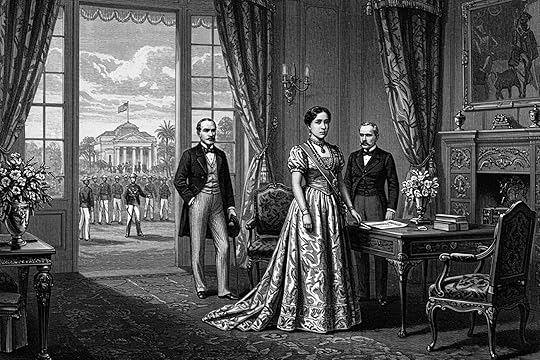
Image: Colonial power and wealth in Hawaii (Source)
Jack has total faith in science and medicine, including an encyclopaedic knowledge of leprosy, albeit thorough rose-tinted spectacles about the leper colony: “They have nothing to do but have a good time. Food, shelter, clothes, medical attendance, everything is theirs… They have a much finer climate than Honolulu, and the scenery is magnificent.”
See also
· The Hawaiian island, Moloca’i, was indeed used as a prison camp for people thought to have leprosy. Between 1866 and 1969, over 8,500 men, women, and children were sent there and declared legally dead.
· Leprosy, aka Hansen’s disease, “is not highly contagious”, although it was widely feared from before Bible times.
· An African-American woman, Alice Ball, developed the first successful treatment for leprosy, which was widely adopted from the 1920s, although she was not originally credited.
· Jack London lived 1876 to 1916. His views on race are complicated and controversial. See here. Nevertheless, his compassion for lepers, few of whom were white, is touching and apparently sincere, in this story and especially another:
· A better and slightly longer London story about how lepers were treated in Hawaii, entirely focusing on the indigenous people, is Koolau the Leper. See my review HERE.
"Good-Bye, Jack" is part of a collection of short stories by Jack London which are set in Hawaii. The story explores race, class, leprosy, and fear. Wealth and talent will not protect anyone from leprosy and, at that time, lifelong confinement on the island of Molokai. It was a well-written, thoughtful story.
Feels odd to read a short story from Jack London that is not set in the cold vastness of Alaska or Yukon. But in this piece (I hesitate to call it a story) the setting is Hawaii.
We have a character sketch, some background and context, and a emotional moment to provide insight into a "fearless" man.
Many locations, back in the day, had quarantine provisions for "lepers" — and this piece is about that, in a way, an island of permanent exile; but almost all we see of the "lepers" is what people say about them. We never hear from them directly.
Good-Bye, Jack was last week's selection in the GoodReads Short Story Club. My two stars does not mean that I think Jack London is a bad writer, or that this is a bad story - structurally it is perfect. In this case it simply means I did not like the story - which is unusual for me because I generally enjoy everything I read.
I’m not sure I have anything intelligent to add to the discussion…An ironic twist on Social Darwinism? Paternalism exposed as hypocracy?…
Sweet Bean Paste is the only other book I have read dealing with Hansen’s Disease link. My reading preferences tend to veer away from deeply disturbing topics (and I don’t just mean Hansen’s Disease, which was only one of the disturbing topics in this story).
I remember sniffling when I read SBP. I gritted my teeth while reading Goodbye, Jack. I’ve never read anything by Jack London before, and it is unlikely I will read anything else by him. Maybe my introduction to the author should have been on a lighter note, and I don’t mean light versus horror.
this was somewhat captivating, until it came to a rather abrupt ending, which may or may not have been captivating, get back Jack 🤣but seriously, it was like To Build a Fire, which likewise, was without fire just when it would have been appropriate, but both are decent stories all in all